'Oscar Wilde once said, “Man is least himself when he talks in his own person. Give him a mask, and he will tell you the truth.” Art provides a way to communicate experiences when individuals lack verbal skills or when words are insufficient. Humans evolved artistic expression as an imaginative tool for adapting to changing conditions and solving problems.'-Girija Kaimal, associate professor in the Creative Arts Therapies, Drexel University and president-elect of the American Art Therapy Association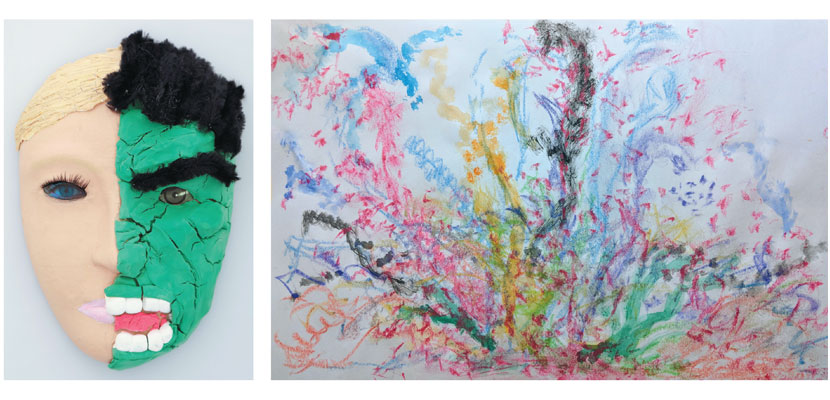 'Nonverbal therapy helps people work through trauma and build resilience.'
Photo credit:Via AmericanScientist
Today (Friday 9 January 2026) I read an inspiring and meaningful editorial in the Guardian which very much resonated with me-The Healing power of art, culture, poetry, music, visiting museums, art galleries, going to concerts, gigs, and more. To me this editorial makes a lot of sense.
In August 2023 my wife, Annie, had a life-changing stroke, resulting in many forms of disabilities, physical as well as emotional. For a while after the stroke we were consumed with fear, hopelessness, anxiety and despair. Then, suddenly out of the blue, we rediscovered our love and passion for arts, art galleries, museums, concerts, gigs and more, things that we had always valued and enjoyed.
We embarked on a wonderful journey. We began to rekindle the healing powers of creative art. Our lives began to change. Disabilities are still there. Fears and anxieties are still there. But, our resilience and strength to cope and the belief in our abilities to carry on more positively has significantly improved.
We are very lucky living in England, where we can access an excellent support system for people like us, from reduced or at times free tickets for Annie and myself as her essentail companion, to price-reduced train tickets and a wonderful and caring assistance team at the train stations and much more, for which we are extremely grateful.
And now, reverting back to the Guardian’s editorial:
In this editorial, the Guardian argues that engaging with art should be treated with the same importance as physical exercise and a healthy diet- the piece suggests that instead of focusing on deprivation (giving up alcohol or sugar), we should focus on nourishment through creativity, enjoyment of arts and culture.
‘Instead of denying ourselves pleasures, suggests a new batch of books, a more successful route may be adding to them – nourishing our minds and souls by making creativity as much a daily habit as eating vegetables and exercising. Rather than the familiar exhortations to stop drinking, diet, take up yoga or running, there is an overwhelming body of evidence to suggest that joining a choir, going to an art gallery or learning to dance should be added to the new year list.’
The editorial highlights a growing body of scientific evidence showing that "art is good for us" in measurable, physiological ways.
Citing research by Daisy Fancourt, professor of psychobiology and epidemiology at University College London, and highlighted in her recent book, Art Cure:The Science of How the Arts Transform Our Health, which brings together numerous research projects confirming what we have always suspected – ‘art is good for us. It helps us enjoy happier, healthier and longer lives. One study found that people who engaged regularly with the arts had a 31% lower risk of dying at any point during the follow-up period, even when confounding socioeconomic, demographic and health factors were taken into account. Studies also show that visiting museums and attending live music events can make people physiologically younger, and a monthly cultural activity almost halves our chances of depression. As Fancourt argues, if a drug boasted such benefits governments would be pouring billions into it. Instead, funding has been slashed across the culture sector and arts education has been devalued and eroded in the UK.’
The editorial is then concluded by the following statement: ‘But it seems clear that actively participating in artistic pursuits increases our wellbeing. Despite the threat to creativity from AI, art remains uniquely human. Learning a new skill gives us a sense of control. Joining a book group fosters community. Really looking at a painting forces us to slow down. Art delivers joy and beauty. As Charles Darwin wrote in his autobiography: “If I had my life to live over again, I would have made a rule to read some poetry and listen to some music at least once every week.” We would all do well to make a similar rule – and enjoy sticking to it.’
The healing and the inspiring power of arts and culture: A selection from our archive
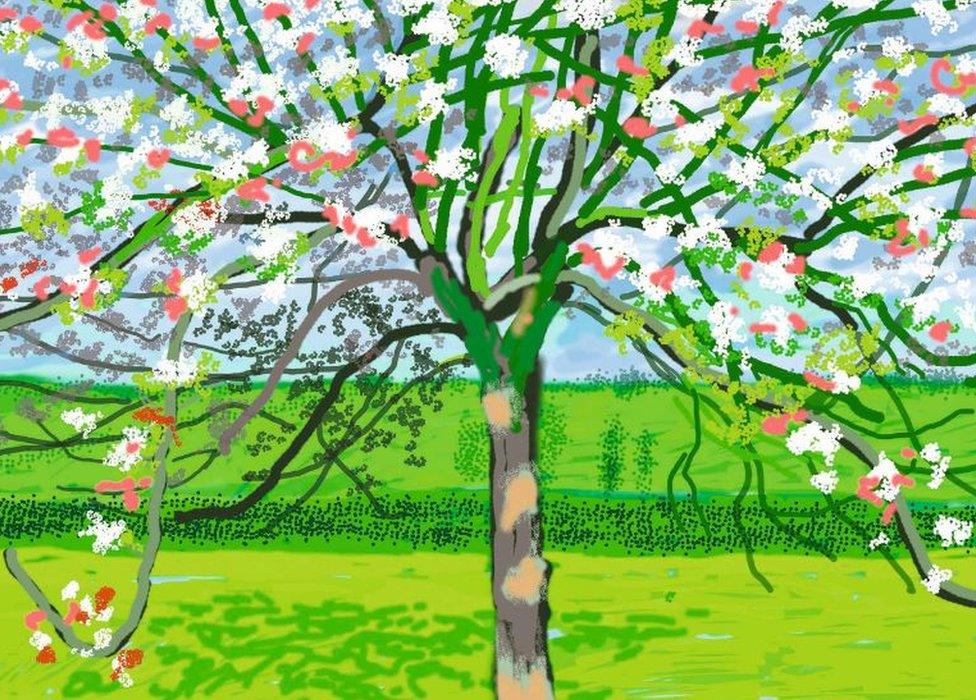
David Hockney/Royal Academy
World in chaos and despair: The healing power of art
World in Chaos and Despair: The Healing Power of Poetry
World in Chaos and Despair: The Healing Power of Interfaith Spiritual Music
World in Chaos and Despair: The Healing Power of Music
World in Chaos and Despair: The Healing Power of Laughter
See also:
A moment that changed me: The day I discovered that indeed small is beautiful
A moment that changed me: The day I discovered William Morris
A moment that changed me: The day I discovered William Wordsworth
A moment that changed me: The day I saw the ruins of Coventry Cathedral
A moment that changed me: The day I discovered what are the essentials
Vincent van Gogh’s ‘Sower at Sunset’ painting, a symbol of hope to many

Vincent van Gogh/ Kröller-Müller Museum via Wikimedia Commons, CC BY-NC-SA