
Militarisation is a lie and deceptive illusion and it cheats the masses

Photo credit: Blakiston’s
Lying to Ourselves is the Cardinal Sin and the Ultimate Act of Self Harm
Trust is Foundational to What it Means to be Human
To prioritise the military over human well-being is a crime against people everywhere.
Unlike the untrustworthy and self-centered political leaders (here today, gone tomorrow), the common men and women of this country with high moral compass, know that true security is defined not just by borders, but by access to healthcare, education, efficient and fairly priced public transport, affordable housing, clean and safe drinking water and clean air to breathe, as well as reverence for Mother Earth, in the recognition that we are deeply interconnected with the planet that sustains us, to name but a few.
They also know that security flourishes when there is a sense of economic justice and fairness, not when their governments lead an economic policy of socialism for the 1% and capitalism for the rest. Moreover, they also know that it is an act of folly and a clear sign of amorality to drastically increase military expenditure when the UK’s families are getting poorer, with record numbers of people classed as in “very deep poverty”—meaning their annual household incomes fail to cover the cost of food, energy bills and clothing, and more—and when many of the country’s future leaders, today’s children, are lonely, anxious, depressed, isolated, hungry, neglected, and at risk.
People also know that endemic corruption and sleaze directly degrade national security and social harmony, fueling a vicious cycle of instability. No amount of military power and expenditure can substitute for trust, honesty, transparency and integrity, which are the foundations of long-term security.
They, too, remember their history well, past and present. They know how a large group of poverty stricken, weak, vulnerable, unsecure, and marginalised groups, created from the ashes of austerity, when the tories punished the victims of the 2008 financial crash, slashing the public sector and expenditures, in turn humiliated their uncaring leaders and voted en masse for Brexit, making the country far less secure and ungovernable, prime ministers after prime ministers!
And now, once again, they are offered austerity in exchange for fancy drones and missiles!! This, to an informed progressive mind, is nothing but another catastrophe in making.
No amount of military expenditires and military hardware has ever made us more secure and safer. The world must never forget that 'accelerated militarization poses a serious threat to humanity's future by diverting critical resources from sustainable development and peace-building initiatives.'-United Nations-Peace and Security
Nota bene
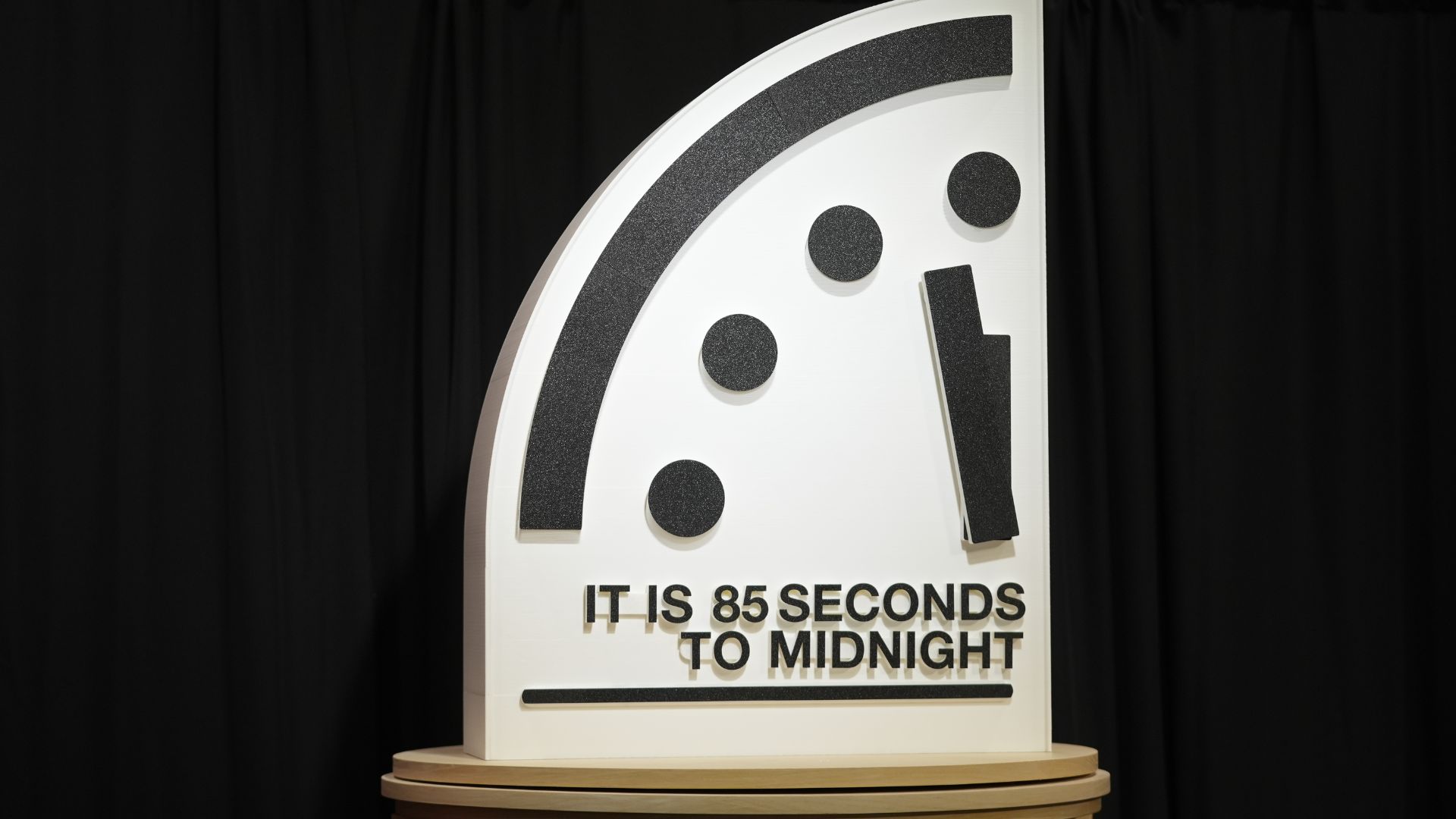
AP Photo/Pablo Martinez Monsivais/via EyewintnewwNews abc7
'Founded in 1945 by Albert Einstein, J. Robert Oppenheimer, and University of Chicago scientists who helped develop the first atomic weapons in the Manhattan Project, the Bulletin of the Atomic Scientists created the Doomsday Clock two years later, using the imagery of apocalypse (midnight) and the contemporary idiom of nuclear explosion (countdown to zero) to convey threats to humanity and the planet. The Doomsday Clock is set every year by the Bulletin’s Science and Security Board in consultation with its Board of Sponsors, which includes eight Nobel laureates. The Clock has become a universally recognized indicator of the world’s vulnerability to global catastrophe caused by man-made technologies.'
‘The Bulletin of the Atomic Scientists attribute this alarming milestone directly to failing global leadership, escalating conflicts, and the unchecked expansion of nuclear weapons, drones, and emerging technologies.’
Today our untrustworthy world is spinning out of control, nobody trusts anybody and the madmen of politics, here today, gone tomorrow, tell the masses that building more lethal weapons of mass destruction, missiles and drones are the solutions!
However, borrowing lyrics from the musical Evita, ‘They are illusions, They're not the solutions they promised to be, The answer was here all the time’.
‘Militarisation is often criticized as a means of deceiving the public. Many political theorists and historians argue that governments use war preparations to distract from domestic crises, manufacture consent through propaganda, and justify the expansion of state power at the expense of civilian welfare and basic freedoms…
‘Massive budgets for defense and weaponry divert critical funding away from education, healthcare, essential infrastructure construction, such as roads, highways, housing and more…’- Militarization-an overview, ScienceDirect
See also: We need to talk about UK Military Spending
Campaign Against Arms Trade (CAAT)
Stockholm International Peace Research Institute(SIPRI)
To prioritise the military over human well-being is a crime against people everywhere.
‘Redirecting funds from welfare and aid programs to military spending will inevitably exacerbate existing social inequalities and globally will only increase instability. The Office for Budget Responsibility estimates that the welfare cuts at home could push an additional 250,000 individuals, including 50,000 children, into relative poverty by 2029-30, impacting over 3 million households. Such austerity measures undermine the social safety net, leaving marginalized communities to bear the brunt of fiscal policies that prioritise the military over human well-being.
It isn’t just the vulnerable at home who will suffer as a result of these policies. In 2023-24, the UK’s core military spending was approximately 3.5 times the size of the aid budget; by 2027-28, it is projected to be about ten times larger. This dramatic shift signifies a troubling departure from the UK’s commitment to international development and humanitarian assistance. When the Trump Administration announced their slashing of US AID Foreign Secretary David Lammy described it as a “big strategic mistake” – just weeks before supporting a similar policy in Cabinet.
The government’s obsession with ever-increasing military spending entails significant opportunity costs. Public services are already under strain, with record-high NHS waiting lists, deteriorating school infrastructure, and persistent child poverty. Removing the two-child benefit cap would cost a fraction of the upcoming increase in military spending, yet would change the lives of more than 500,000 children. Redirecting resources towards the military diverts much-needed investment away from these critical areas, hindering efforts to address pressing social issues and improve the quality of life for citizens...’-Global Campaign on Military Spending (GCOMS)
The folly of militarisation and endless wars of choice to create ‘security’ and ‘safety’ cannot be observed better than in what I had noted elsewhere before:
Mission Accomplished? The Human and Economic Cost of US Wars Since 9/11
The spectacular defeat of western pseudo-values: The Afghan Debacle
UN chief argues that investing in fighting poverty instead of wars would make a more secure world
Continuing to increase military expenditures is a bottomless pit, as it is never enough!! Global military expenditures have now surged to a record $2.9 trillion and still nobody feels safe and nobody has been able to buy their way to peace and security, whilst billions of people are hungry, malnourished, homeless, living in abject poverty.
‘Sacrificing domestic projects to pay for it is indefensible.’- Simon Jenkins, the Guardian
‘Britain should spend less on defence. It is a waste of money and should be reduced so more could be spent on supporting employment, welfare and growth.
Why is there no such debate? Why should “defence” be awarded an almost religious invulnerability? At present, parliament, broadcasters, print and social media, thinktanks and pundits all admit to only two points of view. One is that Britain should spend more on defence, the other is that it should spend far more…’-There is no immediate military threat to Britain. We should spend less on defence
Infrastructure cuts to pay for defence will cost UK 10,000 jobs, analysis shows
‘Findings cast doubt on Keir Starmer’s claims that reallocation of funds to MoD will boost British jobs.’
‘Keir Starmer’s decision to cut billions of pounds of infrastructure spending to pay for more defence equipment will end up costing the UK 10,000 jobs, according to an analysis of the government’s own figures.
The prime minister announced this week he was putting an extra £15bn into defence investment to revamp the country’s armed forces and boost British manufacturing…
‘Khem Rogaly, the co-author of the report, said: “The idea that military spending can provide a defence dividend is misleading: job losses will result from this latest funding settlement while the opportunity cost of military spending is sharp.
“Far more jobs are created when investing in public needs like health, education and addressing the climate crisis. This latest data suggests that the turn towards autonomous weapons and AI could also mean that military spending creates even fewer jobs per pound than before.”- Continue to read
And now a look at the European Union's militarisation
'The European Union’s push toward militarisation—manifesting in massive rearmament and the controversial Readiness 2030 initiative—is widely criticized as a "march of folly." Critics argue this shift severely compromises the bloc's founding identity as a postwar peace project and undermines long-term socioeconomic stability.'
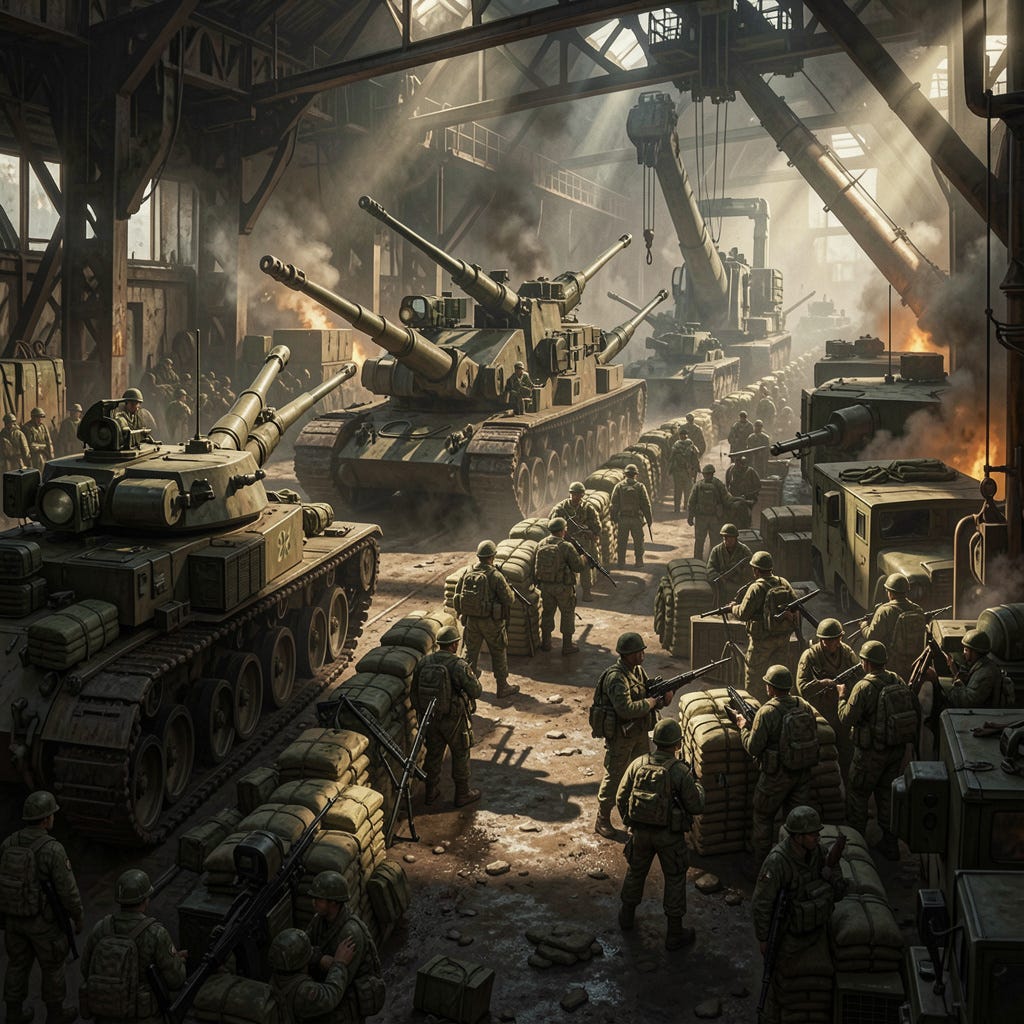
AI-generated illustration from Magnific. Source TFF
And finally, a shameful Europe, shame on you! Forgetting your history of past militarisation, wars, death, and destruction, means that you have also forgotten to know what it means to be honest, sincere, and truthful. In short, what it means to be human.
Sinéad Gibney: EU Militarisation Threatens Peace
“In der Ruhe liegt die Kraft” (“In serenity strength lies”- Angela Merkel
‘Are Europe’s Leaders Ignorant — Or Are They Lying?’
A two-part analysis by TFF • Transnational Foundation & Jan Oberg, 3 and 4 July 2026
‘No study has ever shown that military spending outperforms civilian investment.’
“Europe must build a strong defence industrial base — it will create jobs and drive innovation.”— Ursula von der Leyen, President of the European Commission (2024)
“Investing in defence is investing in Europe’s economic future.”— Thierry Breton, EU Commissioner for Internal Market (2023)
“Rearmament is an opportunity for European industry and for growth.”— Emmanuel Macron, President of France (2022)
“The €100 billion special fund will strengthen Germany’s economy and technological base.”— Olaf Scholz, Chancellor of Germany (2022)
“Increasing defence production will create Danish jobs and support our economy.”— Mette Frederiksen, Prime Minister of Denmark (2023)
“Defence investments are also investments in Finnish industry and competitiveness.”— Petteri Orpo, Prime Minister of Finland (2023)
“Our defence expansion is a stimulus for the Polish economy.”— Mateusz Morawiecki, Prime Minister of Poland (2022)
“Higher defence spending strengthens our economies and our industries.”— Jens Stoltenberg, NATO Secretary General (2023)
‘European leaders repeatedly tell their citizens that rearmament is good for growth, good for jobs, good for innovation, and good for competitiveness. They present defence spending as a kind of industrial policy — a stimulus package wrapped in camouflage. These quotations are not marginal statements; they come from the highest political offices in Europe. They form the dominant narrative of Europe’s new militarisation.
‘This article examines that narrative against the best available economic evidence. What follows is not ideology, not opinion, not geopolitics — but economics: multipliers, opportunity costs, capital productivity, market structure, and long‑term welfare effects. And when these economic facts are placed next to the political claims above, the contrast becomes impossible to ignore…’-Continue to read the part 1 analysis Here
Part II 'now turns to the structural political economy behind Europe’s militarisation — and the absence of any serious economic analysis of its consequences.'-Continue to read the part II analysis HERE
Concluding Remarks
Preparing for war will accelerate it, not prevent it
'The government’s war agenda has made the world more dangerous, increased the risks of nuclear weapons being used and only worsened economic insecurity in this country. At this point of crisis, it is clear that we need a new direction that will genuinely address the key security threats we face – the rising threat of war and nuclear weapons, accelerating climate breakdown, a looming global recession and the rising far right.
We need a political leadership that will break with the warmongering and engage in serious efforts through dialogue to secure a ceasefire in Ukraine and a sustainable peace. We need a leadership that will genuinely defend international law and abide by their own nuclear disarmament commitments. We need a leadership that will prioritise investment in climate action and rebuild our public services and welfare system. These are vital, not only if we are to protect people from the imminent cost-of-living crisis, but also to build a long-term, sustainable future for us and the planet.'- Government’s military spending risks us all
Rapid increases in military expenditures and military hardware: What can European leaders learn from the late Shah of Iran?

In September 1990 my book ‘The Economic Consequences of the Gulf War’ was published by Routledge I am proud of this publication, where and when I very clearly and soundly debunked the myth of rapid rises in military expenditures as a percentage of the GDP as the passport to power and ultimate security.
Driven by soaring petrodollars following the 1973 oil crisis, the Shah rapidly escalated Iran's military spending. The defense budget increased more than tenfold over the decade. This massive military buildup became a primary catalyst for the 1979 revolution, severely destabilising the Iranian economy and the regime, fueling widespread public outrage, and raising revolutionary fervor.
The Shah thought he could buy power and security while ignoring the fundamentals. He paid a heavy price for his illusions.
Today, 36 years later, British and European leaders are repeating the same tragic, illusory mistake. The path to true power and true security lies elsewhere.
The Shah did not have either the humility or the wisdom to see what he was doing. I sincerely hope that the European leaders, even at this late hour, will discover the needed humility and wisdom.