
When we look back at the literary landscape of 1934, an extraordinary book stands out as mirror images of our contemporary world. That book, without exception, is: Crooked Cross.
'Sally Carson's 1934 novel Crooked Cross captures the terrifying, real-time collapse of a civilised society into Nazi tyranny, mirroring contemporary anxieties about how quickly democratic norms and moral consensus can dissolve.'
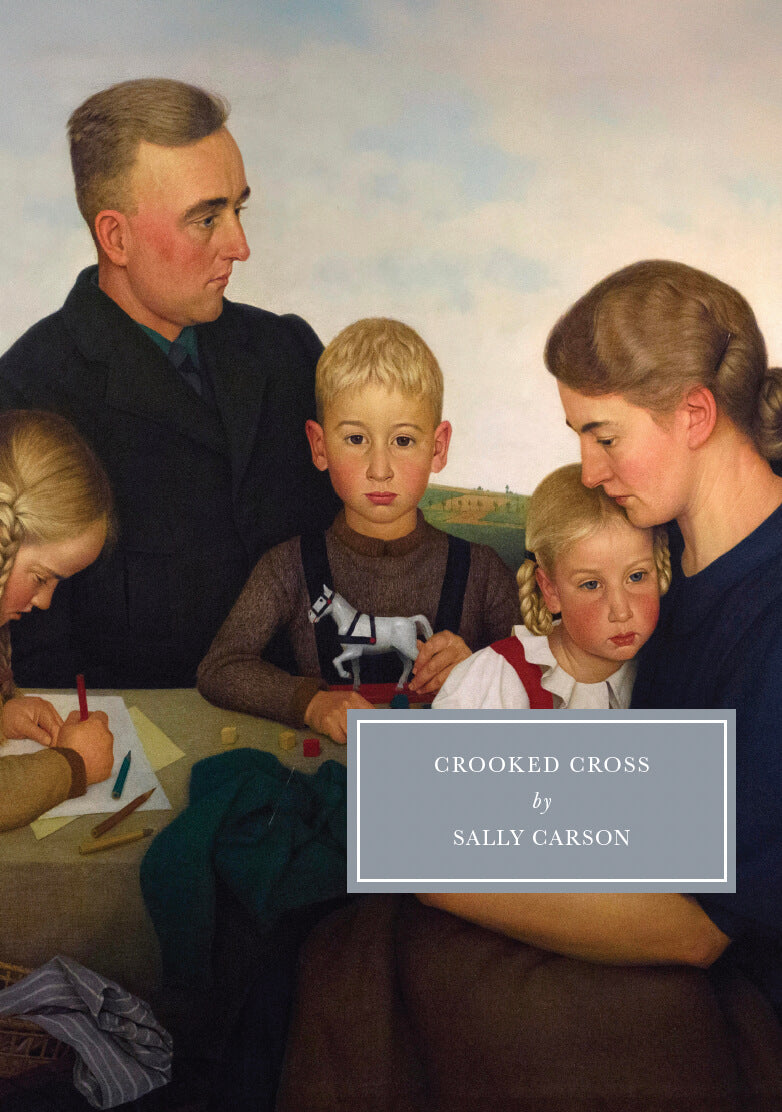
A lost classic, first published in 1934, about one ordinary German family destroyed by the rise of the Nazis/Persephone Books
Today, the book serves as an urgent, timeless warning about the vulnerability of civilised societies to authoritarianism.
‘The lost 1934 novel that foresaw the terrible power of Hitler’s ‘crooked cross’
‘Sally Carson’s prescient novel Crooked Cross offers an unflinching look at the early days of Nazism, resonating with today’s fears of lost boys, strong men and old hatreds’-The Times, 9 April 2025
Crooked Cross, the extraordinarily prescient 1934 novel by British author Sally Carson, serves as a powerful historical mirror for modern times. Written after Carson witnessed the dawning of fascism firsthand during visits to Bavaria, the book acts as an immediate warning of how quickly a civilized society can succumb to authoritarianism, hatred, and the systematic erosion of human empathy.
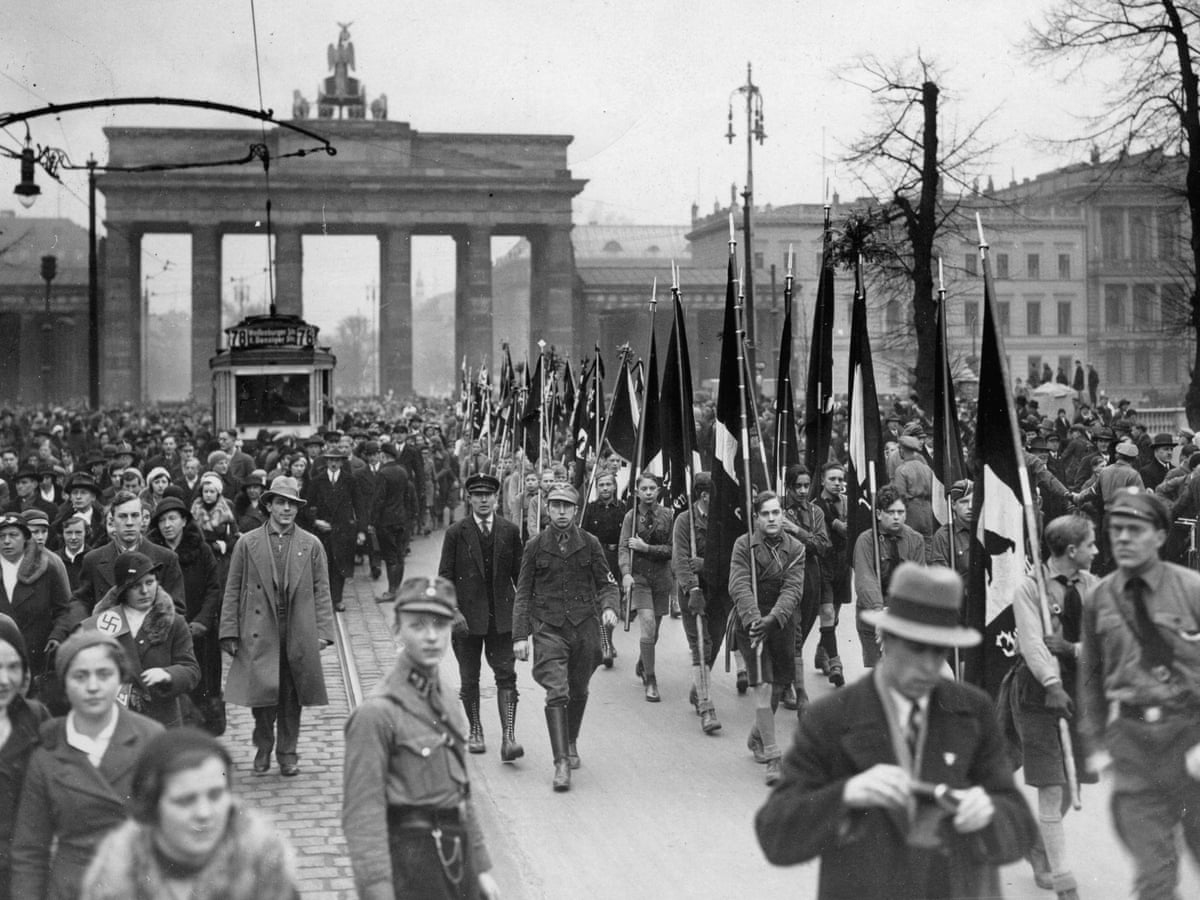
Hitler Youth marching by the Brandenburg Gate, Berlin, in March 1933. Photograph: Brandstaetter. Images/Getty Images/The Guardian
‘Sally Carson’s Crooked Cross was written and set during the rise of nazism. It shows both how extremism takes hold, and the moral certainty needed to resist it.’- Charlotte Higgins, the Guardian’s chief culture writer
…’What is so impressive about Carson is, despite the fact she had no idea where Hitlerism would end, the novel has an unshakeable moral core. There is no equivocation. What is being done in Germany to Jews, to communists, is plainly horrific, according to the novel’s worldview. Carson wrote – already in 1933 – of the grim stories emerging from Dachau: “People had a way of suddenly disappearing, no trial, no explanation”; “prisoners were half-starved, bullied, inhumanly treated”.
‘Not every outsider wrote of Hitler’s Germany like this at the time. A three-part New Yorker profile of Hitler, by Janet Flanner, published in 1936, is a tour de force in its way – full of details of the particular porridge favoured by the Führer, and where he got his suits (“He scrupulously chooses a second-rate tailor”). But, with its detached, ironic tone, with its closeup detail of Hitler’s habits without a long-range view of what he was actually doing to Germany, Flanner also provides a chilling example of a journalist failing to see the wood for the trees.’ ( Adolf Hitler: Fanatic, celibate, vegetarian—the man who brought the Nazis to power, Flanner noted). {Can you observe any similarities with some contemporary writers writing about today’s cults of personality?}
‘A few days ago I asked an American acquaintance – as one does these days – where he sees “it”, by which I meant the political situation, heading. He took a breath. “In my opinion, the US is in a very similar position to Germany in 1933-4,” he said. “And we have to ask, could 1936, 1937, 1938 have been avoided? That’s the point we are at. You can try to say fascism couldn’t happen in the US. But I think the jury’s out.”
‘His words seemed especially resonant to me because I had just finished reading a remarkable novel precisely to do with Germany in 1933-4, a book written in the former year and published in the latter. Forgotten for decades, Sally Carson’s Bavaria-set Crooked Cross was republished in April by Persephone Books, which specialises in reviving neglected works. Since then, it has been a surprise hit, a word-of-mouth jaw-dropper, passed from hand to hand.
‘Crooked Cross begins in December 1932, and ends in midsummer the following year. The setting is the little, fictional Bavarian town of Kranach, a picture-postcard place in the foothills of the Alps. Its focus is the Kluger family – a modest, middle-class clan of kindly, loving parents and three grown-up children, Helmy, Lexa and Erich – who are gathering to celebrate Christmas with their cousins and Lexa’s fiance, Moritz. Everything is warm and delightful and full of promise: the tree with its glass baubles and candles, the tissue-wrapped presents, the carols, the roasted goose. Everything is gorgeously decorated, “even” – one reads with a shudder that is deepened by a 21st-century knowledge of where “it” was all headed – “Helmy’s picture of Hitler which stood on the piano”.
…’What is so impressive about Carson is, despite the fact she had no idea where Hitlerism would end, the novel has an unshakeable moral core. There is no equivocation. What is being done in Germany to Jews, to communists, is plainly horrific, according to the novel’s worldview. Carson wrote – already in 1933 – of the grim stories emerging from Dachau: “People had a way of suddenly disappearing, no trial, no explanation”; “prisoners were half-starved, bullied, inhumanly treated”...A prophetic 1934 novel has found a surprising second life – it holds lessons for us all
See also:
‘Sally Carson’s plangent, prophetic Crooked Cross – its title taken from the shape of the swastika, adopted as the symbol of Nazi Germany – was acclaimed on publication in 1934 as “a novel that everybody should read – and remember”. Carson’s dramatization of the novel played in Birmingham the following year and London in 1937, when it was praised by the New York Times as “without indulging in propaganda and without bias”. Carson would pursue the story of the fictional Klüger family and their small Bavarian town, gripped by National Socialism, through two sequels: The Prisoner (1936) and A Traveller Came By (1938). She died of breast cancer aged thirty-eight in June 1941, the month when Germany invaded the Soviet Union; and Crooked Cross, this novel that “everybody should read – and remember”, went out of print, along with her other works. Only due to the discovery of a rare copy has it been brought back into circulation, in a new edition published to mark the eighty years since the end of the Second World War…’- Like a blindfold surgeon
The 1934 novel Crooked Cross by Sally Carson was originally published in Britain in 1934, though the specific original mainstream publishing house is not explicitly named in standard general archives; it was later famously rediscovered and reissued by Persephone Books in 2025
Crooked Cross by Sally Carson is published by Persephone Books
If only we had learned from Crooked Cross
A painting that fought fascism, speaking out against brutality and cruelty
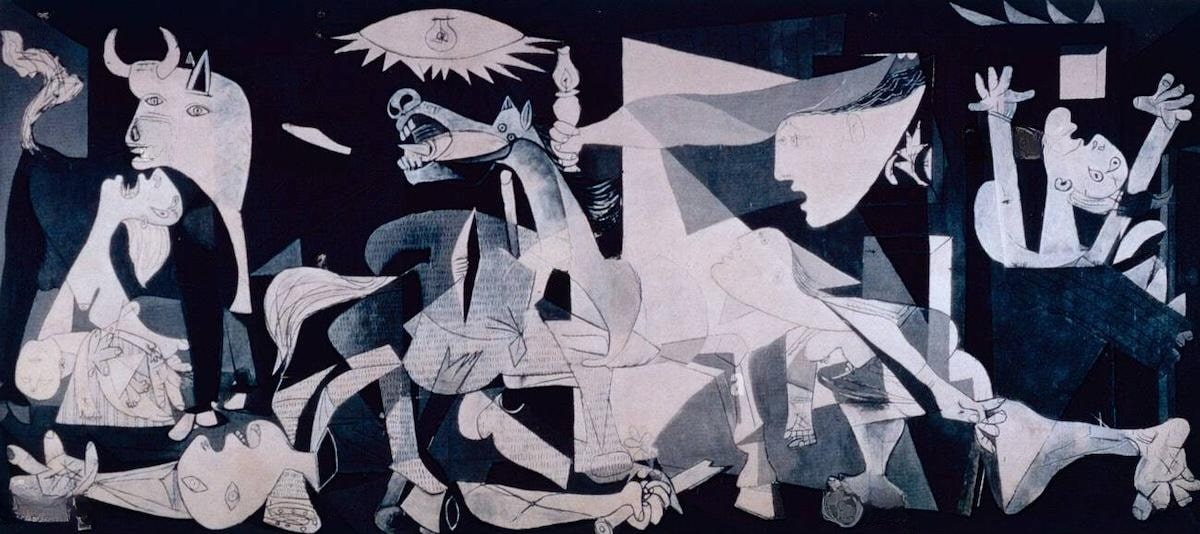
Guernica, 1937 by Pablo Picasso (Credit: Museo Nacional Centro de Arte Reina Sofía)
What it means to be Human in the age of End of Times Fascism
Are we witnessing the rise of fascism today in a world that once vowed, "Never again"?