- Details
- Written by: Kamran Mofid
- Hits: 6434
Margaret Thatcher had 'psychopathic tendencies' and was 'not in touch' emotionally- says actress who played the politician in her younger years
On 3 June 2011 I wrote a blog under the title of “The Broken Model”. Due to its relevance to this blog, I wish to note it once again:
“Do you remember that Margaret Thatcher, the so-called Iron Lady!! She told the Brits that she was going to put the “Great” back into the “Great” Britain. Do you remember? Then, she told us this can only happen if we accept and implement the “Washington Consensus”, the so-called dreaded neo-liberalism. She told us that there was no alternative. She told us we will all prosper and develop more fairly and equitably. She won election after elections. Everything was privatised, deregulated, self-regulated. Industry, manufacturing, (the real economy) was destroyed. Instead, the banks and the bankers were encouraged to rule the world. The economists with no principles and values were “bought” and the business schools, such as Harvard and Columbia were showered with money to act as “Cheer Leaders” for the dreaded neo-liberalism (see the Inside Job for evidence). Communities were dis-mantled and dis-organised. We were told that there is nothing as a society and community. We are all in it just for ourselves, we were told. Destructive competition at the expense of life-enhancing cooperation, collaboration and dialogue was greatly prompted. We were told to say no to love, kindness, generosity, sympathy and empathy and say yes to selfishness, individualism and narcissism, as these values will fire the engine of capitalism and wealth creation! In short, the hell with the common good, we were encouraged to believe.- Details
- Written by: Kamran Mofid
- Hits: 7525
'Growing private wealth, combined with public austerity, is undermining the health of western democracies.'
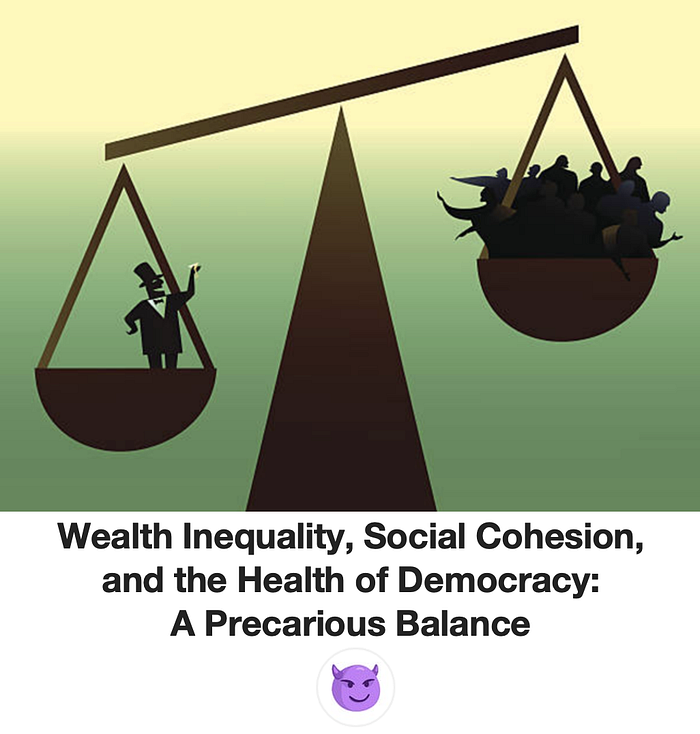
Photo credit: Lilac Draccus Media
The growing wealth gap is unsustainable
99% on their knees, whilst the 1% is laughing all the way to the banks
The ever-increasing many who are struggling cannot support a structure that favours a tiny number of the very rich
“Last month, Barack Obama, on his re-election to a country with 42 million living in poverty, warned: "America cannot succeed when a shrinking few do very well and a growing many barely make it." At the World Economic Forum in Davos, its founder, Klaus Schwab, said: "Capitalism in its current form no longer fits the world around us." How badly it "fits" is powerfully demonstrated in Inequality for All, a documentary made by Jacob Kornbluth, that recently won the special jury prize at the Sundance festival…
While the debate in the UK is mostly focused on growth and how best to engender it, Reich explains in chilling detail why growth alone may not be enough. For too many, he explains, social mobility has begun to slide backwards. A small but growing band of global pirates – billionaires all, without allegiance to community or country, devoid of civic responsibility – accrue wealth from the continued immiseration of the squeezed majority. These hugely rich are fawned over and subsidised by governments even as inequality widens to a chasm that may yet produce social unrest.
Reich's analysis is similar to that of the UK thinktank, the Resolution Foundation It launches its definitive study of low- to middle-income families, Squeezed Britain, this week. Britain has more than 10 million adults living on between £12,000 and £30,000 gross, the majority in work. However, this squeezed middle is fast becoming the squeezed majority, with even those on £50,000 seeing their children's prospects decline. The cause, Reich points out, is that while wages have flattened for years, the cost of living has spiralled and the richest have accelerated away. In the US, in 2008, 400 billionaires were "worth" more than 150 million of the US population. British housing statistics published last week indicated a similar contemptible polarisation under way here. The 10 most expensive boroughs in London, packed with Russian oligarchs, have a combined property "value" of £552bn, identical to that of Wales, Scotland and Northern Ireland combined…
"Free" markets with the rules written by the richest result in a shrinking public sector, deregulation, unemployment, low taxes for the most affluent and the threat of globalisation, depressing wages still further. The sum impact isn't "bad" capitalism, it is modern-day capitalism. How it changes, and how rapidly, is a challenge to its own survival. Once, the advancement of the employee was a part of the social contract. Under Thatcher, the aspiration of the average citizen was central via shareholding and home ownership. Now, a more brutal set of priorities pushes the requirements of "the little man" aside, while those who have money buy the influence that unjustly shapes the world in which we live. So how do we forge again the link between morality and the markets?
Iceland, post 2008, forced the resignation of the government, refused to bail out the banks and placed 200 "banksters' under investigation. In 2011, its economy grew by 2.9%. Would a similarly tough approach persuade some of today's pirates that the much mocked habits of the bourgeoisie do have a value that also matters: moderation; giving something back; a sense of civic duty. In that context, Apple would desist from legitimately funnelling more than a billion dollars' worth of iTunes sales through the tax haven of Luxembourg, while the British Virgin Islands would no longer be home to 30,000 people but a staggering 457,000 companies legally siphoning money that could build sustainable communities.
Reich's agenda for positive change includes more jobs; greater investment in skills and higher education; a just taxation regime; strong unions; investment in public infrastructure; a living wage and a narrowing of the earnings gap. Reich ends with a warning: "We are losing the moral foundation stones on which our democracy is built," he says. How much more evidence do we need?”
Read more:
The growing wealth gap is unsustainable
Editorial, The Observer, Sunday 3 February 2013
Inequality for All – another Inconvenient Truth?

Photo: YouTube : Robert Reich: Inequality for All
The powerful documentary Inequality for All was an unexpected hit at the recent Sundance film festival, arguing that US capitalism has fatally abandoned the middle classes while making the super-rich richer. Can its star, economist Robert Reich, do for economics what Al Gore did for the environment?
“In one sense, Inequality for All is absolutely the film of the moment. We are living through tumultuous times. The economy has tanked. Austerity has cut a swath through the country. We're on the verge of a triple-dip recession. And, in another, parallel universe, a small cohort of alien beings – or as we know them, bankers – are currently engaged in trying to figure out what to spend their multimillion-pound bonuses on. Who wouldn't want to know what's going on? Or how it happened? Or why? Or if it is really true that the next generation down is well and truly shafted?...
And what the film tries to do is thread together evidence that many people know about – the increasing struggle of the middle classes to just get by, the way that the top 1% of society has unshackled itself from the rest of us and has seen its income increase exponentially, and the ever-increasing cost of the traditional avenues of improvement, such as higher education – and weave it into a cohesive and convincing narrative. It is, in some respects, a theory of everything. Reich charts the three decades of increasing median income after the second world war, a period he calls "the great prosperity" and then examines what happened in the late 1970s to put an end to it. The economy didn't falter. It kept on growing. But wages didn't.
The figures that Reich supplies are simply gobsmacking. In 1978, the typical male US worker was making $48,000 a year (adjusted for inflation). Meanwhile the average person in the top 1% was making $390, 000. By 2010, the median wage had plummeted to $33,000, but at the top it had nearly trebled, to $1,100,000…
Reich's thesis is that since the 1970s a combination of anti-union legislation and deregulation of the markets contrived to create a situation in which the economy boomed but less of the wealth trickled down. Though for a while, nobody noticed. There were "coping mechanisms". More women entered the workforce, creating dual-income families. Working hours rose. And increasing house prices enabled people to borrow.
The system simply isn't working, he says. It's put the millionaires and the billionaires, the Nick Hanauers and the Mitt Romneys – the people that Republican rhetoric describes as job creators – at the centre of the economic universe, rather than what Hanauer calls the true job creators – the middle classes.
In the UK, Royal Bank of Scotland, having covered itself in glory in the Libor interest-rate fixing scandal, is currently contemplating bonuses for its investment banking division of £250m, according to reports last week. This, to put it another way, is the annual wage bill for at least 12,500 of its call-centre workers. Because this isn't just an American problem. It's a British one too…
Inequality for All – another Inconvenient Truth?
And finally a note from me:
So far so good. But in my view, nothing will change for the better, unless we change the current dominant economic philosophy, namely, the Neo-liberalism, which has brought down the world to its nadir of decadence. Failure to do so, nothing will change, nothing.
The so called neo-liberalism has a fair claim to be the ugliest philosophy the post-war world has produced. Selfishness, it contends, is good, altruism, empathy and compassion are irrational. The poor are guilty for their poverty, whilst the rich deserve unmediated power, because they are worth it. This holds that the only moral course is pure self-interest.
Thus, for this group of individuals, what matters most is money. Success, happiness, well-being, and more, all have monetary values, and all must be measured through monetary means. This is why many of them are tax-avoiders, cheaters and dodgers. They are paid huge salaries, in absolute and relative terms. But are only moved by huge bonuses to do the jobs for which they are already handsomely paid for. They show no regards for other fellow human beings, nature and environment. They shout loud about nationalism and claim to be patriotic, but in the interest of maximising their profits, show no allegiance to the motherland and its workers and out-source all they do. Sustainability and responsibility means nothing to them, as long as costs are minimised, profits are maximised, leading to huge bonuses. They have no regard for the common good and no value for volunteerism, service, and selfless giving.
In all, for this group, inspired by modern economic thinking, greed and selfishness are upheld as guiding the ‘invisible hand’ of the market and are therefore exempt from moral consideration. And thus in today’s money-only-driven world that they have constructed, which is devoid of any values but the worship of mammon, democracy means the ability to consume, whilst the citizens are valued only as consumers, borrowers and shoppers.
- Details
- Written by: Kamran Mofid
- Hits: 7154
The news from the “Super-rich”, "gated" community is not good, encouraging, or inspiring. This group is mostly corrupted by the fraudulent philosophy of neo-liberalism which has brought the world to its knees.
The so called neo-liberalism has a fair claim to be the ugliest philosophy the post-war world has produced. Selfishness, it contends, is good, altruism, empathy and compassion are irrational. The poor are guilty for their poverty, whilst the rich deserve unmediated power, because they are worth it. This holds that the only moral course is pure self-interest.
Thus, for this group of individuals, what matters most is money. Success, happiness, well-being, and more, all have monetary values, and all must be measured through monetary means. This is why, many of them are tax-avoiders, cheaters and dodgers. They are paid huge salaries, in absolute and relative terms. But are only moved by huge bonuses to do the jobs for which they are already handsomely paid for. They show no regards for other fellow human beings, nature and environment. Sustainability and responsibility means nothing to them, as long as costs are minimised, profits are maximised, leading to huge bonuses. They have no regard for the common good and no value for volunteerism, service, and selfless giving.
In short, for this group, inspired by modern economic thinking, greed and selfishness are upheld as guiding the ‘invisible hand’ of the market and are therefore exempt from moral consideration.
Thus, in today’s money-only-driven world that they have constructed, which is devoid of any values but the worship of mammon, democracy means the ability to consume, whilst the citizens are valued only as consumers, borrowers and shoppers.
However, there is hope. Out of this despair comes a ray of sunshine, beauty and inspiration to guide the world. There are individuals who have risen above this nonsensical and bankrupt philosophy and have bucked the trend: Individuals with a big heart, which have discovered the awesome power of giving and sharing for the common good. Giving thanks for all the blessings life has offered them, by giving back to their local or global community.
As it has been noted, at its core, giving is a means of uniting all the members of our human community through a process of bonding so that we may live together in peace, harmony and security. Giving, in all its forms, is the gesture that attempts to equalize the differences that separate the rich from the poor and the privileged from the disadvantaged. It is inspired by an innate urge to dissolve the barriers that make people feel distant from each other. Because we are inherently social beings from our first breath to our last, giving is a statement of openness and trust that affirms we are all similar in our humanity and mortality.
Indeed, throughout history there have been many examples of such individuals, changing their world for better. Today, in this blog, I wish to highlight one individual from Africa, sharing his wealth with many, whilst inspired to do so, by the African spirit of "ubuntu" - a belief system which translates as "I am because you are", meaning individuals need other people to be fulfilled.
An anthropologist proposed a game to the kids in an African tribe. He put a basket full of fruit near a tree and told the kids that who ever got there first won the sweet fruits. When he told them to run they all took each others hands and ran together, then sat together enjoying their treats. When he asked them why they had run like that as one could have had all the fruits for himself they said:''UBUNTU, how can one of us be happy if all the other ones are sad?''
Now see the power of UBUNTU in action:
South Africa's richest black man, Patrice Motsepe, has announced he is giving away half his wealth to improve the lives of the poor.
The mining magnate said the money would be handled by the Motsepe Foundation to address education and health issues.
Mr Motsepe has a net worth of $2.65bn (£1.67bn), Forbes' rich list estimates.
"I decided quite some time ago to give at least half of the funds generated by our family assets to uplift poor and other disadvantaged and marginalised South Africans but was also duty-bound and committed to ensuring that it would be done in a way that protects the interests and retains the confidence of our shareholders and investors," said Mr Motsepe.
Mr Motsepe said he was also inspired by the spirit of "ubuntu" - an African belief system which translates as "I am because you are", meaning individuals need other people to be fulfilled.
"South Africans are caring, compassionate and loving people. It has always been part of our culture and tradition to assist and care for less fortunate and marginalised members of our communities. This culture is also embodied in the spirit and tradition of ubuntu/botho," he said.
Read more:
Patrice Motsepe: South African tycoon to donate millions
http://www.bbc.co.uk/news/world-africa-21259399
The Giving Pledge
How Much is Enough? Money and the Good Life
http://www.gcgi.info/blog/333-how-much-is-enough-money-and-the-good-life
The Good Life: In Pursuit of Happiness?
http://www.gcgi.info/blog/316-the-good-life-in-pursuit-of-happiness
- The Commodification of Life: A path to turn the citizens into neo-liberal consumers
- The greatest debate of them all: Imaging a dialogue between Marx, Keynes, Friedman and Schumacher on current global crises
- The Sorry State of British Universities: Could a university be the next HMV?
- Instead of unethical austerity let us kick start a housing construction
- In Praise of Swami Vivekananda: The man who brought Eastern philosophy to the West