- Details
- Written by: Kamran Mofid
- Hits: 11765
Center for Global Dialogue and Cooperation, Vienna, Austria
The 3rd CGDC Annual Meeting "Dialogue and Cooperation for Change"
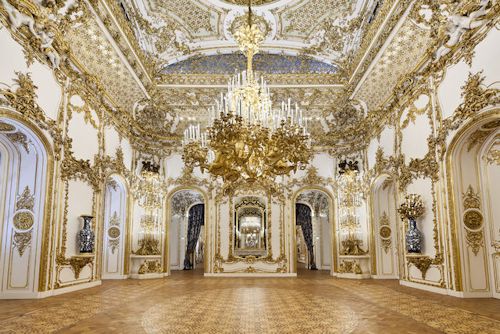
3-4 December 2013, Palais Liechtenstein, Vienna
The text of the Plenary Speech by Prof. Kamran Mofid* at Session 3
‘Synergies to Master the Global Crisis’
Read the Press Release HERE
“A Call to Recover our Moral and Spiritual Compass:
Globalisation for the Common Good as a Path to a Just and Sustainable World”
(This presentation is dedicated to the youth of the world, our children and grand- children, who are the unfolding story of the decades ahead.
May they rise to the challenge of leading the world, with hope and wisdom in the interest of the common good, to change our troubled world for the better)
Honourable Presidents, Your Excellencies, Honourable CGDC Founders and Members, distinguished guests, fellow- speakers, friends, colleagues, ladies and gentlemen
It is wonderful to be back in Vienna, the beautiful city of culture, arts, history, and at the crossroads of civilisations, peoples and dialogue.
We gather here at the kind invitation of The Centre for Global Dialogue and Cooperation, grateful for their warm hospitality, support and encouragement.
Before anything else, I wish to give all present in this hall a gift from my heart, in the form of a great Celtic blessing:
The Warmth of the sun to you
The Light of the moon to you
The Silver of the stars to you
The Breath of the wind to you
And the Peace of the Peace to you
And now to my presentation: “A Call to Recover our Moral and Spiritual Compass: Globalisation for the Common Good as a Path to a Just and Sustainable World.”
Let me set the scene by reading you a few inspiring quotes to focus our minds on life’s bigger picture, what’s important, who we are and what is it that makes us truly human:
“He that seeks the good of the many seeks in consequence his own good.”
St. Thomas Aquinas
"What is the essence of life? To serve others and to do good." Aristotle
'UBUNTU': "I am because we are.”
“A generous heart, kind speech, and a life of service and compassion are the things which renew humanity.” Buddha
“Try not to become a man of success, but a man of value” Albert Einstein
"In both the civic and faith realms, a commitment to the common good means pursuing policies and community actions that benefit all individuals and balance self-interest with the needs of the entire society" Bill Clinton
“Our poverty in the West is not that of the wallet but rather that of social connectedness.” James R. Doty, M.D. Founder and Director of the Center for Compassion and Altruism Research and Education at Stanford University
The Dalai Lama was once asked what surprised him most. He replied: "Man, because he sacrifices his health in order to make money. Then he sacrifices money to recuperate his health. And then he is so anxious about the future that he does not enjoy the present; the result being that he does not live in the present or the future. He lives as if he is never going to die, and then dies having never really lived."
Now let me share with you the words and sentiments of a young executive, a CEO, earning a lot of money, with bonuses, power, and more: “Now it's all about Productivity, Pay, Performance and Profit - the four Ps – which are fuelled by the three Fs: Fear, Frustration and Failure. Just sometimes I wish that in the midst of these Ps (& Fs), there was some time left for another set of four Fs: Families, Friends, Festivals and Fun.”
You see ladies and gentlemen, we need values, we need love, friendship, kindness, generosity, sympathy, empathy, and compassion to be the guiding principles of all we do. Otherwise, no amount of money, capital, technology, IT, theories and policies, can save us from our own mistakes, the crises of our own making.
In this presentation and conversation afterwards, I will attempt to shed some light on these and other matters and questions in my quest to offer you a path to a just and sustainable world.
I also wish you to note that, this presentation is not addressed to those who regard a practical problem merely as something to be talked about. No profound philosophy or deep erudition will be found in this address. I only aim at putting together some remarks which are inspired by what I hope is common sense, and mostly further inspired by the wisdom of those before me. I have learnt much from the wisdom of others, which I hope to share with you. All that I claim for the recipes offered to you is that they are as such confirmed by my own experience, observation, and most importantly, by my life journey, both personally and professionally. On this basis I venture to hope that some among those thinking about the same and other related issues may find my contribution useful, whilst hoping that our debate and dialogue will be helpful in initiating debate on reconstructing the common good in economics, business, finance, international relation, education and more.
Moreover, I will present my thoughts in an easy-to-follow manner and I see myself as a story-teller in a heart-to-heart dialogue and conversation with you; nothing less, nothing more.
Before I venture out more, let me share with you the philosophy, the vision and values of my educational belief. Here I am most humbly inspired by Lao Tzu,a mystic philosopher of ancient China, considered the founder of Taoism.
He said:
"Some say that my teaching is nonsense. Others call it lofty but impractical.
But to those who have looked inside themselves, this nonsense makes perfect sense.
And to those who put it into practice,
this loftiness has roots that go deep.
I have just three things to teach:
simplicity, patience, compassion.
These three are your greatest treasures.
Simple in actions and in thoughts,
you return to the source of being.
Patient with both friends and enemies,
you accord with the way things are.
Compassionate toward yourself, You reconcile all beings in the world."
Before I proceed further, let me offer you some reflection on what I mean by the common good.
Put it very simply, the common good has origins in the beginnings of Christianity. An early church father, John Chrysostom (c. 347–407),once wrote: “This is the rule of most perfect Christianity, its most exact definition, its highest point, namely, the seeking of the common good . . . for nothing can so make a person an imitator of Christ as caring for his neighbours.” Of course, all other religions say that we are indeed our neighbour’s keeper, and one way or other have time-honoured traditions on the common good.
From a non-religious perspective, in modern political times, the term "common good" is closely associated with the 17th-century British philosopher John Locke, who devoted his Second Treatise on government to the concept and its implications. Locke argued that when people enter a society they give up some liberties to gain protection of a larger set of liberties and rights as part of a social contract. A society knitted together by the common good guarantees rights that would not exist in a pre-social setting. Locke used this explanation to rationalise the establishment of a parliamentary government that would be responsible for assuring the public welfare. Indeed, for example, in the American Constitution itself, the notion of the common good is clearly adhered to when it notes that government should promote “the general welfare.”
Perhaps given your past experiences of listening to the masters and practitioners of the “dismal science”, who have brought us such a bitter harvest, you may now be asking yourselves: Who is this Professor, what kind of economist is he? He is not telling us how to make loads of money, or how to take our money off-shore, but is talking about love, kindness, generosity and the common good! What a strange economist he is! What’s wrong with him! Quite!
Let me explain, as I strongly believe that unless you know the messenger well, first and foremost, then, his message would not make any sense at all.
Given the time constraint today, the best I can do is to quote you a passage from a book I wrote in 2005, well before the crash of September 2008 and very relevant to our discussion and debate today:
“From 1980 onwards, for the next twenty years, I taught economics in universities, enthusiastically demonstrating how economic theories provided answers to problems of all sorts. I got quite carried away by the beauty, the sophisticated elegance, of complicated mathematical models and theories. But gradually I started to have an empty feeling.
‘I began to ask fundamental questions of myself. Why did I never talk to my students about compassion, dignity, comradeship, solidarity, happiness, spirituality – about the meaning of life? We never debated the biggest questions. Who are we? Where have we come from? Where are we going to?
‘I told them to create wealth, but I did not tell them for what reason. I told them about scarcity and competition, but not about abundance and co-operation. I told them about free trade, but not about fair trade; about GNP – Gross National Product – but not about GNH – Gross National Happiness. I told them about profit maximisation and cost minimisation, about the highest returns to the shareholders, but not about social consciousness, accountability to the community, sustainability and respect for creation and the creator. I did not tell them that, without humanity, economics is a house of cards built on shifting sands.
‘These conflicts caused me much frustration and alienation, leading to heartache and despair. I needed to rediscover myself and real-life economics. After a proud twenty-year or so academic career, I became a student all over again. I would study theology, philosophy and ethics, disciplines nobody had taught me when I was a student of economics and I did not teach my own students when I became a teacher of economics.
‘It was at this difficult time that I came to understand that I needed to bring spirituality, compassion, ethics and morality back into economics itself, to make this dismal science once again relevant to and concerned with the common good.’
As an economist ladies and gentlemen, with a wide range of experience, I do appreciate the significance of economics, politics, trade, banking, insurance and commerce, and of globalisation. I understand the importance of wealth creation. But wealth must be created for the right reasons.
Value-led wealth creation for the purpose of value-led expenditure and investment is to be encouraged and valued. Blessed are those wealth creators who know “Why” and “How” wealth is produced and, more importantly, when wealth is created “What” it is going to be used for.
Today’s business leaders are in a unique position to influence what happens in society for years to come. With this power comes monumental responsibility. They can choose to ignore this responsibility, and thereby exacerbate problems such as economic inequality, environmental degradation and social depravation, but this will compromise their ability to do business in the long run. The world of good business needs a peaceful and just world in which to operate and prosper: A world that is truly for the common good.
However, in order to arrive at this peaceful and prosperous destination, we need to change the house of neo-classical economics, to make a fit home for the common good. After all, many of the issues that people struggle over, or their governments put forward, have ultimately economics at their core. As I mentioned before, the creation of a stable society in today’s global world is largely ignored in favour of economic considerations of minimising costs and maximising profits, while other equally important values are put aside and ignored.
Economics once again must find its heart, soul and spirit. Moreover, it should also reconnect itself with its original source, rooted in ethics and morality. Today’s huge controversy which surrounds much of the economic activity and the business world is because they do not adequately and appropriately address the needs of the global collective and the powerless, marginalised and excluded. This, surely, in the interest of all, has to change. The need for an explicit acknowledgment of true global values is the essential requirement in making economics work for the common good. Economics, as practiced today cannot claim to be for the common good. In short, a revolution in values is needed, which demands that economics and business must embrace both material and spiritual values.
Given my observation above, it is very telling and humbling to me to note the Financial Times editorial of November 12, 2013 addressing the same issues as I had made many years ago. Below I have quoted a couple of important and relevant passages:
‘The failure of the dismal science to predict and explain the worst financial crash since the Depression has understandably prompted some reflection among the more thoughtful ranks of academics.
‘The case for new thinking is strong. Economics teaching – even to first-year undergraduates – had before the crisis become too wedded to scientific pretension. Excessive faith was invested in abstract mathematical models, while insufficient effort was made to link these to real-life experience. The absence of topicality not only robbed the subject of interest and excitement, it risked not equipping the student with the skills to grapple with everyday problems.
‘The recital of laws and ritual genuflection towards mathematical models may lend the subject a certain intellectual respectability, but much of this is spurious.
‘There are stirrings in the academic gloaming. The failure to predict the crash not only unsettled Queen Elizabeth II – who famously gathered some economists together to ask them how they had missed it. There has been some soul-searching among academics too.
‘There is a recognition that disciplines such as psychology, history and finance need to be more firmly embedded in economics teaching. The route to publication in top journals should involve empirical research, not just the firing up of an Excel spreadsheet.
‘But, as the crisis showed, we should be humble about the limits of our knowledge. Substituting a little humility for pretension would be a welcome step.’
Well said. However, what a great pity that to the best of my knowledge, influential publications, such as the Financial Times, had not written an editorial in similar vein before the crash of September 2008. I believe our world would have been a better place for it if they had.
For example, perhaps people like the Director of the London School of Economics and his colleagues at the department of economics would have behaved differently, and would have acted with wisdom, courage, and commitment to the common good.
In support of the above, we couldn’t have clearer evidence than Lord Kalms’ letter to the Times (08/03/2011):
Ethics boys
Sir, Around 1991 I offered the LondonSchool of Economics a grant of £1 million to set up a Chair in Business Ethics. John Ashworth, at that time the Director of the LSE, encouraged the idea but had to write to me to say, regretfully, that the faculty had rejected the offer as it saw no correlation between ethics and economics. Quite. Lord Kalms, House of Lords
Thus, ladies and gentlemen, by now it must be clear that, given the state of our world today- a world of progress and poverty- the continuing and deepening global economic turmoil merely is a symptom of a much larger moral, spiritual and ethical crisis. In short, the world is facing a crisis of values.
There is no doubt that, we should see this multitude of crises as a wakeup call to action, to see things as they are. We should search with an open mind for the wisdom we need to transform our economic system to a sustainable path, grounded in ecological reality, with respect for justice and dignity for all, and our appreciation for nature and our kinship for all living things.
Time is Now for Radical Change: What is to be done?
At a time during the American Revolution, when things looked very dire and impossible, Tom Paine wrote:
"These are the times that try men's souls. The summer soldier and the sunshine patriot will, in this crisis, shrink from the service of his country; but he that stands it now, deserves the love and thanks of man and women. Tyranny, like hell, is not easily conquered; yet we have this consolation with us, that the harder the conflict, the more glorious the triumph. . . ”
As many round the world are saying loud and clear, “This is another of those times. Our souls are being tried. This is our opportunity to stand firm, to show our perseverance and fortitude. This is a time our children and grandchildren will sing about. Their ballads will praise us for bringing them the world we all deserve.”
Thus, it is time to question the functionality of the existing economic system that has created a massive and widening gap between a few super rich and the many in abject poverty. We need to examine the soundness of extracting growing profit from a highly leveraged and unsustainable real sector in the face of massive numbers of disenfranchised people who are deprived of a potentially prosperous economic life. We need to question the ability of mother earth to support the extravagance of our blind and ignorant consumerism. We also need to put self interest in perspective, and balance it with concern for the common good and for other species and the earth.
We should recall the wisdom of Adam Smith, “father of modern economics”, who was a great moral philosopher first and foremost. In 1759, sixteen years before his famous Wealth of Nations, he published The Theory of Moral Sentiments, which explored the self-interested nature of man and his ability nevertheless to make moral decisions based on factors other than selfishness. In The Wealth of Nations, Smith laid the early groundwork for economic analysis, but he embedded it in a broader discussion of social justice and the role of government. Today we mainly know only of his analogy of the ‘invisible hand’ and refer to him as defending free markets; whilst ignoring his insight that the pursuit of wealth should not take precedence over social and moral obligations.
We are taught that the free market as a ‘way of life’ appealed to Adam Smith but not that he thought the morality of the market could not be a substitute for the morality for society at large. He neither envisioned nor prescribed a capitalist society, but rather a ‘capitalist economy within society, a society held together by communities of non-capitalist and non-market morality’. As it has been noted, morality for Smith included neighbourly love, an obligation to practice justice, a norm of financial support for the government ‘in proportion to [one’s] revenue’, and a tendency in human nature to derive pleasure from the good fortune and happiness of other people.
Building a new economics system will demand challenging and novel ways of thinking, perspectives that encompass the broad swath of human experience and wisdom, from the natural sciences and all the social sciences, to the philosophical and spiritual values of the world’s major religions and of indigenous peoples as well. The task before us is a daunting one, and wisdom in how to proceed will come from a multiple of sources, and must embrace the panorama of cultural and disciplinary perspectives. Let us not carry on constructing a global society that is materially rich but spiritually poor. Let us begin to construct globalisation for the common good, as a path to construct a just and sustainable world.
Globalisation for the Common Good Initiative (GCGI): Where we connect our intellect with our humanity
To understand, appreciate, and face the challenges of the contemporary world requires us to focus on life’s big picture. Whether it is war and peace, economics and the environment, justice and injustice, love and hatred, cooperation and competition, common good and selfishness, science and technology, progress and poverty, profit and loss, food and population, energy and water, disease and health, education and family, we need the big picture in order to understand and solve the many pressing problems, large and small, regional or global.
The “Big Picture” is also the context in which we can most productively explore the big perennial questions of life - purpose and meaning, virtues and values.
In order to focus on life’s bigger picture and guided by the principles of hard work, commitment, volunteerism and service; with a great passion for dialogue of cultures, civilisations, religions, ideas and visions, at an international conference in Oxford in 2002 the Globalisation for the Common Good Initiative (GCGI) and the GCGI Annual International Conference Series were founded.
We recognise that our socio-economic problems are closely linked to our spiritual problems and vice versa. Moreover, socio-economic justice, peace and harmony will come about only when the essential connection between the spiritual and practical aspects of life is valued. Necessary for this journey is to discover, promote and live for the common good. The principle of the common good reminds us that we are all really responsible for each other – we are our brothers' and sisters' keepers – and must work for social conditions which ensure that every person and every group in society is able to meet their needs and realize their potential. It follows that every group in society must take into account the rights and aspirations of other groups, and the well-being of the whole human family.
One of the greatest challenges of our time is to apply the ideas of the global common good to practical problems and forge common solutions. Translating the contentions of philosophers, spiritual and religious scholars and leaders into agreement between policymakers and nations is the task of statesmen and citizens, a challenge to which Globalisation for the Common Good Initiative (GCGI) adheres. The purpose is not simply talking about the common good, or simply to have a dialogue, but the purpose is to take action, to make the common good and dialogue work for all of us, benefiting us all.
What the GCGI seeks to offer - through its scholarly and research programme, as well as its outreach and dialogue projects - is a vision that positions the quest for economic and social justice, peace and ecological sustainability within the framework of a spiritual consciousness and a practice of open-heartedness, generosity and caring for others. All are thus encouraged by this vision and consciousness to serve the common good.
The GCGI has from the very beginning invited us to move beyond the struggle and confusion of a preoccupied economic and materialistic life to a meaningful and purposeful life of hope and joy, gratitude, compassion, and service for the good of all.
Perhaps our greatest accomplishment has been our ability to bring Globalisation for the Common Good into the common vocabulary and awareness of a greater population along with initiating the necessary discussion as to its meaning and potential in our personal and collective lives.
In short, at Globalisation for the Common Good Initiative we are grateful to be contributing to that vision of a better world, given the goals and objectives that we have been championing since 2002. For that we are most grateful to all our friends and supporters that have made this possible.
In conclusion, I wish to invite you all to rise to the global challenges and uncertainties. Many campaigners for a better world, wishing to serve and to promote the common good, often face an uphill battle every day. Here, I wish to read you a poem from Hafez, the 14th century Persian philosopher of love, a seeker of wisdom who became a poet of genius, a lover of truth, who has transcended the ages. May this poem be a source of hope and inspiration to us, as we must remain positive; we must remain hopeful. We will build the World for the Common Good. We will.
Don't Despair Walk On
Josef to his father in Canaan shall return, don't despair walk on;
and Jacob's hut will brighten with flowers, don't despair walk on.
Aching hearts heal in time, vanished hopes reappear,
the disparate mind will be pacified, don't despair walk on.
As the spring of life grows the newly green meadow,
roses will crown the sweet nightingale's song, don't despair walk on.
If the world does not turn to your whims these few days,
cosmic cycles are preparing to change, don't despair walk on.
If desperation whispers you will never know God,
it's the talk of hidden games in the veil, don't despair walk on.
O heart, when the vast flood slashes life to its roots,
Captain Noah waits to steer you ashore, don't despair walk on.
If you trek as a pilgrim through sands to Kaabeh,
with thorns lodged deep in your soul shouting why, don't despair walk on.
Though oases hide dangers and your destiny's far,
there's no pathway that goes on forever, don't despair walk on.
My trials and enemies face me on their own,
but mystery always backs up my stand, don't despair walk on.
Hafez, weakened by poverty, alone in the dark,
this night is your pathway into the light, don't despair walk on.
May the Spirit of Hafez, the wisdom of dialogue and cooperation and Globalisation for the Common Good spread everywhere, in our hearts, through our group, and throughout the world.
Thank you very much ladies and gentlemen.
See the Programme HERE
For further reading see:
Bill Clinton and the Common Good
A comment on a Financial Times editorial (November 12, 2013)
Try not to become a man of success, but a man of value- Albert Einstein
The Fallacy of Economic Growth: In Praise of Robert F. Kennedy
My Guest Blogger Anthony Werner: Ethical Economics
Small is Beautiful: The Wisdom of E.F. Schumacher
*Prof. Kamran Mofid is Founder of the Globalisation for the Common Good Initiative (founded at an international conference in Oxford in 2002) and Co- founder/Editor, Journal of Globalisation for the Common Good, member of the International Coordinating Committee (ICC) of the World Public Forum, Dialogue of Civilisations, and Founding Member, World Dignity University, and Global Advisory Board, Human Dignity and Humiliation Studies. Mofid received his BA and MA in economics from the University of Windsor, Canada in 1980 and 1982 respectively. In 1986 he was awarded his doctorate in economics from the University of Birmingham, UK. In 2001 he received a Certificate in Education in Pastoral Studies at Plater College, Oxford. From 1980 to 2000 he was Economic Teaching Assistant, Tutor, Lecturer and Senior Lecturer at Universities of Windsor (Canada), Birmingham, Bristol, Wolverhampton, and Coventry (UK). Mofid's work is highly interdisciplinary, drawing on Economics, Business, Politics, International Relations, Theology, Culture, Ecology, Ethics and Spirituality. Mofid's writings have appeared in leading scholarly journals, popular magazines and newspapers. His books include Development Planning in Iran: From Monarchy to Islamic Republic , The Economic Consequences of the Gulf war, Globalisation for the Common Good, Business Ethics, Corporate Social Responsibility and Globalisation for the Common Good , Promoting the Common Good (with Rev. Dr. Marcus Braybrooke, 2005), and A non-Violent Path to Conflict Resolution and Peace Building (Co-authored, 2008).
- Details
- Written by: Kamran Mofid
- Hits: 10498
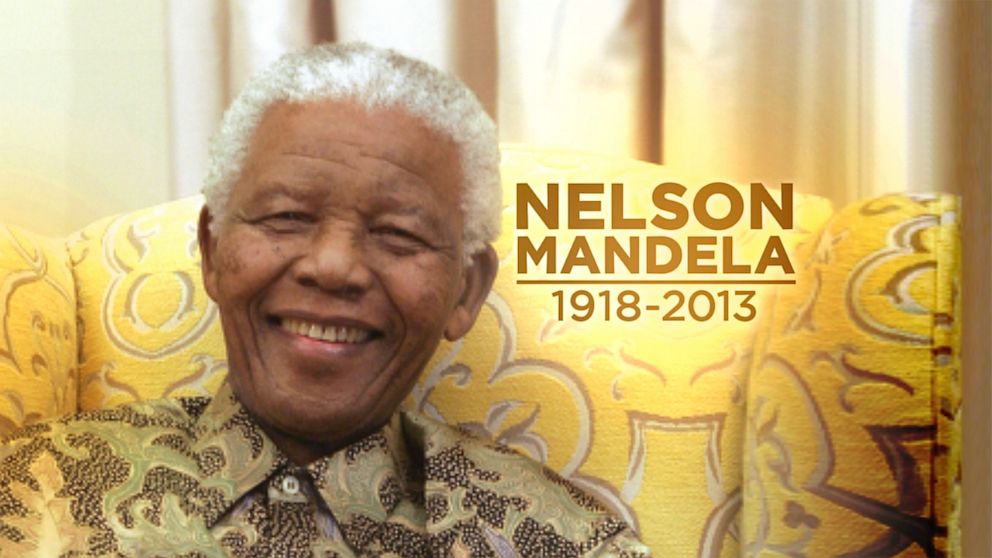
Photo: a.abcnews.com
Today ,we, at Globalisation for the Common Good Initiative (GCGI), mourn the loss of Nelson Mandela - a brave and inspirational champion of human rights, humility, justice, dialogue, cooperation, forgiveness, reconciliation, and the common good.
Nelson Mandela appreciated knowledge, wisdom and education. He cherished freedom and the ability of an individual to contribute to the whole of society. He always said that a good head and a good heart is always a formidable combination. And, he often measured a society by the way it treats its children, and the weakest members of the community.
He was the epitome of selflessness, grace and dignity. Rather than personal gain, he devoted his life to working on behalf of the common good. He was a once-in-a-lifetime, transformational figure.
By the force of his amazing personality, his incredible achievements, his sweeping vision, his enormous generosity and his admirable values, Nelson Mandela's presence served -- and will continue to serve -- as a beacon for all those who believed in the power of goodness eventually overcoming divisive evil.
Thank you very much Nelson Mandela- The Man for the Common Good - for all the good that you delivered to so many, and for all those that you helped, both in South Africa and well beyond. We are deeply indebted to you. We will never forget you.
I can only say that Africa and the world have lost a great leader, a friend and mentor. I am praying in my own way for Nelson Mandela and I ask The Almighty to ensure his continuous love, affection, guidance and wisdom for us all to continue his work and vision to do all we do in the interest of the common good. May God grant him eternal rest; he was, in the old idiom, a lovely man, who if required may still be a peacemaker in heaven.
And now I very much wish to share with you one of his most inspiring speeches, where he so beautifully and eloquently talked about goodness, wisdom, hope and the common good.
Mandela's wish for South Africa
10 May 2004
‘There are many theoretical debates about the meaning of democracy that I am not qualified to enter into. A guiding principle in our search for and establishment of a non-racial inclusive democracy in our country has been that there are good men and women to be found in all groups and from all sectors of society; and that in an open and free society those South Africans will come together to jointly and co-operatively realise the common good.’
Nelson Mandela bade farewell to Parliament on Monday 10 May 2004 – 10 years to the day after he was sworn in as South Africa's first democratically elected president – urging South Africans never to forget their past, but to use it as a guide in overcoming the challenges still facing the country.
His wish, he said, was that South Africans "never give up on the belief in goodness".
"Let us never be unmindful of the terrible past from which we come," Mandela told a special sitting of Parliament in Cape Town. That memory should be used "not as a means to keep us shackled to the past in a negative manner, but rather as a joyous reminder of how far we have come and how much we have achieved".
The country's history of division, injustice and suffering ought to "inspire us to celebrate our own demonstration of the capacity of human beings to progress, to go forward, to improve, to do better".
We signal that good can be achieved amongst human beings who are prepared to trust, prepared to believe in the goodness of people. "Historical enemies succeeded in negotiating a peaceful transition from apartheid to democracy exactly because we were prepared to accept the inherent capacity for goodness in the other.
"My wish is that South Africans never give up on the belief in goodness, that they cherish that faith in human beings as a cornerstone of our democracy."
Nelson Mandela's final address to Parliament
Address during a joint sitting of Parliament to mark 10 years of democracy in South Africa, Monday 10 May 2004, Cape Town
“Madam Speaker, Mister President, Honourable Members
We are deeply moved and humbled by your magnanimous gesture in inviting us to address this joint session of the two houses of parliament. We are aware, Madam Speaker, that an exception to the standing rules had to be made in order to allow a retired old pensioner, who is neither a member of parliament nor the serving head of state of any country, to address you.
We remember, Madam Speaker, that on this exact day ten years ago democratic South Africa celebrated its ceremonial birth with the inauguration of its first president and two deputy presidents.
We recall the joy and excitement of a nation that had found itself: the collective relief that we had stepped out of our restrictive past and the expectant air of walking into a brighter future.
The national climate was one of magnanimity and a great generosity of spirit. As a people we were enormously proud of what we had achieved, negotiating amongst ourselves a peaceful resolution to what was regarded as one of the most intractable situations of conflict in the world.
Hope and confidence
We were not unaware of or blind to the extent, depth and gravity of the challenges ahead of us as we set out on that day to transform, reconstruct and develop our nation and our society.
However, the overwhelming feelings in those early days of democratic nationhood were of hope and confidence. We had miraculously – as many said – transcended the deep divisions of our past to create a new inclusive democratic order; we had confidence that as a nation we would similarly confront and deal with the challenges of reconstruction and development.
Madam Speaker, this old man – who was greatly honoured by the nation and parliament to be elected founding president of democratic South Africa – notes with immense satisfaction and pride today the persistence and strengthening of that spirit of generosity, magnanimity and confident hopefulness about the future of our nation.
Merely observing this parliament inspires national pride and confidence. We, the people of South Africa, the Preamble to our Constitution states, believe that South Africa belongs to all who live in it, united in our diversity. The make-up of this Parliament confirms that the people of South Africa had spoken in all its diversity, asserting the strength of our unity in diversity.
Voice of the people
Allow us, Madam Speaker to congratulate you, the Chairperson of the National Council of Provinces and your deputies on your election to these important and prestigious positions in our democracy. Parliament is the voice of the people and you, the presiding officers, bear a heavy responsibility in ensuring that that voice is clearly heard in national affairs and that its role be protected and defended.
Similarly, our congratulations to all the members of parliament in whom the nation has put its trust. Yours is the almost sacred duty to ensure government by the people under the Constitution.
Madam Speaker, we also wish to extend congratulations to our president and to those that he has appointed as members of his national Cabinet and to the positions of provincial Premiers.
I have said it so often, but want to repeat it here at what must certainly be the last time that parliament will bend its own rules to allow me to address it: no president or prime minister in the history of this country can claim to have done more for the people and the country than has been achieved by President Thabo Mbeki.
National future
He is a modest man and I know he would prefer that I do not sing his personal praises, but his achievement as president and national leader is the embodiment of what our nation is capable of. Public acknowledgement of his achievements is to affirm ourselves as a nation, to assert the confidence with which we face our national future and conduct ourselves on the international stage.
Thank you, Mister President, for leading us with such vision and dedication to your task.
Assuming, Madam Speaker, that Parliament is not cavalier about its own rules and that this is my last address to this House: what do I wish for our democracy in this second decade that we have entered?
Let us never be unmindful of the terrible past from which we come – using that memory not as a means to keep us shackled to the past in a negative manner, but rather as a joyous reminder of how far we have come and how much we have achieved.
The memory of a history of division and hate, injustice and suffering, inhumanity of person against person should inspire us to celebrate our own demonstration of the capacity of human beings to progress, to go forward, to improve, to do better.
There are many theoretical debates about the meaning of democracy that I am not qualified to enter into. A guiding principle in our search for and establishment of a non-racial inclusive democracy in our country has been that there are good men and women to be found in all groups and from all sectors of society; and that in an open and free society those South Africans will come together to jointly and co-operatively realise the common good.
Never give up
My wish is that South Africans never give up on the belief in goodness, that they cherish that faith in human beings as a cornerstone of our democracy.
The first value mentioned under the founding principles of our Constitution is that of human dignity. We accord persons dignity by assuming that they are good, that they share the human qualities we ascribe to ourselves.
Historical enemies succeeded in negotiating a peaceful transition from apartheid to democracy exactly because we were prepared to accept the inherent capacity for goodness in the other. We live in a world where there is enough reason for cynicism and despair.
We watch as two of the leading democracies, two leading nations of the free world, get involved in a war that the United Nations did not sanction; we look on with horror as reports surface of terrible abuses against the dignity of human beings held captive by invading forces in their own country.
Cynicism and despair
We see how the powerful countries – all of them democracies – manipulate multilateral bodies to the great disadvantage and suffering of the poorer developing nations.
There is enough reason for cynicism and despair. But then we should take heart from our own experience and performance. Let us refrain from chauvinistic breast-beating; but let also not underrate what we have achieved in establishing a stable and progressive democracy where we take freedoms seriously; in building national unity in spite of decades and centuries of apartheid and colonial rule; in creating a culture in which we increasingly respect the dignity of all.
Inspiration
In a cynical world we have become an inspiration to many. We signal that good can be achieved amongst human beings who are prepared to trust, prepared to believe in the goodness of people.
Poverty, unemployment, preventable disease and ill-health, and other forms of social deprivation continue to blot our landscape as we strive to give content to the democratic commitment of a better life for all. Nothing impairs the dignity of a person so much as not being able to find work and gainful employment. HIV/Aids continues to threaten our future in a particularly frightening manner.
Our democracy must bring its material fruits to all, particularly the poor, marginalised and vulnerable. Our belief in the common good ultimately translates in to a deep concern for those that suffer want and deprivation of any kind.
Inclusiveness
We are inspired by the commitment that has emerged from all parties that have participated in the past elections. This parliament, leading into the second decade of democracy, promises to take seriously that contract with the people to improve their lives.
We are impressed by the spirit of inclusiveness exuded by our legislature and our executive. We are warmed by the spirit of generosity that continues to characterise our nation and national efforts.
Madam Speaker, we thank Parliament for this opportunity to greet the dawn of our second decade of democracy. We wish you well.
May God protect our people.
Nkosi sikelel’iAfrika. Morena boloka setjhaba sa heso.
God seen Suid-Afrika. God bless South Africa.
Mudzimu thatutshedza Afrika. Hosi katekisa Afrika.”
See the original source of this article:( SouthAfrica.info)
- Details
- Written by: Kamran Mofid
- Hits: 6204
‘Common Good Reaffirmed: A Vision for America and the World’
The concept of the common good, an idea that winds through time from Aristotle to Saint Thomas Aquinas, to the U.S. Founding Fathers and, on the way, through a number of popes and many others was the theme of a conference organised by the Centre for American Progress, and hosted at Georgetown University on October 18, 2006.
John Podesta, President and CEO of the Centre, opened the event ‘Common Good Reaffirmed: A Vision for America and the World’ by noting that in today’s tumultuous landscape, revisiting this old yet powerful moral principle is important. The panel’s speakers developed and expanded the notion of the common good as a concept in contemporary politics and society that needs to be reinvigorated for the good of all people—both in America and beyond, Podesta noted.
The Conference’s keynote speech was delivered by President Bill Clinton. Speaking at his alma mater, under the banner of securing the “common good,” President Clinton reflected on his eight years in office, and delivered, what I can only describe as a very moving and inspiring speech on the common good, the philosophy, meaning and action.
As the Founder of the Globalisation for the Common Good Initiative, I am very pleased to share with you a summary of the speech and also a link to a video where you, too, can watch the entire lecture.
President Bill Clinton on "Securing the Common Good"- A comment on a Financial Times editorial (November 12, 2013)
- A reflection on ‘Evangelii Gaudium’, Apostolic Exhortation of Pope Francis
- Try not to become a man of success, but a man of value- Albert Einstein
- Iran and the P5+1: Triumph of Diplomacy for the Common Good
- Prof. Mofid to speak at the 3rd CGDC Annual Meeting, 3-4 December 2013, Vienna