
- Details
- Written by: Kamran Mofid
- Hits: 4450
Detroit and Windsor
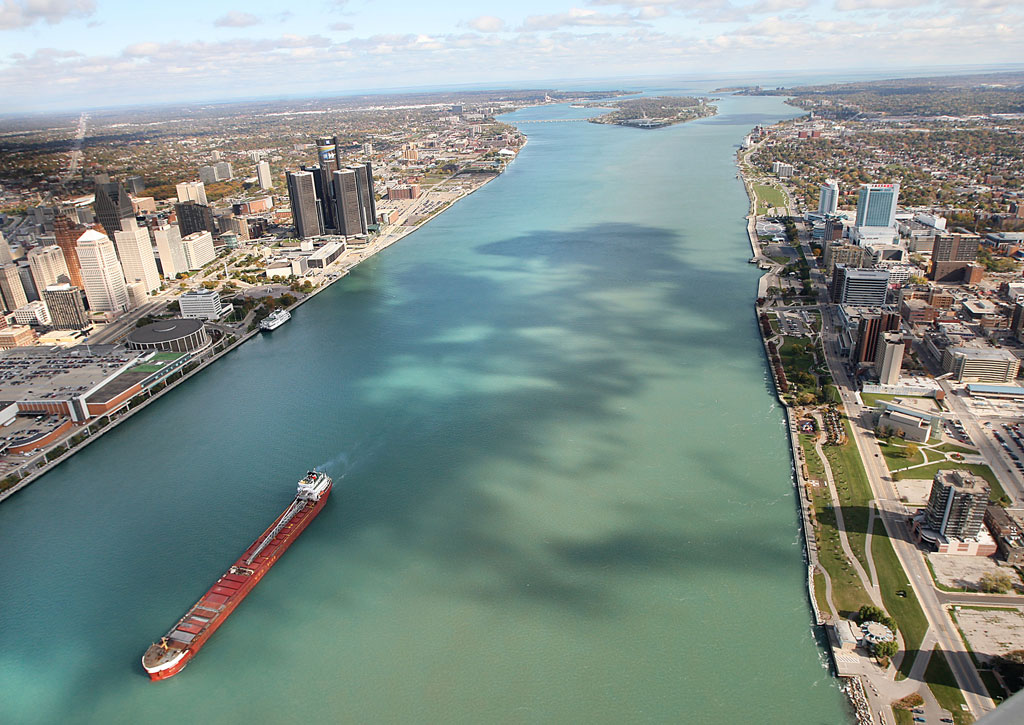
Photo:windsorstar.com
Detroit (and Windsor) struggle with tar sands refinery – in pictures
This series of photographs takes a closer look at the people the petroleum coke piles are affecting, the areas around the stockpiles and where it is being produced.
First, a personal note: I was greatly saddened to read the articles below and to see the pictures. I hold a special place in my heart for Windsor, Ontario. My wife, Annie, and I emigrated to Canada in the mid-1970s. We went to Windsor, where my wife got a position at Windsor Cancer Clinic, Metropolitan General Hospital, whilst I went to the University of Windsor, where I studied for my BA and MA in Economics. Our oldest son, Kevin was born in Windsor in 1982. Whilst we were in Windsor, my brother, Kambiz, and my sister, Kiyan, were in Windsor too, studying at the University of Windsor. Moreover, my sister was married to Sasan in Windsor, whom was studying at the University with us all. Moreover, we were very fortunate to meet and make lasting friendship with many wonderful friends in Windsor.
"One day in November, mysterious black piles appeared on the banks of the Detroit River, not far from the Motor City's downtown and right next to the Ambassador Bridge, the busiest international crossing in North America. These huge stockpiles of petroleum coke, the byproduct of refining tar sands oil at the Marathon refinery in south-west Detroit, are owned by Koch Carbon, run by businessmen Charles and David Koch."
See the pictures:
http://www.guardian.co.uk/world/gallery/2013/jun/07/detroit-petroleum-coke-environment-pictures
See the latest report on the Most Destructive Project on Earth: CANADA’S TOXIC TAR SANDS (25 January 2024)- Canadian tar sands pollution is up to 6,300% higher than reported, study finds
Read more:
Detroit's mountains of petroleum coke are 'dirtier than the dirtiest fuel'
http://www.guardian.co.uk/world/2013/jun/07/detroit-petroleum-coke-dirty-keystone
Mining in Canada: No native spirituality, No children dancing, No prayers- Ottawa urged
Mother Earth is Crying: A Path to Spiritual Ecology and Sustainability
http://www.gcgi.info/blog/395-mother-earth-is-crying-a-path-to-spiritual-ecology-and-sustainability
- Details
- Written by: Kamran Mofid
- Hits: 2913
The Big Brothers are watching you: George W Obama, Google, Amazon, Facebook, Apple, Yahoo and Microsoft
“It's hard to be optimistic, for technology has made the pickings available too rich, too tempting, for the spies to resist. And, strangest of all, it is us who made this possible – by becoming informants on ourselves.”
“Among the guests at the fabled Bilderberg meeting, held this weekend just outside London, are the top brass of Google, Amazon and Microsoft. How appropriate they should be there, alongside luminaries of the US political and military establishment. For this was the week that seemed to confirm all the old bug-eyed conspiracy theories about governments and corporations colluding to enslave the rest of us.- Details
- Written by: Kamran Mofid
- Hits: 6748
Those familiar with my blog postings know well that I am a firm believer in volunteerism. The whole foundation and path of the GCGI has been nothing but a journey in and for volunteerism and volunteering for the common good* (See below for more).
The other day I came across a wonderful article which includes the results of a scientific research and study on the benefits of volunteerism, both physical and emotional, which I very much wish to share with you. It goes a long way to support and verify my claim on the wisdom and benefits of volunteerism.
In the said article the author-Dr. Stephen Post- sites the 2010 Do Good Live Well Survey, released by United Healthcare and Volunteer Match, based on a survey of 4,500 American adults. 41 percent of Americans volunteered an average of 100 hours a year. 68 percent of those who volunteered reported that volunteering made them feel physically healthier. Moreover,
|
• |
89% report that "volunteering has improved their sense of well-being" |
|
• |
73% agree that "volunteering lowered their stress levels" |
|
• |
92% agree that volunteering enriched their sense of purpose in life |
|
• |
72% characterize themselves as "optimistic" compared to 60% of non-volunteers |
|
• |
42% of volunteers report a "very good" sense of meaning in their lives, compared with 28% of non-volunteers |
|
• |
96% said volunteering made them "feel happier" |
I very much encourage you to read Dr. Post’s article (noted below). However, before concluding this posting, I wish to continue with the following questions:
So how does the love of others change us? How are we changed when we extend active love?
“First, when so engaged we are freed from preoccupation with the self and its problems, with rumination, and with other destructive emotions. Disappointment and betrayal are unavoidable in life. We get sucked down into a negative vortex of bitterness, despair, and resentment. Simple acts of loving kindness can transform us emotionally. It is said that if you do not feel happy, smile anyway, and happiness will likely follow. The keys to forgiveness are acts of love coupled with patience, because with the passing of time our perspectives mature.
Second, life becomes interesting. Selfishness is boring. When we seek the happiness, security, and well-being of another in creative love the world becomes full and engaging. Sir John Templeton once wrote that it is impossible to be bored if you love your neighbor.
Third, loving others gives us a reason to develop our gifts. Students learn more when they have to tutor younger peers, or when they learn in groups and are responsible for teaching one another. Most great people have fine-tuned their talents in the service of the neighbor.
Fourth, we make deeper friendships. Our friends are no longer the people we just hang out with, but they are the ones with whom we find exhilarating common cause and commitment. Finally we have serious friends, the kind who are loyal and want to keep us on our course and true to our higher selves.
Fifth, loving others is a source of hope because as active agents we use our strengths to make a difference in the life of another, and we can therefore have greater confidence in shaping the future. This is an active hope, rather than the passive variety that just waits for a surprise.
Sixth, loving others is a source of joy. Happiness is to joy as optimism is to hope. Joy, like hope, is not a mere innate disposition, but a virtue fine-honed through bringing creative goodness into the life of the beloved. Thus, we should not worry much about reciprocity, because the benefits are already there inwardly. As they say, “pay it forward,” although a note of gratitude is nice.
Seventh, loving others, so long as one also cares for the self and its limits both physical and psychological, is associated with self-reported physical health”
Read more:
*Kamran Mofid, “Opening Remarks: In Gratitude for your Friendship and Support”
*Kamran Mofid, “Why Love, Trust, Respect and Gratitude Trumps Economics”
http://www.gcgi.info/blog/177-why-love-trust-respect-and-gratitude-trumps-economics
Stephen Post, “How Does Love of Others Change Us?”
https://www.bigquestionsonline.com/content/how-does-love-others-change-us
Press Release: Volunteering Reduces Risk of Hypertension In Older Adults, Carnegie Mellon Research Shows (Thursday, June 13, 2013)
http://www.cmu.edu/news/stories/archives/2013/june/june13_volunteeringhypertension.html
- Where has all the Wisdom gone?: "Destitution, hardship and hunger on a large scale" in Britain, and £37bn for Helmand province!
- For God’s sake, we are Citizens not Customers: Justice cannot be for Sale or Profit
- The damning consequences of the neo-liberalisation and privatisation of Sweden
- The shaming of the neo-liberal, privatised Australia
- Everything you wished to know about “Austerity”: Watch this Video