- Details
- Written by: Kamran Mofid
- Hits: 3752

“I found the greatest love of all, inside of me, the greatest love of all, is easy to achieve. Learning to love yourself, it is the greatest love of all.” An excerpt from the song, “The Greatest Love of All.”-Photo: alicehocker.com
‘The song "Greatest Love of All," written by Michael Masser and Linda Creed (performed by Whitney Houston) contains the following lyrics: "I found the greatest love of all/Inside of me/ ... Learning to love yourself/It is the greatest love of all." There are many types of love that we have for the people in our lives: love for a romantic partner or spouse, for our family, for our children, for our friends, for humanity, in general, and for ourselves. Which of these is most important? Which should be our first priority? Is self-love the "Greatest Love of All"? Or is it selfish and self-indulgent?’- Leslie Karen Lobell
Love Thyself: A Reflection by Harold W. Becker
Founder and President, The Love Foundation
“There is a great wisdom in the idea to “know thyself.” There is an even more amazing truth to “love thyself.” This is not love in a selfish sense, rather to fully accept ourselves just for who we are here and now without condition or limitation. The better we begin to know, understand and love ourselves, the greater we develop love for others and together, the more compassionate world we create.
The process of loving unconditionally begins by turning within and acknowledging our potential to love – even if we do not currently believe it is possible. We have to clear away our thick layers of old worn out and limiting beliefs that hide our light. We also need to look in the mirror of life and realize our current state of personal affairs. How much do we love? Why do we give in to fear and doubt? Why are we afraid to accept and love our self? What keeps us from loving all others? Do we even know what love really means to us?
In every moment we have the opportunity to embrace our natural ability to love unconditionally and to share this love with all others. Thankfully, we are not alone in this endeavor. We have our Higher Self, our indwelling higher nature that knows how to guide us personally through the maze of illusion and into our unconditionally loving selves. In contrast to our human side and focus, this is the spiritual part of us that understands and embodies love and knows the big picture. It brings to us the right ideas, impulses, people, lessons, and experiences that best encourages us how to love more deeply and release the judgments and opinions that bind us. It is ever ready to help us realize and use the higher response of love. We need only acknowledge this guiding force and potential within ourselves to reap the gifts.
Pursuing a life of unconditional love is an incredible journey of ever expanding freedom and joy, peace and harmony. The more we engage in it, the more our lives become enriched by this energy. Willingness is the key that unlocks our potential. Without our willingness to go beyond current understandings of personal and societal beliefs and to even try it out, unconditional love remains little more than a pair of words. It is especially during challenging experiences and events that touch us at our very core, that our readiness to find and use the qualities of forgiveness and love become vital to our individual and collective wellbeing. Without this willingness, we often shut the door to a loving response that could change generations of lives in a single moment.
The journey is as simple as embracing the love we already have within. We are the only ones that make it difficult or delay its attainment in our life. Experiencing and sharing love is the intention; patience and practice are how we get there. Whether we accept it or not, love is the only force that resolves the issues of life. It is the energy that dissolves the limitations of hatred, separation, anger, greed, ignorance and the many other negative and destructive forces that pass through and around us each moment. It is up to us to integrate and use the energy of love to transform the limitations into unlimited possibilities that benefit all.
It is our ultimate destiny to love unconditionally. It is also our freedom, right, privilege, and our gift to ourselves and life around us. Not only does it generate harmony and joy, wisdom and understanding, it brings reason and purpose to life. Be inspired to seek love for yourself and your neighbor and make this a better world for all. We have much to gain and nothing to lose in accepting and using unconditional love. So give it a try, you may never experience life the same way again.”
Original source of this article: Mailshot by the Love Foundation
Read more:
Why Love, Trust, Respect and Gratitude Trumps Economics: Together for the Common Good
- Details
- Written by: Kamran Mofid
- Hits: 15105
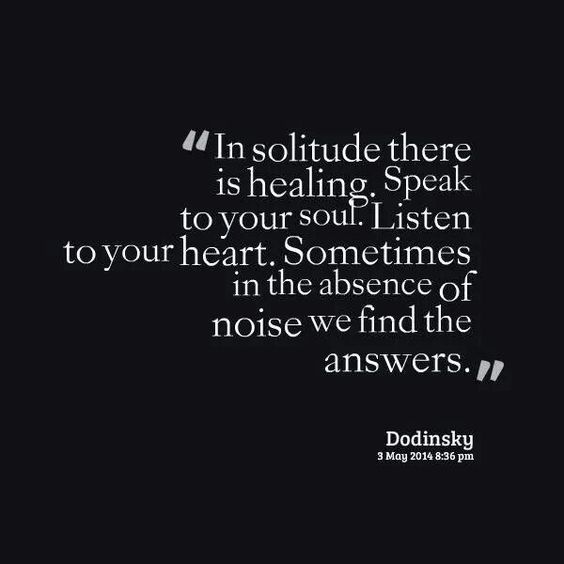
Today, in the world gone mad with gadgets and the so-called “Social Media”, people everywhere, it seems have no time left for themselves. No time for solitude, contemplation, reflection, thinking and meditation.
In all, in the wise words of William Henry Davies:
What is this life if, full of care,
We have no time to stand and stare.
No time to stand beneath the boughs
And stare as long as sheep or cows.
No time to see, when woods we pass,
Where squirrels hide their nuts in grass.
No time to see, in broad daylight,
Streams full of stars, like skies at night.
No time to turn at Beauty's glance,
And watch her feet, how they can dance.
No time to wait till her mouth can
Enrich that smile her eyes began.
A poor life this is if, full of care,
We have no time to stand and stare.
Today, everybody, young and old, is constantly Facebooking, tweeting, texting, Iphoning, IPadding, emailing, surfing the net, Goggling, Amazoning, and watching TV. Supposedly busy or indeed pretending to be!
All this, supposedly, to making us feel as if we are connected. But, connected to what, to whom and for what purpose? We do not know!
A pertinent question surely should be "What happens when constant communication replaces thoughtful reflection?" I'm not saying that the immediacy of the Internet is harmful, but rather how we tend to thrive on it. Instead of engaging with each other or just ourselves, it seems we are seeking something "out there" while ignoring real sustenance for thought.
In this ‘busy’ world, when we are virtually constantly connected to somebody else, somewhere else, then, where is the time for solitude, contemplation and connection between ‘Myself and Me’? To my mind, this must be the biggest question we should all ask of ourselves.
After all, "solitude gives us room, at least in the mind, to take a break from the churn."
Popular, commercilised culture, it seems, is confused about solitude. The image of 'happiness', conveyed by television and advertising, is of a merry group of friends, while being 'alone' is considered almost synonymous.
Before I procceed further, let me say that by alone in solitude, I do not mean lonliness and isolation. There is a big difference between them.
Loneliness
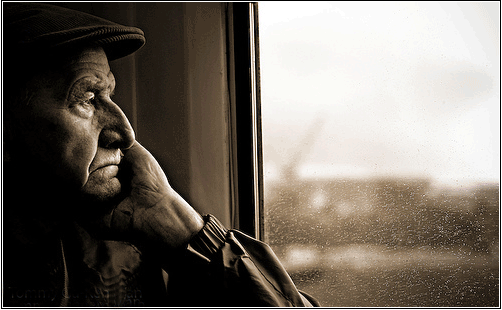
Photo: bing.com/images
1. Loneliness is a painful, negative state.
2. It is where we feel alone, and cut off and estranged from other people. Thus, we may feel as if we are excluded, unwanted, unimportant or unnoticed.
3. We can be surrounded by people we know and love and still experience feelings of intense loneliness.
4. Loneliness feels like punishment or rejection. It is rooted in a sense of deficiency or inadequacy.
5. It is something that depletes us, and is imposed on us.
6. Loneliness can lead to self rejection, and even to self loathing and despair.
Solitude
1. Solitude is a positive state.
2. It is where we are perfectly happy to be by ourselves, and relish and enjoy our own company.
3. Solitude can help us get in touch with, or engage with, our true self. It allows us to reflect on ourselves, others, our life, and our future.
4. Often, solitude is a springboard to greater self-awareness, greater creativity, fresh insights, and new growth.
5. Solitude is something we choose. It is something that restores and builds us up.
6. Solitude grounds us in who we are – and that enables us to reach out and give to others, to be for the common good. (Source: onlinecounsellingcollege.com)
And now a short introduction to solitude:
What Is Solitude?
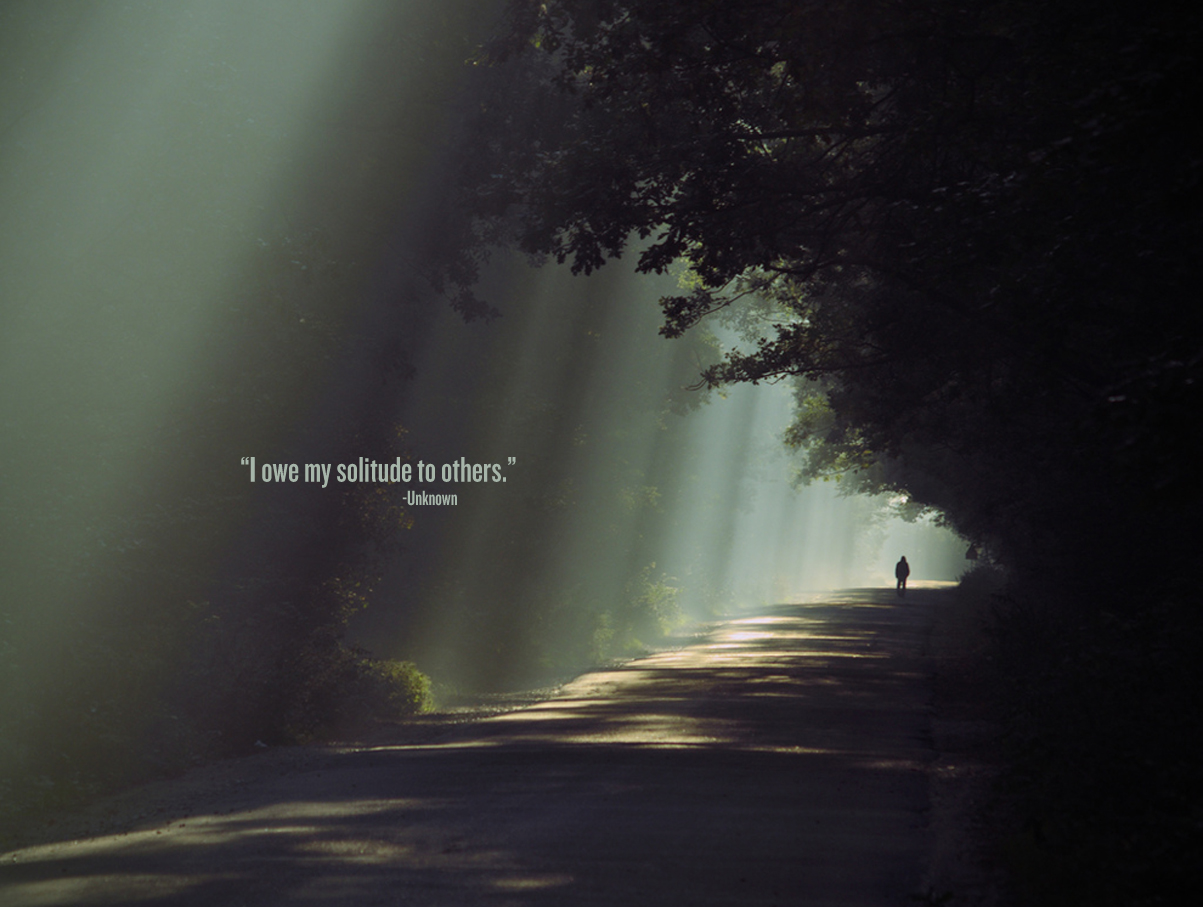
Loneliness is marked by a sense of isolation. Solitude, on the other hand, is a state of being alone without being lonely and can lead to self-awareness
‘As the world spins faster and faster—or maybe it just seems that way when an email can travel around the world in fractions of a second—we mortals need a variety of ways to cope with the resulting pressures. We need to maintain some semblance of balance and some sense that we are steering the ship of our life.
Otherwise we feel overloaded, overreact to minor annoyances and feel like we can never catch up. As far as I'm concerned, one of the best ways is by seeking, and enjoying, solitude.
Solitude is the state of being alone without being lonely. It is a positive and constructive state of engagement with oneself. Solitude is desirable, a state of being alone where you provide yourself wonderful and sufficient company.
Solitude is a time that can be used for reflection, inner searching or growth or enjoyment of some kind. Deep reading requires solitude, so does experiencing the beauty of nature. Thinking and creativity usually do too.
Solitude suggests peacefulness stemming from a state of inner richness. It is a means of enjoying the quiet and whatever it brings that is satisfying and from which we draw sustenance. It is something we cultivate. Solitude is refreshing; an opportunity to renew ourselves. In other words, it replenishes us.
We all need periods of solitude, although temperamentally we probably differ in the amount of solitude we need. Some solitude is essential; It gives us time to explore and know ourselves. It is the necessary counterpoint to intimacy, what allows us to have a self worthy of sharing. Solitude gives us a chance to regain perspective. It renews us for the challenges of life. It allows us to get (back) into the position of driving our own lives, rather than having them run by schedules and demands from without.
Solitude restores body and mind. Lonelinesss depletes them.’ (Source: psychologytoday.com, 1 July 2003)
- Details
- Written by: Kamran Mofid
- Hits: 5517

Lord Robert Skidelsky is professor of political economy at Warwick University. He is the co-author, with Edward Skidelsky, of How Much Is Enough: The Love of Money and the Case for the Good Life.
In a recent article, “Economics faces long needed upheaval as students demand right to dissent” Prof. Skidelsky, has very eloquently noted that we may be witnessing the beginning of the end of the neo-liberal capitalist consensus that has prevailed throughout the west since the 1980s – and that many claim led to the economic disaster of 2008-2009.
This is music to my ears and thus, I very much wish to share the “Good News” with you.
Lord Skidelsky notes that: