- Details
- Written by: Kamran Mofid
- Hits: 16404

Photo: Anne Mofid
“Father, Forgive” - these two words which I discovered at the ruins of Coventry Cathedral in 1973 changed the course of my life.
This is the story I must tell: A Story of Suffering and Hope
It is 42 years (as of 2015) that I first visited Coventry Cathedral. It had a profound impact on me, hugely influencing and inspiring me to be who I am and what I now do.
It was, if I remember rightly, on an early morning in November 1973. A few months earlier, I had met a wonderful girl from Coventry in Oxford, where we were living and studying, a girl who later became my dear wife, Annie. In July 1974 we were married at the old, historical Saint Osburg’s in Coventry.
In November 1973 Annie had invited me to her home town of Coventry, so that she could introduce me to her parents. It was a memorable occasion for me, leading to a long and loving relationship between us, which I cherish dearly.
We visited the cathedral. I can recall it was a cold grey day. I was only 21 years old, and had arrived in England, only a couple of years earlier from Iran, as a student to further my studies. I did not know anything about Coventry, its bombed and destroyed Cathedral, its industrial heritage, and moreover, I did not know much about Christianity, except what I had heard about Jesus and Mary, which in Iran I knew as ”Hazrat-e Isa” and “Maryam-e Moghadas” (Prophet Jesus and Holy Mary).
To cut a long story short, Annie gave me a quick tour of the Cathedral, the old, destroyed one and then took me down the stairs to the new one.
For sure, I didn't understand every word Annie was telling me. Indeed, I suspect I was lost at times but, as I recall, I could not believe what I was seeing and hearing.
Later on, in my search to learn more about what I had seen in Coventry Cathedral on that November day, I discovered:
that in just one night more than 43,000 homes, 71 factories, the entire city centre, two hospitals, two churches and the police station had been destroyed by 449 German bombers, dropping 30,000 incendiary bombs. An estimated 568 people had died in the raid on the first night of bombing, with over one thousand people sustaining serious and life-threatening injuries;
that as a result of their efforts, the Nazis coined the verb Coventrierung (literally, to Coventrate) to describe total annihilation of a city through aerial bombardment;
that the next morning, while the rubble was still smouldering, Richard Howard, the cathedral Provost, had taken a piece of chalk and written on the sanctuary wall: “Father, Forgive”;
that Richard Howard had made a bold move to break the cycle of vengeance. When the 1940 BBC Christmas Day service was broadcast from amongst the ruins of the cathedral, he vowed that, once the war was over, the cathedral would work with the people who had previously been their enemies “to build a kinder, more Christ-like world”;
that, inspired by the cathedral’s stonemason, who had made a wooden cross from the debris, Provost Howard made a cross from the nails that originally held the roof together. The destroyed altar was remade from the rubble, the crosses were placed on the new altar and the words “Father, Forgive” were inscribed on the wall behind;
that after the war ended, the cathedral donated a “Cross of Nails” to the Kaiser Wilhelm Memorial Church in Berlin, which was also destroyed in the war. Today there are over 170 Cross of Nails Centres across the globe, each one owning a cross made from three nails from Coventry Cathedral, symbolizing the road to forgiveness and reconciliation.
Father, Forgive
Every weekday at noon in the new cathedral (and in the ruins on Fridays – a service in which I have participated on many occasions over the years) the Coventry Litany of Reconciliation is prayed. In the context of World War Two, the cathedral's destruction and the work of the Community of the Cross of Nails which rose from the ashes, this prayer is the ultimate message of hope and healing for a better life from Coventry to the world:
All have sinned and fallen short of the glory of God.
The hatred which divides nation from nation, race from race, class from class … Father, Forgive.
The covetous desires of people and nations to possess what is not their own … Father, Forgive.
The greed which exploits the work of human hands and lays waste the earth … Father, Forgive.
Our envy of the welfare and happiness of others … Father, Forgive.
Our indifference to the plight of the imprisoned, the homeless, the refugee … Father, Forgive.
The lust which dishonours the bodies of men, women and children … Father, Forgive.
The pride which leads us to trust in ourselves and not in God … Father, Forgive.
Be kind to one another, tender-hearted, forgiving one another, as God in Christ forgave you.
Father Forgive: It’s Impact on Me
In short, looking back, I believe one experience of that day, has had a major impact on me. That was when Annie and I were at the ruins of the old cathedral. I saw the ruined altar, with a charred cross, a replica of the original, its burnt blackness in startling contrast to the clean polished wood of most church crosses I had seen in Oxford or London. Then on the wall behind the altar, I noticed two words that had been carved into the red sandstone, their letters a foot high: FATHER, FORGIVE.
I asked Annie: “Who is the Father?” and “Forgive who?” She tried to the best of her ability to answer me. But, I am sure she knew that I was not getting it:
Father, and the Son, and the Holy Spirit, All in one! Forgiving the Germans, who had just destroyed the cathedral and the city! Wow! What next?!
Now, who would have guessed, who could have believed, one day, that young man inspired and fuelled by what he had seen in an early morning visit to Coventry Cathedral in 1973, would end up co-founding the Centre for the Study of Forgiveness and Reconciliation at Coventry University in 1996: This is the story, “My Coventry Story” which I would love to share with you all.
As it has been said, Storytelling has the capacity to touch our deepest emotions and it can allow us to peer at beauty. We glance at our own creativity and breathe our own thoughts. But more than that: Storytelling is also a wonderful path to set ourselves free, by opening our hearts to others and letting them in; becoming one with one another.
Because, after all, as many have reminded us, the best way to know truth, wisdom or beauty is to try to express it and share it with others.
I think Bill Clinton has said it most eloquently:
“I learned a lot from the stories my uncle, aunts and grandparents told me: that no one is perfect but most people are good; that people can’t be judged by their worst or weakest moments; that harsh judgements can make hypocrites of us all; that a lot of life is just showing up and hanging on; that laughter is often the best, and sometimes the only response to pain.
“Perhaps most important, I learned that everyone has a story – of dreams and nightmares, hope and heartache, love and loss, courage and fear, sacrifice and selfishness. All my life I’ve been interested in other people’s stories. I wanted to know them, understand them, feel them. When I grew up into politics, I always felt the main point of my work was to give people a chance to have better stories.” Bill Clinton, My Life
My Coventry Story: Part I- The Early Years 1973-2000
Annie and I got married on 27 July 1974. After a couple of years working in Coventry, we emigrated to Canada in 1976. After a short period in Calgary and some travelling, we eventually settled down in Windsor, Ontario, where I embarked for my economics studies at the University of Windsor and Annie began her work as radiotherapist at the Windsor Cancer Clinic. (Windsor was twinned with Coventry in 1963- a fact we did not know in 1976).
We had a most wonderful time in Windsor and in 1982, after I had received my MA in economics, and the birth of our son, Kevin, we returned home to Coventry, and I started my PhD in economics at University of Birmingham.
Whilst studying at Birmingham, I was also a teaching assistant in economics. I also taught at Bristol University, Wolverhampton Polytechnic (now University) and a couple of six-form colleges in Coventry.
In 1986, just after the birth of our second son, Paul, I was awarded my PhD and soon after I was given a full time post as senior lecturer at the Department of Economics at Coventry Polytechnic (now University).
Soon after my appointment, a dear friend of mine from New Zealand, Prof. Kevin Clements, visited me at Coventry. I had organised a dinner at a small, cosy restaurant near the cathedral. He asked me if a dear friend of his from New Zealand, who lived in Coventry, could join us too.
I did not know at the time that I was going to meet a globally known and respected person, a man that was going to have a major impact on my life in years to come.
They arrived at the restaurant where I was waiting for them. Kevin introduced me to Canon Paul Oestreicher, a residentiary canon of Coventry Cathedral and director of the Cathedral's Centre for International Reconciliation, a member of the General Synod of the Church of England, Chair of Amnensty International UK from 1975-1979; Vice President, Campaign for Nuclear Disarmament (CND); and a lifetime worker for peace and social Justice.
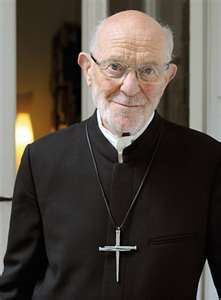
Canon Paul Oestreicher
Paul and I became very good friends. I shared many wonderful and enriching times with him at his office at the cathedral, listening to his stories, learning from his wisdon and insight. A truly wonderful man. We also had many wonderful times, sharing food and drinks at our respective homes, alongside our families.
Paul introduced me to senior figures at the cathedral, including Bishop Barringtomn Ward and Provost John Petty and many others. We also organised a few conferences together and gave joint lectures. I thank him for all his friendship and support. Paul was also very helpful when he made it possible for us to have the opening ceremony of a major conference which I had organised on Iran in March 1996, to be held at the cathedral, an occasion that I am sure many around the world still remember.
I am also grateful for his support, advice and input, when I organised the first Conference on “Forgiveness and Reconciliation” at Coventry university in March 1995.
Then, my life changed for the better again, if I may say so, when I met another great man. He was like a father to me, very kind, understanding and supportive. Together we later co-founded the Centre for the Study of Forgiveness and Reconciliation. That man was the late George Bull.
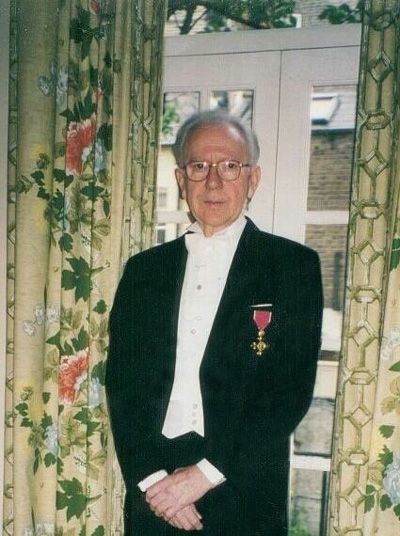
George Bull
Let me quote a passage or two from the eulogy I delivered at a mass in his honour at Plater College, Oxford:
“In 1986 George became the director of the Anglo-Japanese Economic Institute in London. This is when, and where, I met him first. He introduced me to Japan and to many Japanese friends and facilitated some of my trips to Japan. We did many national and international conferences together, including: Japan and the U.K. Economy; Forgiveness and Reconciliation; NAFTA and the EU; Japan and the Global Economy; and Iran and the Emerging Global Order.
“We also together - in association with and supported by the University, the Cathedral and the City Council - instigated and co-founded the Centre for the Study of Forgiveness and Reconciliation at Coventry University and as part of its work, in association with the Ambassadors’ Lecture Series, which we had founded already, invited international speakers including the former presidents of Ireland and South Africa, namely, Mrs. Mary Robinson, and F.W. de Klerk to deliver lectures at Coventry Cathedral. Moreover, we also invited other international speakers including Ambassadors of Japan, Germany, Italy, Egypt, Mexico and the High Commissioner of Canada to deliver lectures on the need for dialogue and mutual respect among different cultures and civilisations at Coventry’s St. Mary’s Guildhall. We were delighted when Mrs. Robinson accepted our invitation to become the Patron of our newly founded Centre. Our joint activities resulted in many publications. At George’s suggestion and with the kind support of Canon Paul Oestreicher and Provost John Petty, I received an invitation from Sir Richard Branson to accompany the Coventry delegation (City and Cathedral) to Hiroshima for the unveiling ceremony of the Statue of Reconciliation at HiroshimaPeaceMuseum, representing Coventry University.
“George, amongst many other publications and journals, had founded and edited International Minds to bring together psychological and political aspects of international affairs. I was very honoured when he invited me to join the journal as an advisor and to manage the publications on the relationship between economics, politics and business with ethics, spirituality, and faiths. He was also most helpful in focusing my mind on my forthcoming book Globalisation for the Common Good.
“George taught me that by respecting and valuing others, I would start to respect and value myself more fully. He taught me to love and enjoy the world, with all its wonders of diversity and beauty. He encouraged me to always take action in the interest of the common good. We also, on many different occasions, had the opportunity to share with each other, our love and interest of old civilisations and cultures, especially Japan, Italy and Persia. I cannot be more thankful and grateful to him.
“I can only say I have lost my greatest friend and mentor. I will never forget his loving smile, warm words and positive attitudes towards me. I am praying in my own way for my friend George and I ask The Almighty to ensure George’s continuous love for me to inspire me to do what I can for the common good. God grant George eternal rest; he was, in the old idiom, a lovely man, who, if required, may still be a peacemaker in heaven.”
Remembering my friend George Bull, OBE KCSG FRSL (1929-2001)
Remembering an extra ordinary and inspiring day, 11 March 1996, when President Mary Robinson came to Coventry, the first visit to Coventry by an Irish President
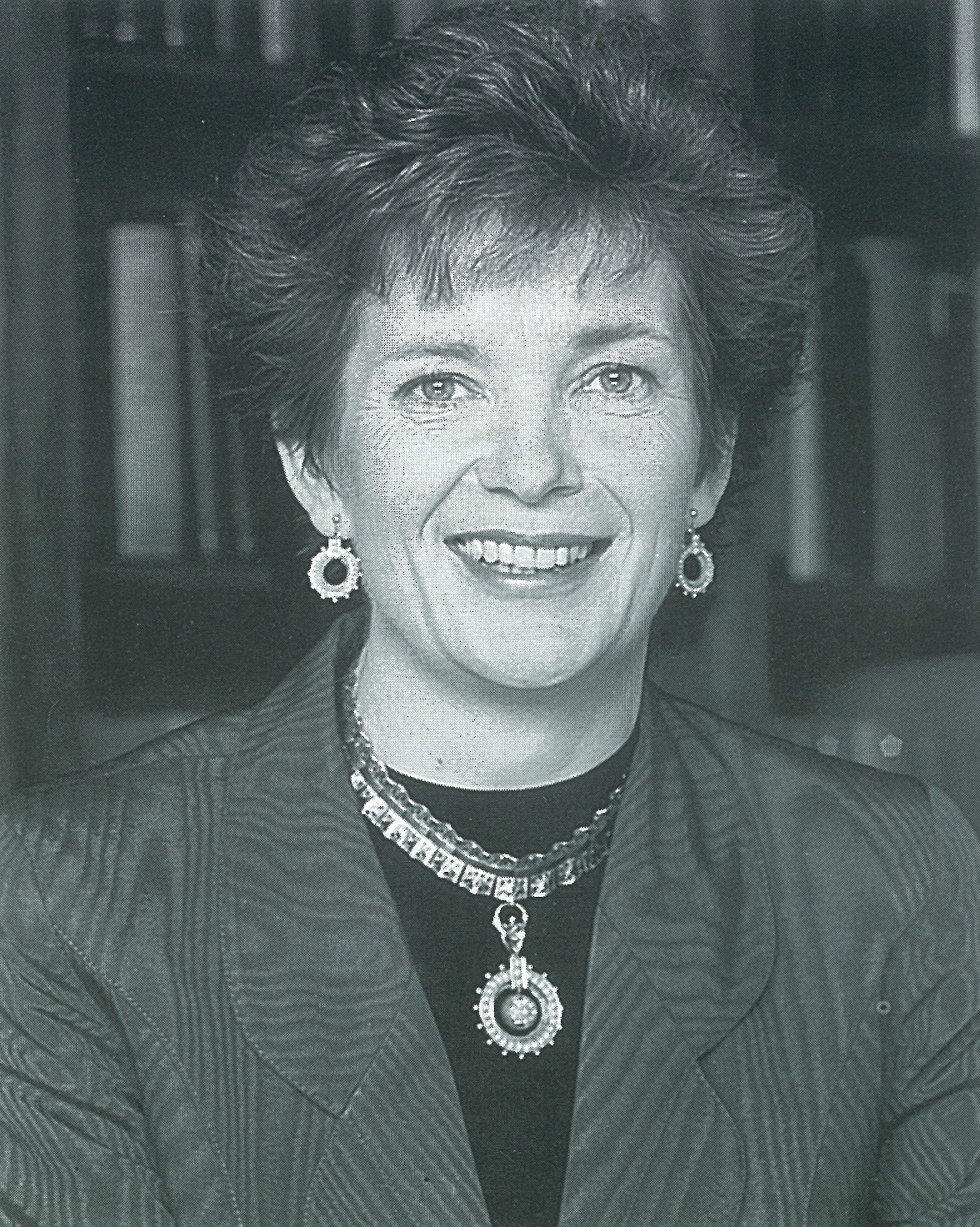
President Mary Robinson
“I am deeply honoured to have been invited to inaugurate your Centre for the Study of Forgiveness and Reconciliation with this lecture, and to act as the Centre’s Patron.” -Mary Robinson, President of Ireland
I remember this day very affectionately, with pride and honour. A few months earlier, George Bull and I had sent a letter, if my memory serves me right, through the Irish Ambassador in London (a close personal friend of George) to President Robinson, inviting her to deliver the inaugural lecture of the Centre for the Study of Forgiveness and Reconciliation, and to act as the Centre’s Patron.
Then, on 12 January 1996 I received a fax from the Irish Embassy in London with the most pleasing and wonderful news, that President Mary Robinson has most graciously accepted our invitation to come to Coventry, to deliver the inaugural lecture of the Centre for the Study of Forgiveness and Reconciliation, and to act as the Centre’s Patron.
I could only think about that November day in 1973, when Annie and I were standing in front of the Old Altar at the ruins of the Cathedral, when I had asked Annie, “Who is the Father” and “Forgive Who?”.
I wonder if you can put yourself in my place and feel the joy that I was feeling, and feel the gratitude that has taken me over as I write?
All in all, a most memorable day for us all. Now I wish to share with you the text of the President’s Address at Coventry Cathedral, followed by the booklet I had prepared to announce the establishment of the Centre:
President Mary Robinson’s Address at Coventry Cathedral, Monday 11 March 1996
Centre for the Study of Forgiveness and Reconciliation
I got on with the work of the Centre, putting a research team together, organising meetings, lectures, research proposals, writing working papers, etc. As part of the ongoing international activities of the Centre, George and I submitted a letter of invitation to former President F. W. de Klerk of South Africa, to give the Second Lecture of the Centre at Coventry Cathedral.
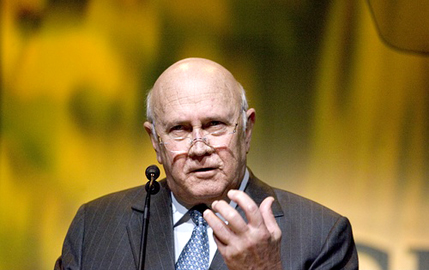
Former President F.W.de Klerk
I was delighted and honoured when a few weeks later I received a fax that he had graciously accepted our invitation, and on 2 September 1997 Mr de Klerk came to Coventry, delivering his timely lecture “Principles of Forgiveness and Reconciliation” at the Cathedral.
Below you can read the text of his speech:
Former President F.W. de Klerk’s Address at Coventry Cathedral, 2 September 1997
Cecil Angel Cup Coventry University
(The Cecil Angel Cup is awarded to staff or students of the University, either individually or on a group basis, for significant contribution to the development and/or well being of the University and the wider community, and/or significant enhancement of the reputation on the Institution.)
Dr. Kamran Mofid, The 1995-96 Recipient of Cecil Angel Cup
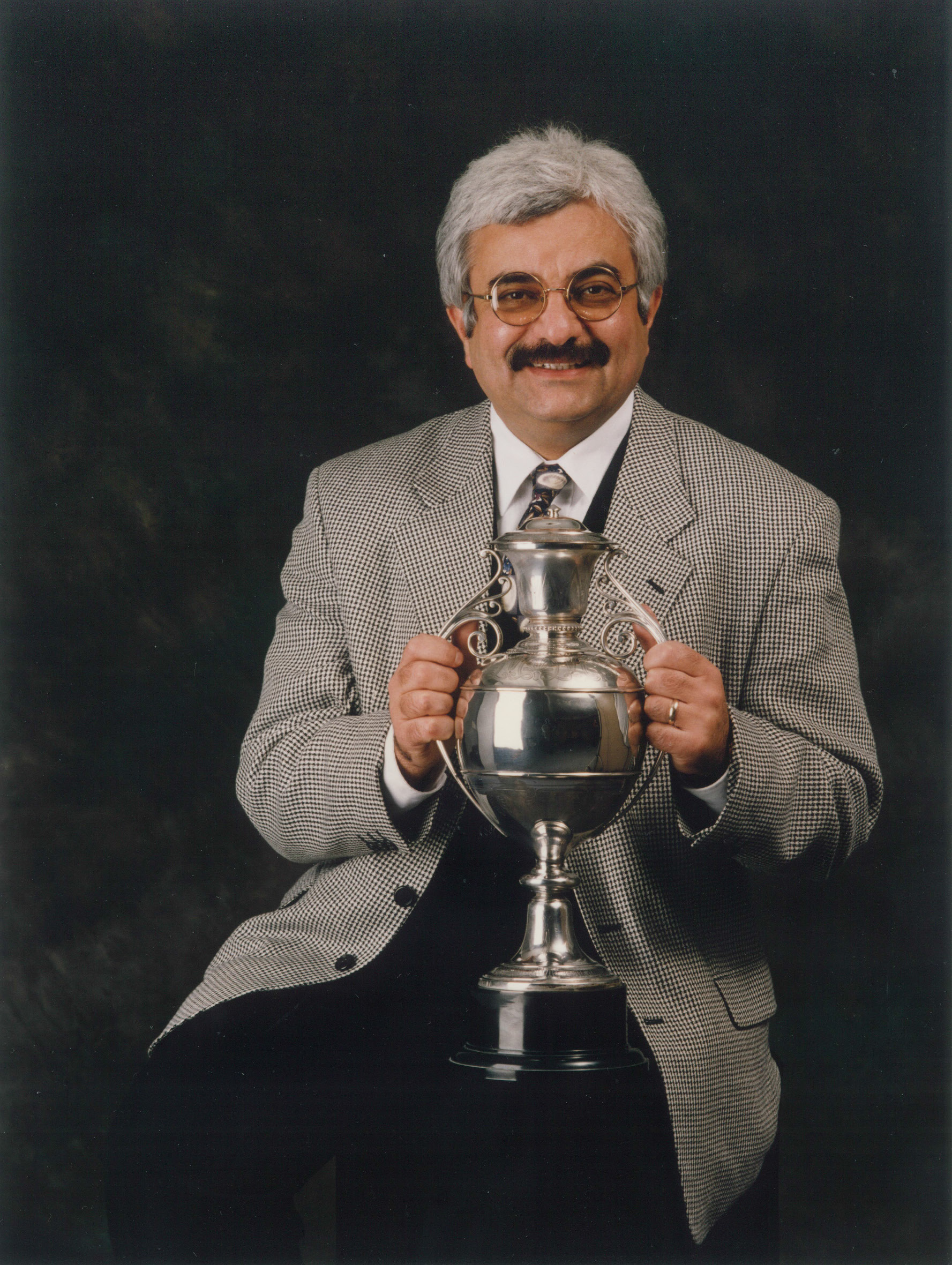
See the Award Certificate:
Dr. Kamran Mofid Awarded the Cecil Angel Cup by Coventry University in 1996
Life is so full of unpredictable beauty and strange surprises
As many people, wiser than me have noted, our lives and the world in which we all live, are so unpredictable. Things happen suddenly, unexpectedly. We want to feel we are in control of our own existence. In some ways we are, in some ways we're not ... Life, it can bring you so much joy and yet at the same time cause so much pain.
I was so devastated that after this wonderful journey, full of joy and happiness, achievements and success, due to some reasons beyond my control, I started to feel unwell, unhappy, not enjoying what I was doing and teaching, especially when I lost all confidence in the value of moral-free economics that I was teaching my students, and more.
In 1999 I voluntarily resigned from my post at Coventry University. It goes without saying that, I was heartbroken and extremely hurt that I was unable to nurture and develop further what I had envisioned and built.
Looking back, reflecting on what has happened, I think, somehow, somebody, somewhere, had planned it so that I, too, should have a life, similar to the life of Coventry itself: fall and rise again, a topic to which I will return in the second part of "My Coventry Story", covering 2000-2016.
Once again, thank you Coventry, my Coventrian friends, the sources of my inspiration and strength. I cannot tell you how grateful I am to you all.
Coventry for ever,
In gratitude,
Kamran Mofid, co founder and the Associate Director
The Centre for the Study of Forgiveness and Reconciliation at Coventry University in 1996
Coventry: The City of Peace, Forgiveness and Reconciliation
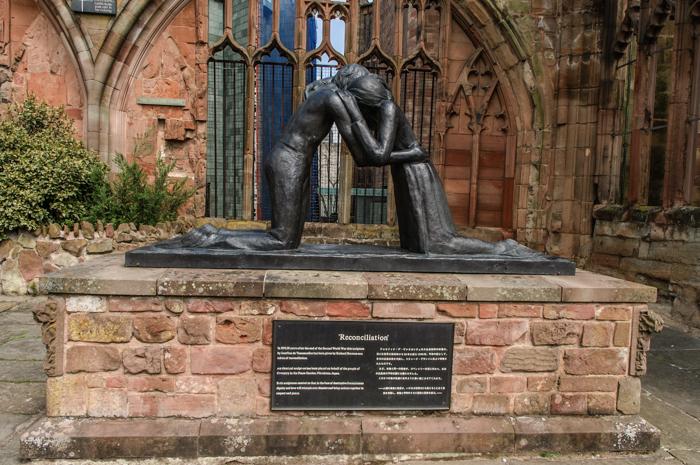
Photo: Anne Mofid
The statue of reconciliation in the ruins of Coventry Cathedral. I was honoured and proud to be present at the unveiling ceremony of the statue in Coventry in 1995 and later on at Hiroshima Peace Garden where a replica was unveiled.

Hiroshima Peace Memorial Park, 1995, on the right of the picture, Coventry Cathedral delegation (Canon Paul Oestreicher and Provost John Petty) and myself(kamran Mofid). Photographer: Unknown
- Details
- Written by: Kamran Mofid
- Hits: 13987

The Madness of Materialism and Consumerism: A Very Black Friday Indeed
Shoppers get into the madness of Black Friday Sales. Photo: Twitter
The Big Question surly must be:
As we are only here for a short while, with so little time to do all we should do, why then this madness to posses more and more?
Have you not heard about Memento mori and Memento vivere?
‘There is no time like the present to look at life from its widest perspective’
“It occurred to me that there were two sets of virtues, the résumé virtues and the eulogy virtues. The résumé virtues are the skills you bring to the marketplace. The eulogy virtues are the ones that are talked about at your funeral — whether you were kind, brave, honest or faithful. Were you capable of deep love?"
Although it's still over a week or so away, Black Friday is already in the front of many shoppers' minds. Sale promotions are enticing the masses to rise and oil the wheels of money-driven capitalism: Buying things that they do not need, with the money that they do not have, to impress the friends that they do not have time for.
Thanksgiving vs. Black Friday: Where is the Gratitude?
Many retailers are aware of this, and have already begun to release the specifics of the deals they will offer on the day after Thanksgiving. Other stores have had their promotional offers "leaked" online beforehand due to the eagerness many shoppers have to find the best deals, and more so, to create a false hype to fool the masses even more! Many cannot wait, for this opportunity of a life time! A madness that repeats itself every November!
However, this madness ‘shop till you drop’ has brought us all a very bitter harvest. As Sue Gerhard, the author of The Selfish Society: How we all forgot to love one another and made money instead, has candidly reminded us:
“We are rich in material comforts at the price of having become self-centred, self-interested, self-absorbed and self-regarding. Self-contained, too – though also not in a good way, as late capitalism succeeded in rotting our emotional links with community, neighbourhood, family and outer world and forced us into making free-market, gimlet-eyed competitors of ourselves. Our relations with one another – in which our forebears found, if not happiness, at least a proper sense of belonging – are shot. Where "selfishness" might once have evoked someone using up the last of the milk, now those proliferating "self" prefixes have eaten away at the moral fabric we used to snuggle under together.”
Nowhere can this be seen more clearly than when a ‘darling’ of the social media and Instagram, the queen of self-promotion, Essena O’Neill, came out and spilled the beans on the false, unreal, materialistic lives that many of us are leading:
Good on you Ms. Essena O'Neill: Social media 'is not real life'
Memento mori, Memento vivere and the Madness of Black Friday
The futility and the madness of materialism, consumerism, accumulation of useless gadgets and tools, and all other falsehoods, can be noted very clearly if they are contrasted with the ultimate reality of life, which is: Memento mori-“remember that you must die.”
As historian and editor of History of Psychology, James H. Capshew, has wisely reminded us: “The prospect of death is reason enough to embrace life”.
The shortness of life is to be celebrated, remarked Seneca: it reminds us to live. “So the man who restrains himself within the bounds set by nature will not notice poverty; the man who exceeds these bounds will be pursued by poverty however rich he may be” remarked Seneca in On the Shortness of Life.
This, reminds me of memento vivere - "remember that you must live."
Seneca is just one individual from an impressive array of men and women who have argued that memento mori are invaluable in life. Cicely Sanders, the founder of the hospice movement, argued: "We do best in life if we look at it with clear eyes." Memento mori cultivates virtues such as gratitude, nurtures the experience of pleasures, enables an embrace of the present moment, facilitates decisions that affect who we strive to be - the eulogy as well as the resumé virtues, as David Brooks, the New York Times columnist has recently put it:
"About once a month I run across a person who radiates an inner light. These people can be in any walk of life. They seem deeply good. They listen well. They make you feel funny and valued. You often catch them looking after other people and as they do so their laugh is musical and their manner is infused with gratitude. They are not thinking about what wonderful work they are doing. They are not thinking about themselves at all.
“When I meet such a person it brightens my whole day. But I confess I often have a sadder thought: It occurs to me that I’ve achieved a decent level of career success, but I have not achieved that. I have not achieved that generosity of spirit, or that depth of character.
“A few years ago I realized that I wanted to be a bit more like those people. I realized that if I wanted to do that I was going to have to work harder to save my own soul. I was going to have to have the sort of moral adventures that produce that kind of goodness. I was going to have to be better at balancing my life.
“It occurred to me that there were two sets of virtues, the résumé virtues and the eulogy virtues. The résumé virtues are the skills you bring to the marketplace. The eulogy virtues are the ones that are talked about at your funeral — whether you were kind, brave, honest or faithful. Were you capable of deep love?
“We all know that the eulogy virtues are more important than the résumé ones. But our culture and our educational systems spend more time teaching the skills and strategies you need for career success than the qualities you need to radiate that sort of inner light. Many of us are clearer on how to build an external career than on how to build inner character.
“But if you live for external achievement, years pass and the deepest parts of you go unexplored and unstructured. You lack a moral vocabulary. It is easy to slip into a self-satisfied moral mediocrity. You grade yourself on a forgiving curve. You figure as long as you are not obviously hurting anybody and people seem to like you, you must be O.K. But you live with an unconscious boredom, separated from the deepest meaning of life and the highest moral joys. Gradually, a humiliating gap opens between your actual self and your desired self, between you and those incandescent souls you sometimes meet.”
Photo: digitalbloggers.com
Here you have it, all about Memento mori, Memento vivere, Materialism, Consumerism and the Madness of Black Friday. If you like what you have read, then, join us and boycott the Black Friday Sales, ensuring it fails, so that we can all become the agents of change to build the better world we are all hoping to create. The opportunity is upon us. Let us seize it. Carpe Diem!
References:
Memento mori - Wikipedia, the free encyclopedia
The Moral Bucket List - The New York Times
"The next best thing to knowing something is knowing where to find it”-Samuel Johnson
With a sincere hope that readers everywhere, all over the world, will discover “simplicity, patience and compassion” in all they do and hope for:
- Details
- Written by: Kamran Mofid
- Hits: 9977
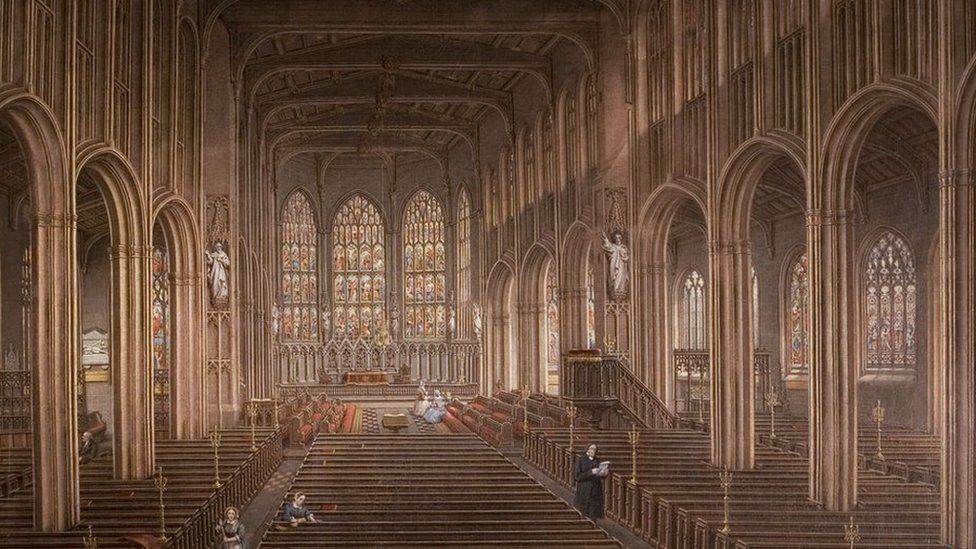
St Michael's was elevated to cathedral status in 1918 but destroyed in 1940- Bridgeman Images
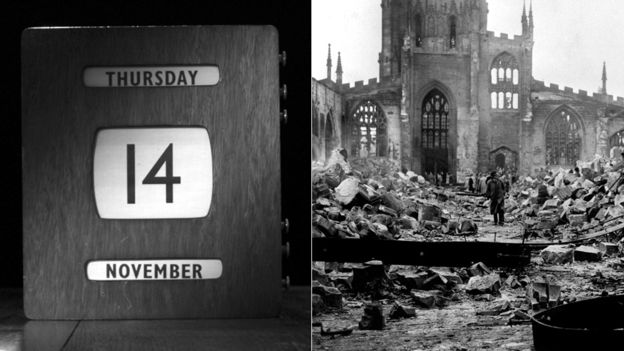
About 1200 people were killed and the city centre was demolished by the bombs on 14 November 1940
Photo: PA
“On 14 November 1940 the Luftwaffe launched its most devastating bombing raid of the Second World War so far. The target was Coventry, a manufacturing city in the heart of England with a beautiful medieval centre.
As dawn broke over a ruined city, a horrific scene of destruction greeted the survivors. Homes and factories were flattened and many buildings were consumed by flames so intense, the city's sandstone brickwork glowed red. The air stank of burning flesh, and bodies, some mutilated beyond recognition, lay in the streets. Amid the broken walls and burning buildings, a 14-year-old girl was making her way to school.”…
Coventry: A remarkable historical city, my home town since 1974, when I married my Coventrian wife, Annie. Coventry, where I have made many wonderful friends, taught at its University for many years, was inspired by its values, spirit, and history, envisioning and enabling me to co-found the Centre for the Study of Forgiveness and Reconciliation at Coventry University. The Centre was officially inaugurated on 11 March, 1996, when its distinguished patron, Mary Robinson, the President of Ireland, delivered the inaugural Lecture at Coventry Cathedral and I was then appointed the Centre’s Associate Director.
Read “My Coventry Story”: Coventry and I: My Coventry Story
Coventry: The City of Peace, Forgiveness and Reconciliation
The statue of reconciliation in the ruins of Coventry Cathedral. I was honoured and proud to be present at the unveiling ceremony of the statue in Coventry in 1995 and later on at Hiroshima Peace Garden where a replica was unveiled.
Photo: Anne Mofid
The Coventry Blitz: 'Hysteria, terror and neurosis' - BBC News
"With each passing year the relevance of the human tragedy of the event and how Coventry rallied to become the city of peace and reconciliation grows in significance.
"Whilst remembering the horror of 1940 is vitally important, it's also key we view this as an opportunity for looking forward and ensuring that people and communities come together as a city to work towards a place we can all be proud of."-Ann Lucas, Coventry City Council
Coventry Blitz anniversary marked by 'human chain of light' - BBC News
- A Response from Kamran Mofid to an article on higher education by Prof. AC Grayling, Master, the New College of the Humanities
- Good on you Ms. Essena O'Neill: Social media 'is not real life'
- There is more in less: The Evolution of Simplicity
- World in Chaos and Despair: The Healing Power of Slow Reading
- World in Chaos and Despair: The Healing Power of Gratitude