- Details
- Written by: Kamran Mofid
- Hits: 7310
Education Needs a Revolution: Values-led Slow Teaching and Reading
Gandhi and Slow Reading: A Look at Gandhi’s Philosophy of Reading
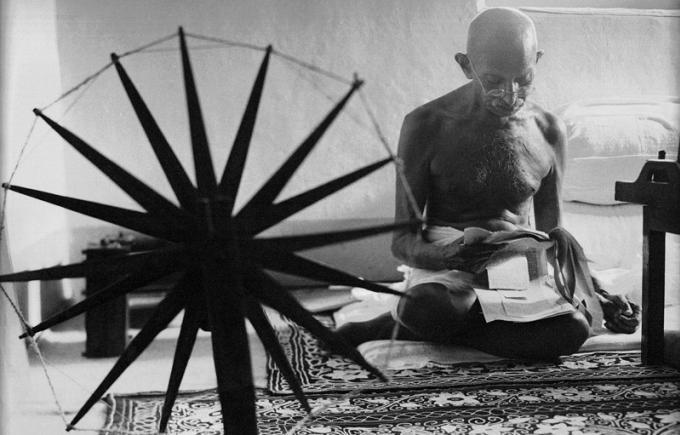
Gandhi’s practices of silence, slow reading, fasting, walking and spinning were integral to his self-search.
Photo: caravanmagazine.in
"There is more to life than increasing its speed"-Gandhi
Gandhi's Printing Press: Experiments in Slow Reading
Isabel Hofmeyr, Professor of African Literature, University of the Witwatersrand
Here Hofmeyr analyzes the act of slow, deliberate reading and thoughtful reflection that Gandhi cultivated and adopted as key conditions toward the realization of truth and self-rule.
“In our own frantic age, with online reading becoming ever more fragmentary, Gandhi’s ideas have deep resonances. As all aspects of life accelerate, we have to seek out the pauses that provide an opportunity for reflection and contemplation. Taking Gandhi’s advice, we can use reading itself as a mode of slowing down the agitated rhythms that drive contemporary life.”
“During his South African years (1893-1914), Mohandas Gandhi started a printing press and a newspaper, Indian Opinion. One of the world’s great intellectual archives, Indian Opinion constitutes an experiment with reading and writing that fed into Gandhi’s ideas on satyagraha or “passive resistance.”
Writing in an age of vertiginous acceleration via telegraph, train and steamship, Gandhi grappled with an industrializing information order in which readers were bombarded with ever more reading matter. In this context, Gandhi saw reading and writing as ways of managing the tempos of the industrial pressure. Such strategies questioned the relationship of speed with efficiency, a link that lay at the heart of satyagraha and its critiques of industrial modernity.
Gandhi’s ideas on reading and writing hence have much to say to our frantic, information-smothered lives. In a recent book, Gandhi’s Printing Press: Experiments in Slow Reading (Harvard University Press, 2013), I explored these themes of speed and sovereignty, satyagraha and reading.
Satyagraha and Reading
Satyagraha is generally understood as a political practice of non-violence, civil disobedience or non-co-operation. But it is equally a mode of building swaraj or “self-rule,” which for Gandhi meant literally that, namely, rule of the self. In his thinking, such self-rule or independence cannot be conferred on a person; it has to be built up painstakingly by each individual.
Satyagraha then is a practice of sovereignty rooted in the individual, rather than an abstraction like the nation state. As a concrete practice, satyagraha best inheres in activities which proceed at the pace of the body (like spinning and fasting) and which disrupt instrumental logic of means and ends. Through such practices, ethical values accrete in the individual and form the basis of self-rule, creating independence one person at a time.
Reading is of course a practice that can only proceed at the pace of the body. If we are to read thoughtfully, we cannot speed up the pace at which we read and we cannot outsource the activity to someone else. In a Gandhian world, reading could become one way of pausing industrial speed to create small moments of intellectual independence. Reading may happen within the world of industrial time, but didn’t need to be entirely driven by its logics. This focus on bodily rhythm as a way of interrupting industrial tempos became central to his world-famous critiques of modernity, which questioned the equation of speed with efficiency and technology with progress.
Gandhi’s Printing Press and Indian Opinion
One of Gandhi’s first experiments with these ideas utilized a printing press and a newspaper set up in Durban, an Indian Ocean port city in the colony of Natal (in present day South Africa). The International Printing Press (IPP) of which Gandhi was the sometime proprietor was established in 1898, initially as a jobbing press to serve the Indian community in Natal. In 1903, the IPP began printing the newspaper Indian Opinion. The paper appeared weekly and was initially printed in four languages (English, Gujarati, Hindi and Tamil), although the latter two soon fell away.
Before long the paper and the press experienced major financial difficulty, and in early October 1904 Gandhi (then based in Johannesburg) took the overnight train to Durban to investigate. Famously, his friend Henry Polak gave him a copy of Ruskin’s Unto this Last, a book that persuaded Gandhi to establish his first ashram, Phoenix, 14 miles north of Durban. By December 1904, the paper and press has been moved to Phoenix where both played an important role in dramatizing the new kind of community that Gandhi sought to build as different religion, caste groups, races and genders interacted in Phoenix and the press itself.
The paper appeared weekly and functioned as a key component in Gandhi’s campaigns in South Africa. In terms of circulation figures, these ranged (according to Gandhi’s estimates) from 800 to 3,500, with an average of 1,200 to 1,500 (as well as a secondary readership of borrowers and non-literates).
Slow Reading
In these printing and newspaper operations, Gandhi sought to propagate practices of slow reading and writing. He favored hand-printing wherever possible and, as the newspaper continued, he scaled back on advertisements with a view to withdrawing the paper from the dictates of the market.
Gandhi (ever an alchemist of the ordinary) took the basic elements of the newspaper, designed to promote hasty reading and sought to turn them against themselves. With its telegraphic headlines and ever-briefer genres, the periodical format aimed to speed up reading. Gandhi regarded such modes of reading as dangerous, and as capable of “macadamizing” the mind (a phrase he took from Thoreau). Instead he sought to turn these structures of haste to different ends. Rather than regarding the breaks in a newspaper as a pretext for hastening ahead, they could as well function as pauses, moments of contemplation to think about what one had read.
Since the newspaper was made up of bits and pieces (often taken from other periodicals, in keeping with the practices of the time), one could juxtapose different kinds of material. In the columns of Indian Opinion one frequently encounters ethical and philosophical extracts among reports on current events. Such juxtapositions encouraged readers to read news at the pace of philosophy and vice versa.
Gandhi gave extensive instructions to readers on how best to read. He urged attentive and careful reading and rereading. He suggested that readers keep copies of the paper and also write out and memorize selections from the newspaper, so they could return again to these passages.
His great manifesto Hind Swaraj (written in 1909 as he returned by ship from England to South Africa) is as much a treatise on reading as it is on ideas of how to deal with colonial rule. The book first appeared in two parts in the Gujarati section of Indian Opinion before being produced as a booklet in an English translation by Gandhi himself.
The book takes the form of a dialogue between a Reader and an Editor in which the latter tries to train the former to read slowly and carefully, to digest ideas before rushing ahead to hasty conclusions. The point of the dialogue is to shift the Reader from being an intemperate hothead to a considered and thoughtful individual. One recurrent method that the Editor uses is to make the Reader return to, and reconsider, ideas that are initially pooh-poohed. The book hence enacts a methodology of reading that Gandhi first experimented with in Indian Opinion.
The book has largely been interpreted as Gandhi’s dialogue with the revolutionary, extremist Indians who favored violence as the most effective anti-colonial strategy. But the text can equally be seen as a book that exemplified Gandhi’s key ideas about reading and its relationship to satyagraha. The book urges patience and slowness as a way of building up one’s own interior independence rather than trusting this will be created on one’s behalf by an anti-colonial movement. The methods of reading the text espouses mirror these themes.
In our own frantic age, with online reading becoming ever more fragmentary, Gandhi’s ideas have deep resonances. As all aspects of life accelerate, we have to seek out the pauses that provide an opportunity for reflection and contemplation. Taking Gandhi’s advice, we can use reading itself as a mode of slowing down the agitated rhythms that drive contemporary life.”
About the Author
Isabel Hofmeyr is Professor of African Literature at the University of the Witwatersrand in South Africa. After her initial work in African Studies, she has turned to transnational topics, some of these focusing on Indian Ocean themes. She has published widely in this latter area and recently completed a book Gandhi’s Printing Press Experiments in Slow Reading (Harvard University Press, 2013). In its review of Gandhi’s Printing Press, Publishers Weekly wrote, “This thoughtful account is a compelling preview of the colonial subcontinent’s development, as well as Gandhi’s eventual role as peaceful emancipator of his own country.”
See the original article:
Slow Reading the News: Gandhi’s Philosophical Experiments with His South African Newspaper | Readex
Purchase Gandhi’s Printing Press:
Gandhi’s Printing Press — Isabel Hofmeyr | Harvard University Press
- Details
- Written by: Kamran Mofid
- Hits: 12596
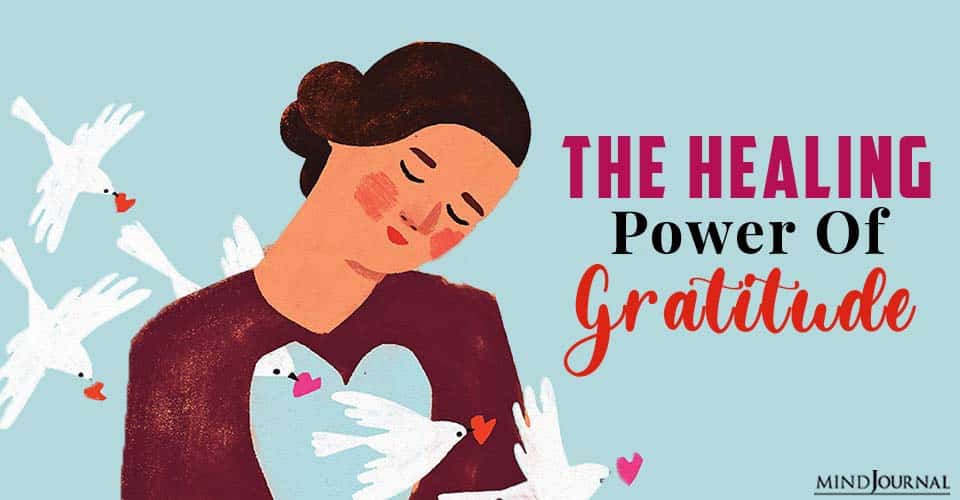
“Cultivate the habit of being grateful for every good thing that comes to you, and to give thanks continuously. And because all things have contributed to your advancement, you should include all things in your gratitude.”― Ralph Waldo Emerson
‘It’s moral, feels great and keeps you healthy. But being grateful isn’t just good for you – it might hold the key to a more peaceful world.’*
‘How Gratitude Changes You and Your Brain’
‘New research is starting to explore how gratitude works to improve our mental health.’
'With the rise of managed health care, which emphasizes cost-efficiency and brevity, mental health professionals have had to confront this burning question: How can they help clients derive the greatest possible benefit from treatment in the shortest amount of time?
'Recent evidence suggests that a promising approach is to complement psychological counseling with additional activities that are not too taxing for clients but yield high results. In our own research, we have zeroed in on one such activity: the practice of gratitude. Indeed, many studies over the past decade have found that people who consciously count their blessings tend to be happier and less depressed…’- Continue to read
See also: Feeling the healing power of gratitude
Thanksgiving vs. Black Friday: Where is the Gratitude?
Opening Remarks: In Gratitude for your Friendship and Support
Everybody knows that having an attitude of gratitude makes people happier. Another positive effect however, is that it can make you physically healthier. Psychologists Dr. Robert A. Emmons of the University of California, Davis, and Dr. Michael E. McCullough of the University of Miami have been conducting research experiments on the effects of gratitude in people’s lives. People that are thankful have shown to have better lifestyles and less visits to the doctor. It is hard to completely prove if the reduction in visits to the doctor has a direct correlation with an attitude of gratitude. However, whether it is a direct or indirect effect, it is still a very valuable finding. Being grateful doesn’t cost any money and doesn’t have any negative side effects, so why not give it a try!
“The word gratitude is derived from the Latin word gratia, which means grace, graciousness, or gratefulness (depending on the context). In some ways gratitude encompasses all of these meanings. Gratitude is a thankful appreciation for what an individual receives, whether tangible or intangible. With gratitude, people acknowledge the goodness in their lives. In the process, people usually recognize that the source of that goodness lies at least partially outside themselves. As a result, gratitude also helps people connect to something larger than themselves as individuals — whether to other people, nature, or a higher power. In positive psychology research, gratitude is strongly and consistently associated with greater happiness. Gratitude helps people feel more positive emotions, relish good experiences, improve their health, deal with adversity, and build strong relationships.” …
Read the full article: In Praise of Gratitude - Harvard Health
Could gratitude be the most important emotion of all?
“It’s moral, feels great and keeps you healthy. But being grateful isn’t just good for you – it might hold the key to a more peaceful world”
“All the members of human society stand in need of each other's assistance.”- Adam Smith
In the link above, we read about the individual benefits of practicing gratitude. “But it’s the relational aspects of gratitude that make it a powerful weapon against misery and conflict. It acts as social glue, something that has been recognised down the ages. Cicero called it “not only the greatest of the virtues, but the parent of all the others”. In his Theory of Moral Sentiments, Adam Smith wrote: “All the members of human society stand in need of each other’s assistance, and are likewise exposed to mutual injuries. Where the necessary assistance is reciprocally afforded from love, from gratitude, from friendship, and esteem, the society flourishes and is happy.” Psychologists and sociologists have discovered that experiencing gratitude means you are more likely to behave in ways that induce gratitude in others. It also acts as a “moral reinforcer”, binding people in – entirely voluntarily – to a cycle of altruism.”…
*Read the full article: Is gratitude the most important emotion of all? | David Shariatmadari | Comment is free | The Guardian
- Details
- Written by: Kamran Mofid
- Hits: 8325

Slow Reading
Photo: slowreadingjoyce.wordpress.com/
"The next best thing to knowing something is knowing where to find it”-Samuel Johnson
With a sincere hope that readers everywhere, all over the world, will discover “simplicity, patience and compassion” in all they read
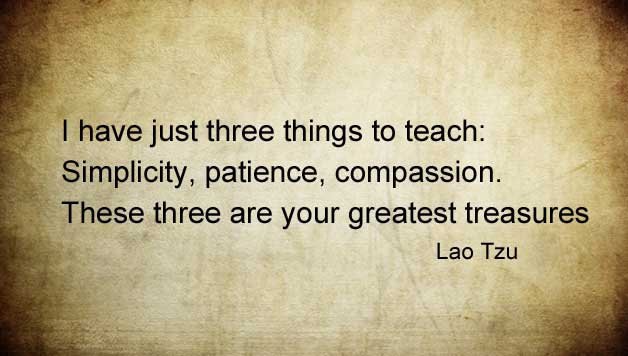
In an age of tech acceleration and the need to consume as much information as quickly as possible, “Slow Reading Sunday” is our journey back to wisdom. I believe in the wise words and sentiments of Mahatma Gandhi, when, well before the digital age of high-speed communication, just-in-time deliveries, social media and twittering, warned us against the pitfalls of living full throttle when he said, "there is more to life than increasing its speed".
On this beautiful Sunday, the day of reflection, contemplation and reconnection, I wish to offer the following to you to begin your “Slow Reading Sunday” journey. They are the latest pieces from my “Wisdom Corner” where I store the many gems I have discovered in my life journey from the wisdom of others. They have opened new horizons in my life. Their wisdom has nourished and nurtured my personal and professional development. For that I am for ever grateful to them.
In sharing the wisdom of others with you, I am only a story teller, saying it all simply and slowly. Today, our global family is facing a multitude of enduring and potentially catastrophic crises. For me, the answers lie in simplicity. There is no need to complicate matters further. After all, in the wise words of Leonardo da Vinci, “Simplicity is the ultimate sophistication.”
Here, by sharing their wisdom with you, I hope they will do the same for you.
Enjoy your Sunday: A day when we engage with our family, friends and local community. A day we reject fast food and like the olden days prepare and make food for the whole family, all eating together, celebrating our love for each other. A day we take part in simple actions that symbolise a rejection of commercialism, a passion for the planet and a desire for change. A day we read slowly and absorb the received wisdom deeply.

What follows are a sample of my offerings and stories:
Slow Reading Sunday Summer 2019

Photo:pinterest.com
Do you have an eye for justice and sense of duty? Then, these questions are for you.
British democracy is brought to its knees
Austerity driven Homeless children put up in Shipping Containers in ‘Great Britain’
Anthea Lawson, We Owe it to Our Humanity to hear you, to emulate you
Dr. Larch Maxey, We Owe it to Our Humanity to hear you, to emulate you
Slow Food for the Common Good to save the World
American Dream was False and is Dead. But, the Good American Dream Can be Resurrected
A Must Read Book about how Adam Smith can change your life for better
The World would be a Better Place if Economists had Read This Book
In Praise of Darwin Debunking the Self-seeking Economic Man
In Praise of Youth on International Youth Day- Monday 12 August 2019
The Value of Values: Values-led Education to Make the World Great Again
Death and Destruction on Brothers’ Road to Serfdom
The tragedy of India copying the ways of the US and the UK
Interfaith Spiritual Music to Heal the World, GCGI 1st Conference, Oxford 2002
Todi-Week 2019- A Reflection: Where we came to imagine and co-create a better world together
Playing for Change: How music can change the world!
Slow Reading Sunday 22 May 2016

Photo: madailylife.com
The Tragedy of Youth Depression:
Children searching for hope
“A different world cannot be built by indifferent people.”
"One in 12UKteenagers self-harms and one in 10 is clinically depressed. Between 2010 and 2014, the number of girls aged between 10 and 14 admitted to hospital for self-harming inEnglandincreased by 93%. The statistics support my own observations, as a clinical psychologist treating young people for mental health conditions, that this is a problem on the increase. When I look at the world through their eyes, I see levels of competition and performance anxiety unknown to my generation. Outside school, our body-obsessed, share everything culture subjects them to new forms of scrutiny. Who’s got the most “followers”? Whose selfie or video got the most likes? Body-shaming,cyberbullyingandsextingcan happen to them on their mobiles wherever they might be, robbing them of a place of safety.”…
Continue to read:
Slow Reading Sunday 17 April 2016
London story is my story: Sadiq Khan

Photo: ibtimes.co.uk
Khan’s pitch “is that his story is (or should be) London’s story. In this, it is the good fortune of the council estate kid to find himself up against a billionaire’s son and former non-dom. “The contrast between Zac’s life story and Sadiq’s is very striking if you are a non-political person in London,” says Jim Fitzpatrick, a former chair of the London Labour party and the highly experienced MP for Poplar and Limehouse. “Sadiq’s life as a bus driver’s son from a council estate made good is much more appealing and attractive and chimes with the experience of ordinary Londoners. I think it gives him a head-start.”
Continue to read:
Slow Reading Sunday 3 April 2016
Finding our treasure

Photo: bing.com/images
Read the article:
Slow Reading Sunday 27 March 2016
The Secrets to a Happy Life

Photo: cdn.theantimedia.org
Surveys show that most young adults believe that obtaining wealth and fame are keys to a happy life. But a long-running study out of Harvard suggests that one of the most important predictors of whether you age well and live a long and happy life is not the amount of money you amass or notoriety you receive. A much more important barometer of long term health and well-being is the strength of your relationships with family, friends and spouses…
Continue to read:
The Secrets to a Happy Life, From a Harvard Study
Slow Reading Sunday 20 March 2016
Happy Norooz

Continue to Read:
Happy Norooz-(Eide shoma mobarak): Happy New Year to You
Slow Reading Sunday 6 March 2016
Education for Wisdom to Build a Better Future for All
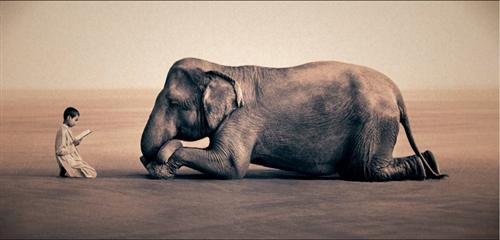
"Educating the mind without educating the heart is no education at all."- Aristotle
Photo: montville.net
Continue to read:
The Journey to Sophia: Education for Wisdom
Slow Reading Sunday 28 February 2016
Sustainable People=Sustainable World: Discover Your Inner Ecology

Photo: imaginativeethnography.org
Have you ever thought about your body as a little piece of planet Earth? If you think about it for a minute, about what your body is made of and what keeps it alive, it’s kind of amazing.
Your entire body is made of Earth stuff- every single molecule and atom. And where do those atoms come from? From the Earth’s biosphere, from the other life forms doing their life processes, from the trees and plants converting Earth elements into forms we can live on. Food, water and air keep your body alive; the air you breathe, the food you eat and the water you drink become your flesh and blood.
Continue to read:
Sustainable People=Sustainable World: Discover Your Inner Ecology
Slow Reading Sunday 21 February 2016
From Broken to Beautiful: The Power of Kintsugi

Photo: i.vimeocdn.com
"Though we may keep a little quiet about this, especially when we’re young, we tend deep down to be rather hopeful that we will – eventually – manage to find perfection in a number of areas. We dream of one day securing an ideally harmonious relationship, deeply fulfilling work, a happy family life and the respect of others. But life has a habit of dealing us a range of blows – and leaving nothing much of this array of fine dreams save some shattered and worthless fragments."...
Continue to read:
In Search of Perfection: What about the damaged pots, cups and bowls!
Slow Reading Sunday 3 January 2016
Make 2016 the Year We Cultivate Inner Peace

Photo: facebook.com
“Inner peace is the most valuable thing that we can cultivate. Nobody can give us inner peace; at the same time it is only our own thoughts that can rob us of our inner peace. To experience inner peace we don’t have to retreat to a Himalayan cave; we can experience inner peace right now, exactly where we are. The most important criteria is to value the importance of inner peace. If we really value inner peace, we will work hard to make it a reality.
These are some suggestions for bringing more peace into your mind."...
Continue to read:
A Journey to Inner Peace in 2016
Slow Reading Sunday 27 December 2015
Make 2016 the Year We Light a Candle and Stop Cursing the Darkness
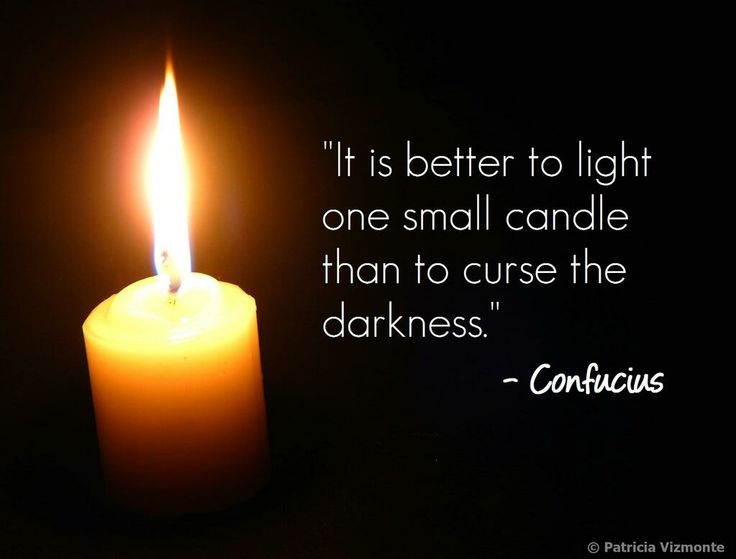
As I was reflecting on my New Year message for 2016, I came across a most beautiful and relevant quote from Confucius: “Better to Light a small Candle than to curse the darkness.”
There and then I was captured by the beauty, elegance, and meaningfulness of this inspirational quote and decided that it should become the central focus of my message. This quote reaffirms my long held view that through our love and zest for life and our natural desire to be good, and to lead a good life, we can always do something positive no matter what circumstance we find ourselves in.
Continue to read:
Make 2016 the Year We Light a Candle and Stop Cursing the Darkness
Slow Reading Sunday 20 December 2015
Our Christmas Message: A time to open our hearts
A Christmas Gift of Forgiveness
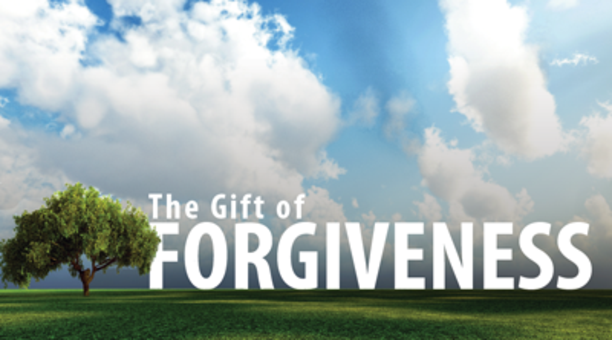
Photo: Photo: africase.lds.org
As we decide what to give to others for Christmas this year, why not consider the gift of forgiveness?
"Forgive us our trespasses as we forgive those who trespass against us" (Matt. 6:12).
Our Christmas Message: A time to open our hearts
Slow Reading Sunday 13 December 2015
We are the leaders we have all been searching for: This is what Simorgh says
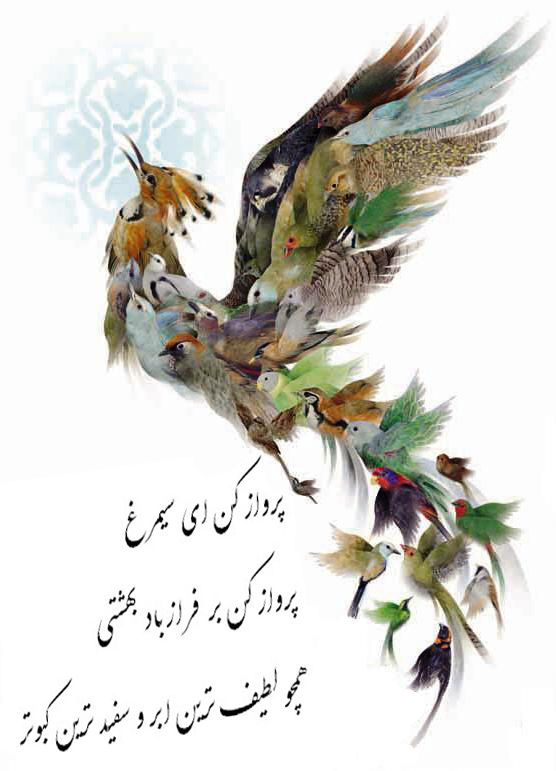
Simorgh: 30 Birds
‘In the famous epic Persian poem "Conference of the Birds," the birds of the world gather to decide who is to be their king. The hoopoe, the wisest of them all, suggests that they should find the legendary Simorgh, a mythical Persian bird. The hoopoe leads the birds, each of whom represent a human fault which prevents man from attaining enlightenment. When the group of thirty birds finally reach the dwelling place of the Simorgh, all they find is a lake in which they see their own reflection. They realize that they were the Simorgh (which in Persian literally means "thirty birds") all along. The leader they sought was each and every one of them.’
‘Hundreds of birds embark on a perilous journey across seven treacherous valleys in search of a king who can right the wrongs in their world. They are led by the poet Attar, who has been transformed into a sharp-beaked, crested hoopoe. The troubles that spur them into flight — "Anarchy — discontent — upheaval! Desperate fights over territory, water, and food! Poisoned air! Unhappiness!" — are of course all too familiar in our world.’
Read the inspiring story of Simorgh:
Simorgh tells me: We are the leaders we have all been searching for
Slow Reading Sunday 6 December 2015
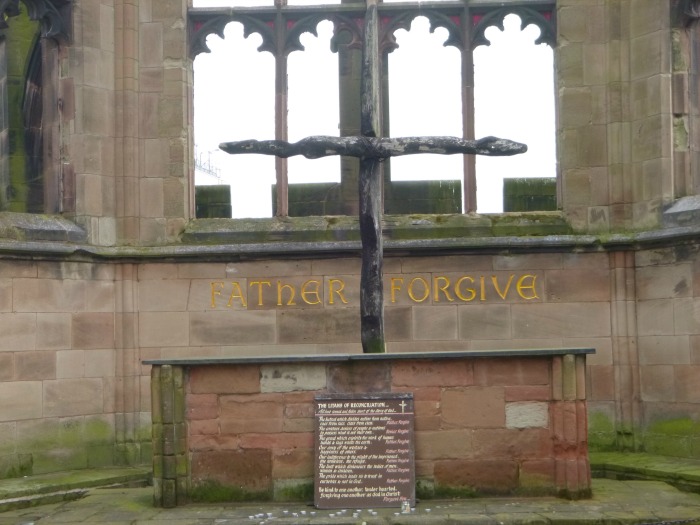
Photo: Anne Mofid
“Father, Forgive” - these two words which I discovered at the ruins of Coventry Cathedral in 1973 changed the course of my life.
This is the story I must tell.
Lest We Forget
Coventry and I: The story of a boy from Iran who became a man in Coventry
Slow Reading Sunday 29 November 2015
Paris climate summit: 30 November-11 December 2015

Photo: popularresistance.org
Conference of Parties (COP) - What’s it all about?

“The international political response to climate change began at the Rio Earth Summit in 1992, where the ‘Rio Convention’ included the adoption of the UN Framework on Climate Change (UNFCCC). This convention set out a framework for action aimed at stabilising atmospheric concentrations of greenhouse gases (GHGs) to avoid “dangerous anthropogenic interference with the climate system.” The UNFCCC which entered into force on 21 March 1994, now has a near-universal membership of 195 parties.
The main objective of the annual Conference of Parties (COP) is to review the Convention’s implementation. The first COP took place in Berlin in 1995 and significant meetings since then have included COP3 where the Kyoto Protocol was adopted, COP11 where the Montreal Action Plan was produced, COP15 in Copenhagen where an agreement to success Kyoto Protocol was unfortunately not realised and COP17 in Durban where the Green Climate Fund was created.
In 2015 COP21, also known as the 2015 Paris Climate Conference, will, for the first time in over 20 years of UN negotiations, aim to achieve a legally binding and universal agreement on climate, with the aim of keeping global warming below 2°C.
France will play a leading international role in hosting this seminal conference, and COP21 will be one of the largest international conferences ever held in the country. The conference is expected to attract close to 50,000 participants including 25,000 official delegates from government, intergovernmental organisations, UN agencies, NGOs and civil society.”
Now, the Big Question surely must be: What the Nature itself has to say about the Paris Climate Summit? Who is the Wisest? Who is the Best Teacher?
The Answer surely must be: Nature
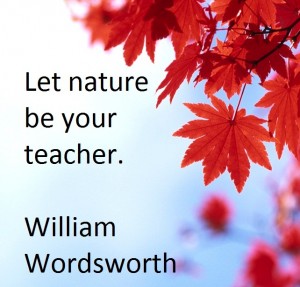
Nature the Best Teacher: Re-Connecting the World’s Children with Nature
Sustainable Development Goals: Where is the Common Good?
Slow Reading Sunday 22 November 2015
The Madness of Materialism and Consumerism: A Very Black Friday Indeed

Two "Happy" shoppers fighting for the bargain of a life time!
Photo: forums.oneplus.net
The Big Question surly must be:
As we are only here for a short while, with so little time to do all we should do, why then this madness to posses more and more?
Have you not heard about Memento mori and Memento vivere?
‘There is no time like the present to look at life from its widest perspective’
Memento mori, Memento vivere and the Madness of Black Friday
Slow Reading Sunday 15 November 2015
Coventry: The City of Forgiveness and Reconciliation
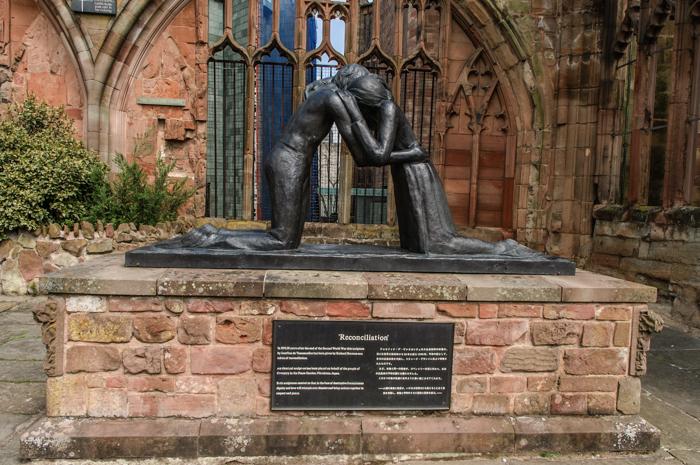
The statue of reconciliation in the ruins of Coventry Cathedral- Photo: Anne Mofid
Read about that fatal night on the 14th of November 1940, the night that Coventry fell and like a Phoenix rose again as the City of Forgiveness and Reconciliation- lest we forget:14 November 1940: The Destruction and Re-birth of Coventry
Slow Reading Sunday 8 November 2015

Photo: slidesharecdn.com
Is it all about “Likes” and “Dislikes”? The Impact of Social Media on Our Lives

Photo: gograph.com
Does social media do more good or harm? Have you ever thought of its consequences? How much time do you spend on social media every day? Are you liked or disliked? How many followers you have? How many are you following? How many virtual friends you have? How much time do you spend with your real friends or relatives? Are you lonely and bored, whilst surfing the net chatting with virtual people? Are you any wiser, or have you made anybody wiser and better after all these years of social media? You are not sure?

Have you heard about Ms. Essena O'Neill, who came out only the other day, revealing it all about the social media?
Click on the link below, my offering for this Slow Reading Sunday:
Good on you Ms. Essena O'Neill: Social media 'is not real life'
Slow Reading Sunday 1 November 2015
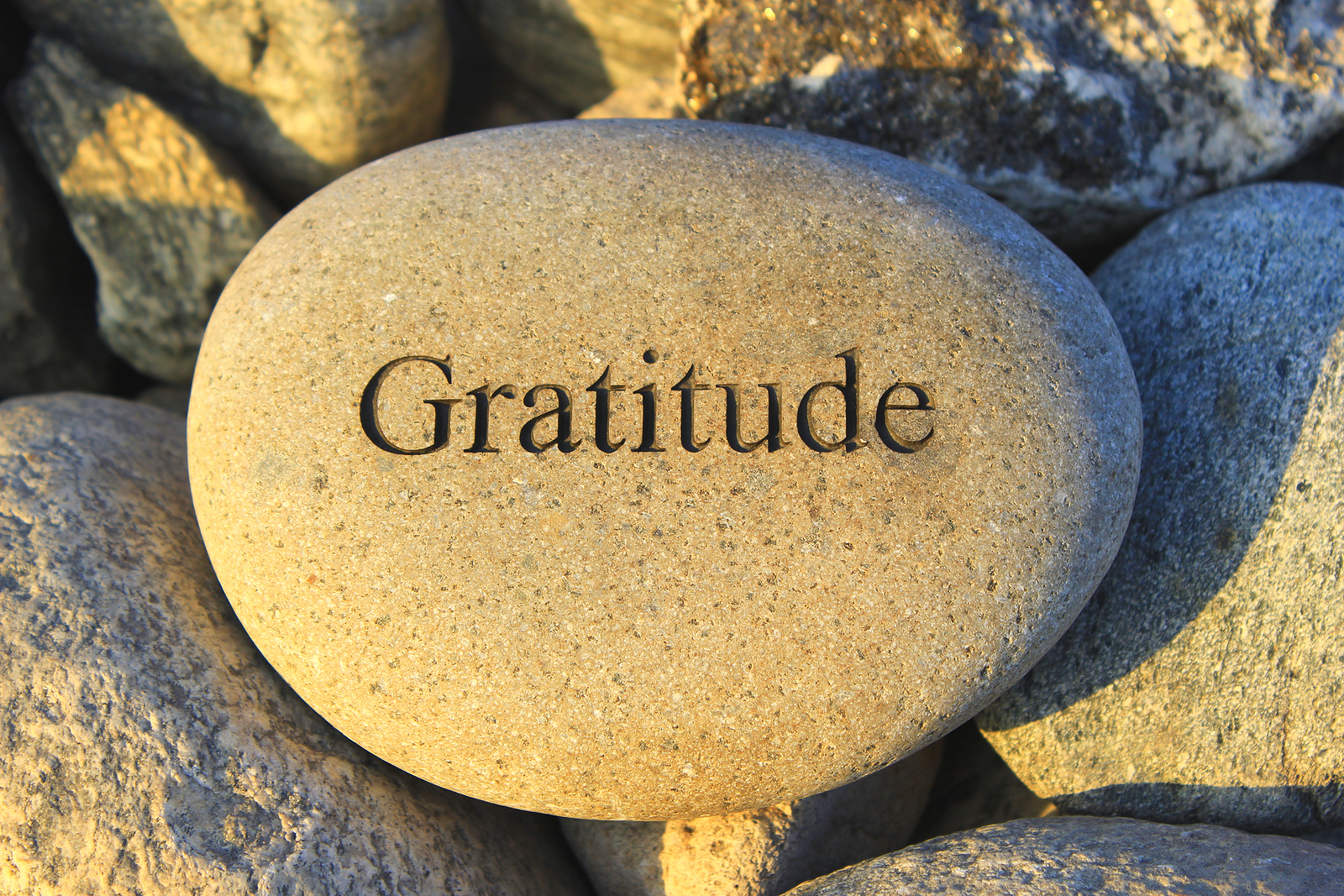
plus.google.com
In Praise of Gratitude: A Reading for Slow Sunday 1 November 2015
In Praise of ‘Enoughness’ and 'Lagomist' Economy
Slow Reading Sunday 25 October 2015
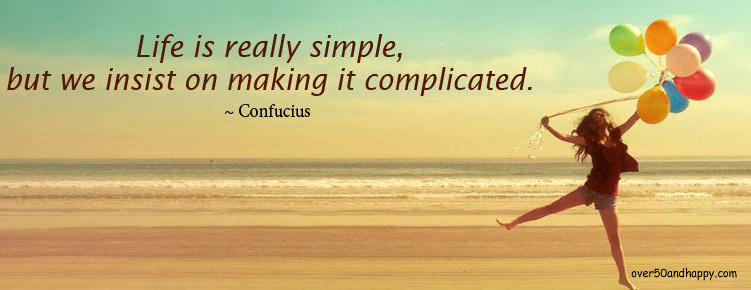
Simplicity: it’s our true guide to a better life
A must read book: Economics Unmasked
The chairman of Barclays agrees with me: Better late than never
How to make the Nobel Prize in Economics Noble?
Remembering a Heroine Called Nurse Edith Cavell
World Mental Health Day 2015: Dignity in mental health
(More to be listed: Please visit this website and page every Sunday, when further lists will be noted on weekly basis).
Thank you for your kind attention. Thank you for allowing me to share this beautiful day with you.
Kamran
A Simple Day at Oxwich Bay, South Wales, GB- October 2015
Photo: Anne Mofid

A Simple Day at the nature trail, the University of Warwick, Sunday 1 November 2015
Photo: Anne Mofid