- Details
- Written by: Kamran Mofid
- Hits: 7847
Updated and revised on 11 September 2020
In Pursuit of the Moral and Spiritual Roots of Economics and Capitalism: Quaker Economics

Building a fairer world.- Photo: Quakers in Britain
Quakers reimagine the economic system
'Young adult Quakers came together this week with a common desire for a new economic system that is fairer, more sustainable and resilient. They call for urgent change and a system more focused on wellbeing and the common good'
......
In a speech at the Labour Party Spring Conference (23 March 2013) in Birmingham, the Labour leader, Ed Miliband, unveiled a new role model for his economic vision – inspired by the values of the Cadbury family. The Labour leader said George Cadbury, the son of the pioneer John Cadbury, believed his business would be more successful if his workforce were treated well.
Mr Miliband claimed that the coalition's policies, of rewarding the wealthy at the top of society at the same time as forgetting those at the bottom, were in direct conflict with the Quaker philosophy of Cadbury Jnr, whose factory and workers' homes were built 150 years ago not far from the conference centre in Birmingham where the Labour leader was addressing his party's "People's Policy Forum".
Cadbury "had a simple idea", Mr Miliband said: "His business would be more successful if his workforce was well-motivated and lived in decent homes with decent conditions. That is the idea that should guide us to the change we need today. But it hasn't been the way our economy has been run for a long time. And it certainly isn't the direction offered by this Government. They think wealth comes from a few at the top. I know wealth comes from the forgotten wealth-creators. The people who work in the supermarkets, the factories, in small businesses on your high street, doing the shifts, putting in the hours. It's they who have got to be rewarded and supported in this country."
Whilst reading the report of this speech in the press today, I recalled a blog that I had posted on 13 January 2013 at my older blog address. Due to its significant importance to this blog, I wish to share it with you once again:
Quakerism and Economics of the Common Good
The Quaker Peace Testimony, Economics, and the Common Good
An article by Keith Helmuth
I recently came across this fascinating and well-written, easy to read article, and I love to share it with all my friends. The article is mainly about the many social and economic reforms that unfolded from the Quaker faith and moral vision of John Bellers.
Try to read this excellent article. The wisdom of Bellers rings true today, as much as it did during hin own life time. " Renewing the Peace Testimony is, in large part, a matter of how Friends respond to the economic, social, and ecological mandate now placed before us by the converging crises of our time. This is the moral assignment. As a matter of religious responsibility, we can enter fully into reshaping economic policy and economic behavior on behalf of the common good and the integrity of Creation. Thus will the visions of John Bellers, John Woolman, and many Friends since their time be given new opportunities for realization. Thus will the Peace Testimony be renewed, and thus will Quakers be able to more effectively advance a moral vision of the common good."
The Quaker Peace Testimony, Economics, and the Common Good
“English Quaker John Bellers (1654-1725) was the first social thinker to advance universal healthcare as a public policy. He based his case on the enhanced level of well-being and economic efficiency that would result from an improved level of health across the entire society. Bellers was also the first social thinker to advance a comprehensive plan of vocational training and sustainable employment as a national solution to chronic poverty. This policy and investment proposal was also based on calculations of progressive improvement in the economic well-being of those in poverty, and on the society-wide benefits of ameliorating social degradation and its accompanying violence.
These are but two of many social and economic reforms that unfolded from the Quaker faith and moral vision of John Bellers. His social and economic analyses and his visionary moral response come to us from the beginning of Quakerism. His lucid and prescient approach to social and economic conditions was focused through the new light that early Quakerism was bringing to the sense of “right relationship.” Bellers was just a half generation younger than George Fox.
Bellers repeatedly petitioned the English Parliament to enact legislation that would implement the social policies and economic projects he proposed. He was not successful in convincing the national government of the time, or the holders of capital to whom he also appealed, that implementing his proposals would advance the common good and be beneficial across the entire economy. However, it was only a matter of time until the soundness of his proposals would be recognized and acted on in many progressive jurisdictions. One hundred and fifty years later, Robert Owen, England’s greatest social reformer and the originator of the cooperative movement, said he had gotten all his best ideas from John Bellers.
As far as I know, there is no direct evidence that John Woolman was familiar with the work of John Bellers, but there is no doubt that the same holistic vision informed both men’s social and economic analyses and moral witnesses for the common good. All of John Woolman’s discussions on spiritual life, and in particular on spiritual disorders, crossed over into their social and economic consequences. And all his discussions on social and economic behavior led back to their spiritual foundations. In his continual probing of these relationships, he repeatedly returned to the recognition that minds possessed by the spirit of domination lead to social and economic disorder. Woolman’s holistic understanding also went a step further and helped set the stage for ecological thinking. He clearly understood economic geography and ecological adaptation. He understood that unwise use of resources leads to ecosystem breakdown in the same way that unwise use of labor leads to societal breakdown.
Why is it that from the beginning of Quakerism, the life of the spirit and economic affairs converge into a single focus? Why is it that both William Penn and John Woolman amplified this convergence into the larger context of the human-Earth relationship? Why is it that Quaker economist Kenneth Boulding (1910–1993) was one of the first social scientists to recognize Earth’s ecological context as the primary reference for all progressive thinking, policy, and action with regard to the human future? The answer, I suggest, is as obvious as the full moon in a cloudless night sky.
The Spiritual Basis of Economics and Ecology
In a deeply profound sense, economics and ecology are domains of relationship. Economics is about access to the means of life. Ecology is about the mutual interdependence of life communities. There is a deep sense of right relationship within a fully rounded understanding of these domains.
For example, in the right relationship of human solidarity, we see economic activity flowing from social relations that enhance the common good. In the right relationship of ecological integrity, we see the human economy as a wholly owned subsidiary of Earth’s ecology.
When we bring these two perspectives together, the lens of human solidarity and the lens of ecological science pivot into a single focus. Through this focus we can see right relationship in a more fully rounded and deeply instructive way. Right relationship then becomes the central motif in both the social design of human well-being and in ecologically sound economic adaptation.
Our spiritual traditions teach us that in right relationship, we touch the fullness of human meaning and the presence of the Divine. The Friends Peace Testimony is about elevating all areas of human policy and practice into this zone of right relationship. Because economic behavior is so often excluded by policy from the zone of right relationship, it is a primary area of injustice, conflict, violence, and war. A Peace Testimony that does not address economics in a major and sustained way is not a fully developed or spiritually accountable witness.
A Fully Developed Peace Testimony
Near the end of his short life, Martin Luther King Jr. (1929–1968) saw how certain kinds of economic arrangements were directly connected to oppression, conflict, violence, and war. He began to focus his analysis through a vision of right relationship that challenged inequity and structural violence in U.S. economic behavior and its worldwide extensions. Within this enlarged context he asked the question, “What is the moral assignment?” This question of right relationship in economic policy and behavior is now central to the renewal of the Peace Testimony.
In this context we need to make a distinction between the economics of resource competition and the economics of the common good. The former is leading to resource wars, social disintegration, and ecological degradation. The latter has the potential of creating cultures of peace, social cooperation, and ecological resil?ience. A fully developed Peace Testimony will offer critical intervention in the former and creative advancement of the latter.
If Friends can now move the Peace Testimony into this arena, we will help advance an already substantial faith witness that has boldly challenged economic violence and injustice. For example, when the U.S. Conference of Catholic Bishops recently issued a document of social teachings strongly critical of the capital-driven economy and its morally unacceptable inequities, some economists, politicians, and corporate leaders told them to butt out. They argued that the bishops had no business making pronouncements on economics and economic policy, and that they should just stick to religion. This naïve reaction failed, of course, to understand that Catholic social teaching has a long history in these matters.
Heritage as a Resource for Renewal
Quakerism, likewise, has a long genealogy of concern, thought, and action with regard to economics. The Peace Testimony applied to economics is not breaking new ground. We need only to update our heritage. In addition to the witnesses of Bellers and Woolman, the following more recent examples are worth noting.
In 1934, the Industrial Relations Committee of Friends General Conference prepared and published A Statement of Economic Objectives, which addressed the disaster of the Great Depression. This document offered a comprehensive strategy for equity-based economic reform. (A significant number of Quakers were deeply involved in creating the New Deal.)
In 1969, Friends Committee on National Legislation issued a well-crafted policy statement on Goals for a Just Society: Jobs and Assured Income. This document makes the case for the elimination of poverty through a combination of measures addressing health, education, vocational training, employment, and basic income.
In 2004, American Friends Service Committee published the report of its Working Party on Global Economics: Putting Dignity and Rights at the Heart of the Global Economy. With an acute awareness that poverty is a peace issue, this document calls for a Global New Deal, and for the moral leadership of Friends in fostering such a transformation. The authors write, “Just as the charges of ‘idealism’ have never made the AFSC abandon the commitment to the Peace Testimony and the power of love, charges that ‘the market doesn’t work that way’ should not distract us from our goal of a world of economic justice for all.” The most recent work on this theme comes from the Friends Testimonies and Economics Project, which is now posting its three-volume resource guide Seeds of Violence, Seeds of Hope on the website of Friends General Conference.
Our quest to renew the Peace Testimony will be lifted into a more fully rounded and relevant context if we bring this heritage into a position of central focus and if we see the economics of the common good unfolding as the central peace issue.
Strengthening the Peace Testimony in Its Moral Vision
The Peace Testimony is strengthened in its address to economics when we remember that economics is primarily a social science. It is further strengthened when we realize that economics, in its origin, was a moral discipline. It still is. And being a moral discipline, economics is precisely the arena where religion enters most fully into the service of the world. It is the arena of analysis and action where Friends can discover a more fully rounded expression of the Peace Testimony as it develops within the economics of the common good. Ongoing study and research will be needed to support and advance this witness. A certain fearlessness may be required. Those who benefit from human exploitation, resource domination, and the economics of war do not want the present financial architecture and economic arrangements altered.
In the time of spiritual crisis when Quakerism began, Friends decided they could not leave religion to the established Church. In our time of mounting social and ecological crisis, Friends should likewise not leave economic relationships to the current political-financial establishment. Economics and finance have become, in effect, the modern world’s established religion, and they now need, for sake of the common good, the same wind of reform that Quakers brought to religion in the 17th century.
The Ethics of Human Solidarity
If the ethics of human solidarity and the economics of the common good are our moral assignment, can we pose a straightforward and helpful guide to action? To answer this question we can paraphrase Aldo Leopold (1887–1948), a founding figure in conservation biology and a thinker who formulated a “land ethic”: “A thing is right when it tends to preserve the integrity, stability, and beauty of the biotic community. It is wrong when it tends otherwise.” With this simple admonition, Leopold coined an ethical formula that has entered into the foundation of the ecological worldview and environmental ethics. It is an expression of solidarity at the level of the human-Earth relationship.
In a similar way, and with respect to human solidarity, we can say: “A thing is right when it tends to preserve the integrity, stability, and beauty of the human com?munity. It is wrong when it tends otherwise.” In a time when human solidarity is a preeminent requirement for decent human survival, this is a moral template against which all economic policy and behavior can be gauged and evaluated.
Renewing the Peace Testimony is, in large part, a matter of how Friends respond to the economic, social, and ecological mandate now placed before us by the converging crises of our time. This is the moral assignment. As a matter of religious responsibility, we can enter fully into reshaping economic policy and economic behavior on behalf of the common good and the integrity of Creation. Thus will the visions of John Bellers, John Woolman, and many Friends since their time be given new opportunities for realization. Thus will the Peace Testimony be renewed, and thus will Quakers be able to more effectively advance a moral vision of the common good.”
Read the original article: The Quaker Peace Testimony, Economics, and the Common Good
Related articles:
Why do Quakers want a new economy?
'We work to create an economy that values people and the planet above profit. Alternatives to irresponsible capitalism are emerging all the time – and Quakers are bringing them into their local communities.
The new economy project supports Quakers to articulate a vision of a practical, ethical economic system in line with Quaker values. We also support Quakers who are taking action to move our economy in this direction.
"The global economic system is posited on continued expansion and growth, and in its pursuit of growth it is often unjust, violent and destructive…We need to ask the question whether this system is so broken that we must urgently work with others of faith and good will to put in its place a different system in which our testimonies can flourish..."- Continue to read
A Quaker Declaration for Equality and the Common Good
Below please see a few relavant posts since 2013
Religion in Public Life (Kellogg College, University of Oxford, 5 June 2008)
Responsible Leadership in Action, Geneva, June 2015
Economics, Globalisation and the Common Good: A Lecture at London School of Economics (2015)
Finding our treasure (2016)
UK’s Broken Economic Model: A New Path is Called for- I offer you the Common Good (2017)
A Non-Violent Path to Conflict Resolution and Peacebuilding- Kamran Mofid (Editor), et al (2017)
Oxford Theology Society Lecture: Values to Make the World Great Again (Keble College-University of Oxford, 8 March 2017)
Economic Growth: The Index of Misery (2018)
To All Striking Academic Colleagues in Britain: Turn the Strike to a Force for the Common Good (2019)
On the 250th Birthday of William Wordsworth Let Nature be our Wisest Teacher (2020)
In praise of cooperation as an insurance at time of crisis (2020)
Is Neoliberal Economics and Economists 'The Biggest Fraud Ever Perpetrated on the World?' (2020)
- Details
- Written by: Kamran Mofid
- Hits: 5197
Why is Trust so Vital to Who we are and How we live our lives?

Photo: MediaMath
I am prompted to write this blog after reading a disturbing report on the increased lack of trustworthiness in the UK, “Britain 'is suffering a huge loss of faith in its institutions': Trust in all politicians has slumped to an all-time low, say researchers”.
The pertinent questions now are: How can we live and lead a good life when we can trust no one and no one trusts us? Or, is life possible or meaningful without trust? Let me explain a bit more:
As it has been observed time and again, “Trust is the treasure of our daily lives. However, we do not understand its value. It is generally seen that trust in our daily lives is disappearing fast.
Why have we become so suspicious that we cannot enter into meaningful relationships with each other? Why can we not behave as normal human beings? After all when we were born as human beings the first lesson we learnt was that we should trust each other. However, as our lives progressed slowly, trust began to diminish. Our childhood innocence has given way to calculations in which there is no place for trust.
Trust in each other gives strength and vitality to our relationships. It gives us inner happiness, which is priceless. It brings joy all around and life appears brighter and brighter. Its fragrance spreads far and wide. Trust keeps us in a positive mental framework. When you trust each other you feel self-confident. The feeling of believing others is electrifying. It not only provides sense of security but provides new zeal to fight the vagaries of life. Trusting each other gives us a sense of deep bonding. It signifies that we are united to fight the battles ahead. Trust is a synonym for warmth in our relationships.
With so many advantages of trusting each other, how do we feel when germs of mistrust appear? Life appears to be devoid of colour and lacks spontaneity. We behave- mechanically- like robots .We constantly live with fear and tensions. We live in our shells. We are unable to share with each other. We live in suppressed condition, which inhibits the growth of our personality. As a result we are not able to contribute towards the betterment of society .We are not able to create a conducive atmosphere where there is transparency all around. A society whose foundation is built around trust is progressive and dynamic. Lack of trust signifies decay in the society.
To build trust, we must not indulge in unhealthy competition by trying to outwit each other. Instead we should master the art of rejoicing in the happiness of others. Good performance of others should spur us to act in a positive manner. Being jealous and competitive will be of no use as it will lead to destroying trust."
And now let me return to the article that has prompted this blog:
Britain 'is suffering a huge loss of faith in its institutions': Trust in all politicians has slumped to an all-time low, say researchers
Britain is in the grip of a ‘deep institutional crisis’ with trust in government, parliament and politicians at an ‘all-time low’, according to a recent study by The Economist Intelligence Unit which measured the health of democracy in 167 countries around the world.
The survey noted that the UK has one of the lowest political participation rates in the developed world – and even scoring below Palestine and Iraq.
Researchers said other institutions in Britain have suffered a decline in trust including the police, the church, the banks and the media.
The MPs’ expenses scandal, the handling of the Libor-rate rigging by the banks and other controversies were blamed for damaging public trust.
And the researchers warned that the inner-city riots during the summer of 2011 had ‘provided a glimpse of the unpredictable consequences of institutional breakdown’.
Last November, only 15 per cent of the public bothered to take part in elections for police and crime commissioners. Turnout for a string of Parliamentary by-elections has fallen below 50 per cent.
According to the Intelligence Unit, the participation rate in British politics was ranked below all of the major powers in Europe, and a string of nations which were not even considered to have fully functioning democracies. These included Lebanon, Palestine, Iraq, Tunisia and Namibia.
For all categories in the study, which also included civil liberties, the UK was ranked 16th out of 167 countries in 2012, placing it towards the bottom of the 25 nations considered a ‘full democracy’.
But The Economist magazine’s researchers said it would have been lower, had it not been for ‘deteriorating conditions elsewhere’.
These included a loss of democratic accountability in countries hit by the eurozone crisis, which have been forced to take orders from Brussels.
The UK was ranked below the Netherlands (10th), Ireland (13th) and Germany (14th).
In a damning indictment of the political class, the researchers warned that the UK is ‘beset by a deep institutional crisis’.
They said: ‘Problems are reflected across many elements – voter turnout, political party membership, the willingness of citizens to engage in politics and their attitudes towards it. Trust in government, parliament and politicians is at an all-time low.’
The report suggests it is unsurprising that voters are losing faith in politicians. ‘Over the past few years the British public’s mistrust of politicians, and ruling institutions more generally, has had ample cause to deepen, amid a series of scandals ranging from parliamentary expenses and “cash-for-questions” to Libor-fixing and payment protection scams, phone-hacking and police cover-ups,’ it says.
And there has been widespread concern among consumer groups at the failure of the Government fully to hold the bankers to account for triggering the financial crash.
The researchers, based in London, also commented on the 2011 riots. ‘The elite reaction to the riots was a warning of what can happen when society’s institutions are no longer clear what they stand for and do not function as they should,’ the report says.
‘The initial failure of the authorities to respond to the breakdown of law and order on the streets of London provided a glimpse of the unpredictable consequences of institutional breakdown.’
The researchers warned of more problems ahead. ‘The gulf between the country’s citizens and the political elite is a cause of concern given the depressed state of the economy, and the gloomy outlook,’ they said.
‘The Coalition is still in the early stages of implementing the deepest sustained period of real-term public spending restraint since 1945.
‘There is a clear risk of escalating resentment among affected groups, particularly if further state support is offered to the deeply unpopular financial sector.’
Now you have it:
Margaret Thatcher in 1979 promised the British people that she will put “Great” back into “Great Britain” if they go for her neoliberal philosophy: public is bad and private is good. All must be privatised, deregulated and all values must be monetised.
Perhaps this is the price you pay when you privatise everything, every value and life itself.
Hope this serves as a warning to the next generation: Do not allow yourselves to be fooled, as we have!
Read more:
http://www.thecheers.org/Opinion/article_291_Importance-of-trust.html
http://www.gcgi.info/blog/351-can-capitalism-survive-without-trust-and-regulation
- Details
- Written by: Kamran Mofid
- Hits: 5010

Photo:travelsecretsmag.wordpress.com
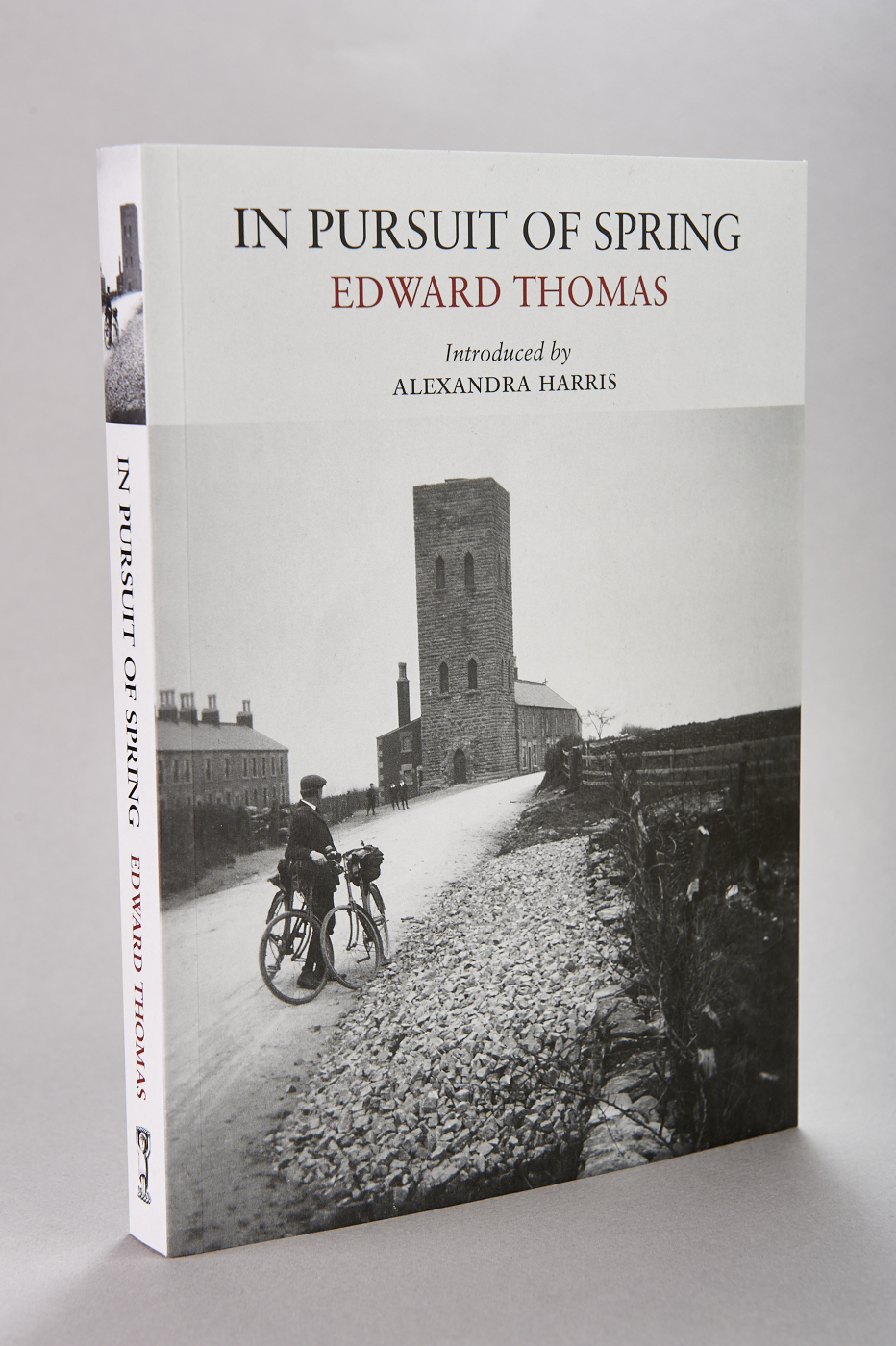
One hundred years ago, on the official first day of spring, the Anglo-Welsh war poet and naturalist Edward Thomas set off from Clapham Common in London to cycle and walk to the Quantock Hills in Somerset. The record of his journey, called In Pursuit of Spring, became a nature-writing classic, telling of exuberant chiffchaffs and house martins, daffodils and cowslips in full flower and "honeysuckle in such profusion as I had never before seen".
‘In Pursuit of Spring’ is a classic of English literature that offers its reader directions out of London on a pilgrimage to the ‘holy of holy of English poetry’, Coleridge’s beloved Quantock Hills. Here is a mystic’s view of nature, literature and personality in which the experience of one’s own unprotected being within a landscape is a sacred ritual. Written in 1913, as the threat of a European war grew, it is also a book that speaks for the value of introspection and against the power of historical forces.
Edward Thomas has a reputation as the poet other poets admire. He is also a prose writer on themes that anyone concerned with our ecology, our inadequate definition of ourselves and our potential for rebirth will enormously enjoy.
“I HAD planned to start on March 21, and rather late than early, to give the road time for drying. The light arrived bravely and innocently enough at sunrise; too bravely, for by eight o’clock it was already abashed by a shower. There could be no doubt that either I must wait for a better day, or at the next convenient fine interval I must pretend to be deceived and set out prepared for all things. So at ten I started, with maps and sufficient clothes to replace what my waterproof could not protect from rain.”…
See and read more about the the book:
IN PURSUIT OF SPRING
by
EDWARD THOMAS
21st March – 28th March 1913
Summer voyages: In Pursuit of Spring by Edward Thomas