- Details
- Written by: Kamran Mofid
- Hits: 5083
Updated on 6 June 2023
‘The model of more is failing both environmentally and socially, and practically everyone is still cheering it on… it almost makes you want to climb to the top of the highest building and shout, “ENOUGH!”
How Much Is Enough? What is money and wealth for? Why do we as individuals and societies go on wanting and yearning for more? What is economic growth for? Can we/ should we carry on just growing, creating, producing, consuming,…,more and more, for ever more? Do we need to satisfy our wants or look after our needs? Should we be a “maximiser” or “satisfier” and choose the path of “enoughness”? Then, what is a good life? What are the main ingredients of a good, happy and peaceful life? Should we move away from Gross National Product (GDP) to Gross National Happiness?
In short, is the incessant quest for higher incomes, more and more profits at any cost, and faster growth robbing us of the good life rather than helping us to attain it? And, in the end, what adjustments in our moral and economic system would be needed to realise change?
Enough Is Enough: Building a Sustainable Economy in a World of Finite Resources
A Must-read book by Dan O'Neill and Rob Dietz

‘It’s time for a new kind of economy
'We’re overusing the earth’s finite resources, and yet excessive consumption is failing to improve our lives. In Enough Is Enough, Rob Dietz and Dan O’Neill lay out a visionary but realistic alternative to the perpetual pursuit of economic growth – an economy where the goal is enough, not more.
They explore specific strategies to conserve natural resources, stabilise population, reduce inequality, fix the financial system, create jobs, and more – all with the aim of maximising long-term well-being instead of short-term profits. Filled with fresh ideas and surprising optimism, Enough Is Enough is the primer for achieving genuine prosperity and a hopeful future for all.’- See more HERE
In his foreword to ‘Enough is Enough’ Herman Daly writes these inspiring and thought provoking words to celebrate the publication of this timeless book:
Enough: The Central Concept in Economics
‘I have long wanted to write a book on the subject of “enough” but never did. Now I don’t have to because Rob Dietz and Dan O’Neill have done it in a clearer and more accessible way than I could have. Therefore, it is a special pleasure for me to write a foreword calling attention to their important contribution.
Enough should be the central concept in economics. Enough means “sufficient for a good life.” This raises the perennial philosophical question: What is a good life? That is not easy to answer, but at a minimum, we can say that the current answer to “having ever more” is wrong. It is worth working hard and sacrificing some things to have enough, but it is stupid to work even harder to have more than enough. And to get more than enough not by hard work but by the exploitation of others is immoral.
Living on enough is closely related to sharing, a virtue which today is often referred to as “class warfare.” Real class warfare, however, will not result from sharing, but from the greed of elites who promote growth because they capture nearly all of the benefits from it while “sharing” only the costs.
Enough is the theme of the story of God’s gift of manna to the ancient Hebrews in the wilderness. Food in the form of manna arrived like dew on the grass every morning and was enough for the day. If people tried to gather more than enough and accumulate it, it would spoil and go to waste. So God’s gift was wrapped up in the condition of enough—sufficiency and sharing—an idea later amplified in the Lord’s Prayer, “give us this day our daily bread.” Not bread for the rest of our lives or excess bread with which to buy whatever luxuries we may covet, but enough bread to sustain and enjoy fully the gift of life itself.
This story from Exodus has parallels in the thoughts of pioneer ecological economist and Nobel Prize-winning chemist, Frederick Soddy. Soddy observed that humanity lives off the revenue of current sunshine that is gathered each day by plants with the aid of soil and water. Unlike manna, some of the sunshine was accumulated and stored by geologic processes, and we have consumed it lavishly with mixed results. Today, we also try to accumulate surplus solar income and exchange it for a permanent lien on future solar income. We then expect this surplus, converted into debt in the bank, to grow at compound interest. But the future solar-based revenue, against which the debt is a lien, cannot keep up with the mathematics of exponential growth, giving rise to debt repudiation and depression.
For the Hebrews in the wilderness, the manna economy was designed with “enough” as a built-in feature. Our economy does not have that automatic regulation. We have to recognize the value of enough and build it into our economic institutions and culture. Thanks to Dietz and O’Neill for helping us do that.’- Herman Daly is CASSE Chief Economist, Professor Emeritus (University of Maryland), and past World Bank senior economist.
Read more: Enough Is Enough (Excerpt)
Read more and buy the book HERE
Enough is Enough: The Film
'Enough Is Enough lays out a visionary but realistic alternative to the perpetual pursuit of economic growth-an economy where the goal is enough, not more.
“Based on the best-selling book by Rob Dietz and Dan O’Neill, the film explores specific strategies to fix the financial system, reduce inequality, create jobs, and more.
Drawing on the expertise of Tim Jackson, Kate Pickett, Andrew Simms, Natalie Bennett, and Ben Dyson, Enough Is Enough is the primer for achieving genuine prosperity and a hopeful future for all.'- Watch the film HERE
ENOUGH is ENOUGH: A pick from our archive
How Much is Enough? Money and the Good Life (2013)
The Super-rich and the Politics of Envy (2013)
In Praise of Frugality: Materialism is a Killer (2014)
The Joy of Less (2014)
Small is Beautiful: The Wisdom of E.F. Schumacher (2011/2015)
Hello Fat Cats! Do you fancy a dialogue for the Common Good? (2016)
Economic Growth: The Index of Misery (2018)
What is Money? Is it Money Money Money, Must be funny? (2018)
Happiness is to Do Nothing (2018)
The Secret of Success is Idleness: Less is More! (2018)
The Art of Living a Happier life: Solitude- The Most Important Skill Nobody Taught You (2018)
Why Happiness Should be Taught at Our Universities (2011/2019)
The beauty of living simply: the forgotten wisdom of William Morris (2019)
Simpler life and simpler times: A Journey in Life (2019)
In these troubled times let us be ordinary and enjoy the simple pleasures of life (2019)
The Beauty and Wisdom of being Ordinary (2019)
- Details
- Written by: Kamran Mofid
- Hits: 4383
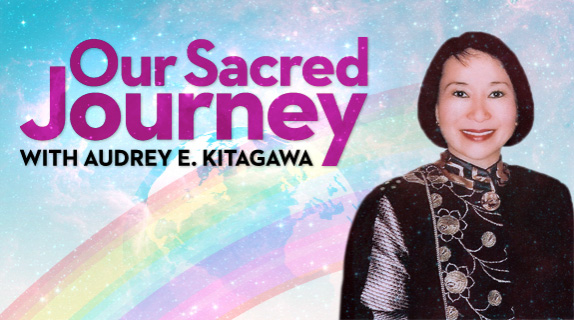
Audrey E. Kitagawa interviews Prof. Kamran Mofid, Founder of the Globalisation for the Common Good Initiative.
'The interview was wide ranging including discussion about globalisation and the common good, financial crisis, education, MBA, Business Schools, teaching of economics, the value of values and more.'
Mofid explains, "It was one of the most rewarding encounter, discussion and debate I have ever had."
“Starting a movement for reformation of how Economics is taught at universities, and seeking to instill positive values as a foundation for education and daily life, Kamran Mofid created the Globalization For The Common Good Initiative (GCGI). Joining with a broad spectrum of disciplines from religious communities to think tanks, he spawned the Journal of Globalization for the Common Good, hosted at Purdue University. For 12 years, GCGI’s international annual conferences held in different countries, from Russia to Kenya, the United Kingdom, and France, continues to gain momentum, with ever broadening communities that seek to promote values of respect, gratitude, love, and caring. The GCGI produces cutting edge research and innovative policy ideas for a just, democratic and sustainable world. It strives to bring the human face and heart to impersonal market forces and seeks to bring cultures, faiths and academic disciplines together to foster appreciation and cooperation for eachother.”
The interview can be heard online at the website of the Voice America at:

http://www.voiceamerica.com/episode/67749/globalization-for-the-common-good
- Details
- Written by: Kamran Mofid
- Hits: 3732
Today, The Independent on Sunday publishes its sixth annual Happy List, naming 100 outstanding people whose volunteering, caring, fundraising, mentoring, charity founding or selflessness makes Britain a more contented, supportive, better-adjusted and happier place.
From the dawn of our creation, our ultimate desire has been to find happiness. This desire is in the nature of things; it is common to all of us, at all times, and in all places. Nature, the material of the universe, is modified by us to create wealth so that this desire may be satisfied.
Today, at the dawn of the Third Millennium, our civilisation has scored its greatest successes in the material sciences. Our glory is the willing application of these achievements to daily life: they have brought us enormous benefits. However, in our understanding of the forces governing the relations between people in society we have shown little aptitude. So tragic is this failure that we have turned the masterpieces of the material sciences into engines of destruction which threaten to annihilate the civilisation which produced them.
This is the challenge of our time: we must either find the way of truth in the government of our relations one with another, or succumb to the results of our ignorance.
Now let us see how so many people have discovered the path to a true and lasting happiness by looking at the Happy List.
“The Happy List began six years ago as an antidote to all those rich lists that worship the super-wealthy, the financially successful, inheritors of millions, and the over-bonused. This list celebrates a different set of values, honouring those who give back, rather than take, those who help others without thought of enriching themselves, and, in many cases, at considerable personal cost. The list has grown in influence and has now become a stand-alone idea in its own right, inspiring Bristol to become the first city to create a “Happy List” of its own. A campaign will launch soon to get other cities to follow Bristol’s example.
As last year, the list is made up exclusively of the unsung, people whose extraordinary efforts have gone unrecognised outside their own circles and communities. Many of them do their good work in a town, village, or limited area. They have been selected not only because what they do is inspiring, but because they are representative of the hundreds of thousands of people who make Britain a happier place by volunteering, fundraising or caring.
The final list is the result of weeks of research, appeals across social media, and scores of nominations from individuals and organisations.”
Read more:
The Independent on Sunday Happy List 2013
http://www.independent.co.uk/news/people/news/the-independent-on-sunday-happy-list-2013-8591000.html
*At the GCGI we are delighted and honoured to support this vision of happiness and well-being. Yes, it is true, by being for the common good and acting as volunteers, we too, feel happier, more content and more at ease with ourselves and others.
Please see more below:
The Story of the GCGI: Why Love, Trust, Respect and Gratitude Trumps Economics: Together for the Common Good
http://www.gcgi.info/news/338-the-story-of-the-gcgi
Opening Remarks: In Gratitude for your Friendship and Support
- Thanks God, it seems, morality is becoming fashionable again!
- Margaret Thatcher: This is a state funeral, and it is a very big mistake
- The Memorable Speech on Thatcher: Glenda Jackson
- A moving and telling account of Thatcher and Thatcherism
- Thatcherism- the poisonous ideology that became the global norm