- Details
- Written by: Kamran Mofid
- Hits: 4353
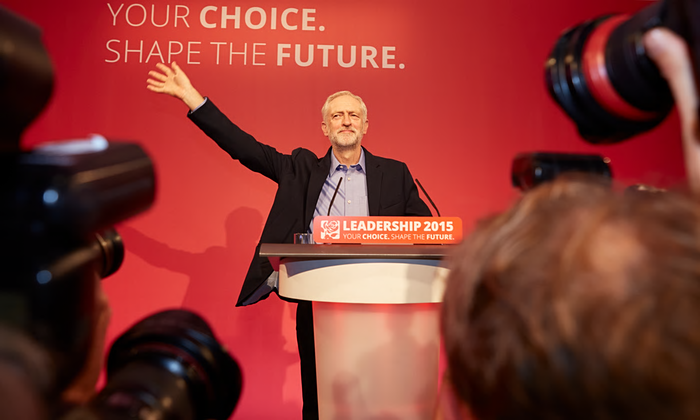
Jeremy Corbyn
Photo: guardian.co.uk
On Saturday 12 September 2016 Jeremy Corbyn was elected leader of the British Labour party, in a stunning first-round victory that dwarfed even the mandate for Tony Blair in 1994.
He won with nearly 59.5% of first-preference votes, beating rivals Andy Burnham, who trailed on 19%, and Yvette Cooper who received 17%. The “Blairite” candidate Liz Kendall came last on 4.5%.
As it has been noted by many observers writing about and analysing Mr. Corbyn’s election, including Gary Younge in today's Guardian: “Whatever one thinks of the wisdom of that choice, the transformational nature of it is beyond question. It has revived debates about nationalisation, nuclear deterrence and wealth redistribution and returned the basis of internal Labour party divisions to politics rather than personality. It has energised the alienated and alienated the establishment. The rebels are now the leaders; those who once urged loyalty are now in rebellion. Four months after losing an election, a significant section of Labour’s base is excited about politics for the first time in almost a generation while another is in despair.”
And now let me share with you why I, too, am excited and pleased with the result of this Labour leadership election.
Yes. I am pleased. As now for the first time in decades, we will have an alternative to neo-liberalism when we go to vote. This is great. Many people have become apathetic, disillusioned with politics since Labour became a copy of the Tories, albeit, pretending to be a bit nicer, a bit less austere and less painful!
Democracy, the neo-liberals tell us, is all about choice, the ability to choose amongst competing alternatives.
Now, with the election of Jeremy Corbyn we will have that choice, we will be able to exercise our democratic rite to choose amongst competing alternatives when we go in a ballot box next time around.
I hope Jeremy Corbyn and his team will carry on encouraging the British people and indeed the people everywhere to imagine that a better world, a better life is possible: A World that can be for the Common Good- when we begin to contribute our energies and our insights to our always-emerging common good.
OURS IS THE RIGHT AND THE POWER TO IMAGINE A NEW COUNTRY
In the country I wish to see, we value ourselves, and we value each other. In this new country, it is an honour to serve, where the highest good is the common good.
We must begin to imagine what the world for the common good may look like:
Imagine a political system that puts the public first. Imagine the economy and markets serving people rather than the other way round. Imagine us placing values of respect, fairness, interdependence, and mutuality at the heart of our economy. Imagine an economy that gives everyone their fair share, at least an appropriate living wage, and no zero-hour contracts. Imagine where jobs are accessible and fulfilling, producing useful things rather than games of speculation and casino capitalism. Imagine where wages support lives rather than an ever expanding chasm between the top 1% and the rest. Imagine a society capable of supporting everyone’s needs, and which says no to greed. Imagine unrestricted access to an excellent education, healthcare, housing and social services. Imagine hunger being eliminated, no more food banks and soup kitchens. Imagine each person having a place he/she can call home. Imagine all senior citizens living a dignified and secure life. Imagine all the youth leading their lives with ever-present hope for a better world. Imagine a planet protected from the threat of climate change now and for the generations to come. Imagine no more wars, but dialogue, conversation and non-violent resolution of conflicts.
This is the country and the world I wish to see and I believe we have the means to build it, if we take action in the interest of the common good.
Today our country, despite many good works, deeds and actions by so many individuals, organisations, civil societies and more, is facing a number of major socio-economic, political, ecological, moral, ethical and spiritual crises. We see all around us rising levels of abject poverty, inequality and austerity, food banks and crisis centres, housing, education, welfare and healthcare crises, challenges facing children, young people and senior citizens and the prospect of a climate crisis, to name but a few.
Today, in many parts of the world, including our own country, the so-called “free” market, the consumerist culture, and “Black Friday” sales, have become increasingly dominant, and are now seriously threatening our global future, both in terms of our care of the planet, ourselves and our neighbours, and in increasing societal rivalry and conflict.
Thus, no wonder that, in the process we have lost trust in everything: politics, economics, politicians, business, CEOs, governments, the media, and dare I say, even in mainstream religions. Time is of the essence. We must build cultures of trust, being prepared to take risks for the common good. We must begin today, with this election of a new Labour leadership.
Trust surely comes from the experience of a relationship - an in-depth experience - which by its nature is rooted in values that are not necessarily economic or monetary.
At the basis of such trust is an understanding that, in spite of our differences, we have our humanity in common. Archbishop Desmond Tutu speaks of “that African thing, Ubuntu” – the notion that a person is only a person through other persons. A person with “Ubuntu” is open and available to others, all others, for we are incomplete without each other. Ubuntu echoes the insight of John Donne that “No man is an island ..... I am involved in mankind.” What was true for John Donne in the 17th Century is even more so today.
Therefore, let us work in cooperation for the benefit of all - instead of competition that has been so deeply entrenched in our psyche - that has turned people against one another and has destroyed every ounce of our true spiritual essence that flows through our veins as living, breathing human beings.
Despite how sincere we might be, echoing Einstein, we cannot solve our problems with the same kind of thinking that created them - and neither can we solve our economic crisis by using the same tools that created the financial mayhem. We have to find a whole new system and a new way of thinking. A core essential truth, in which I firmly believe, is that a more hopeful story of change, based upon principles of the ‘common good’, is needed to address many of the big challenges confronting our country and world.
The practice of the common good is beginning to emerge as a transformative, inspirational and aspirational alternative way to approach our polarised socio-political/economic, spiritual and cultural existence. It is at the heart of a profound generational shift that has the potential to strengthen civil society and place human dignity at the heart of economic and political decision-making.
How can we become agents of change for the common good? How can we spark a new public conversation framed around human dignity and the common good?
In seeking to answer these and other relevant pertinent questions, and to understand the world better, we need to discover the world not just as it is, but also how it ought to be. Indeed, the deepest and most difficult questions with which we wrestle are problems of value — right and wrong, beautiful and ugly, just and unjust, worthy or unworthy, dignified or abhorrent, love or hatred, cooperation or competition, selflessness or selfishness, progress and poverty, profit and loss.
Human beings have explored these many questions of value through religion, philosophy, the creation of art and literature, and more. Indeed, questions of value have inaugurated many disciplines within the humanities and continue to drive them today. Questions and conversations about values and valuing are fundamental to what it means to be human, but rarely become the subject of explicit public reflection.
In short, if we want to realise anything good in life, including any goals we may set for ourselves, we must begin, first and foremost, by focusing on some fundamental and enduring questions of human meaning and value. Questions such as:
1. What does it mean to be human?
2. What does it mean to live a life of meaning and purpose?
3. What does it mean to understand and appreciate the natural world?
4. What does it mean to forge a more just society for the common good?
By their very nature, these questions involve thought and discussion around spirituality, ethics, morals and values.
This means that our lives are connected not only to knowledge, power and money, but also to faith, love and wisdom. Unless the questions we ask encompass the full spectrum of these emotions and experiences, we are unlikely to find the answers we are looking for, or to understand them in any depth, let alone solving problems and attaining goals.
The current economic model - employed by all political parties who have governed our country since the late 1970s - has brought us a very bitter harvest. This bitter harvest is the result of the quintessential ignorance and narrowness of these models and their utter inability to accept that our life journey is not merely about economics, money and finance. We need to understand and acknowledge that our crises are not merely economic but, to an even greater degree, deeply spiritual.
This is why I firmly believe that we must begin by discussing values to highlight why they matter.
The benefits of the current economic/money globalisation are limited and are based on individualism, greed, self-interest and economics (regarding human societies primarily as economic systems in which financial considerations alone govern choices and decisions). Other fundamental values such as faith, spirituality, justice, love, compassion, sympathy, empathy, co-operation, co-creation, and the common good are neglected.
To answer the call for inclusion of moral, ethical and spiritual values in all we do, we in the Globalisation for the Common Good Initiative (GCGI) have developed a model of what it would look like to put values such as love, generosity, integrity, honesty, cooperation, friendship and caring for the common good into socio-political and economic practice, suggesting possibilities for healing and transforming our world.
To focus our minds, assisting us to see the big picture, I very much wish to offer for consideration and reflection the deeply held values of the GCGI.
I firmly believe that if these or similar ennobling values are adopted by ALL, and then are seriously adhered to in practice, then the attainment of our vision for a better world becomes much more possible indeed.
We value caring and kindness
We value passion and positive energy
We value service and volunteerism
We value simplicity and humility
We value trust, openness, and transparency
We value values-led education
We value harmony with nature
We value non-violent conflict resolution
We value interfaith, inter-civilisational and inter-generational dialogue
We value teamwork and collaboration
We value challenge and excellence
We value fun and play
We value curiosity and innovation
We value health and wellbeing
We value a sense of adventure
We value people, communities and cultures
We value friendship, cooperation and responsibility
The future is full of risk and perils for our planet and all peoples. If we are to survive we must surely build cultures of peace, justice, kindness, and trust, and we must walk together to face the future. The journey, for sure, will be much more secure and fruitful if we begin to walk the walk together for the common good.
As far back as the 6th century BC, the Greek poet Theognis of Megara said: “Hope is the one good god remaining.”
As the poet Theo Dorgan reminds us, hope is a profound act of imagination, the most important and the most neglected of the civic virtues. In the face of the present societal and global crises we can lie down in despair, or we can choose hope — which means placing all our faith in each other and in the boundless capacity of the imagination to reinvent circumstance, to establish new truths.
We are no mean people. We have hearts and minds, we care for each other still, we have our dreams — and in dreams, as the poet Delmore Schwartz once said, “in dreams begin responsibilities”. It falls to us, voting in May, to assume the responsibility of dreaming a new country.
I exhort you to imagine what we can achieve together if we allow such a vision of values to guide our choices when we vote next time.
Kamran Mofid,
Founder, Globalisation for the Common Good Initiative
www.gcgi.info
- Details
- Written by: Kamran Mofid
- Hits: 5921
September 1st is when the majority of Japanese children return to school after the summer holidays
‘Last year, for the first time, the most common cause of death of those aged 10 to 19 in Japan was suicide’.
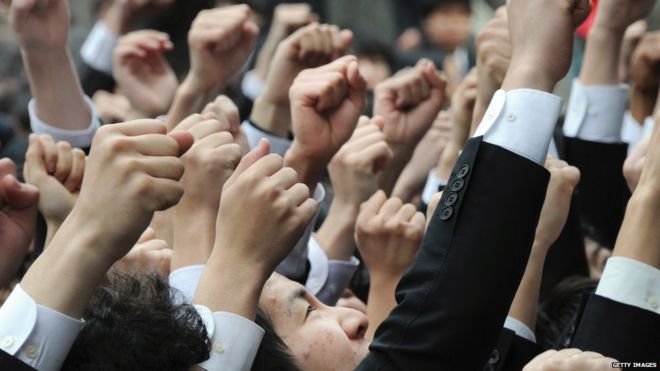
The intensity of the competitive school environment is seen as one trigger for teenage suicide
- Details
- Written by: Kamran Mofid
- Hits: 15555
Why a Simple Life Matters: The Path to peace and happiness lies in the simple things in life
Have you ever stopped and thought about what this life is all about? Have you ever asked yourself questions such as these: How fast is your life moving? Do you ever wish you could slow it down? Ever wish you had a few more hours in the day so you could get everything done you need to get finished? What if, instead of always trying to do more, we slowed down a little and embraced a slower paced life. What if we didn’t try to do everything, but slowed down and concentrated only on the things that are truly valuable and important to us.
As it has been observed by many wise souls, every year it seems the pace of communication and expectations increase. As our life begins to go through a period of acceleration, we often feel the need to step back, evaluate and simply slow our life down. The faster paced life often leaves our health in ruin and our closest relationships drifting. A slower paced life introduces margin and gives us more awareness about how we spend our time. Slow doesn’t happen naturally. In fact, our lives tend to pile more and more on because we rarely remove commitments even if we add new ones. It’s almost like that old computer that just keeps piling on junk and virus’ until it gets so slow it needs a reformat or a trip to the trash can. Is your life ready for a reboot? Are you ready to embrace a slower paced life? These are the Big Questions!
'Let Nature be Your Teacher'
The Peace of Wild Things
When despair for the world grows in me
and I wake in the night at the least sound
in fear of what my life and my children’s lives may be,
I go and lie down where the wood drake rests
in his beauty on the water, and the great heron feeds.
I come into the peace of wild things
who do not tax their lives with forethought of grief.
I come into the presence of still water.
And I feel above me the day-blind stars
waiting with their light.
For a time I rest in the grace of the world, and am free. - Wendell Berry

Nature, Beauty, Harmony+
“In 1845, the American writer Henry David Thoreau, then in his late 20s, built himself a small cabin in a quiet, idyllic location among the pine trees on the shores of Walden Pond, in Massachusetts. He wanted to see what it would be like to live cut off from other people, in communion with nature, in a simple hut, without the support of machines and modern civilization. He was to sum up his experiences in a book, Walden: Life in the Woods (1854), still the single most inspiring book for anyone wanting to imagine a less cluttered and more natural way of life.
While in the woods, Thoreau went for long walks, read the books he had always meant to read, mended his own clothes, gathered fruit, went fishing and mused on what holds us all back from living in this way.”
Elegance, Lightness, Speed+
“In 1925, the Swiss-French modernist architect Le Corbusier published a book, The City of Tomorrow and its Planning, which described a city made perfect through beautiful, rational contemporary architecture. The City of Tomorrow would be uncluttered, calm and elegantly proportioned.
Technology would simplify life. There would be dignified housing for all and none of the anxiety and stress of our current large cities. Commuters would be propelled from their homes to offices in minutes by high-speed trains. We would keep fit by regularly playing tennis and going swimming. Le Corbusier – who loved flowers – took a particular interest in the design of public gardens. There would be allotments on the roofs of skyscrapers. Offices would be serene, with perfect filing systems and moderate work hours. There would be no slovenliness, no squalour and no garishness.”
Reason, Calm, Order+
“The ancient Greek philosopher Plato (428BC – 348BC) wanted philosophy to be more than an academic exercise, he wanted it to change the world. As he surveyed the city state of Athens where he lived, he was struck by a range of its problems: the politicians were corrupt, pandering to the mob and lining their own pockets. Families weren’t educating their children properly. People pursued money and power rather than self-knowledge and insight. Love and sex weren’t properly understood and artists were keener on thrilling their audiences than making them wise or good.
His solution came in The Republic, one of the most ambitious and thought-provoking of all utopian texts, written around 380BC. The book evokes a community governed by wisdom. Those at the top are motivated only by selfless duty to the common good; their qualification is the depth of their insight into the real needs of others, and they are exemplary for the modesty and simplicity of their habits. The Republic is the ancestor of all modern utopias – a continuing inspiration for those offended by the chaos, ugliness and irrationality of our world.”
Simplicity Is the Key to Happiness++
by Paramhansa Yogananda
(Paramhansa Yogananda (1893-1952), one of the most renowned and beloved yoga masters of the 20th century, is the author of the spiritual classic, Autobiography of a Yogi. One of the first teachers to bring yoga to the West, Yogananda emphasized direct inner experience of the Divine, which he called “Self-realization.” His teachings are universal and offer a practical approach to inner awakening.)
“Simplicity is not grinding poverty: It is not the polar opposite of wealth. To live simply is to pursue a quiet path of moderation. In a life of balance between opposite extremes lies inner happiness.
People everywhere, in their quest for happiness outside themselves, discover in the end that they’ve been seeking it in an empty cornucopia, and sucking feverishly at the rim of a crystal glass into which was never poured the wine of joy.
There are so many things here in America that I wanted for my own impoverished country. In time, however, I found that the people here are not so happy, on average, as the peasants in India—many of whom cannot afford more than one meal a day. Despite the material prosperity here, people haven’t the same inner happiness. Americans are satiated with a plethora of sense pleasures. Happiness eludes them for the simple reason that they seek it everywhere except in themselves.
Most so-called “happiness” is nothing but suffering in disguise. You may enjoy eating a huge meal, but you are also likely to have unpleasant after-effects such as acute indigestion or stomachache. The greatest way to create happiness for yourself is not to allow sense lures or bad habits to control you, but to be a stern ruler of your habits and appetites. Just as you cannot satisfy your own hunger by feeding another person, so you cannot find happiness in satisfying the over-demands of your senses. Too much luxury, instead of producing happiness, drives it away from your mind. Do not spend all your time looking for things to make you happy. Be contented always, equally in your struggle for prosperity and in your attainment of it. You can be a King of Happiness in a tattered cottage, or you can be a tortured victim of unhappiness in a palace. Happiness is a mental phenomenon exclusively. You must first establish it firmly within yourself and then, with an undying resolution always to be happy, go through the world seeking health, prosperity, and wisdom. You will find greater happiness if you seek success ever with a happy attitude than if you try to gain your heart’s desire with an unhappy mind, no matter what that desire may be.
Joy is too delicate a flower to bloom in the sooted atmosphere of worldly minds, which crave happiness from money and possessions. Joy wilts, too, when people water it inadequately by placing conditions on their happiness, telling themselves, “I won’t be really happy until I get that car (or dress, or house, or vacation by the sea)!” Materialistic people, however frantically they pursue the butterfly of happiness, never succeed in catching it. Were they to possess everything their hearts ever craved, happiness would still elude them.
On the other hand, happiness blooms naturally in the hearts of those who are inwardly free. It flows spontaneously, like a mountain spring after April showers, in minds that are contented with simple living and that willingly renounce the clutter of unnecessary, so-called “necessities”— the dream castles of a restless mind. When a person renounces outward ambition to seek peace within himself, he may feel a certain, fleeting nostalgia for his old, familiar habits. Accustomed as he was formerly to outward busy-ness, simplicity may strike him at times, in the beginning, as stark and unattractive. Gradually however, if he perseveres, he will accustom himself to the inner world, and will discover increasing happiness in soul-sufficiency. He will come to appreciate more and more deeply the meaning of true happiness. One may, similarly, experience a temporary sense of loss after failing in his worldly endeavors. Life then, at first, may seem devoid of any herbage of hope. If, however, after wandering in that desert for a time, he determines to face his new circumstances courageously, he will come to realize that life has not changed essentially at all; that whatever occurred to him was only defined as failure by his own imagination. He may then remember happier moments: the simple delights, for example, that he enjoyed as a child.
Suddenly he will understand that inner contentment is itself the one and only valid definition of success—and, quite as wonderfully, that contentment is the one thing in his life he need never lose! In every case, the wilderness of apparent loss, failure, and disappointment can be coaxed to bloom again, like a barren desert after abundant rain. Newly flowering meadows of peace appear suddenly in minds that seek rest within. The soul then knows a happiness more precious than the greatest success attainable through worldly pursuits.
If you, dear reader, should ever slip, or even fall, from the ladder of success, and find yourself abandoned by wealth and honor, and forced to live in humble circumstances—grieve not. Welcome, rather, the new adventure that life has placed before you. If your dreams lie in ruin all about you, bravely adjust to your altered circumstances. In simplicity you will find—even if you never sought it there!—the sweet happiness your heart has always craved. Life will give you more than you ever dreamed, if only you will define prosperity anew: not as worldly gain, but as inner, divine contentment.”
+These excerpts were first published in The School of Life Shop
++This article was first published in Simplicity Is the Key to Happiness
For further reading see:
Be Inspired: The Wisdom Corner

Photo: virtuesforlife.com
The links noted below are amongst my Blog postings which are there to provide ideas for inspirational stories for everyone, encouraging contemplation, soul searching and spiritual enrichment.
Whenever you get a chance, please take a few minutes to watch, listen and read some of the amazing narratives below: They are some examples of the many gems I have discovered in my life journey from the wisdom of others. They have opened new horizons in my life. For that I cannot be grateful enough.
Here, by sharing their wisdom with you, I hope they will do the same for you.
Journey to Healing: Let Me Know What is Essential

Journey of hope, a painting by Iryna Manukovska.