- Details
- Written by: Kamran Mofid
- Hits: 13503
First written on 15 March 2011
Updated on 27 June 2022
Dear Students,
Below you will find the list of my promises to you should you decide to take a module in business or economics with me, or come to my public lectures on business ethics and responsible leadership. In the final analysis, I firmly believe that the solution to ethical challenges in business must be a shared responsibility between the students and the faculty. You- the students- have shown us the way: you have presented us with your own MBA oath+. It is high time we- the educators- declare to you our own oath too. As educators we must assume more responsibility by providing better leadership development. Only then might our graduates take an oath they can actually live up to. Below is my oath and promise to you.
Before anything else, let me tell you what My Teaching Vision is:
I firmly believe that education should be a path to wisdom and educators are here to make a difference: To do something meaningful and to leave a legacy that guides future generations to take action in the interest of the common good, building a better world. Educational leaders should seek to create cultures where people learn together and people lead together to create real and deep sustainable change.
My Economics and Business Educators’ Oath
My classroom and my lectures are not just an economic sphere, they are the region of the human spirit and hope
First, let me tell you this: In sharp contrast to what modern, market-fundamentalist and values-free economics and economists tell us, I very strongly believe that people are priceless. So, when you come to my lectures, you are not a customer, I am not a seller of a service or commodity. My classroom is not a marketplace, a fancy bazar, or a factory converter belt. I believe in the wisdom of our sages who have reminded us, again and again, that teaching is more than a noble profession. It is a vocation, a calling... The teacher is the most important person in any civilisation, as on him or her depends the molding of the nation.
All in all, my teaching is based on and inseparable from our understanding of the entire web of life, with dignity and respect for all creation and all that gives life meaning. It will not be about making money at all costs, production and consumption. It will also be about making life-lasting values and contributing to what makes us human in this journey we call life.
This may not be as fashionable idea as it once was in yesteryears. But, it still resonates with me. It is still my fashion. Be assured of that. This is my first promise to you.

*I admit that in the wake of the financial crisis of 2008 and many more before and since, public opinion of business, business leaders, business schools, economists and MBA graduates has dipped to record lows. Many have become the butt of jokes and ridicule, suspected of knowing anything of value, beauty or wisdom.
*I admit to the considerable role of the business schools and economics/business academics in the implosion of the current crises. I admit that surely some of our teachings must be held responsible for the fact that hedge funds, private equity, investment banking, venture capital and consulting, creative accounting and loan structures, the so-called high priesthood of financial capitalism, were/are overwhelmingly MBAs’ preferred job destinations.
*I admit that it is high time that business schools and the MBA/Economics educators reflect upon the role and the responsibility of their graduates in the carnage of Wall Street and consider how business and economics education have contributed to a mindset that has led to the excesses that have brought us all a very bitter harvest.
To set the record right and to give you a values-led business education that you are justly demanding, I commit myself to the following principles in my teaching and engagement with you:
* I will teach you that ethics is the moral analysis of business activity and practices. In my dialogue with you, we consider business actions and decisions in the light of moral, philosophical and spiritual principles and values, and ask whether ethical motives in business activity would make business better and more successful.
What are my educational/teaching ethos& values?
Before saying more, let me share with you the philosophy, the vision and values which underpin my thinking and have guided me in offering this suggested path for the common good. Here I am most humbly inspired by Lao Tzu, a mystic philosopher of ancient China, considered the founder of Taoism. He said:
Some say that my teaching is nonsense.
Others call it lofty but impractical.
But to those who have looked inside themselves,
this nonsense makes perfect sense.
And to those who put it into practice,
this loftiness has roots that go deep.
I have just three things to teach:
simplicity, patience, compassion.
These three are your greatest treasures.
Simple in actions and in thoughts,
you return to the source of being.
Patient with both friends and enemies,
you accord with the way things are.
Compassionate toward yourself,
You reconcile all beings in the world.
Values-driven teaching
Statement of Ethical Principles
‘We have to build a better man before we can build a better society.’-Paul Tillich
‘Try not to become a man of success, but a man of value.’ - Albert Einstein
- When I tell you to create wealth, I will also ask you: Why, How and for what reason wealth should be made?
- I will ask you to reflect upon the true meaning of wealth, that perhaps the greatest wealth is not stored in things but in relationships and community, happiness, contentment and well-being.
- When I tell you about scarcity and competition, I will also tell you about abundance and co-operation.
- When I tell you about free trade, I will also tell you about fair trade.
- When I tell you about GNP – Gross National Product – I will also tell you about GNH – Gross National Happiness.
- When I tell you about profit maximisation and cost minimisation, about the highest returns to the shareholders, I will also tell you about social consciousness, accountability to the community, sustainability and respect for creation and the creator. I will tell that without humanity, business is a house of cards built on shifting sands.
In my teaching I remain mindful of life’s bigger questions that rarely find their way into the business schools and departments of economics, questions that are deeply spiritual:
- What is the source of true happiness and well-being? What is the good life? What is the purpose of economic life? What is true affluence? What is genuine wealth? Does money hold the secret to having a happy life? Should money be a means to an end or the goal itself? Other questions include: What is education? What is knowledge? What is a university? What does it mean to be a human being living on a spaceship with finite resources? How can we contribute to creating the new civilisation for the common good?
To achieve the above mentioned principles, I acknowledge that:
- Business education should fill a burning need in the contemporary world: education that is meaningful for our present, and relevant to our future. It should also fill a growing demand by you to discover: What kind of world do we live in? What kind of future can we expect? And what can we do to create a better world for ourselves, and for our fellow members of the human community on this planet, our home?
- Filling this need and responding to this demand calls for expert, informed, down-to-earth and at the same time visionary education. It calls for a curriculum that embraces all the facts and events, whether they belong classically to the physical, the biological, or to the human and social sciences. We live on a shared planet: on Spaceship Earth, and everything that happens here affects every one of us. And every one of us is an architect of the future of humankind, for what each of us does affects, and so concerns, everyone else.
- We must reorient economics, business and the world of education and work towards a truly meaningful and values-based development of human well-being, in balance with the well-being of nature, not simply the pursuit of unbridled economic growth, consumerism and materialism. The world of autistic economics and business must change and only then we can claim that we are genuinely pursuing a wealth creation model that is providing for the happiness and the good life for the good of all.
- Our teaching should be far more values-based, reflecting the real world, and the deeper aspirations of its peoples. And that is not mathematical, mechanical and robot- like. It must be people oriented and nature based. In short, in the wise words of E. F. Schumacher “economics as if people mattered”, as described in his acclaimed book “Small is beautiful”.
- My teachings should enable you to discover how you can make the economy serve the interests of society, not the other way around, as it is mostly the case today. You should be taught that a sustainable and prosperous global economy needs to be for the common good, in which a fair society and the environment accompany profits. The failure of markets, institutions and morality during the current financial crisis has shown that the emergence of global capitalism has brought a new set of risks demanding an ethical, moral and spiritual framework.
I will teach you a value-led “Bottom Line”
- I acknowledge that the new bottom line must not be all about economic and monetary targets, profit maximisation and cost minimisation, but it should involve spiritual, social and environmental considerations. When practiced under these values, then, the business is real, viable, sustainable, efficient and profitable.
Therefore, the New Bottom Line that I will tell you now could read as follow:
- "Corporations, government policies, our educational, legal and health care practices, every institution, law, social policy and even our private behaviour should be judged 'rational', 'efficient', or 'productive' not only to the extent that they maximise money and power (The Old Bottom Line) but ALSO to the extent that they maximise love and caring, kindness and generosity, ethical and ecological behaviour, and contribute to our capacity to respond with awe, wonder and radical amazement at the grandeur and mystery of the universe and all being."
Given my oath to you, the economics and business education that I teach you are built upon the following key pillars:
- The belief that leadership is based upon a deep understanding of the self and of the core values that drive one’s actions. Thus effective leadership requires the development of a compelling personal vision that engages others by offering meaning, dignity, and purpose. The ultimate aim of leadership is the building of more humane relationships, organizations, and societies. Effective leaders need to develop the critical imagination required to embrace individual, organizational, and global change from a stance of hope and courage.
- The education path must attempt to provide a learning community in which you can develop the personal qualities of self-knowledge, self-acceptance, a restless curiosity, a desire for truth, a mature concern for others, respect for human dignity, and a thirst for justice. The Programme of study must promote academic excellence and facilitates the strengthening of conceptual, scholarly, and professional competencies for use in leadership roles that serve others. The defining of the common good, in the context of personal, organisational, and global leadership, should be an important goal of this education and training.
- It should address the need for collaborative forms of leadership in a shared-power world. There is an increasing need for interdependent and interrelated solutions to the complex ecological, political, cultural, health, and economic problems facing the people of our planet. These solutions must honour the voices of all global citizens and stakeholders from individuals to small groups to global organizations. These solutions will involve various mixtures of government (global, national, and local), private enterprise, Civil Societies, as well as labour and environmental organizations. The solutions should fully embrace values from all cultures and traditions and represent a dialogue amongst civilisations.’
- Now, it goes without saying that, I am very much looking forward to our classes, where I can share all these in more detail with you, and also hearing your stories, your perspectives and insights. It is only then that we can look forward to and proceed together in hope.
- If you are so inspired, please share this with others.
- Prof. Kamran Mofid, PhD (Econ)
-
+Students’ MBA Oath: The MBA Oath | Responsible Value Creation
-
The Value of Values: Why Values Matter
The Art of Living a Happier life: Solitude- The Most Important Skill Nobody Taught You
Brexit, Trump and the failure of our universities to pursue wisdom
In this troubled world let the beauty of nature and simple life be our greatest teachers
The future that awaits the human venture: A Story from a Wise and Loving Teacher
-
Why Happiness Should be Taught at Our Universities
Adam Smith and the Pursuit of Happiness
Calling all academic economists: What are you teaching your students?
Economics and Economists Engulfed By Crises: What Do We Tell the Students?
-
The Journey to Sophia: Education for Wisdom
-
Nature the Best Teacher: Re-Connecting the World’s Children with Nature
What might an Economy for the Common Good look like?
- Details
- Written by: Kamran Mofid
- Hits: 6111

Photo: virtuesforlife.com
On 16 June 2015 I posted a Blog Calling all academic economists: Calling all academic economists: What are you teaching your students? Soon after this I had a very nice email from a young academic economist, at the beginning of his academic journey, full of enthusiasm, commitment and dreams.
He told me that he was very inspired and moved by my Blog. He, too, like me, he noted, sees teaching as a vocation and he had opted to become a university lecturer, believing that it is his mission in life to engage with students with life’s bigger questions, not just teaching them a bit of economics here and there with huge amount of mathematics, statistics and IT.
He then told me that he wishes to prepare a different module for his first year students, something that will make them stop and think about more important questions and aspects of life.
He then asked me if I can shed some light on this, sharing a bit more of what I think is important to teach and perhaps suggest a course that I, myself, would have liked to teach my own first year students, if I was still teaching.
I was so excited and happy to hear from him. What an honourable young man.
I began my research, composing my thoughts and getting things together. I then came across a Blog “Ubuntu Education: Nelson Mandela’s Lasting Legacy” which I had written on 31 December 2013. There I had suggested a possible inspiring economics module.
I then emailed back the young academic. He was very appreciative and excited about the possibility of offering such a module, hoping that the majority of “orthodox” forces at his school would not put a spanner in his works, a fact that I remember very clearly myself, looking back all those years ago.
I hope he will succeed. I wish him and other “heterodox” academic economists well.
Below I have noted my suggested ECON 101 for all those who are thinking along the same lines.
- Details
- Written by: Kamran Mofid
- Hits: 6333
To all those imagining a real economics, a wise economist and a just economy:
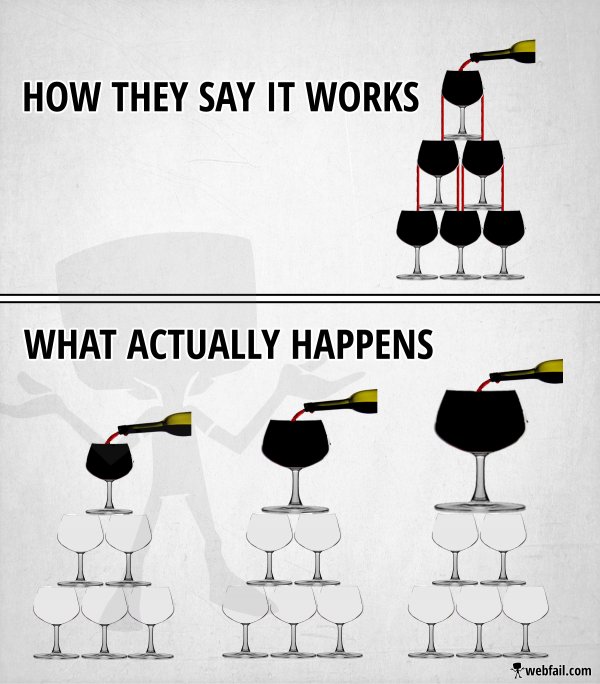
Why Economists Fail?
In the last couple of weeks I have posted a number of Blogs concerning economics, economy, globalisation, and the common good. I have been humbled by the warmth and positivity of the so many emails I have received, the comments and suggestions.
See the Blogs:
Economics, Globalisation and the Common Good: A Lecture at London School of Economics
Sustainable Development Goals: Where is the Common Good?
Open Letter to Mark Carney, Governor of the Bank of England
Values, Ethics, and the Common Good in MBA rankings: Where are they?
Calling all academic economists: What are you teaching your students?
Today I received an email from a friend drawing my attention to a very interesting, informative article, “Why Economists Fail?” which is very much related to the Blogs I have been writing.
I very much enjoyed reading it and I now wish to share it with you. I hope my honest and conscientious fellow academic economists and other readers will be sufficiently inspired and thus, we can all come together and demand a better, more relevant, truthful and honest economics teaching.
Why Economists Fail?

“…Yet there’s a case to be made for discussing economics from a standpoint distinct from that of today’s economists – in fact, from nearly any imaginable standpoint other than that of today’s economists. That case could draw its initial arguments from many points, but the most obvious one just now has to be the near-total failure of contemporary economic thought to provide meaningful guidance to the macroeconomic challenges of our time.
This may seem like an extreme statement, but the facts back it up. Consider the way that economists responded – or, rather, failed to respond – to the late housing boom. This was as close to a perfect textbook example of a speculative bubble as you’ll find in recent history. The very extensive literature on speculative bubbles, going back all the way to Mackay’s Extraordinary Popular Delusions and the Madness of Crowds, made recognizing another example of the species easy enough. All the signs were there: the dizzying price increases, the huge influx of amateur investors, the giddy rhetoric insisting that prices could and would keep on rising forever, the soaring rate of speculation using borrowed money, and the rest of it.
By 2005, accordingly, a good many people outside the economics profession were commenting on parallels between the housing bubble and other speculative binges; by 2006 the blogosphere was abuzz with accurate predictions of the approaching crash; by 2007 the final plunge into mass insolvency and depression was treated in many circles as a foregone conclusion – as indeed it was by then. Yet it’s a matter of public record that among those who issued these warnings, economists – who should have caught onto the bubble faster than anyone – could very nearly be counted on the fingers of one foot. On the contrary, the vast majority of the economists who expressed a public opinion on the subject insisted that the delirious rise in real estate prices was justified and that the exotic financial innovations that drove the bubble would keep banks and mortgage companies safe from harm.
These comforting announcements were wrong. Those who made them had every reason to know at the time that they were wrong. No less an economic luminary than John Kenneth Galbraith pointed out decades ago that in the financial world, the term “innovation” usually refers to the rediscovery of the same limited set of bad ideas that always, without exception, lead to economic disaster. Galbraith’s books The Great Crash 1929 and A Short History of Financial Panics, which chronicle the carnage caused by the same gimmicks in the past, can be found on the library shelves in every school of economics in North America, and anyone who reads either one can find every rhetorical excess and fiscal idiocy of the housing bubble faithfully duplicated in the great speculative binges of the past.
If this were an isolated instance of failure, it might be pardonable, but the same pattern repeats itself as regularly as speculative bubbles themselves. Identical assurances were offered – in some cases, by the identical economists – during the last great speculative binge in American economic life, the tech-stock bubble of 1996-2000. They have been offered by professional economists during every other speculative binge since the profession of economics came into being. Take a wider view, and you’ll find that whenever a professional economist assures the public that some apparently risky course of action is perfectly safe, he is usually wrong.
A colorful recent example was the self-destruction of Long Term Capital Management (LTCM) in the early 1990s. One of the two Nobel laureates in economics on LTCM’s staff announced publicly that the computer models the company used for its hugely leveraged trades were so good that they could not lose money in the lifetime of the universe. Have you ever noticed that villains in bad movies very often get blown to smithereens a few seconds after saying “I am invincible”? Apparently the same principle applies to economists, though the time lag is longer; it was, as I recall, some five years after this announcement that LTCM got blindsided by a Russian foreign-loan default that many other people saw coming, and failed catastrophically. The US government had to arrange a hurried rescue package to keep the implosion from causing a general financial panic.
Economists are not, by and large, stupid people. Those who work in some of the less glamorous subsets of the field have worked out a great many useful tools for businesses and individuals, and the level of mathematical skill to be found among today’s “quants” rivals that of many university physics departments. Yet the profession seems to have become incapable of learning from its most glaring and highly publicized mistakes. This is all the more troubling in that you’ll find many economists among the pundits who insist that industrial economies need not trouble themselves about the impact of limitless economic growth on the biosphere that supports all our lives. If they’re as wrong about that as so many other economists were about the housing bubble, they’ve made a fateful leap from risking billions of dollars to risking billions of lives.
What lies behind this startling blindness to the evidence of history and the reality of the downside? Plenty of factors doubtless play a part, but three seem most important to me.
First of all, for professional economists, being wrong is much more lucrative than being right. During the runup to a speculative binge, and even more so during the binge itself, a great many people are willing to pay handsomely to be told that throwing their money into the speculation du jour is the right thing to do. Very few people are willing to pay to be told that they might as well flush it down the toilet, even – indeed, especially – when this is the case. During and after the crash, by contrast, most people have enough calls on their remaining money that paying economists to say anything at all is low on the priority list.
The same rule applies to professorships at universities, positions at brokerages, and many of the other sources of income open to economists. When markets are rising, those who encourage people to indulge their fantasies of overnight wealth will be far more popular, and thus more employable, than those who warn them of the inevitable outcome of pursuing such fantasies; when markets are plunging, and the reverse might be true, nobody’s hiring. Apply the same logic to the fate of industrial society and the results are much the same; those who promote policies that allow people to get rich and live extravagantly today can count on an enthusiastic response, even if those same policies condemn industrial society to a death spiral in the decades ahead. Posterity, it’s worth remembering, pays nobody’s salaries today.
Second, like many contemporary fields of study, economics suffers from a bad case of premature scientification. The dazzling achievements of science have encouraged scholars in a great many fields to ape science’s methods in the hope of duplicating its successes, or at least cashing in on its prestige. Before Isaac Newton could make sense of the planets in their courses, though, thousands of observational astronomers had to amass the raw data with which he worked. The same thing is true of any successful science: what used to be called “natural history,” the systematic recording of what nature actually does, builds the foundation on which science erects structures of hypothesis and experiment.
A great many fields of study have attempted to skip the preliminaries and fling themselves straight into scientific research. The results are not good, because there’s a boobytrap hidden inside the scientific method. The fact that you can get some fraction of nature to behave in a certain way under arbitrary conditions in the artificial setting of a laboratory does not mean that nature behaves that way left to herself. If all you want to know is what you can force a given fraction of nature to do, this is well and good, but if you want to understand how the world works, the fact that you can often force nature to conform to your theory is not exactly helpful.
Economics is particularly vulnerable to this sort of malign feedback because its raw material – human beings making economic decisions – is so complex that the only way to control all the variables is to impose conditions so arbitrary and rigid that the results have only the most distant relation to the real world. The logical way out of this trap is to concentrate on the equivalent of natural history, which is economic history: the record of what has actually happened in human communities under different economic conditions. This is exactly what those who predicted the housing crash did: they noted that a set of conditions in the past (a bubble) consistently led to a common result (a crash) and used that knowledge to make accurate predictions about the future.
Yet this is not, on the whole, what successful economists do nowadays. Instead, a great many of them spend their careers generating elaborate theories and quantitative models that are rarely tested against the evidence of economic history. The result is that when those theories are tested against the evidence of today’s economic realities, they often fail.
The Nobel laureates whose computer models brought LTCM crashing down in flames, for example, created what amounted to extremely complex hypotheses about economic behavior, and put those hypotheses to a very expensive test, which they failed. If they had taken the time to study economic history first, they might well have noticed that politically unstable countries tolerably often default on their debts, that moneymaking schemes involving huge amounts of other people’s money usually end up imploding messily, and that every previous attempt to profit by modeling the market’s vagaries had come to grief when confronted by the sheer cussedness of human beings making decisions about their money. They did not notice these things, and so they and their investors ended up losing astronomical amounts of money.
The third factor driving the economic profession’s blindness to its own mistakes is more complex, and will demand a post of its own. Few things seem less related than the abstractions of metaphysics and the gritty realities of money, but there’s a crucial connection. Underlying today’s economic thought is a specific set of metaphysical assumptions, and those assumptions form the foundation of sand underneath the proud and unsteady towers of today’s economic theories. In next week’s post I plan on taking a hard look at the metaphysics of money, in the hope of finding a less problematic basis for economic life in the approaching deindustrial age.”
Read the original article: