- Details
- Written by: Kamran Mofid
- Hits: 9665
Biomimicry: Mother Nature’s Guide to a Better and more Harmonious World
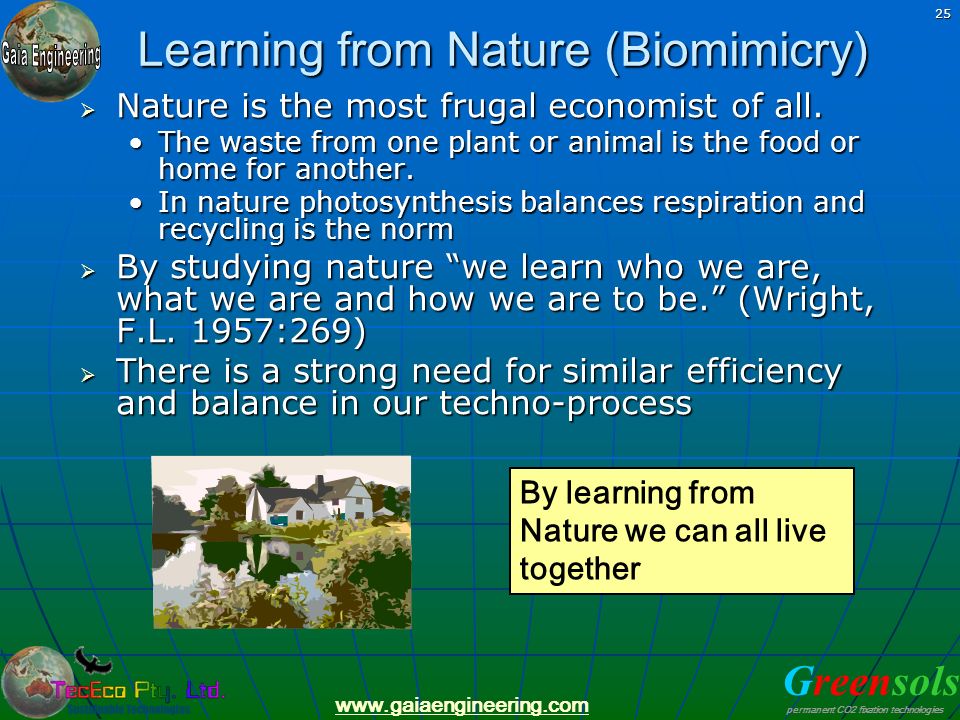
Learning fromNature
“With the onward march of science and technology, and the continuing quest for improvement, there is a growing curiosity about the world around us. The structures in nature are great lessons for human study. Only the most successful structural forms have survived. The resourcefulness of material use, conformity with mathematical proportion, underlying structural systems, and the profound capacity to respond to a variety of climatic and environmental forces, make natural forms tremendous exemplars to numerous aspects of our life. Close examination of structures in nature can be rewarding and surprising. “Doing it nature's way”, as shown below, has the potential to change the way we live for the better.
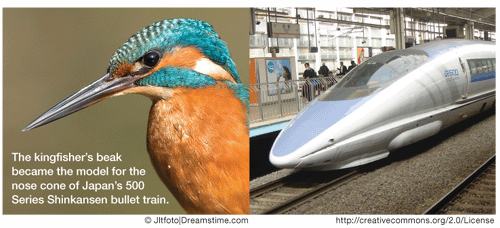
Biomimicry (from bios, meaning “life,” and mimesis, meaning “to imitate”) is a design principle that seeks sustainable solutions to human problems by consulting and emulating nature’s time- honoured patterns and strategies. According to Janine Benyus (2002), author of the ground breaking book Biomimicry, the core idea is that nature, imaginative by necessity, has already solved many of the problems we are grappling with. Using nature’s principles allow us to create products, processes, and policies that are well- adapted to life on Earth over the long haul.

'BT took inspiration from the behaviour of ants when it redesigned its phone network.'.
Photo:theguardian.com
The science of biomimicry provides us with a framework. In her book, Benyus offers the following nine basic laws of the circle of life, all of which resonate throughout her work and that of other biomimics:
• Nature runs on sunlight
• Nature uses only the energy it needs
• Nature fits form to function
• Nature recycles everything
• Nature rewards cooperation
• Nature banks on diversity
• Nature demands local expertise
• Nature curbs excesses from within
• Nature taps the power of limits”

Shi Ling Bridge:Biomimicry in architecture and the start of the Ecological Age
Photo: wired.co.uk
‘Animals, plants and microbes are eternal engineers, possessing a power of innovation that humanity can merely watch in awe. They are in a constant flux of change, adapting and evolving to fit with the ever-changing world around them. With climate change now an accepted trend and scarcity of crucial resources becoming increasingly prevalent, what can business learn from this constant cycle of natural innovation?
Biomimicry is a new science that aims to use nature's best ideas and adapt them for human use. The environment has developed many of the world's most phenomenal masterpieces such as photosynthesis, self-sustaining eco-systems and natural selection, so how can humans copy these designs and manufacturing systems to solve some of today's biggest challenges?
Biomimicry looks at nature in three different ways:
• Nature as a model: Biomimicry uses the forms, processes, systems, and strategies employed by the natural world as inspiration for sustainable solutions.
• Nature as a measure: Looking at the standards set by nature, biomimicry aims to measure the sustainability of inventions using ecology as a benchmark.
• Nature as a mentor: The focus of biomimicry is not what we can extract from nature but what we can learn from it.’
“Mimesis within the context of its original Greek meaning requires the imitator to embody that which is being imitated. This goes to the heart of what makes us human: through perception, imagination and empathetic identification, we can share in what another feels and in doing so transform what we perceive into what we experience. It's wisdom sourced from our ability to love.
It is true that our analytical examination of nature is important, but only as part of a deeper, richer participatory engagement. If the deeper resonance of our nature is overlooked, such biomimetic transformations fail to address the root cause of our unsustainable way of life. We deal with symptoms (carbon emissions, waste to landfill, ocean dead zones, social inequality, factory farming) while neglecting the underlying cause (attuning our self-other-nature relationship).
Put more bluntly, scientific rationalism will not get us out of this mess on its own; in fact, it will only add to our dysfunctional way of living unless it goes hand-in-hand with a deeper participatory way of engaging with life: scientific, sensuous and spiritual.”
The above excerpts are from the following original articles:
Live discussion: What is Biomimicry? | Guardian Sustainable Business | theguardian.com
- Details
- Written by: Kamran Mofid
- Hits: 19892
Why do we need an Economy for the Common Good, and what might it look like?
These are the pertinent questions of our time, given the sorry state of our global economy today.
First: A bit of reminder on how economics is taught at our 'prestigious' and not 'very prestigious' universities around the world, lest we forget!
Hiding Behind Falsehood
Unless you are an academic wonk, you will be stymied by words and teaching that looks like this ...
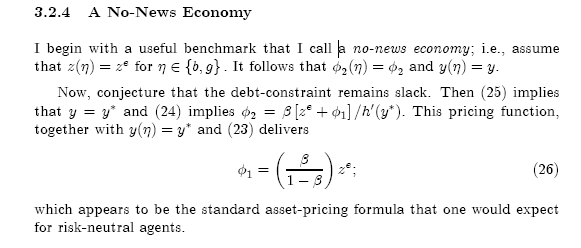

"Today's neoclassical economist is an emperor with no clothes who's fooled us all long enough."
Photos: marketoracle.co.uk&transitionvoice.com
Second, let us compare the above with what a values-led teaching might look like: A teaching to empower one to begin to think about what might an economy for the common good could be like and then to be able to imagine a better world that can collectively be co-created and built:
Some say that my teaching is nonsense.
Others call it lofty but impractical.
But to those who have looked inside themselves,
this nonsense makes perfect sense.
And to those who put it into practice,
this loftiness has roots that go deep.
I have just three things to teach:
simplicity, patience, compassion.
These three are your greatest treasures.
Simple in actions and in thoughts,
you return to the source of being.
Patient with both friends and enemies,
you accord with the way things are.
Compassionate toward yourself,
You reconcile all beings in the world.- Lao Tzu
These values have been instrumental to empower and enable me to imagine the better world I wish to see:
Imagine a political system that puts the public first. Imagine the economy and markets serving people rather than the other way round. Imagine us placing values of respect, fairness, interdependence, and mutuality at the heart of our economy. Imagine an economy that gives everyone their fair share, at least an appropriate living wage, and no zero-hour contracts. Imagine where jobs are accessible and fulfilling, producing useful things rather than games of speculation and casino capitalism. Imagine where wages support lives rather than an ever expanding chasm between the top 1% and the rest. Imagine a society capable of supporting everyone’s needs, and which says no to greed. Imagine unrestricted access to an excellent education, healthcare, housing and social services. Imagine hunger being eliminated, no more food banks and soup kitchens. Imagine each person having a place he/she can call home. Imagine all senior citizens living a dignified and secure life. Imagine all the youth leading their lives with ever-present hope for a better world. Imagine a planet protected from the threat of climate change now and for the generations to come. Imagine no more wars, but dialogue, conversation and non-violent resolution of conflicts. Imagine a world free of corruption!
And finally, let us just imagine what our world and lives could be like today, if the world leaders and other decision makers were/are imagining the same world as above, just imagine that!!
And now: A Look at an economy that looks and feels good
At a recent seminar I was asked by one of the participants if I could explain, in simple, jargon-free language, what I meant by “an economy that serves the common good”, and also what I meant by “sustainability, social justice and ecology”.
I was excited by these questions, as they are very close to my heart. Although, I have written extensively on these issues*, here, now was my chance to engage, face-to-face, with some interested and well-informed people, who wanted some clear explanations. Thus, I began to explain and the dialogue started:
First, I said, in order to see what an economy for the common good might look like, it would be helpful to consider what globalisation for the common good might look like. This is important, as an economy for the common good needs a fertile ground in which to develop. Thus, I began telling them about the Globalisation for the Common Good Initiative (GCGI), where we connect our intellect with our humanity on our path towards the common good.
I explained that to understand and face the challenges of the contemporary world requires us to view the big picture. Whatever we are considering, whether it is war and peace, economics and environment, justice and injustice, love and hatred, cooperation and competition, common good and selfishness, science and technology, progress and poverty, profit and loss, food and population, energy and water, disease and health, education and family, we need to keep the big picture in mind to understand and solve the many pressing problems, large and small, regional or global.
This big picture is also the context in which we can most productively explore the perennial questions of life – its purpose and meaning, the relevance of values, justice and our relationship to the ecosystem which supports all life.
At an international conference in Oxford in 2002 the Globalisation for the Common Good Initiative (GCGI) and the GCGI Annual International Conference series were born. Through a dialogue of cultures, civilisations, religions, ideas and visions, the big picture was kept in mind. We realized that hard work, commitment, volunteerism and service were needed to achieve our ends.
We recognise that our socio-economic problems are a reflection of our attitude to life and to one another. Justice, peace and harmony will come about only when the connection between the spiritual and practical in life is valued by each one of us and in society at large. This is beautifully expressed in a Chinese proverb:
“If there be righteousness in the heart, there will be beauty in the character.
If there be beauty in the character, there will be harmony in the home.
If there be harmony in the home, there will be order in the nation.
When there is order in each nation, there will be peace in the world.”
This brings the problems of life closer to home. It is not ‘they’ who have to change, but ’we’ who have to change our attitude. It is a journey from ‘what’s in it for me’ towards discovering, living and promoting the common good. The principle of the common good reminds us that we are all responsible for each other – we are our brothers' and sisters' keepers – and must work for social conditions which ensure that every person and every group in society is able to meet their needs and realise their potential. It follows that every group in society must take into account the rights and aspirations of other groups, and the well-being of the whole human family.
One of the greatest challenges of our time is to apply the ideas of the global common good to practical problems and forge common solutions. Translating the teachings of philosophers, spiritual leaders and religious scholars into practical policies that statesmen can apply across the world is a challenge which Globalisation for the Common Good Initiative (GCGI) has taken on. The purpose is not simply to talk about the common good, or simply to have a dialogue, but the purpose is to take action, to work for the common good, using dialogue to resolve differences.
What the GCGI seeks to offer - through its research and conferences, as well as its outreach and dialogue projects - is a vision that places the quest for economic and social justice, peace and ecological sustainability within a spiritual context and a practice of open-heartedness, generosity and caring for others. All are thus encouraged by this vision to serve the common good.
The GCGI has from the very beginning invited us to move beyond the struggle and confusion of a life preoccupied with materialism to a meaningful and purposeful life of hope and joy, gratitude, compassion, and service for the good of all.
Perhaps our greatest accomplishment has been our ability to bring Globalisation for the Common Good into the common vocabulary and awareness of a greater population along with initiating the necessary discussion as to its meaning and potential in our personal and collective lives.
In short, at Globalisation for the Common Good Initiative we are grateful to be contributing to that vision of a better world, given the goals and objectives that we have been championing since 2002.
Having introduced them to the GCGI, I then thought that I have to tell them a bit about myself and my journey: what is it that has made me, an economist, think and speak like this?
Perhaps the best way I could demonstrate this, I thought, was by quoting a passage from an Open Letter I wrote to the editor of the Financial Times. I was prompted to write this letter in response to an editorial which was published on 13 November 2013, under the title of ‘The new economics: Teaching of discipline needs to rely less on abstract models’.
‘Sir, I have read your editorial ‘A new economics’ with much interest. You conclude your piece by asking the economics profession to substitute a little humility for pretension as the first step to a new economics: I wholeheartedly agree.
‘However, may I respectfully ask you to let me know if you had ever written an editorial in similar vein before the crash of September 2008? Had you ever encouraged your readers to think about economic pluralism? Have you ever encouraged a dialogue of disciplines, ideas and visions in the study and practice of economics: a dialogue between economics, ethics, philosophy, spirituality, and the common good? Have you ever encouraged the wealth-creators that read your paper to reflect on ‘Why’ and ‘How’ wealth is produced and, more importantly, when wealth is created, ‘What’ it is going to be used for?
‘Knowing how busy you are, may I share with you a short passage on the subject from a book I wrote in 2005, well before the crash of September 2008:
“From 1980 onwards, for the next twenty years, I taught economics in universities, enthusiastically demonstrating how economic theories provided answers to problems of all sorts. I got quite carried away by the beauty, the sophisticated elegance, of complicated mathematical models and theories. But gradually I started to have an empty feeling.
“I began to ask fundamental questions of myself. Why did I never talk to my students about compassion, dignity, comradeship, solidarity, happiness, spirituality – about the meaning of life? We never debated the biggest questions. Who are we? Where have we come from? Where are we going to?
“I told them to create wealth, but I did not tell them for what reason. I told them about scarcity and competition, but not about abundance and co-operation. I told them about free trade, but not about fair trade; about GNP – Gross National Product – but not about GNH – Gross National Happiness. I told them about profit maximisation and cost minimisation, about the highest returns to the shareholders, but not about social consciousness, accountability to the community, sustainability and respect for creation and the creator. I did not tell them that, without humanity, economics is a house of cards built on shifting sands.
“These conflicts caused me much frustration and alienation, leading to heartache and despair. I needed to rediscover myself and real-life economics. After a proud twenty-year or so academic career, I became a student all over again. I would study theology, philosophy and ethics, disciplines nobody had taught me when I was a student of economics and I did not teach my own students when I became a teacher of economics.
“It was at this difficult time that I came to understand that I needed to bring spirituality, compassion, ethics and morality back into economics itself, to make this dismal science once again relevant to and concerned with the common good.”
OK, so far so good, I thought. They seemed very eager to continue the dialogue. Then, a hand was raised and a question asked:
‘Can you please tell us a bit more on your definition of the common good, and moreover, what are the ingredients of an economy/globalisation for the common good?’
I thus began to define the common good:
Put it very simply, the common good has origins in the beginnings of Christianity. An early church father, John Chrysostom (c. 347–407),wrote: ‘This is the rule of most perfect Christianity, its most exact definition, its highest point, namely, the seeking of the common good . . . for nothing can so make a person an imitator of Christ as caring for his neighbours.’ Of course, all other religions say that we are indeed our neighbour’s keeper, and one way or other have time-honoured traditions on the common good.
From a non-religious perspective, in modern political times, the term ‘common good’ is closely associated with the 17th-century British philosopher John Locke, who argued that when people enter a society they give up some liberties to gain protection of a larger set of liberties and rights as part of a social contract. A society knitted together by the common good guarantees rights that would not exist in a pre-social setting. Locke used this explanation to rationalise the establishment of a parliamentary government that would be responsible for assuring the public welfare. Indeed, in the American Constitution, the notion of the common good is clearly referred to when it states that government should promote ‘the general welfare’.
As for the ingredients, this is what I had to say:
The world today is engulfed by a multitude of crises, including enduring poverty for many, hunger, and resource depletion, a lack of values-led development, economic and social injustice, climate change, species extinction, war, and violence. It is in dialogue with one another, respecting alternative cultures, different religions and diverse social norms, nationalities, and ethnicities, that we will find the global solutions needed for our planet, our human family, and the larger community of the natural world to which we belong. In breaking down barriers towards mutual understanding and respect, in bringing together people from many walks of life, various careers, nations, and organizations, we of the Globalization for the Common Good Initiative, inspired by our dialogue, have together discovered our hope for a better world.
To help build a world that is just, free and with prosperity enjoyed by all through serving and promoting the common good, we offer the following path:
Acknowledging our work, dialogue, research and deliberations since our first encounter in 2002, as well as our continuing and deepening efforts to promote peace, sustainability, global interconnectedness, reverence for life and unity, and having explored many of the structures needed to move us toward the global good, healing our troubled world, we affirm our inalienable rights and recognise our obligations, not only as local and national citizens, but as members of the human race and citizens of the planet. We are heirs to the whole evolution of consciousness and culture, which means that we human beings have to see ourselves as part of the Earth community and recognize that all of life is bound together. We realize that, as members of the human family, we must provide security, sanctuary and constructive engagement for all its members. Sustained by the bounty of all, called by the Sacred, and animated into action by the Spirit of Peace, Justice, and Reverence for All Life, we, hereby acknowledge and pledge to hold ourselves responsible to and accountable for:
* Life-serving environmental stewardship,
*The fulfilment of universal, basic human needs worldwide,
*Economic and social well-being,
* A culture of peace and non-violence,
*Dialogue of Civilisations and Interfaith Dialogue,
*An innovative development model based on the recognition of and respect for human rights and the Rights of Nature,
*Values-led education,
*Values-led economics, business, finance, politics, governance, transparency, and full accountability,
*Volunteerism and Service,
*Dialogue and engagement with Youth,
* Care for Senior Citizens in keeping with respect for their life experience and wisdom,
*The physical and cultural survival of indigenous peoples through new expressions and forms of sovereignty and self-determination,
*The world’s wisdom traditions, which offer living examples of the fruits of contemplation and reflection for contemporary society.
I then completed my remarks by saying that:
In short, in the words of Mahatma Gandhi, we should declare ourselves against the ‘Seven Social Sins’. These are:
Politics without principles
Commerce without morality
Wealth without work
Education without character
Science without humanity
Pleasure without conscience
Worship without sacrifice.
Moreover, in the words of Robert Muller, former UN Under-Secretary General, we ought:
• To see the world with global eyes;
• To love the world with a global heart;
• To understand the world with a global mind;
• To merge with the world with a global spirit.
We can achieve this by:
Bringing the material consumption of our species into balance with the needs of the earth;
Realigning our economic priorities so that all persons have access to an adequate and meaningful means of earning a living for themselves and their families;
Democratising our institutions to route power to people and communities;
Replacing the dominant culture of materialism with cultures grounded in life-affirming values of cooperation, caring, compassion and community;
Integrating the material and spiritual aspects of our beings so that we become whole persons for the greater good
Finally, I invited all present in the room to join the GCGI to ensure a sustainable and harmonious world, nurturing and nourishing the global common good, for present and future generations.
(I am most grateful to my learned friend Anthony Werner, Editor-in-Chief, Shepheard-Walwyn Publishers for his wisdom, insight, support and friendship, which he has so generously given me since 2001 when we first met.)
*Read more:
Kamran Mofid, Globalisation for the Common Good, Shepheard-Walwyn, London, 2002
Kamran Mofid and Marcus Braybrooke, Promoting the Common Good, Shepheard-Walwyn, London, 2005
Economics, Globalisation and the Common Good: A Lecture at London School of Economics
An Invitation to Dialogue: Creating a Culture of Collaboration and Cooperation for the Common Good
- Details
- Written by: Kamran Mofid
- Hits: 11832
Shameful architects of Global Misery
Photo: plainhoney.com
'On September 11, 1973—now referred to as the “other 9/11”—Augusto Pinochet staged a successful coup to oust Chile’s democratically elected president, Salvador Allende. Backed by the CIA, American business interests, and the blessings of Henry Kissinger, Pinochet, enlisting economists trained under Milton Friedman and the so-called “Chicago boys,” restructured the Chilean economy in the image of what has now come to be known as “neoliberalism,” that state apparatus which seeks to deregulate markets, privatize formerly public assets, minimize the power of unions, unleash all manner of austerity measures—in short, to ensure, in the name of freedom, an increasingly frictionless flow of capital across borders and into the bank accounts of those in power.’*
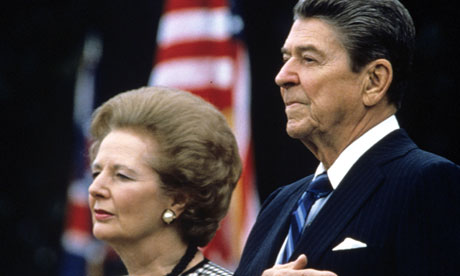
'Today the dominant narrative is that of market fundamentalism, widely known in Europe as neoliberalism. The story it tells is that the market can resolve almost all social, economic and political problems. The less the state regulates and taxes us, the better off we will be. Public services should be privatised, public spending should be cut and business should be freed from social control. In countries such as the UK and the US, this story has shaped our norms and values for around 35 years: since Thatcher and Reagan came to power. It’s rapidly colonising the rest of the world,’* *or as I would say: It has colonized the rest of the world.

Photo: miamiautonomyandsolidarity
'Our era is the individualistic one, and the myth of the happy single obscures our longing for the other in combination with our distrust of this other.
This is strange. We live in one of the safest regions of the world and we have never been so afraid of one another! Why do we view the other as a possible threat? In my opinion, the explanation is to be found in the dominant nature of neoliberal ideology, setting the tone of the past thirty years or so. When it started, Margaret Thatcher produced a very prophetic formulation: ‘There is no such thing as society, there are only individuals’. In the meantime, neoliberalism has installed a society with isolated and ever competing individuals. An unexpected side effect was the growing need for top down control of everything and everyone. We have been turned into lonely hedgehogs filling in forms for every step we take. And we have to take it, that’s for sure. The golden goose is called success.
Michael Douglas puts it quite clearly in one of 1987’s blockbusters ‘Wall street’: “Greed is good. Greed is right. Greed works.” Neoliberalism has realised its own principle, a ‘rational’ selfishness. We do no longer parent, or teach or love. We invest in parenthood, education and relations. And if the investment does not return satisfactorily, we dump the lot, and move on to the next. Get rid of the weakest links in order to boost productivity. The other is first of all a competitor. Team spirit has become rare and needs to be boosted by team building weekends, ironically enough filled with survival of the fittest games.
In the early stages of neoliberalism the principle was limited to industry and trade, but today it dominates everyday life. An ironic example can be found in so called ‘reality shows’ on TV, with striking titles such as The Weakest Link, Temptation Island or Top Starter. The irony is that they pretend to show us who we really are, whilst they are dictating how we should behave. Their message is clear: the ideal human is a rat-race- loving player, always looking for number one. We have to score. In bed, at work, in life. The winner takes it all.
Under the skin of our successful society, fear thrives, from fear of failure to a general distrust of the menacing other. Indeed, if everybody is only looking for number one, then no one is to be trusted. This explains another surprising effect of neoliberalism: the ever-growing burden of top down control, audits, evaluations, protocols and the like. CEO’s are everywhere, meaning chief executive officers. Mind you: ‘officers’, obviously, we are all part of the army. We may have freed ourselves from god, but the almighty eye of CCT is everywhere. Beware if you do not follow the rules!
For the last thirty years, our neoliberal society has been promoting competitive individualism and top down control. Today, the smoke is clearing and we are left with a world of winners and losers, all of them on their own.
Loneliness means cold. And because we are social animals, we need the other in order to feel protected and warm. Today, we need global warming on a societal level. We don’t need a new messiah for that. On the contrary; we should remember that we love our autonomy as well. We need no messiah to enforce top down innovations. Change will come from grass root initiatives, in our own streets and neighbourhoods, bringing people together with a common goal, teaching them to trust one another, instead of feeling afraid and helpless. Citizen Initiatives testify to citizen power.’***
*Neoliberalism and Its Discontents
**Do you feel left out? Perhaps it’s because you refuse to succumb to the competition, envy and fear neoliberalism breeds
Deviant and Proud | George Monbiot
*** PaulVerhaeghe2013TED-xLeidschendam
Now watch this excellent video:
Hedgehogs united: Paul Verhaeghe at TEDxDamlaan - YouTube
For more readings see:
Who Am I in this Market-Based and Money-Driven World?
The 2008 Financial Crisis Explaind: Hyman Minsky Revisited
Margaret Thatcher: A Reflection
The Destruction of our World and the lies of Milton Friedman