
- Details
- Written by: Kamran Mofid
- Hits: 2052
Hope you can hear me!!

Photo:lollydaskal.com
Spring is here in the Northern Hemisphere. But while the blossom and leaves are emerging, butterflies, ladybirds and bees are beginning to dazzle us with their beautiful dancing routines, many of us are staying in to try and halt the global spread of the Covid-19 virus, by self-isolating and social-distancing, actions that are in total contrast to our human nature.
Wherever you live, we hope you, your family, friends and colleagues are safe, healthy and staying calm amidst the uncertainty.
In moments of isolation and fear it is important to foster relationships of care and solidarity. In this spirit, it is my sincere hope that we still can remember and recall the beauty, wisdom and the hopeful message of this day, 20 MARCH.
Yes, Lest We Forget
- Details
- Written by: Kamran Mofid
- Hits: 1748
'Given that we now seem to be inhabiting a somewhat medieval world of plague and portent, I’d like to make the case for the prophetic powers of the US journalist Michael Lewis. Last year, his book, The Fifth Risk, identified a new threat to civilisation to set alongside the climate crisis, nuclear war and the rest.
The “fifth risk” was the attack from populist politicians on the idea of good government – bullying and firing independent experts and undermining the deep institutional knowledge of civil servants – in their crowd-pleasing efforts to “dismantle bureaucracy”. Or, in Lewis’s terms, to carelessly destroy “what you never learn that might have saved you”.
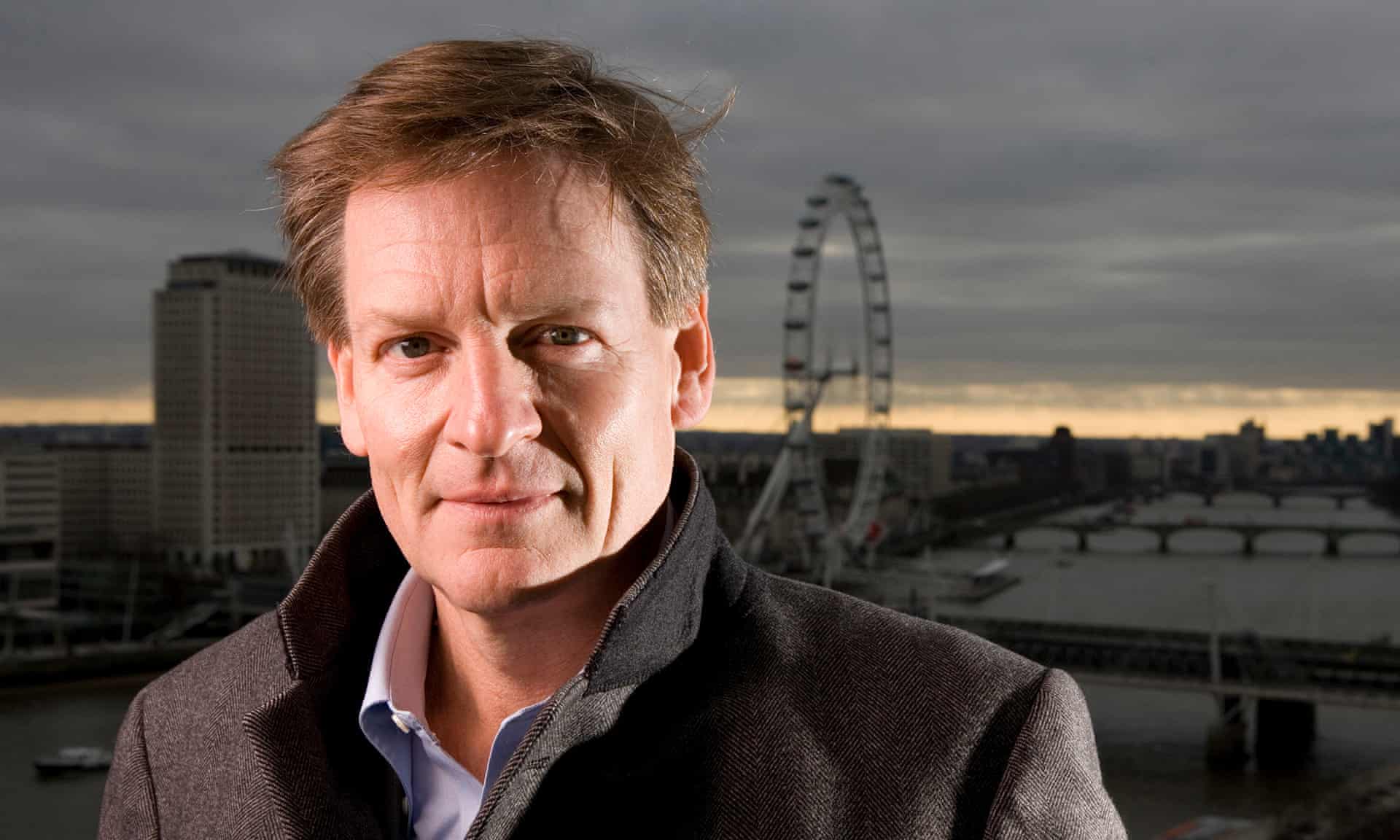
'Michael Lewis, the financial journalist, predicted that it would take something like a pandemic
to expose Donald Trump as not up to the job.'-Photo: The Observer
‘Trump is the single worst business manager that’s ever occupied the office’ ... Michael Lewis.
'Government positions left empty, cronyism, anti-government ideology...' - America more vulnerable to risk
Trump's mismanagement helped fuel coronavirus crisis
'He's an idiot': critics say Trump has failed the US in this test of reassurance

Photo:politico.com
He responded to the pandemic with denial and blaming foreigners. His incompetence and selfishness has now proved lethal.
‘The US is on course to be severely ravaged by the coronavirus outbreak due to a delayed and dysfunctional testing regime and misleading messaging from the Trump administration, public health experts have warned.’
And then, the ‘America First’ demagogue, populist ‘administration rejected World Health Organization testing kits in favor of developing its own, which turned out to be faulty…’-Oliver Milman, The Guardian, 15 March 2020
‘I spoke to Lewis in December and wondered if he could imagine anything that might challenge that drift in our politics, that might make us desire leaders with a respect for independent expertise within robust public institutions.
“For people to suddenly start to value what good government does,” Lewis said, “I think there will have to be something that threatens a lot of people at once. The problem with a wildfire in California, or a hurricane in Florida, is that for most people it is happening to someone else. I think a pandemic might do it, something that could affect millions of people indiscriminately and from which you could not insulate yourself even if you were rich.”
I remember thinking at the time that the notion seemed wildly far-fetched. Four months on, it seems we will get the chance to find out if he was on the money.’-Tim Adams
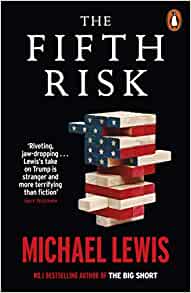
From the Back Cover
The phenomenal new book from the international bestselling author of The Big Short
'The election happened ... And then there was radio silence.'
The morning after Trump was elected president, the people who ran the US Department of Energy - an agency that deals with some of the most powerful risks facing humanity - waited to welcome the incoming administration's transition team. Nobody appeared. Across the US government, the same thing happened: nothing.
People don't notice when stuff goes right. That is the stuff government does. It manages everything that underpins our lives from funding free school meals, to policing rogue nuclear activity, to predicting extreme weather events. It steps in where private investment fears to tread, innovates and creates knowledge, assesses extreme long-term risk.
And now, government is under attack. By its own leaders.
In The Fifth Risk, Michael Lewis reveals the combustible cocktail of wilful ignorance and venality that is fuelling the destruction of a country's fabric. All of this, Lewis shows, exposes America and the world to the biggest risk of all. It is what you never learned that might have saved you. Buy the Book
See more related reflections:
In the coronavirus crisis, our leaders are failing us
‘As I learned in the 2008 crash, a global problem requires governments to work together. Today’s populist nationalism puts us all at risk.’-Gordon Brown, UK prime minister from 2007 to 2010
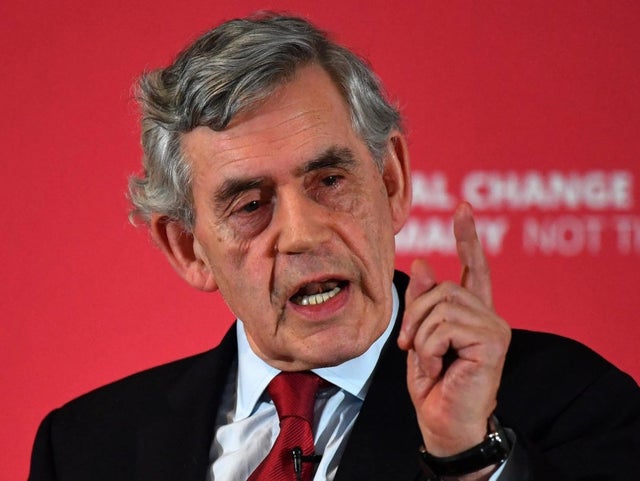
Gordon Brown. Photo:The Scotsman
‘Of course, the very idea of global collaboration – and the convening of what would be a “virtual” G20 – sits uneasily with the “America first”, “China first”, “India first” and “Russia first” populist nationalism that has been subdividing our world. Since the high point of cooperation in 2009, nationalists have been in the ascendant – building walls, closing borders, clamping down on immigrants and imposing tariffs. And what was first a protectionist nationalism has morphed into an aggressive us-versus-them unilateralism.’ In the coronavirus crisis, our leaders are failing us
A reflection on why cooperation has always been the best to understand, address and resolve conflicts and crises: In praise of cooperation as an insurance at time of crisis: Lessons as coronavirus spreads around the globe
A reflection on why selfishness has trumped cooperation: Have We lost the Art of Knowing What it Means to Be Human?
A reflection on the failure of the marketised, consumerised and values-less education and the rise of populist, demagogues, values-less leadership: Brexit, Trump and the failure of our universities to pursue wisdom
- Details
- Written by: Kamran Mofid
- Hits: 3244
Selfishness
The Damning Impact of a Toxic Philosophy on the World’s Humanity: The Tragedy of Ayn Rand, Trump and the Fall of Humanity and Civility
Ayn Rand: The Woman who regarded altruism, selflessness, empathy, compassion and the common good as incompatible with man's nature, with the creative requirements of his survival, and with a free society!
(One wonders if by man’s nature and free society, she was referring to Trump and his Great America!!)- See below for more.
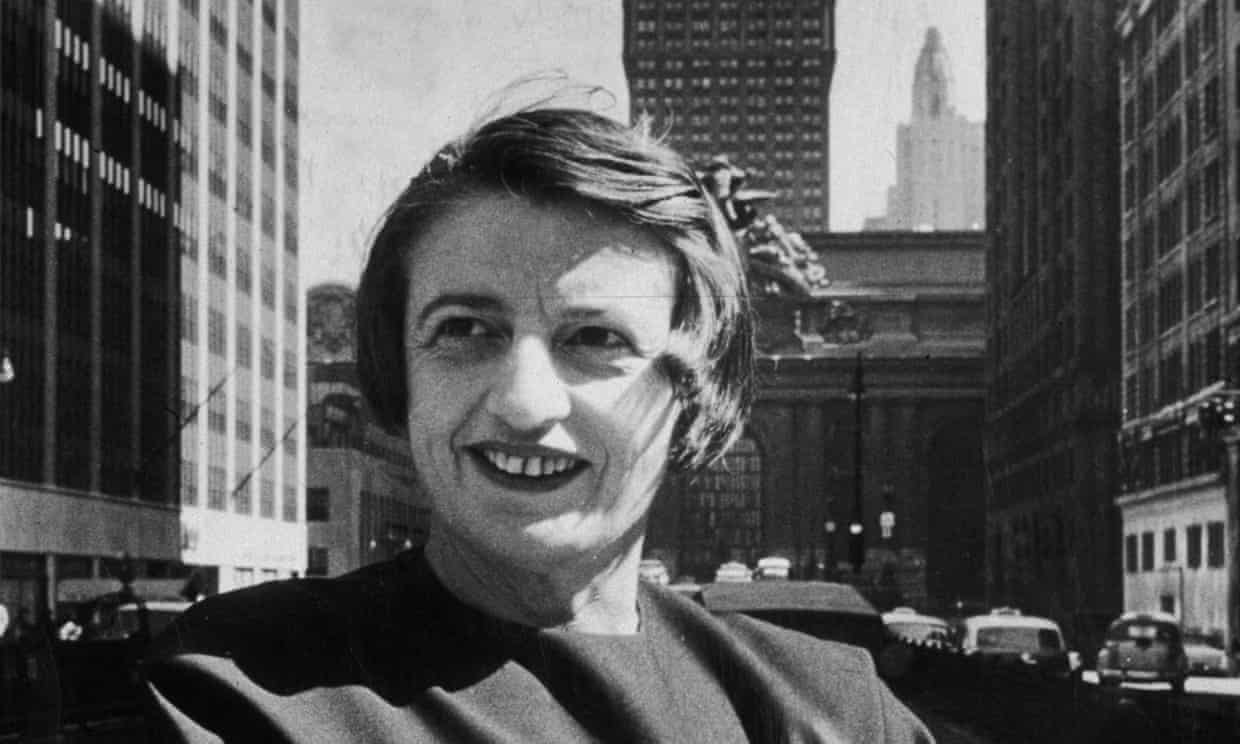
Ayn Rand: The Virtue of Selfishness. Photo:Getty Images
"It has a fair claim to be the ugliest philosophy the postwar world has produced. Selfishness, it contends, is good, altruism evil, empathy and compassion are irrational and destructive. The poor deserve to die; the rich deserve unmediated power. It has already been tested, and has failed spectacularly and catastrophically.”
Rand was a Russian from a prosperous family who emigrated to the United States. Through her novels (such as Atlas Shrugged) and her nonfiction (such as The Virtue of Selfishness) she explained a philosophy she called Objectivism. This holds that the only moral course is pure self-interest. We owe nothing, she insists, to anyone, even to members of our own families. She described the poor and weak as "refuse" and "parasites", and excoriated anyone seeking to assist them. Apart from the police, the courts and the armed forces, there should be no role for the government: no social security, no public health or education, no public infrastructure or transport, no fire service, no regulations, no income tax."...Continue to read
And now, given the tragic consequences of this toxic, immoral, uncivil, inhuman, untrue philosophy, once again, this ugly belief system has become the central agenda of a man who has captured the White House, whilst becoming a role model for other demagogues around the world.
Trump's Brand Is Ayn Rand

'Libertarian philosopher and author Ayn Rand has had a pernicious impact on many over the decades,
but Donald Trump and his gang of reactionary corporatists have showed just how far they are willing to go.'-Photo:commondreams.org
‘This far-right philosophy is an affront to the idea that we're all in this thing together.’
Rand and Trump Have Destroyed the Common Good (Robert Reich)
‘If there is no common good, there is no society
‘...In other words, we have to understand who Ayn Rand is so we can reject her philosophy and dedicate ourselves to rebuilding the common good.
The idea of the common good was once widely understood and accepted in America. After all, the U.S. Constitution was designed for “We the people” seeking to “promote the general welfare” – not for “me the selfish jerk seeking as much wealth and power as possible.”
Yet today you find growing evidence of its loss – CEOs who gouge their customers, loot their corporations and defraud investors. Lawyers and accountants who look the other way when corporate clients play fast and loose, who even collude with them to skirt the law.
Wall Street bankers who defraud customers and investors. Film producers and publicists who choose not to see that a powerful movie mogul they depend on is sexually harassing and abusing young women.
Politicians who take donations (really, bribes) from wealthy donors and corporations to enact laws their patrons want, or shutter the government when they don’t get the partisan results they seek.
And a president of the United States who lies repeatedly about important issues, refuses to put his financial holdings into a blind trust and then personally profits off his office, and foments racial and ethnic conflict.
The common good consists of our shared values about what we owe one another as citizens who are bound together in the same society. A concern for the common good – keeping the common good in mind – is a moral attitude. It recognizes that we’re all in it together.
If there is no common good, there is no society.’-Robert Reich, Trump's Brand Is Ayn Rand
Kindness the Antidote to Selfishness
“In a world where you can be anything, be kind.”
In a time of panic, please don’t forget to be kind.
How can we measure what makes a country great?
Imaging a Better World: Moving forward with the real Adam Smith
Adam Smith and the Pursuit of Happiness
A Must Read Book about how Adam Smith can change your life for better
Ayn Rand and the Cruel Heart of Neoliberalism*
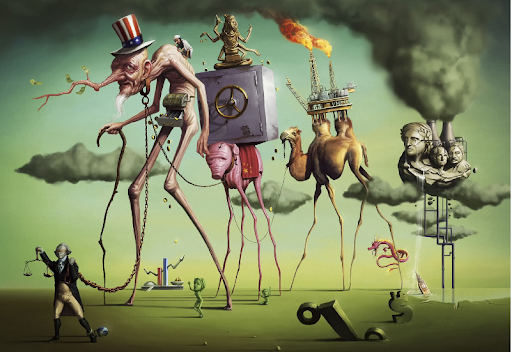
Photo:softpanorama.org
'Trump is in most ways a Rand villain—a businessman who relies on cronyism and manipulation of government. Yet he praises The Fountainhead: “It relates to business, beauty, life and inner emotions. The book relates to . . . everything.”
‘In 2018, tech writer Douglas Rushkoff met with a handful of hedge fund billionaires to talk about the future of technology. But they were actually most interested in enlisting his help in filling in the details for their vision of the dystopian future—or rather, for their own high-tech vision of a Galt’s Gulch–style escape from it. Writing in Medium, Rushkoff described their questions about future apocalypse:
The Event . . . was their euphemism for the environmental collapse, social unrest, nuclear explosion, unstoppable virus, or Mr. Robot hack that takes everything down. . . .
They knew armed guards would be required to protect their compounds from the angry mobs. But how would they pay the guards once money was worthless? What would stop the guards from choosing their own leader? The billionaires considered using special combination locks on the food supply that only they knew. Or making guards wear disciplinary collars of some kind in return for their survival. Or maybe building robots to serve as guards and workers—if that technology could be developed in time. . . .
They were preparing for a digital future that had a whole lot less to do with making the future a better place than it did with . . . insulating themselves from a very real and present danger of climate change, rising sea levels, mass migrations, global pandemics, nativist panic, and resource depletion. . . .
Asking these sorts of questions, while philosophically entertaining, is a poor substitute for wrestling with the real moral quandaries associated with unbridled technological development in the name of corporate capitalism.
These unnamed hedge fund honchos may have read Atlas Shrugged, but even those who hadn’t would likely have been familiar with John Galt and the producers’ utopia he created far from the collapsing world. By 2018 Ayn Rand and her novels had become widespread cultural reference points among wealthy bankers, CEOs, tech moguls, and right-wing politicians.
Rand’s philosophy had its roots in nineteenth-century classical liberalism and in her impassioned rejection of socialism and the welfare state in the twentieth century. Her anti-statist, pro–“free market” stances went on to shape the politics of what came to be called libertarianism, or sometimes anarcho-capitalism, during a period of rapid expansion in the 1970s. The rise of neoliberalism has a parallel history, and much overlap with libertarianism—but these formations nonetheless have distinct trajectories. Rand’s influence floats over all of them as a guiding spirit for the sense of energized aspiration and the advocacy of inequality and cruelty that shaped their worldviews. By the 2018 meeting with Rushkoff, however, the billionaires could no longer be called optimistic. Their plans differ from Galt’s intention to return to save the world; the contemporary billionaires are only hoping to escape and survive the ruin—in high-tech style.
Ayn Rand bitterly rejected libertarians as right-wing “hippies” in the 1970s, but her views and those of her Objectivist followers melded substantially with the emerging libertarian movement. Young enthusiasts were joining older libertarian warhorses to create new organizations, publications, and institutions. Libertarian “rads” split from conservative “trads” in Young Americans for Freedom in 1969 and went on to help found the new Libertarian Party in 1971. The New York Times Magazine featured a major story that January tracking these developments: “The New Right Credo—Libertarianism.”
During the 1970s, chapters of organizations like the Society for Individual Liberty proliferated along with popular publications such as Reason magazine. A yearly libertarian studies conference, the Center for Libertarian Studies, and the Journal of Libertarian Studies established a foothold in academic life. The influential Cato Institute was originally opened as the libertarian Charles Koch Foundation in 1974. The libertarians, who clashed on a wide range of issues, ranged from countercultural left libertarians, to pragmatic advocates of a minimal state (“minarchists”), to a fiery right wing of adamantly anti-state anarcho-capitalists. Objectivists were prominent in all of their activities; reading Rand’s novels became a rite of passage for many. Rand herself disapproved of the lack of philosophical discipline among the motley crew of young libertarians, however, announcing that “if such hippies hope to make me their Marcuse, it will not work.”
Rand just got crankier and crankier as the years went by. She continued giving a few public lectures and publishing short essays on current events. She was interviewed by Phil Donahue; she began work on a television script for Atlas Shrugged that was never produced. Her health began a long decline when her lifetime of heavy smoking resulted in a diagnosis of lung cancer in 1974 (though she denied the connection between smoking and cancer to the end). She alienated nearly all her friends and colleagues one by one over the years, leaving only her heir, philosopher Leonard Peikoff, and a few others at her death in 1982. Objectivism, meanwhile, lived on—both in the loyal band of followers associated with the Ayn Rand Institute (founded by Peikoff in 1985) and in those who split off, feeling freer to branch out into more heterodox formations after Rand’s death.
As libertarianism spread and Rand withdrew, a new political economic formation began to take center stage. Becoming organized in the late 1940s with the establishment of the Mont Pelerin Society (MPS), neoliberal thinkers accumulated power and influence over the decades, to the point of seizing state power by the 1980s. Hard to define and largely hidden from view in the early years (the term was first used in 1925), neoliberalism was just one thread in the wild and woolly fabric of right-wing politics in the United States and Europe. The founding of the MPS helped define it as a distinct tendency among the classical liberals, Burkean traditionalists, libertarians, anarcho-capitalists, religious conservatives, right-wing racial nationalists, and fascists. Organized primarily by economist Friedrich Hayek, the more than one thousand economists, journalists, policy makers, and other thinkers who eventually gathered under the MPS umbrella formed what Philip Mirowski has called a “Neoliberal Thought Collective”—an intellectual/political intervention that eventually defined a new era of capitalism.
Although neoliberalism was never monolithic, the neoliberal project was focused on the need to develop a “new liberalism” to replace the outmoded concepts of nineteenth-century classical liberalism. The primary goal—remaking the infrastructure of states and markets in the post–Great Depression and post–Second World War world—did not comport with the “laissez-faire” capitalism of an earlier era. The neoliberals set out to retool the state in relation to the market values of property rights and corporate hegemony. While their public propaganda efforts emphasized the keyword freedom and linked so-called free markets with free minds, they set out via activist interventions in state policy to create a decidedly planned version of “laissez-faire.”
This gap between the public face and the relatively hidden political planning of neoliberals has been described by David Harvey as a contrast between the utopian theory of neoliberal freedom and the practical class project of installing oligarchical elites at the center of economic and state power. Neoliberalism is often misunderstood through its utopian propaganda as an effort to shrink the state and free the natural operations of “the market.” But neoliberals redirect state efforts rather than diminish them. The “Neoliberal Thought Collective,” combined with the various allied political policy centers of neoliberal action, might be understood as a global anti-left social movement. Nancy MacLean has traced the planning of various neoliberal forces—through foundations, think tanks, research centers and private funders—to create new barriers to democratic decision-making, in the interests of corporate power. She describes how Charles Koch was introduced to the thinking of Russian revolutionary Vladimir Lenin by anarcho-capitalist Murray Rothbard. Always learning from the left, Koch drew from Lenin’s thinking to develop plans for well-trained cadres that could prevail over a majority in the political arena. (Today, Lenin’s adherents on the right include former Breitbart editor and Trump adviser Steve Bannon.)
Neoliberalism was initially centered in Europe and the United States, focused on attacking the influence of John Maynard Keynes and the welfare states his thinking helped establish. The point of neoliberal effort was to free capitalism from the “mixed economies” that emphasized limited forms of social security, financial regulation, empowerment of labor, social services, and public ownership. The slow-motion collapse of the Fordist economies of secure employment, with relatively high wages and benefits, opened the door to new macroeconomic, monetary, and fiscal policies advocated by the Neoliberal Thought Collective—including privatization of public services, re-regulation of corporate operations, and erosion of consumer and workplace protections.
Though this process of “neoliberalization” was represented as race blind, many of the ideas and policies evolved out of resistance to the civil rights movement in the United States, via what Nancy MacLean has called “property supremacy.” Opposition to the Civil Rights Act of 1964 was often articulated as a defense of private property against government interference, rather than as racial animus. Claims were made for the freedom of private property owners to discriminate against anyone for any reason. During “massive resistance” to civil rights in the U.S. South, the creation of private “segregation academies” sometimes displaced support for public schools—a model for later neoliberal strategies for privatization of education. But the critique of government institutions did not extend to legislative efforts to suppress voting rights and “law and order” police suppression of political dissent. In those circumstances state action was required to defend property rights from democracy as well as disorder.
In 1980, neoliberal politicians Ronald Reagan and Margaret Thatcher ascended to become heads of state in the United States and United Kingdom. In subsequent years, neoliberal politics and policies moved social democratic parties unevenly toward neoliberalism all across Europe. During the 1990s the neoliberal Washington Consensus took form, and the 1992 Maastricht Treaty founded the European Union on neoliberal principles.
But the neoliberal political project was pursued far beyond Europe and the United States. Fundamentally, neoliberalism was a global extension of European colonialism on the nonterritorial U.S. imperial model. During the mid–twentieth century, former colonies throughout the Global South declared independence. New postcolonial states in Asia, Africa, the Middle East, Latin America, and the Caribbean instituted a range of strategies to establish growth and autonomy: restrictions on foreign investment, replacement of imports with local production, the redistribution of land, and the launching of ambitious public projects and social supports. Global neoliberalism was engineered to erode those strategies.
Violence was a central method for the imposition of neoliberalism in the Global South. The 1973 coup in Chile and the 2003 invasion of Iraq were both followed by foreign investment, resource extraction, and privatization of public assets. But the primary means for reestablishing the economic exploitation and political domination that are key to racial capitalism was the trap of debt.
Through lending to impoverished postcolonial states, financial institutions based in the Global North (especially the International Monetary Fund) were able to impose “structural adjustment” requirements on debtor nations in the South. After the 1989 fall of the USSR, neoliberalism entwined with various forms of postsocialist governance in states of the former Russian empire. Neoliberal policies also reshaped late twentieth-century China. More recently, forms of authoritarian neoliberalism mixed with right-wing populism are in ascendance in India, the Philippines, and elsewhere.
Neoliberal influence has been culturally deep as well as geographically wide. Drawing on the work of Michel Foucault, a multidisciplinary group of scholars have described the reach of neoliberal modes of governance into the conduct of everyday life. To counter the solidarity economies and social cooperation of organized workers, public-spirited officials, and professionals, neoliberals have promoted the Entrepreneurial Self who competes in the Aspiration Society. Everyone invests in their own personal and familial human capital, and all are responsible for their own risk-taking and rewards, or the lack of them. According to these conceptions, the poor are not a class, but a collection of individual failures. The rich are not exploitive parasites on the labor of the majority, but the very source of wealth and a boon to society. Except that, as Margaret Thatcher noted, “society” as such does not exist. The social is the context for individual striving. It is also the scene of the Neoliberal Theater of Cruelty, through which feelings of resentment, fear, anger, and loathing are enacted against the weak, who are a drain on the worthy. Cracking down on welfare “cheats,” “illegal” immigrants, and homeless “vagrants” can become a form of public satisfaction.
But the everyday life of neoliberalism—a template for living as well as governance—is not always so dramatic. Neoliberal cultures are multiple, and include “soft” multicultural, inclusive, and self-help–infused versions. Bill Clinton and Tony Blair, Barack Obama and Angela Merkel represent a range of softer versions. They have steered clear of the open-air theater of cruelty approach, while also busying themselves with stripping away the social safety net and backing the investor class—Bill Clinton abolished “welfare as we know it,” and Obama put Wall Street bankers in charge of dealing with the economic crisis in 2008. Under both soft and hard versions, everyday life is infused with the nuts-and-bolts preoccupations of neoliberalism more than with the spectacular—arranging medical care, purchasing insurance, checking credit scores, going to the gym, paying student loans, worrying about housing costs, getting kids into schools. The reorganization of the infrastructure of political and economic life has reached deeply into daily living, erasing many of the boundaries between “the market” and the body, the family, emotional life. Everyday preoccupations in neoliberal times center on surviving a precarious employment landscape and investing in the skills and traits needed to keep moving—rather than on building the solidarity that might underwrite a broad remaking of political and economic infrastructure. As a bus stop advertisement for New York University recently put it, “I am the CEO of Me, Inc.”
Then in 2007 and 2008, it looked like it all might come tumbling down. The collapse of the subprime mortgage market in the United States reverberated through global financial institutions, then infected markets and industries well beyond banking and housing. Losses were deep and broad. Neoliberal strategies of privatization, deregulation (especially of finance), and minimization of social services lost support in the short run. But their supporters soon recovered their nerve and Zombie Neoliberalism stalked the land. As Fredric Jameson and others have argued, economics is a story more than a science. And the story the Neoliberal Thought Collective told in the wake of the 2008 economic crisis was: More and better neoliberalism is the cure for, not the cause of, economic crisis. More tax cuts, less regulation, intensified theaters of cruelty! In Philip Mirowski’s phrasing, more “everyday sadism.” Those losing their homes are to blame for their bad mortgages; immigrants are to blame for citizens’ job losses and precarity; everyone should be responsible for their own healthcare! And in an especially tricky twist, the groups calling for neoliberal remedies for neoliberal crises (like the Tea Party) posed as outsiders—Fight the Power! Identifying the power became the crux of the problem.
During the decade since the crisis of 2008, politics have increasingly polarized in volatile ways around the world. The “center” of neoliberal consensus seems to be progressively collapsing, despite the strenuous efforts and significant successes of the Zombies. Left activism and right-wing mobilization have expanded rapidly. In this polarized landscape, Ayn Rand pops up as a kind of avatar of capitalist “freedom.” From a figure admired largely on the margins of U.S. politics, she moved into the political center in the decades after 1980—or rather, the center moved toward her.
Ayn Rand’s popularity has had four significant high points: (1) from the publication of The Fountainhead to the appearance of Atlas Shrugged (1943–1957); (2) among newly ascendant neoliberals during the 1980s; (3) among the new tech tycoons of Silicon Valley during the 1990s and after; and (4) during and after the 2008 crash. The link between the first two periods can be traced through the career of Alan Greenspan.
Greenspan became a regular at Rand’s Collective meetings during the 1950s, accompanying his first wife, Joan Mitchell. At first quiet and circumspect, Greenspan slowly waded into debates with Rand—who called him the Undertaker. He was a math whiz, a logical positivist, a committed empiricist technocrat when he encountered Objectivism. But then, he explains in his memoir The Age of Turbulence, “Rand persuaded me to look at human beings, their values, how they work, what they do and why they do it, and how they think and why they think. This broadened my horizons far beyond the models of economics I’d learned. . . . She introduced me to a vast realm from which I’d shut myself off.”
His work and reputation as an economic consultant took off during the 1960s, when he delivered lectures at the Nathaniel Branden Institute and published in the Objectivist. In 1974, as neoliberal thinking began to move increasingly away from pure forms of libertarian philosophy and toward the project of reshaping state power, Greenspan moved into a new post on President Gerald Ford’s Council of Economic Advisors (Rand and Frank O’Connor accompanied him to the swearing in). In his new location at the center of administrative power, he abandoned his advocacy of the gold standard and opposition to central banks. In 1987, he was appointed by President Reagan to be chairman of the Federal Reserve. From there until his retirement in 2006, Greenspan presided over the deregulation of the U.S.-based financial system.
Alan Greenspan thus became one of the most important neoliberal policy makers in world history. His rise to this position required compromises and shifts from his earlier, purist Objectivist views. Rand herself clung tightly to her integrated, uncompromising philosophy. She was thus not exactly a neoliberal herself—she shunned the negotiations required to retool the economic and political infrastructure as neoliberals aspired to do. She remained a propagandist, an Objectivist purist, and a drama queen presiding over her fictional Theaters of Cruelty, providing templates, plot lines, and characters for the everyday fantasies of the neoliberal era. She promoted the Entrepreneurial Self, attacked solidarity and socialism, and posed as the ultimate rebel, the icon of capitalist freedom. In this, she stood alongside rather than within the neoliberal project. Her spirit certainly guided major neoliberal institutions and publications—including the Cato Institute (directed from 2012 to 2015 by Objectivist and Ayn Rand Institute board member John Allison) and Reason magazine (founded in 1968 to support the Randian project of “free minds and free markets”).
Rand acolytes were spread throughout the world of business during the 1980s and ’90s, but the tech gurus of Silicon Valley have been an especially rich source of Ayn Rand fandom. As Nick Bolton explains in a 2016 issue of Vanity Fair,
Perhaps the most influential figure in the industry, after all, isn’t Steve Jobs or Sheryl Sandberg, but rather Ayn Rand. Jobs’s co-founder, Steve Wozniak, has suggested that Atlas Shrugged was one of Jobs’s “guides in life.” For a time, [Uber founder Travis] Kalanick’s Twitter avatar featured the cover of The Fountainhead. [Paypal founder] Peter Thiel . . . is also a self-described Rand devotee.
At their core, Rand’s philosophies suggest that it’s O.K. to be selfish, greedy, and self-interested, especially in business, and that a win-at-all-costs mentality is just the price of changing the norms of society. As one start-up founder recently told me, “They should retitle her books It’s O.K. to Be a Sociopath!” And yet most tech entrepreneurs and engineers appear to live by one of Rand’s defining mantras: The question isn’t who is going to let me; it’s who is going to stop me.
The Randian ethos of the heroic individual entrepreneur as alpha white male (and sometimes female) genius fits the self-mythologizing self-image of Silicon Valley tech startups particularly well.
It might have been expected that the bursting of the 1990s dot.com bubble and the early twenty-first-century financial crisis would have pulled the plug on some of these hot-air balloons. Even Alan Greenspan admitted during a 2008 congressional hearing that, “Yes, I found a flaw” in the ideology underpinning his deregulating fervor as chair of the Federal Reserve. But Ayn Rand rose with the Zombies after 2008, with a big sales surge for Atlas Shrugged. Tea Partiers and others saw the financial collapse and economic crisis as following the plotline of that novel. John Galt to the rescue meant . . . time for more and better neoliberalism.
The election of Donald Trump in 2016 would seem on the surface to constitute a repudiation of Randism. Trump is in most ways a Rand villain—a businessman who relies on cronyism and manipulation of government, who advocates interference in so-called “free markets,” who bullies big companies to do his bidding, who doesn’t read. His personal and public corruption mirror her character sketches of sellouts and dirtbags. Trump draws from nationalism in his rhetoric and some of his policies, and panders to religious conservatives—both ideologies Rand found odious. Yet he praises The Fountainhead: “It relates to business, beauty, life and inner emotions. The book relates to . . . everything.” His cabinet and donor lists are full of Rand fans.
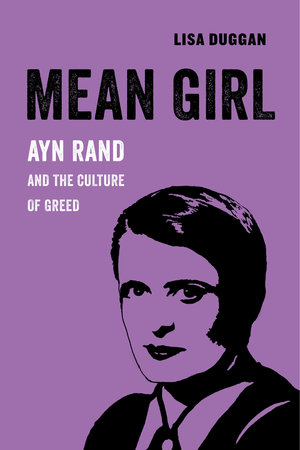
The question arises with the election of Trump and the success of far-right nationalism and populism around the world—are these still neoliberal times? Are the Zombies reinforcing their infrastructure and deepening their hold with policies like the U.S. tax cut bill, the appointment of neoliberal judges, the extended privatization of healthcare and education, the gutting of environmental regulations that businesses oppose? Or is neoliberalism collapsing? Are we seeing the rise of security states and fascist parties that might replace neoliberal hegemony with something new—something terrifying? Or might we see socialist organizing reach toward something more egalitarian and inclusive, something exciting? The reign of the cruel optimism of Mean Girl Ayn Rand is one barometer. Rand cannot be a presiding spirit for right-wing nationalism or for socialism. She is the avatar of capitalism, in its militant form as market liberalism. If neoliberalism crashes and burns in public acceptability, so does she.
What can we all do? Organize, of course, as so many on the global feminist, antiracist, anti-neoliberal left are now doing. But also, expose the cruelty at the heart of neoliberalism, and build on the social solidarity she worked so hard to discredit and destroy. Reject Ayn Rand. After all, she rejects you.’
*This article by Lisa Duggan was originally published in Dissent Magazine on May 20, 2019.
Read the Must-Read Book by Lisa Duggan
University of California Press, May 2019
Also See: Is Neoliberal Economics and Economists 'The Biggest Fraud Ever Perpetrated on the World?'
The Ultimate Selfishness of Randism and Trumpism
Photo: pinterest.co.uk
Super-rich jet off to disaster bunkers amid coronavirus outbreak
‘Self isolate’ for some of world’s richest means Covid-19 tests abroad, personal medics and subterranean hideouts
‘Like hundreds of thousands of people across the world, the super-rich are preparing to self-isolate in the face of an escalation in the coronavirus crisis. But their plans extend far beyond stocking up on hand sanitiser and TV boxsets.
The world’s richest people are chartering private jets to set off for holiday homes or specially prepared disaster bunkers in countries that, so far, appear to have avoided the worst of the Covid-19 outbreak.
Many are understood to be taking personal doctors or nurses on their flights to treat them and their families in the event that they become infected. The wealthy are also besieging doctors in private clinics in Harley Street, London, and across the world, demanding private coronavirus tests.’...Continue to read
..And now lest we forget:
Rand, these are the true human beings, representing the true human values and what makes us all human, not you, Trump and others like you two.
Ubuntu : “I Am because We Are”

Photo:What is this life if…?
I would like to close with a story that illustrates “Generosity of Spirit of Selflessness” to perfection: An anthropologist proposed a game to children in an African tribe. He put a basket of fruit near a tree and told the children that whoever got there first would win the sweet fruits. When he told them to run, they all took each other’s hands and ran together, then sat together enjoying their treats. When he asked them why they had run like that, since one of them could have had all the fruits for himself, they said: “Ubuntu, how can one of us be happy if all the others are sad?”
Read more: Build a Better World: The Healing Power of Doing Good
Today is World Kindness Day: Embracing Kindness to Defeat the Political Economy of Hatred
- In praise of cooperation as an insurance at time of crisis: Lessons as coronavirus spreads around the globe
- In a time of panic, please don’t forget to be kind.
- “In a world where you can be anything, be kind.”
- Crisis after crisis and the crucial voices of hope
- Is Neoliberal Economics and Economists 'The Biggest Fraud Ever Perpetrated on the World?'