- Details
- Written by: Kamran Mofid
- Hits: 1646
This is why debt relief should be the answer to this coronavirus crisis
Yesterday I was watching the daily Coronavirus briefing from Downing Street and I could not believe my ears...
Breaking News: NHS has £13,400,000,000 debt written off to help coronavirus battle
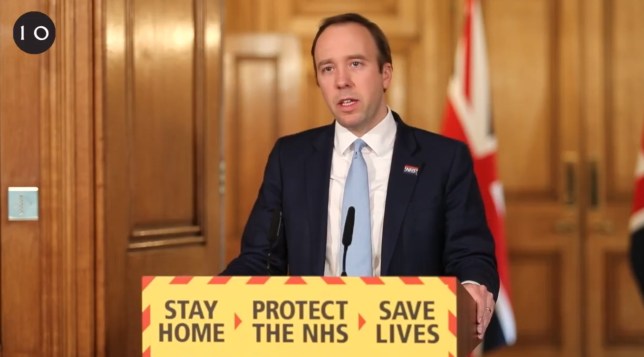
Health Secretary Matt Hancock said:
‘As we tackle this crisis, nobody in our health service should be distracted by their hospital’s past finances.
Today’s £13.4 billion debt write off will wipe the slate clean and allow NHS hospitals to plan for the future and invest in vital services.’-Photo:Metro UK
These are the words that I thought I would never hear to be uttered by any minister in any government idolising ‘free market’ economy.
But there you have it, he said it, and I heard it!
As he was talking, things were flashing in my head! I began to think deeply, recalling that a few years back, myself and two other fellow ‘Recovered’ economists, GCGI Senior Ambassadors, had written something on ‘Debt Forgiveness’, which in the light of Mr. Hancock’s announcement, I thought that piece must be opened up again, read and get the recognition that it justifiably deserves.
So I began the search and in the GCGI archives I found it. I couldn't believe what I was reading: A fantastic recommendation for anytime, but profoundly significant for NOW, the Cornovaruis crisis ridden world.
Please join me, read it with me and then share it with the world.
Breaking the Chains of Debt: Lessons from Ancient Wisdom for Today’s Coronavirus Crisis
Overcome Fear and Embrace Hope
Photo:resilience.org
Promised Land Revisited: Forgive our debts as we forgive our debtors
By
My Guest Bloggers Steve Szeghi, Jamshid Damooei and I
(First published on 16 June 2012)
Photo:PLI
'The global economy is in crises, whilst stuck in a consumer debt trap. Consumers and businesses, not to mention local and national governments, are in the dregs of a balance sheet recession. Without increased government spending to mitigate the demand crisis, there’s little chance the economy will jump start on its own.
Whilst we can turn to the trusted Keynesian spending model to fix a balance sheet recession and get consumer spending to kick back in; there is also the old biblical idea of a jubilee - a national cancellation of private debts. We believe forgiveness is the best present we can give ourselves, as it will set us all free.
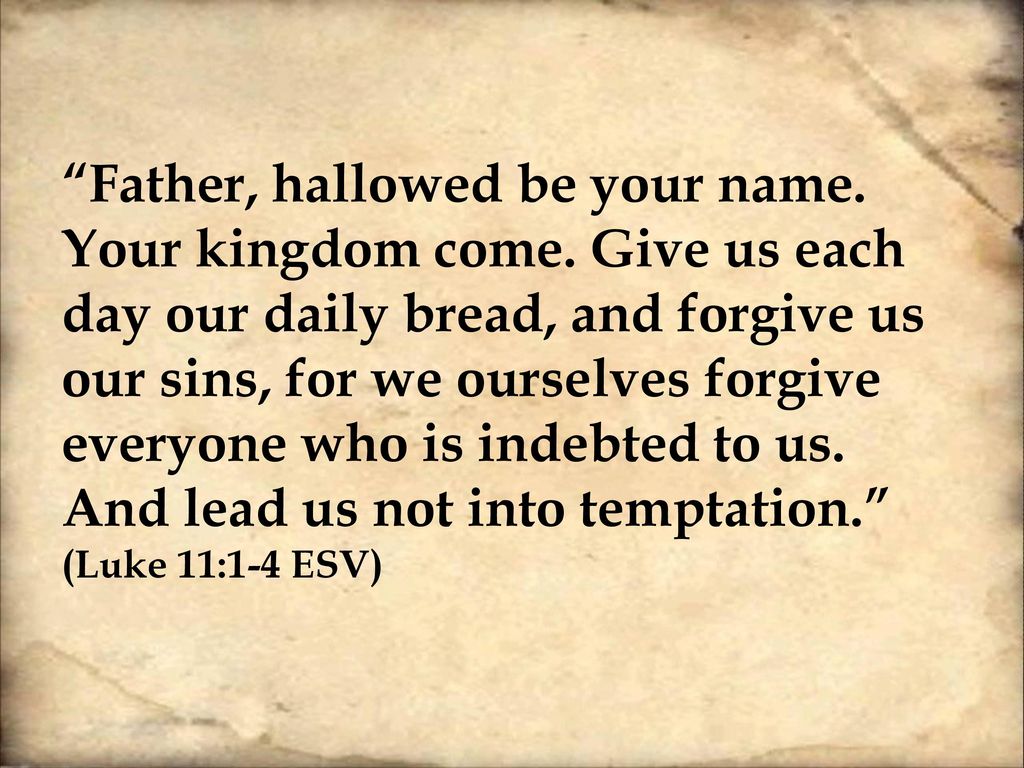
Contained in what many Christians refer to as the ‘Our Father’ or ‘Lord’s Prayer’, are the following words in some interpretations, “Forgive us our debts as we forgive of debtors”. The words imply that since we owe much to God, that we should stand ready and willing to forgive what others owe to us, and to stand ready to do that every day as the prayer also says, “give us this day our daily bread”. What has happened to the concept of forgiveness of debt? Much of the developing world is saddled with debt service payments that take such a large and substantial portion of GDP that not only is development imperiled, but life itself for a multitude of people in the country is imperiled. While occasionally for many decades now there has been talk of debt forgiveness, little has changed.
From Ireland, to Portugal, to Greece, to Spain, to Italy, throughout Europe and elsewhere there is one sovereign debt crisis after another. Debt forgiveness while spoken about is seldom significant enough to make a difference. In the United States as a result of the financial crisis of 08-09, huge financial institutions were rescued, in some sense forgiven, but there has been little to no relief for the individual homeowner, just as there is little to no relief for individuals who borrow be it in micro credit markets or by more conventional means throughout the world
The global financial and economic system is structured, and it is ever increasingly the case, to resist forgiveness of debt. Creditors bristle at the mere suggestion. The notion of debt forgiveness rankles their inmost being at its very core. But yet we cannot help but to think of the words, “forgive us our debts as we forgive our debtors.” In coming to grips with the problems of growing inequality, poverty, continuing financial instability, and stagnant economies, debt forgiveness stands out as a requisite part of the solution. A system that refuses to forgive debt is a system that is essentially siding with creditors, bailing out their bad choices, at the peril of the stability of the system itself, in addition to exacerbating inequality, perpetuating poverty, and stalling the engine of economic progress.
Forgiveness of debt was an essential ingredient of the political economy of the Ancient Hebrews. All debts of fellow Hebrews were to be forgiven in the Sabbatical Year (which occurred every seven years). In addition all slaves who were ‘kinsmen”, were to be set free in the Sabbatical Year. Forgiveness of debt was an essential part of Hebrew society. Debt forgiveness was structured into the system which in turn allowed for social cohesion and unity. Not only were the Ancient Hebrews required to forgive debts in the Sabbatical Year they were required to lend freely even as the sabbatical year grew closer. “Be on guard lest, entertaining the mean thought that the seventh year, the year of relaxation is near, you grudge help to your needy kinsman and give him nothing: else he will cry to the Lord against you and you will be held guilty.” Deuteronomy 15, v 9
Jesus of Nazareth extended this wisdom of the Torah. For Jesus, all human beings, Hebrew and non-Hebrew alike were kinsmen. So for Jesus the tradition of the Torah was extended to all. In addition Jesus instructed those who followed him to lend freely to all, fellow Hebrew or not. His teaching was to be willing to forgive every day, every year, and to lend freely without any care as to whether or not the one you were lending to could pay you back. For Jesus then, every year becomes the Sabbatical Year. In Ancient Israel it is forbidden to charge interest, such was called usury, and in the Christian Middle Ages throughout Europe usury was considered one of the seven deadly sins. Yet here is Jesus of Nazareth not just forbidding the taking of interest but also teaching not to even expect repayment of principal. (Luke chpt 6)
Now we live in a time when interest is charged freely without even any maximum caps (For example it is estimated that a typical annual interest rates (APRs) of between 650% to around 4000% and more is charged by the “Payday” loan companies). We live at a time when an increasing number of people cannot have their debts forgiven, not ever, because they fall in a particular demographic or income category. In the United States today under the new Bankruptcy law passed in the latter years of the George W. Bush Administration, so long as a person makes the average or above income in their state, bankruptcy is increasingly impossible to declare, in the sense of having one’s debts permanently discharged or forgiven. We live in a time when an ever increasing share of total debt, has been placed in a non-forgivable or non-dischargeable category. These types of debts include student loans in the United States, as well as micro-credit loans in many countries.
In the United States for example, those with more than a million dollars in debt are allowed to play by the older more generous bankruptcy rules. So millionaires and corporations are still generously forgiven, and through other means as well, in addition to bankruptcy court. Corporations, and the individuals who run them and benefit the most from them, routinely escape responsibility, but middle class and poor students trying to get through college, there is little to no debt forgiveness for them. The financial system that we have across the globe, a system that resists debt forgiveness, has no caps on interest rates, and no limits on wealth, is unsound on a moral level, and is also unsound on an economic level. The poor countries of the world are mired in debt and need forgiveness. First we experienced the housing bubble. The remedies for that crisis amounted to little or no relief for actual homeowners, and so the effects of that crisis continue to linger. Now we have the sovereign debt crisis of the European countries coupled with the debt burdens of the developing world. Next will come, either the student loan bubble or the credit card bubble, both of which are securitized just as was the case with home mortgages and both will cause just as much damage and instability as the housing crisis. It is time to wipe the slate clean and start fresh and new.
Significant debt forgiveness is clearly called for. But in addition we need a structured and systematic means of forgiveness for debt such as was the case for the people of Ancient Israel. It cannot merely be something that is trotted out on an ad hoc basis to respond to a lingering crisis and its aftermath. It has to be a regular part of the social contract. We need a structured means to limit the accumulation of wealth just as the Ancient Hebrews had with their Jubilee Year. Such means to limit wealth should include both a wealth and an inheritance tax of significant magnitude. While it is likely too ambitious to insist upon interest free lending, caps on interest rates are clearly called for, and in consideration of social justice discounted rates for the poor to provide for their means of support are crucial.
We think creating a clean slate is the only way we can really move forward that does not replicate the past. In looking at Forgiveness on a collective level, we were reminded of this Ancient process of both the Sabbatical Year (the Seventh year) and the Jubilee Year (seven times the Seventh Year). The Jubilee is the Sabbatical of the Sabbatical years. Every Sabbatical year, debt is completely forgiven and the slaves may return home as freed men and women. In the Jubilee Year, not only were debts forgiven and slaves returned home, but all land was to be returned to its original owners. (Leviticus 25) The Jubilee Year functioned as a structural means of redistribution to limit wealth – as most wealth consisted of land at that time in history, so that in the words of Isaiah the rich would not join field to field and leave no room for the poor.
Forgiveness is about release of past wrongs and hatreds. It is the healing of old wounds held deep in the social and personal fabric of our collective and personal bodies. The energy and time wasted in servicing debt is blocking the life force teeming up from the hearts of those who choose to see a new earth.
In theological terms, as a time of Grace, the Jubilee Year provided an opportunity to stop, to listen and to consider. It was an opportunity to enact forgiveness. It marked an occasion—what theologians call a kairos moment— A God-given moment of destiny not to be shied away from but seized with decisiveness; the floodtide of opportunity and demand in which the unseen waters of the future surge down to the present. It’s the alignment of natural and supernatural forces creating an environment for an opening to occur; a time when heaven and earth align with one another in a spiritual sense; a time when heaven touches earth in a way that will never be forgotten, the Promised Land once again.’
Steve Szeghi PhD (ECON), Professor of Economics, Wilmington College, Wilmington, Ohio, USA
Jamshid Damooei PhD (ECON), Professor of Economics, California Lutheran University, USA
Kamran Mofid PhD (Econ), Founder, Globalisation for the Common Good Initiative (GCGI), UK
Read the original article here
Healing Our world after Coronavirus
Photo:America Magazine
- Details
- Written by: Kamran Mofid
- Hits: 3495

Photo:EOCA's Spring 2020 Newsletter
Time to reflect…
Every move you make, every breath you take leaves its mark on our world
Crisis after Crisis
The remarkable characteristic of our chaotic and crisis riddled world today is their deepening and continuity
Crisis after Crisis: Financial Crisis. Credit and Banking Crisis. Environmental and Ecological Crisis. Biodiversity Crisis. Epidemic and Pandemic Crisis. Housing Crisis. Health and Well-being Crisis. Education Crisis. Spiritual and Moral Crisis. Trust and Trusting Crisis. Indifference Crisis. Fake, Fake News and Faking Crisis. Reality Crisis. Populism and Fascism Crisis,...all of them leading ours to be a generalized "time of crisis."
At a time of profound crises there must be an opportunity for new vision, new understanding and new thinking. There is a desperate need for new practical ways of relating in an increasingly interdependent global community: a time to re-introduce spirituality, ethics, civility, kindness, humanity and the common good into the debate on globalisation, economics, politics, business, education, international relation and much more.
Surely the time is now to rise and challenge the falsehood and the inhumanity of the ideology that since the early 1980s has cheated and humiliated us by monetising all aspects of our lives, and has stopped us from knowing what it means to be human:
I am a Transformed and Reformed Economist: My Journey and My Story
‘From 1980 onwards, for the next twenty years, I taught economics in universities, enthusiastically demonstrating how economic theories provided answers to problems of all sorts. I got quite carried away by the beauty, the sophisticated elegance, of complicated mathematical models and theories. But gradually I started to have an empty feeling.
‘I began to ask fundamental questions of myself. Why did I never talk to my students about compassion, dignity, comradeship, solidarity, happiness, spirituality – about the meaning of life? We never debated the biggest questions. Who are we? Where have we come from? Where are we going to?
‘I told them to create wealth, but I did not tell them for what reason. I told them about scarcity and competition, but not about abundance and co-operation. I told them about free trade, but not about fair trade; about GNP – Gross National Product – but not about GNH – Gross National Happiness. I told them about profit maximisation and cost minimisation, about the highest returns to the shareholders, but not about social consciousness, accountability to the community, sustainability and respect for creation and the creator. I did not tell them that, without humanity, economics is a house of cards built on shifting sands.
‘These conflicts caused me much frustration and alienation, leading to heartache and despair. I needed to rediscover myself and real-life economics. After a proud twenty-year or so academic career, I became a student all over again. I would study theology, philosophy and ethics, disciplines nobody had taught me when I was a student of economics and I did not teach my own students when I became a teacher of economics.
‘It was at this difficult time that I came to understand that I needed to bring spirituality, compassion, ethics and morality back into economics itself, to make this dismal science once again relevant to and concerned with the common good.’- Excerpts from my comments on a Financial Times editorial
See also: My lecture at London School of Economics
Calling all academic economists: What are you teaching your students?
A Businessman and an Economist in Dialogue for the Common Good
The Broken Economic, Social, Spiritual Model
(First published as an email to the GCGI members in May 2011)
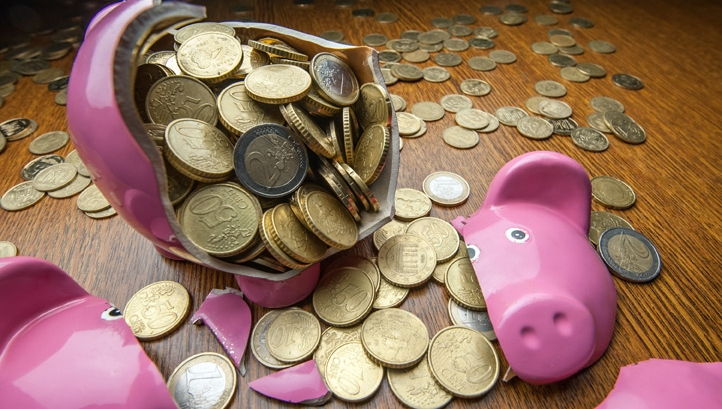
Photo:edie.net
“Do you remember that Margaret Thatcher, the so-called Iron Lady!! She told the Brits that she was going to put the “Great” back into the “Great” Britain. Do you remember? Then, she told us this can only happen if we accept and implement the “Washington Consensus”, the so-called dreaded neo-liberalism. She told us that there was no alternative. She told us we will all prosper and develop more fairly and equitably. She won election after elections. Everything was privatised, deregulated, self-regulated. Industry, manufacturing, (the real economy) was destroyed. Instead, the banks and the bankers were encouraged to rule the world. The economists with no principles and values were “bought” and the business schools, such as Harvard and Columbia were showered with money to act as “Cheerleaders” for the dreaded neoliberalism (see the Inside Job for evidence). Communities were dis-mantled and dis-organised. We were told that there is nothing as a society and community. We are all in it just for ourselves, we were told. Destructive competition at the expense of life-enhancing cooperation, collaboration and dialogue was greatly prompted. We were told to say no to love, kindness, generosity, sympathy and empathy and say yes to selfishness, individualism and narcissism, as these values will fire the engine of capitalism and wealth creation! In short, the hell with the common good, we were encouraged to believe.
We were brained-washed. Our other Prime Ministers repeated her nonsense and have carried on her footsteps. It is now over 30 years since the neo-liberalism experiment in Britain. Are we any “Greater” than we were in 1979? Are we any fairer or more equitable? The country is nearly bankrupt, with public and private debt at unprecedented levels, with greatest levels of poverty and wealth disparity ever. The house of neo-liberal capitalism is now at its nadir of decadence.”
You see, all those interested in life’s bigger picture, have been saying the same, over and over. The neo-liberals are not in touch with humanity. They will prostitute all in the interest of profit maximization, cost minimization, highest return to the shareholders, and the biggest and juiciest bonuses for the CEOs and their lackeys.”
The Age of Perpetual Crises and Coronavirus Pandemic
Photo:outerlimitsradio.com
‘When all of this is over, the world won’t be the same.’
But, the Challenge Is: How to Make the World a Better Place?
Times of upheaval are always times of radical change. Some believe that the current global crisis, the Coronavirus pandemic, is a once-in-a-generation chance to remake society and build a better future. Others fear it may only make existing injustices worse.
I wish to be a voice of hope and optimism: This crisis can change our world for the better, should we have the wisdom to see the path
What kind of actions would it take for the optimists’ vision to materialise?
I am sure there are many answers to this timely question. Below are my offerings:
Ten Steps to a Better World and a Better Life
We, the people, all around the globe, are slowly realising that our planet, our lives, and more are in desperate need for new measures to evolve humanly, environmentally, economically and politically towards a more cooperative, peaceful and respectful sense of interdependency.
While the urgency is being felt on all levels, too many feel disempowered with the potential to spark a change, make a difference or even perceive an ounce of hope for the future.
The task isn’t small. Indeed, the task is so great that there is only one way to succeed, and that is, all of us, coming together in the spirit of the common good, to empower and enable each one of us to become self-directed, and active in defining this time in the world as opportunity for positive change and healing and for the true formation of a culture of peace by giving thanks, spreading joy, sharing love, seeing miracles, discovering goodness, embracing kindness, practicing patience, teaching tolerance, encouraging laughter, celebrating diversity, showing compassion, turning from hatred, practicing forgiveness, peacefully resolving conflicts, communicating non-violently, choosing happiness and enjoying life. Carpe Diem!
Neoliberalism's excesses belong in the dustbin of history. What's next is up to us
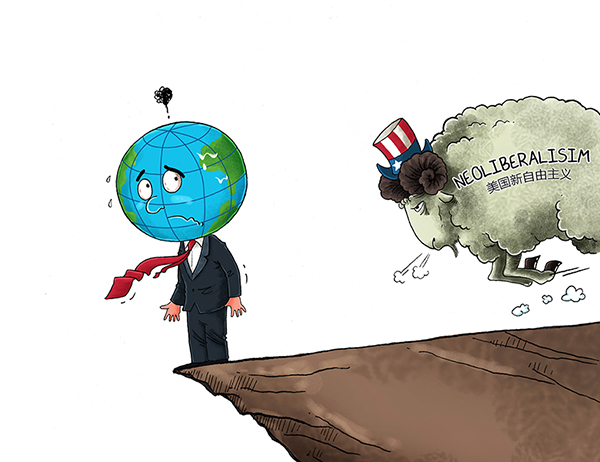
Photo:chinadaily.com
1- Throw away this single-minded ideology and replace it with a more balanced logic, laying the foundations for a better, more equitable world
Death and Destruction on Brothers’ Road to Serfdom
Neoliberalism destroys human potential and devastates values-led education
2- Replace the selfishness and hatred of neoliberalism with Kindness
Kindness to Heal the World- Kindness to Make the World Great Again
“In a world where you can be anything, be kind.”
What if Universities Taught KINDNESS?
3- Replace the hopelessness of neoliberalism with Hopefulness
Crisis after crisis and the crucial voices of hope
How to defeat hatred and fear: Don't Despair Walk On
4- Replace the delusional and destructive neoliberal education with inspirational values-led Education
The Value of Values: Values-led Education to Make the World Great Again
Brexit, Trump and the failure of our universities to pursue wisdom Details
To All Striking Academic Colleagues in Britain: Turn the Strike to a Force for the Common Good
The Journey to Sophia: Education for Wisdom
Detaching Nature from Economics is ‘Burning the Library of Life’
5- Replace the devastated neoliberal economy with Economy as if People Mattered
Is Neoliberal Economics and Economists 'The Biggest Fraud Ever Perpetrated on the World?'
My Economics and Business Educators’ Oath: My Promise to My Students
What might an Economy for the Common Good look like?
6- Throw away the fake neoliberal ‘teachers’ and let nature to be your wisest Teacher
On the 250th Birthday of William Wordsworth Let Nature be our Wisest Teacher
Why should we all become mother nature and sacred earth guardians
To Heal the World and People We Need to Save the Commons from Plunder
7- Throw away materialism and consumerism, ‘Black-Friday’ sales mentality, and opt for simplicity, simple living and be grateful for who you are, what you are and what you have
In Praise of Frugality: Materialism is a Killer
There is more in less: The Evolution of Simplicity
Simplicity: it’s our true guide to a better life
The beauty of living simply: the forgotten wisdom of William Morris
Black Friday, Brexit and Trumpian Values: Deadly forces taking over our world, controlling our minds
Thanksgiving vs. Black Friday: Where is the Gratitude?
Memento mori, Memento vivere and the Madness of Black Friday
In Praise of ‘Enoughness’ and 'Lagomist' Economy
8- Throw away hatred and desire for revenge Remember and Forgive: Forgiveness is the Greatest Gift You Can Give Yourself
Forgiveness and Reconciliation in Pursuit of the Global Common Good
Good Friday Agreement and the Spirit of Forgiveness and Reconciliation
9- Overcome Fear and Embrace Hope: Forgive our debts as we forgive our debtors
Coronavirus Crisis and Mounting Debt: Forgive our debts as we forgive our debtors
10- and finally, let us begin our Journey to Healing, and enjoy togetherness, family, friends and community. Ours should not be a caravan of despair, but the flame of love and hope
Walk with the wanderers
Sing and dance with the worshipers
Proclaim the memory of those who have taken their leave
Wrap the despairing and the broken in the arms of love and community
And hold the hands of all of us who have broken our vows and call us back—again and again—to the covenant and work of justice, humility, and steadfast faithfulness.
For this we are here together today. So, my friends, come, yet again; come let us be together.
- Details
- Written by: Kamran Mofid
- Hits: 1885
This Crisis Has Exposed the Absurdities of Neoliberalism.
How do neoliberal governments act in emergency situations when the interests of the private sector top their agenda?
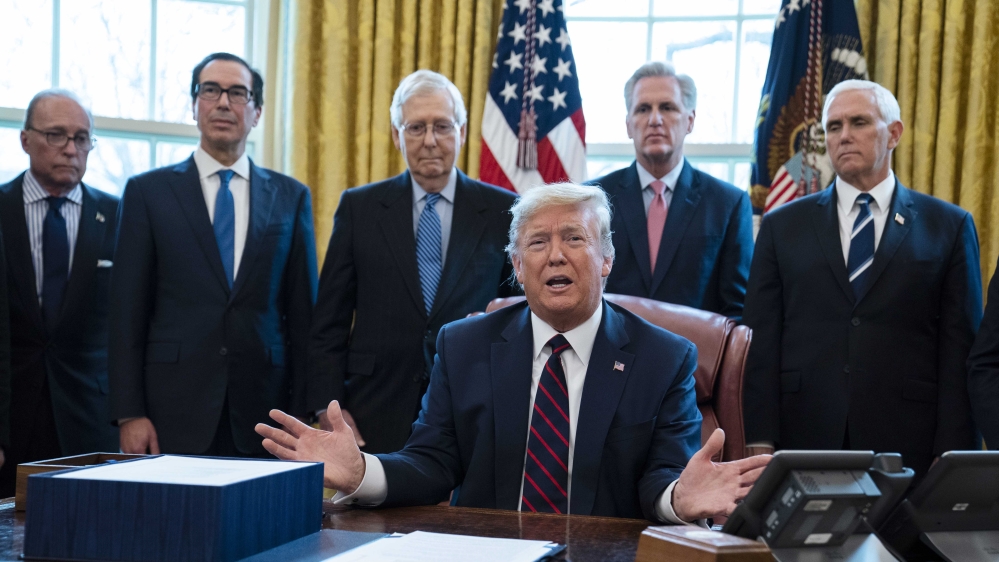
President Donald Trump talks to reporters before signing the coronavirus stimulus relief package in the Oval Office at the White House, on March 27, 2020. Photo and more
First, Lest We Forget Again!
Neoliberalism: Lessons Learned from a Failed Ideology
Capitalism for the 99% and Socialism for the 1%
Bailout for the Rich and Virus for the Rest of Us
Death and Destruction on Brothers’ Road to Serfdom
Is Neoliberal Economics and Economists 'The Biggest Fraud Ever Perpetrated on the World?'
'The Neoliberal Plague'*
‘For those who aren’t familiar with Albert Camus’ The Plague, disparate lives are brought together during a plague that sweeps through an Algerian city. Today, by way of the emergence of a lethal and highly communicable virus (Coronavirus), we— the people of the West, have an opportunity to reconsider what we mean to one another. The existential lesson is that through dread and angst we can choose to live, with the responsibilities that the choice entails, or just fade away.'
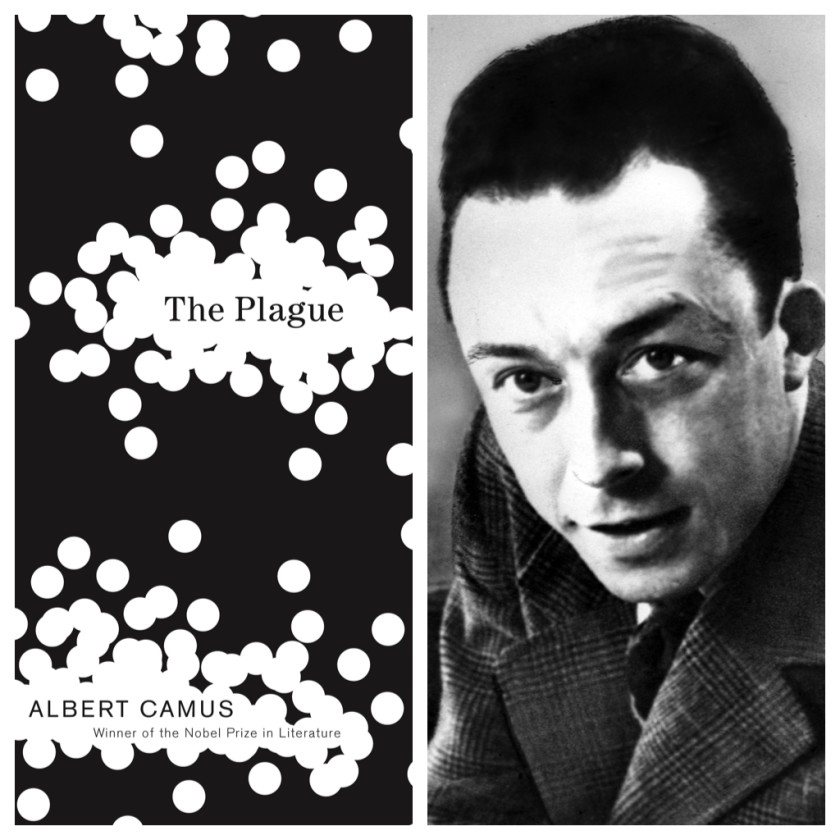
“The Plague” and author Albert Camus. Photo:(Vintage/ Everett/Shutterstock)
For Times of Extremity, Albert Camus Prescribed Modest Virtues
What Albert Camus’s “The Plague” can teach us about life in a pandemic.
'Through the virus, a new light is being shone on four decades of neoliberal reorganization of political economy. The combination of widespread economic marginalization and a lack of paid time off means that sick and highly contagious workers will have little economic choice but to spread the virus. And the insurance company pricing mechanism intended to dissuade people from overusing health care (‘skin in the game’) means that only very sick people will ‘buy’ health care they can’t afford.
Market provision of virus test kits, vaccines and basic sanitary aids will, in the absence of government coercion, follow the monopolist’s model of under-provision at prices that are unaffordable for most people. The most fiscally responsible route, in the sense of assuring that the rich don’t pay taxes, is to let those who can’t afford health care die. If this means that tens of millions of people die unnecessarily, markets are a harsh taskmaster. (3.4% mortality rate @ 2X – 3X the contagion rate of the Spanish Flu @ 4 X 1918 population).
If this last part reads like (Ayn) Randian social theory as interpreted by a budding sociopath in the basement of his dead parent’s crumbling tract home, it is basic neoliberal ideology applied to circumstances that we can see playing out in real time. According to Ryan Grim of The Intercept, Bill Clinton eliminated the ‘reasonable pricing’ requirement for drugs made by companies that receive government funding. This has bearing on both commercially developed Coronavirus test kits and vaccines.
The Damning Impact of a Toxic Philosophy on America: The Tragedy of Ayn Rand
Leaving aside technical difficulties that either will or won’t be resolved, how would any substantial portion of the 80% of the population that lives hand-to-mouth be effectively quarantined when losing an income creates a cascade effect of evictions, foreclosures, starvation, repossessions, shut-off utilities, etc.? The current system conceived and organized to make desperate and near desperate workers labor with the minimum of pay and benefits is a public health disaster by design.
While the American response to the Coronavirus threat seems to be less than robust, there was a near instantaneous response from the Federal Reserve to a 10% decline in stock prices. The same Federal Reserve that has been engineering a non-stop rise in stock prices since Wall Street was bailed out in 2009 knows perfectly well how narrowly stock ownership is concentrated amongst the rich— it publishes the data. It quickly lowered the cost of financial speculation as the cost of Coronavirus tests and a vaccine— and the question of who will bear them, remain indeterminate.
If priorities seem misplaced, you haven’t been paying attention. The statistics on suicides, divorces, drug addiction and self-destructive behavior that result from the loss of employment were understood and widely published by the early 1990s, at the peak of that era’s round of mass layoffs. Creating employment insecurity was the entire point of neoliberal reforms such as outsourcing, de-skilling and contingent employment. Neoliberal theory had it that desperate workers work both longer and harder. And they die younger.
The Broken Economic Model and the Inhumanity of the Lost Decade of Austerity
People’s Tragedy: Neoliberal Legacy of Thatcher and Reagan
Neoliberalism and the rise in global loneliness, depression and suicide
The brutality of the logic used by the Obama administration in constructing the ACA, Obamacare, is worthy of exploration. The premise behind the ‘skin in the game’ idea is neoliberalism 101, developed by a founder of neoliberalism, economist Milton Friedman, to ration health care. The basic idea is that without a price attached to it, people will ‘demand’ more health care than they need. That from a public health perspective, oversupplying health care is better than undersupplying it, is ignored under the premise that public health concerns are communistic. (Read Friedman).
The Destruction of our World and the lies of Milton Friedman
Economic Growth: The Index of Misery
But how likely is it that people will ‘demand’ too much healthcare? The starting position of Obamacare was that the American healthcare system provided half the benefit at twice the price of comparable systems. Through the ‘market’ pricing mechanism that existed, the incentive was for people to avoid purchasing healthcare because it was / is wildly overpriced. Not considered was that through geographical and specialist ‘natural monopolies,’ health care providers had an incentive to undersupply health care by providing high-margin services to the rich.
Furthermore, why would a healthcare system be considered from the perspective of individual users? In contrast to the temporal sleight-of-hand where Obamacare ‘customers’ are expected to anticipate their illnesses and buy insurance plans that cover them, the entire premise of health insurance is that illnesses are unpredictable. Isn’t the Coronavirus evidence of this unpredictable nature? And through the nature of pandemics, it is known that some people will get sick and other people won’t. Not known is precisely who will get sick and who won’t.
While there are public health emergency provisions in Obamacare that may or may not be invoked, why does it make sense in any case to require that people anticipate future illnesses? Such a program isn’t health care and it isn’t even health insurance. It is gambling. Guess right and you live. Guess wrong and you die. Why should we be guessing at all? Prior to Obamacare, health insurance companies gamed the system with life and death decisions. In true neoliberal fashion, Obamacare randomized the process as health insurers continue to game the system.
As I understand it, the public health emergency provision in Obamacare might cover virus testing and the cost of a vaccine if one is ever found. Great. What about care? How many readers chose a plan that covers Coronavirus? How many days can you go without a paycheck if you get sick or are quarantined? Who will take care of your children and for how long? How will you pay your rent or mortgage? Who will deliver groceries to your house and how will you pay for them? How will you make the car payment before they repossess it and how will you get to work without it if you recover?
The rank idiocy— and the political content, of the frame of individual ‘consumers’ overusing health care quickly devolves to the fact that some large portion of the American people can’t afford to go to the doctor when they need to. Even if they can afford the direct costs, they can’t afford the indirect costs. When Obamacare was passed, the U.S. had the worst health care outcomes among rich countries. Ten years later, the U.S. has the worst healthcare outcomes among rich countries. And medical bankruptcies are virtually unchanged since Obamacare was passed.
The reason for focusing on Obamacare is it is the system through which we encounter the Coronavirus. In the narrow political sense of getting a health care bill passed, Obamacare may or may not have been ‘pragmatic.’ In a public health care sense, it is a disaster decades in the making. The problem wasn’t / isn’t Mr. Obama per se. It is the radical ideology behind it that was posed as pragmatism. Mr. Obama’s success was to get a bill passed— a political accomplishment. It wasn’t to create a functioning healthcare system.
The otherworldly nature of neoliberal theory has led to a most brutal of social philosophies. Mr. Obama later put his energy into lengthening drug company patents to give drug companies an economic advantage provided by the government. Economist Dean Baker has made a career out of hammering this general point home. Michael Bloomberg benefited from government support for both technology and finance. His fortune of $16 billion in 2009 followed stock prices higher to land him at $64.2 billion in 2020.
Donald Trump inherited a large fortune that likewise followed stock and Manhattan real estate prices higher. Both he and Mr. Bloomberg could have put their early fortunes into passive portfolios and received the returns that they claim to be the product of superior intelligence and hard work. Analytically, if the variability of these fortunes tracks systemic, rather than personal, factors, then systemic factors explain them. The same is true of most of the great fortunes of the epoch of finance capitalism that began around 1978.
The point of merging these issues is that they represent flip sides of the neoliberal coin. In a broad sense, neoliberalism is premised on economic Darwinism, the quasi-religious (it isn’t Darwin) idea that people land where they deserve to land in the social order. This same idea, that systemic differences in economic outcomes are evidence of systemic causes, applies here. However, differences in intelligence, initiative and talent don’t map to systemic outcomes, meaning that concentrated wealth isn’t a reward for these.
The ignorant brutality of this system appears to be on its way to getting a reality check through a tiny virus. Unless the Federal government figures this out really fast, most of the bodies will be carried out of poor and working class neighborhoods like mine. Few here have health insurance and most health care providers in the area don’t take the insurance they do have. More than a day away from work and many of my neighbors will no longer have jobs. Evictions are a regular state of affairs in good times. There are no resources to facilitate a larger-picture response.
Liberalism, of which neoliberalism is a cranky cousin, lives through a patina of pragmatism until the nukes start flying or a virus hits. Getting healthcare ‘consumers’ to consider their market choices follows a narrow logic up to the point where none of the choices are relevant to a public health emergency. One I plus another I plus another I doesn’t equal us. The fundamental premise of neoliberalism, the Robinsonade I, has always been a cynical dodge to let rich people keep their loot.
The mortality rate and contagion factor recently reported for Coronavirus (links at top) place it above the modern benchmark of the Spanish Flu of 1918 in terms of potential lethality. What should make people angry is how the reconfiguration of political economy intended to make a few people really rich has put the rest of us at increased risk. These are real people’s lives and they matter.
Finally, for students of neoliberalism: there is no conflation of neoliberalism with neoclassical economics here. Milton Friedman, one of the founders of neoliberalism through the Mont Pelerin Society, produced a long career’s worth of half-baked garbage economics. On the rare occasions when he wasn’t helping Chilean fascists toss students out of airplanes in flight, he was pawning his infantile theories off on future Chamber of Commerce and ALEC predators. His positivism was already known to be a farce when he took it up. Here is a primer that explains why it is, and always will be, a farce.’
*The above piece by Rob Urie was first published in CounterPunch on 6 March 2020.
Read more articles by Rob Urie
‘When all of this is over, the world won’t be the same.’
But, the Challenge Is: How to Make the World a Better Place?
I am sure there are many answers to this timely question. Below are my offerings:
My Six Steps to a Better World and a Better Life
Neoliberalism's excesses belong in the dustbin of history. What's next is up to us
We, the people, all around the globe, are slowly realising that our planet, our lives, and more are in desperate need for new measures to evolve humanly, environmentally, economically and politically towards a more cooperative, peaceful and respectful sense of interdependency.
While the urgency is being felt on all levels, too many feel disempowered with the potential to spark a change, make a difference or even perceive an ounce of hope for the future.
The task isn’t small. Indeed, the task is so great that there is only one way to succeed, and that is, all of us, coming together in the spirit of the common good, to empower and enable each one of us to become self-directed, and active in defining this time in the world as opportunity for positive change and healing and for the true formation of a culture of peace by giving thanks, spreading joy, sharing love, seeing miracles, discovering goodness, embracing kindness, practicing patience, teaching tolerance, encouraging laughter, celebrating diversity, showing compassion, turning from hatred, practicing forgiveness, peacefully resolving conflicts, communicating non-violently, choosing happiness and enjoying life. Carpe Diem!
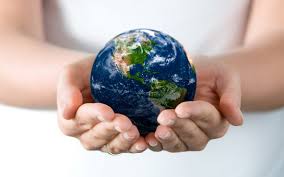
Photo:modernlifeblogs.com
1- Throw away this single-minded ideology and replace it with a more balanced logic, laying the foundations for a better, more equitable world
Death and Destruction on Brothers’ Road to Serfdom
Neoliberalism destroys human potential and devastates values-led education
2- Replace the selfishness and hatred of neoliberalism with Kindness
Kindness to Heal the World- Kindness to Make the World Great Again
“In a world where you can be anything, be kind.”
3- Replace the hopelessness of neoliberalism with Hopefulness
Crisis after crisis and the crucial voices of hope
How to defeat hatred and fear: Don't Despair Walk On
4- Replace the delusional and destructive neoliberal education with inspirational values-led Education
The Value of Values: Values-led Education to Make the World Great Again
Brexit, Trump and the failure of our universities to pursue wisdom Details
To All Striking Academic Colleagues in Britain: Turn the Strike to a Force for the Common Good
The Journey to Sophia: Education for Wisdom
5- Replace the devastated neoliberal economy with Economy as if People Mattered
Is Neoliberal Economics and Economists 'The Biggest Fraud Ever Perpetrated on the World?'
My Economics and Business Educators’ Oath: My Promise to My Students
What might an Economy for the Common Good look like?
6- and finally, throw away the fake neoliberal ‘teachers’ and let nature to be our wisest Teacher
On the 250th Birthday of William Wordsworth Let Nature be our Wisest Teacher
Why should we all become mother nature and sacred earth guardians
To Heal the World and People We Need to Save the Commons from Plunder