- Details
- Written by: Kamran Mofid
- Hits: 3274
I don’t know about you, but I get excited and joyful when, as an academic economic activist, I come across a CEO, a major business leader, whose views on what is good, converges with mine.
People like us, all of us, together will make the world great again
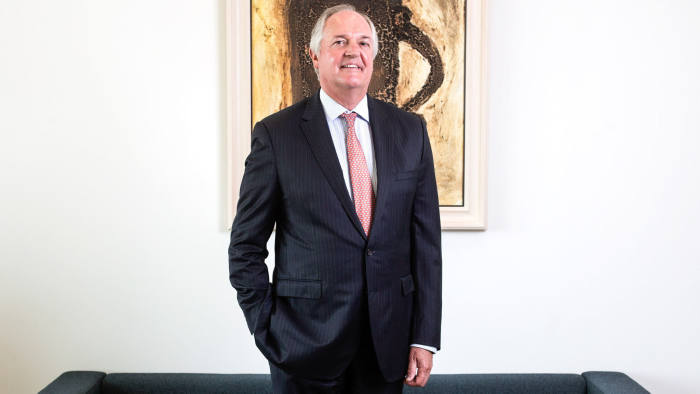
Paul Polman, Photo: Financial Times
‘We have ambitious plans to grow our company, creating jobs and income for all whose livelihoods are linked to our success. But growth at any cost is not viable. We have to develop new ways of doing business which will increase the social benefits from our activities’- Paul Polman, CEO, Unilever (2011)
'Mr Polman’s most significant contribution came from understanding just how badly business’s reputation had been damaged by the 2008 financial crisis and by the feeling of many that they had been left out of the supposed gains from globalisation and automation. He grasped the importance of talking to a younger generation about creating a more ethical and responsive business culture...'True leadership is putting yourself to the service of others and, if you can marry that with a very noble cause, to make this a better place for all.'... 'So if you buy into this long-term value-creation model, which is equitable, which is shared, which is sustainable, then come and invest with us. If you don’t buy into this, I respect you as a human being, but don’t put your money in our company, he once told his investors...'Mr Polman did not achieve all his goals — who of us does? But he helped create a new discourse that speaks to those disillusioned with business and its doings.'-Quotes from Michael Skapinker, Unilever’s Paul Polman was a standout CEO of the past decade, Financial Times, 11 December 2018
See also:Unilever CEO Paul Polman is redefining sustainable business
Photo: Uli Spalthoff
‘Globalisation for the common good will enable us to discover the urgent need for a new global ‘Bottom Line’. It will help us to acknowledge that the new bottom line must not be all about economic and monetary targets, profit maximisation and cost minimisation, but it should involve spiritual, social and environmental consideration. When practiced under these values, then, the business is real, viable, sustainable, efficient and profitable.
Therefore, the New Bottom Line that you should now believe in must read as follow:
Corporations, business leaders, politicians, government policies, our educational, legal and health care practices, environmental considerations, every institution, law, social policy and even our private behaviour and relationships, should be judged 'rational', 'efficient', or 'productive' not only to the extent that they maximise money and power (The Old Bottom Line) but ALSO to the extent that they maximise love and caring, kindness and generosity, ethical and ecological behaviour, and contribute to our capacity to respond with awe, wonder and radical amazement at the grandeur and mystery of the universe and all being.’- Kamran Mofid, Keynote Lecture, GCGI Dubai Conference, 2004
Imagining the World We Want and are Hoping For

Photo: The Mission
Imagine a political system that puts the public first. Imagine the economy and markets serving people rather than the other way round. Imagine us placing values of kindness, respect, fairness, interdependence, and mutuality at the heart of our economy. Imagine an economy that gives everyone their fair share, at least an appropriate living wage, and no zero-hour contracts. Imagine where jobs are accessible and fulfilling, producing useful things rather than games of speculation and casino capitalism. Imagine where wages support lives rather than an ever expanding chasm between the top 1% and the rest. Imagine a society capable of supporting everyone’s needs, and which says no to greed. Imagine unrestricted access to an excellent education, healthcare, housing and social services. Imagine hunger being eliminated, no more food banks and soup kitchens. Imagine each person having a place he/she can call home. Imagine all senior citizens living a dignified and secure life. Imagine all the youth leading their lives with ever-present hope for a better world. Imagine a planet protected from the threat of climate change now and for the generations to come. Imagine no more wars, but dialogue, conversation and non-violent resolution of conflicts. Imagine a world free of corruption!
This is the country and the world I wish to see and I believe we have the means to build it, if we take action in the interest of kindness for the common good.- Kamran Mofid, What might an Economy for the Common Good look like?
Damaged ideology': business must reinvent capitalism – ex-Unilever boss*
Firms that take a lead on world’s biggest problems will be most successful, says Paul Polman
'Business needs to reinvent capitalism. We need to build a new model of inclusive and sustainable capitalism.'
‘A former boss of Unilever has said capitalism is a “damaged ideology” that must reinvent itself to survive by doing more to combat inequality and the climate emergency.
Paul Polman said companies that took a lead on the world’s biggest problems would be the most successful of the 21st century. Companies that put short-term profit ahead of long-term sustainability would not survive, he said.
“Capitalism, which has been responsible for the growth and prosperity that has done so much to enhance our lives, is a damaged ideology and needs to be reinvented for the 21st century,” Polman said in a speech. “Business needs to reinvent capitalism. We need to build a new model of inclusive and sustainable capitalism.”
...As chief executive of one of the world’s biggest consumer goods companies, he argued for businesses to take a long-term view on urgent matters such as global heating instead of prioritising profit.
Since leaving Unilever, Polman has invested in Imagine, a foundation to promote the UN’s sustainable development goals. He has also backed the young activists behind Extinction Rebellion and is a fan of Greta Thunberg.
Polman said there was a compelling business case for investing in the UN’s development goals with the opportunity to create at least $12 trillion (£9.3tn) a year in economic growth and generate 380m jobs.
“Companies with a strong sense of purpose are better able to grow not only revenue and profits but also create additional value, such as customer loyalty, attracting top talent and developing new products and services,” he told a dinner of business leaders held by the executive recruiter Odgers Berndtson. Companies must aim for “a next decade of delivery” to be a force for good, he said.
Despite Polman’s campaigning for more responsible capitalism while he was at Unilever, the company has only recently pledged to halve its use of plastics from 700,000 tonnes a year by 2025. His replacement, Alan Jope, has also said he will sell off brands that do not contribute to society or the planet.
Business leaders faced with unrest over the looming environmental disaster, social inequality and companies’ treatment of workers are trying to head off political interference by accepting that capitalism needs to change. In August, Apple, Amazon and the Wall Street bank JP Morgan were among 200 big US companies that redefined their purpose as “improving our society” and not only making money for shareholders.
Some of the world’s richest and most powerful businesspeople have warned that capitalism is failing. The hedge fund billionaire Ray Dalio has said the gap between rich and poor is an “existential threat” to US capitalism because it could lead to conflict, populism and “revolution of one sort or another”. Starbucks’ former chief executive Howard Schultz has said capitalism faces a crisis and has advocated higher taxes on the wealthy.
In Britain, the Labour party has committed itself to a target for the UK of net zero emissions by 2030 in its version of a Green New Deal. Labour has also pledged to extend workers’ rights, cap bosses’ pay at companies that provide services to the government and increase the minimum wage to £10 for all workers.’
*The above article by Sean Farrell was first published in The Guardian on 29 October 2019
A bit more on similar and relevant topics
Dreaming About Utopia to Make the World Great Again
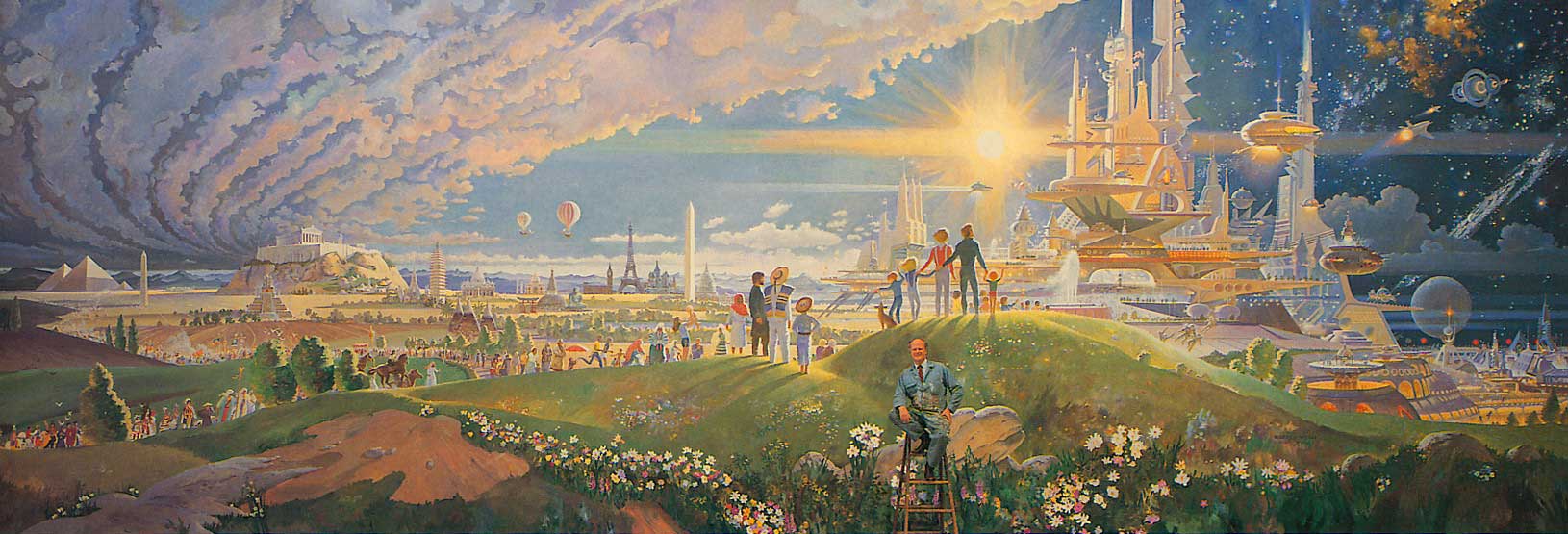
A version of Utopia from last century-Robert McCall 1983 Mural, The Prologue and the Promise-
Photo: mccallstudios.com
Dreaming about Utopia where we spend less time thinking about the Dow Jones and more time about contributing to the collective good
What is a perfect society, what is a good business and economy? What is a good life? What is a good person?
Reflecting on these and other similarly ‘Big’ questions, we seem to be able to achieve good and goodness in all we do, when and where our system is run by dreamers who call themselves realists. That is, hopefully, people like you and me!
For thousands of years human beings have dreamt of perfect worlds, worlds free of conflict, hunger and unhappiness. But can these worlds ever exist in reality?- Dreaming About Utopia to Make the World Great Again
To have the kind of world we are dreaming about and wish to build...we need to free ourselves from all the fear, pain, despaire, frustration, anger, and distortions that have led us to give up hope and has stoped us to imagine what the better world could look like.
What is the Value of MBA and Business Education?
The Value of Values: Values-led Education to Make the World Great Again
2008-2018 Crises: Have we learned anything?
Fat Cats: An invitation to dialogue
Life after Coronavirus: We Must Not Be Cheated and Exploited Again
...Now, and most importantly, the time is now to dump neoliberalism into the dustbin of history:
It is time for business leaders to move away from Milton Friedman's target of short term shareholder gain towards long term sustainability, says Paul Polman, the chief executive of Unilever.

Photo: hubpages.com
“Paul Polman, the chief executive of consumer goods giant Unilever, is in a league of his own when it comes to being the leader of a multinational company challenging the corporate status quo. In a wide-ranging interview with Guardian Sustainable Business to coincide with the first annual update of the company's ambitious 10-year Sustainable Living Plan, Polman calls on business leaders, politicians and NGOs to embrace systems thinking, and to recognise they cannot deal with the world's environmental and social challenges in isolation.”
Reflecting on this interview, Gordon Pearson, the author of “The Road to Co-operation”, notes the following:
“Much of the totally unsustainable impoverishment faced today springs from that one simple untruth: the reckless depletion of finite resources, pollution of atmosphere and oceans, predatory activity of an unregulated financial sector, and the destruction of the real economy which provides real jobs as well as paying for education, health, defence and social security. All this destruction on the altar of shareholder wealth maximisation, is mirrored by the excessive bonuses and executive remuneration that are part of the daily news. No wonder, in his BBC lecture, Barclays CEO Bob Diamond lovingly claimed Milton Friedman to be his 'favourite economist'!
It is to be hoped that more will follow Polman's bold lead away from short term shareholder gain towards long term sustainability. But many firms are not strong enough to swim against the tide.
The Destruction of our World and the lies of Milton Friedman
Why Economics Needs the Common Good?
Is Neoliberal Economics and Economists 'The Biggest Fraud Ever Perpetrated on the World?'
Wouldn’t the world be a better place with a bit more kindness? Harnessing the Economics of Kindness
How may we build a better world?
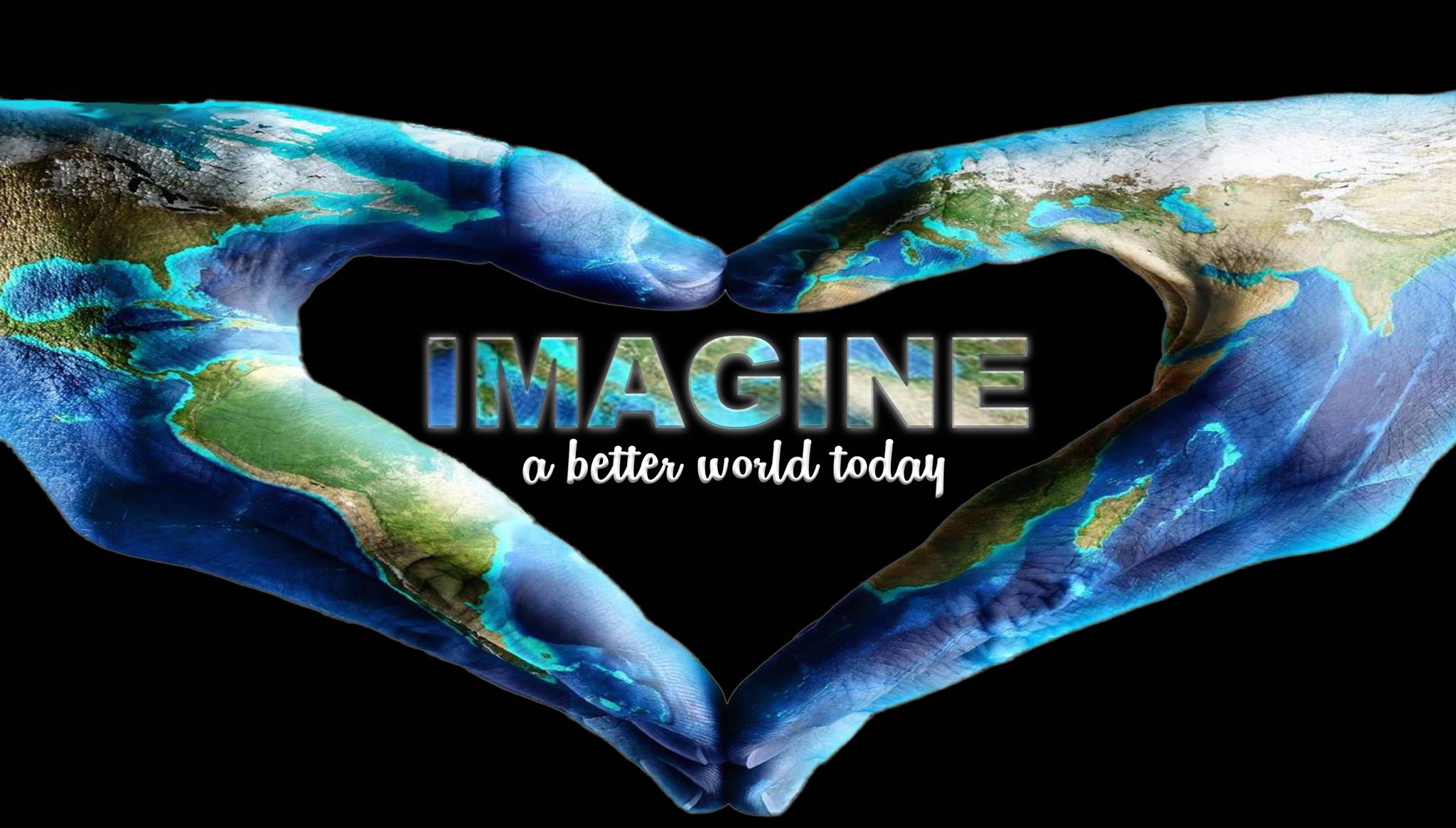
Photo: Facebook
The time is now to rediscover our true selves
‘Knowing yourself is the beginning of all wisdom.’-Aristotle
Unless we can reclaim our commitment to one another, we are not adhering to our humanity.
Beyond the Neoliberal, Thatcherite Wasteland: Ten Common Good Steps to Build a Compassionate and Kinder World
Call to Action
I believe in the power of service, volunteerism, empathy and actions in the interest of the common good to improve lives, to build a better world. I also believe that economic prosperity, ecological harmony, better lives and a kinder world are all possible, if we all acknowledge one thing: We are not only accountable to our shareholders, but and more importantly, we must be answerable to all the stakeholders and the entire web of life.
After all is said and done, it is not enough to simply talk about beliefs and principles; we must live up to them, be transparent and accountable, and continually find ways of improving.
At the GCGI, we want to continue and play our part in building a better world for everyone. I do know that I do not have all of the answers, and it is only by working with others and being open to new ideas and different perspectives that I can come up with possible solutions that global challenges require.
Below you can see my suggested Ten Steps to build a better world. Please share your thoughts, ideas, and insights with me. We can only build the better world we are seeking if we come together, work together, build together.
It’s time to deliver on the goals we’ve set for a more peaceful, resilient planet and a better life
Ten Steps to Build a Better World
Co-creating “The Future We Want” in the Interest of the Common Good

Photo: Arcadis
The future is indeed fraught with environmental, socio-economic, political, and security risks that could derail the progress towards the building of “The Future We Want”. However, although these serious challenges are confronting us, we can, if we are serious and sincere enough, overcome them by taking risks in the interest of the common good.
One thing is clear: the main problem we face today is not the absence of technical or economic solutions, but rather the presence of moral and spiritual crises. This requires us to build broad global consensus on a vision that places values such as love, generosity and caring for the common good into socio-political and economic practice, suggesting possibilities for healing and transforming our world.
Furthermore, I invite you to share a common belief in the potential of each one of us to become self-directed, empowered, and active in defining this time in the world as opportunity for positive change and healing and for the true formation of a culture of peace by giving thanks, spreading joy, sharing love, seeing miracles, discovering goodness, embracing kindness, practicing patience, teaching tolerance, encouraging laughter, celebrating diversity, showing compassion, turning from hatred, practicing forgiveness, peacefully resolving conflicts, communicating non-violently, choosing happiness and enjoying life.-Kamran Mofid
- Details
- Written by: Kamran Mofid
- Hits: 3913
Fr. Peter Milward, My Friend and My Spiritual Mentor
‘As you will discover when you begin to read this book, he is a truly remarkable man. His charming innocence, universal compassion and thirst for true knowledge mark him out as a teacher in the great tradition of religious and philosophical sages who embrace the one universal truth. He is a giant among men, who truly deserves to be described as a Renaissance man, a friend to mankind and a bridge of reconciliation between cultures. It goes without saying that I was delighted and honoured when he asked me to write the Foreword to this book.’
Father Peter Milward, SJ (12 October 1925 London – 16 August 2017 Tokyo) was a Jesuit priest and literary scholar. He was emeritus professor of English Literature at Sophia University in Tokyo and a leading figure in scholarship on English Renaissance literature. He was chair of the Renaissance Institute at Sophia University from its inception in 1974 and director of the Renaissance Centre from its start in 1984. He primarily published about the works of William Shakespeare and Gerard Manley Hopkins.
A short story about When Kamran met Fr. Milward, SJ and the idea of What Is A Univerity
In 1999/2000 in search of life’s biggest questions in my struggles to become a different academic economist to what I had become, I began to study Pastoral Theology at Plater College- a Catholic adult education establishment- in Oxford. In 2001 I received a Certificate in Education in Pastoral Studies. In 2002 I authored and published Globalisation for the Common Good, which was mainly on globalisation and Catholic Social Teaching.
Soon after this publication I had a phone call from a conference organiser on An Interfaith Dialogue, which was going to be held at Campion Hall, University of Oxford, inviting me to the Hall for a meeting. I was delighted to discover that they wanted me to make a presentation based on my new book.
The three keynote speakers at that conference were Cardinal Francis Arinze, President of the Pontifical Council for Interreligious Dialogue, Archbishop Michael Fitzgerald, papal nuncio to Egypt and delegate to the Arab League, and Prof. Fr. Peter Milward, director, Renaissance Institute, Sophia University, Tokyo. I remember that day very fondly.
When the Conference was finished, somehow, Fr. Milward invited me for a coffee. I had a most wonderful and inspiring conversation with him and I was so happy that he also liked the book I had published.
Then a few months after the Camion Hall meeting, I convened the inaugural GCGI Conference on “An Interfaith Perspective on Globalisation” at Plater College. I was so happy that Fr. Milward accepted my invitation to participate at the conference. He gave a most fascinating talk on ‘The Globalisation of Shakespeare.’
Still more good news was on its way. I had a lovely letter from Japan. Fr. Milward was inviting me to spend a couple of weeks as resident scholar at Sophia University and the Renaissance Institute. Wow! I was feeling so happy, so excited.
I went to Japan. Fr. Milward had organised a series of lectures for me at Sophia, as well as at a number of think tanks, civil societies, religious, cultural and literary organisations and more in different locations across Japan.
Whilst in Tokyo, as well as when we were travelling on the Shinkansen, I had some of the most beautiful, enriching and inspiring conversations with Fr. Milward. It was then that he also told me he wanted to organise and arrange the translation of my book into Japanese and have it published in Tokyo, which he did.
Another topic of our long conversation was on education, universities, meaning and their meaningfulness, values and relavance. He shared many hand-written documents, manuscripts, etc with me. The more I read them, the more I discovered that they are truly a gem, words of wisdom, a treasure trove.
One evening, when I had been given the honour of having dinner with the Jesuit community at the Jesuit House at Sophia University, I don't know why, but I turned to Fr. Milward and said, Father, it would be a tradgedy if you do not put all these hand-written documents together and publish a book with a title of What is a University?
I also told him that, in that endeavour I could perhaps be of some assistance to him. I mentioned that I knew of a very good and ethical publisher in London, namely, Shepheard- Walwyn, who had published a few of my books, and ensured him of the excellent standards of its Editor-in- Chief, Anthony Werner. Fr. Milward listened carefully, but did not say anything.
A few days later, at Narita Airport, as I was leaving for London, he said to me that, (as best as I can recall) ‘Kamran, I am going to do as you suggested the other evening. I am coming to London next month. Please arrange a meeting for me with Anthony Werner. But now you must do a bit of work for me and write the Foreword to my book.’ The book was published in 2006, in London and again in the US in 2009 by Fulcrum under the title of ‘Wisdom and the Well-Rounded Life: What is a University?'
By now, Fr. Milward and I had become very good friends. He invited me again to Japan. And I was delighted when he came to a couple of our GCGI Annual Conferences, delivering Keynote lectures, notably in Dubai 2004 and Hawaii 2006.
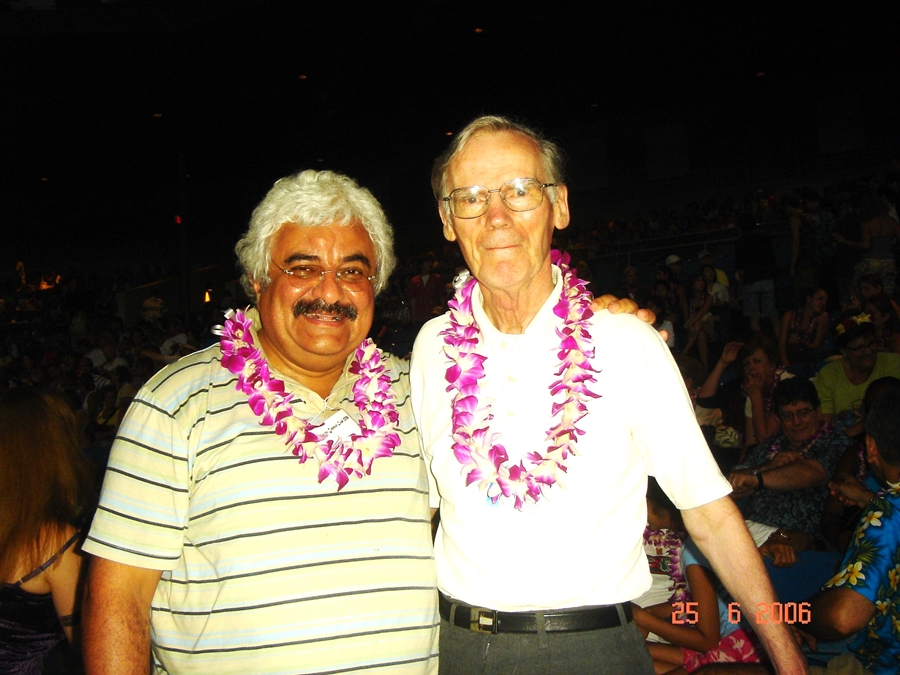
Fr. Milward on the right, Hawaii 2006, GCGI Conference. Photo: Anne Mofid
And now, Fr. Milward is gone. And I miss him so much.
He taught me many wonderful lessons. He told me that by respecting and valuing others, I would start to respect and value myself more fully. He taught me to love and enjoy the world, with all its wonders of diversity and beauty. He encouraged me to always take action in the interest of the common good. We also, on many different occasions, had the opportunity to share with each other our love and interest in old civilisations and cultures, especially Britain, Japan, and the land of my birth, Persia. I cannot be more thankful and grateful to him.
I can only say I have lost a great friend and mentor. I will never forget his loving smile, warm words and positive attitudes towards me. I am praying in my own way for my friend Peter and I ask The Almighty to ensure his continuous love for me to inspire me to do what I can for the common good. God grant Peter eternal rest; he was, in the old idiom, a lovely man, who, if required, may still be a peacemaker in heaven.
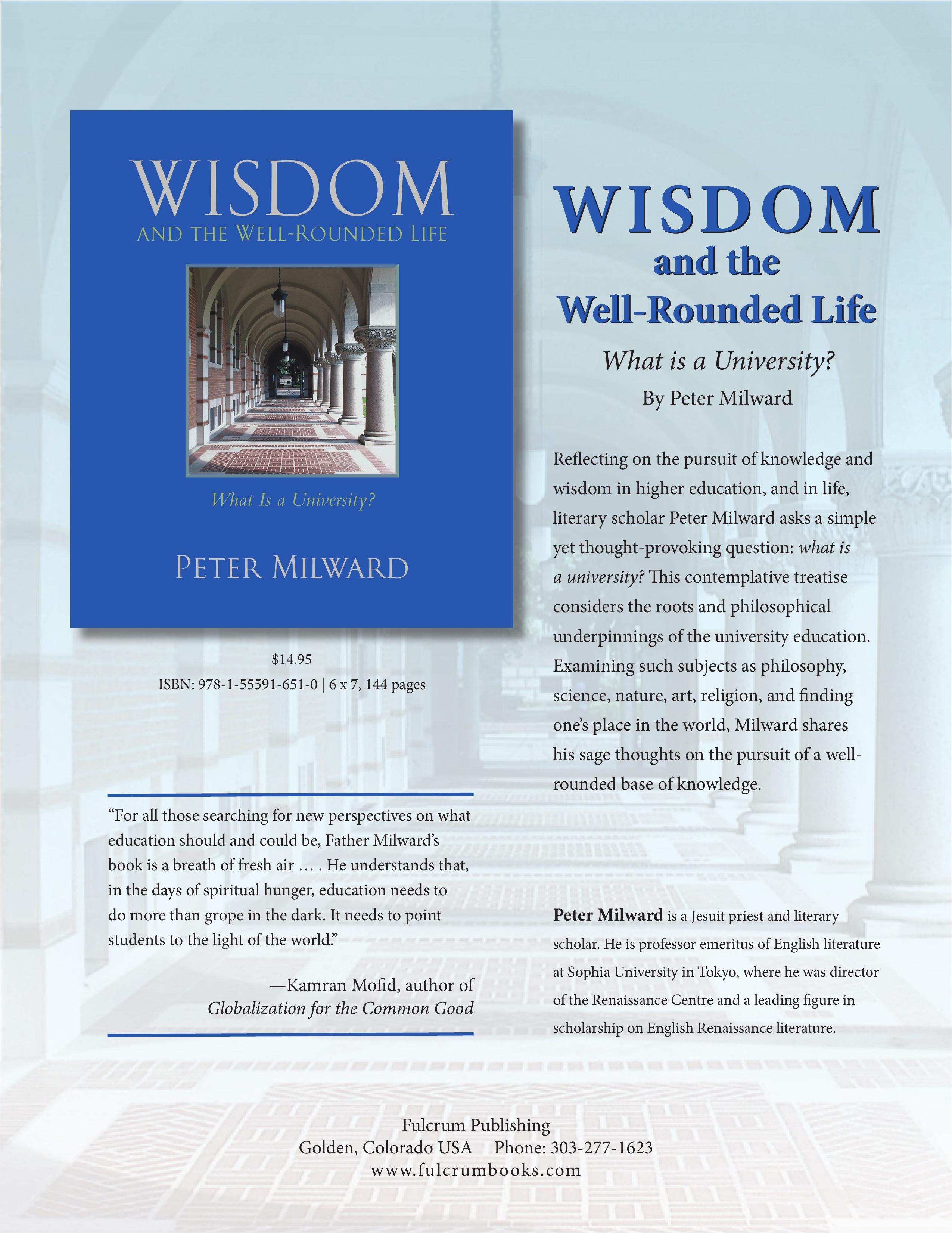
Wisdom and the Well-Rounded Life: What Is a University?
'Reflecting on the pursuit of knowledge and wisdom in higher education and in life, this thoughtful treatise considers the roots and philosophical underpinnings of university education. Examining such subjects as philosophy, science, nature, art, religion, and finding one's place in the world, Peter Milward shares his sage thoughts on obtaining a well-rounded base of knowledge.'
Read the Foreword and more details about What is a University HERE
- Details
- Written by: Kamran Mofid
- Hits: 2375
After The Coronavirus Passes, We Must Resist the Call To Go Back To ‘Normal’
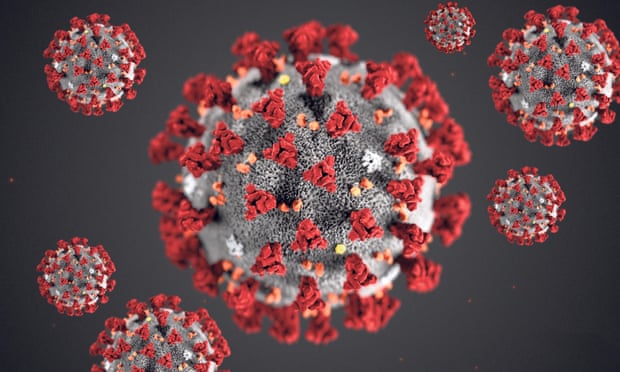
An illustration of the 2019 novel coronavirus (2019-nCoV) from the US Centers for
Disease Control and Prevention. Photo: AP Via The Guardian
Before the pandemic began, the systems that govern our world were broken and brutal. We were cheated. We, the people, mother nature and our sacred earth, were abused and exploited to make loads of money for the few. That world was emotionally and spiritually disconnected, dehumanised, devalued. Mammon was ruling the world and humanity in decline.
When we emerge, the world will be different, so must we be.
Out of the coronavirus crisis, a new kinder and better world must be born
The time is now to rediscover our humanity and our solidarity