- Details
- Written by: Kamran Mofid
- Hits: 2946
What a pleasant surprise I had today!
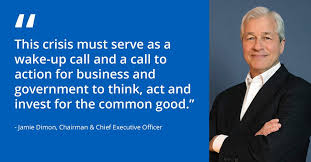
Photo:facebook.com
Today, as any other day, I came down to my study at about 4.30am for my usual Dawn Moment, to do a bit of meditation, enjoying the morning chorus, watching the sun rising, butterflies dancing and the sky colours changing. Reading a poem or two, trying to find the right balance, in my heart and in my mind, to begin my day, hopefully for the common good.
Then, I turned to my next action of the day, reading the Guardian to discover what had been going on when I was sleeping.
I began to read the headlines first and this is where the big shock came in. I could not believe my eyes:
Covid-19 a 'wake-up call' to build fairer society, says billionaire JP Morgan boss
JPMorgan Chase boss says business and government must act and invest for common good.
Friends, this is a very significant statement, from a big and powerful chief, who is the boss of an equally big and powerful organisation, in charge of very bad things happening in our world. Put it simply, the antithesis par excellence to what the common good is all about.
Given the above, nonetheless, let me share the gist of what the ‘Boss’ has said:
Jamie Dimon says this crisis must be used to ‘rebuild an economy that creates and sustains opportunity for dramatically more people’
Jamie Dimon, JPMorgan Chase’s chief executive, says the coronavirus outbreak is a ‘wake-up call’ for the government and business to build a fairer economy for millions of people ‘who have been left behind for too long’. America’s best-known banker made the plea in a memo to staff ahead of JPMorgan’s annual shareholders’ meeting, where he spoke of his ‘fervent hope’ that the coronavirus pandemic would lead to sweeping societal changes by ‘reminding us that we live on one planet’...
…’The last few months have laid bare the reality that, even before the pandemic hit, far too many people were living on the edge,’ Mr Dimon wrote in his memo, days after figures showed that 36.6m people had applied for jobless benefits in the US since the pandemic hit. ‘This crisis must serve as a wake-up call and a call to action for business and government to think, act and invest for the common good and confront the structural obstacles that have inhibited inclusive economic growth for years,’ wrote Mr Dimon. (extracts from the CEO’s Memo to the shareholders)
Wow! Such beautiful words, music to my ears. I am happy that a miracle has happened, and one of the main architects of the 2008 financial crisis and other calamities, has come out, changed his spots, and now is talking about the common good. But, I am disappointed that he has not gone a step further, telling us how this change may come about, what is the path to, what are the steps to climb to get to the promised land of the common good.
Given this big omission and shortsightedness, as the founder of the Globalisation for the Common Good Initiative, I am humbled and delighted to step in and show a possible direction and sources of inspiration to Mr. Dimon.
Dear Mr. Dimon, to change the world for the better, and to build it in the interest of the common good, obliges us to imagine a different world first. I invite you to join me in this act of re-imagination:
Imagine a political system that puts the public first. Imagine the economy and markets serving people rather than the other way round. Imagine us placing values of kindness, respect, fairness, interdependence, and mutuality at the heart of our economy. Imagine an economy that gives everyone their fair share, at least an appropriate living wage, and no zero-hour contracts. Imagine where jobs are accessible and fulfilling, producing useful things rather than games of speculation and casino capitalism. Imagine where wages support lives rather than an ever expanding chasm between the top 1% and the rest. Imagine a society capable of supporting everyone’s needs, and which says no to greed. Imagine unrestricted access to an excellent education, healthcare, housing and social services. Imagine hunger being eliminated, no more food banks and soup kitchens. Imagine each person having a place he/she can call home. Imagine all senior citizens living a dignified and secure life. Imagine all the youth leading their lives with ever-present hope for a better world. Imagine a planet protected from the threat of climate change now and for the generations to come. Imagine no more wars, but dialogue, conversation and non-violent resolution of conflicts. Imagine a world free of corruption!
This is the country and the world I wish to see and I believe we have the means to build it, if we take action in the interest of the common good.- Kamran Mofid, What might an Economy for the Common Good look like?
Dear Mr. Dimon, way before it became fashionable for bankers, such as your good self, talking about the common good, I, a ’Recovered’ academic economists, spoke about the common good, its relevance to business, economics, globalisation, education, management, fairness and justice, at a major conference in Dubai in 2004.
Given your newly discovered interest in the common good, I believe it is very important for us to revisit that inspiring evening in Dubai.
‘It was a very memorable occasion: Around 500 invited guests, amongst them, senior politicians, diplomats, business, cultural and military attaches, captains of industry, bankers and financial leaders, the leaders of the civil societies, NGOs and the media, senior religious and spiritual representative, scholars, researchers, students, youth and many more.
Given the current state of the world economy, the crises and challenges of capitalism, and more, I think recalling and remembering this speech- delivered over 16 years ago, at the height of the hyper boom and the seemingly unstoppable march of neo-liberalism and economic-globalisation, may prove to be very telling.’
A Businessman and an Economist in Dialogue for the Common Good: Dubai 2004
Finally, Mr. Dimon, to prove to the world that indeed you are serious about your call to action for the common good, I invite you to join us at the GCGI in our Call to Action:
GCGI Call to Action
We believe in the power of service, volunteerism, empathy and actions in the interest of the common good to improve lives, to build a better world. I also believe that economic prosperity, ecological harmony, better lives and a kinder world are all possible, if we all acknowledge one thing: We are not only accountable to our shareholders, but and more importantly, we must be answerable to all the stakeholders and the entire web of life.
After all is said and done, it is not enough to simply talk about beliefs and principles; we must live up to them, be transparent and accountable, and continually find ways of improving.
At the GCGI, we want to continue and play our part in building a better world for everyone. I do know that I do not have all of the answers, and it is only by working with others and being open to new ideas and different perspectives that I can come up with possible solutions that global challenges require.
Below you can see my suggested Ten Steps to build a better world. Please share your thoughts, ideas, and insights with me. We can only build the better world we are seeking if we come together, work together, build together.
It’s time to deliver on the goals we’ve set for a more peaceful, resilient planet and a better life
Ten Steps to Build a Better World
Co-creating “The Future We Want” in the Interest of the Common Good
I yearn to see that one day in the not too distant future JP Morgan can be believed and trusted by all stakeholders around the world as the Bank For The Common Good.
Related reading:
Dear Mr. Johnson, your Covid-19 survival must become a force for good
- Details
- Written by: Kamran Mofid
- Hits: 2290
‘What is the unfolding story of the next decades?
The rise of today’s youth, leading the world, with hope, inspiration, commitment, imagination and wisdom in the interest of the common good, to change our troubled world for the better’- Kamran Mofid, Founder, the GCGI
'Nature has shaken us': Welsh youths' 2020 message to the world
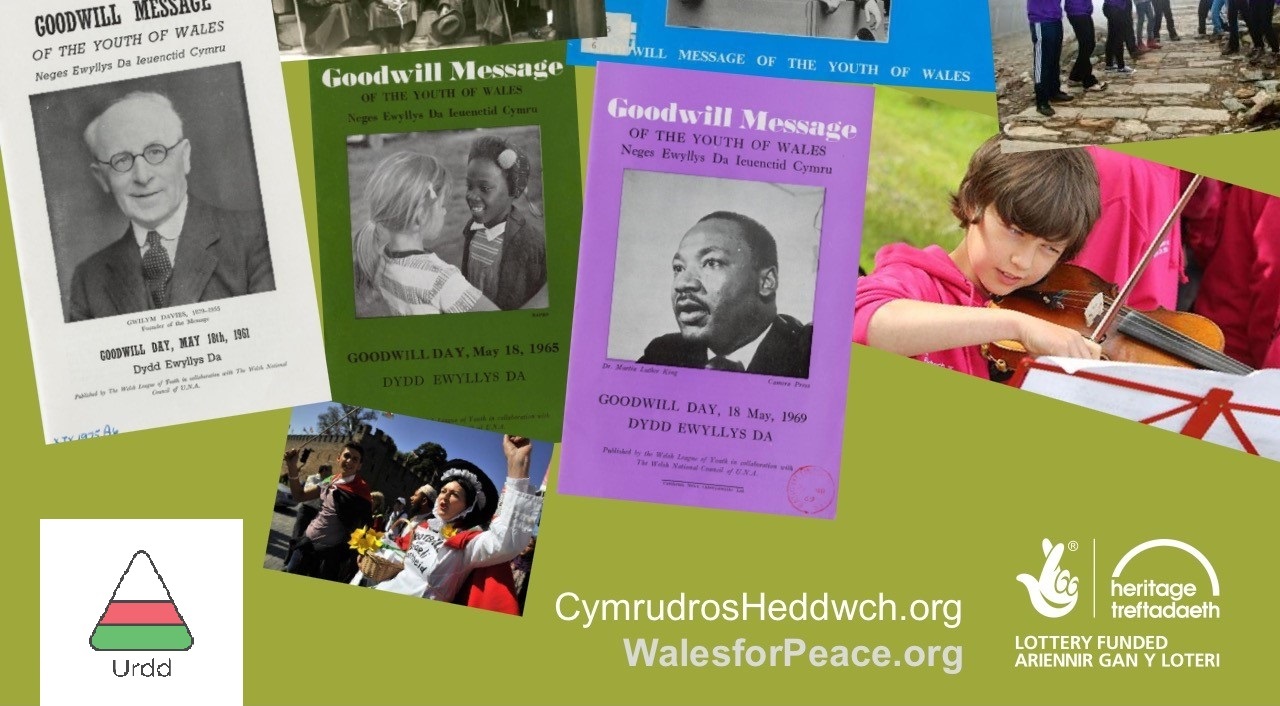
‘The Peace Message is broadcast every May by the young people of Wales to young people across the world.
- Details
- Written by: Kamran Mofid
- Hits: 1710
We are loving our simpler life in lockdown!
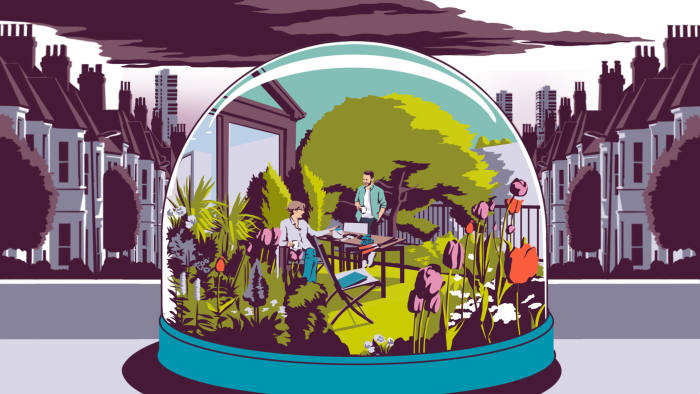
Photo: Bill Butcher, Via The Financial Times
The other day I began to read a very interesting article by Mariella Frostrup, the Observer's agony aunt. It was very beautiful and inspiring. This is why I want to share it with you.
This was the heading of the letter that Mariella had recieved: ‘I’ve craved a slower pace of life – and want to make it permanent’
‘The dilemma:
I know we’re in the middle of a global pandemic with the economy knackered and the free world led by a man like Trump. I know our freedom has been temporarily taken away from us. But I’m dreading the end of lockdown.
For years I’ve craved a slower pace of life. Lockdown has allowed me to spend time with my family – and not on the relentless promise of success in my career. It has allowed me to play and learn with my child, rather than rush to drop-off or pick-up at wraparound care. It has allowed me to walk in woodland rather than standing on a crowded commuter train. In many ways it has been idyllic.
Yes, I know I’m lucky to be able to work from home instead of being furloughed. Yes, I miss friends and family and meals out, and theatre and cinema and sport. But I’m loving this pace of life and struggle to come to terms with going back to “normal”. Should I use this break as a chance to re-evaluate my way of life?’
And now my friends, this is my dilemma!
As I was reading the above, I was itching to put pen to paper and attempt to write a reply to this timeless letter that I would have liked to have given. But, having read Mariella’s reply, I thought that I could not do better. So below I have noted her wise words.
But before that, I want to share something personal on the same topic and idea. Something that our GCGI has been at the forefront of highlighting, promoting and recommending.
Here I can do no better than noting a passage from the GCGI Ten Steps to Save the World:
‘Throw away materialism and consumerism, ‘Black-Friday’ sales mentality, and opt for simplicity, simple living and be grateful for who you are, what you are and what you have
In Praise of Frugality: Materialism is a Killer
There is more in less: The Evolution of Simplicity
Simplicity: it’s our true guide to a better life
The beauty of living simply: the forgotten wisdom of William Morris
Black Friday, Brexit and Trumpian Values: Deadly forces taking over our world, controlling our minds
Thanksgiving vs. Black Friday: Where is the Gratitude?
Memento mori, Memento vivere and the Madness of Black Friday
In Praise of ‘Enoughness’ and 'Lagomist' Economy
Now, reverting to the wise words of Mariella Frostrup:
Mariella replies:
‘The short answer? Yes! I’m sure that plenty of us will look back at this momentary pause in normal proceedings and share your sense of regret for its passing.
Yes there is extreme hardship and a financial impact that few will escape but, for all that, these are definitely gentler days for many of us. Not just in terms of kindnesses and a reduction in the everyday frenzy of life, but beyond that, there is a slow dawning of appreciation of the things we’ve failed to value highly enough. The proximity of those we love; the luxury of idling; the value to our lives of friends not in our immediate reach; the enriched quality of a kind of existence that is possible when we are not running our lives against a ticking clock. There is also the pleasure of supporting local enterprises that have proved so much more essential than the impersonal giants that, for all their market domination, just weren’t there when we needed them.
For old socialists like me, { and me too, KM} the best of that ideology seems to be experiencing a reawakening as more and more people realise that the way of life we’ve been aspiring to pre-Covid hasn’t produced a bounty of wellbeing. It says a lot about our old lifestyle that the “wellness industry” was booming, making big bucks by commercialising the very things many of us are now enjoying under lockdown. Maybe that goal of “wellness”, but without the trademark, should now be top of our list of good things to retain from this traumatic time. Would it not be a fitting fate for this insidious virus that’s stolen so much from us, to rebrand it as a positive new “ism”, symbolising the moment our world paused and we reconstructed our dreams of what a good life should be? When we are forced to battle our way back into business, would it not be possible to make sure the same old rat race does not re-emerge? To try to maintain the central compassionate glow of this Covid spring?
Making the most of the time left is starting to feel like an imperative and you are not alone in experiencing the tightening of a knot in your stomach at the prospect of the lockdown bubble bursting. The cooped-up chaos, endless rowing and inertia that most of us expected seems instead to have configured itself into a better sense of being. Kids, no matter how reluctantly, taking some responsibility for chores; adults with time to talk to each other, to walk and read and listen and even play cards of an evening! Our world definitely seems to improve when we relinquish the expectations we have come to embrace as normal ambitions, sustained by endless and relentless consumerism.
Now may well be the moment to take note of the beneficial impact that simpler lifestyles have had on us and our planet and insist that, when the time comes for re-entry, we won’t just step back on the treadmill. I know that with an economy in freefall and job losses at an all-time high it won’t be hard to tempt us into re-embracing our bad consumerist habits, but does a less frenetic pace have to be a bad economic choice?
What I am certain of is that it would be an even greater tragedy than the one that has just befallen us to learn nothing from the whole experience except how to be better prepared for a pandemic.
Would we be “living the dream” if, after losing so many of those we love, enduring terrible financial hardship and cataclysmic job losses, we turned around and went straight back to normal once the threat of the virus abated?
If I believed in God, I’d consider Covid-19 a pretty strong message from him about the need for behavioural change. I’d like to join with you in exhorting readers to celebrate how different and better a world not based on “busyness” actually is – and could be. I’d be tempted to call this new awakening Covidism, as a mark of respect to those who have died and a way of reminding ourselves that their deaths should not be in vain. It’s given us pause for thought and if we’ve learned nothing from it, we really are a lost cause.’- Read the original article HERE
In Conclusion, Lest We Forget
Whatever happens in life afer Coronavirus, we must not go back to ‘NORMAL’. We Must Not Be Cheated and Exploited Again.
Photo: AP Via The Guardian
Before the pandemic began, the systems that govern our world were broken and brutal. We were cheated. We, the people, mother nature and our sacred earth, were abused and exploited to make loads of money for the few. That world was emotionally and spiritually disconnected, dehumanised, devalued. Mammon was ruling the world and humanity in decline.
When we emerge, the world will be different, so must we be.
Out of the coronavirus crisis, a new kinder and better world must be born
The time is now to rediscover our humanity and our solidarity
- Our Rotten and Corrupted World: Murdoch’s Carnage and His Evil Empire
- Our postcard from the future: We long for Algarve’s warm sunshine, blue skies and our Hapimag Resort
- World in Chaos and Despair: The Healing Power of Poetry
- Giving Tuesday 5th May 2020 – A response to Coronavirus: “In a world where you can be anything, be kind.”
- Can there ever be a Compassionate Capitalism?