- Details
- Written by: Kamran Mofid
- Hits: 2832
Murdoch's Mystery: Debunking the'Shadow State', The Empire of Corruption and Destruction
And here is a Reuters ( 7 July 2011) infographic that captures Murdoch's Global Media Empire

This is How a Media Empire and the Common Bad Have Come Together to Destroy the World!!
‘MURDOCH AND HIS CHILDREN HAVE TOPPLED GOVERNMENTS ON TWO CONTINENTS AND DESTABILIZED THE MOST IMPORTANT DEMOCRACY ON EARTH. WHAT DO THEY WANT?’- Jonathan Mahler and Jim Rutenberg, The New York Times Magazine, 3 April 2019

Photo: The New York Times
As we proceed to build a fairer, kinder, and better world in the post- Covid-19 era, we should try to discover who our friends and foes are.
Nota Bene
In May 2012, I had posted a Blog, with this timeless question: Can the Media be for the Common Good?
Let me quote a passage from it:
‘Today, there is a great interest in highlighting a growing problem area, namely, the rapidly accelerating global corporate concentration of media ownership and the consequent grave impacts on democracies and consciousness throughout the world. It is very obvious that the performance of the mass media has recently become extremely degraded, with rampant commercialisation, trivialisation, corporate ownership, the PR industry and pressure groups agenda. This, as well as so much repetition, the narrow range of debate, and sharply declining standards for journalistic integrity, has significantly affected the possibilities of progress, development and education.
Lest we forget, a free and an independent media were conceived to serve the public good. Good journalism once stood at the heart of the struggle for freedom, democracy and justice, making it possible for responsible citizens to make informed decisions. This, as we all know, is not, by-and-large, true any more. Profit and share-holders values and interest are what matters most.
Given this increasing and overwhelming ownership of our global media outlets by individuals such as Rupert Murdoch and his cohorts, supported by corporate advertisers, compromising independent and responsible journalism, the time has arrived to seriously question if under these conditions the media indeed can be for the common good?’...
Anyhow, to cut a long story short, I then answered my own question, by saying, YES, indeed, it is possible to have a media for the common good, as long as they are like The Guardian and the BBC.
Can the Media be for the Common Good?
‘It goes without saying that I was delighted and very happy to note that in a University of Oxford study, my favourite newspaper that I have been reading daily since the early 1970s has topped the poll of national papers for coronavirus coverage.The Birts trust the Guardian, its investigative journalism and its reporting of facts, analysis, and stories.
Moreover, I was very happy to note that the nation’s favorite TV and Radio news coverage, The BBC, has also topped the poll in its category.
Wow! What more can say, but that it is wonderful to see that my long held views, convictions, and praise for the Guardian and the BBC have been in line with the praises of the British and indeed many more around the world.
So, my friends, come on board, support, value and cherish these institutions (and off course the NHS), or the Thatcherite ideologues will destroy them, as they have done with everything that was once good and worthy. Be warned.’ I always knew that the Guardian and the BBC are the BEST
Today, I wish to ask a different question:
Can the media be for the common bad?
The answer, in my mind, is, YES, indeed.
But, I want to invite Kevin Rudd to answer this question more fully

Kevin Rudd was prime minister of Australia from 2007 to 2010 and then again in 2013.
He is president of the Asia Society Policy Institute in New York.-Photo: Mike Bowers/The Guardian
The Murdoch media’s China coronavirus conspiracy has one aim: get Trump re-elected- Kevin Rudd*
‘In liberal democracies, the integrity, impartiality and professionalism of intelligence agencies matters. That’s why it is essential that intelligence agencies remain aloof, not only from the political debates of the day, but also from the policy decisions that individual governments may take. The intelligence community’s core task is to provide brutally realistic analysis on the threat environments we face so that governments can then make the best-informed policy decisions possible to preserve our common security.
The failures of the intelligence community before the Iraq war, the gullibility of much of the western media, as well as the cynical manipulation of both by the political class of the day, provide us with a stark reminder of what can go radically wrong. On 8 September 2002 the New York Times published one of this century’s most consequential news articles. The front-page story, supplied by the Bush administration, claimed that Saddam Hussein had stepped up his quest for weapons of mass destruction by acquiring key components for a nuclear weapon. In the UK, the Blair government’s “dodgy dossier” compounded the error. John Howard did the same in Australia. The problem was that it just wasn’t true. These were over-egged stories designed to soften the public up for what would become a disastrous war.
The invasion of Iraq in March 2003 casts a long shadow. Hundreds of thousands of people were killed, first in the invasion, then the ensuing chaos, then in the rise and fall of Islamic State. It strengthened Iran’s hand in both Iraq and Syria. It contributed to a massive outflow of refugees across the world, a factor in the resurgence of the far right across Europe. And Washington has spent nearly two decades trapped in a Middle Eastern mess of its own making, diverting much of its attention from China’s regional and global rise.
Lies were reported as facts. Credible sceptics were downplayed, ignored or attacked as unpatriotic “appeasers”. The thrill of landing a big “story” overtook the media’s fundamental duty to prevent the public from being deceived. Journalists who believed they were muscling up to a looming security threat turned out to be working instead against their own countries’ long-term interests. And in all this the Murdoch media were leading the pack across the anglosphere as the unrelenting cheerleaders for war – and vilifying those, like me, who opposed it.
Murdoch and the Two Trumps!!

Photo:BuzzFeed News
This brings us to the Covid-19 pandemic and the public health and economic mayhem it has unleashed across the globe. The sheer magnitude of the damage means that the people of the world have every right to know how this came about. Whether China’s new class of “wolf warrior” diplomats care to recognise it or not, there are fundamental questions we can all legitimately demand answers to. These include the origin of the virus in Wuhan; whether the earliest genetic evidence of the outbreak has been properly preserved for independent research; the danger of wildlife “wet markets” in the transmission of such viruses; what delays occurred in notifying central authorities; why some local medical staff were either silenced or punished; what delay occurred in notifying the World Health Organization of human-to-human transmission, given China’s obligations under the relevant international health regulations. There are also fundamental questions on whether the WHO properly discharged its mandate to provide clear and early warnings to the international community. And whether national governments took all necessary actions to prepare for the virus reaching their own shores, or whether these warnings were effectively ignored – as appears to have been the case in the US.
But amid all these questions, and the parallel debate about the mechanism now needed to conduct an effective international inquiry, we suddenly have a unilateral declaration by the US president and his secretary of state that the body of evidence overwhelmingly points to the virus having leaked from the Wuhan Institute of Virology, where research projects have been under way into various categories of coronavirus borne by bats. They claim a “high degree of confidence” in this theory, citing compelling but as-yet undisclosed evidence – despite the US director of national intelligence issuing a rare public statement disparaging this theory.
Enter the “global exclusive” story of Rupert Murdoch’s Australian Daily Telegraph last weekend, headlined “China’s batty science – bombshell dossier lays out the case against the People’s Republic”. The paper claims to have been leaked a 15-page research dossier prepared by unnamed “western governments” on the Chinese government’s culpability for the outbreak. The clear inference from the Telegraph report is that the document was prepared by the “Five Eyes” intelligence community linking the US, UK, Australian, Canadian and New Zealand intelligence services. Other Murdoch journalists, re-reporting the story, have expressly stated it was a Five Eyes document. While the article itself shies away from stating explicitly the document’s authorship, the newspaper goes on to detail a number of investigatory actions being undertaken by the Five Eyes to nail the Chinese state’s responsibility.
The most critical part of the Telegraph newspaper report deals with apparent divisions among the wider intelligence community on the authenticity of the “Wuhan laboratory leak” thesis. And it’s here that Murdoch’s paper becomes explicit in its assertion that the Five Eyes research dossier helps validate the as-yet-unproven claim by Donald Trump and Mike Pompeo that the virus was “invented” at the Wuhan laboratory. The article and associated stories are laced with colourful reporting about Chinese “bat virus” researchers – “bat men”, “bat women” and other tales from the Wuhan bat cave. Nonetheless, having delivered its political ordinance in support of Trump and Pompeo, the Murdoch story carefully and cleverly seeks to cover its traces by stating repeatedly that nothing is yet proven about the laboratory leak.
The Murdoch journalist in question, Sharri Markson, a few days later pops up as the prime interview on the Murdoch-owned US cable TV network Fox News. The interviewer is none other than Trump’s personal favourite, Tucker Carlson, who together with Sean Hannity are his cheerleaders-in-chief in the American media. Right on cue, Tucker chimes in that the dossier “is the most substantial confirmation of what we’ve suspected that we’ve had so far” and that “because it’s a multinational effort I think it would be hard to dismiss it as a political document”.
The truth is, at this stage, none of us know definitively whether the virus came from the Wuhan laboratory. The best we can do is accept the Australian government’s assertion that this is at best a 5% possibility. Politically, the bottom line is that the leak of this alleged Five Eyes intelligence dossier to the Murdoch media in Australia, before being resold back into the US political audience by the very same Murdoch media, appears designed to back Trump’s and Pompeo’s claim. But this time with the added “authenticity” factor of the dossier being “multinational” and not just a normal drop from the White House to Fox, which have become a dime a dozen.
This is all about US presidential politics. There are three issues in this campaign: Trump’s handling of the virus; how to dig the US out of its virus-induced economic hole; and who can be most hardline on China – the Donald or “Beijing Biden”, as the Republicans now seek to tag his Democratic opponent. There’s little else on the table. Therefore, using an intelligence leak pushing Chinese culpability, laundered through a foreign country, turbocharged with the credibility factor of being an alleged Five Eyes product, helps the partisan political cause. And let’s be clear: Murdoch is campaigning full-bore for Trump.
Here are questions now for the Australian government and potentially its Five Eyes partners. First, was this an “intelligence” product, or was it simply open source material derived from information in the public domain? Second, was it an authorised Five Eyes product, or was just prepared in the US? Third, who leaked it, given that leaking such material is a criminal offence – as the US has made plain in its handling of Chelsea Manning’s and Julian Assange’s cases that included the large-scale unauthorised release of
classified Five Eyes material. Were any ministers of the Australian government complicit in this? Or was the US embassy in Canberra involved? If the Australian government is serious about the protection of classified documents, then why hasn’t a full police investigation been commissioned? Or is the government fearful of what it might discover if, as is likely, the leak has been driven by political and electoral interests within the US.
The extent to which the Australian intelligence community has sought to distance itself from the “dossier” suggests it does not wish to be in any way drawn into domestic politics – either Australian or American. The British intelligence community is reportedly doing the same. This is good. These institutions appear to have learnt from the Iraq war fiasco and the political abuse of intelligence agencies that occurred at that time. But on this question, the bitter lessons of Iraq appear to have been lost on Trump and the Murdoch empire that supports him.
China has much to answer for, including the ultimate origins of the virus. But if Trump’s claim in the Wuhan laboratory saga ultimately ends up being disproven, either by the Five Eyes or by US intelligence itself, then the irony is that the net political winner will be China. Remember the humiliation when no WMD were found in Iraq? Beijing would seek to exonerate itself as a result of egregious presidential overreach – once again aided and abetted by the Murdoch media. This is why the watchword of any sophisticated intelligence agency is caution in endorsing premature conclusions until all the facts are on the table.’
*This article was first published in The Guardian on Friday 8 May 2020.
Watch the Video: Former Australian PM describes Murdoch media empire's 'assault'
Read more:
Corruption? Is Rupert Murdoch Hacking our Democracy?

Photo:Manhattan Buzz
How Thatcher and Murdoch made their secret deal

'A rare sighting of Margaret Thatcher and Rupert Murdoch, in 1991.
Their meetings were a good deal more secretive 10 years earlier.' Photo:John Mantel/Rex Features, Via, The Guardian
Murdoch and Thatcher – a convenient alliance against the BBC
Johnson met Murdoch on day he signalled general election bid
Rupert Murdoch in Series of Meetings With Boris Johnson and High-Profile Ministers
Boris Johnson’s last official meeting before resigning as Prime Minister was with Rupert Murdoch

Photo: Scram News
“Mr Murdoch has had successive Prime Ministers in his pocket.”- John Mann MP

Photo: Daily Mirror
Dial M For Murdoch: News Corporation and the Corruption of Britain

Photo: The Daily Beast

Photo: The Bureau of Investigative Journalism
Murdoch and His Hacking Empire

‘On Nov. 10, 2011, a protester representing media executive James Murdoch appears at a demonstration by the activist organization Avaaz outside
the British Houses of Parliament, where Murdoch was testifying about the cell-phone-hacking scandal that brought down the News of the World newspaper earlier in the year.’- Photo: Encyclopædia Britannica
The Murdoch empire: Phone hacking exposed
Phone-hacking scandal: is this the tipping point for Murdoch's empire?
Rupert Murdoch's empire must be dismantled – Ed Miliband

Photo: Via LIGYA GARDEN
Our postcard from the future: We long for Algarve’s warm sunshine, blue skies and our Hapimag Resort
- Details
- Written by: Kamran Mofid
- Hits: 1712
We are dreaming about one of our favourite places in the world, our beautiful resort, Hapimag Albufeira, Algarve, Portugal.
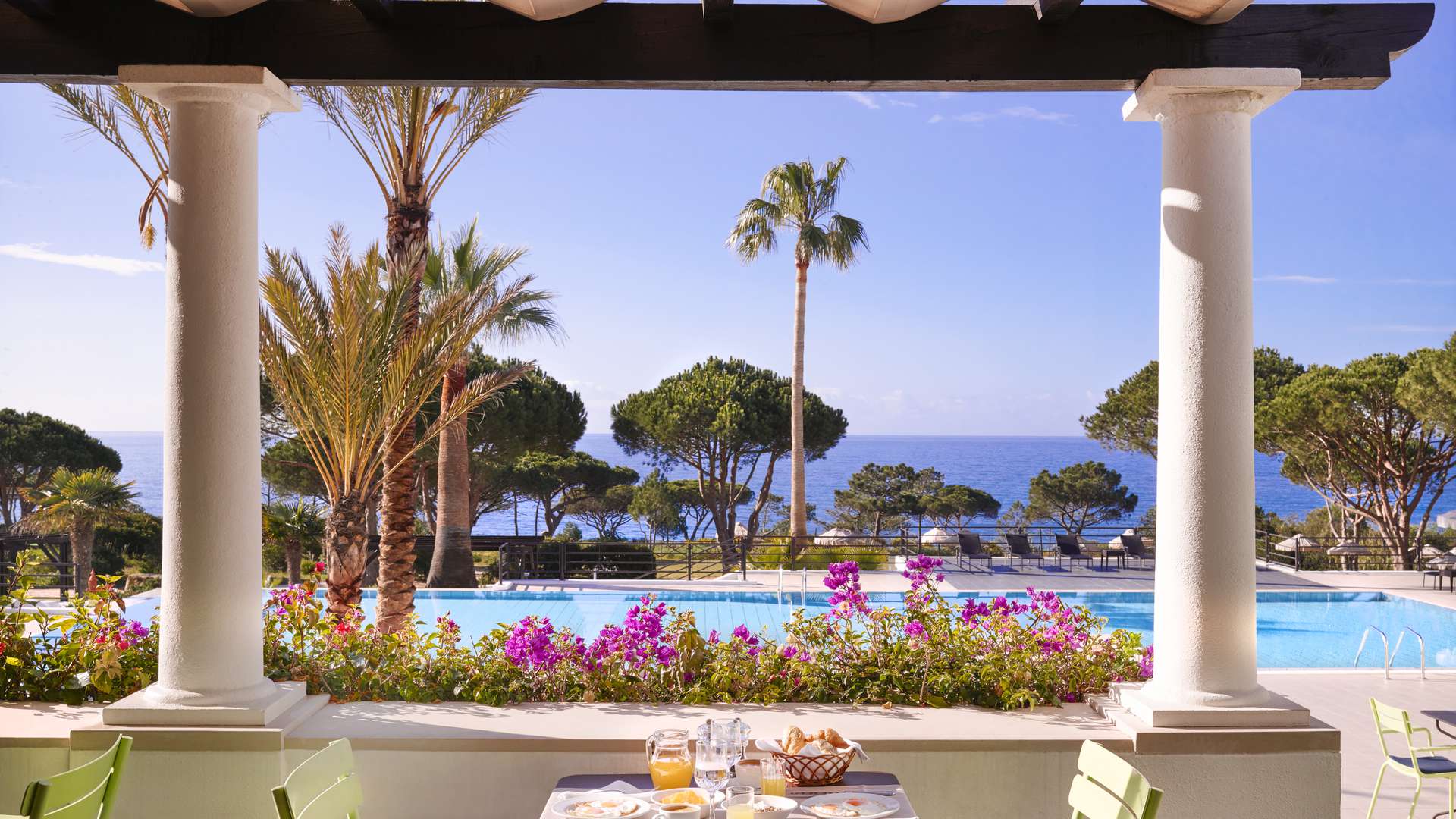
Photo: HAPIMAG
As far as we can remember, perhaps for the last 20 years, every January, and sometimes in Spring and Autumn too, we have visited the lovely Hapimag resort in Algarve. We just love it there. We were there in January this year, for a whole blissful one month.
We now know everyone there. All so kind, friendly and hopeful, the resort manager, admin staff, receptionists, the leisure consultant, the supermarket, restaurant, and bar staff, cleaners, gardners and the golf-buggy drivers, the many guests that we have met every year, and of course the kind portuguese people that we have met and made friends with. We long to go and see them all again.
'The Sharing Economy: Hapimag - A Business for the Common Good'
We miss the most beautiful sunrises and sunsets, we miss our early morning walks and swimming, chatting and laughing with fellow swimmers, nearly all Germans. We miss going to the Zen Garden, for our daily dose of spirituality and meditation.
We miss going to the supermarket, saying Hallo, Guten Morgen, making jokes with the manager and staff about ‘English Weather’, whilst picking up our daily freshly baked baguettes, bread and croissants.
We yearn for our walks to Gale, that beautiful long beach, and carrying on to the most beautiful long boardwalk ever, and on the way back, stopping at our favourite supermarket, Apolonia, for our daily galeo/ lite lunch, food shopping and/or perhaps picking some takeaway for dinner.
We miss walking through the fields of olive trees, oranges and lemons, not forgetting the loveliest almond blossoms.
We also miss our many shorter trips to some of the loveliest places including Albufeira, Olhao, Faro, Sagres, Lagos, Luz, Portimão, Tavira, Monchique, Silves, Loule, and many, many more.
Oh, we can write and write, more and more, how we are dreaming about our next visit to our Hapimag resort in Algarve.
But at this moment in time we cannot plan and book, as we have done over the past many years. Because of Covid-19 there are many travel restrictions in place and at this moment the British government is advising against all, but essential, travels.
Thus, we must remain patient and we know, sooner or later, we will be back to Hapimag Algarve.
Kamran and Annie Mofid
Hapimag Lisbon, we are missing you too
Hapimag Bowness, we are missing you too
Hapimag London, we are missing you too
Hapimag Paguera, we are missing you too
Hapimag Athens, we are missing you too
Hapimag Damnoni, we are missing you too
Hapimag Vienna, we are missing you too
Hapimag Salzburg, we are missing you too
Hapimag Bad Gastein, we are missing you too
Hapimag Mas Nou, we are missing you too
Hapimag Marbella, we are missing you too
Hapimag San Agustín, we are missing you too
Hapimag Cefalu, we are missing you too
Hapimag Antibes, we are missing you too
- Details
- Written by: Kamran Mofid
- Hits: 6478
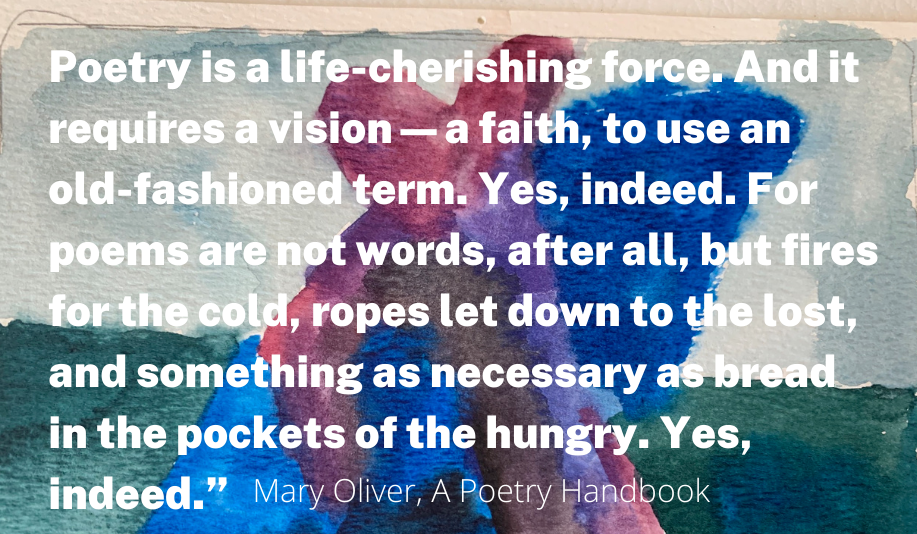
“Reading or writing poetry creates a space for empathy, for seeing another person, for bearing witness to our common humanity. Poetry, and the arts more generally, allow that chance to be human together with our patients…Empathy is essential for our survival . . . without empathy, how would we heal?”... “When we hear rhythmic language and recite poetry, our bodies translate crude sensory data into nuanced knowing . . . feeling becomes meaning.”-Poet and physician Rafel Campo, M.D.
Poetry is the key which unlocks the gates of hope, healing and wisdom
In these challenging and troubling times of self-isolation and social distancing, it seems more important than ever to build, maintain, and nurture our collective spirit of humanity, community, and neighbourliness. What better way to do this than through poetry to guide us through our journey of healing.
Determined to find an uplifting moment every day, I have been reciting poetry at Dawn for many years now. But I must admit this long held habit of mine has provided a particularly welcome escape into a sense of calmness in recent weeks.
The Road to Bliss: My Joyous Journey in the Company of Poets
Reading poetry, solitude, silence and sanctuary: finding ourselves on pilgrimage of self-discovery
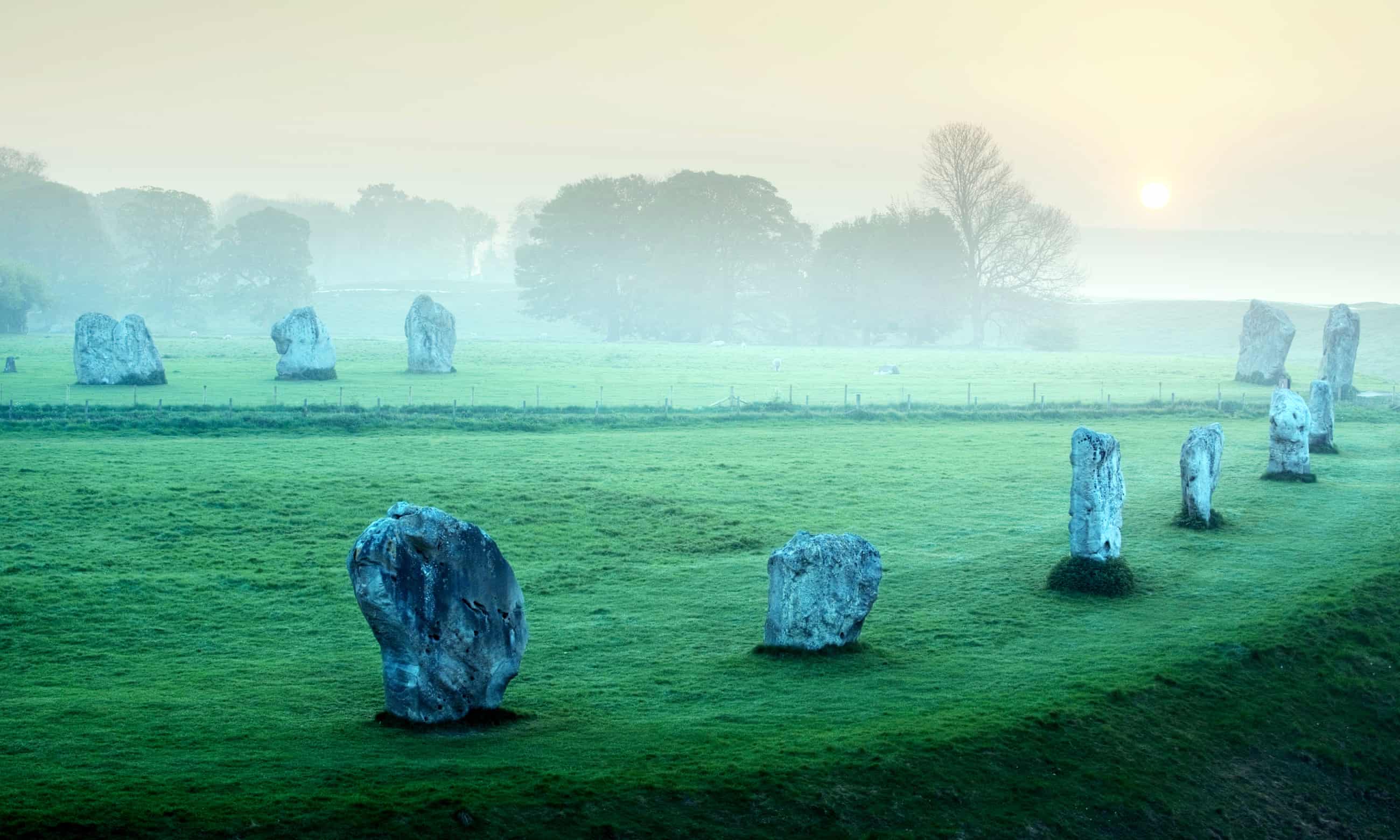
Rocking out … stone circle at Avebury, Wiltshire. Photo: Alamy, Via The Guardian
The time is now to sing the praises of poetry
‘Poetry, The Landscapes of the Soul, The Path to Serenity’
‘Poetry has a power to inspire change like no other art form’- Kate North
Photo:georgetown.edu
Poetry to calm the anxious mind
Beauty in words, others' and mine
A Poetic Pilgrimage to Wisdom
“Now I am made one with You and from that Union my heart is consumed with rapture and my tongue is bewildered. By union, I have been merged in the Unity, I am become altogether apart from all else. I am You and You are I - nay, not I, all is altogether You. I have passed away, ‘I’ and ‘You’ no more exist. We have become one and I have become altogether You”--Farid ud-Din Attar, one of the most ancient poets of Persia
As it happens, the date of this publication, my poetic pilgrimage, has now coincided with the 75th anniversary of VE Day. I can't see a better poem to begin this journey than For the Fallen (the Ode of Remembrance) - by Laurence Binyon.
Photo: trinitygosforth.org.uk
For the Fallen
'With proud thanksgiving, a mother for her children,
England mourns for her dead across the sea.
Flesh of her flesh they were, spirit of her spirit,
Fallen in the cause of the free.
Solemn the drums thrill; Death august and royal
Sings sorrow up into immortal spheres,
There is music in the midst of desolation
And a glory that shines upon our tears.
They went with songs to the battle, they were young,
Straight of limb, true of eye, steady and aglow.
They were staunch to the end against odds uncounted;
They fell with their faces to the foe.
They shall grow not old, as we that are left grow old:
Age shall not weary them, nor the years condemn.
At the going down of the sun and in the morning
We will remember them.
They mingle not with their laughing comrades again;
They sit no more at familiar tables of home;
They have no lot in our labour of the day-time;
They sleep beyond England's foam.
But where our desires are and our hopes profound,
Felt as a well-spring that is hidden from sight,
To the innermost heart of their own land they are known
As the stars are known to the Night;
As the stars that shall be bright when we are dust,
Moving in marches upon the heavenly plain;
As the stars that are starry in the time of our darkness,
To the end, to the end, they remain.'
The Sweetness of Being Human: ‘We have all of us one human heart.’
As I write this, it is a beautiful, sunny, warm spring day, here, in my hometown of Coventry.
Flowers are blooming, birds are singing, the days are getting brighter. What better way to sing the praises of Spring’s arrival than to read beautiful poetry.
Celebrating the joyous Spring with William Wordsworth
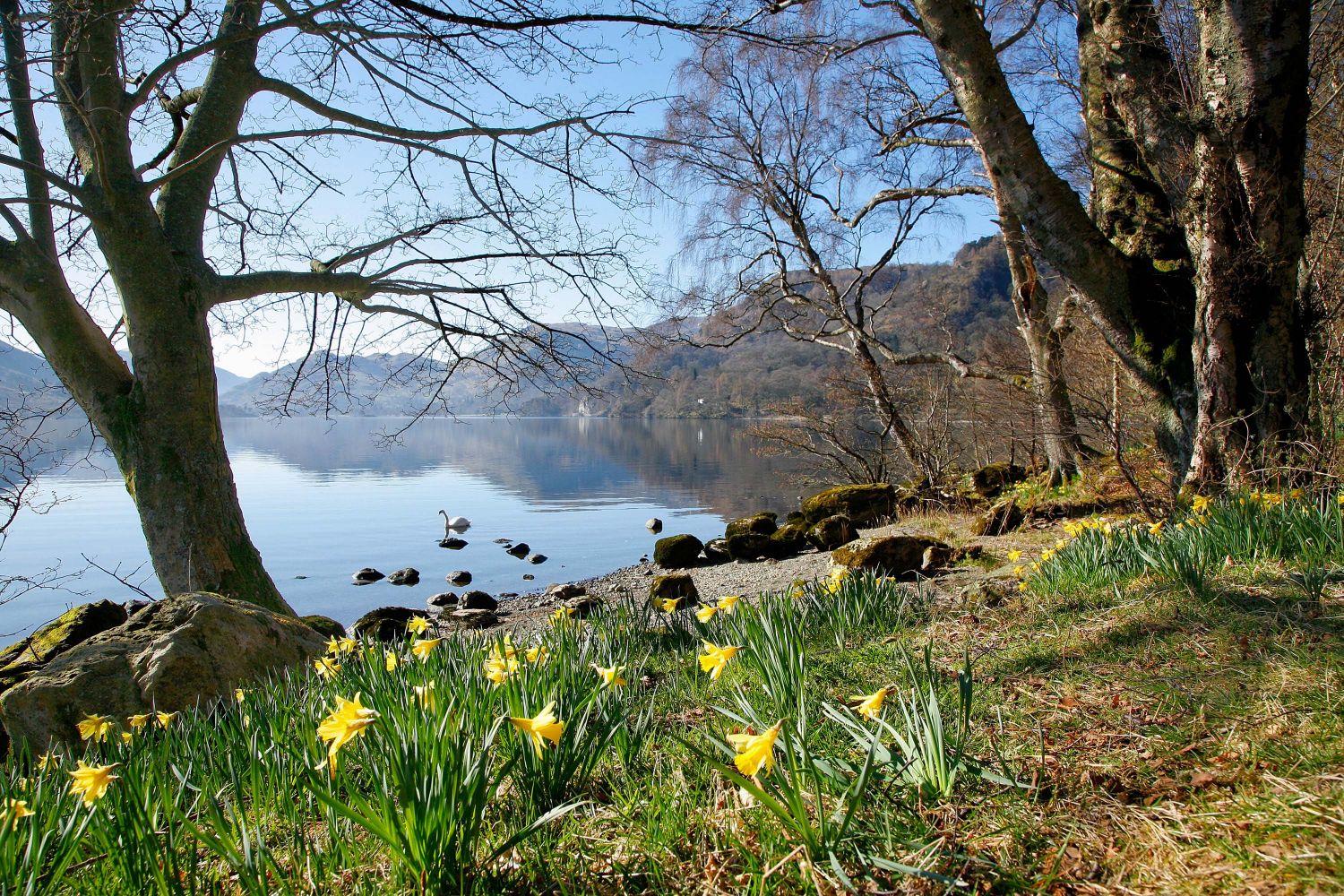
Daffodils At Wordsworth Point, Ullswater
Here is one of my favourite poems I would like to share with you: Of all the famous poems of Wordsworth, none is more famous than "I Wandered Lonely as a Cloud".
In this poem, Wordsworth says that, wandering like a cloud floating above hills and valleys, he encountered a field of daffodils beside a lake. The dancing, fluttering flowers stretched endlessly along the shore, and though the waves of the lake danced beside the flowers, the daffodils outdid the water in glee. He says that a poet could not help but be happy in such a joyful company of flowers. He says that he stared and stared, but did not realize what wealth the scene would bring him. For now, whenever he feels “vacant” or “pensive,” the memory flashes upon “that inward eye / That is the bliss of solitude,” and his heart fills with pleasure, “and dances with the daffodils.”
‘I Wandered Lonely as a Cloud
I wandered lonely as a cloud
That floats on high o'er vales and hills,
When all at once I saw a crowd,
A host, of golden daffodils;
Beside the lake, beneath the trees,
Fluttering and dancing in the breeze.
Continuous as the stars that shine
And twinkle on the milky way,
They stretched in never-ending line
Along the margin of a bay:
Ten thousand saw I at a glance,
Tossing their heads in sprightly dance.
The waves beside them danced; but they
Out-did the sparkling waves in glee:
A poet could not but be gay,
In such a jocund company:
I gazed—and gazed—but little thought
What wealth the show to me had brought:
For oft, when on my couch I lie
In vacant or in pensive mood,
They flash upon that inward eye
Which is the bliss of solitude;
And then my heart with pleasure fills,
And dances with the daffodils.’-On the 250th Birthday of William Wordsworth Let Nature be our Wisest Teacher
All in all, when all is said and done, to my mind, there is no doubt that at this time of global calamity, coronavirus crisis, we all need all the wisdom we can receive, especially in relation to the dark thoughts, the shame and the malice from which no person is immune. We need hope, love, beauty and wisdom to guide us in all we do. We need to be agents of goodness and light, whilst projecting them onto others. Taking this path, I am sure, in due course, the world would probably be less fractured and in pain than it is….today.
‘To place you in my heart may turn you into thought
I will not do that.
To hold you with my eyes may turn you into thorn.
I will not do that.
I will set you on my breath , so you will become my life’.- Rumi
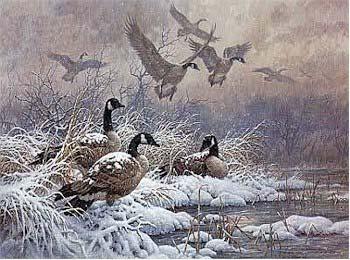
Larry Fanning, Winter Retreat - Canada Geese (AP) CE Edition
Wild Geese
‘You do not have to be good.
You do not have to walk on your knees for a hundred miles through the desert, repenting.
You only have to let the soft animal of your body
love what it loves.
Tell me about despair, yours, and I will tell you mine.
Meanwhile the world goes on.
Meanwhile the sun and the clear pebbles of the rain
are moving across the landscapes
over the prairies and the deep trees
the mountains and the rivers.
Meanwhile the wild geese, high in the clean blue air
are heading home again.
Whoever you are, no matter how lonely,
the world offers itself to your imagination,
calls to you like the wild geese, harsh and exciting—
over and over announcing your place in the family of things.’- Mary Oliver, Wild Geese

Photo:Influence Magazine
“To be seated in full reality is to be seated also in permeability, interconnection, and compassion: the qualities of good poems. My experience, then, is that every truly good poem has in it, somewhere, an anchor dropped down into wholeness—findable even in poems in which that may be hard, at first, to see.”- Jane Hirshfield
In these challenging and troubling times, staying calm is a particular hurdle - but, nonetheless, a vital necessity. I have a trusted recipe for calmness, thanks to my dear late friend and spiritual mentor, Prof. Fr. Peter Milward.

Photo:Willer Express
From the mid-1990s to mid- 2000s, for over ten years or so, at the invitation of Fr. Peter, I visited Japan a number of times. I recall that in one of the earliest visits, I was feeling a bit anxious, missing my wife and my two young boys. Fr. Peter sensed my anxiety and fear. The next day, when I went to his office at Sophia University, just before delivering my lecture, he gave me a copy of his book,’ Seasonal Poems of England’.
He then read the first poem of the book to me, ‘The Morning -Watch’ by Henry Vaughan:
O Joys! Infinite sweetness! With what flowers,
And shoots of glory, my soul breaks, and buds! …
Continuing our conversation he then told me that it is quite normal to be anxious and fearful at times. Then he said that he deals with his own fears, by starting his day with reciting a poem or two. That timeless and precious advice has remained with me and I practice it everyday at Dawn.
“Poetry is often written during times when people are feeling intense emotions.
Reflecting on Life: My Childhood in Iran where the love of poetry was instilled in me

Photo: psychcentral.com
In fact, the emotions often drive the poetry. Much like a good conversation or therapy session, poetry can provide a release… Poems often emerge in the midst of strong emotions. While part of what the poem does is describe the painful experience vividly and creatively, there is often a component of trying to make sense of the experience through understanding it more fully or through finding meaning in the suffering. When this second component is part of the writing process or the reflections on the poem, it closely parallels therapy… Processing emotions often leads to greater self-awareness and new insights. There are many ways poetry can bring new insights. For example, when I write a poem from a strong emotional experience, I generally try to lay it aside for at least a day or two and then return to it. Often, when I return to it, I discover new elements of the poem that I had not originally considered.”- Louis Hoffman
Below I have noted a few poems that have helped me to find my path of healing and hope, at the challenging times of uncertainty and confusion.
Then, I am delighted to share some of the poems that I have received from our GCGI friends, who have very kindly shared them with me.
But before that I wish to share the very interesting and inspiring story of Caedmon (flourished 658–680), first Old English Christian poet, as told by Edward Hirsch:
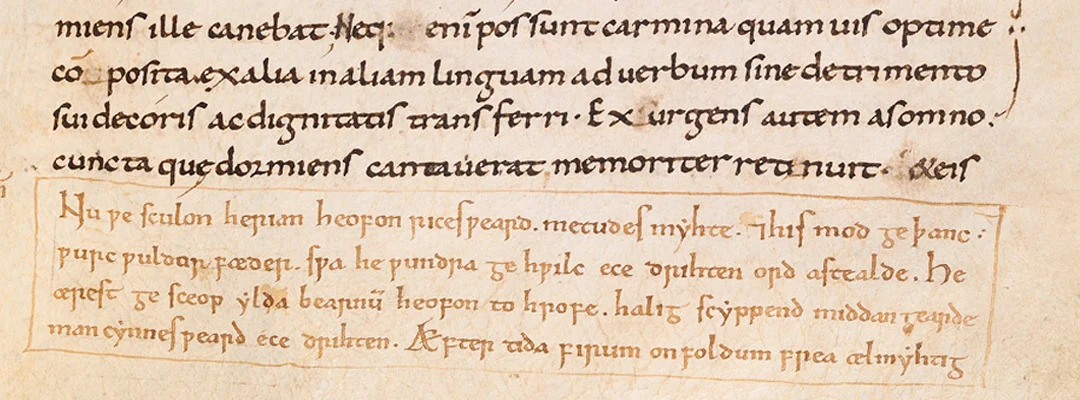
Lines from Cædmon’s hymn, added at the bottom of a page of Bede’s ‘History’
© Bodleian Libraries (Hatton MS 43 fol 129r), Photo via English Heritage
‘ENGLISH POETRY BEGAN with a vision. It started with the holy trance of a seventh-century figure called Caedmon, an illiterate herdsman, who now stands at the top of the English literary tradition as the initial Anglo-Saxon or Old English poet of record, the first to compose Christian poetry in his own language.
The story goes that Caedmon, who was employed by the monastery of Whitby, invariably fled when it was his turn to sing during a merry social feast. He was ashamed he had never had any songs to contribute. But one night a voice came to Caedmon in a dream and asked him to sing a song. When Caedmon responded that he had no idea how to sing, the voice commanded him to sing about the source of all created things (“Sing to me the beginning of all things”).
“Thereupon,” as the monk known as the Venerable Bede tells it in his Ecclesiastical History of the English People (731), “Caedmon began to sing verses which he had never heard before in praise of God the creator.”
Bede embedded a Latin translation of the Anglo-Saxon poem in his history. He probably translated it into Latin in order to make the poem available to an international audience of clerics, but it’s also possible that he was translating it from Latin. No one knows the priority of these texts—in manuscripts, the English version survives alongside Latin translations. Here is the Anglo-Saxon text, and then a modern English translation of the inspired poem called “Caedmon’s Hymn,” which was composed between 658 and 680.
Nu sculon herigean heofonrices Weard
Meotodes meahte and his modgepanc,
weorc Wuldor-Fæder, swa he wundra gehwæs
ece Drihten or onstealde
He ærest sceop ielda bearnum
Heofon to hrofe halig Scyppend
ða middangeard moncynnes Weard,
ece Drihten æfter teode
firum foldan Frea ælmihtig
(The English Translation)
Now we must praise the protector of the heavenly kingdom
the might of the measurer and his mind’s purpose,
the work of the father of glory, as he for each of his wonders,
the eternal Lord, established a beginning.
He shaped first for the sons of the earth
heaven as a roof, the holy maker;
then the middle-world, mankind’s guardian,
the eternal Lord, made afterwards,
solid ground for men, the almighty Lord.
Caedmon’s dream was a sign he had become a poet. It was a signal of poetic vocation. A clumsy, unschooled peasant is suddenly gifted with the power of song.’- Edward Hirsch, Caedmon’s Hymn: The First English Poet
And now reverting to the earlier tasks I had noted above, sharing a few of my favoriate poems and more, those that speak to me.
To begin with, I wish to start with this beautiful poem (The Guest House) by The 13th century Persian poet, Rumi, which to my mind explains the healing power of poetry eloquently:

Rumi. Photo: wikimedia
‘This poem by Rumi would have to be one of the most frequently recited poems in mindfulness retreats and courses around the world. I love all of his poetry but this is definitely one of my personal favourites. It just gets to the heart of mindful living in the most eloquent and beautiful way.’- Melli O’Brien
The Guest House
'This being human is a guest house.
Every morning a new arrival.
A joy, a depression, a meanness,
some momentary awareness comes
as an unexpected visitor.
Welcome and entertain them all!
Even if they are a crowd of sorrows,
who violently sweep your house
empty of its furniture,
still, treat each guest honorably.
He may be clearing you out
for some new delight.
The dark thought, the shame, the malice.
meet them at the door laughing and invite them in.
Be grateful for whatever comes.
because each has been sent
as a guide from beyond.’- MINDFUL LIVING WITH MELLI O’BRIEN
Staying with Rumi, I now wish to share the following with you:
What is to be done, O Moslems? For I do not recognise myself.
I am neither Christian, nor Jew, nor Gabr, nor Moslem.
I am not of the East, nor of the West, nor of the land, nor of the sea;
I am not of Nature’s mint, nor of the circling heaven.
I am not of earth, nor of water, nor of air, nor of fire;
I am not of the empyrean, nor of the dust, nor of existence, nor of entity.
I am not of India, nor of China, nor of Bulgaria, nor of Saqsin.
I am not of the kingdom of ’Iraqian, nor of the country of Khorasan
I am not of this world, nor of the next, nor of Paradise, nor of Hell.
I am not of Adam, nor of Eve, nor of Eden and Rizwan.
My place is the Placeless; my trace is the Traceless;
’Tis neither body nor soul, for I belong to the soul of the Beloved.
I have put duality away; I have seen that the two worlds are one;
One I seek, One I know, One I see, One I call.
He is the first, He is the last, He is the outward, He is the inward;
I am intoxicated with Love’s cup, the two worlds have passed out of my ken;
If once in my life I spent a moment without thee,
From that time and from that hour I repent of my life.
If once in this world I win a moment with thee,
I will trample on both worlds; I will dance in triumph for ever.
As I have noted elsewhere, it was through studying Rumi that I came to discover and get to know, Saint Francis of Assisi (1182-1226), perhaps the most beloved saint of the Western world. There are accounts that St Francis while in the Middle East was in contact with Rumi’s mentor and the source of many of his inspirations, Shams Tabriz. Rumi and St Francis, the great names in Abrahamic mysticism, are thus given a point of contrast which reflects their spiritual unity.
Much like Rumi, Francis of Assisi adored The Creation. Trees and animals would bow with reverence when he passed by. Saint Francis, like Rumi also loved to help all beings at whatever stage and in whatever difficulties they found themselves. He, too, loved to see people and animals happy and at peace with their lives and with God.
Below I wish to share with you a great prayer by St Francis which like Rumi’s poem quoted above has had a major impact on me. In this prayer we can clearly see the resemblance of Shams’s advice to Rumi on the true meaning of love and how St Francis has also similarly reflected on it.
Lord, make me an instrument of your peace,
Where there is hatred, let me sow love;
where there is injury, pardon;
where there is doubt, faith;
where there is despair, hope;
where there is darkness, light;
where there is sadness, joy;
O Master, grant that I may not seek so much to be consoled as to console;
to be understood as to understand;
to be loved as to love.
For it is in giving that we receive;
it is in pardoning that we are pardoned;
and it is in dying that we are born to eternal life.
May this prayer and the poem above be a source of inspiration to all those who are working to change the world for the better. In all, when I am inspired by something so powerful, I feel renewed in my hope for this world that has long turned in the darkness of greed, anger, revenge, fear, confusion, and pain. Rumi and Saint Francis of Assisi: Sages for Today
The Healing Message of Simurgh
The Conference of the Birds - Simurgh portrayed by Attar
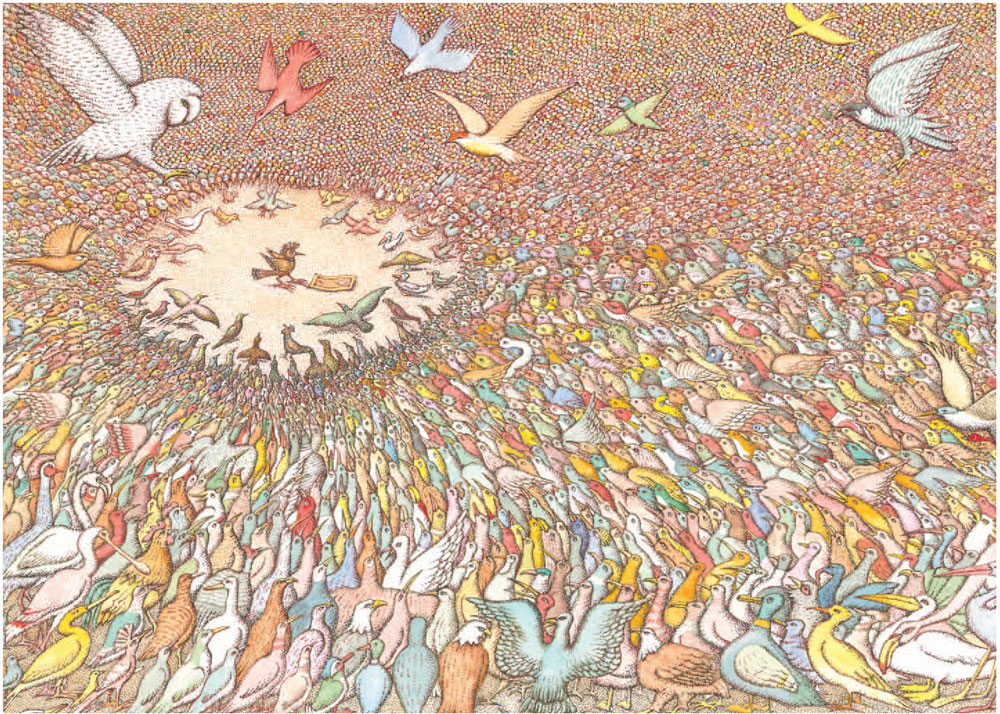
Photo: images-amazon.com
‘In the famous epic Persian poem "Conference of the Birds," the birds of the world gather to decide who is to be their king. The hoopoe, the wisest of them all, suggests that they should find the legendary Simorgh, a mythical Persian bird. The hoopoe leads the birds, each of whom represent a human fault which prevents man from attaining enlightenment. When the group of thirty birds finally reach the dwelling place of the Simorgh, all they find is a lake in which they see their own reflection. They realize that they were the Simorgh (which in Persian literally means "thirty birds") all along. The leader they sought was each and every one of them.’
‘Hundreds of birds embark on a perilous journey across seven treacherous valleys in search of a king who can right the wrongs in their world. They are led by the poet Attar, who has been transformed into a sharp-beaked, crested hoopoe. The troubles that spur them into flight — "Anarchy — discontent — upheaval! Desperate fights over territory, water, and food! Poisoned air! Unhappiness!" — are of course all too familiar in our world.’- Discover more about Simurgh

Photo:alicewalkersgarden.com
Don't Despair Walk On
By
Hafez, the 14th century Persian philosopher of love, a seeker of wisdom who became a poet of genius, a lover of truth who has transcended the ages.

Hafez. Photo: Braided Way Magazine
‘Josef to his father in Canaan shall return, don't despair walk on;
and Jacob's hut will brighten with flowers, don't despair walk on.
Aching hearts heal in time, vanished hopes reappear,
the disparate mind will be pacified, don't despair walk on.
As the spring of life grows the newly green meadow,
roses will crown the sweet nightingale's song, don't despair walk on.
If the world does not turn to your whims these few days,
Cosmic cycles are preparing to change, don't despair, walk on.
If desperation whispers you will never know God,
it's the talk of hidden games in the veil, don't despair walk on.
O heart, when the vast flood slashes life to its roots,
Captain Noah waits to steer you ashore, don't despair, walk on.
If you trek as a pilgrim through sands to Kaabeh,
with thorns lodged deep in your soul shouting why, don't despair walk on.
Though oases hide dangers and your destiny's far,
there's no pathway that goes on forever, don't despair walk on.
My trials and enemies face me on their own,
but mystery always backs up my stand, don't despair walk on.
Hafez, weakened by poverty, alone in the dark,
this night is your pathway into the light, don't despair walk on.’
(Reprinted from: Hafez: Teachings of the Philosopher of Love )
...and now, before sharing my friends’ offerings with you, I leave you with the gift of this beautiful song for the ongoing journey- a journey of hope, remembering who, why and where we are:
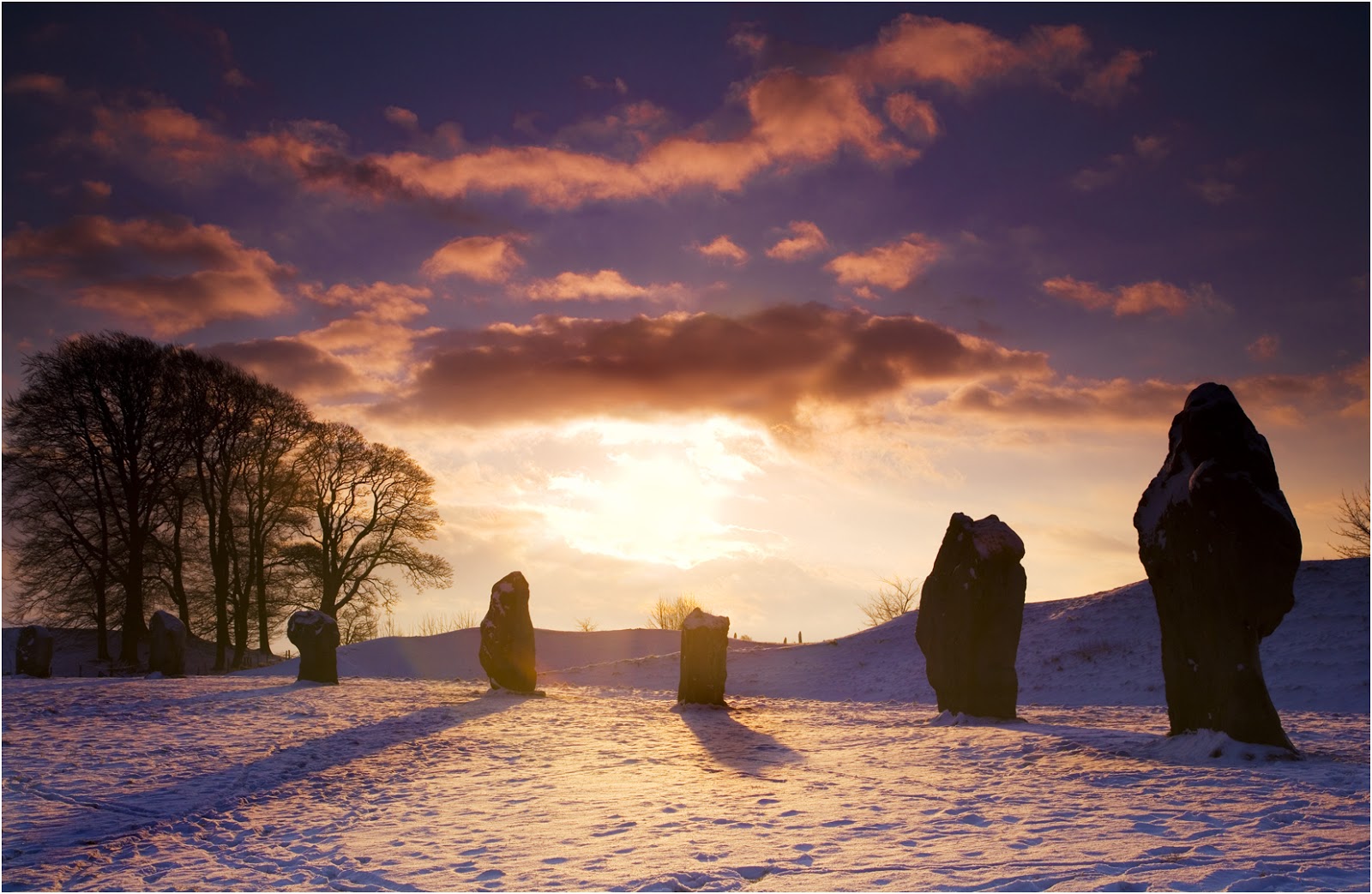
Winter Sunrise.Photo: Anna Stowe
I think over again my small adventures
My fears
Those small ones that seemed so big
For all the vital things
I had to get and reach
And yet there is only one great thing
Only one thing
To live to see the great day that dawns
And the light that fills the world.- Old Inuit Song
These are the offerings from GCGI Friends from around the world.
(Offerings are from Prof. Jamshid Damooei, Prof. Majdoddin Keyvani, Prof. Farhang Jahanpour, Mr. Steve Pendrey, Dr. David Wyatt, Dr. Ann Hallock, Mr. Ian Mason,Sr. Georgene L. Wilson, OSF, and Prof. Richard Bowen)
*****
Bani Adam ("Children of Adam")
Saadi Shirazi, from the Book of Golestan, (chapter 1, story 10), completed in 1258 AD
(Sent by Prof. Jamshid Damooei)
Human beings are like parts of a body,
Created from the same essence.
When one part is hurt and in pain,
the others cannot remain in peace and be quiet.
If the misery of others leaves you indifferent,
and with no feelings of sorrow,
You cannot be called a human being.
Another of Saadi’s poems is inscribed at the entrance of the Secretariat of the United Nations in New York:
The children of Adam
are limbs of one another;
in terms of creation
they’re of the self-same Essence
Song of Spring
Hafez of Shiraz, translated by Michael Boylan and published by Mage Publishers.
(Sent by Prof. Jamshid Damooei)
The gentle breeze will blow anew
Vitality to the barren earth.
The old will become young.
Persian lilacs will offer the white lily
Their fragrant red cup.
Their narcissus will glimpse the anemone.
Because of the tyranny of separation endured
The nightingale shall speed
Into the rose garden bursting with song.
If I’ve left the mosque for the tavern,
Don’t complain: the ceremonies stretch on far too long
And time is short
Heart, if you deposit today’s joy for tomorrow
You may be left with nothing.
For who will guarantee it?
In the month before the fast
Drink your fill of wine
For this sun, too, will set
In Ramazan
These will be out of sight.
The rose’s beauty is very dear.
Enjoy its petals when it is here.
As soon as it comes it is gone.
Minstrel, for this feast of love sing your melody!
No more chatter of the past
Nor of the future, now.
Hafez has made the journey to LIFE
For you.
Bid him fond adieu for soon in death his passing he- shall be.
*****
The Vernal Friend's Return
Mawlana Jalal al-Din Rumi, translated by Dr Franklin Lewis, Professor of Persian Literature at University of Chicago)
(Sent by Prof. Majdoddin Keyvani, Iran/Canada/USA)
Water down the dusty road! Look! Quick!
Beauty's very picture, and here it comes our way!
let the crier call glad--tidings to the garden:
Here comes the fragrance of the spring!
Make way for the friend we love, that waxing full-form moon:
Here comes a global radiance, basking in that beaming face.
The heavens cleft asunder, a mighty clamor fills the world,
Ambergris and musk aflutter in the wind,
Here come the regal streamers of the Friend!
The garden - splendor ripenings; the eyes - delighted and illuminated.
Sulking sorrow creeps aside,
and here is that celestial orb, ascendant at our side.
The unleashed arrow's speeding toward its target, and we're still sitting
still?
*****
Here comes the King to hunt
The verdure bows in waves of salutation: Peace!
The cypress rises, rooted upright in salute
on foot, the shrubbery marches forward in formation,
and here there come the blossoms, riding on their mounts.
Those lucky ones ensconced at ease,
within the private canopy of sky,
what wines they slowly sip!
Their spirits are already smashed and wasted,
There goes their starried shooting reason - hung-over, drooping
drunk.
As you enter in our cul-de-sac, you'll see silence is our habit,
for talk and chatter with the likes of us kicks up dust and vapor.
*****
Do not sink into sadness
Hafiz, translated by Robert Bly and Leonard Lewisohn.
(Sent by Prof. Majdoddin Keyvani, Iran/Canada/USA)
Joseph the lost will return, Jacob should not
sink into sadness; those who sit in the Grief
House will eventually sit in the Garden.
The grieving chest will find honey; do not let
The heart rot. The manic hysterical head
Will find peace; do not sink into sadness.
if the way the Milky Way revolves ignores
Your desire for one or two days, do not
Sink into sadness; All turning goes as it will.
I say to the bird: "As long as spring
Baptizes the grass, the immense scarlet blossoms
Will continue to sway over your head."
Even if the flood of materialism
Drowns everything, do not sink into
Sadness, because Noah is your captain.
Do not sink into sadness, even though the mysteries
Of the other world slip past you entirely.
There are plays within plays that you cannot see.
When you're lost in the desert, full of longing
For the Kaaba, and the Arabian thornbush
Pierces your feet, do not sink into sadness.
Although the way station you want to reach
Is dangerous and the goal distant, do not
Sink into sadness. God is the one who changes conditions.
Oh, Hafiz, in the darkness of poverty and in
The solitude of the night, as long as you can sing
and study the Qur'an, do not sink into sadness.
*****
Hope and patience are the best remedies for overcoming (self-) isolation, says Rumi:
( Sent by Prof. Farhang Jahanpour, UK)
Never lose hope
when the Beloved
sends you away.
If you're abandoned
if you're left hopeless
tomorrow for sure
you'll be called again.
If the door is shut
right in your face
keep waiting with patience
don't leave right away.
Seeing your patience
your love will soon
summon you with grace
raise you like a champion.
In this poem, Rumi addressed God (or may be Shams in whom he saw a reflection of God), but it can equally express our feelings eloquently for someone we love:
With Your sweet Soul, this soul of mine
has merged as water does with wine.
Who can part the water from the wine,
or me from You when we combine?
You have become my greater self;
How can smallness limit me?
You've taken on my being,
how shall I not take on Yours?
Forever, You have claimed me
that forever I may know You're mine.
Reflection during periods of solitude is worth more than being in a crowd of thousands, according to Rumi:
Which is worth more, a crowd of thousands,
or your own genuine solitude?
Freedom, or power over an entire nation?
A little while alone in your room
will prove more valuable than anything else
that could ever be given you.
(Coleman Barks, Rumi, The Book of Love, p. 36)
At a time of enforced isolation which provides us with the luxury of deeper reflection we can see that what we are seeking really resides inside us and not in all the glitter outside. Let’s hope that when this terrible pandemic is over, we re-evaluate our priorities. I can think of no better way of expressing that idea than in the following poem by William Wordsworth:
(Sent by Prof. Farhang Jahanpour)
The world is too much with us; late and soon,
Getting and spending, we lay waste our powers;—
Little we see in Nature that is ours;
We have given our hearts away, a sordid boon!
This Sea that bares her bosom to the moon;
The winds that will be howling at all hours,
And are up-gathered now like sleeping flowers;
For this, for everything, we are out of tune;
It moves us not. Great God! I’d rather be
A Pagan suckled in a creed outworn;
So might I, standing on this pleasant lea,
Have glimpses that would make me less forlorn;
Have sight of Proteus rising from the sea;
Or hear old Triton blow his wreathèd horn.
******
Leisure
By William Henry Davies
(Sent by Steve Pendrey, UK)
'What is this life if, full of care,
We have no time to stand and stare.
No time to stand beneath the boughs
And stare as long as sheep or cows.
No time to see, when woods we pass,
Where squirrels hide their nuts in grass.
No time to see, in broad daylight,
Streams full of stars, like skies at night.
No time to turn at Beauty's glance,
And watch her feet, how they can dance.
No time to wait till her mouth can
Enrich that smile her eyes began.
A poor life this if, full of care,
We have no time to stand and stare.'
Abou Ben Adhem
BY LEIGH HUNT
(Sent by Dr. David Wyatt, Australia)
‘Abou Ben Adhem (may his tribe increase!)
Awoke one night from a deep dream of peace,
And saw, within the moonlight in his room,
Making it rich, and like a lily in bloom,
An angel writing in a book of gold:—
Exceeding peace had made Ben Adhem bold,
And to the presence in the room he said,
"What writest thou?"—The vision raised its head,
And with a look made of all sweet accord,
Answered, "The names of those who love the Lord."
"And is mine one?" said Abou. "Nay, not so,"
Replied the angel. Abou spoke more low,
But cheerly still; and said, "I pray thee, then,
Write me as one that loves his fellow men."
The angel wrote, and vanished. The next night
It came again with a great wakening light,
And showed the names whom love of God had blest,
And lo! Ben Adhem's name led all the rest.’- From New York Times April 9 2018
*****
The Peace of Wild Things
by Wendell Berry
(Sent by Dr. Ann Hallock, USA)
When despair for the world grows in me
and I wake in the night at the least sound
in fear of what my life and my children’s lives may be,
I go and lie down where the wood drake
rests in his beauty on the water, and the great heron feeds.
I come into the peace of wild things
who do not tax their lives with forethought
of grief. I come into the presence of still water.
And I feel above me the day-blind stars
waiting with their light. For a time
I rest in the grace of the world, and am free.
******
Sonnet 33: ‘Full many a glorious morning have I seen’
BY WILLIAM SHAKESPEARE
(Sent by Ian Mason, UK)
Full many a glorious morning have I seen
Flatter the mountain-top with sovereign eye,
Kissing with golden face the meadows green,
Gilding fair streams with heavenly alchemy.
Anon permit the basest clouds to ride
With ugly rack on his celestial face.
And from the forlorn world his visage hide,
Stealing unseen to west with this disgrace.
Even so my sun one early morn did shine
With all-triumphant splendour on my brow;
But out, alack, he was but one hour mine,
The region cloud hath masked him from me now.
Yet him for this my love no whit disdaineth;
Suns of the world may stain when heaven's sun staineth.
*****
Invitation to Prayer*
(Written and sent by Sr. Georgene L. Wilson, OSF, USA)
Watch for the white rose.
See it in dreams delicious with beauty,
after diamond-winter snows,
in the midst of struggles and seasons,
and between journeys and jolts.
It appears as a whisper,
as a delicate light in deepest darkness,
as silence in terrible storms,
as bud emerging from thorny growth,
and as breast milk on an infant’s lip.
It is the scent of mother love:
a holding of the Infinite and finite as one.
Behold this glimpse of glory.
Offer gratitude for its sighting.
Then quickly return to gazing.
You have done no-thing
to create such mystery.
It is gift. It is now. It is free.
Be gift. Be now. Be free.
Watch
for a white rose
*In the poem, THE DIVINE COMEDY, Dante envisions paradise and beholds the Trinity and Woman, representing Wisdom, Creation, Mary, seated on a white rose.
All That is Needed is Compassion
(Written and sent by Sr. Georgene L. Wilson, OSF, USA)
To your insight, my friend,
I’ll add my minute seeing:
a mustard seed size of wisdom is enough
to plunge the mind’s insight
into the heart’s seeing
that goodness is always ONE.
Compassion (com-passion) with another
whom/that is NOW before me
is all that is necessary,
one breath at a time.
******
Finally, as I was preparing to post this offering online, I had an email from a friend, Prof. Richard Bowen, who lives in the Gower peninsula, South Wales, with this lovely message:
‘...If I could only read one poem, it would very likely be Shelley's 'To a Sky-Lark'. I would do so whilst recalling many walks along the ridge of Cefn Bryn on the Gower peninsula on a warm, sunny Spring morning, with the sea visible on both sides and an orchestra of Skylarks in the sky.’
Richard had then attached the photo below. At the bottom of the picture he had written: ‘I think you know this place,’ and how right he is.
My family and I have many wonderful memories of our travels to the Gower, to the most beautiful and unspoiled Oxwich Bay, staying over many years at the Oxwich Holiday Park and the lovely Oxwich Bay Hotel. So, thank you Richard for reminding me of the Gower again.
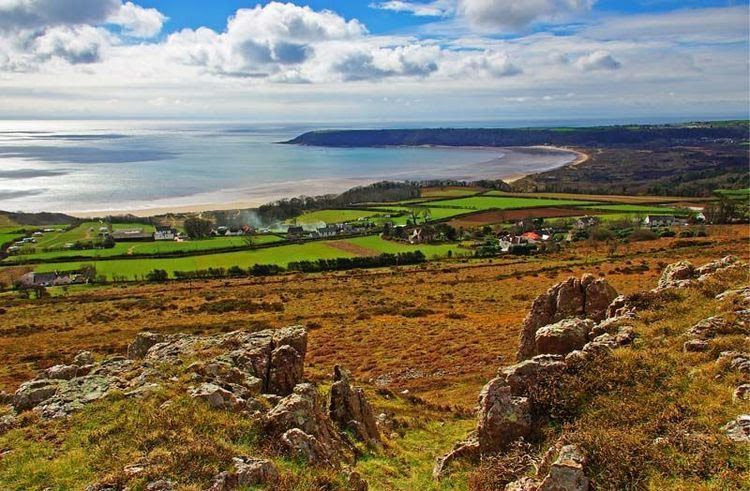
To a Skylark
BY PERCY BYSSHE SHELLEY
(Sent by Prof. Richard Bowen, South Wales, UK)
Hail to thee, blithe Spirit!
Bird thou never wert,
That from Heaven, or near it,
Pourest thy full heart
In profuse strains of unpremeditated art.
Higher still and higher
From the earth thou springest
Like a cloud of fire;
The blue deep thou wingest,
And singing still dost soar, and soaring ever singest.
In the golden lightning
Of the sunken sun,
O'er which clouds are bright'ning,
Thou dost float and run;
Like an unbodied joy whose race is just begun.
The pale purple even
Melts around thy flight;
Like a star of Heaven,
In the broad day-light
Thou art unseen, but yet I hear thy shrill delight,
Keen as are the arrows
Of that silver sphere,
Whose intense lamp narrows
In the white dawn clear
Until we hardly see, we feel that it is there.
All the earth and air
With thy voice is loud,
As, when night is bare,
From one lonely cloud
The moon rains out her beams, and Heaven is overflow'd.
What thou art we know not;
What is most like thee?
From rainbow clouds there flow not
Drops so bright to see
As from thy presence showers a rain of melody.
Like a Poet hidden
In the light of thought,
Singing hymns unbidden,
Till the world is wrought
To sympathy with hopes and fears it heeded not:
Like a high-born maiden
In a palace-tower,
Soothing her love-laden
Soul in secret hour
With music sweet as love, which overflows her bower:
Like a glow-worm golden
In a dell of dew,
Scattering unbeholden
Its a{:e}real hue
Among the flowers and grass, which screen it from the view:
Like a rose embower'd
In its own green leaves,
By warm winds deflower'd,
Till the scent it gives
Makes faint with too much sweet those heavy-winged thieves:
Sound of vernal showers
On the twinkling grass,
Rain-awaken'd flowers,
All that ever was
Joyous, and clear, and fresh, thy music doth surpass.
Teach us, Sprite or Bird,
What sweet thoughts are thine:
I have never heard
Praise of love or wine
That panted forth a flood of rapture so divine.
Chorus Hymeneal,
Or triumphal chant,
Match'd with thine would be all
But an empty vaunt,
A thing wherein we feel there is some hidden want.
What objects are the fountains
Of thy happy strain?
What fields, or waves, or mountains?
What shapes of sky or plain?
What love of thine own kind? What ignorance of pain?
With thy clear keen joyance
Languor cannot be:
Shadow of annoyance
Never came near thee:
Thou lovest: but ne'er knew love's sad satiety.
Waking or asleep,
Thou of death must deem
Things more true and deep
Than we mortals dream,
Or how could thy notes flow in such a crystal stream?
We look before and after,
And pine for what is not:
Our sincerest laughter
With some pain is fraught;
Our sweetest songs are those that tell of saddest thought.
Yet if we could scorn
Hate, and pride, and fear;
If we were things born
Not to shed a tear,
I know not how thy joy we ever should come near.
Better than all measures
Of delightful sound,
Better than all treasures
That in books are found,
Thy skill to poet were, thou scorner of the ground!
Teach me half the gladness
That thy brain must know,
Such harmonious madness
From my lips would flow
The world should listen then, as I am listening now.
*****
A selection of poems recieved since the first publication of our offerings above on 7 May 2020
Wildflowers
(Written and Sent by Dagny Mofid, USA)
Seeds plan for life,
and then wait patiently,
stoic singularity,
a parched, dry earth is by design,
twinkling stars to mark the time,
they’re ok with sleeping rough,
just to be is quite enough,
years can pass without disdain,
their wrinkled skin a weather vane,
they never fret or ask what-ifs,
their hearts prepared for breaking,
because life will bring the darkest rains,
and beauty breathtaking
Heaven
(Written and Sent by Dagny Mofid, USA)
Today Heaven called to me,
and I followed her a ways,
rested in her sunbeams,
kissed my cares away.
And on a silky tender breeze,
by a quiet forest pond,
a butterfly led an orchestra,
in leafy sing-song.
*****
What will you do God, when I die?
By Rainer Maria Rilke
(Sent by Brigitte Volz, Germany)
What will you do God when I die?
I am your jar ( if cracked I lie?)
Your well-spring (if the well go dry?)
You lose your purport, losing me.
When I go, your cold house will be
Empty of words that made it sweet.
I am the sandals your bare feet
Will seek and long for, wearily.
Your cloak will fall from aching bones
Your glance, that my warm cheeks have cheered
As with a cushion long endeared,
Will wonder at a loss so weird,
And, when the sun has disappeared,
Lie in the lap of alien stones.
What will you do God? I am feared.- From: "Modern German Poems"
Translated by Babette Deutsch and Avrahm Yarmolinsky
*****
Come Dance with Me!
(Adapted from Dhruv Bhatt)
(Sent by Lata Nathwani, Canada)
‘Hi! What is so funny in this Covid 19 season? I blurted, meeting a smiling stranger along the trail.
‘What is not? Can you not see Nature, dancing all around us? She is so bountiful and at play, and so am I.
See the clouds in the sky and the waves in the yonder ocean, they too leave some space and are at play.
So why not join in the dance?
Are not our playful moments hidden, wanting to play hide and seek with us all the time? He continued.
In the treasure box, which never needs a lock, nor stands to be stolen, our treasures are surely safe.
Look into the torn pockets of you mind, find them, and discover that we are in a carnival, each day.
Do thus join in the dance, please!
While tears in the eyes may come and go, and the ocean gets stormy, the moistness within never dries.
The shore may keep account of more or less, but surely the ocean can never bother about such scores.
The Sun may rise and set every day, but amidst the moving clouds, the sky above is always the same.
Move on my friend, let us all sing that like the waves in the ocean or moving clouds, we are all at play.
If they say so, then keep your distance by all means, but remember, you can never be out of the dance.
Come on! Aren't we meant, after all, to be at play on this dance floor, Her divine abode within us all?
Move on my friend and experience this dance!
*****
If-
By Rudyard Kipling
(Sent by Dr. Shirish Nathwani, Canada)
If you can keep your head when all about you
Are losing theirs and blaming it on you;
If you can trust yourself when all men doubt you,
But make allowance for their doubting too:
If you can wait and not be tired by waiting,
Or, being lied about, don't deal in lies,
Or being hated don't give way to hating,
And yet don't look too good, nor talk too wise;
If you can dream- -and not make dreams your master;
If you can think- -and not make thoughts your aim,
If you can meet with Triumph and Disaster
And treat those two impostors just the same:.
If you can bear to hear the truth you've spoken
Twisted by knaves to make a trap for fools,
Or watch the things you gave your life to, broken,
And stoop and build'em up with worn-out tools;
If you can make one heap of all your winnings
And risk it on one turn of pitch-and-toss,
And lose, and start again at your beginnings,
And never breathe a word about your loss:
If you can force your heart and nerve and sinew
To serve your turn long after they are gone,
And so hold on when there is nothing in you
Except the Will which says to them: 'Hold on! '
If you can talk with crowds and keep your virtue,
Or walk with Kings- -nor lose the common touch,
If neither foes nor loving friends can hurt you,
If all men count with you, but none too much:
If you can fill the unforgiving minute
With sixty seconds' worth of distance run,
Yours is the Earth and everything that's in it,
And- -which is more- -you'll be a Man, my son!
- Giving Tuesday 5th May 2020 – A response to Coronavirus: “In a world where you can be anything, be kind.”
- Can there ever be a Compassionate Capitalism?
- I always knew that the Guardian and the BBC are the BEST
- My Dawn Experience, by my friend, Steve Pendrey
- Canon Dr. Paul Oestreicher ANZAC DAY 2020 GCGI Sunday 26 April Sermon