- Details
- Written by: Kamran Mofid
- Hits: 1286
Our society has lost the instinct for kindness- Julia Unwin*
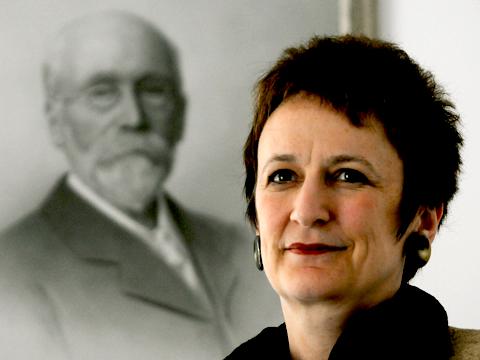
Julia Unwin CBE, Chief Executive of JRF and JRHT from 2007 to 2016.-Photo:The York Press
The Joseph Rowntree Foundation today (11 June 2009) publishes Contemporary Social Evils, which argues that a dangerous erosion of trust and culture of fear now pervades our society. Here foundation head Julia Unwin looks at how we can reclaim our values
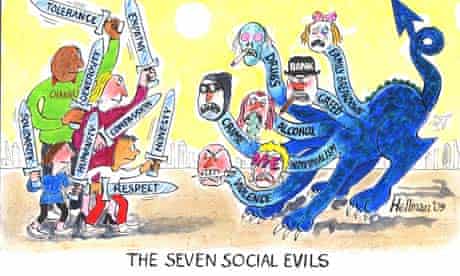
The Joseph Rowntree Foundation says people are fed up with the status quo and are hungry for change.
Illustration: Louis Hellman, Via The Guardian
…’As a society, we appear to have lost the instinct for kindness and the willingness to extend the hand of friendship. Our responses to children, to older people, to strangers, are all conditioned by a concern not to offend and a fear of getting involved.
What does it mean to be kind? What is Kindness?
Today is World Kindness Day: Embracing Kindness to Defeat the Political Economy of Hatred
Our recent public consultation into the social evils of today highlights a real concern for the way in which society increasingly values people for their economic contribution, at the expense of kindness and compassion.
Mr Trump, we are not what we earn!
Memento mori, Memento vivere and the Madness of Black Friday
Some blame the nature of regulation – while providing protection for some, it seems to have intimidated the majority. Others feel there has been a general decline in values: individual advancement is seen as more significant than the ability to care for others.
The Value of Values: Why Values Matter
Crisis in Trust and Perpetual Global Crisis
Can Capitalism Survive Without Trust and Regulation?
Whatever the reasons, we are uncomfortable with the society we have created. The idea of the common good has been lost and Britain today is experiencing a severe social recession – the effects of which are far more devastating and long-lasting than any economic recession.
Why Love, Trust, Respect and Gratitude Trumps Economics: Together for the Common Good
Can there ever be a Compassionate Capitalism?
Why is Trust so Vital to Who we are and How we live our lives?
There is, however, light at the end of this very dark tunnel. Our study has shown that the people are fed up with the status quo and are hungry for change.
So, how can we go about making the changes we need?
We need to rediscover humanity in our communities. Solidarity is a term little used today. Yet across the country, people are taking on the challenge of climate change by working together to reduce their carbon footprints through recycling and growing and selling local produce. The same is true of those who help people in need, or who volunteer in hospitals and schools to make sure people in our communities are cared for and nurtured.
"In Search of the Virtuous Economy: A Plea for Dialogue, Wisdom, and the Common Good"
Ten Steps to Build a Better World
From allotment societies to arts centres, conservation groups to internet cafes, housing co-operatives to car clubs, civic society is showing itself to be adaptive and resilient. It is demonstrating that solidarity is a product of a more serious, more engaged political discourse that is willing and able to respond to the challenges of the 21st century.
Have We lost the Art of Knowing What it Means to Be Human?
In Praise of Generosity, Compassion and Kindness: Lessons of London 2012
Closely associated with this is the notion of hospitality, and the desire to create a world that is genuinely hospitable. A hospitable world is one that is a good steward of the earth, able to ration in the interests of generosity, not plunder in the pursuit of greed. It is a world in which the stranger is welcomed, the weak are supported and the dispossessed are empowered.
We need to come together to stop the plunder of the commons
Do you have an eye for justice and sense of duty? Then, these questions are for you.
The Age Of Perpetual Crisis: What are we to do in a world seemingly spinning out of our control?
Interfaith Spiritual Music to Heal the World, GCGI 1st Conference, Oxford 2002
And finally there is civility. The generosity of spirit which allows for kindness, and politeness, that embraces difference without fear, and that genuinely sees an equality between people. Civility is at the core of an active, vibrant and welcoming society.
Without fear of being nostalgic, it is time to reclaim these values – the future of our society depends on them.’
- Julia Unwin is chief executive (2009) of the Joseph Rowntree Foundation
*This article was first published in The Guardian on 11 June 2009
Contemporary social evils
JOSEPH ROWNTREE FOUNDATION
Distributed for Bristol University Press
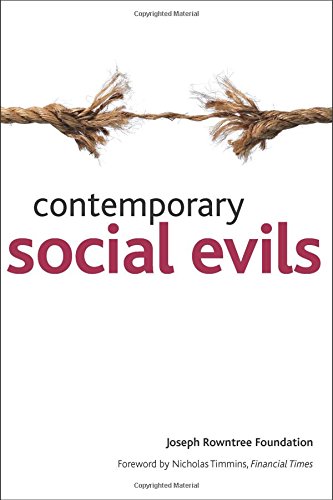
‘Which underlying problems pose the greatest threat to British society in the 21st century? A hundred years after its philanthropist founder identified poverty, alcohol, drugs and gambling among the social evils of his time, the Joseph Rowntree Foundation initiated a major consultation among leading thinkers, activists and commentators, as well as the wider public. The findings have now been brought together in this fascinating book.Individual contributors range across the political spectrum but the book also reports the results from a web survey and consultation with groups whose voices are less often heard. The results suggest that while some evils - like poverty - endure as undisputed causes of social harm, more recent sources of social misery, such as an alleged rise in selfish consumerism and a perceived decline in personal responsibility and family commitment, attract controversy.’
- Details
- Written by: Kamran Mofid
- Hits: 1821
Prince Charles: ‘Coronavirus pandemic is a chance to reset the economy.’
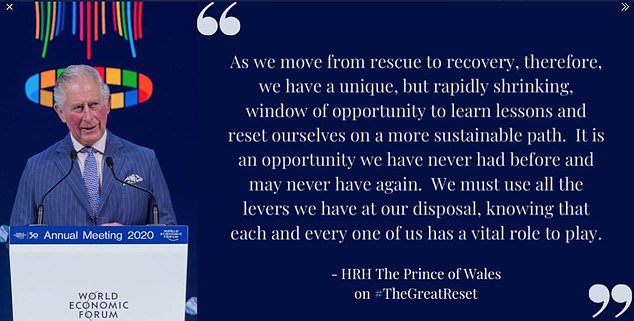
Photo: Daily Mail
Executive Summary
‘Prince Charles made an impassioned speech at the World Economic Forum's virtual meeting yesterday, where he stressed the importance of using the outcome of the pandemic to reset the global economy. The royal spoke about the need to prioritise sustainable development without damaging the environment.
"We have a unique but rapidly shrinking window of opportunity to learn lessons and reset ourselves on a more sustainable path," he said, according to The Guardian. "We have a golden opportunity to seize something good from this crisis. Its unprecedented shockwaves may well make people more receptive to big visions of change."
Charles' speech was part of the launch for The Great Reset, a project involving the World Economic Forum and the Prince of Wales’s Sustainable Markets Initiative, which hopes to rebuild the economic and social system to be more sustainable.
The royal then set out a five-point plan of how to seize this opportunity which involved capturing the imagination and will of humanity, rebalancing investments to accelerate the green economy and redesigning systems and pathways to enforce carbon pricing.’
Pandemic is a chance to reset the global economy, says Prince Charles*
Prince of Wales unveils a five-point plan to stimulate sustainable economic growth- A report by Phillip Inman, economics editor of the Observer and an economics writer for the Guardian
‘The recovery from the coronavirus crisis represents an opportunity to reset the global economy and prioritise sustainable development without further damaging the planet, Prince Charles said at the opening of a World Economic Forum (WEF) virtual meeting.
Outlining a five-point plan to rebuild economies following a global recession, the 71-year-old prince said the pandemic was the result of a breakdown in the link between humanity and nature that could be corrected by recognising “the interdependence of all living things”.
The prince emphasised that the private sector would be the engine of recovery and was heartened by the pledges from business leaders to recognise the damage to the environment that would result from an unfettered dash for growth.
“We have a unique but rapidly shrinking window of opportunity to learn lessons and reset ourselves on a more sustainable path,” said Charles, who himself has recovered after suffering mild symptoms of Covid-19.
He said that the pandemic, which has forced governments worldwide to mothball their economies, had showed people that dramatic change was possible.
“We have a golden opportunity to seize something good from this crisis. Its unprecedented shockwaves may well make people more receptive to big visions of change,” he added.
The five points he outlined were:
- To capture the imagination and will of humanity – change will only happen if people really want it.
- The economic recovery must put the world on the path to sustainable employment, livelihoods and growth. Longstanding incentive structures that have had perverse effects on our planetary environment and nature herself must be reinvented
- Systems and pathways must be redesigned to advance net zero transitions globally. Carbon pricing can provide a critical pathway to a sustainable market.
- Science, technology and innovation need re-invigorating. Humanity is on the verge of catalytic breakthroughs that will alter our view of what is possible and profitable in the framework of a sustainable future.
- Investment must be rebalanced. Accelerating green investments can offer job opportunities in green energy, the circular and bio-economy, eco-tourism and green public infrastructure.
The WEF, which stages an influential annual gathering of business and political leaders at its annual meeting in the Swiss ski resort of Davos, has come under fire from anti-poverty groups in recent years for failing to tackle climate change and executive pay.
Charles’s speech was part of a launch event for The Great Reset, a project involving the WEF and the Prince of Wales’s Sustainable Markets Initiative, aimed at rebuilding the economic and social system to be more sustainable.’
Great Reset | Prince Charles | ‘Coronavirus pandemic is a chance to reset the economy.’: Watch the Video
…...
Speaking at the same event, International Monetary Fund boss Kristalina Georgieva said the world economy faced a similar situation to the UK in the second world war. She urged global leaders to recognise the success of the 1942 Beveridge report, which put forward reforms to raise welfare and health standards across Britain, and was ready to be implemented when the war was over.
“The best memorial we can build to those who have lost their lives is a greener, smarter, fairer world.”

Photo: YouTube
“That led to a better country after the war and to a National Health Service that is saving so many lives today. We have to use all the strength we have to turn a page and have history be about the Great Reset and not the Great Reversal.” She added: “The best memorial we can build to those who have lost their lives is a greener, smarter, fairer world.”
Great Reset | Kristalina Georgieva | How will history judge this moment?: Watch the Video
…...
Conclusion
All said and done, I must admit, I was delighted to hear what Prince Charles or indeed, Kristalina Georgieva had to say about how we may reset the post-COVID-19 global economy.
However, to my mind, a very long-term academic-activist, nothing will change for the better and we will not succeed in building a better, kinder and more just world, if we do not take the following three steps first and foremost:
To reverse the current inhumane, unfair and unjust path we need a different model of education and we need a different economic value and economy. However, these are not possible to achieve so long as The Fraudulent Ideology reins supreme. Full stop. Carpe Diem!
And now a bit more from the GCGI Archives:
'We are an integral part of Nature, which we cherish, revere and preserve in all its magnificent beauty and diversity. We strive to live in harmony with
Nature locally and globally. We acknowledge the inherent value of all life, human and non-human, and treat all living beings with compassion and respect.'-Photo:bing.com
A Sure Path to build a Better World: How nature helps us feel good and do good
On the 250th Birthday of William Wordsworth Let Nature be our Wisest Teacher
The Sweetness of Being Human: ‘We have all of us one human heart.’
Dear Mr. Johnson, your Covid-19 survival must become a force for good
Kindness to Heal the World- Kindness to Make the World Great Again
The healing power of ‘Dawn’ at this time of coronavirus crisis
Can there ever be a Compassionate Capitalism?
- Details
- Written by: Kamran Mofid
- Hits: 1887
A Celebration of Persian Storytelling, poetry, literature, and culture
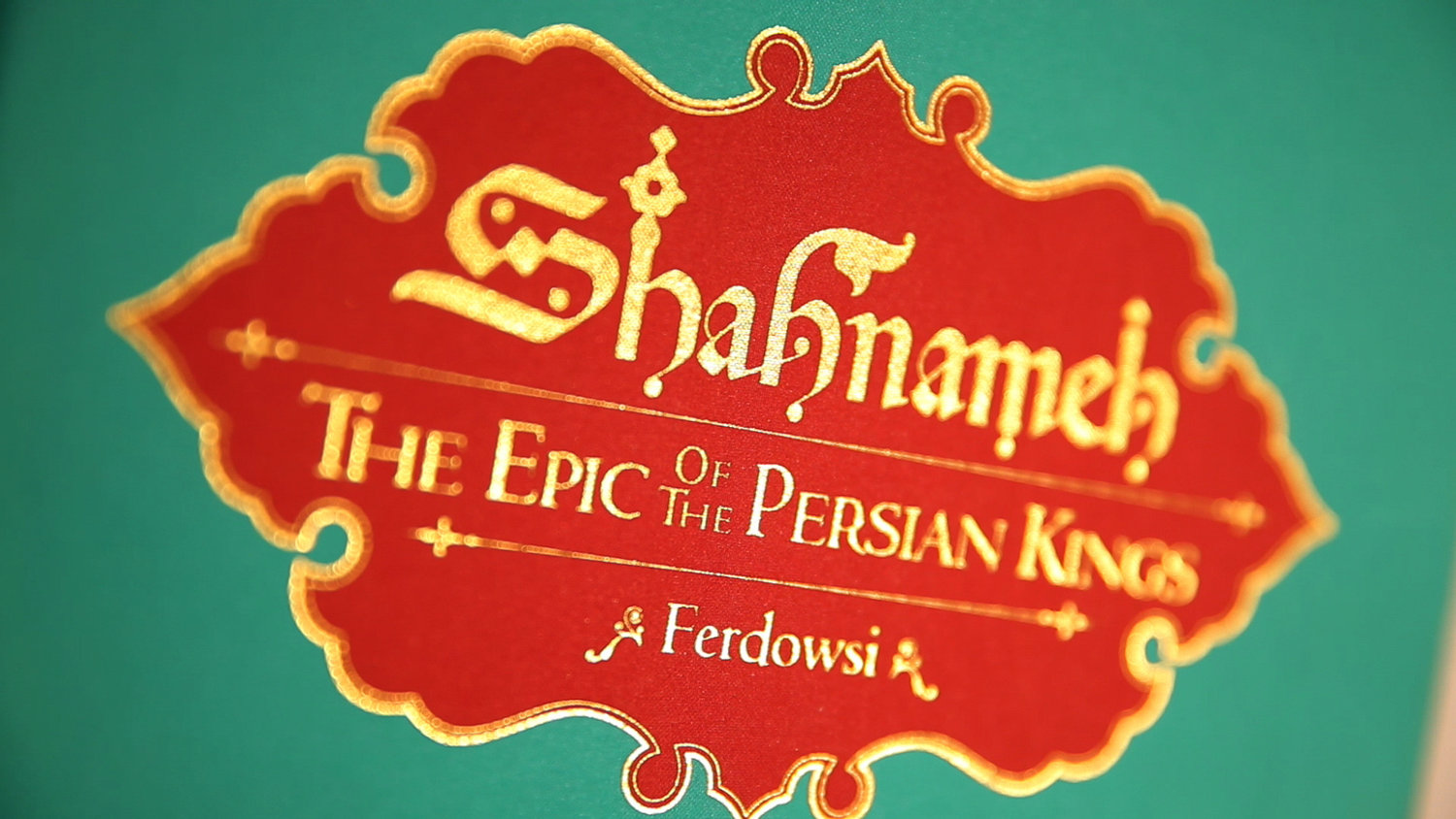
Photo:kingorama.com
N.B. In July 2013 I posted a Blog ‘Shahnameh: The Epic of the Persian Kings’ on our GCGI website, highlighting and celebrating the beauty, the timeless wisdom and inspiring words and poetry of one of the greatest poets in Persian history, Ferdowsi (940–ca. 1019). Let me quote a passage or two from it:
‘Ferdowsi’s epic poem Shahnameh (“The Book of Kings”) is part myth, part history—it begins with the legend of the birth of the Persian nation and its tumultuous history. It contains magical birds, and superhuman heroes, and centuries-long battles. Written over 1,000 years ago, it was meant to protect Persian collective memory amidst a turbulent sea cultural storms. Originally written in couplets, the new translation and adaptation by Ahmad Sadri retells the mythological tales in prose format. The spectacular illustrations in this edition were created from elements culled from thousands of illuminated manuscripts, lithographs, and miniatures dating from the thirteenth through nineteenth centuries, each panel becoming a new work of art, an exquisite collage of traditional forms.
“After the enormous success of the Lord of the Rings and Game of Thrones, as well as blockbusters such as 300 and Clash of the Titans, the time might be right for Persian mythology to find an audience in the west.
Iran's national epic, the Shahnameh, involves many of the same themes and motifs as popular works of fantasy: heroic quests, magical beasts, devilish monsters, passionate romances, fierce intrigues over power, and monumental conflicts fought across immense spans of time…
…’But New York–based artist Hamid Rahmanian's recent illustrated rendition with translator Ahmad Sadri of, Shahnameh: The Epic of the Persian Kings could change that. His images draw on thousands of carefully orchestrated elements from paintings, lithographs, and manuscript miniatures from Iran, Mughal India, and the Ottoman Empire between the 15th and 19th centuries, and convey scenes such as dreams and nightmares rarely if ever depicted in previous versions.
Rahmanian describes his process as akin to that of a movie editor splicing frames for a montage or a DJ blending tracks for a mash-up. Taking the visual elements out of their original context to produce new pictures also adds a new layer to their meaning. The images not only convey the Shahnameh's stories, they also bring traditions of literary illustration from distant places and times into intimate dialogue. The unique result is a fresh visual narration that makes the ancient text feel as if it flows seamlessly, like a finely edited film.’-Excerpts from Shahnameh: The Epic of the Persian Kings
Today I had an email from the National Iranian American Council (NIAC) with the following announcement, which took me back to the Blog I had posted in July 2013.
Shahnameh Comes to Life in the Dazzling Shadow Play: “Feathers of Fire”
A Celebration of Persian Storytelling, poetry, literature, and culture
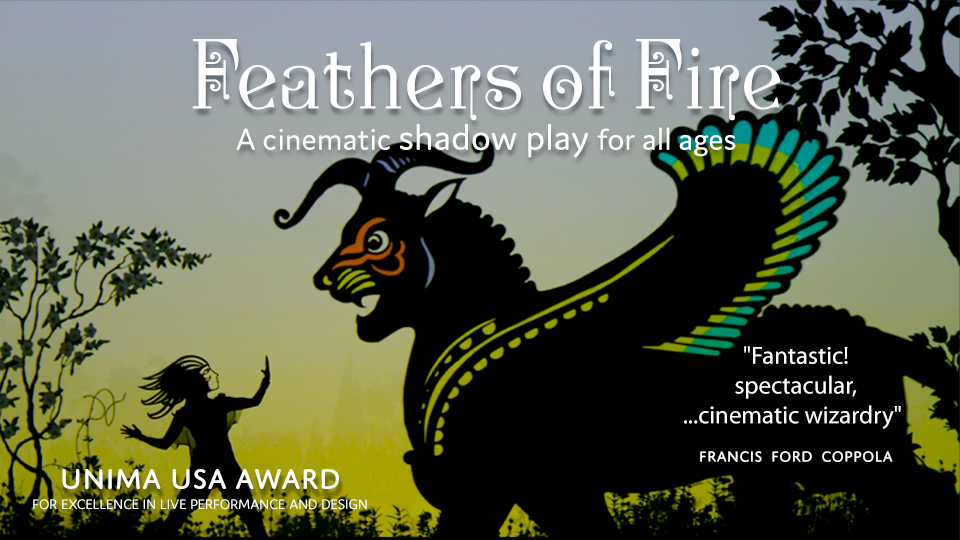
Photo:kingorama.com
“Feathers of Fire” is a magnificent retelling of the forbidden love story of Zaul and Rudābeh from the epic Shahnameh.
‘While the world has been forced to slow down and people have been required to quarantine themselves, we have been reminded of the most basic components that give our lives meaning. Taking the time to reflect on the natural world and the importance of human bonds, the pandemic has in many ways given us time to appreciate how we are all connected and to see the beauty of the world around us. At the heart of our shared experience is culture, history, and the stories of humanity that have been told for millennia.
For Iranians and the diaspora, one story that is central to our shared identity is the 11th century epic by Ferdowsi, Shahnameh (The Book of Kings). Recollecting the heroic tales and fantastic legends of ancient Iran, Shahnameh is a true masterpiece, comprising over 50,000 couplets that were written over three decades by the renowned poet. More than a collection of stories, Shahnameh embodies a cornerstone of Iranian history and culture. It is regarded by many Iranians as a defining symbol of their identity and a guardian of the Persian language.
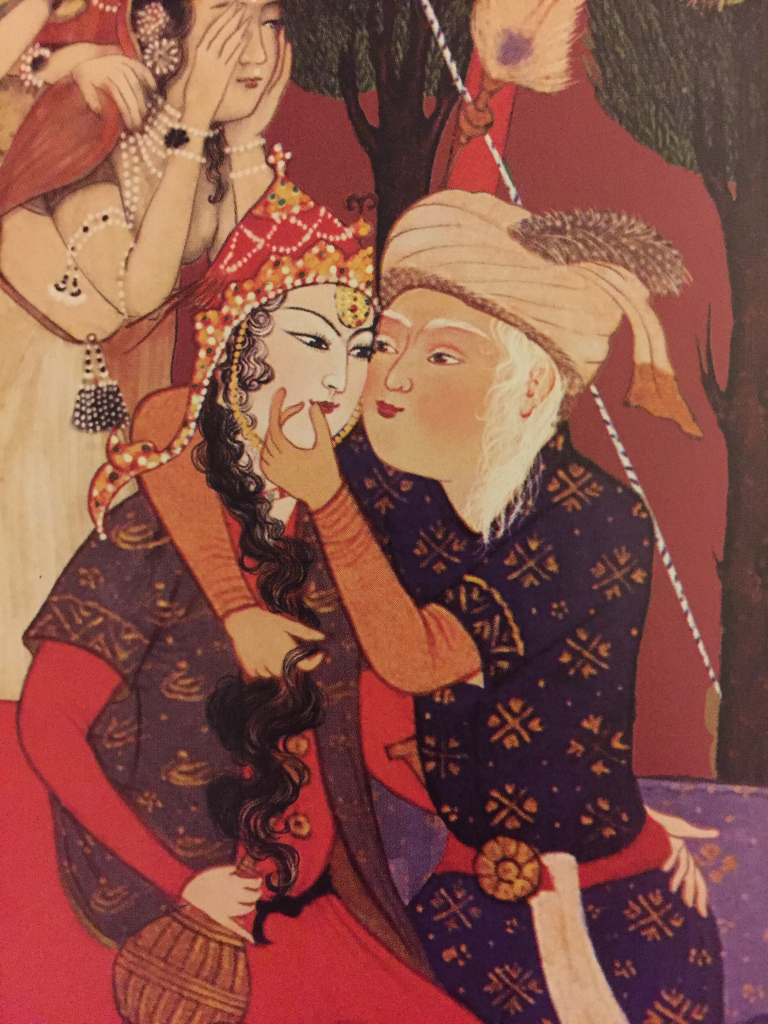
Rudabeh and Zal on their wedding day (Shahnameh illustration and design by Hamid Rahmanian).
Given its monumental status, it is no surprise that the epic has been celebrated, translated, and utilized in various art forms for centuries by Iranians and non-Iranians alike. Like the universal appeal of Greek heroes and traditions, Shahnameh’s incredible tales are compelling for the masses. But like Ferdowsi himself, one Iranian-American artist, Hamid Rahmanian–a Guggenheim fellowship-winning visual artist–has dedicated much of his labor to telling the story of Shahnameh to the widest audience possible.
Along with his wife, Melissa Hibbard, Rahmanian has created a variety of stunning work under the banner of “Kingorama,” which includes a recent translation of the epic, a pop-up book called Zahhak: The Legend of the Serpent King, an audiobook, and a cinematic shadow play, Feathers of Fire.
Translated and adapted by Ahmad Sadri, Rahmanian’s Shahnameh book is a breathtaking illustrated edition of the epic, with 500 pages of intricate and colorful illustrations by Rahmanian himself. A proper feast for the eyes, Rahmanian has conveyed the same splendor in his shadow play, which depicts the legendary story of forbidden lovers Zaul and Rudābeh from Ferdowsi’s saga. Their love gives birth to the mightiest hero of ancient Iran, Rostam, whose valor and repute is so grand that even his stallion’s name, Rakhsh, is legendary.
In Feathers of Fire, Rahmanian’s live-performance play combines traditional puppets, masks, and costumes, with the modernity of digital animation, to create an unforgettable visual spectacle in its most primal form, shadows. This masterful retelling of an ancient story is sure to captivate any audience, young and old. Now available to stream online, don’t miss the chance to experience what Francis Ford Coppola calls, “Fantastic, spectacular… cinematic wizardry.”
Watch from home, give it as a gift, and share it with friends and family. Now is the perfect opportunity to enjoy this truly unique vision, support Iranian-American artists, and share a beautiful part of our rich culture. The epic of Shahnameh transcends time and borders; it may be revered by Iranians, but it was Ferdowsi’s gift to humanity. At a time when we may feel isolated, there is solace in our shared stories and community.’
- This article was first published by the National Iranian American Council (NIAC) on 28 May 2020.
- Watch Feathers of Fire Online
- Buy The New Shahnameh Book - The Epic | شاهنامه فردوسی
- Lockdown lawyers finding solace in poetry to deliver justice in times of COVID-19
- Is this the way to make America great again?
- A look at the biggest casualty of Boris Johnson’s COVID-19 Britain, without which life becomes meaningless
- The Tragedy of Health and Social Care Failings in our Privatised and Monetised World
- The Global Tragedy of Care for the Elderly: When Caring and Empathy becomes a Business for Profit, then, even a Caring Country Fails Miserably