
- Details
- Written by: Kamran Mofid
- Hits: 1813
Lest We Forget Mr. Trump- This is a bird’s-eye view of your country today, as it has been for a very very long time:
‘We don’t get enough sleep, we’re consumed by stress, we can’t afford to get sick, childcare is exorbitantly expensive, our repressive government makes it difficult for workers to unionize and allows them to be fired arbitrarily, and millions of people aren’t even being paid a living wage (let alone given health care benefits or sick days). Child labor remains a dire problem in the U.S, where the FLSA sets the minimum age for hazardous agricultural work at 16, and child farmworkers as young as eight have been found working in the fields. Exploitation is the rule, not the exception. It’s no wonder that American workers feel so hopeless.’
Surely This is Not the Path to ‘Greatness’

Thus, Mr. Trump, the time is now to stop pretending and believing in your country’s 'Exceptionality’ and also to accept that yours is not the way to ‘Make America Great Again’.
Below your fellow citizen, KIM KELLY, is showing you the possible path to Greatness:
Americans Don’t Have to Work Themselves to Death*
'The Fair Labor Standards Act: What to Know and Why the U.S. Needs New Labor Laws.'
By Kim Kelly, Via teenVOGUE
‘In June 1938, Congress passed one of the most important labor laws in U.S. history. The Fair Labor Standards Act (FLSA) was passed during the New Deal era of social and economic reforms, and marked the first appearance of a federal minimum wage. It was championed by trailblazing secretary of labor Frances Perkins, Clara Mortenson Beyer of the Bureau of Labor Standards, and Representative Mary Teresa Norton, the first woman member of the Democratic Party elected to Congress, and signed into law by President Franklin Delano Roosevelt. The law was bitterly opposed by conservatives, who cried that it would lead the country into “tyrannical industrial dictatorship,” but despite their protests, the minimum wage was indeed won. In 1938, it was $0.25 per hour (worth about $4.45 today). As of 2009, it was still only $7.25. Chew on that for a minute, but not too hard; Lord knows none of us can afford a dentist in this country.
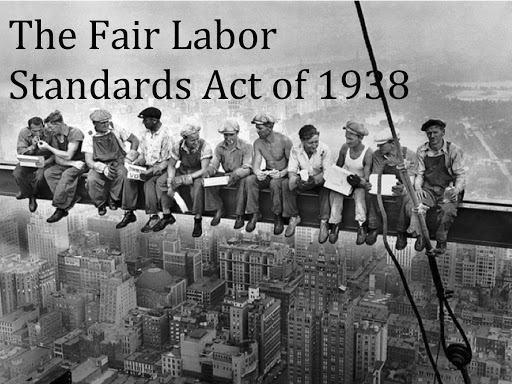
Photo:ABA Law Info
In the 1930s, guaranteeing hourly workers even that paltry sum was seen as a radical move, and getting these protections secured took years of struggle, both within the halls of power and out in the streets. Despite its flaws, the FLSA was truly groundbreaking for its time, and it paved the way for the more expansive legislation that followed. The law’s other highlights included implementing overtime pay, requiring that employers keep records of wages and hours, and setting standards for child labor (not eliminating it, mind you, but adding some basic restrictions). The law applied to full-time and part-time workers in the private sector as well as the federal, state, and local governments — with a bevy of exceptions. The workers it left out were (and generally still are) the most marginalized, and vulnerable to exploitation and mistreatment.
Like much of the U.S.’s major labor legislation, the law is rife with exemptions and special allowances. One of its most shocking provisions allows student workers or those with mental or physical disabilities to be paid a subminimum wage. Thankfully, there are currently two bills in Congress that would address this injustice, and Democratic presidential candidate Joe Biden has pledged to end the practice, but that still means that for the past 82 years, people with disabilities — who already face myriad barriers to entering the workforce — have been paid even less than our already pathetic minimum wage. And they aren’t the only ones. Workers like bartenders and restaurant staff who receive tips as part of their job are also exempt from the FLSA; their federal base rate of pay is only $2.13. While employers are required to make up the difference, not all of them do, and wage theft is rampant within these industries. Now that the coronavirus pandemic has kneecapped the restaurant and nightlife industries and continues to disproportionately affect people who are disabled, it sure seems like a good time to correct these outdated outrages.
At a time when the workday could stretch up to 18 hours, the demand for “eight hours for work, eight hours for rest, eight hours for what we will” was seen as a revolutionary dream. Now, to modern workers, it almost sounds like a vacation. The erosion of once steady industries like manufacturing, the rise of the gig economy, the fact that only about 10% of U.S. workers are protected by union contracts, and the overall dearth of well-paying jobs for people without expensive degrees or privileged backgrounds means that many workers in this country would be hard-pressed to get away with working “only” eight hours in a given day.
Those who care for children or other family members also face additional hours of unpaid labor once they return home from their other jobs (so much for those eight hours of rest), and hourly workers in industries like retail or fast food often don’t even know when their next shift will be scheduled (so much for doing what we will). Those with office jobs often find themselves sucked into a competitive workplace culture that demands employees make themselves available at a moment’s notice. Even when they’re off the clock, they find themselves answering work emails at midnight or fielding calls from the boss on their day off. Americans are working themselves to death — and remember, this is progress. If the capitalist class had their way back in 1938, we’d all still be working 14-hour days; now, we usually only work closer to nine.
The U.S. has certainly earned its reputation for being a nation of hard workers, but that’s not necessarily a positive endorsement of the realities of work in this country. In many other countries, work looks a lot different, and — much like what happens when they hear about the cruelties of our abysmal health care system — people living elsewhere are often shocked at what the average American worker goes through. In the U.S., people work extremely long hours compared to many other countries. Workers lucky enough to have access to paid time off seldom take their vacation days (and get far fewer of them than their European counterparts). There is no federal parental leave policy, which means that people who give birth have no legal support to stay home instead of heading straight back to work. Many of us don’t even take our lunch breaks, if we have them, and don’t leave any time to socialize or recharge during the workday.
We don’t get enough sleep, we’re consumed by stress, we can’t afford to get sick, childcare is exorbitantly expensive, our repressive government makes it difficult for workers to unionize and allows them to be fired arbitrarily, and millions of people aren’t even being paid a living wage (let alone given health care benefits or sick days). Child labor remains a dire problem in the U.S, where the FLSA sets the minimum age for hazardous agricultural work at 16, and child farmworkers as young as eight have been found working in the fields. Exploitation is the rule, not the exception. It’s no wonder that American workers feel so hopeless.
And even now that the coronavirus pandemic has reshaped the way that millions of people work — and left tens of millions more unemployed — the evolving culture of work has still found a way to remain toxic and harmful. The shift toward working from home has unleashed a whole new level of hell upon workers who have children or other dependent family members, or who are stuck in cramped living spaces, or who are now expected to be available for Zoom calls and video chats and emails 24/7 because they “have nothing else going on.” People who are now unemployed are worried about what will happen once the unemployment money runs out and the rent check is due. The entirety of the U.S. capitalist system is set up to fail the poor and working class and line the pockets of the rich, and in that way, things are moving along exactly as intended. The only problem is, of course, all the human suffering that comes with it.
But it doesn’t have to be this way, and right now, we have an opportunity to force the kind of societal recalibration that hasn’t been seen since the New Deal. There is already movement toward healthier workplace norms, from Finland (where the prime minister has discussed dramatically shortening the work week) to France (where workers are annually guaranteed 30 days paid vacation).
Our future feels more uncertain with every passing day, but some things have come into sharp focus. We may not abolish work itself anytime soon, but it’s definitely time to tear down our oppressive workplace structures, kill the capitalists in our heads, and build something healthier and more equitable for everyone, no matter their age or ability. The FLSA was a good start, but as the past century — and past few months — have shown, we’ve still got a helluva lot of work to do.’- *This article was first published in teenVOGUE on 10 July 2020
...And finally, Mr. Trump the fundamental question at this moment is: can the United States be reformed?
The answer to my mind is an emphatic NO, unless the following is understood and addressed accordingly:
To reverse this destructive path we need a different model of education and we need a different economic value and economy. However, these are not possible to achieve so long as The Fraudulent Ideology reins supreme. Full stop. Carpe Diem!
If you want to know the truth about Brexit, Trump, and the rise of Populism, then you must see this!
- Details
- Written by: Kamran Mofid
- Hits: 1827
Anne Applebaum: how my old friends paved the way for Trump and Brexit
Nick Cohen in Conversation with Anne Applebaum, Via The Observer, 12 July 2020
In a powerful new book, the journalist and historian reveals how her former
friends and colleagues became agents of populism
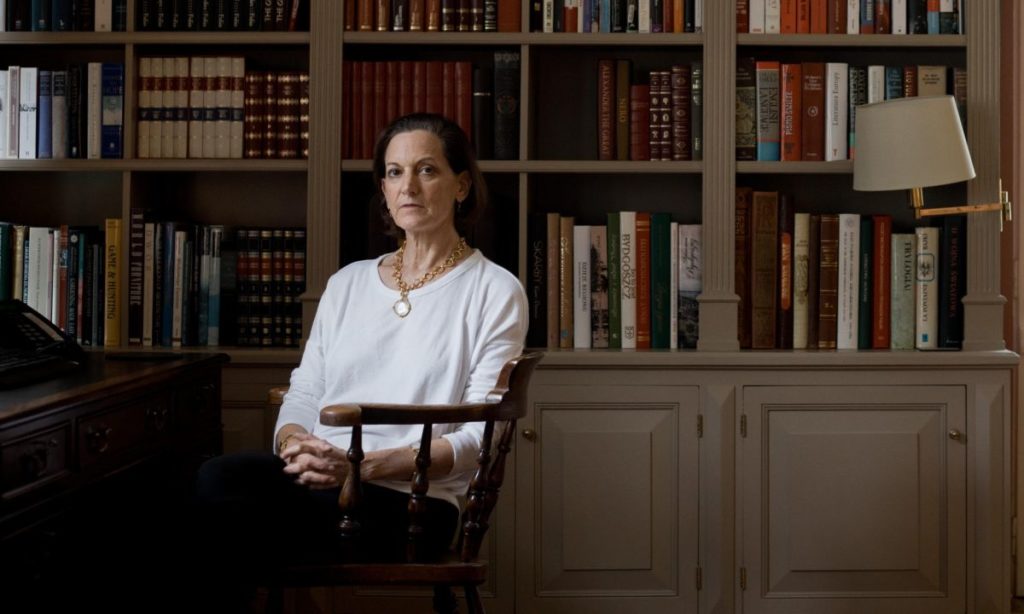
‘Given the right conditions any society can turn against democracy’:
Anne Applebaum at her home in Poland. Photograph: Piotr Malecki, Via The Guardian
‘Readers should be glad she bided her time. Applebaum can bring a candle into the darkness of the populist right precisely because she stayed on the right for so long. She does not know whether it can be beaten. She’s a journalist not a soothsayer. But I know that if you want to fight it, her writing is an arsenal that stores the sharpest weapons to hand.’-Nick Cohen
‘Anne Applebaum can look at the wreck of democratic politics and understand it with a completeness few contemporary writers can match. When she asks who sent Britain into the unending Brexit crisis, or inflicted the Trump administration on America, or turned Poland and Hungary into one-party states, she does not need to search press cuttings. Her friends did it, she replies. Or, rather, her former friends. For if they are now embarrassed to have once known her, the feeling is reciprocated.
Applebaum’s latest book, Twilight of Democracy: The Failure of Politics and the Parting of Friends, opens with a scene a novelist could steal. On 31 December 1999, Applebaum and her husband, Radosław Sikorski, a minister in Poland’s then centre-right government, threw a party. It was a Millennium Eve housewarming for a manor house in the western Poland they had helped rebuild from ruins. The company of Poles, Brits, Americans and Russians could say that they had rebuilt a ruined world. Unlike the bulk of the left of the age, they had stood up against the Soviet empire and played a part in the fall of a cruel and suffocating tyranny. They had supported free markets, free elections, the rule of law and democracies sticking together in the EU and Nato, because these causes – surely – were the best ways for nations to help their people lead better lives as they faced Russian and Chinese power, Islamism and climate change…
...Her husband knew Boris Johnson. They were both members of the Bullingdon Club at Oxford. She assumed that he was as much a liberal internationalist as Sikorski was. When the couple met Johnson for dinner in 2014, she noted his laziness and “all-consuming narcissism”, as well as the undoubted charisma that was to seduce and then ruin his country. In those days, Johnson appeared friendly. He was alarmed by the global challenge to democracy, he told them, and wanted to defend “the culture of freedom and openness and tolerance”. They asked about Europe. “No one serious wants to leave the EU,” he replied, which was true enough as Johnson was to prove when he came out for Brexit…’ Continue to read
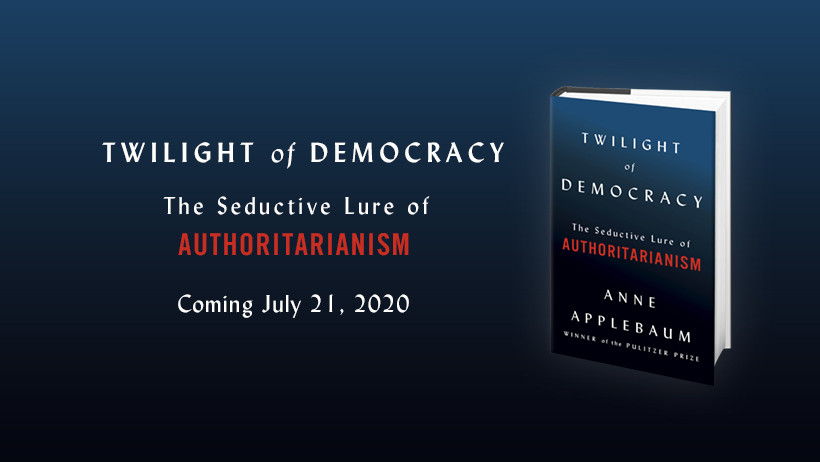
Photo: Amazon
Twilight of Democracy: The Failure of Politics and the Parting of Friends is published on 21 July by Allen Lane (£16.99). To order a copy go to guardianbookshop.com. Free UK p&p over £15
Read More:

Photo: Financial Times
Too Much and Never Enough review: Mary Trump thumps Donald
Britain Today (24 September 2019): A picture is worth a thousand words
The Mother of all Heists: ‘The Neoliberal Looting of America’
- Details
- Written by: Kamran Mofid
- Hits: 2371
Photo:Big Education Ape
The Neoliberal Looting of America
This was the heading of an article in today’s (2 July 2020) New York Times that caught my eye and imagination, which I would very much like to reflect more upon and share with you.
But, first, a bit of Nota bene is Called For!
It is so sad to see a country with the potential to be a force for good, a beacon of hope to many, sinking so low, isolated,fearful, hopeless, in despair, abject poverty side by side with the billionaires, angry, xenophobic, and in the grip of mental and physical ill health and suicidal tendencies.
This should not have been so, should America have chosen wisdom and the common good, rather than being fooled into worshipping the nonsensical and false belief in its ‘exceptionalism’.
And should they have chosen the path of wisdom and the common good, then, the US would have been great already, and thus, there would have been no need to rely on Donald Trump to Make the US Great Again!!
And finally, there are, for sure, many reasons why Americans are being looted. But, to my mind, paraphrasing the words of John Ruskin, it is all because of ‘Bastard Neoliberal Economics.’
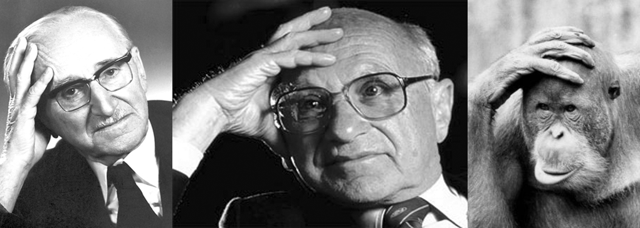
Photo:seekingalpha.com
The Destruction of our World and the lies of Milton Friedman
The Neoliberal Road to Serfdom
People’s Tragedy: Neoliberal Legacy of Thatcher and Reagan
Neoliberalism destroys human potential and devastates values-led education
Neoliberalism and the rise in global loneliness, depression and suicide
Why are people in the US living shorter lives?
Economic Growth: The Index of Misery
And
This must never be forgotten, that neoliberal teaching and values have churned out an army
of amoral, inhumane and narcissistic leadership
Photo: Financial Times
...And now reverting back to the article I had mentioned above:
The Neoliberal Looting of America
By Mehrsa Baradaran, Via The New York Times*
“It’s hard to separate what’s good for the United States and what’s good for Bank of America,” said its former chief executive, Ken Lewis, in 2009. That was hardly true at the time, but the current crisis has revealed that the health of the finance industry and stock market is completely disconnected from the actual financial health of the American people. As inequality, unemployment and evictions climb, the Dow Jones surges right alongside them — one line compounding suffering, the other compounding returns for investors.
One reason is that an ideological coup quietly transformed our society over the last 50 years, raising the fortunes of the financial economy — and its agents like private equity firms — at the expense of the real economy experienced by most Americans.
The roots of this intellectual takeover can be traced to a backlash against socialism in Cold War Europe. The Austrian School economist Friedrich A. Hayek was perhaps the most influential leader of that movement, denouncing governments that chased “the mirage of social justice.” Only free markets can allocate resources fairly and reward individuals based on what they deserve, reasoned Hayek. The ideology — known as neoliberalism — was especially potent because it disguised itself as a neutral statement of economics rather than just another theory. Only unfettered markets, the theory argued, could ensure justice and freedom because only the profit motive could dispassionately pick winners and losers based on their contribution to the economy.
Neoliberalism leapt from economics departments into American politics in the 1960s, where it fused with conservative anti-communist ideas and then quickly spread throughout universities, law schools, legislatures and courts. By the 1980s, neoliberalism was triumphant in policy, leading to tax cuts, deregulation and privatization of public functions including schools, pensions and infrastructure. The governing logic held that corporations could do just about everything better than the government could. The result, as President Ronald Reagan said, was to unleash “the magic of the marketplace.”
The magic of the market did in fact turn everything into gold — for wealthy investors. Neoliberalism led to deregulation in every sector, a winner-take-all, debt-fueled market and a growing cultural acceptance of purely profit-driven corporate managers. These conditions were a perfect breeding ground for the private equity industry, then known as “leveraged buyout” firms. Such firms took advantage of the new market for high-yield debt (better known as junk bonds) to buy and break up American conglomerates, capturing unprecedented wealth in fewer hands. The private equity industry embodies the neoliberal movement’s values, while exposing its inherent logic.
Private equity firms use money provided by institutional investors like pension funds and university endowments to take over and restructure companies or industries. Private equity touches practically every sector, from housing to health care to retail. In pursuit of maximum returns, such firms have squeezed businesses for every last drop of profit, cutting jobs, pensions and salaries where possible. The debt-laden buyouts privatize gains when they work, and socialize losses when they don’t, driving previously healthy firms to bankruptcy and leaving many others permanently hobbled. The list of private equity’s victims has grown even longer in the past year, adding J. Crew, Toys ‘R’ Us, Hertz and more.
In the last decade, private equity management has led to approximately 1.3 million job losses due to retail bankruptcies and liquidation. Beyond the companies directly controlled by private equity, the threat of being the next takeover target has most likely led other companies to pre-emptively cut wages and jobs to avoid being the weakest prey. Amid the outbreak of street protests in June, a satirical headline in The Onion put it best: “Protesters Criticized for Looting Businesses Without Forming Private Equity Firm First.” Yet the private equity takeover is not technically looting because it has been made perfectly legal, and even encouraged, by policymakers.
According to industry experts, 2019 was one of the most successful years for private equity to date, with $919 billion in funds raised. The private equity executives themselves can also garner tremendous riches. Their standard fee structure involves collecting around 2 percent of the investor money they manage annually, and then 20 percent of any profits above an agreed-upon level. This lucrative arrangement also lets them tap into the very favorable “carried interest” tax loophole, allowing them to pay much lower capital gains tax rates on their earnings, rather than normal income taxes like most people.
An examination of the recent history of private equity disproves the neoliberal myth that profit incentives produce the best outcomes for society. The passage of time has debunked another such myth: that deregulating industries would generate more vibrant competition and benefit consumers. Unregulated market competition actually led to market consolidation instead. Would-be monopolies squeezed competitors, accrued political power, lobbied for even more deregulation and ultimately drove out any rivals, leading inexorably to entrenched political power. Instead of a thriving market of small-firm competition, free market ideology led to a few big winners dominating the rest.
Take the banking sector. For most of American history, banks were considered a public privilege with duties to promote the “best interest of the community.” If a bank wanted to merge or grow or offer new services, the regulators often denied the request either because a community could lose a bank branch or because the new product was too risky. During the neoliberal revolution of the 1980s and ’90s, Congress and bank regulators loosened the rules, allowing a handful of megabanks to swallow up thousands of small banks.
Today, five banks control nearly half of all bank assets. Fees paid by low-income Americans have increased, services have been curtailed and many low-income communities have lost their only bank. When federally subsidized banks left low-income communities, vulture-like fringe lenders — payday, title, tax-refund lenders — filled the void. As it turns out, private equity firms are invested in some of the largest payday lenders in the country.
Faith in market magic was so entrenched that even the 2008 financial crisis did not fully expose the myth: We witnessed the federal government pick up all the risks that markets could not manage and Congress and the Federal Reserve save the banking sector ostensibly on behalf of the people. Neoliberal deregulation was premised on the theory that the invisible hand of the market would discipline risky banks without the need for government oversight. Even a former Fed chairman, Alan Greenspan, the most committed free market fundamentalist of the era, admitted in the understatement of the century, that “I made a mistake.”
We can start fixing the big flaws propagated over the last half century by taxing the largest fortunes, breaking up large banks and imposing market rules that prohibit the predatory behaviors of private equity firms.
Public markets can take over the places that private markets have failed to adequately serve. Federal or state agencies can provide essential services like banking, health care, internet access, transportation and housing at cost through a public option. Historically, road maintenance, mail delivery, police and other services are not left to the market, but provided directly by the government. Private markets can still compete, but basic services are guaranteed to everyone.
And we can move beyond the myths of neoliberalism that have led us here. We can have competitive and prosperous markets, but our focus should be on ensuring human dignity, thriving families and healthy communities. When those are in conflict, we should choose flourishing communities over profits.”
*Mehrsa Baradaran is a professor of law at the University of California, Irvine, and the author of “The Color of Money: Black Banks and the Racial Wealth Gap.”
The above article was first published in The New York Times on 2 July 2020.
Ten Steps to Right the Wrongs of Neoliberalism and the Looting of the World
‘Every move you make, every breath you take leaves its mark on our world'

Photo:EOCA's Spring 2020 Newsletter
The remarkable characteristic of our chaotic and crisis riddled world today is their deepening and continuity
Crisis after Crisis: Financial Crisis. Credit and Banking Crisis. Environmental and Ecological Crisis. Biodiversity Crisis. Epidemic and Pandemic Crisis. Housing Crisis. Health and Well-being Crisis. Education Crisis. Spiritual and Moral Crisis. Trust and Trusting Crisis. Indifference Crisis. Fake, Fake News and Faking Crisis. Reality Crisis. Populism and Fascism Crisis,...all of them leading ours to be a generalized "time of crisis."
At a time of profound crises there must be an opportunity for new vision, new understanding and new thinking. There is a desperate need for new practical ways of relating in an increasingly interdependent global community: a time to re-introduce spirituality, ethics, civility, kindness, humanity and the common good into the debate on globalisation, economics, politics, business, education, international relation and much more.
Surely the time is now to rise and challenge the falsehood and the inhumanity of the ideology (Neoliberalism) that since the early 1980s has cheated and humiliated us by monetising all aspects of our lives, and has stopped us from knowing what it means to be human.