- Details
- Written by: Kamran Mofid
- Hits: 4309
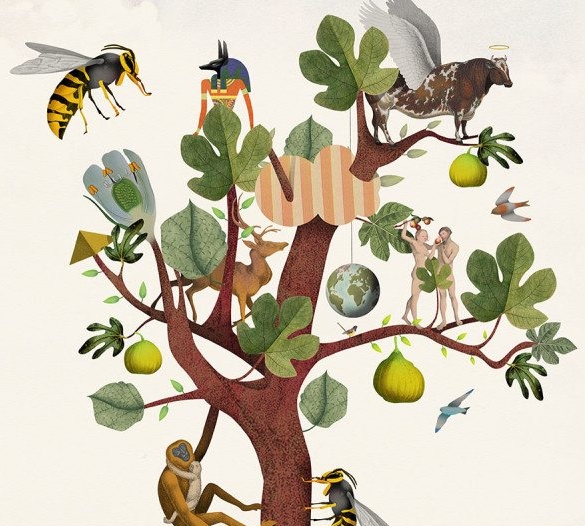
Photo: Brett Ryder
‘THEIR leaves clothed Adam and Eve; their roots were used by the Maasai people’s god to shuttle the first cattle from heaven to Earth; and according to an Indonesian story, two gods carved the first couple from their wood. The presence of fig trees in numerous origin myths is down to more than coincidence. They have shaped our world since long before the dawn of humanity, and have fed us and our imaginations for millennia. Now, as the world warms and forests fall, these extraordinary trees could help us to restore life to deforested landscapes.
It’s all because fig trees cut a curious deal with tiny wasps back when dinosaurs still roamed. Thanks to this, they sustain far more biodiversity than other trees. Today, there are more than 750 species of Ficus, each of which relies on its own wasp species to pollinate its flowers. In turn, the wasps can only breed inside the figs of their partner tree. Genetic studies suggest that this remarkable codependency is at least 80 million years old.’- Tree of life: How figs built the world and will help save it
Trees of Life, Trees of Knowledge- Ecology and Mythology of the Fig Tree
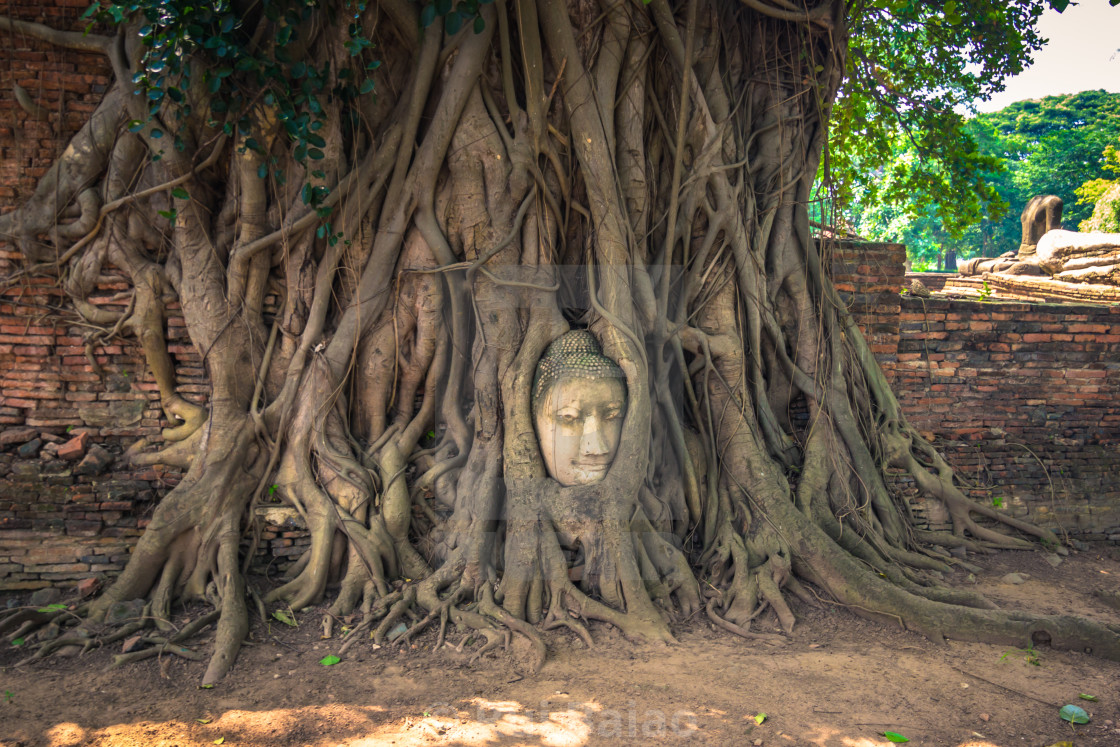
Ancient Buddha head in the fig tree at Wat Mahathat in the historic city of Ayutthaya, Thailand.-Photo:Picfair
The tree that shaped human history
By Mike Shanahan, Via BBC Earth
‘Fig trees have not only witnessed history but have shaped it and they could even enrich our future.’
Over 2,000 years ago, an important tree had one of its branches removed on the order of Indian emperor Ashoka the Great. It was under this very tree that the Buddha is said to have attained enlightenment. Ashoka bestowed kingship on the branch, and planted it in a thick-rimmed solid gold vase.
He then took the branch over mountains and down the Ganges River to the Bay of Bengal. There, his daughter carried it aboard a ship and sailed for Sri Lanka to present it to the king. Ashoka loved the plant so much that he shed tears as he watched it leave.
This story, from the epic poem The Mahavamsa, is about a kind of fig tree scientists call Ficus religiosa. True to its name, an unbroken line of devotion towards it stretches back to thousands of years before Ashoka's time.
But F. religiosa is not alone. It is just one of more than 750 fig species. No other plants have held such sway over human imagination. They feature in every major religion and have influenced kings and queens, scientists and soldiers. They played roles in human evolution and the dawn of civilisation. These trees have not only witnessed history; they have shaped it. If we play it right, they could even enrich our future…’- Continue to read
Discover more:
The Fig Tree Fed Ancient Civilizations and Feeds Modern Gardeners Today*
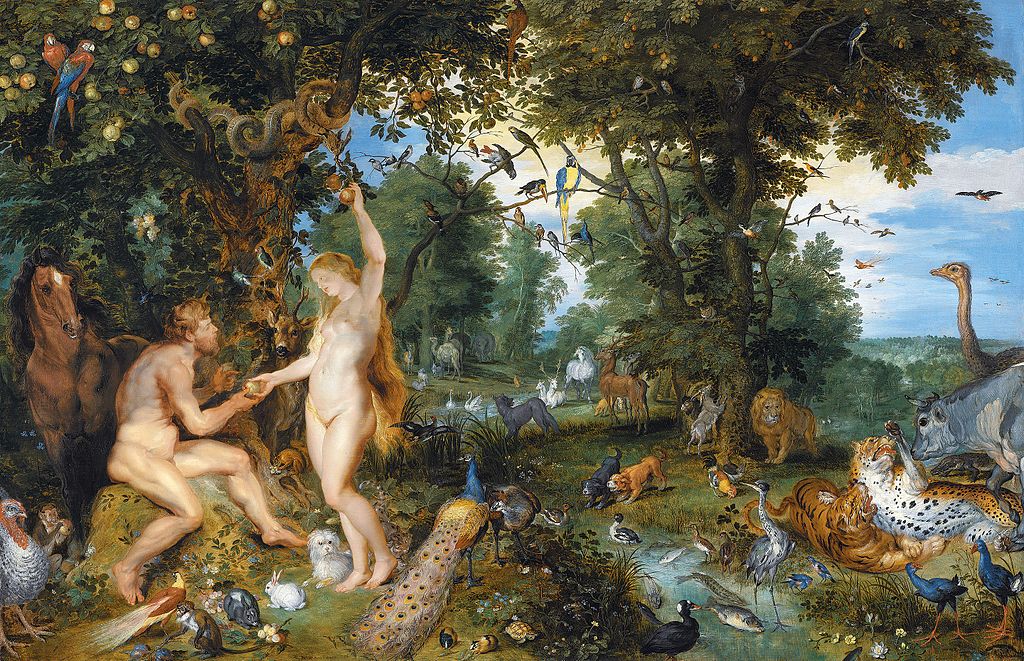
Plants and fruit trees of the garden of Eden
Figs - Ficus carica. This is the easiest one to identify as it is mentioned in Genesis 3:7
‘…And the eyes of them both were opened and they knew that they were naked; and they sewed fig leaves together, and made themselves aprons…-
Photo and text: PLANTS AND FRUIT TREES OF THE GARDEN OF EDEN
‘The Fig Tree that grows in today’s fruit garden is a tropical-like crop that matures figs in the Summer even in Northern States with a cold hardy character unknown until the last decade. Hybrid fig trees have been shown to survive temperatures of zero degrees in outside gardens and re-grow to produce various colored fig fruit in the Summer, colored, green, brown, black, blue, purple, white and yellow – tasty and delicious. The fig is tree ripe when the shape of the fig sags and is sweetest when picked to dry in the sun. The dried fig contains considerable sugar and can be used as fig newtons, fig candy or fig rolls. The cold hardy character of the fig means that the fig tree can be extensively grown when properly mulched throughout the U.S.
The fig tree was one of the ancient fruits recorded in the Bible along with the pomegranate, olive, grape and date palm that fed ancient civilizations reliably. A famous Bible reference in the Gospels of Matthew & Mark notes that Jesus cursed a fig tree, and the Apostle Peter noted that because the fig tree had no available figs to eat, the fig tree instantly withered. Many Bible Scriptures cite the fig tree leafing out as being a sign of Summer and also a sign of the apocalypse when Jesus returns to earth to rapture His Christian followers. The fig tree is highly productive and produces several waves of fig ripening, if the figs are picked often from the tree. In Europe the fig is sold fresh at markets or dried into fig bars or sold in cafes as fig desserts. The great problem with fig trees is the short shelf life of the fig after harvest, but drying the fig is an excellent alternative to spoiling.
Wildlife animals love to eat figs especially birds and many fig growers cover their trees with netting to thwart wildlife game. Farmers have known in the South that planting a fig tree in a pig lot will provide cheap food to fatten hogs. The fig tree is easy to grow and appears to favor sandy soil of low fertility. The greatest threat to fig trees is the old garden site that grows tomatoes and peppers where the nematode (eelworm) thrives in large populations. The nematode goes directly into the soft fleshy roots of the fig tree causing the fig tree to decline and the nematode can even crawl up into the bark to eat the fig leaf or fig fruit.
ANCIENT FIG TREES THROUGH HISTORY
The fig tree, ‘Ficus carica,’ possibly originated in Northern Asia according to archeological fossil records. Spanish missionaries brought it to the United States in 1520. Historical Sumerian tablets record the use and consumption of figs in 2500 BC. In Greek mythology, the fig figures prominently as a gift of Demeter to Dionysus and as having received the blessing and sanctity of the Greek Gods. Plato documented that Greek athletes at Olympia were fed diets of figs to increase their running speed and overall strength. The figs contained up to 50% concentration of sugar which was virtually like feeding the athlete a candy bar.
The most famous Biblical reference to figs is that, in which Jesus cursed a fig tree for not producing any fruit for him as he passed by, a curse that killed the fig tree, Matt 21:18
The Jewish King, Hezekiah, was cured of a life-threatening plague by applying figs to the infected spot. 2 Kings 20 The Apostle, James, brother of Jesus, used the metaphor of the fig tree to describe the appropriate behavior that he expected to follow from Christian living. James 3:12
Fig leaves were used in the early church to hide the genitalia of nude, marble sculptures that adorned religious buildings. Fig trees were also used in ancient history as shade trees and to chop and use as quick start firewood.
Cooked figs were used as sweeteners in ancient times and this practice is still used in many third world countries in Asia Minor. The figs contain over 50% sugar. Hybrid figs contain many hollow, tiny seeds on the interior of the fruit, similar in taste as those found in blueberries and strawberries. A fig fruit has a round tiny opening at the base of the fig called an ‘eye.’ A tiny wasp flies into the interior of the fig and pollinates the tiny flowers lining the interior walls of the fig. These tiny seeds are not generally digested by the stomach and offer a great laxative effect to the elderly sedentary citizens. American hybrid figs do not require or receive pollination to be transformed into edible fruit.
Fig trees in Europe can grow to a tremendous height of 100 feet, but the fruit is very difficult to harvest when the tree grows taller than 10 feet. In harvesting the figs, it is important to pick the fruit from the tree, when it is completely mature--usually when it sags, droops, and changes color. If the figs are taken from the tree prematurely, the sweetness declines, but more importantly, if the figs are removed in the juvenile developing state, a white milky fluid exudes from the stem, which is transferred to a person’s hands and then eyes or mouth, the fluid is very irritating and should be washed away as quickly as possible.
One of the most famous figs in the United States is the “Black Mission” fig tree, which was named after the California, Franciscan mission that dates back to 1770, when it was planted there and cultivated on a commercial scale.
Perhaps the most famous product of figs is the fig newton that uses dried figs placed between curved, sweet wafers and distributed by Nabisco. In Europe, figs are gathered from commercial fig tree orchards where they are sized, graded, and packed to sell as fresh fruit at local markets. Figs are easily dried after harvesting from the trees, and various brands are popularly sold throughout the world, because of their extended shelf life in the United States, California is the largest producer of figs and most of them are marketed as dried figs. In the South figs are boiled in sugar liquid, sometimes adding strawberries and the resulting fig preserves are eaten during the fall and winter months as fig preserves on hot buttered biscuits. The trees grow into picturesque specimens in many landscapes. The trunks are often whitewashed when young in order to keep the sun from scalding the tender bark. The roots are vigorous growers and will grow far away from the canopy; however, trimming these roots does not damage the tree.
Fig trees grown in full sun have soft wood that break easily. The trees easily grow to 100 feet in Europe but usually less than 30 feet in the United States. Fertilizing fig trees on most soils is unnecessary and unwise, because nitrogen fertilizer tends to promote aggressive branch growth and will reduce the size of the crop. If too much nitrogen is applied, the fruit does not mature properly and the fruit has an off taste. The first crop of figs that matures in the spring is called the “breba” crop and the next and tastiest crop matures in the fall. Figs are harvested from the trees from June till October, although some new cultivars will be ready for eating in April. The shelf life for freshly picked figs is short and fig generally last only about three days in refrigeration. A fig should not be picked from a tree, if it is over ripe or mushy, since it will begin souring from fermentation. At this point figs will lose their roundness and begin to collapse inward. When a fig is harvested from a tree, it should be soft to the touch and a very firm fig will not ripen properly, if it is picked at this immature stage.
The beautiful leaves of the fig tree are used to make an odd scented perfume with the aroma of wood or musk. The white, milky latex from the tree can be used as a meat tenderizer or in making cheese, if the latex is dried and powdered. Figs can be frozen whole or sliced in plastic bags or jars and expected to last satisfactorily for one year. Dried figs can be soaked in warm water to restore their shape and softness. Fruit of figs is high in iron, calcium, potassium, and fiber, and they are used as a diuretic and a laxative.
Figs contain protein digesting enzymes and can be used as a meat tenderizer and a taste enhancer. Dried figs are often used to substitute for recipes calling for dried apricots, dates, or prunes.
Fig trees are considered to be about as cold hardy as citrus; however, recent hybrid cultivars show that fig trees can survive temperatures below zero degrees Fahrenheit for limited periods of time, and if the tree freezes to the ground, the new shoots will sprout in the spring to rapidly renew the fig tree.’- *This article was first published by Ty Ty Plant Nursery
PERSIAN GARDEN, THE PARADISE ON EARTH
A REFLECTION
…’the idea of a Paradise garden comes from the ancient Persians, who were themselves influenced by earlier civilisations: the Babylonians (in c. 2,100 BC) described their Divine Paradise in the Epic of Gilgamesh: ‘In this immortal garden stands the Tree…beside a sacred fount the Tree is placed’.- Reflections on Monty Don’s Paradise Gardens
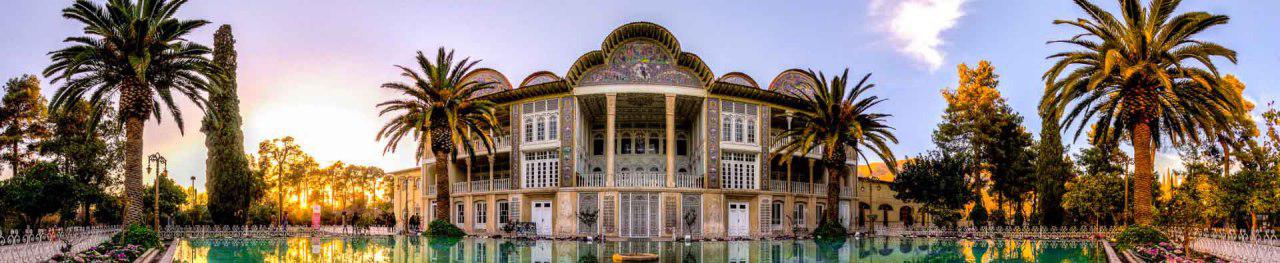
‘Persian garden truly resembles the paradise on Earth. The general pattern of Persian gardens (Iranian gardens) has a rectangular form consisting of four quarters abundant in trees and flowers, streams and pathways, ponds and fountains, usually a central pavilion, and the walls that surround the garden. The Persian gardens are so remarkable that nine gardens out of a wide variety are inscribed on UNESCO World Heritage Site. The gardens located in different climatic parts of Iran have their unique features but are still similar in overall structure.
According to Persian literature, the word garden means “paradise “which is derived from the word”paridaiza”. Paridaiza means a garden surrounded by walls. This walled garden makes a harmony between nature and humans’ art of creation. The evergreen trees harness the sharp sunlight, the water flows make the environment cool, and the pavilion blocks the sunlight while providing picturesque view from the terrace.’- Continue to read
- Details
- Written by: Kamran Mofid
- Hits: 2157
NHS72 – A chance to commemorate and to say thank you

Thank You NHS for who you are and what you do. The nation owes you a debt of gratitude.
- Details
- Written by: Kamran Mofid
- Hits: 2527
The US: The Promised Land of Socialism for a Few and Capitalism for the Many!

Photo: HISTORY.com
“ONE of the great myths Americans have about their country is that everyone wants to come here. Advocates and enemies of immigration share this assumption, which dates at least as far back as the turn of the 20th century. As reports of “American fever” circulated in Eastern Europe, one Polish economist, Leopold Caro, claimed that entire villages were becoming ghost towns. “Many houses stood empty, and in many others only old women and small children remained behind. In some villages the entire young generation left home.”
“Everyone,” he concluded, “believed that America was the Promised Land, a true paradise.”-Tara Zahra, ‘America, the Not So Promised Land’, The New York Times, 14 November 2015
The misery and inhumanity of inequality in the land of billionaires and ‘exceptionality’
‘The US has the most billionaires in the world – but here's what it doesn't have.’*
This was the heading of an article in today’s (2 July 2020) Guardian that caught my eye and imagination, which I very much want to reflect more upon and share with you.
‘It’s official: America has the most billionaires in the world, for yet another year. The US increased its share of billionaires by 12% in 2019 according to a report by Wealth-X, which annually takes stock on the world’s mega-rich.’ More on this later.
But, first, a bit of Nota bene is Called For!
Debunking the Myth of American Exceptionalism
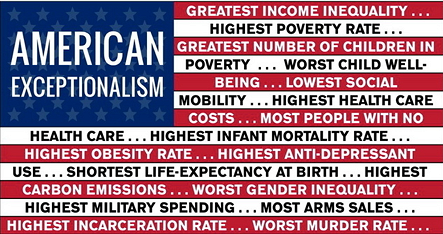
Photo: HuffPost
‘Over the last two centuries, prominent Americans have described the United States as an "empire of liberty," a "shining city on a hill," the "last best hope of Earth," the "leader of the free world," and the "indispensable nation." These enduring tropes explain why all presidential candidates feel compelled to offer ritualistic paeans to America’s greatness... Most statements of "American exceptionalism" presume that America’s values, political system, and history are unique and worthy of universal admiration. They also imply that the United States is both destined and entitled to play a distinct and positive role on the world stage.
The only thing wrong with this self-congratulatory portrait of America’s global role is that it is mostly a myth. Although the United States possesses certain unique qualities — from high levels of religiosity to a political culture that privileges individual freedom — the conduct of U.S. foreign policy has been determined primarily by its relative power and by the inherently competitive nature of international politics. By focusing on their supposedly exceptional qualities, Americans blind themselves to the ways that they are a lot like everyone else.
This unchallenged faith in American exceptionalism makes it harder for Americans to understand why others are less enthusiastic about U.S. dominance, often alarmed by U.S. policies, and frequently irritated by what they see as U.S. hypocrisy, whether the subject is possession of nuclear weapons, conformity with international law, or America’s tendency to condemn the conduct of others while ignoring its own failings. Ironically, U.S. foreign policy would probably be more effective if Americans were less convinced of their own unique virtues and less eager to proclaim them.
What we need, in short, is a more realistic and critical assessment of America’s true character and contributions. In that spirit, I offer here the Top 5 Myths about American Exceptionalism…’- Continue to read See also: Debunking the Myth of American Exceptionalism

Two Malnourished Victims of American Exceptionalism
…’Guess which child is a well-fed, proud-to-be-an-American boy, whose parents (and culture) may think that he has a God-given right to more food than he deserves or needs, and who may never have seen the reality – nor understood the sources – of human suffering and starvation. These otherwise good people are likely to be oblivious to the suffering of the millions of non-American, non-white, non-Christian, homeless, hungry and war-ravaged refugees, because those stories are never shown on the nightly news. Making the connections will not be good for the Myth…’- Gary G. Kohls, MD, TRANSCEND Media Service - Photo: TRANSCEND International
...And now reverting back to the article I had mentioned above:
‘The US has the most billionaires in the world – but here's what it doesn't have.’

‘The market may be down, but these real estate executives are doing just fine.’
From left: Stephen Ross, Jonathan Gray, Sheldon Solow, John Catsimatidis, Charles Cohen and Donald Trump. Photo: Via The Real Deal
‘It’s official: America has the most billionaires in the world, for yet another year. The US increased its share of billionaires by 12% in 2019 according to a report by Wealth-X, which annually takes stock on the world’s mega-rich.
But while US billionaires are waiting to find out whether Kim “I have 14 Freesian [sic] horses” Kardashian West will join their ranks this year, the rest of us have more important questions on our minds, such as: has any of this wealth trickled down yet?
The answer is no. One in eight Americans still live below the poverty line, and 40% are one paycheque away from destitution. In fact, there are a lot of basic services that other similarly wealthy countries provide as a minimum that just aren’t given to Americans.
Free college tuition
In the US, if you want to be college-educated, you have to be rich – or willing to take on a huge amount of personal debt. College tuition fees range from around $10,000–$40,000 a year depending on whether they are state or private, with education at the country’s top institutions usually charging over $50,000.
By comparison, in much of the rest of the developed world, college tuition is either free or affordable. In places like Germany, Poland and Sweden, tuition is even free for citizens. In Norway, college education is also free for international students and in Denmark, students are paid to go to college.
It’s not just Europe: college tuition fees are also a fraction of the price in countries across the world, from Mexico to Australia to New Zealand. In fact, according to an OECD report from 2017, the US has the highest tuition fees of any country in the world.

Photo:YouTube
Paid vacation
In the absence of a national paid leave policy, it is up to companies to provide paid leave to its employees. That means that almost one in four Americans go without a vacation every year. It is worth noting that the US is the only wealthy economy in the world without a paid vacation policy
Paid parental leave and daycare
In countries around the world, parents are entitled to take time off after having a child. Across Europe, paid parental leave is the norm. In New Zealand, paid parental leave lasts 26 weeks. In the UK, parents get 37 weeks of paid leave and can opt to take a further 13 weeks of unpaid leave after that.
Paid leave varies greatly from country to country: in some places, parents receive the equivalent of their full salary while on parental leave; in others, a flat rate is provided that varies from a few hundred dollars a month to more than $1,000, and sometimes the rate changes over time. But most aren’t dependent on their employer (or family wealth) to get by if they have a baby.

Billionaires and their partners enjoying some brilliant time together!
Jeffrey Epstein and his partner, Ghislaine Maxwell, with Donald and Melania Trump at Mar-a-Lago in 2000.- Photo: Vox
Meanwhile, in the US, there is no national policy of paid parental leave. The only states with an active parental leave policy are California, New Jersey and Rhode Island. American parents are entitled to 12 weeks’ unpaid leave under the Family Medical Leave Act (although many parents don’t qualify for this).
And when parents go back to work, putting a child in full-time daycare can cost up to tens of thousands a year.
Universal healthcare coverage
Americans live shorter lives than people in other similarly wealthy countries. Meanwhile, the US spends nearly twice as much on healthcare as the average OECD country – but with the lowest life expectancy and highest suicide rates among the 11 nations, it’s not clear where that money is going.
Year after year, while the US continues to spend the most on healthcare in comparison to high-income countries, it continuously ranks last when it comes to measures such as healthcare quality, accessibility and equity.
An inhospitable climate for billionaires
Obviously the US is a place where billionaires can thrive, meanwhile a number of countries manage to get by with just a handful of billionaires. Finland, the happiest country in the world, has just six billionaires. Japan, the country with the second-longest lifespan in the world and the third-highest GDP, has just 26 billionaires. The UK, which is by no means the most egalitarian country in the world, has a paltry 45 billionaires. All three still manage to provide free healthcare.’- *This article by Poppy Noor was first published in the Guardian on 2 July 2020.
A Virtual Dialogue and Conversation with Mr. Trump, the Billionaire President
Dear President Trump,
Sometimes, the truth slips out. At a recent rally in Cedar Rapids you got to free-associating about the members of your cabinet who had come along for the trip with you. You mentioned Gary Cohn and Wilbur Ross, two of the Wall Street bigwigs who were recruited to run your National Economic Council and Commerce Department, respectively. You praised their great business minds, but more importantly, you bragged about how rich they are. And in the process, you went on to say that: "And I love all people, rich or poor," "but in those particular positions, I just don't want a poor person. Does that make sense?"
Answering your question, I must, quite frankly, say that: No, Mr. Trump, it does not make sense to me!!
Mr. President: We are not what we earn, otherwise, you, Gary Cohn, Wilbur Ross, the rest of the billionaires in your cabinet, all present in the US, well before you came to be the president and them, joining your cabinet, would had made America Great already, and thus, no need for you and them to come along trying to make America Great Again! Does that make sense?- Mr Trump, we are not what we earn!
And now, Mr. Trump, honestly speaking, let us not fake it this time around:
Is this the way to make America great again?

Photo:usnews.com
...And finally, Mr. Trump the fundamental question at this moment is: can the United States be reformed?
The answer to my mind is an emphatic NO, unless the following is understood and addressed accordingly:
To reverse this destructive path we need a different model of education and we need a different economic value and economy. However, these are not possible to achieve so long as The Fraudulent Ideology reins supreme. Full stop. Carpe Diem!
Why Love, Trust, Respect and Gratitude Trumps Economics
See also:
"Sharing the Wisdom, Shaping the Dream:
Reclaiming the Moral and Spiritual Roots of Economics and Capitalism"
Money, Meaningful Life, Self-worth, Wisdom and HappinessBy The Reverend Canon Dr. Vincent Strudwick
And
Wisdom and the Well-Rounded Life: What Is a University?
Only idiot fools ignore lessons from history
Another Billionaire Found Dead- Suicide

Photo:The Independent
Billionaires Everywhere! See Below and Wisen Up!
"In 1923, a very important meeting was held at Edgewater Beach Hotel in Chicago.
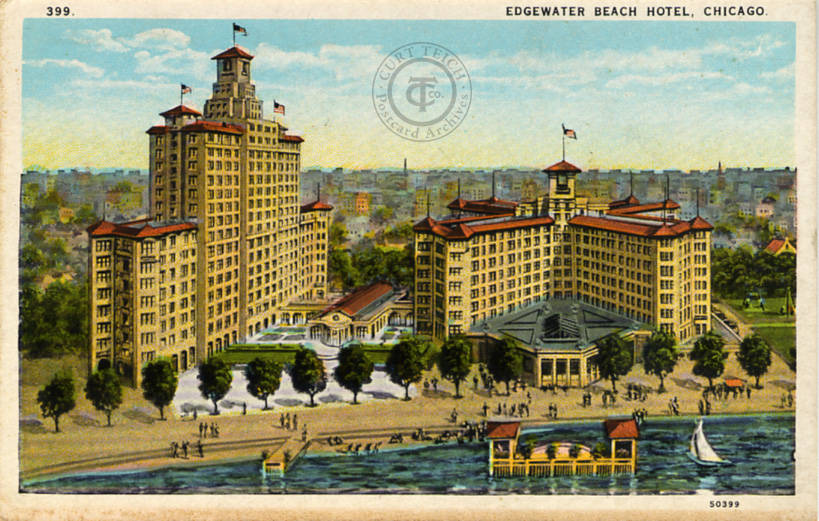
Chicago's Legendary 'Edgewater Beach Hotel', completed in 1924 and demolished in 1970 due to bankruptcy.
Postcard of Edgewater Beach Hotel.-Photo: Wikipedia
Attending this meeting was nine of the world’s most ‘successful’ financiers and businessmen. Those present were: the President of the largest independent steel company; the President of the largest utility company; the President of the largest gas company; the greatest wheat speculator; the President of the New York Stock Exchange; a member of the President’s cabinet; the greatest ‘bear’ in Wall Street; the head of the world’s greatest monopoly; and the President of the Bank of International Settlement. This, we must admit, was a gathering of some of the world’s most successful men – or at least men who had found the secret of making money. Twenty-five years later (1948) let us see what had happened to these men:
the President of the largest independent steel company had died, bankrupt, having lived on borrowed money for five years before his death; the President of the largest utility company had died a fugitive from justice, penniless in a foreign land; the President of the largest gas company was insane; the greatest wheat speculator had died abroad – insolvent; the President of the New York Stock Exchange had recently been released from Sing Sing penitentiary; the member of the President’s cabinet had been pardoned from prison so that he could die at home; the greatest ‘bear’ in Wall Street had died– a suicide; the head of the world’s greatest monopoly had died– a suicide; the President of the Bank of International Settlement had died – a suicide
All these men learned well the art of making money but none of them learned how to live, commented the original compiler of this list. It seems that the business world (who should know better, given what was described above) has changed not one iota. For them economic growth, the corporate bottom line and the pursuit of self-interest are what matters most. More recent observations also show that the self-interested pursuit of wealth brings only misery. Since 1950 there has been much economic growth and wealth creation in the West, but also a tenfold increase in the incidence of depression and a massive rise in the number of people suffering from sub-clinical neuroses, anxiety and profound self-dissatisfaction, drugs and alcohol abuse, self-harm, suicide, and more…”- What a powerful and telling story! A lesson to all those who think that what matters most is money and money and loads of it!
And Now Meet the Architects of the Global Pandemics of Misery, Inequality, Inhumanity, Racism, Xenophobia and more:
Death and Destruction on Brothers’ Road to Serfdom
The Destruction of our World and the lies of Milton Friedman
People’s Tragedy: Neoliberal Legacy of Thatcher and Reagan
Neoliberalism and the rise in global loneliness, depression and suicide