
- Details
- Written by: Kamran Mofid
- Hits: 1731
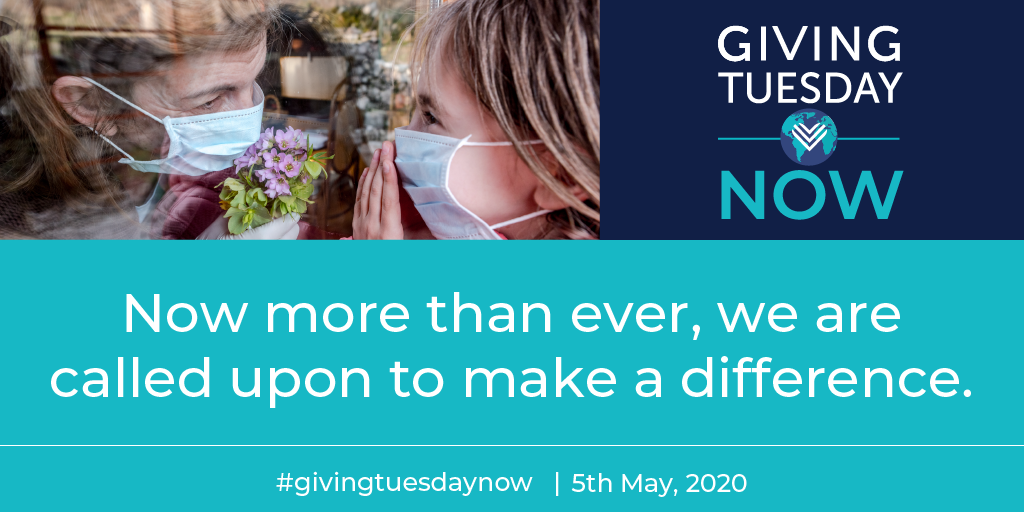
A global movement for good
Working together, cooperating and taking actions in the interest of the common good, will enable and empower us to build a great world in the interest of all
‘On 5 May, we are asking people to share a message of thanks on social media, or a heart in their front window, as a sign of gratitude to all essential workers supporting our communities. You can even combine these two activities and share a photo of your heart with a personal message on social media. And of course, we ask, if people are in a position to give, then to make a donation on the day to a charity or a fund to help those affected.’
‘#GivingTuesdayNow is a global day of unity in response to Coronavirus. A day where we can all come together to recognise, celebrate and give thanks for the incredible outpouring of compassion we have witnessed during this crisis.
We want everyone to show their gratitude for what so many have been doing over the past few weeks and months. How people have put kindness and compassion first, how they have reached out to support our neighbours and our communities.
It is a chance to say thank you to those who have kept us going through this challenging time, an opportunity to show our appreciation for all NHS workers including medical staff, cleaners, porters, laundry staff and caterers, all food chain staff, delivery drivers, bin collectors, public transport workers, teachers, care workers, milk and post men & women, emergency services, community volunteers, workers making PPE, neighbours and of course charities!
#GivingTuesdayNow will also be a day to celebrate and support the charities who have stepped up and reached out to support our family, friends and communities during this difficult time and who are continuing with their important work in challenging circumstances. They need us now to help make sure they will still be there in the future.
It will be a time to say thank you to those whose focus during this crisis has been on how they could help.
How to give back during the pandemic
Show your thanks and appreciation to all those who are helping our communities through this difficult time. Print, draw, or download a#GivingTuesdayNow heart poster and put it in your window to share the message that you’re standing with them. Give to the organisations that you love most – no amount is too little and charities need our support. Support healthcare workers by donating supplies, advocating for them, and staying home. Combat loneliness by reaching out to a neighbour, relative, or older person in your community, adhering to social distancing guidelines. Join a local mutual aid network and come together to help neighbours in need.’-#GivingTuesdayNow
Below is the list of my suggested charities that if you wish you may consider to choose to support
Photo: manusapon kasosod - Getty Images, Via MSN.com
Marie Curie Nurses and hospices
"In a world where you can be anything, be kind," Caroline Flack wrote on Instagram in December 2019
Working together, cooperating and taking actions in the interest of the common good, will enable and empower us to build a great world in the interest of all
- Details
- Written by: Kamran Mofid
- Hits: 1816
Photo:News Vire
Idea of pursuing competitiveness while promoting the common good began as early as the medieval period
How compassionate capitalism flourished in medieval Cambridge*
'Wealthy entrepreneurs gave their profits away to city’s religious houses and hospitals'

The house, possibly commissioned by Hervey Dunning, mayor of Cambridge in 1207, now known as the School of Pythagoras,
St John’s College, Cambridge. © Ben Harris (CC BY-SA 2.0), Via Medievalists.net
‘It is the most unequal city in the land – a place of college spires and glamorous May balls, where homelessness and food poverty are rife and the lowest-paid workers cannot afford their rent.
Now newly discovered historical documents reveal that Cambridge has also achieved a more egalitarian economic feat: as the birthplace of compassionate capitalism in the UK.
A fascinating manuscript about the property dealings of Cambridge’s wealthiest medieval families shows that they consistently gave their profits and assets away to improve the welfare of their local community. The find has provided the earliest evidence of this kind of systematic philanthropy ever uncovered in Britain.
The document, from 1279, puts Cambridge’s contemporary record on inequality to shame, detailing how the city’s early capitalists used their wealth to benefit local religious houses and hospitals.
“It was one of the Hundred Rolls, a massive survey undertaken by the Crown similar to the Domesday Book. But it had been lost in the National Archives,” said Dr Catherine Casson, co-author of Compassionate Capitalism, a major new book on the subject. “The missing roll we found informed us about an area of Cambridge that no one had really looked at before.”
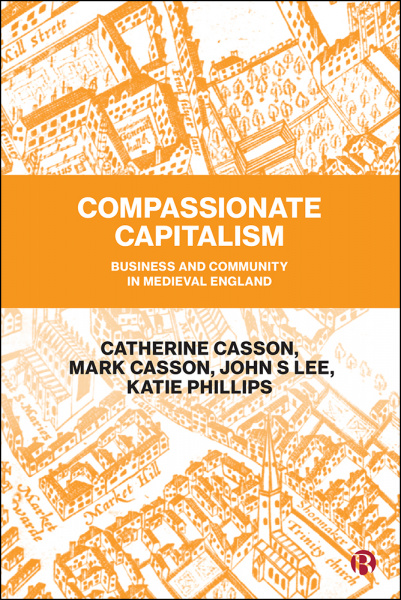
Photo: Bristol University Press
The roll recorded the ownership history of property in the city and its suburbs over the preceding 100 years, enabling Casson to analyse 36 family dynasties and more than 1,000 properties. “It’s very rare for this period of history to recreate any family trees, let alone 36.”
The data showed many of the city’s medieval entrepreneurs made their money in trade or as administrators for religious institutions and government. But they savvily invested their spare cash in the Cambridge property market, which boomed in response to legal reforms and a fierce new demand for student accommodation after the university was founded in 1209.
Some landlords even became property developers, subdividing the buildings they owned in order to buy vacant land to build new homes. “They keep half of the property for themselves and sell off the other half as a means of financing their purchase. So already they’re doing something we’re quite familiar with today.”
The majority of these newly wealthy families in Cambridge gave away more than half of their profits from property. “That’s not because they had to, it’s because they chose to,” said Casson.
At the time, other medieval families were spending their cash on luxury consumer goods such as jewellery, silks and furs, or choosing to live “a wild lifestyle” by 13th-century standards. “Potentially, they could have spent the money on mistresses... but also on things like food and drink. Bills for hospitality in medieval times were very high,” said Casson.
Instead, the entrepreneurs chose to fund places such as the Leper Chapel, part of an isolation hospital for people with leprosy. The building still exists in Cambridge today.

Cambridge’s rich families helped to fund places like the city’s Leper Chapel, which still stands off Newmarket Road.
Photo: East Anglia Images/Alamy, Via The Guardian
Casson thinks they probably hoped that investing in these projects would increase their chances of getting into heaven, as well as improving their stature in the local community.
But the medieval capitalists also had a real sense that providing the local community with financial support and a welfare infrastructure made Cambridge a more attractive – and economically successful – place to live, study and bring up a family in the 13th century. “It was a mutually beneficial process,” she said.
In 2018, a report showed income was more unevenly distributed among Cambridge residents than in any other UK city. The top 6% of earners who lived in Cambridge took home 19% of the total income generated by residents.’
*This article by Donna Ferguson was first published in The Guardian on Saturday 2 May 2020.
The Long Read
Compassionate capitalism in the Middle Ages: Profit and philanthropy in medieval Cambridge
Catherine Casson, Mark Casson, John Lee, Katie Phillips 07 May 2017
'Contemporary businesses are frequently challenged to invest the profits from their commercial successes into projects that benefit society. Yet this is not a new concept – this column reports that it began as early as the medieval period. Profits from property speculation in the Middle Ages were re-invested into local communities. Compassionate capitalism involved high levels of charitable giving to hospitals, monasteries, churches, and colleges, which helped to disseminate the economic benefits of investments from individuals to the wider community'…Continue to read
Is It Time for Compassionate Capitalism to Make a Comeback?
Can there ever be a Compassionate Capitalism in the 21st Centurey too?

Big business. Photo by Samson (@samsonnyyc) on Unsplash, Via Medium
To my mind, the answer is an emphatic YES. But only if:
See also:
"In Search of the Virtuous Economy: A Plea for Dialogue, Wisdom, and the Common Good"
June 6 – 10, 2010
California Lutheran University
Thousand Oaks, California
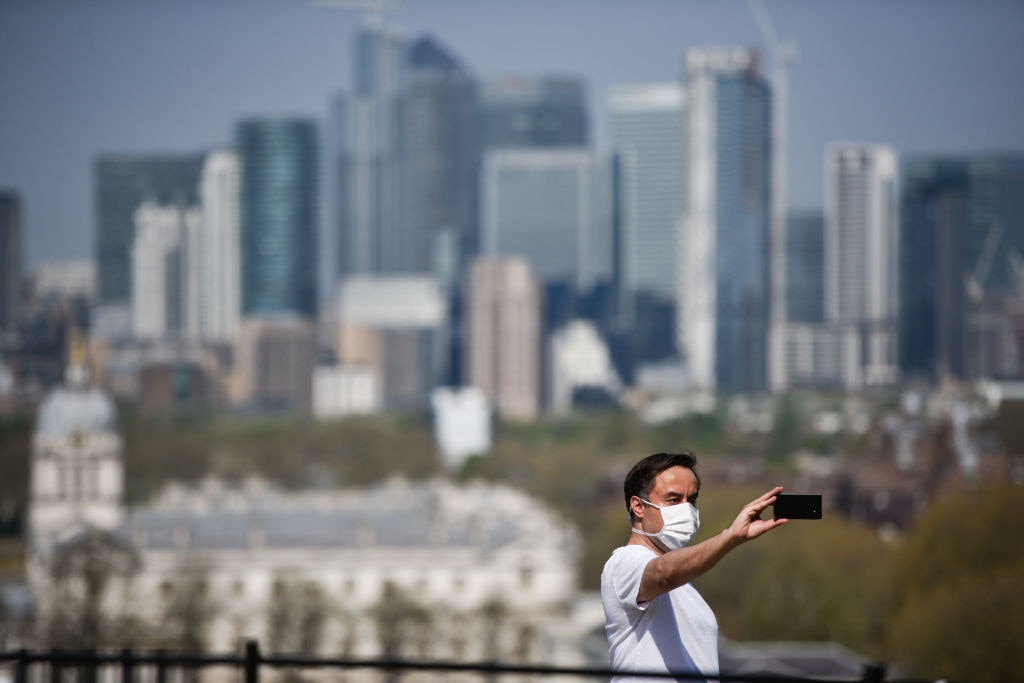
Moreover, compassionate capitalism can underpin our coronavirus recovery
 =
=
Photo: City A.M.
The time is now to rediscover our true selves
‘Knowing yourself is the beginning of all wisdom.’-Aristotle
Unless we can reclaim our commitment to one another, we are not adhering to our humanity.
Beyond the Neoliberal, Thatcherite Wasteland: Ten Common Good Steps to Build a Compassionate and Kinder World Post-coronavirus
Call to Action
I believe in the power of service, volunteerism, empathy and actions in the interest of the common good to improve lives, to build a better world. I also believe that economic prosperity, ecological harmony, better lives and a kinder world are all possible, if we all acknowledge one thing: We are not only accountable to our shareholders, but and more importantly, we must be answerable to all the stakeholders and the entire web of life.
After all is said and done, it is not enough to simply talk about beliefs and principles; we must live up to them, be transparent and accountable, and continually find ways of improving.
At the GCGI, we want to continue and play our part in building a better world for everyone. I do know that I do not have all of the answers, and it is only by working with others and being open to new ideas and different perspectives that I can come up with possible solutions that global challenges require.
Below you can see my suggested Ten Steps to build a better world. Please share your thoughts, ideas, and insights with me. We can only build the better world we are seeking if we come together, work together, build together.
It’s time to deliver on the goals we’ve set for a more peaceful, resilient planet and a better life
- Details
- Written by: Kamran Mofid
- Hits: 1977
Guardian tops poll of national papers for coronavirus coverage
‘Twice as many Britons feel the outlet is doing a ‘good job’ compared with its nearest rival, amid record traffic to its website.’
Nota Bene
It goes without saying that I was delighted and very happy to note that in a University of Oxford study, my favourite newspaper that I have been reading daily since the early 1970s has topped the poll of national papers for coronavirus coverage.The Birts trust the Guardian, its investigative journalism and its reporting of facts, analysis, and stories.
Moreover, I was very happy to note that the nation’s favorite TV and Radio news coverage, The BBC, has also topped the poll in its catagory.
Wow! What more can say, but that it is wonderful to see that my longheld views, convictions, and praise for the Guardian and the BBC have been in line with the praises of the British and indeed many more around the world.
So, my friends, come on board, support, value and cherish these institutions (and off course the NHS), or the Thatcherite ideologues will destroy them, as they have done with everything that was once good and worthy. Be warned.
Can the Media be for the Common Good?

Photo:bing.com

Photo:buzzfeed.com
Guardian tops poll of national papers for coronavirus coverage
‘The Guardian’s coverage of the coronavirus outbreak is considered to be substantially better than that of any other British newspaper, according to a University of Oxford study looking at the UK population’s attitudes to news during the lockdown.
According to the research, twice as many Britons said they felt the Guardian was doing a “good job” covering the pandemic compared with the Times, its nearest rival.
The Guardian’s website was also one of the most-read sources for information on the outbreak, second only to BBC News. This fits with internal traffic statistics which show the Guardian has consistently reached record audiences over the last two months, while also seeing a surge in reader contributions to fund its journalism.
Other outlets fared less well but the Sun and the Mail were the only national newspapers where more people felt they were doing a “bad job” than approved of their reporting on the pandemic.
The survey by YouGov for the University of Oxford’s Reuters Institute also found that the BBC’s output continues to dominate online news consumption in the UK, with 36% of the population saying they had turned to the public service broadcaster’s website for coronavirus coverage.
Around 16% said they had visited the Guardian’s website, with Sky News and MailOnline in joint third place on 9%...’ Continue to read
Related articles:
The Spirit of '45: When Britons Chose the Common Good
The NHS: The Healthcare for the Common Good …
Britain’s greatest achievement: Wishing Our Precious NHS a Very Happy 70th Birthday …
Thatcherism- the poisonous ideology that became the global norm
- My Dawn Experience, by my friend, Steve Pendrey
- Canon Dr. Paul Oestreicher ANZAC DAY 2020 GCGI Sunday 26 April Sermon
- World in Chaos and Despair: The Healing Power of the Dawn
- Healing Our Way to a more Caring, Kinder and Fairer Society: A View from a CEO and a Recovered Economist
- Wisdom and the Well-Rounded Life: What Is a University?