
- Details
- Written by: Kamran Mofid
- Hits: 1819
The remarkable characteristic of our chaotic and crisis riddled world today is their deepening and continuity
Crisis after Crisis: Financial Crisis. Credit and Banking Crisis. Environmental and Ecological Crisis. Biodiversity Crisis. Epidemic and Pandemic Crisis. Housing Crisis. Health and Well-being Crisis. Education Crisis. Spiritual and Moral Crisis. Trust and Trusting Crisis. Indifference Crisis. Fake, Fake News and Faking Crisis. Reality Crisis. Populism and Fascism Crisis,...all of them leading ours to be a generalized "time of crisis."

Photo:outerlimitsradio.com
Given the state of our world today, falling from one crisis to the next, from one fear, anxiety and despair to the next, from hopelessness and helplessness to the next, I thought perhaps it's time to reflect again on some of the main reasons for such a sorry state of affairs, and perhaps more crucially, to see if there are any voices of hope, suggesting a more humane alternatives to the current inhumane and unjust outcomes.
So, if interested, there you have it:
- Details
- Written by: Kamran Mofid
- Hits: 2583
Lies, damn lies and neoliberal economics and economists
"Today's neoclassical economist is an emperor with no clothes who's fooled us all long enough."
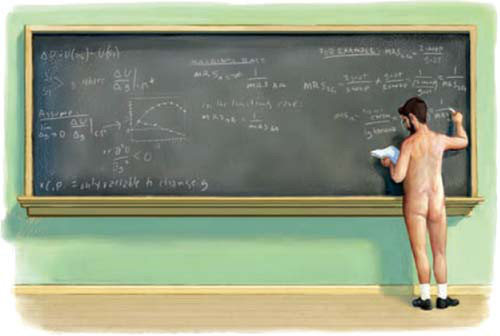
Photo: transitionvoice.com
The global application of a fraudulent economic theory, promoted and taught by its cheerleaders- the fraudulent neoliberal economists- has brought the world to its knees. Yet for those in power, it offers riches, whilst it showers its victims with misery, inhumanity, poverty, destitution and death.
Austerity is a political choice, not an economic necessity*
‘Neoliberal economists present themselves as ‘neutral’ technocrats, but they’re actually partisans for the status quo. Don’t fall for it!’ More on this a bit later.
For now, Lest We Forget
My long held struggles to make economics a force for the good
Coventry and I: The story of a boy from Iran who became a man in Coventry
To All Striking Academic Colleagues in Britain: Turn the Strike to a Force for the Common Good
Today, with total humility and selflessness, in a moment of soul searching and reflection, I feel peace and contentment. I feel at ease with myself, that, the very costly and personal price that I paid for my belief and conviction, that modern neoliberal economics is nothing but a fraudulent mumbo-jumbo, was all worth it. I was right. I am proven right. I hold my head high and my conscience is clear. I did not cheat my students, and I did not lie to them. I am grateful for this for the rest of my days.
The Broken Economic Model and the Inhumanity of the Lost Decade of Austerity
People’s Tragedy: Neoliberal Legacy of Thatcher and Reagan
The Destruction of our World and the lies of Milton Friedman
These are the main ingredients of the Bastard Economics of Neoliberal Ideology
Oxford Theology Society Lecture: Values to Make the World Great Again
Calling all academic economists: What are you teaching your students?
And now, reverting to the main theme of this Blog: ‘Neoliberal economists present themselves as ‘neutral’ technocrats, but they’re actually partisans for the status quo. Don’t fall for it!’
Austerity is a political choice, not an economic necessity*
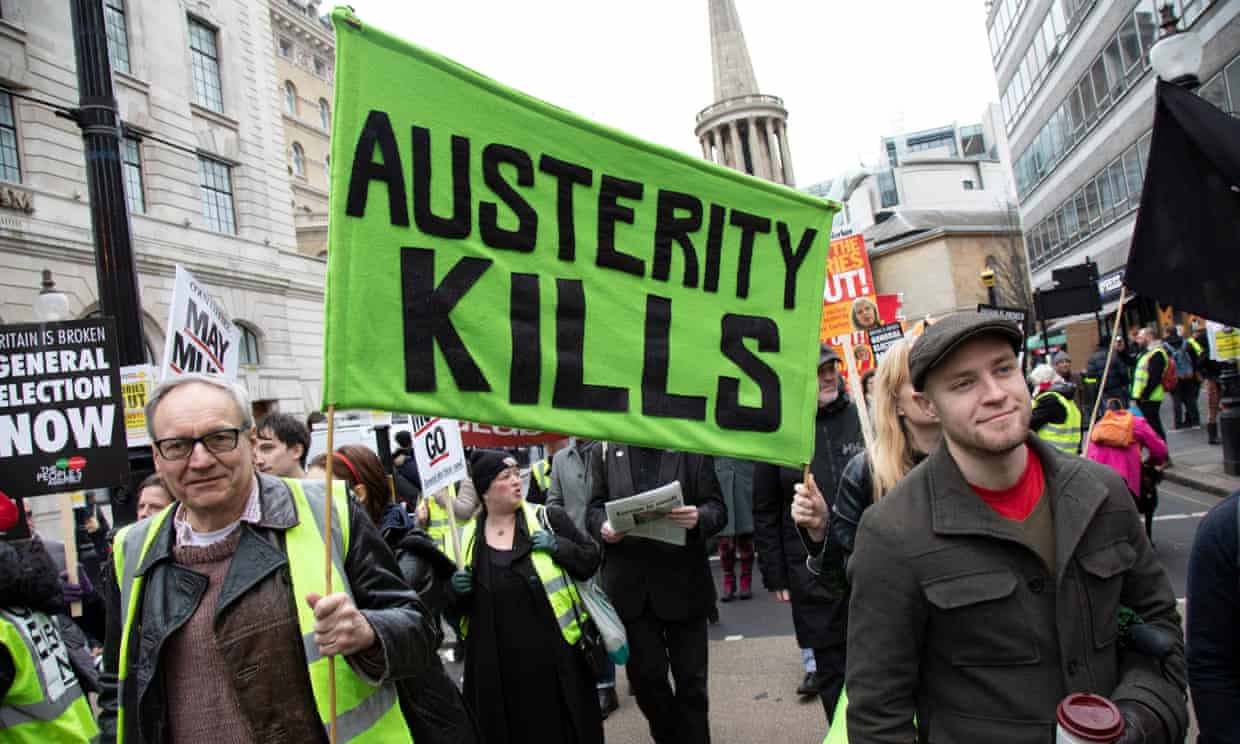
‘Neoliberal rhetoric always disguises the coercion underlying austerity’ Photo: The Guardian
‘The outcome of austerity policies in Britain and elsewhere has become painfully clear: increased child poverty and social misery; declining life expectancy; an increase in racial inequality; decaying public schools and public health and other public services; and all-around catastrophe for disabled people.
Yet the Financial Times columnist Martin Wolf recently recommended the book Austerity: When it Works and When it Doesn’t as his top book to read this summer. The book is a qualified defense of austerity policies written by Alberto Alesina, Carlo Favero, and Francesco Giavazzi, an influential trio of economists and rising stars known for advising major economic institutions. “This is an extremely important book,” Wolf said. The economist Kenneth Rogoff agreed, recently describing Austerity as “a towering scholarly achievement.”
We agree with Wolff that this is an extremely important book but not because of its scholarly achievements as Rogoff claims, but rather because of its ideological character that serves to unabashedly justify oppressive neoliberal policies that are still being implemented worldwide.
Alesina and his co-authors attempt to save austerity from its demise by positing an empirical distinction between two types of austerity. One, based on tax increases, hurts the economy they say, while the other, based on spending cuts, has less recessionary effects and can even expand the economy. By putting forth this distinction, the authors end up defending the harmful economic policies occurring in most Western countries, including the US: aggressive cuts to taxes (especially to corporate taxes) and to public welfare expenditure.
In other words, this book – and its public acclamation in the mainstream media - is a telling example of the way in which neoliberal economic discourse is rendered technical and seemingly “depoliticized” in order to justify coercive state policies in favor of the one percent.
Through technical language and appeals to science and expertise, neoliberal economic prescriptions are presented as “natural givens” that society must accept as matters of fact. Economists can therefore claim to be neutral scientific commentators rather than ideologues of the status quo – and technocrats can treat those economists’ prescriptions as indisputable and inevitable.
Economic Growth: The Index of Misery
Britain today and the Bankruptcy of Ideas, Vision and Values-less Education
Recession, Austerity, Mental, Emotional and Physical Illness
This is most visible in the book’s emphasis on economic growth and its tendency to ignore class differences in favor of a vaguely defined general or national interest. For economic experts like Alesina, Favero and Giavazzi, the sole criterion that matters seems to be the effect of austerity on GDP. Their preference for this metric is a reminder of just how out of touch they are with the real-life needs of most citizens.
This preoccupation with GDP growth fails to ask an important question: for whom, exactly, is GDP growth beneficial? There is no automatic correlation between GDP growth and prosperity for everyone. According to the standard neoliberal argument, cutting welfare expenditure lowers taxes and increases the pool of wealth available for private investment. This line of thinking is based on the strange assumption that the interests of the top one percent and the interests of the nation as a whole are the same, and that the rest of us should stomach harsh cuts to social spending while waiting for wealth to spread to ordinary people.
Neoliberal rhetoric always disguises the coercion underlying austerity - a policy agenda to enhance capitalist growth while reallocating the burden of capitalism’s failures to the majority of the population. This requires the subordination of the working people by rising unemployment, forcing wage cuts, cutting welfare expenditures, eroding social solidarities, demonizing immigrants, tearing apart communities and ultimately increasing levels of exploitation.
We must never forget that the fundamental question is not “when does austerity work and when doesn’t it?” but “for whom does austerity work, and for whom doesn’t it?”
*This article by Clara Mattei and Sam Salour was first published in The Guardian on 2 September 2019.
...And now read about the possible paths on how we may put right what has so tragically gone wrong, on how to stop death and destruction and how we may begin to value and nurture life again
I am positive and hopeful. We can change the world for the better. Come with me on this journey of self discovery in the interest of the common good
Yes, We can win over death and destruction, the neoliberalism, If we listen to the Voice of Hope, echoing across the world,
The Voice of Hope
"The Days to Come"
Now shall I store my soul with silent beauty,
Beauty of drifting clouds and mountain heights,
Beauty of sun-splashed hills and shadowed forests,
Beauty of dawn and dusk and star-swept nights.
Now shall I fill my heart with quiet music,
Song of the wind across the pine-clad hill,
Song of the rain and, fairer than all music,
Call of the thrush when twilight woods are still.
So shall the days to come be filled with beauty,
Bright with the promise caught from eastern skies;
So shall I see the stars when night is darkest,
Still hear the thrush’s song when music dies.
~ Medora C. Addison, “The Days to Come,” in Dreams and A Sword (Yale University Press, 1922).

The lackluster economy, continuous and deepening global crisis since the crash of 2008 and much much more are delivering a humbling lesson about economics: Values-less theories and models, laced with large doses of incomprehensible mathematical mumbo-jumbo, resulting in top-line growth, doesn’t ensure either bottom-line prosperity nor ethical/moral/spiritual behaviour or a good life.
Yet, the practice of conventional economics remains focused solely on the former while the latter is deemed someone else’s responsibility, which has resulted in socialism (with all the benefits) for the 1% and capitalism (with all the costs and consequences) for the rest!
However, now, years of soul-searching have spawned movements that could change fundamental aspects of the field, from the way it is taught to people who practice it and the underlying theories it treats as gospel. This GCGI Common Good Project- Remaking Economics- examines the foundations of a revolution with far-reaching consequences for our understanding of the world, our lives and ultimate wellbeing.
Below, you will find a sample of my take on ‘Remaking Economics’:
Remaking Economics in an age of economic soul-searching
The World would be a Better Place if Economists had Read This Book
In Praise of Darwin Debunking the Self-seeking Economic Man
Composing a New Life: In Praise of Wisdom
Brexit, Trump and the failure of our universities to pursue wisdom
Calling all academic economists: What are you teaching your students?
The Journey to Sophia: Education for Wisdom
My Economics and Business Educators’ Oath: My Promise to My Students
What might an Economy for the Common Good look like?
Christmas and New Year Message Holds True: A Time to Weave a New and Hopeful Tapestry of Life
What if Universities Taught KINDNESS?
Wouldn’t the world be a better place with a bit more kindness? Harnessing the Economics of Kindness
Today is World Kindness Day: Embracing Kindness to Defeat the Political Economy of Hatred
- Details
- Written by: Kamran Mofid
- Hits: 2971
The Lost Decade: The Hidden Story of How Austerity Broke Britain*
‘Between 2010 and 2020, Conservative cuts destroyed the fabric of society as we know it. Speaking to people on the frontline reveals the ways our lives have been changed forever...’
*The latest on inhumanity of Austerity(March 2024): Austerity doesn’t just damage public services, it destroys faith in the future
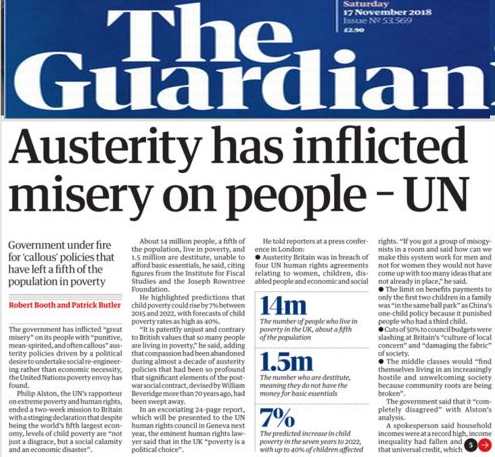
Poverty envoy says callous policies driven by political desire for social re-engineering.
‘The UK government has inflicted “great misery” on its people with “punitive, mean-spirited, and often callous” austerity policies driven by a political desire to undertake social re-engineering rather than economic necessity, the United Nations poverty envoy has found.’
‘The outcome of austerity policies in Britain and elsewhere has become painfully clear: increased child poverty and social misery; declining life expectancy; an increase in racial inequality; decaying public schools and public health and other public services; and all-around catastrophe for disabled people.’ More on these a bit later.
First, Lest We Forget
Nearly nine years ago, in May 2011, I shared the following in an email with our GCGI Friends, which I believe must be remembered again, its words and sentiments,feelings and emotions, more true today, than the day they I wrote them:
The Broken Economic Model*
(First published as an email to the GCGI members in May 2011)
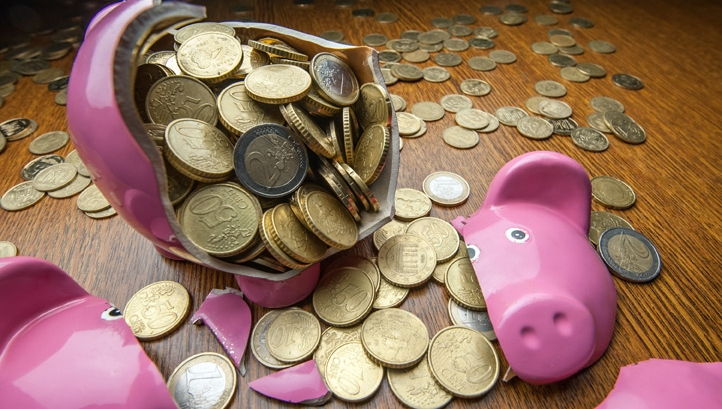
Photo:edie.net
“Do you remember that Margaret Thatcher, the so-called Iron Lady!! She told the Brits that she was going to put the “Great” back into the “Great” Britain. Do you remember? Then, she told us this can only happen if we accept and implement the “Washington Consensus”, the so-called dreaded neo-liberalism. She told us that there was no alternative. She told us we will all prosper and develop more fairly and equitably. She won election after elections. Everything was privatised, deregulated, self-regulated. Industry, manufacturing, (the real economy) was destroyed. Instead, the banks and the bankers were encouraged to rule the world. The economists with no principles and values were “bought” and the business schools, such as Harvard and Columbia were showered with money to act as “Cheer Leaders” for the dreaded neo-liberalism (see the Inside Job for evidence). Communities were dis-mantled and dis-organised. We were told that there is nothing as a society and community. We are all in it just for ourselves, we were told. Destructive competition at the expense of life-enhancing cooperation, collaboration and dialogue was greatly prompted. We were told to say no to love, kindness, generosity, sympathy and empathy and say yes to selfishness, individualism and narcissism, as these values will fire the engine of capitalism and wealth creation! In short, the hell with the common good, we were encouraged to believe.
We were brained-washed. Our other Prime Ministers repeated her nonsense and have carried on her footsteps. It is now over 30 years since the neo-liberalism experiment in Britain. Are we any “Greater” than we were in 1979? Are we any fairer or more equitable? The country is nearly bankrupt, with public and private debt at unprecedented levels, with greatest levels of poverty and wealth disparity ever. The house of neo-liberal capitalism is now at its nadir of decadence.”
You see, all those interested in life’s bigger picture, have been saying the same, over and over. The neo-liberals are not in touch with humanity. They will prostitute all in the interest of profit maximization, cost minimization, highest return to the shareholders, and the biggest and juiciest bonuses for the CEOs and their lackeys.”
Continue to read and discover more on the Broken Economic Model and the ‘Killing’ Ideology of Neoliberalism:
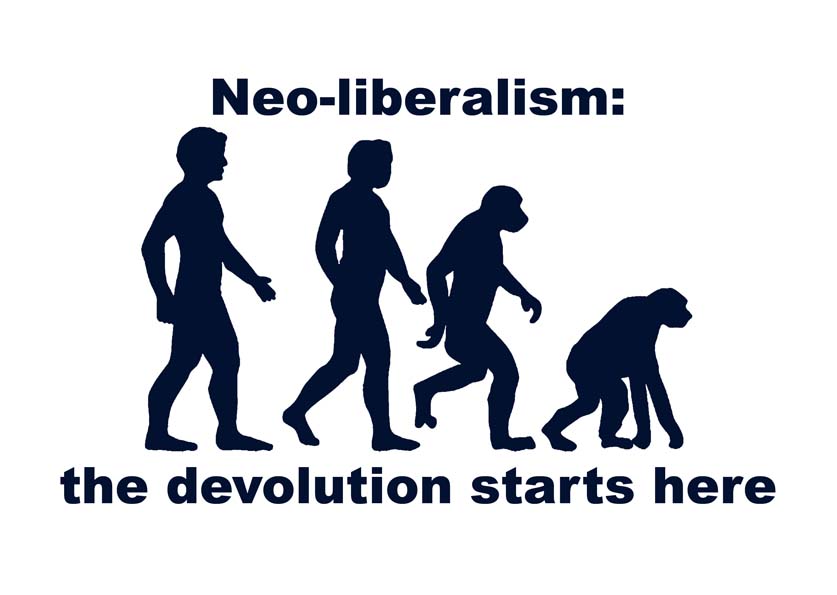
Photo:redandsky.blogspot.co.uk
People’s Tragedy: Neoliberal Legacy of Thatcher and Reagan
The Destruction of our World and the lies of Milton Friedman
Economic Growth: The Index of Misery
Britain today and the Bankruptcy of Ideas, Vision and Values-less Education
Recession, Austerity, Mental, Emotional and Physical Illness
Lest We Forget: The Dark side of Austerity
Life, death and economics: Austerity is a killer
Neoliberalism and the rise in global loneliness, depression and suicide
Austerity driven Homeless children put up in Shipping Containers in ‘Great Britain’
Austerity and its Consequences: No Hope for the Youth
Neoliberalism destroys human potential and devastates values-led education
The scar on the conscience of Britain: The neglect of its children, youth, students and more
Child Poverty UK: The Shaming of the British Elites
Bastard Economics of Greedy Neoliberalism and the Killings of the Innocents in London Tower
Dear Prime Minister-Britain needs a New Economic Model
And now, reverting to: The lost decade: the hidden story of how austerity broke Britain
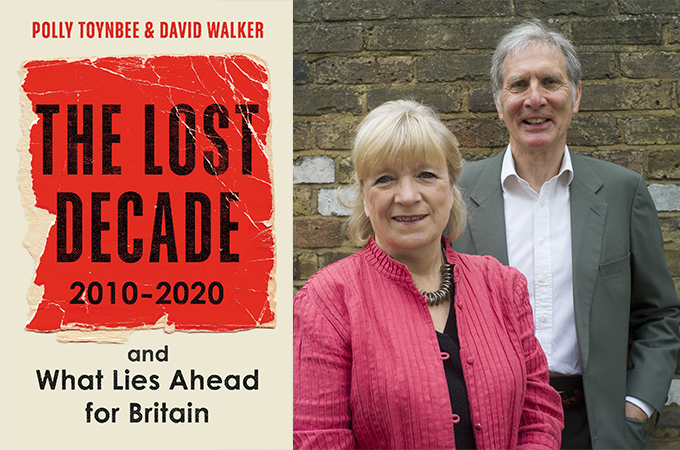
Photo:bathfestivals.org.uk
‘What happened in the UK between 2010 and 2020 will scar us for the rest of our lives. David Cameron’s Conservatives, only just victorious in the 2010 election, sold austerity as a necessary response to the 2008 financial crash. The exact social consequences of these cuts were spelled out last week in Michael Marmot’s report for the Institute of Health Equity: for the first time in a century, life expectancy has stopped growing and for women in poor areas actually fallen.
We should never stop reminding ourselves just what an astonishing decade we have lived through. In the aftermath of the crash, employment climbed and stayed remarkably high. But these new jobs paid badly and it took until two months ago for earnings to reach where they were before 2008. It is no surprise that debt is mountainous: each household owes on average £15,385, not counting their mortgages. The gap between rich and poor has widened; the young are now worse off than their parents at their age; home ownership has declined steeply – families are stuck in life-long and precarious private renting.
In our 2010 book The Verdict, we evaluated the Blair-Brown era, years of marked social progress. For a new investigation, to assess the extent of the past decade’s damage, we went back to the people we talked to then to see how they have fared since and the hidden ways that austerity has affected their lives.
We followed the fortunes of Emma Percy, in Folkestone, Kent. With her husband, Rob, and three children, the family moved from one rented home to another, changing the children’s schools as rents rose, roofs leaked. They were sometimes living without a functioning boiler all winter long. They were the “just about managing”. Theresa May never got round to helping. Emma and Rob did all the striving and aspiring the prime minister had called for, hoping to save for a deposit, but never quite making enough. In the summer, the only holiday they could afford was camping in the grounds of the school where Rob was caretaker. Their parents own homes; they may never.
Decades take shape in the rearview mirror. Even as the past decade was unfolding, people were aware times were out of joint, an unprecedented number telling a Hansard Society survey at the end of 2018 that the UK was in decline. Everyone saw that pressing national tasks were neglected, as carbon cuts and affordable housing targets were missed, as transport worsened along with education and productivity. Instead, massive efforts were diverted into ideological futility. On the whims of ministers, probation was broken apart, forensic services wrecked and enormous effort wasted on pushing England’s schools out of public control into semi-private academies and trusts, in evidence-free reorganisations.
People expect someone to monitor air and water quality, inspect restaurants and food standards. But the environmental health officers we visited in Huntingdon, Cambridgeshire, were inspecting fewer kebab shops and closing air-monitoring stations despite more pollution. We were there on an inspection when they found a stack of meat pies on the dirty floor of a roadside cafe: the officer told us they register fewer food outlets as high risk, for lack of staff to check them. Nationally, one in 10 takeaways now score zero or one for hygiene and safety. Andy Birks, a butcher in Rotherham in South Yorkshire, told us he hadn’t seen a health inspector in years. “I don’t think there are any left,” he said. Like so many high-street shops, his business had declined in the decade since we first met him, his profits down since 2010.
The Food Standards Agency tests 58% fewer samples and the National Audit Office (NAO) says local authorities are “failing to meet their legal responsibilities”, with staff numbers cut by 45%. Checks that establish if food is safe and contains what it says – not horse meat – were few and far between: the NAO found only 37% of food checks scheduled actually took place. Time and again, in one field after another, we found the covert fraying of the fabric of a civilisation we take for granted.
A Friday night in the control room with Bedfordshire police told the same story of services stretched to breaking point. Mental health and domestic violence dominated the calls. A neighbour reported a man next door banging on his wife’s window, threatening violence. A man called as he chased his son across a dark park, terrified he might harm himself. The chief constable, Jon Boutcher, had just written to his MP recounting a typical night of rapes, stabbings and a lethal traffic accident involving young children. “I run out of officers regularly for 999 calls,” he said.
Meanwhile, the UK got older, with no plan for the decade’s 25% rise in those aged over 65. Social care was a can kicked down the road; as a result, 1.5 million frail old people get no care at all: at the end of the decade, the Johnson government’s response was to deny visas to care staff from abroad, as they earn too little to reach a new £25,600 threshold.
In Hastings, East Sussex, we watched the closure of another day centre, the building sold by the cash-strapped council. This was the seventh of these havens for older adults to close in the town since 2010. As packing cases were being filled with pictures from the walls, we talked to Rose, Mary and Sal, old friends sitting together as they always did, but now for the last time.
Home alone, the statistics showed that many more would arrive in A&E malnourished or dehydrated. That is the constant perversity of austerity; scrimping a bit now to cost more later.
Everywhere, we found a sense of common belonging diminished, with fewer meeting places, playing fields sold off, museums and libraries closed. As the public realm shrank, so did social capital, found the ONS, with less trust and neighbours not talking to one another. Pub closures – premises were down from 52,500 in 2001 to 38,000 by 2020 – were another loss of sociability.
Cameron’s “big society” gimmick delivered a smaller one, as people donated less to charities and volunteering declined. Foreign journalists filmed the Britain of food banks, the homeless, payday loans, bedroom tax and zero-hours jobs. The Conservatives’ pitch in 2010 had been repairing “broken Britain”, but its cracks were widened by an austerity that was neither necessary nor inevitable but resulted from ideological choices. The cap on housing benefit created socially segregated no-go areas for low earners. Councils lost a third of their spending power: buses, planning, housing, youth services and sports facilities were cut or sold off. Nature suffered: Natural England, custodian of flora and fauna in national parks, lost half its budget and shed 1,000 inspectors. Eleven million trees were promised, 1.4m planted.
One service always in the public eye was the NHS. But its 2010 training cuts left it short of 100,000 nurses and doctors. Spending time with the chief executive of Ipswich hospital, we watched as he begged a senior nurse not to leave. Jenny (not her real name), one of his best, brightest and most dedicated nurses, had turned around his difficult chemotherapy ward, caring for seriously ill people feeling at their worst, where deaths of patients exacted a heavy emotional toll on staff. But, taking a deep breath, she told him: “I just can’t keep going.” She would join the nursing bank for occasional shifts, but her departure would add to the 41,000 nurse vacancies. Her team cried when she told them.
The public realm now employs a smaller proportion of the workforce than at any time since 1945. For every £100 for public services in 2010, only £86 in real terms was spent in 2020. Rebuilding schools and hospitals stopped dead. A quarter of local government jobs vanished, with youth workers tackling knife crime the first to go. Criminal justice was hard hit: courts closed; prisons overflowed with violence and drug abuse rife; legal aid was pared to nothing. The armed forces were not spared. Grants to arts organisations fell by a third, funding for national galleries and museums by a half.
It is a perverse society that chooses to harm its youngest most, but years of frozen benefits left families thousands of pounds short, while the old saw their triple-locked pensions rise. State spending per child fell from £11,300 to £10,000. Early intervention for families was so scarce that the numbers of children in care rose fast. Psychiatrists estimated that one in five girls and young women had cut, burned or poisoned themselves in deliberate acts of self-harm on a rising trend: waiting lists for help stretched to a year in some places. Children deprived at school of art, music and drama teaching have lost that chance for ever, with only half taking any arts exams, and trips out severely cut. In 2018, 130 libraries shut and 760 youth clubs closed. This year begins with a million lost young people classified as “Neet”; not in employment or education.
Child poverty soared to its highest level since before the second world war. Infant mortality rose for the first time in two generations. The Thomas Coram Research Institute collected children’s own accounts: “I was so hungry, it was like I got hit in my belly, like I got stabbed with a knife,” 14-year-old Emmanuel told it. The threshold for claiming free school meals halved. More than 2,000 food banks opened, four times more in districts where universal credit – one of the decade’s greatest, but by no means only, disasters – was rolled out. Ministers’ talk of “scroungers” hardened public hearts. In Knowsley, on Merseyside, a food bank organiser collecting donations was asked: “Is this for English people?” He replied: “It’s for hungry people.”
Of course, these years were not monochrome. Plenty of good happened because people are admirably resilient: we found enterprise, generosity and public servants holding it all together with superhuman effort. Despite cuts to subsidies, renewable energy outdid expectations. Film studios flourished, UK acting grabbed glittering prizes and athletes triumphed. But everywhere decaying high streets were a metaphor for national malaise, as internet retail sucked the life out of bricks-and-mortar shops, its US owners paying negligible tax to compensate.
At the other end of the scale, the decade’s winners won big. Jeff Fairburn of Persimmon’s £75m bonus was emblematic; profits poured into his pockets from a misdirected “help to buy” subsidy. Total wealth in second homes, buy-to-lets and flats on the Costa climbed to £941bn. The UK still had more highly paid bankers than the rest of the EU put together. As GDP and pay growth both slowed, profits rose. A third of the UK’s billionaires kept their money in tax havens: the May government backed off from forcing transparency on crown dependencies and, coincidentally, tax exiles donated handsomely to the Conservative party’s 2017 election costs. HMRC cut local offices at the expense of precious local knowledge, a Sheffield accountant told us. Amid austerity, 15,600 tax collectors were dispensed with and the NAO reported 4m calls to HMRC went unanswered; £35bn went uncollected.
British business stayed virtually mute on Brexit, in self-harming silence, fearing public scrutiny of its stratospheric director remuneration, dysfunctional boardrooms and negligent auditors. The small businesspeople we spoke to were often pro-Brexit, refusing to see any bigger picture. A Dartmoor sheep farmer and a Hastings fisherman stayed believers, despite not expecting Brexit to do them much good. A steel stockholder in Derby and a high-street butcher saw turnover drop but stayed true to the faith. Never mind expert reckoning that the Brexit vote was losing Britain £700m a week; taking back control stirred feelings more ineffable than money.
Andy Brooke in Derby had his own bespoke bike business when we first met him, full of hope for the future of his highly specialised service for serious contenders. His shop seemed the perfect spot, near where the council was building a velodrome. But the Brexit vote left uncertainty among his clients from Derby’s big companies. “Overnight, people became very, very careful with their money,” he said. Nationwide, bike sales went down. “Before the referendum, we’d been selling two bikes a week, but now it was down to two a month.” He went bust, his company filing for insolvency. Derby council’s velodrome suffered a similar fate: it made a heavy loss. “This has been a hard time for me,” said Brooke. “I got married and I was busy organising the wedding at the same time as I was dealing with the shop’s bankruptcy.” Looking back, he was rueful. “I was so uplifted by the 2012 Olympics. That showed us off as a great multicultural hub, welcoming everyone. Then came the referendum, so many political lies. Now the country’s creeping in the wrong direction.” So he is emigrating to the US, a young remainer despairing of Britain. “I’ve been offered something in sports science in the US. We want children, but we don’t want to bring them up here any more, not in this atmosphere.”
Brexit was mainly caused by the partisan austerity created by the shrinking of the public sphere by Conservative governments. To win power, Johnson promised to repair his party’s depredations with eye-catching projects. His Brexit rhetoric has raised expectations, but his commitment to “levelling up” is a deceit unless it reverses all the financial and social forces that have been accelerating poverty since 2010.
The lost decade was a Tory decade and perhaps the next one will be, too. They broke Britain; do they really mean to mend it?’
* This article by Polly Toynbee and David Walker was first published in The Guardian on 3 March 2020.
The Lost Decade 2010-2020 and What Lies Ahead for Britain, by Polly Toynbee and David Walker, is published by Faber on 5 March, £10.99 rrp. To order a copy for £8.99 with free UK p&p for orders over £15, visit Guardian Bookshop.
...And now read about the possible paths on how we may put right what has so tragically gone wrong, on how to stop death and destruction and how we may begin to value and nurture life again
I am positive and hopeful. We can change the world for the better. Come with me on this journey of self discovery in the interest of the common good
Yes, We can win over death and destruction, the neoliberalism, If we listen to the Voice of Hope, echoing across the world,
The Voice of Hope
|

Photo:twr.org
Remaking Economics in an age of economic soul-searching
The World would be a Better Place if Economists had Read This Book
In Praise of Darwin Debunking the Self-seeking Economic Man
Composing a New Life: In Praise of Wisdom
Brexit, Trump and the failure of our universities to pursue wisdom
Calling all academic economists: What are you teaching your students?
The Journey to Sophia: Education for Wisdom
My Economics and Business Educators’ Oath: My Promise to My Students
What might an Economy for the Common Good look like?
A New Decade and a New Vision for Education: Seizing the Moment, Realizing the Value of Values-led Civics Education
Christmas and New Year Message Holds True: A Time to Weave a New and Hopeful Tapestry of Life
What if Universities Taught KINDNESS?
Wouldn’t the world be a better place with a bit more kindness? Harnessing the Economics of Kindness
Today is World Kindness Day: Embracing Kindness to Defeat the Political Economy of Hatred
- Cortona Week 2020- A Week of Fulfilment, Joy and Friendship
- How can we measure what makes a country great?
- Zoroastrianism the ancient religion of Persia that has shaped the world
- What is Happiness? What is the Good Life? Lessons from the ancient philosophers to help improve our lives today.
- Weaving the Tapestry of Love on Valentine’s Day in the Time of COVID