- Details
- Written by: Kamran Mofid
- Hits: 4128
Philosophy As a Way of Life
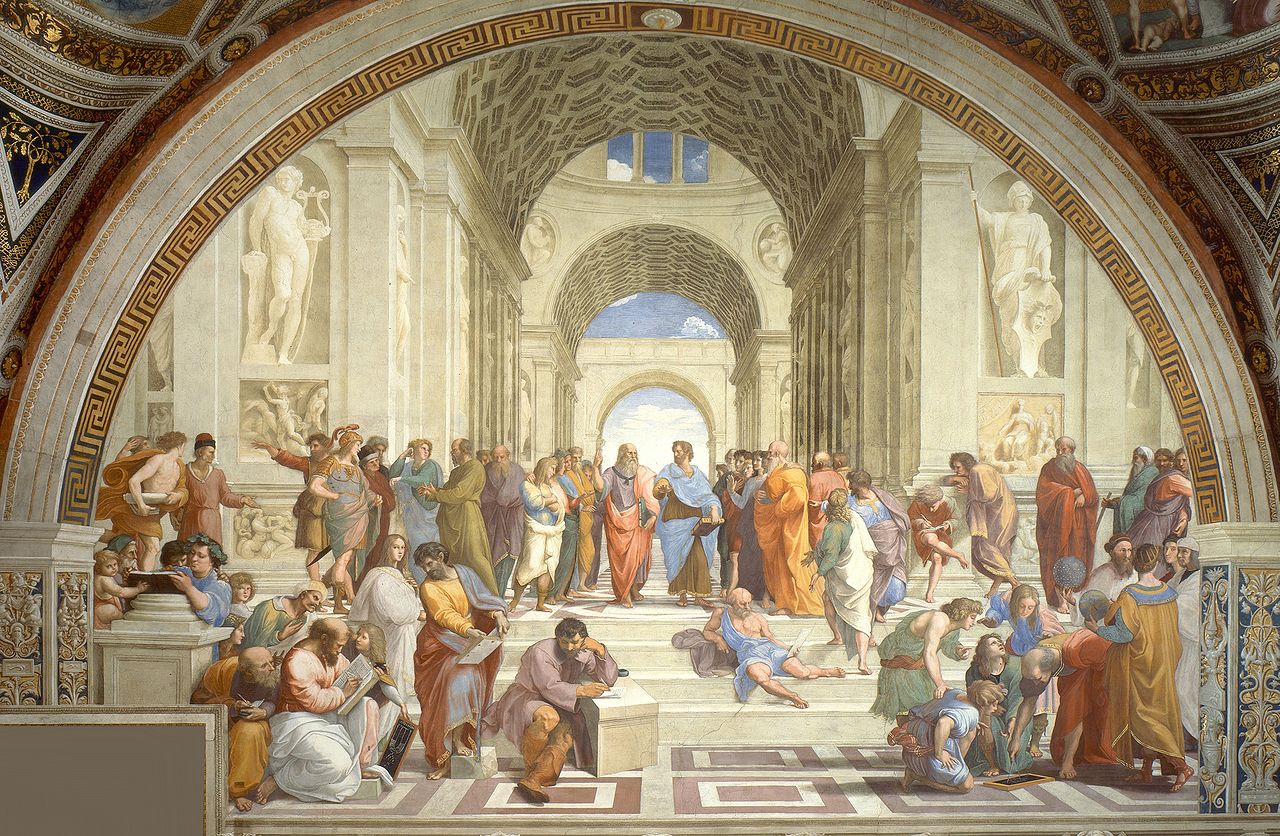
Photo:nypl.org
“Vain is the word of that philosopher which does not heal any suffering of man."- Epicurus
Philosophy, as it is practiced today, is abstract, theoretical, and detached from life, just one academic subject among others. In the Greco-Roman world, it was something quite different, argues the French philosopher Pierre Hadot. Philosophy was a way of life. Not merely a subject of study, philosophy was considered an art of living, a practice aimed at relieving suffering and shaping and remaking the self according to an ideal of wisdom; “Such is the lesson of ancient philosophy: an invitation to each human being to transform himself. Philosophy is a conversion, a transformation of one's way of being and living, and a quest for wisdom.” It is the practice of what Hadot calls "spiritual exercises" that brings about self-transformation and makes philosophy a way of life.
- Details
- Written by: Kamran Mofid
- Hits: 2967
Updated on February 2021
Valentine’s Day in the time of COVID: Let Love, Kindness and Gratitude be Your Everlasting Gifts
Photo:CGTN
Love and the Art of Loving
Whether you have read the novel Love in the Time of Cholera before or not, the drastic twists and turns of the relationship depicted seemed unique, that is, until now.
Today, with our own pandemic and the ‘Love in the Time of COVID’ it seems that, once again, love might not exactly be in the air on this special day this time around.
But, love in the time of coronavirus has been evident and evidenced every day, showing us what true love is.
Valentine’s Day- The Day of Love in all its forms – Family, Friends, Neighbours, Mother Nature and Poetry,..., as well as Romance, All Symbols of Hope and Healing
‘It's times like these you learn to live again
It's times like these you give and give again
It's times like these you learn to love again
It's times like these time and time again.’- Dave Grohl
‘We are all a living tapestry...Living threads...Being Sewn together…’
Love is the Tapestry that we are Weaving for Better Days at this Valentine’s Day
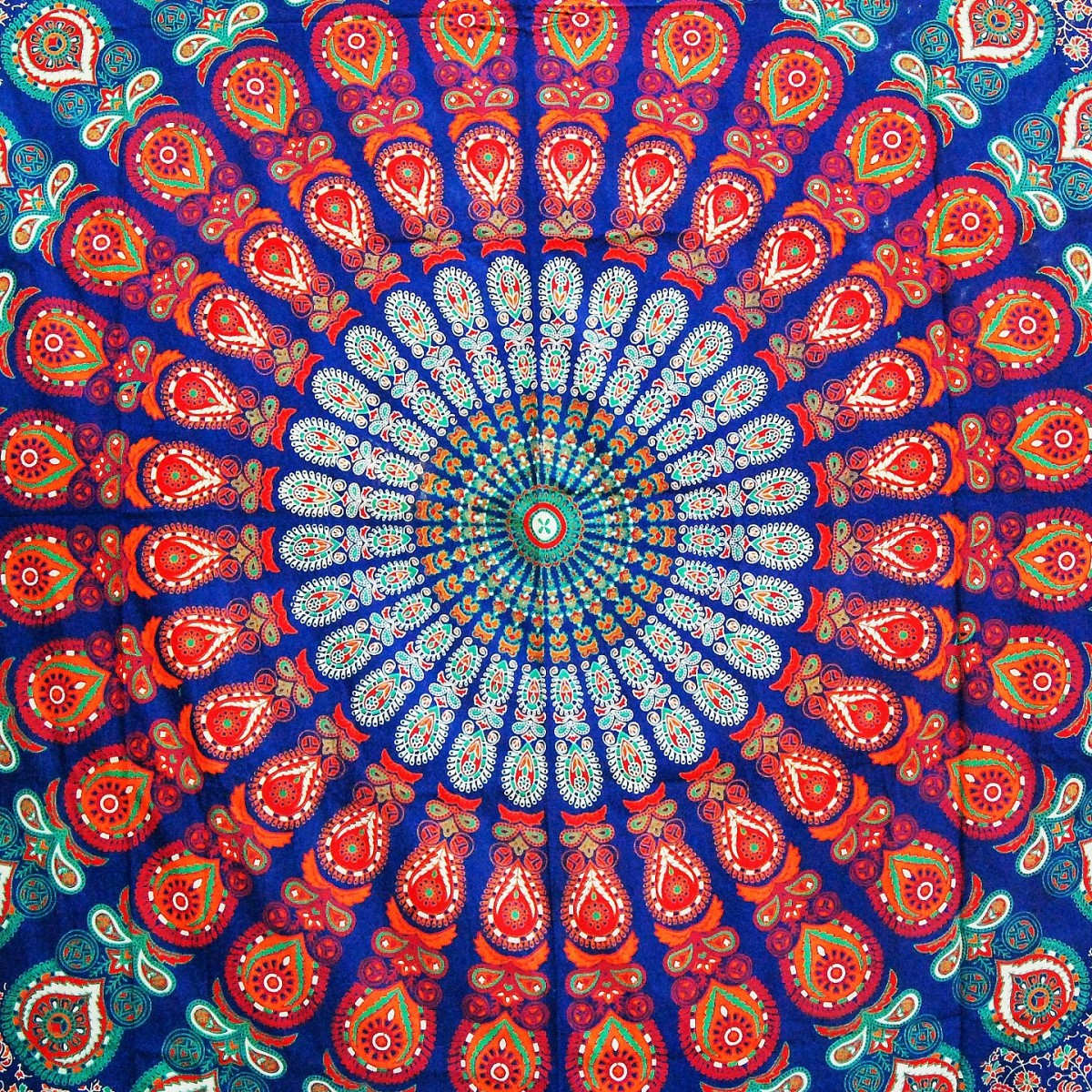
'Weaving the Tapestry of Love'- Photo:Pinterest
We all want to make sense of this journey we call life, of who we are and why we are, why we love and why we are loved.
Thus, when better than today, Valentine's Day, to reflect on these questions by Weaving the Tapestry of Love, and discover how to work love out that can last a lifetime of compassionate companionship
Finding Meaning in Life through a Loving and Meaningful Relationships With All that Matters
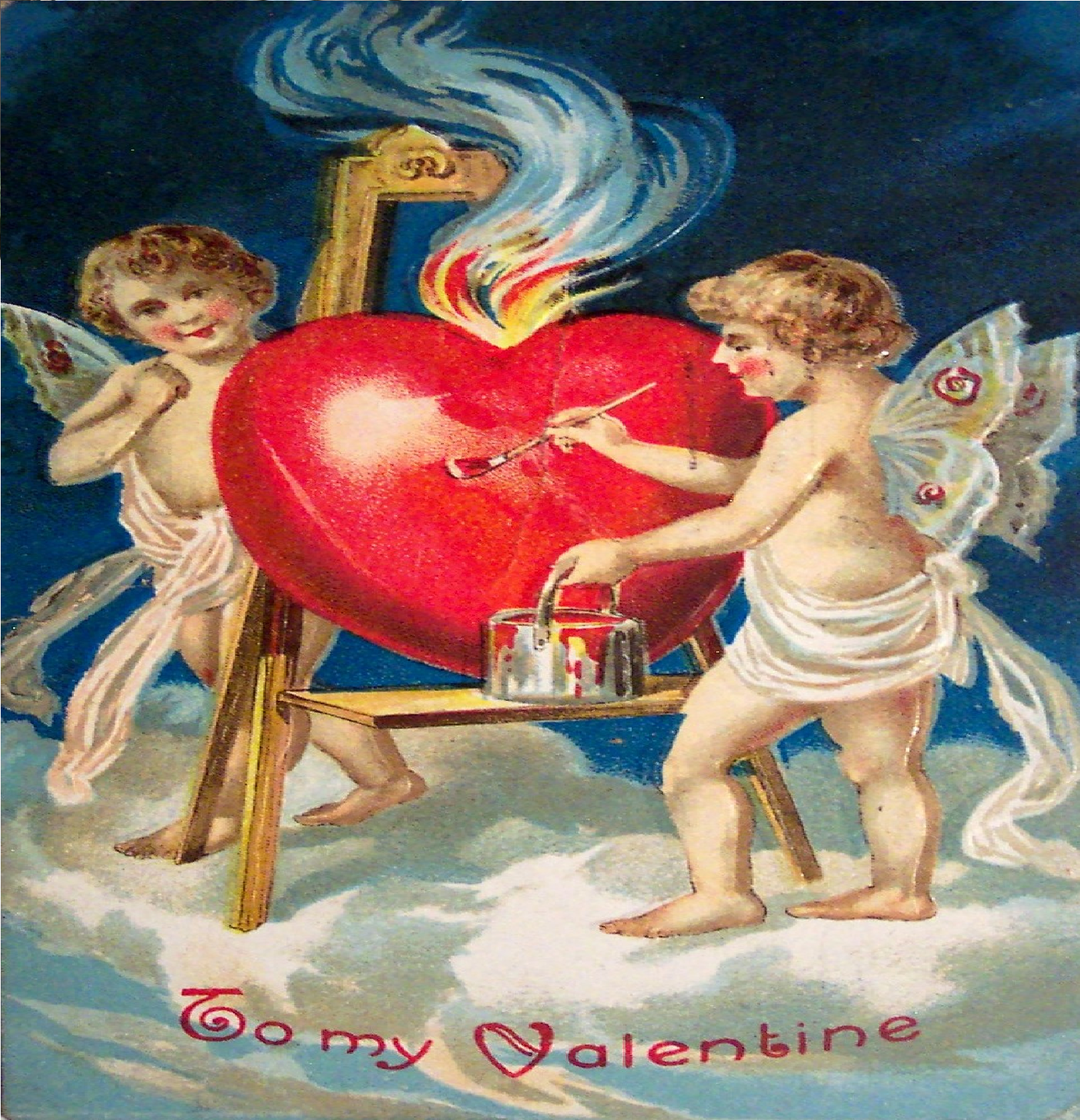
1909 Valentine's card. Photo:wikipedia.org
As it has been observed, something has become skewed in the way we think about love, which we feel keenly on Valentine's Day. It is not the sentimentality, though it can be sugar-sweet. It is not the commercialisation, though it is annoying when roses double in price overnight. It is more to do with the hopes and longings we have for love displayed on that day. On Valentine's Day there is a sense that ‘love’ has become inflated, misdirected, fancifully flawless. Thus, to my mind, a different story is called for.
Therefore, then, let us see what the sages and philosophers have reminded us of what true love is and moreover, what the main source of life, light and love, namely, the Sun can teach us about love also.
Socrates and True Love
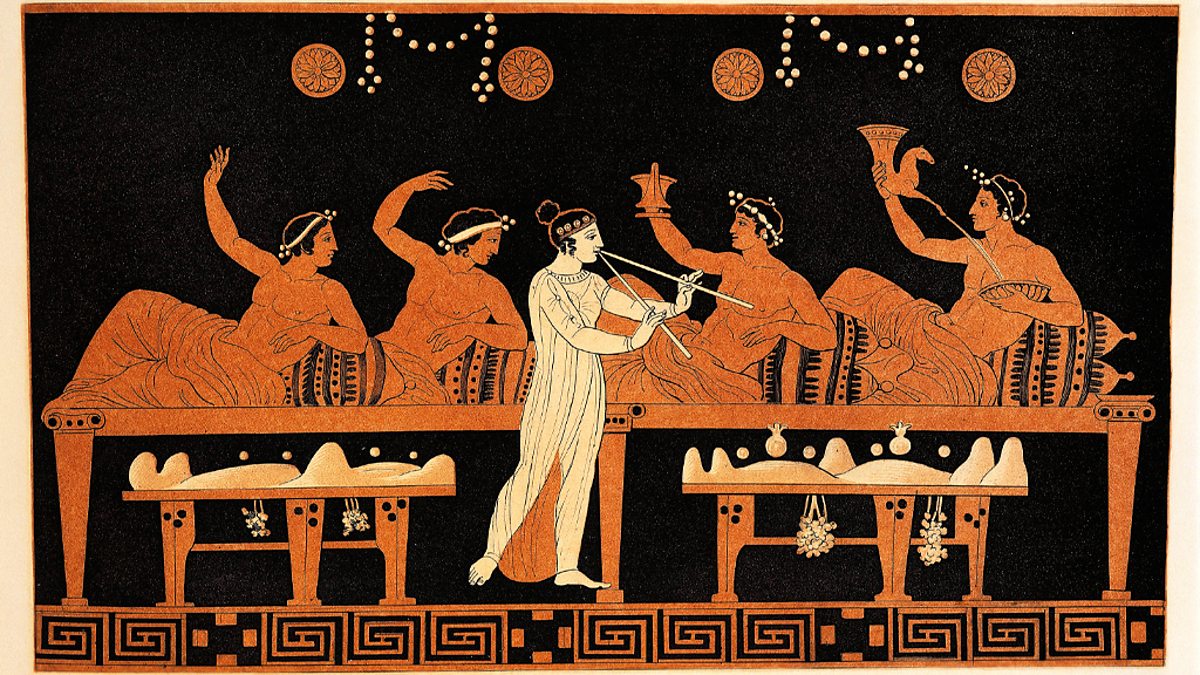
‘Plato's Symposium, one of the Greek philosopher's best-known works and an influential
text about the nature of love.’- Photo: BBC
'Plato’s Symposium takes place in a dining room in a back street of Athens, a place where conversation is a factory for beautiful ideas, ideas of beauty, beautiful things. Even the silences sparkle.
At this dinner party, set more than 2,400 years ago, Love is the night’s theme. The Symposium can still be read as one of the greatest stories of love in Western literature. Socrates is among the guests. The only subject in the world that Socrates believes himself to be the unsurpassed master of is love. ‘I cannot remember a time when I was not in love with someone.’ Socrates loves his fellow men with an overpowering eroticism, and because he believes he can look into their eyes and understand a little about himself as he does so, we are taught that it is through our relationship with the world around us that we can become whole. Socrates sees the massive power of love. We too are just beginning to unpick the complex, psychophysical parcel that love is. Socrates makes our relationships with one another his life’s work.
Socratic love is enormously powerful, it turns the world upside down. What the philosopher knows is that we love love-stories, and our love is often a love-story played out. But nowhere does he mock. Socrates’ love is literal: the point of life is to love it. He is erotic. He states that if Eros passes you by in life, you are a nonentity. All those aspects of love he approves of, as good-life glue for society, since ‘festivals, sacrifices, dances’ are motivated by Eros.
And, more than that, love is a guide – a passion for what is good and a horror for what is degrading. And the genuinely heart-warming revelation of Socrates in the Symposium is that dedication to love is not a selfish pursuit. The point of love is not gratification, but symbiosis.
And love, desire, ambition, hope, concord, enthusiasm, drive whatever you want to call it – if tended, if not allowed to burn itself out, plays a long game. His love is not flash-in-the-pan passionate. In Socrates’ eyes, it is honesty and a pursuit of knowledge rather than ignorance that leads to loveliness in life. For him, love has a purpose. It is the life-force, the desire to do, to be, to think. It is the thing that makes us feel great about our world, and therefore makes us be great in it. Socrates describes these ‘good’ dynamos as ta erotika – the things of love.'- Bettany Hughes who is the author of 'The Hemlock Cup: Socrates, Athens and the Search for the Good Life' (2011).
What does the Sun have to say about LOVE?
The life-giving Sun, the ever-lasting love and the true meaning of Valentine’s Day
Thinking about what this day really means, what its true significance may be, I was touched and moved by a recent sharing of Genesis Farm from the revised edition of Brian Swimme’s Hidden Heart of the Cosmos, which, I believe, beautifully, highlights what I was thinking about. Here is an excerpt:
“The Sun, each second, transforms four million tons of itself into light. Each second, a huge chunk of the Sun vanishes into radiant energy that soars away in all directions…In the case of the Sun, we have a new understanding of the cosmological meaning of sacrifice. The Sun is, with each second, giving itself over to become energy that we, with every meal, partake of. We so rarely reflect on this basic truth from biology, and yet its spiritual significance is supreme.
In the cosmology of the twenty-first century, the Sun’s lavish bestowal of energy can be regarded as the spectacular manifestation of an underlying impulse pervading the universe. In the star, this impulse reveals itself in the ongoing giving away of energy. In the human heart, it is felt as the urge to devote one’s life to the well-being of the larger community…The task of transformation must be the way we start each day as we remind ourselves of the revelation that is the Sun.”
The life-giving Sun with its ever-giving love, whilst expecting nothing in return, and our beautiful, delicate atmosphere are precious gifts we receive with every breath, every day. How we transform and ‘give away’ this energy is a fundamental question for each and every one of us, and many are now realizing that its highest form of expression is what love in its true sense is all about.
We set aside a day we call Valentine’s Day to celebrate love. Yet, we all know that one day a year for remembering love is not enough. Swimme urges us to devote one’s life to the well-being of the larger community. To my mind, the larger community is all living beings –not just people and other animals, but rivers and trees, trees and plants, soil, ecosystems, the entire living Earth. If we truly cherish the Earth we will learn to transform the radiance of creation within the crucible of our hearts into the healing energy of love.
In short, to me, this day should be the day for us all, to come together, in loving and saving the entire Web of Life: The Time is now to Tune into Peace, Love and Wisdom with a Spiritual Revolution, Realising the True Meaning of Love and what Love is all about.
Related reading:
The Hidden Heart of the Cosmos: Humanity and the New Story
Why Love, Trust, Respect and Gratitude Trumps Economics
The future that awaits the human venture: A Story from a Wise and Loving Teacher
In this troubled world let the beauty of nature and simple life be our greatest teachers
The Meaning of Life: tuesdays with Morrie
Three Must-Read Books on LOVE
1- RUMI: THE ART OF LOVING (2012)
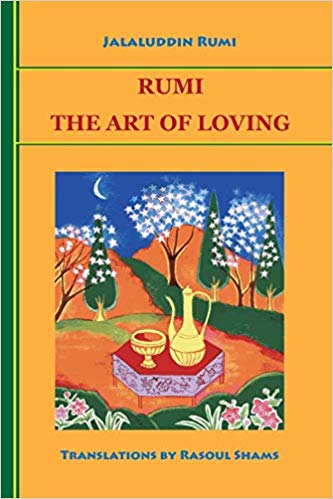
Cambridge University professor Reynold Nicholson once remarked that the 13th-century Persian poet Rumi is the “greatest mystical poet of any age.” In Rumi’s vision, love is the very matrix of existence; love is what moves life. His poetry expresses the deepest and the most inclusive layers of love, and thus connects us to an immense source of joy, compassion, creativity, and mystery.
This book is a new anthology and an original translation of Rumi’s poetry. It is divided into three parts. Part I contains two essays, one on Rumi’s life (“A Messenger from the Sun: A Sketch of Rumi’s Life”) and the other on his thought (“The Path of Love in the Ocean of Life: The Poet’s Voice & Vision”), which help the reader better situate Rumi’s poetry.
Part II presents 144+1 quatrains (Rubaiyat) of Rumi categorized into 12 thematic chapters:
On the Pain and Joy of Longing;
The Search;
Who Am I?;
The Beloved’s Face;
Die to Yourself;
The Art of Living;
Night Secrets;
Water of Life;
Fire of Love;
Unity and Union;
Peaceful Mind; and
Rumi on His Life, Poetry and Death.
These poems have been selected and translated from the authentic Persian editions of Rumi’s Divan-e Shams (some quatrains found in many Rumi anthologies are based on an unreliable edition; such poems have been avoided in this volume). For readers interested in the cadence and rhythm of the poems in the original language the Persian reading (in English script) is also given under each translated poem.
Part III is a selection of twelve wisdom stories from Rumi’s own life (taken from a 14th-century biographical work on Rumi).
A glossary of symbolic terms in Rumi’s poetry, and references to the original sources of the translated poems are also given at the end of the book.
This anthology brings fresh insight into the work and mind of a master poet who mapped the path of spiritual quest and union, and painted in words the art of loving.
Buy the book: Rumi: The Art of Loving
2- Philosopher Erich Fromm on the Art of Loving (First published: 1956)
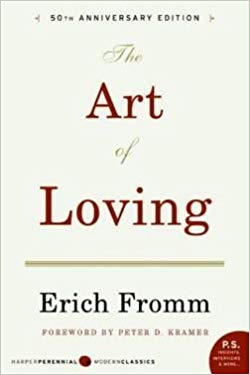
‘This book … wants to show that love is not a sentiment which can be easily indulged in by anyone, regardless of the level of maturity reached by him. It wants to convince the reader that all his attempts for love are bound to fail, unless he tries most actively to develop his total personality, so as to achieve a productive orientation; that satisfaction in individual love cannot be attained without the capacity to love one’s neighbor, without true humility, courage, faith and discipline. In a culture in which these qualities are rare, the attainment of the capacity to love must remain a rare achievement…’ Read more
Buy the book: Erich Fromm: The Art of Loving (Paperback); 2006 Edition Paperback
3- Persian Love Poetry (2005)
Vesta Sarkhosh Curtis, Sheila R. Canby
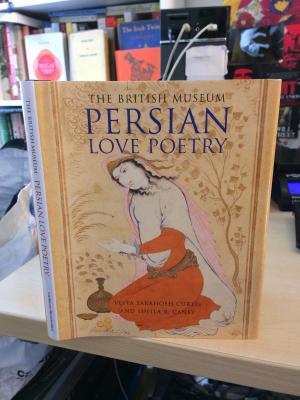
‘Love is everywhere in Persian poetry and can be interpreted in various ways: as mystic love, the basis of the relationship between humans and God; as passionate or affectionate love between lovers, husbands and wives, parents and children, family and friends; even as patriotic love for Iran. The literary style and indeed the Persian language itself are floral and elaborate, but the themes differ little from our preoccupations with love and romance today.
With a brief introduction to the Persian poetic tradition and a short biographical note about each of the major poets, this anthology is an ideal introduction to Persian literature and art. The book is illustrated throughout with images from the British Museum collection.’
Buy the book: Persian Love Poetry
......
And now we wish to share this wonderful Valentine’s Day gift of joy and love with you
Photo: youTube
Salut d'Amour (Love's Greeting), Op. 12
‘What a love letter! Elgar wrote this delicate musical meditation for Caroline Alice Roberts, who would eventually become his wife. Its mixture of longing and fulfilment encapsulates his love.’
- Details
- Written by: Kamran Mofid
- Hits: 2163
Canon Dr Paul Oestreicher, a residentiary canon of Coventry Cathedral and director of the Cathedral's Centre for International Reconciliation (1985-1997); a member of the General Synod of the Church of England from 1970-81 and 1995-97. He joined Amnesty International at its inception in 1961 and was Chair of AI UK from 1975-1979; Vice President, Campaign for Nuclear Disarmament (CND); and a lifetime worker for peace and social Justice.
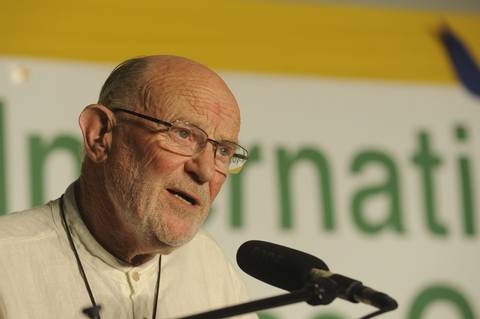
Paul Oestreicher, a disciple of universal compassion and an inspirational peacemaker
Photo:vaincrelaviolence.org
Brexit is, I believe, an English tragedy, a self-inflicted wound, English, not British. My own story leaves me no choice but to believe this. I will tell you why a little later. But first, forget who is writing this. I need to admit that maybe, dislike it intensely as I do, it had to happen. And not because of statistics.
It is likely that Le General was right. Charles de Gaulle lived as an exiled Frenchman in England during the Second World War. His nation had been humiliatingly defeated by Germany. The English did not allow him to forget it. Instead of respecting him as the leader of the Free French, the English proudly ignored him. He gained an insight into the English character that led him to respect, not Britain, but Germany. On that, he built his vision of a future Europe without the English. Non, was his reply, to our first application.
Henry Vlll was convinced that the number of his wives was none of the Pope’s business. So, The Church of England was born. The break with Rome was at least as dramatic in its consequences as the break with Brussels now. Anglicanism turned out to be neither flesh nor fowl, Henry his own kind of Catholic, his successors their particular kinds of Protestant. It worked, after some bloodletting. What mattered was, the English were different, with the Queen’s Prayer Book ironing out the differences. Not to forget putting down the Scots. And a short-lived Revolution that incidentally dealt cruelly with the Irish. And going on to build the world’s greatest Empire.
Blue blood was a problem. It kept ignoring frontiers, kept fomenting continental wars of succession but, having crossed the channel, skilfully Englished the aristocracy, even the many whose mother tongue was German. The royals did nothing to unite Europe. Britannia turned her back and took to ruling the waves - globally. Spaniards be damned.
So much for part of the background to Brexit. Who am I writing this, and why? The only child of a Jewish-born Christian German paediatrician and a German mother, singer and artist, of peasant background. In 1939, aged seven, I arrived in New Zealand with my refugee parents. That same year, World War II began, making us enemy aliens. The children chased me around the school yard. Their game was called: ‘Hunt the Hun’. I played along. A little girl shouted: ‘He’s not just a German, he’s a Jew!’ Did she know what a Jew was? Anyway, not nice.
In 1955, an Anglican ordinand with a degree in politics, I returned to Germany as a New Zealand postgraduate student. My paternal grandmother had died, a victim of the Holocaust. I was subsequently ordained in London and went on to serve the British churches for the rest of my working life, much involved in public affairs: East Europe Secretary of the British Council of Churches, Chair of Amnesty and finally Director of International Ministry at Coventry Cathedral. Even, for a decade, a South London vicar.
People sometimes ask me: ‘Where is home for you?’ ‘Where God sends me’, cuts through the complexities, but is really an evasion. Germany is my first answer. I never spoke to my parents in anything but German. I’m glad to have my German citizenship back. New Zealand is my second answer, my home by adoption and conviction. I return regularly. The landscapes of both countries are my landscapes.
England? It has never felt like home. For 64 years I have remained one of its many, many immigrants, well treated (unlike too many others) but kept at arms’ length, never quite ‘one of us.’ Strange perhaps, that Scotland should feel closer. Dunedin, my New Zealand home, as was my University, was a Scottish, not an English creation. Brexit now underlines that for me. My closest ties to England are now, happily, my most certainly English children.
The fact that, until now, my British passport has also made me a citizen of Europe has made me more comfortable with my UK citizenship. Now, no more. I can understand why my friend and colleague Michael Sadgrove feels he has lost an important part of his identity. Given his refugee mother, a restored German passport might come to his aid, as it has to mine.
Being the passionate European that I am, I need to return to the experience of President de Gaulle. He suffered emotionally under English attitudes. Happy as I was with ‘European Union’ on my UK passport, I nevertheless realised that this did not chime with the feelings of most of the people among whom I live. There have of course always been exceptions, even among prominent Tory politicians, most of whom Boris Johnson has fired. My former boss, Noel Salter, International Secretary of the British Council of Churches, Winchester, Oxford and Travellers Club (how much more English can you get?) was passionate about Europe. As a young diplomat, Churchill’s assistant at the Council of Europe, he never began a day’s work without half an hour with Le Monde. He was part of a small internationally minded and often Christian elite, very aware of how out of step he was, a Tory with a big liberal heart. He told me that once, on a Surbiton commuter train, sitting opposite two bowler hatted Telegraph readers, he muttered under his breath: ‘Gentlemen, I fear for your eternal souls’. Were he still alive, Brexit would break his heart.
With very few exceptions, throughout the years of British membership of the EU, British politicians, Margaret Thatcher included, and finally David Cameron, knew very well that British membership was to the UK’s advantage. Yet it was a membership of the mind but not of the heart. Many of my friends, all remainers and friends of Europe, nevertheless think of Europeans as ‘them’, not ‘us’. They go to Europe, gladly and often, but still do not feel that they live in Europe. This is true of both left and right, across the classes. Now, those Brits who do live on the Continent are left confused and bereft. Thank God for academics and some journalists like Timothy Garton Ash, as much at home in Berlin and Warsaw as in Oxford. ‘If you think you are a citizen of the world’, mocked Theresa May, ‘you are a citizen of nowhere.’
Symbols matter, because they express feelings. The European flag was never flown on British government buildings, as it is in the rest of Europe. Across the Continent, every car’s registration plate carries the European stars. Only in Britain is that optional for each owner to decide. Just over one third have it. Most don’t even know there is a choice.
For more than 40 years Britain has remained the emotional outsider while politically, the outsider inside. Our governments of every brand have never ceased to belittle ‘Brussels’. Hardly a word about this peace project. Public silence on all the benefits, economic, environmental, legal and cultural. As often as not, Britain has simply sought exceptional treatment. And all the while, an anti-European press worked its poison. Even so, in a first referendum, Europe remarkably won. During the second, it is surprising that after all the lying propaganda and a lacklustre six-week ‘remain’ campaign, Cameron came so close to winning. Had his government campaigned with conviction and campaigned for longer, the UK would almost certainly still be part of the EU. The mind might well have triumphed over the heart. I’ve sadly got to face it: England has never felt European at heart.
Nevertheless, on every indicator Brexit remains an English tragedy. Economically, the nation and especially the poor will suffer. Business knows it. The hyper rich will not care a damn in their tax havens. We shall all lose politically, culturally, environmentally, scientifically, legally, humanly, morally. Workers’ rights, human rights, equality and environmental protections will suffer. Shame on our Home Office's hostile environment. Shame on No 10’s closed door to child refugees. Yet we have opened our doors to the prophets of hate. The police and MI5 know it. We will not be more secure.
To all this there is a spiritual dimension, ignored because religion has virtually disappeared from the public discourse. Who has even heard of the Conference of European Churches? One of its Presidents was John Arnold, former Dean of Durham. The three fathers of the EU, Schuman, de Gasperi and Adenauer, were devout Christians. Their peace project was deeply imbued with their aspiration for social justice. Powerful trade unions were built into the structures. Their Christian Democracy was an answer to what they saw as the Communist threat. Their ideals chimed with classic Social Democracy. The Christian socialist Jacques Delors became its most passionate advocate, all in defence of the Common Good. The English Right hated it. The English Left simply did not and does not want to understand. It remains so.
An English radical right cabal has taken Britain over a cliff, refusing to admit that, by now, a UK majority may wish to remain part of a Europe that ruefully mourns our departure. I cannot forget the many who marched for Europe. Not in vain. In politics, never say never. The dye is not cast forever. A compassionate Europe is under threat across the continent. Its soul must remain our cause. How dare we leave the fray.
Related articles:
The Disintegration of this Disunited Kingdom- Canon Dr Paul Oestreicher
THE BATTLE OF THE SOMME, A HUNDRED YEARS ON
So, They Got Their Brexit Done!
Read more in My Coventry Story