- Details
- Written by: Kamran Mofid
- Hits: 1198
Global Silent Minute
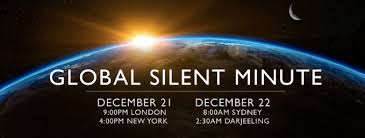
Amidst the challenges we face today, the Global Silent Minute is an opportunity to unite in thought, prayer, and meditation to create the future we imagine. The minute begins with the ringing of bells everywhere, as together we enter into one silent minute, calling on humanity to fulfill its highest potential and greatest destiny: peace on Earth.
The Global Silent Minute is inspired by the Silent Minute launched in WWII in London during the blitz as a call to citizens to unite daily in a silent minute for peace and freedom. Millions participated, and its success was acknowledged after the war as a “secret weapon” which the Germans could not counter. Today, our Global Silent Minute will be a powerful force in the creation of a better world.
The History of the Silent Minute
The Silent Minute was born from a conversation between two soldiers on the eve of a battle in the mountains around Jerusalem in the First World War. One knew he would not survive the war and prophesied the coming of an even greater conflict that would be fought out in every continent, ocean and air. He urged his comrade to provide an opportunity for him, and millions like him, to assist from the “other side”. He said: “Lend us a moment… each day and through your Silence gives us an opportunity. The power of Silence is greater than you know.”
The Silent Minute was instituted by his comrade, Major Tudor Pole O.B.E, during the London Blitz in 1940 as a moment to enter into Silence and, to provide a portal for cooperation with an “unseen but mighty army” in the subtle realms.
The Silent Minute called upon all citizens of the British Commonwealth nations and territories on land, sea and air to unite in thought – irrespective of philosophy or religion - in a Silent Prayer for Freedom and Peace. Every night on BBC radio, at one minute before the hour, the bells of Big Ben signalled the Silent Minute to begin at 9pm. Tudor Pole knew that if enough people joined in this gesture of dedicated intent, the tide would turn and the invasion of England would be diverted. Indeed, its success in bringing peace was acknowledged after the war by a high ranking German Officer who was quoted as saying:
“…you had a secret weapon for which we could find no counter measure and which we did not understand, but it was very powerful. It was associated with the striking of the Big Ben each evening. I believe you called it the ‘Silent Minute’.”
Ring the Bells and enter the Silence
Let us ring a bell at one minute to 9.00pm London GMT on 21 December 2019 and on the hour join together with the Forces of Light in one minute of global, potent, cooperative Silence to create a better world for all.
Click here to learn more about Global Silent Minute. Below you can watch a very interesting video about the Global Silent Minute (SGM) by Dot Maver, who is a leader in the world peace movement and is co-founder of River Phoenix Center for Peacebuilding www.centerforpeacebuilding.org and one of the founders of (SGM): Global Silent Minute with Dot Maver and Global Family Yoga
- Details
- Written by: Kamran Mofid
- Hits: 3935
The New Decade is upon us: We all have a responsibility to make the world a better place
...And unlike everything else that we have done in previous decades- This Responsibility Can Not Be Outsourced!
The New Decade: The Decade of Hope for a Better World and more Meaningful Lives
May you find joy in the simple pleasures of life and may the light of the New Year and the New Decade fill your heart with the hope for a better world
Lest we forget, we all have a personal responsibility to do what we can to make the world a better place in the most impactful and thoughtful way that we can. This is it, this is the moment and I’m so aware and understand that.
We can make the world great again, we can change our lives for the better, not by arrogance, selfishness, greed, populism, trickery, isolationism, exceptionalism and neoliberalism, but, by our humanity, kindness, and rediscovering what it means to be human, when we continue our common good journey and share a common belief in the potential of each one of us to become self-directed, empowered, and active in defining this time in the world as an opportunity for positive change and healing and for the true formation of a culture of peace by giving thanks, spreading joy, sharing love, seeing miracles, discovering goodness, embracing kindness, practicing patience, teaching moderation, encouraging laughter, celebrating diversity, showing compassion, turning from hatred, practicing forgiveness, peacefully resolving conflicts, communicating non-violently, choosing happiness and enjoying life.
To my mind, all these will become possible, if we choose the right path and the right values.
I believe I know the path.

Photo: inc.com
Recalling the beautiful and wise words of Gandhi: ‘I know the path. It is straight and narrow. It is like the edge of a sword. I rejoice to walk on it. I weep when I slip. God's word is: 'He who strives never perishes.' I have implicit faith in that promise. Though, therefore, from my weakness I fail a thousand times, I will not lose faith, but hope that I shall see the Light when the flesh has been brought under perfect subjection, as some day it must.’
Here's what I've learned: This is My Path
2020...entering a new decade with the hope and vision for a glorious tapestry of ideas
Designing a new decade rests in our ability to examine the challenges of the future by fathoming out the present, in our willingness to be curious, in our awareness of where we are now and what we most want to curate.
As I started to wonder what are the most important things I wish to curate, I was directed, again and again, to the source that empowers us to envision a better life, a better world: EDUCATION.
If you are of the same opinion also, then, I am delighted to offer you the following for your reflection, the fruit of 40 years of searching for the wisdom of discovery, A glorious tapestry of ideas
Photo:gerbus-academy.com
Together We Can Seize this Moment
At a time when many see the future as a threat more than a promise, I hope that this offering may encourage us to see how we can bend the future in new, hopeful, positive directions.
A New Vision for Education:Educating Hearts and Minds
This write-up is dedicated to the youth of the world, our children and grand- children, who are the unfolding story of the decades ahead. May they receive a values-led civics education to empower and enable them to rise to the challenge of leading our troubled world, with hope and wisdom in the interest of the common good to a better future
The First Step in Envisioning a Good Education and the ensuing Discovery of the Art of Living the Good Life: Learning to Be Hopeful
HOPE: taking a peek into the future
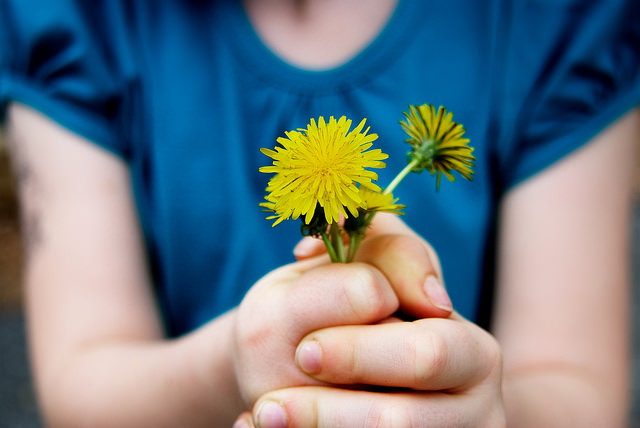
Photo: flickr.com
Hope is ultimately the path to combat the feeling of powerlessness that saps the ability of people to imagine a radically different future.
As we are entering an age of social, economic, political and ecological disruption at this early stage of the twenty-first century, many people are beginning to recognise that perhaps the most important root causes for this crisis originate in an educational thinking and model that are increasingly out of touch with the social, ecological, and spiritual realities of our time.
How, then, can we rethink and redefine the fundamental educational concepts that frame our discussions and shape our key institutions in society today? How can education become a passport to a better, values-led leadership and a kinder, fairer world?
These are the big questions on the table today.
I hope that the coming decade will be one where humanity reconnects to values-led education, creativity, compassion and community, and moves away from the neoliberal, competitive mindset that has dulled society and has inflicted suffering and misery in people’s individual and collective lives, undermining and destroying the entire web of life. My hope is that we will become as invested in elevating our minds as we are in developing our technologies, fancy gadgets and Apps for this and that and everything else!
I am hoping that humanity will rise against the tide of populism, nationalism, tribalism, isolationism and toxic xenophobia and mistrust. May 2020 be the year of citizens of humanity and kindness.
Below, I invite you to come on this journey of ‘Hope to be Hopeful’ with me, enabling us all to move from despair to hope; darkness to light and competition to cooperation, and “Let the beauty we love be what we do.”
What is Education, its Meaning and Purpose?

Photo:integrallife.com
‘Observers, and concerned citizens, have, again and again, stated that education influences, and reflects the values of society and the kind of society we want to be. They recognise education as a route to the spiritual, moral, social, cultural, physical and mental development and thus, the cornerstone of the well-being of the individual, family, community, and the country at large.
Furthermore, it can be argued that the single minded focus on economic growth over much of the twentieth century has led to an erosion of human values. At the same time, there is an emerging new consciousness worldwide that affirms shared values of Peace, Equity, Social Justice, Democracy, Human Rights, Environmental Protection and Nurturing. These values are enshrined in the UN Charter and all other International Conventions and Declarations.
Education is the foundation for a good and fulfilling life, setting the individual on a path of personal fulfilment, economic security and societal contribution. Today the world of knowledge and competence is in a constant state of flux. The same can be said for the universe of visions, aspirations, and dreams. For many centuries it had been considered that education in general and universities in particular were responsible for the moral and social development of students and for bringing together diverse groups for the common good. Is this still the case?
What is the main role and function of a "good" education? To equip students with marketable skills to help countries compete in a global, information-based workplace? Has this overwhelmed other historically important purposes of education, and thus, short- changing us all and in particular the students?
If there is a shared national purpose for education, should it be oriented only toward enhancing the narrow vision of a country's economic success? Should education be answerable only to a narrowly defined economic bottom line, or do we need to discover a more comprehensive, inclusive bottom line, given the catastrophic crises that we are witnessing all around us? Are the interests of the individuals and selective groups overwhelming the common good that the education system is meant to support? Should our cherished educational values be all up for sale to the highest bidder? Should private sector management become the model for our mainly publicly-funded education system? Should the language and terminology of for profit- only business model, such as “downsizing”, “outsourcing”, “restructuring”, ”marketisation”, “privatisation” and “deregulation”, amongst others, be allowed to become the values of education, when teaching and learning is nothing short of a vocation and sacrament?
The current global crisis has given us a golden opportunity to ask ourselves some fundamental questions on the role of education in building better lives and a better world. Soul- searching and self-criticism should not be seen as a source of weakness, but as a source of strength, humility and the search for wisdom.’: The Value of Values: Values-led Education to Make the World Great Again
...And now, nota bene, why do we need Value-led Civics Education?
Because, the Values-less Neoliberal Education has Eroded our Ability to Know What it Means to Be Human
Neoliberal Education: From Delusion to Destruction
The 2008 Financial Crisis has been termed: ‘The Heist of the Century’. The perpetrators were the Most 'Educated Thieves' in History- All with MBAs, Masters and PhDs!
These ‘educated’ individuals had an abundance of knowledge and the ways of trickery, but lacked wisdom and vision. All had learned well the art of making loads of money, but none of them had learned how to live, or what it means to be civil and human.
This is my charge sheet against the neoliberal education which has made us less human
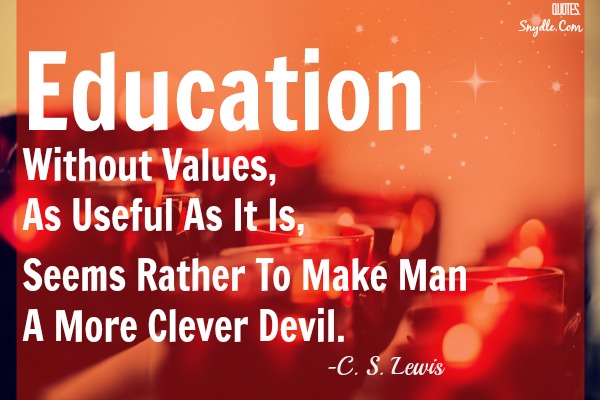
The neoliberal education values are misguided, brainwashing the students into thinking that money and power are the primary values in life, more important than wisdom, love, compassion, kindness and the common good.
This false ideology of life- the worship of mammon and lust for power- has led many graduates to a life of wrongdoing, showing no concern about others, society and the web of life. This, to my mind, is the tragedy of Neliberal Education.
One wonders what kind of ‘education’ they received at university, which turned them so amoral, so indifferent to what it means to be human and civil? What kind of ‘values’ were instilled in them, to turn them into such monsters?
"What we need is “a new story of what it is to be human in the 21st century and to reclaim our humanity”- George Monbiot
But,...in order “to reclaim our humanity”, what we actually need is a revolution in our institutions of learning.- Kamran Mofid
All in all, neoliberal education, similar to neoliberal economics and globalisation, has many moral deficiencies for all to see. This has profoundly damaged both the spirit and the future of people the world over, by devaluing and undermining the entire web of life, for sake of money and profit maximisation.
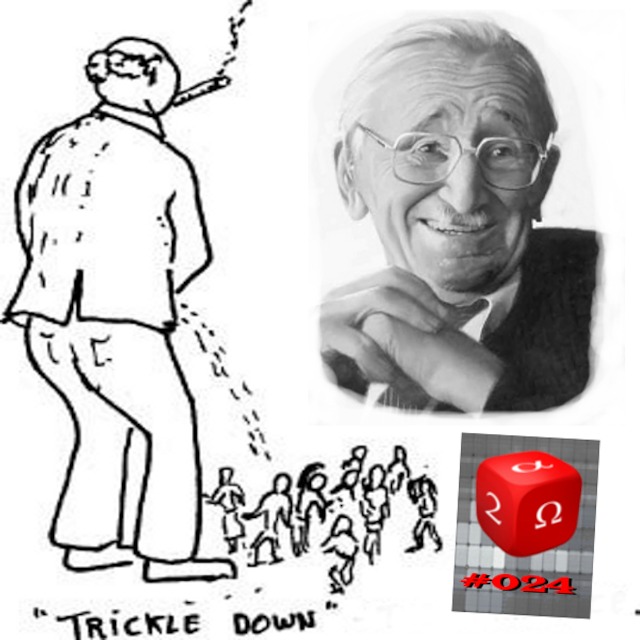
Photo: Neoliberalism & Hayek's Delusion
Devalued, Frustrated, Depressed and Undervalued Academics on Strike Everywhere
Neoliberal university is the Road to Serfdom
What if Universities Taught KINDNESS?
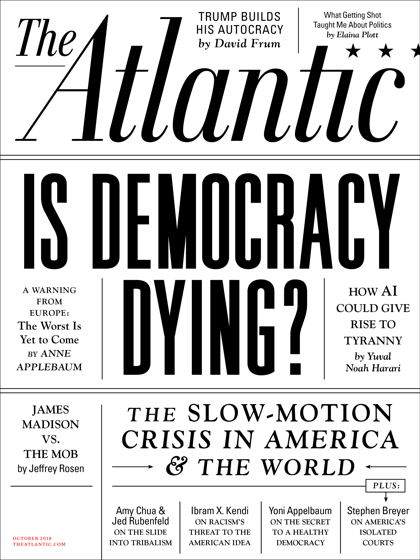
Civics Education: The Antidote to Dying Democracy
At a time when many see the future as a threat more than a promise, I hope that my suggested New Year Resolution may encourage us to see how we can bend the future in new, hopeful directions.
Can Civics Education Repair a Failing Global Democracy?
We can, as an easy way out, blame everything and everybody under the sun for Brexit, Trump and Boris. We can blame the Indian challengers, the Mulims and others for Narendra Modi, the Brazilian opposition for Jair Bolsonaro, and left and centre parties in Australia, the Philippines, Hungary, Poland and Turkey for similar electoral disasters. Or we could recognise that what we are witnessing is a global phenomenon.
The question is, why the far right, the demagogues, are winning elections after elections everywhere? Why citizens are voting against their own self interest? Why people are being swayed like falling leaves so easily? Why do they believe in all the nonsense thrown at them? One wonders what has happened to that thing called WISDOM, the art of knowing what is right, what is wrong, what is true, what is false and fake!!
If there is a formula for the rise of demagoguery the world over, there must also be a formula for confronting and overturning it. There must be a multiple of possible answers. I don’t know all of them, but I believe I know one of them, perhaps, the most important one: CIVICS EDUCATION.
Why are so many countries and nations the world over paralyzed by polarisation and distrust of government?
To my mind, given my lifelong search for wisdom, learning and teaching, the crisis in global democracy originates in the classroom, where we have simply stopped teaching the skills for civic engagement. Today’s teaching has become all about the ‘world of work’, money and how to make loads of it! I argue that engagement in civic life requires skills that the students need to learn. We, thus, need to reverse decades of de-prioritisation of civics education and train the next generation to fix our democracy in this era of fake and virtual reality and existence.
Young people must learn to engage and lead, to fully participate in their country’s manifestation of democracy.
Photo:axios.com
Civic education aims at learning the competences, i.e. skills, knowledge and attitudes required to be an active, democratic, responsible and critical citizen. Its ultimate goal is to educate the population on democratic citizenship and make them aware of their rights and responsibilities. There are many subtopics connected to civic education, such as: Intercultural communication, Media literacy and hate-speech online, Interreligious communication, Functioning of public/private institutions, Political knowledge, Critical thinking, Human rights education, Peace studies, Participation in elections and democratic decision-making, Environmental sustainability, Citizens’ rights and duties, Global education, etc.
Civic Education, Civic Duty and Responsibility First, or We All Drown Together.
Governments and politicians around the world, via their values-less neoliberal, privatisatised, deregulated and marketised policies have handed over their ethical, moral, spiritual and constitutional responsibility to provide an impartial system of protection to ‘unelected’ others, and thereby breaking the civic bond that must exist between the state and citizens.
‘In such conditions, a truly civic society gradually ceases to exist, or comes to be entirely composed of strangers. Worst of all, lack of civic education has made these arguments incomprehensible to many ostensible citizens, who are further estranged, by their ignorance, from one another.
The truth is that citizenship, despite the continuous extension during this century both of its rights and its benefits, has become a reduced thing in the eyes of its beneficiaries. Conversely, its defects - whether they arise from a bureaucratised or over-secretive state, or from the failure of public bodies to 'deliver' adequate services to the 'customer' have been exaggerated beyond reason, often from opportunistic political motives and for the want of any better political agenda. Public debate about the real meaning of a civic society and civic behaviour must surely be running at a lower moral and intellectual level than at any previous time.’...Continue to read
‘Civil society as the ‘good society’ is a vision of what society should look like; it is about ideals and goals (such as equality or the reduction of poverty). Voluntary associations and organisations clearly help to achieve this vision: however, they are only one of many contributing factors. Equally important for example is what happens in families, schools or workplaces. Structural definitions that confine civil society to a sector (i.e. the third sector) tend to forget that the public and private sectors have a role to play in building the ‘good society’, which requires action and collaboration across the board.The public sphere is where societal choices about what constitutes the ‘good society’ can be negotiated, where the development of shared interests beyond competing views (i.e. the public interest) can take place. Civil society as a public sphere provides spaces in which differences can be debated and taken forward. It is this function of civil society as a public sphere that is so crucial to democracy. Key here is civil society as a space in which citizens can debate what the ‘good society’ means – how social, economic and political progress might be defined. It is also a space in which people are able to come together voluntarily, i.e. the space within which voluntary association and voluntary action occur. It is not synonymous with the third sector but it is the space in which third sector organisations exist.’
Composing a New Life: In Praise of Wisdom
Composing a New Life, it’s all about taking the broadest possible view of ideas, people, places, and things to make better choices for the long term. At the centre of it all is the notion of wisdom and taking action in the interest of the common good.
Time is now to Seize the moment and opt for the Values-led Civics Education
Photo:pinterest.com
To save our democracy, way of life, our hopes, dreams and aspirations, we do not need a market economy, continuous economic growth, privatisation, marketisation, deregulation, liberalisation,..., what we need is Civics Education, values that makes us all human, again.
In this world of populism and the reign of demagogue liars and cheaters, where the world is run on fake news and conspiracy theories, truth itself has come under attack.
The pertinent question is Why? Does the values-free, neoliberal education model and teaching got something to do with this? If modern education has numbed wisdom, then, what is education for?
How can schools, colleges and universities encourage responsible and engaged citizenship? This fundamental and timely question has moved from ever-relevant to deeply urgent by a political climate defined by coarsened discourse, sharp polarization, global rise in populism and a profound distrust in everything, everyone and every institution.
Whilst neoliberal education has demoralised and devalued many educators, but, now, in my view, lies the opportunity, for us, the academics, and students alike, choose to be hopeful and helpful, by suggesting and teaching alternatives to the current model that has eroded everything that was once good.
To my mind, the election of Trump in the US, Brexit and Boris Johnson in the UK, and the rise of their elkes elsewhere around the world, should be the vital reasons to focus our minds, that, indeed, the time is now to ‘Jump-Start Civics Education’.
I believe Richard Kahlenberg and Clifford Janey spoke for many around the world when they asked in The Atlantic if 2016's crazed election cycle (in the US) might represent a "Sputnik moment" for civic education: Just as the Soviet Union's launch of the first artificial satellite in 1957 drove an urgent and renewed national commitment to science and math education, perhaps concern about our contentious political discourse and decayed common knowledge base will do the same for civic education today. Forty years ago, all eyes were on the stars, and educators leveraged the public attention to improve science and math education. Today, all eyes are on Washington, and by extension on our schools: Could civic education undergo a similar transformation?
Civic education (also known as citizen education or democracy education) can be broadly defined as the provision of information and learning experiences to equip and empower citizens to participate in democratic processes. The education can take very different forms, including classroom-based learning, informal training, experiential learning, and mass media campaigns. Civic education can be targeted at children or adults, in developed or developing countries, and at the local, national or international level. As such, civic education is an approach that employs a range of different methods, and is often used in combination with other participatory governance tools.
What is it? The overall goal of civic education is to promote civic engagement and support democratic and participatory governance. The idea behind civic education is to promote the demand for good governance (i.e. an informed and engaged public), as a necessary complement to efforts to improve the practice of good governance.
Civic education has been used to address a wide variety of political and governance issues (e.g. corruption, civic apathy or post-conflict reconciliation) as well as important social issues (e.g. domestic violence, drug abuse, and HIV/AIDS). Civic education is concerned with three different elements: civic knowledge, civic skills and civic disposition.
Civic knowledge refers to citizens’ understanding of the workings of the political system and of their own political and civic rights and responsibilities (e.g. the rights to freedom of expression and to vote and run for public office, and the responsibilities to respect the rule of law and the rights and interests of others).
Civic skills refer to citizens’ ability to analyze, evaluate, take and defend positions on public issues, and to use their knowledge to participate in civic and political processes (e.g. to monitor government performance, or mobilize other citizens around particular issues).
Civic dispositions are defined as the citizen traits necessary for a democracy (e.g. tolerance, public spiritedness, civility, critical mindedness and willingness to listen, negotiate, and compromise)...Read more on Civic Education
Given the above, the timely question must be: What is to be done? Time is now to ditch values-free and inhumane Neoliberal Education and choose the Values-led, humane Civic Learning
What is Civic Learning?
‘Civic learning is a process through which young people develop the knowledge, skills, and commitments to interact effectively with fellow community members to address shared problems. It includes preparation for both civic engagement (or practices seeking to promote the public good through non-governmental organizations and informal community work) and political engagement (or activities aiming to influence state action through formal avenues such as voting, lobbying, or petitioning). There are many practices that directly improve the quality and effectiveness of civic learning in schools, including civic action projects; digital literacy education and engagement; classroom instruction in government, history, law and democracy; discussion of current events; service-learning; extra-curricular or co-curricular activities; student voice in school governance; and simulations of democratic processes.’
Why Civic Learning?
‘Research shows that a variety of civic learning opportunities, delivered both in and out of school, can foster greater and more informed civic and political engagement among all youth, and in particular among youth from low-income families, youth of color, and immigrant youth. Indeed, high-quality approaches to civic learning also appear likely to promote the skills needed for the 21st century workplace, such as critical thinking, collaboration, creativity, initiative, and innovation. In addition, it can improve school climate and safety, lower schools’ dropout rates, and promote academic achievement.’...Read more on Civic Learning
Given the above, we must always be guided by our Civic Responsibility
Civic Responsibility is defined as the "responsibility of a citizen". It is comprised of actions and attitudes associated with democratic governance and social participation. Civic responsibility can include participation in government, church, volunteers and memberships of voluntary associations. Actions of civic responsibility can be displayed in advocacy for various causes, such as political, economic, civil, environmental or quality of life issues.
The importance of civic responsibility is paramount to the success of democracy. By engaging in civic responsibility, citizens ensure and uphold certain democratic values, needed to uphold what is good, valuable and worthy. Those values or duties include justice, freedom, equality, diversity, authority, privacy, due process, property, participation, truth, human rights, rule of law, tolerance, mutual assistance, self restraint and self respect...Read more on Civic Responsibility and Civic Education
Neoliberalism and the Erosion of Democratic, Values-led, Civics Education
And now in conclusion, the main purpose of this reflective write up was to start a conversation about particular cultural, ideological, economic limitations and barriers we are working with as we move toward recapturing the civic mission of education. To make education good again.
For me, this is central to all we do. Unless we change direction and promote and implement values-led Civics Education in the interest of the Common Good, there is no possibility of building a better, fairer and kinder world. Sooner or later, similar to other civilisations that fell under their own weight of immorality and inhumanity, our neoliberal, uncivilised civilisation, will also fall and disappear.
Thus, let us join together and seize the moment to opt for the Values-led Civics Education. Carpe Diem!
- Details
- Written by: Kamran Mofid
- Hits: 2113
May you find joy in the simple pleasures of life and may the light of the holiday season fill your heart with the hope for a better world
“…there is nothing better for people than to be happy and to do good while they live.” —Ecclesiastes 3:12
- Boris Johnson’s Landslide: Don’t Despair Walk On
- A Story of Love and Courage: A Short History of Falling- Everything I Observed About Love Whilst Dying
- To All Striking Academic Colleagues in Britain: Turn the Strike to a Force for the Common Good
- What if Universities Taught KINDNESS?
- Wouldn’t the world be a better place with a bit more kindness? Harnessing the Economics of Kindness