- Details
- Written by: Kamran Mofid
- Hits: 3495
The Transformational Power of Kindness to Build a Better and more Fulfilling Life: Be Kind to Yourself, Be Kind to Others. You reconcile all beings in the world.
Wednesday 13 November 2019 is World Kindness Day
Across the globe, hatred, racism, xenophobia, mistrust, indifference, anger, fear, disregard for our sacred earth and mother nature..., are rippling out like vectors in an epidemic.
However, I am hopeful. I believe that we’re witnessing the rise of a Global Kindness Movement for the Common Good.
The Kindness Movement is a path to Make us Great Again.
Photo: The Youth Booth
At the time that so tragically ‘HATRED’ has become a norm in the global arena, and a unifying factor in global discourse, where politicians, certain media and especially social media are exploiting it as an instrument to materialise their dangerous political/economic/societal objectives throughout the world, I offer you ‘KINDNESS’ to find peace, contentment and the courage to beat the rise in global hatred.
Globalisation for the Common Good Initiative (GCGI) is happy to acknowledge and honour the World Kindness Day. A day dedicated to shifting our understanding of who we are and the very foundations of our world and our humanity.
November 13th is World Kindness Day. It's a day where everyone looks past stereotypes and misfortunes. It's a day to perform a random act of kindness and show the world that we are all in this together. It's a day to show others that, despite the ‘busyness’ in our lives, kindness, love, sincerity and the common good still exist.
- Details
- Written by: Kamran Mofid
- Hits: 2516
'You might not see things yet on the surface, but under-ground, it's already on fire.'
Time to support youth as agents of their own future and architects of a better world
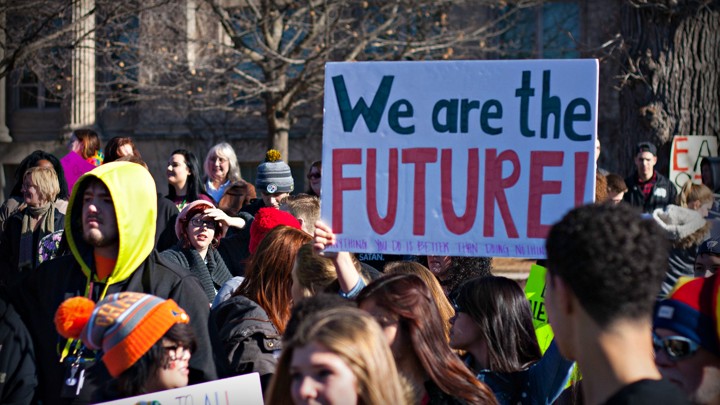
Photo:theatlantic.com
“Twenty years from now you will be more disappointed by the things that you didn't do than by the ones you did do. So throw off the bowlines. Sail away from the safe harbour. Catch the trade winds in your sails. Explore. Dream. Discover.”- Mark Twain
“You have stolen my dreams and my childhood with your empty words. We are at the beginning of a mass extinction and all you can do is talk about money and fairy tales of eternal growth. How dare you!”-Greta Thunberg, Youth Environmental Activist
A Call to Action from Our Children and Grandchildren.
We Must Not Let Them Down!
WE, THE FUTURE GENERATION, ASK YOU TO CHOOSE US
What is the unfolding story of the next decades?
The Youth of the World: Their voices will be heard
The rise of today’s youth, leading the world, with hope, inspiration, commitment, imagination and wisdom in the interest of the common good, to change our troubled world for the better
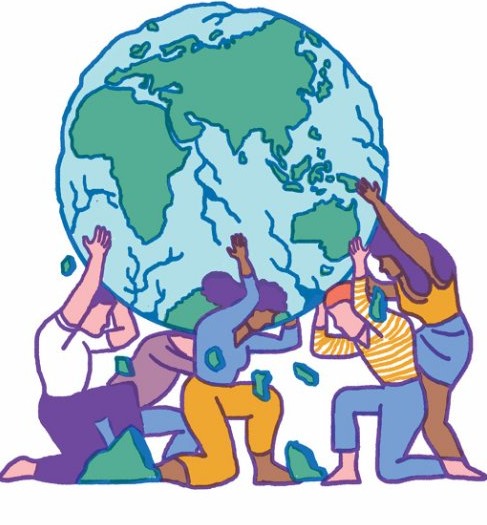
Photo:Poem: Have you heard their voices?
The commitment and the passion of young people is a force for change that cannot be matched or bettered. Today, the youth of the world have risen against injustice, inhumanity, greed, wars and conflicts, environmental degradation and abuse, values-less education, and more. By their actions, they are empowering and enabling us all to imagine and construct a better world in the interest of the common good.
We, the older generation, must become one with them. We must not let them down.
Young people speak with a directness, a moral and spiritual clarity that is extremely and desperately rare in our elected leaders, and perhaps, very sadly, in the adult species as a whole. That’s why we must praise and celebrate their contribution to a better world.
In Praise of Youth on International Youth Day- Monday 12 August 2019
The Youth of the World: Their voices will be heard
The Youth for the Common Good to Build a Better World
Global Mass Protest and Uprising against Neoliberalism, Austerity, Injustice, Inequality, Environmental Degradation and the Path to Serfdom
About 41% of the global population are under 24. And they’re angry…*
‘From Hong Kong to Chile, young people are rising up to fight injustice and inequality. Their elders should be grateful.’

Chilean students are taking to the streets in defense of public education. Photo:CHILE’S LONG HOT WINTER
‘Young women and men today must grapple with serious social, political and environmental problems inherited from their elders. Yet they are systematically excluded from policy decisions, even though young people make up one quarter of humanity. By marshalling the energy, creativity and talents of youth to address the multiple inequalities they face, we will all reap a ‘demographic dividend’ and build a fairer world.’- OXFAM+
‘A spate of large-scale street protests around the world, from Chile and Hong Kong to Lebanon and Barcelona, is fuelling a search for common denominators and collective causes. Are we entering a new age of global revolution? Or is it foolish to try to link anger in India over the price of onions to pro-democracy demonstrations in Russia?
Each country’s protests differ in detail. But recent upheavals do appear to share one key factor: youth. In most cases, younger people are at the forefront of calls for change. The uprising that unexpectedly swept away Sudan’s ancien regime this year was essentially generational in nature.
In one sense, this is unsurprising. Wordsworth expressed the eternal appeal of revolt for the young in The Prelude, a poem applauding the French Revolution. “Bliss was it in that dawn to be alive, But to be young was very Heaven!” he declared. Wordsworth was 19 years old when the Bastille was stormed.
Yet while younger people, in any era, are predisposed to shake up the established order, extreme demographic, social and political imbalances are intensifying present-day pressures. It is as if the unprecedented environmental traumas experienced by the natural world are being matched by similarly exceptional stresses in human society.

The Youth of Lebanon demonstrating against corruption, injustice and inequality in Beirut on Tuesday, Oct. 22, 2019.Photo: thestate.com
There are more young people than ever before. About 41% of the global population of 7.7 billion is aged 24 or under. In Africa, 41% is under 15. In Asia and Latin America (where 65% of the world’s people live), it’s 25%. In developed countries, imbalances tilt the other way. While 16% of Europeans are under 15, about 18%, double the world average, are over 65.
Most of these young people have reached, or will reach adulthood in a world scarred by the 2008 financial crash. Recession, stagnant or falling living standards, and austerity programmes delivered from on high have shaped their experience. As a result, many current protests are rooted in shared grievances about economic inequality and jobs. In Tunisia, birthplace of the failed 2011 Arab spring, and more recently in neighbouring Algeria, street protests were led by unemployed young people and students angry about price and tax rises – and, more broadly, about broken reform promises. Chile and Iraq faced similar upheavals last week.
Death and Destruction on Brothers’ Road to Serfdom
Neoliberalism destroys human potential and devastates values-led education
This global phenomenon of unfulfilled youthful aspirations is producing political timebombs. Each month in India, one million people turn 18 and can register to vote. In the Middle East and North Africa, an estimated 27 million youngsters will enter the workforce in the next five years. Any government, elected or not, that fails to provide jobs, decent wages and housing faces big trouble.
Numbers aside, the younger generations have something else that their elders lacked: they’re connected. More people than ever before have access to education. They are healthier. They appear less bound by social conventions and religion. They are mutually aware. And their expectations are higher.
That’s because, thanks to social media, the ubiquity of English as a common tongue, and the internet’s globalisation and democratisation of information, younger people from all backgrounds and locations are more open to alternative life choices, more attuned to “universal” rights and norms such as free speech or a living wage – and less prepared to accept their denial.
Political unrest deriving from such rapid social evolution is everywhere. Lebanon’s “WhatsApp revolution” is a perfect example. Yet some protests, such as those in Hong Kong and Catalonia, are overtly political from the very start.
Young Hong Kongers face familiar problems over scarce jobs and high rents. But by taking on China’s authoritarian regime, they have assumed pole position in a struggle against autocratic “strongman” rulers everywhere. Their campaign has international resonance, which is why China’s President Xi Jinping fears it.
It is difficult, if not perverse, to watch protesters risking torture and death by challenging Egypt’s dictator, Abdel Fattah el-Sisi, and not relate their daring both to Hong Kong and, say, to Kashmiris’ efforts to throw off the yoke imposed by another “strongman”, India’s Narendra Modi. When Palestinian youths taunt the Israel Defence Forces with flags and stones, are they not part of the same global fight for democratic self-determination, basic freedoms and human rights espoused by young Muscovites opposing Vladimir Putin’s cruel kleptocracy?
In this sea of protest, a common factor is the increased willingness of undemocratic regimes, ruling elites and wealthy oligarchies to use force to crush threats to their power – while hypocritically condemning protester violence. Repression is often justified in the name of fighting terrorism, as in Hong Kong. Other culprits include Saudi Arabia, Turkey, Myanmar and Nicaragua.
Another negative is the perceived, growing readiness of democratically elected governments, notably in the US and Europe, to lie, manipulate and disinform. Distrust of politicians, and resulting public alienation, is the common ground on which stand France’s “gilets jaunes”, Czech anti-corruption marchers and Extinction Rebellion. As William Hazlitt, the 18th-century essayist and celebrated mocker of Wordsworth might have said, disbelief is the new spirit of the age.
Corruption, Corruption,... Corruption, Everywhere
The beauty of living simply: the forgotten wisdom of William Morris
What might an Economy for the Common Good look like?
The Journey to Sophia: Education for Wisdom
Perhaps these protests will one day merge into a joined-up global revolt against injustice, inequality, environmental ruin and oppressive powers-that-be. Meanwhile, spare a thought for a different type of protest – the one you never hear about – and what that may entail. The stifling silence that hangs over North Korea’s gulag, China’s Xinjiang and Tibet regions, and dark, hidden places inside Syria, Eritrea, Iran and Azerbaijan could yet descend on us all. What helps protect us is the noisy, life-affirming dissent of the young.’
*This article by Simon Tisdall was first published in the Guardian on Saturday 26 October 2019. Read the original article here
Rethinking Our Approach to Social Justice: A Perspective from the Youth
- Details
- Written by: Kamran Mofid
- Hits: 1993
Great Canal Journeys: a Narrowboat Love Affair
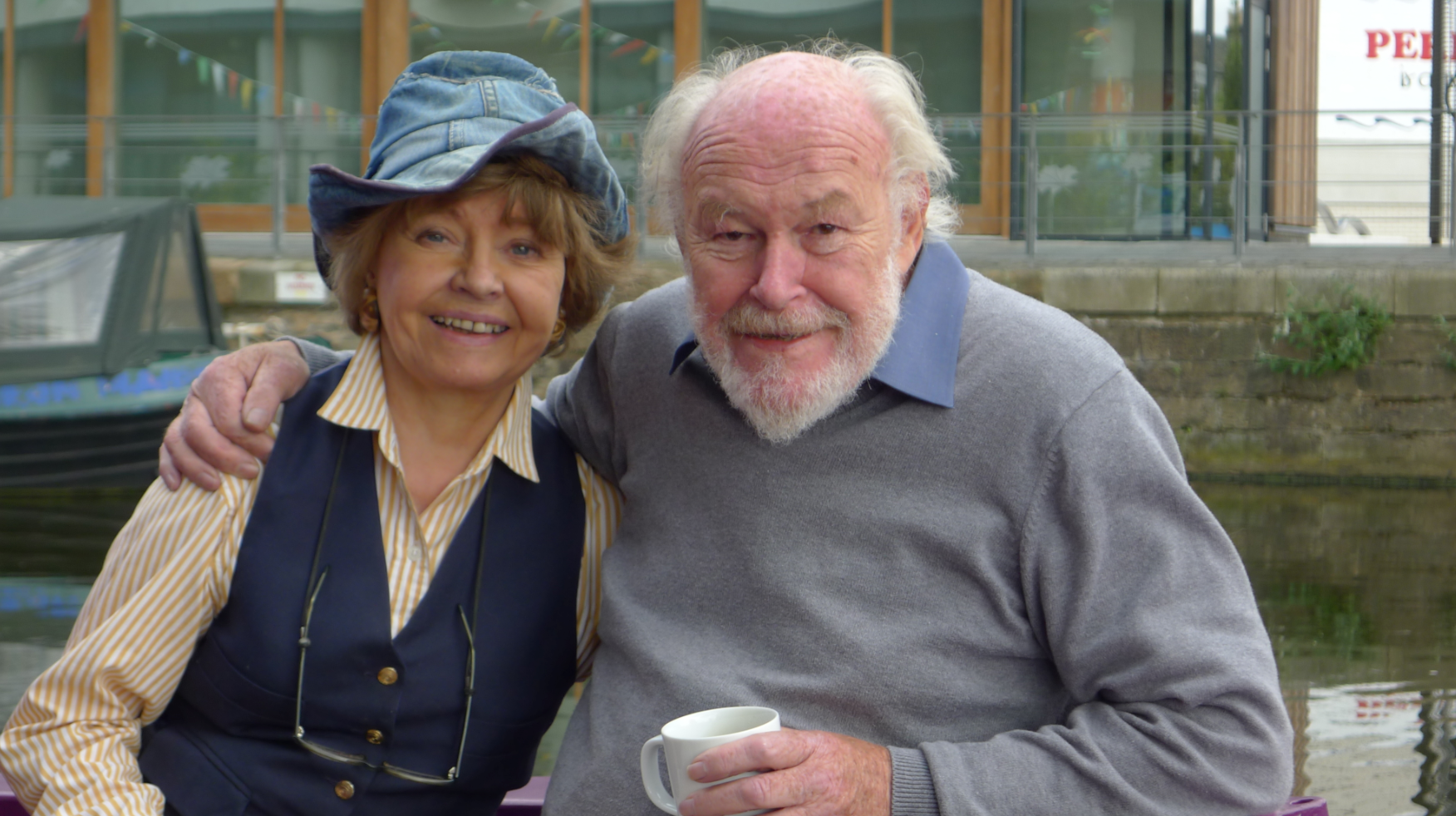
One of the greatest love stories on TV ... Tim and Pru in Great Canal Journeys. Photograph: Channel 4 Television-Photo:Channel 4 Television
Great Canal Journeys: how a bittersweet boating show captured viewers' hearts*
‘The swansong of Timothy West and Prunella Scales’s narrowboat adventures aired this week, having elevated the humble travelogue to a touching saga of love and loss.’
‘This was the swansong, and in the loveliest of many lovely moments, Fairport Convention came on board at Cropredy to perform the exquisitely appropriate: “Who knows how my love grows? And who knows where the time goes?” Oh, for a little more time. But what times we’ve had.’
N.B. My wife, Annie, and I have been watching this beautiful and moving series of journeys, or as I would like to call-Love and Life Stories- over the last few years. We have been touched by them. They have encouraged us to think about our own lives, our own stories and journeys. We, too, growing older together are wondering and pondering on our own swansong: Who knows how my love grows? And who knows where the time goes?” Oh, for a little more time. But what times we’ve had.’
In short, we have been travelling with them, sharing their nostalgic reflections. Recalling and remembering the places that we had been to, the places and moments that are so important to our lives also.
One of the first ever journeys featured on ‘Great Canal Journeys’ was a trip on an Anglo Welsh narrowboat along the Oxford canal, starting in the romantic city of Oxford, where they began their courtship many years ago. Annie and I too, started our courtship many years ago, in the early 1970s in Oxford.
The other memorable of their canal journeys is when they went back to Llangollen, Denbighshire, North Wales, where they spent their honeymoon. Reminiscing over how their relationship has survived and thrived over the past 50 years. The journey took us all to the picturesque sights of the Vale of Llangollen and the Montgomery Canal, before travelling on a horse-drawn barge up the Horseshoe Falls.
Wow! What a nostalgic journey for us too. Llangollen is very special to us, where we have been holidaying and touring for the last twenty years or so. We have got to know the region very well and it is our dream to retire there.
Thank you Timothy West and Prunella Scales for letting us into your Swansong...
Great Canal Journeys: how a bittersweet boating show captured viewers' hearts*
‘My name’s Timothy West, and this is my wife, Prunella Scales.” Much of the tender magic of Great Canal Journeys is in that proud, robustly jolly, semi-formal introduction, habitually included in the narration as one venerated actor refers to his beloved other. The Channel 4 show – the probable last episode of which was broadcast last night – is one of many travel series that amount to watching celebrities go on holiday, but it’s one of the few that truly feels as if it’s inviting us to come along too.
West and Scales have no need to feign canal enthusiasm for the cameras. In their show’s best episodes, they revisit their own, real narrowboating holidays, re-enacting scenes from a romance that’s endured for more than half a century. A simple thing that sets them apart is that they’re a lot older than almost anyone else on British television. What has made this series such a gift is their willingness to share the emotion of navigating that last phase of life together, a bittersweetness made all the more powerful by Scales’s Alzheimer’s disease. West is the boat’s skipper, cajoling and comforting and forever worrying about the welfare of his mate.
The success of the series has demanded that Tim and Pru venture overseas, as near as France and as far as India. Their foreign jaunts were fine, but this new trip put them back where they look most comfortable, in the veins of green England. Going up the familiar Oxford Canal from Banbury in Oxfordshire to Braunston in Northamptonshire offered a chance to relax, enjoy choice excerpts from previous seasons, and update us on the topic discussed whenever we and they reconvene: how Pru’s doing. The news was not good.
Since the first instalment in 2014, the series has charted the long, slow goodbye that is living with dementia, cherishing every moment of precious normality and celebrating how an immersion in nature is the surest way to bring the old Pru back. But that task of loving a person whose powers are fading only ever gets harder. Now we heard not only that Pru’s mental decline was accelerating, but that deafness was also encroaching.
The show’s editors have been masters of holding the shot for an extra second after Tim has finished speaking, long enough for us to discern pain clouding the full-hearted, wrinkly eyed smile that takes over his face when he talks about how happy Pru makes him. As Tim explained that Pru’s hearing loss was denying him the pleasure of ordinary conversation – the quick exchange of ideas and feelings with his best friend, treasured every day since 1963 – we saw more sadness than smile.
This episode was broadcast on West’s 85th birthday and possessed an air of soft valediction throughout. In the ancient St Peter’s Church at Wormleighton, Warwickshire, the vicar boldly asked for clarification of what the rest of the programme was only hinting at: was this the couple’s last ever Great Canal Journey? Tim looked at Pru and thought about the bustling community of hobbyists and holidaymakers on Britain’s manmade waterways. “They can carry on without us. I just wonder if we can carry on without them.”
So a saga that has been – quietly, let’s not make a fuss about it – one of the greatest love stories on TV seems to be over. There’s another new episode next week, but it’s even more heavily based on old clips, with the linking scenes showing Tim taking care of Pru at home rather than judging tight turns and ratcheting locks.
This was the swansong, and in the loveliest of many lovely moments, Fairport Convention came on board at Cropredy to perform the exquisitely appropriate Who Knows Where the Time Goes? “Who knows how my love grows? And who knows where the time goes?” Oh, for a little more time. But what times we’ve had.’
* This article by Jack Seale was originally published in the Guardian on Monday 21 October 2019.
- Our Green and Pleasant Land, A Most Beautiful Country: Pity its led by Donkeys!
- Brexit, Trump’s Daily Tweets, and the World Sleepwalking to Financial Catastrophe Again
- Why should we all become mother nature and sacred earth guardians
- Love Letter to the Earth
- GCGI Friends Newsletter Autumn 2019: Hope and the Common Good