- Details
- Written by: Kamran Mofid
- Hits: 1913
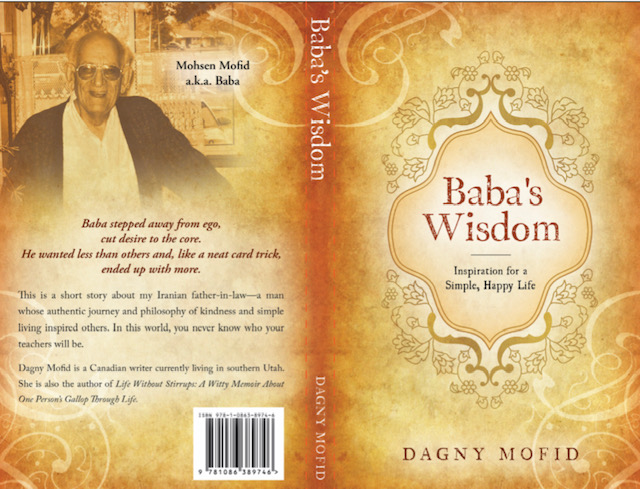
'Baba stepped away from ego, cut desire to the core. He wanted less than others and, like a neat card trick, ended up with more. This is a short story about my Iranian father-in-law —a man whose authentic journey and philosophy of kindness and simple living inspired others. In this world you never know who your teachers will be.'- Photo:amazon.com
The Wisdom of My Father: As Remembered and Recalled by my Sister-in-Law, Dagny Mofid
I am very happy and excited about this beautifully written book, depicting aspects of my dad’s life story and journey, who passed away in 2012 at the age of 87 in Niagara Falls, Canada.
Dagny and her husband, Kamyar, my youngest brother, used to live very close to my parents’ house. Dagny became a good listener of my dad’s stories. He loved to tell stories. After dad passed away, Dagny wished to write a book about all the life lessons she had learned from him over the years. Dagny and my father would spend hours sitting and talking in the living room of my parents’ house. It must have been during those philosophical and spiritual conversations that she came to understand his philosophy of living and indeed, what’s life all about.
Now, Dagny has done this in a very easy, fun to read and beautifully produced book; a good and accurate reflection of a man who, as Dagny has noted “He stepped away from ego, cut desire to the core. He wanted less than others and, like a neat card trick, ended up with more”.
As, I, too, have noted below, my dad’s ideas and his life exemplified a simple, yet deeply engaging and profound roadmap for a happier and a more fulfilling, meaningful life.
It is also noteworthy to know that, whilst writing the book, Dagny carried out a detailed research on the history of Iran and she touches upon some of the magnificent richness of Persia from a historical, familial and cultural perspectives.
I do hope you will read this book, not necessarily because it is a book about my father, but because it is a book about a life lived simply with meaning, and with very positive and inspiring life lessons.
What is a Good Life? It is a Journey in Pursuit of Hope, Meaning and Purpose
A Reflection on My Dad’s Wisdom
Looking back at my life, all those decades ago, growing up in Tehran, I can remember that we spent many days, moments of joy, when my dad engaged with us, his children, our friends and his, pondering and reflecting together on Life’s Big Questions, questions of meaning, values and purpose.
He always used to read poetry to us, quoting the priceless, precious words of the Persian sages of love, Sa’di, Hafez, Rumi, Khayam and others.
I can, in particular, remember, when he used to tell me about the timeless beauty of simple living. I don’t know if I fully understood the significance of what he was telling me at that time or not. But, now, looking back, I think, somehow, I must have got it, given my own chosen path of life. For all these, I am most grateful.
- Details
- Written by: Kamran Mofid
- Hits: 2142
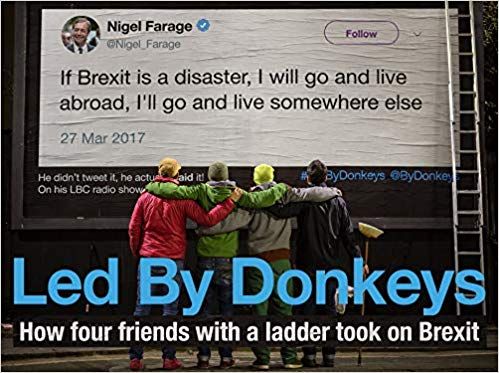
Photo:theguardianbookshop
Brits are ‘lions led by donkeys’, says the ‘ The Lion of the Lions’ Farage at his Brexit party launch on Friday 12 April 2019
Photo:Brexit: a totally mad day
Brexit is a necessary crisis – it reveals Britain’s true place in the world
David Edgerton, Hans Rausing Professor of the history of science and technology and professor of modern British history at King's College London, Via, The Guardian
‘A determined ignorance of the dynamics of global capitalism is bringing about a long-overdue audit of British realities.’
Who backs Brexit? Agriculture is against it; industry is against it; services are against it. None of them, needless to say, support a no-deal Brexit. Yet the Conservative party, which favoured European union for economic reasons over many decades, has become not only Eurosceptic – it is set on a course regarded by every reputable capitalist state and the great majority of capitalist enterprises as deeply foolish.
If any prime minister in the past had shown such a determined ignorance of the dynamics of global capitalism, the massed ranks of British capital would have stepped in to force a change of direction. Yet today, while the CBI and the Financial Times call for the softest possible Brexit, the Tory party is no longer listening.
Why not? One answer is that the Tories now represent the interests of a small section of capitalists who actually fund the party. An extreme version of this argument was floated by the prime minister’s sister, Rachel, and the former chancellor Philip Hammond – both of whom suggested that hard Brexit is being driven by a corrupt relationship between the prime minister and his hedge-fund donors, who have shorted the pound and the whole economy. This is very unlikely to be correct, but it may point to a more disconcerting truth.
The fact is that the capitalists who do support Brexit tend to be very loosely tied to the British economy. This is true of hedge funds, of course – but also true for manufacturers such as Sir James Dyson, who no longer produces in the UK. The owners of several Brexiter newspapers are foreign, or tax resident abroad – as is the pro-Brexit billionaire Sir James Ratcliffe of Ineos.
But the real story is something much bigger. What is interesting is not so much the connections between capital and the Tory party but their increasing disconnection. Today much of the capital in Britain is not British and not linked to the Conservative party – where for most of the 20th century things looked very different. Once, great capitalists with national, imperial and global interests sat in the Commons and the Lords as Liberals or Conservatives. Between the wars, the Conservatives emerged as the one party of capital, led by great British manufacturers such as Stanley Baldwin and Neville Chamberlain. The Commons and the Lords were soon fuller than ever of Tory businessmen, from the owner of Meccano toys to that of Lyons Corner Houses.
After the second world war, such captains of industry avoided the Commons, but the Conservative party was without question the party of capital and property, one which stood against the party of organised labour. Furthermore, the Tories represented an increasingly national capitalism, protected by import controls, and closely tied to an interventionist and technocratic state that wanted to increase exports of British designed and made goods. A company like Imperial Chemical Industries (ICI) saw itself, and indeed was, a national champion. British industry, public and private, was a national enterprise.
Since the 1970s things have changed radically. Today there is no such thing as British national capitalism. London is a place where world capitalism does business – no longer one where British capitalism does the world’s business. Everywhere in the UK there are foreign-owned enterprises, many of them nationalised industries, building nuclear reactors and running train services from overseas. When the car industry speaks, it is not as British industry but as foreign enterprise in the UK. The same is true of many of the major manufacturing sectors – from civil aircraft to electrical engineering – and of infrastructure. Whatever the interests of foreign capital, they are not expressed through a national political party. Most of these foreign-owned businesses, not surprisingly, are hostile to Brexit.
Brexit is the political project of the hard right within the Conservative party, and not its capitalist backers. In fact, these forces were able to take over the party in part because it was no longer stabilised by a powerful organic connection to capital, either nationally or locally.
Brexit also speaks to the weakness of the state, which was itself once tied to the governing party – and particularly the Conservatives. The British state once had the capacity to change the United Kingdom and its relations to the rest of the world radically and quickly, as happened in the second world war, and indeed on accession to the common market.
Today the process from referendum to implementation will take, if it happens, nearly as long as the whole second world war. The modern British state has distanced itself from the productive economy and is barely able to take an expert view of the complexities of modern capitalism. This was painfully clear in the Brexit impact sectoral reports the government was forced to publish – they were internet cut-and-paste jobs.
The state can no longer undertake the radical planning and intervention that might make Brexit work. That would require not only an expert state, but one closely aligned with business. The preparations would by now be very visible at both technical and political levels. But we have none of that. Instead we have the suggestion that nothing much will happen on no deal, that mini-deals will appear. The real hope of the Brexiters is surely that the EU will cave and carry on trading with the UK as if nothing had changed. Brexit is a promise without a plan. But in the real world Brexit does mean Brexit, and no deal means no deal.
Brexit is a necessary crisis, and has provided a long overdue audit of British realities. It exposes the nature of the economy, the new relations of capitalism to politics and the weakness of the state. It brings to light, in stunning clarity, Brexiters’ deluded political understanding of the UK’s place in the world. From a new understanding, a new politics of national improvement might come; without it we will remain stuck in the delusional, revivalist politics of a banana monarchy.
Read the original article HERE
We'll laugh ourselves to disaster with Boris Johnson as prime minister
I was Boris Johnson’s boss: he is utterly unfit to be prime minister
Brexit: The Key Lessons- Now is the time for hope to build on the ruins
The ‘Independence Day’, Not Long to Go!
The Moral Blindness of the English Posh Boys
Boris Johnson: let no such man be trusted
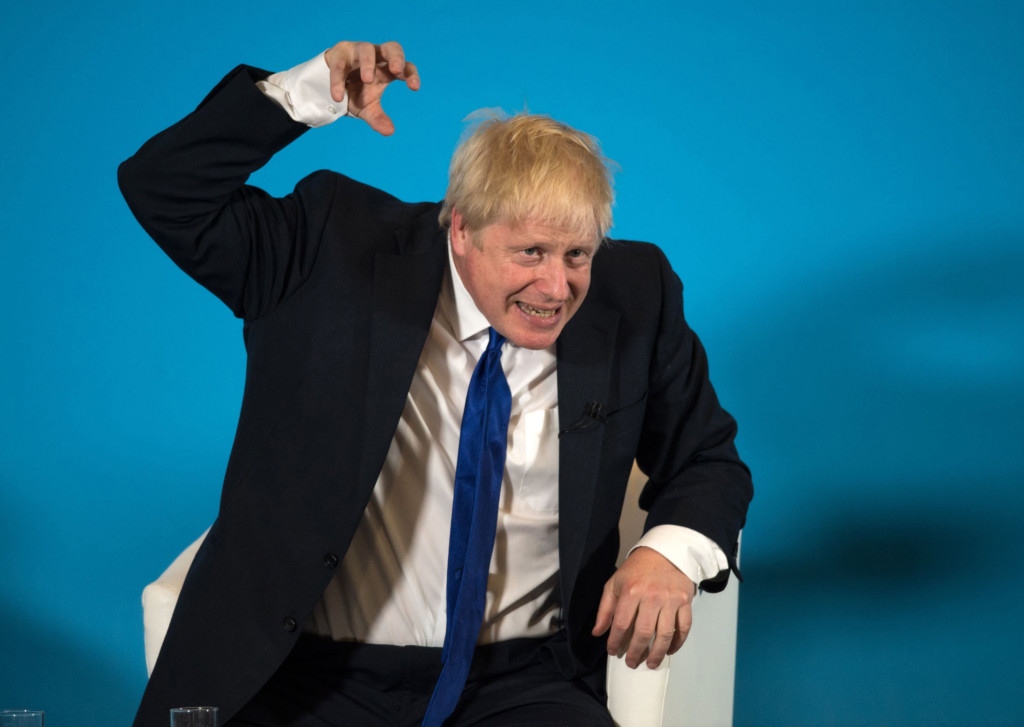
Photo:theneweuropean.co.uk
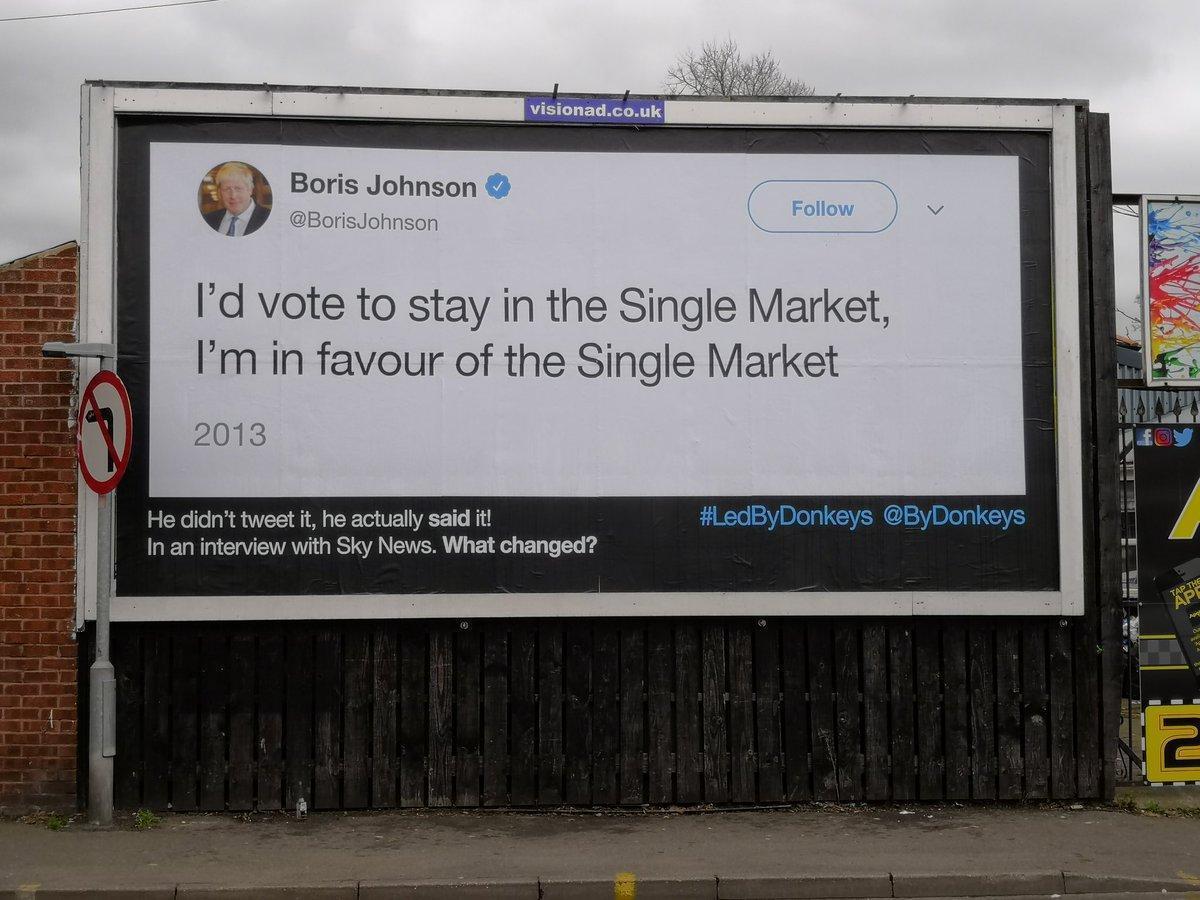
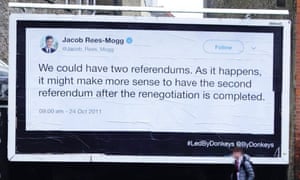
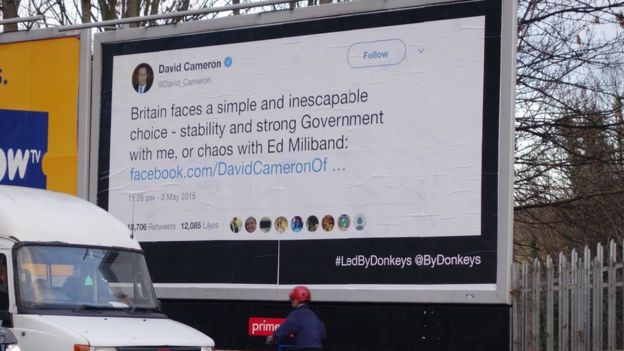
The Pertinent Question Must Surely Be: Can the Donkeys Be Trusted?
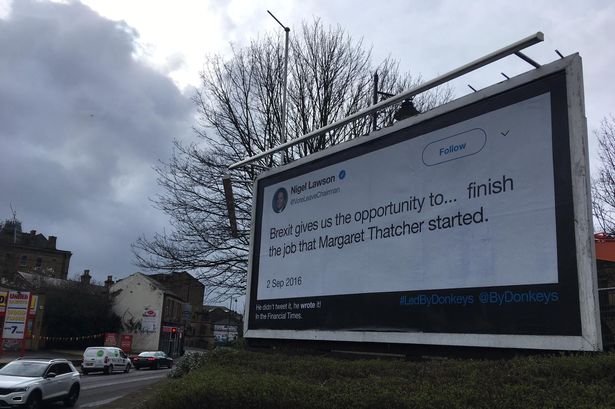
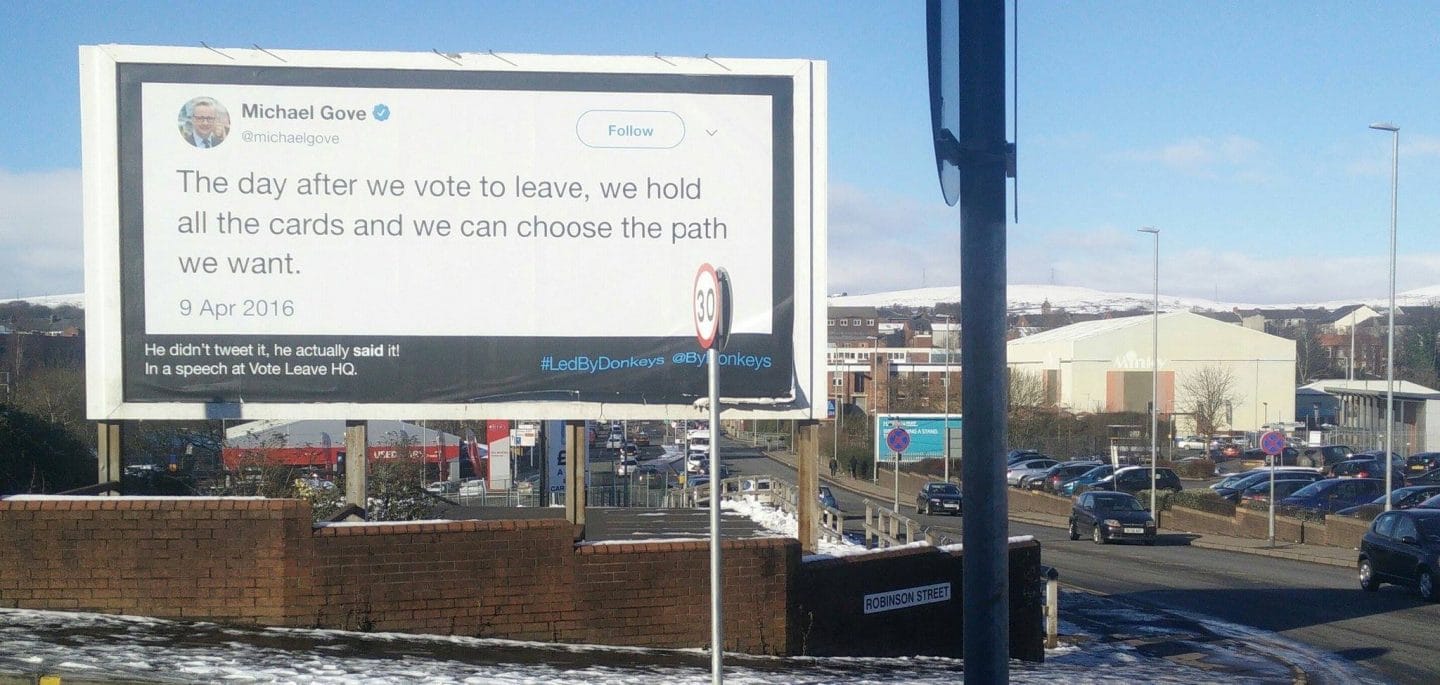
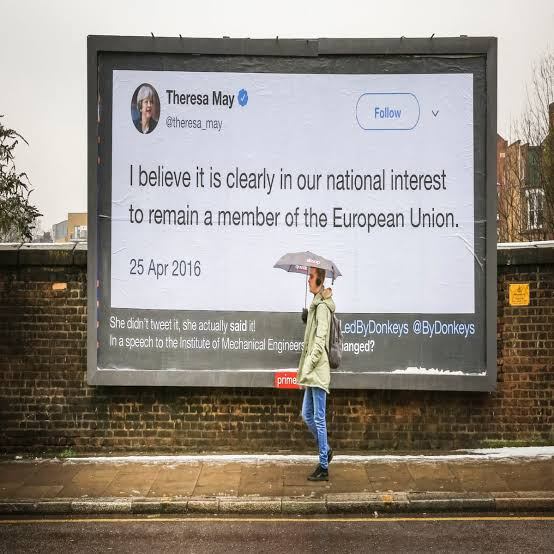
- Details
- Written by: Kamran Mofid
- Hits: 2682
The erosion of trust is not an illusion.
‘We all depend on our social, business, financial, and political affairs, on a shared currency of trust. But we have somehow devalued this currency and breaches of public trust have recently grown to epidemic proportions.’+
Yes. This is very true: The more I read, the more I investigate and research, the more I discover that, all over the world, there is no trust in anything or anybody any more. No trust in politics and politicians, no trust in the media, education, lawyers, police, army and the judiciary, medicine and the medical profession, business and finance, banks and insurance, food, food-processing, supermarkets and agriculture, as well as all sorts of tradesmen and traders, and God forbid, even religion and charities. Do I need to mention more! This, I am sure, resonates with so many people around the world.

Brand trust is disappearing fast as ‘We no longer enjoy high levels of confidence in fellow citizens, much less social institutions, and are increasingly skeptical of those holding positions of authority.’ Photo:trusttour.org
‘Trust is a public virtue in that it is a property or characteristic that communities need to possess in order to function well. Trust among members of a community facilitates exchange among individuals and social interaction. In this sense, trust can be understood as an aretaic (“virtuous”) property that contributes to the well-being or excellence of a community in the same way that virtues are understood as properties or character traits that contribute to individual flourishing.’
‘Simply put, to live in a community where people render aid to strangers without fear of suffering harm requires us not only to condemn violations of this norm but to offer assistance when we can, even in the face of uncertainty. If we do not engage one another in a trusting and trustworthy manner, we fail to maintain a community that reflects these values, and we diminish our ability to flourish both individually and collectively.’
‘Western societies can’t ignore the ‘crisis of trust’ we’re experiencing.’*
Warren Von Eschenbach- Via America, The Jesuit Review
‘United Nations Secretary-General António Guterres opened the General Assembly last fall with the stark observation that “our world is suffering from a bad case of ‘Trust Deficit Disorder.’” Indeed, Western societies are experiencing a crisis of trust that seems to be worsening. We no longer enjoy high levels of confidence in fellow citizens, much less social institutions, and are increasingly skeptical of those holding positions of authority.
Empirical data supports these worrying trends. The 2018 Edelman Global Trust Barometer, conducted for the global marketing firm, showed that citizens in almost two-thirds of the countries participating in the poll were mostly distrusting of governments, businesses, media and nongovernment organizations, with the largest decline in trust from 2017 to 2018 occuring in the United States. Fifty-nine percent of respondents worldwide reported uncertainty about whether information disseminated by the media is true or not; seven in 10 of those surveyed worry about false information or fake news being used as a weapon; and the media was mostly distrusted in 78 percent of countries surveyed.
Trust necessarily involves risk, and often we must engage in trusting others with little or no guarantee that our trust will not be misplaced. At times we are let down by others and experience a sense of betrayal or disappointment as a result. Trust, it has been observed, is difficult to establish and cultivate, but easily lost.
The crisis of trust is paradoxical: We increasingly entrust our wellbeing and security to institutions, technologies and strangers but, at the same time, we report greater feelings of mistrust or an erosion of trust in these same institutions, technologies and individuals. We now rely on computer technology to procure many goods and services: banking, transportation, health care and, to an increasing degree, even education. We depend on government officials, the media and corporations to safeguard our interests, inform us of important events and provide accurate information, and to conduct commerce in a fair and transparent manner. But despite our growing need to trust others and institutions due to the complexity of modern life, trust is considerably harder to establish—we no longer have the same guarantees that others are trustworthy, nor the same recourse should our trust be betrayed, that we had with frequent opportunities for face-to-face interactions.
Public reactions to gross violations of trust, such as egregious data breaches by credit agencies and political disinformation campaigns on social media, reveal that more is at stake than the loss of social capital. Violations of trust are violations of communal integrity in the sense that they are failures to uphold principles that have long been understood to be part and parcel of a community. More than just necessary for social interaction, civic cooperation and financial exchange, trust is a public virtue in that it represents a moral excellence endorsed by members of a community.
For example, the cause for outrage at the unjust treatment of a good Samaritan—where the hypothetical Samaritan is robbed or hurt in rendering aid—is not simply that one will now be less likely to benefit from the kindness of strangers, but that such incidents violate deeply held norms and values of a community. Trust is a public virtue in that it is a property or characteristic that communities need to possess in order to function well. Trust among members of a community facilitates exchange among individuals and social interaction. In this sense, trust can be understood as an aretaic (“virtuous”) property that contributes to the well-being or excellence of a community in the same way that virtues are understood as properties or character traits that contribute to individual flourishing.
Understanding trust as a public virtue explains why the increasing prevalence of dubious attacks on mainstream media for promulgating “fake news” is worrying, especially when espoused by political leaders. These charges contribute to the crisis of trust by undermining the authority and trustworthiness of social institutions, such as free and independent news outlets, necessary for a well-functioning democracy. The problem goes deeper when coupled with instances of actual “fake news” disseminated with the intent to mislead and confuse citizens for partisan gains. In both cases, “fake news,” whether real or alleged, diminishes social trust and has the potential to harm the community through loss of social capital and other related benefits.

Photo:americanmagazine.org
“Fake news” also draws attention to another important reason why the loss of social trust is a crisis. In addition to undermining trust in public institutions important to democracy, “fake news” reinforces particularized trust, or the view that we can or should trust only those with whom we are acquainted or have kinship. Those who are unfamiliar or different than us are not to be trusted, and neither are those information sources that allegedly advocate for worldviews opposed to our own. Particularized trust is especially worrying because it is pernicious to communal identity by fortifying divisions among groups of people and “us versus them” ways of viewing the world, one’s self and others. In this way, particularized trust not only diminishes social capital but also undermines social cohesion and solidarity.
What are we to do to address the trust deficit disorder that has infected our public and communal life?
Active vigilance by citizens to safeguard political and social institutions by holding incumbents accountable for breaches of trust through political action or organized public pressure is a start. Injustice toward some is an affront to us all, and playing fast and loose with truth for political gain undermines the ideals that define us as a community. But because we endorse trust as a moral excellence that gives expression to our identity, we have an obligation to trust unless presented with good reasons to do otherwise.
Simply put, to live in a community where people render aid to strangers without fear of suffering harm requires us not only to condemn violations of this norm but to offer assistance when we can, even in the face of uncertainty. If we do not engage one another in a trusting and trustworthy manner, we fail to maintain a community that reflects these values, and we diminish our ability to flourish both individually and collectively.’
*Read the original article HERE
+The deep roots of the trust crisis
Nota bene
We are very proud of our record here at the GCGI. We have been at the forefront of studying and highlighting the vital importance of trust and trustworthiness to all we do, who, what and why we are. A few examples of our work are noted below.
Why is Trust so Vital to Who we are and How we live our lives?

Photo:shutterstock.com
The pertinent questions now are: How can we live and lead a good life when we can trust no one and no one trusts us? Or, is life possible or meaningful without trust? Let me explain a bit more:
As it has been observed time and again, “Trust is the treasure of our daily lives. However, we do not understand its value. It is generally seen that trust in our daily lives is disappearing fast.
Why have we become so suspicious that we cannot enter into meaningful relationships with each other? Why can we not behave as normal human beings? After all when we were born as human beings the first lesson we learnt was that we should trust each other. However, as our lives progressed slowly, trust began to diminish. Our childhood innocence has given way to calculations in which there is no place for trust.
Trust in each other gives strength and vitality to our relationships. It gives us inner happiness, which is priceless. It brings joy all around and life appears brighter and brighter. Its fragrance spreads far and wide. Trust keeps us in a positive mental framework. When you trust each other you feel self-confident. The feeling of believing others is electrifying. It not only provides a sense of security, but provides new zeal to fight the vagaries of life. Trusting each other gives us a sense of deep bonding. It signifies that we are united to fight the battles ahead. Trust is a synonym for warmth in our relationships.
With so many advantages of trusting each other, how do we feel when germs of mistrust appear?...Continue to read
Can Capitalism Survive Without Trust and Regulation?
How to Restore Trust in VW again?
In Praise of Magna Carta: What happened to Trust and Democracy in Britain?
The Value of Values: Values-led Education to Make the World Great Again
The Age Of Perpetual Crisis: What are we to do in a world seemingly spinning out of our control?
Britain today and the Bankruptcy of Ideas, Vision and Values-less Education
- To Heal the World and People We Need to Save the Commons from Plunder
- We need to come together to stop the plunder of the commons
- University students are crying out for mental health wellbeing modules
- The beauty of living simply: the forgotten wisdom of William Morris
- Simpler life and simpler times: A Journey in Life