- Details
- Written by: Kamran Mofid
- Hits: 4730
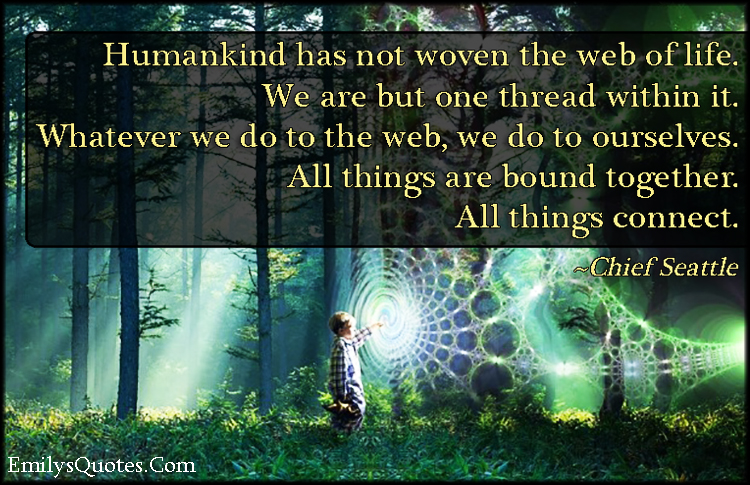
“We are the first generation to know we are destroying our planet and the last one that can do anything about it.”- World Wildlife Fund
Saving the Web of Life: The Time is now to Tune into Peace, Love and Wisdom with a Spiritual Revolution
Falling back in love with Mother Earth and not Economic Models will Save the World
We are the seeds of the future. We are the pillars of the better world we are all hoping for. The human family, indeed, the entire web of life, is going through some very chaotic times now.
The current dominant economic model of neo-liberalism has been one of materialism, consumerism, individualism, conquest, greed, militarism, war, injustice, inequality, violence and values-less thinking; everything goes, as long as it makes money and profit for the 1%.
That paradigm is collapsing now, mindsets are shifting. Attitudes are changing. We are shifting away from the mechanistic world view, devoid of any humanity or spirituality, to a holistic, ecological view. Thus, we can now all be a part of something new that is more in tune with the ways of Nature, more balanced, wholesome, compassionate, creative, cooperative, giving, sharing, caring, loving and wise.
All in all, despite many bad and ugly things happening all around us, we must also recognise that there are so many goodness, beauty and love in this world.
In short, in the wise words of the Persian sage, poet and philosopher of love, Hafez, we must remain positive and hopeful: ‘'Don't Despair Walk On'
With this in mind, below, I offer you the following for your reflection. Hope you may find it of interest and useful.
We are the Ones
We Have Been Waiting For
Thich Nhat Hanh: Be Beautiful, Be Yourself
Photo: goodreads.com
‘Beyond environment: falling back in love with Mother Earth’
Yes, indeed, words of wisdom, love and beauty, are timeless.
In an interview with Jo Confino for the Guardian Professional Network in 2012, Zen master Thich Nhat Hanh explains why mindfulness and a spiritual revolution rather than economics is needed to protect nature and limit climate change.*
"We have constructed a system we can't control. It imposes itself on us, and we become its slaves and victims.
"We have created a society in which the rich become richer and the poor become poorer, and in which we are so caught up in our own immediate problems that we cannot afford to be aware of what is going on with the rest of the human family or our planet Earth.
"In my mind I see a group of chickens in a cage disputing over a few seeds of grain, unaware that in a few hours they will all be killed."-Thich Nhat Hanh
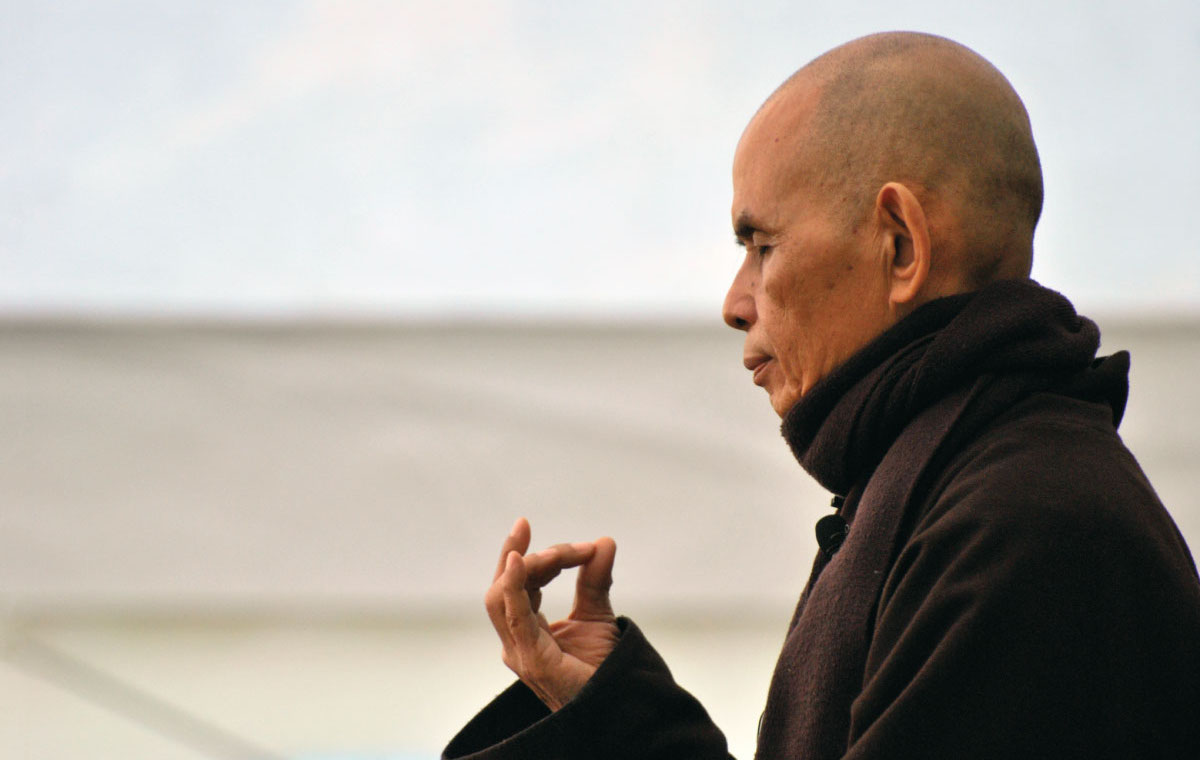
Zen master Thich Nhat Hanh says a spiritual revolution is needed if we are going to confront the environmental challenges that face us. Photo:balancedachievement.com
‘Zen master Thich Nhat Hanh has been practising meditation and mindfulness for 70 years and radiates an extraordinary sense of calm and peace. This is a man who on a fundamental level walks his talk, and whom Buddhists revere as a Bodhisattva; seeking the highest level of being in order to help others.
Ever since being caught up in the horrors of the Vietnam war, the 86-year-old monk has committed his life to reconciling conflict and in 1967 Martin Luther King nominated him for the Nobel Peace Prize, saying "his ideas for peace, if applied, would build a monument to ecumenism, to world brotherhood, to humanity."
So it seems only natural that in recent years he has turned his attention towards not only addressing peoples' disharmonious relationships with each other, but also with the planet on which all our lives depend.
Thay, as he is known to his many thousands of followers, sees the lack of meaning and connection in peoples' lives as being the cause of our addiction to consumerism and that it is vital we recognise and respond to the stress we are putting on Earth if civilisation is to survive.
What Buddhism offers, he says, is the recognition that we all suffer and the way to overcome that pain is to directly confront it, rather than seeking to hide or bypass it through our obsession with shopping, entertainment, work or the beautification of our bodies. The craving for fame, wealth, power and sex serves to create only the illusion of happiness and ends up exacerbating feelings of disconnection and emptiness.
Small is Beautiful: The Wisdom of E.F. Schumacher and Buddhist Economics
Thay refers to a billionaire chief executive of one of America's largest companies, who came to one of his meditation courses and talked of his suffering, worries and doubts, of thinking everyone was coming to take advantage of him and that he had no friends.
In an interview at his home and retreat centre in Plum Village, near Bordeaux, Thay outlines how a spiritual revolution is needed if we are going to confront the multitude of environmental challenges.
While many experts point to the enormous complexity and difficulty in addressing issues ranging from the destruction of ecosystems to the loss of millions of species, Thay sees a Gordian Knot that needs slicing through with a single strike of a sharp blade.
Move beyond concept of the "environment"
He believes we need to move beyond talking about the environment, as this leads people to experience themselves and Earth as two separate entities and to see the planet in terms only of what it can do for them.
Change is possible only if there is a recognition that people and planet are ultimately one and the same.
"You carry Mother Earth within you," says Thay. "She is not outside of you. Mother Earth is not just your environment.
"In that insight of inter-being, it is possible to have real communication with the Earth, which is the highest form of prayer. In that kind of relationship you have enough love, strength and awakening in order to change your life.
"Changing is not just changing the things outside of us. First of all we need the right view that transcends all notions including of being and non-being, creator and creature, mind and spirit. That kind of insight is crucial for transformation and healing.
"Fear, separation, hate and anger come from the wrong view that you and the earth are two separate entities, the Earth is only the environment. You are in the centre and you want to do something for the Earth in order for you to survive. That is a dualistic way of seeing.
"So to breathe in and be aware of your body and look deeply into it and realise you are the Earth and your consciousness is also the consciousness of the earth. Not to cut the tree not to pollute the water, that is not enough."
Putting an economic value on nature is not enough
Thay, who will this spring be in the UK to lead a five-day retreat as well as a mindfulness in education conference, says the current vogue in economic and business circles that the best way to protect the planet is by putting an economic value on nature is akin to putting a plaster on a gaping wound.
"I don't think it will work," he says. "We need a real awakening, enlightenment, to change our way of thinking and seeing things."
Rather than placing a price tag of our forests and coral reefs, Thay says change will happen on a fundamental level only if we fall back in love with the planet: "The Earth cannot be described either by the notion of matter or mind, which are just ideas, two faces of the same reality. That pine tree is not just matter as it possesses a sense of knowing. A dust particle is not just matter since each of its atoms has intelligence and is a living reality.
"When we recognise the virtues, the talent, the beauty of Mother Earth, something is born in us, some kind of connection, love is born.
"We want to be connected. That is the meaning of love, to be at one. When you love someone you want to say I need you, I take refuge in you. You do anything for the benefit of the Earth and the Earth will do anything for your wellbeing."
In the world of business, Thay gives the example of Yvon Chouinard, founder and owner of outdoor clothing company Patagonia, who combined developing a successful business with the practice of mindfulness and compassion: "It's possible to make money in a way that is not destructive, that promotes more social justice and more understanding and lessens the suffering that exists all around us," says Thay.
"Looking deeply, we see that it's possible to work in the corporate world in a way that brings a lot of happiness both to other people and to us ... our work has meaning."
Thay, who has written more than 100 books, suggests that the lost connection with Earth's natural rhythm is behind many modern sicknesses and that, in a similar way to our psychological pattern of blaming our mother and father for our unhappiness, there is an even more hidden unconscious dynamic of blaming Mother Earth.
In a new essay, Intimate Conversation with Mother Earth, he writes: "Some of us resent you for giving birth to them, causing them to endure suffering, because they are not yet able to understand and appreciate you."
Economic Growth: The Index of Misery
How mindfulness can reconnect people to Mother Earth
He points to increasing evidence that mindfulness can help people to reconnect by slowing down and appreciating all the gifts that the earth can offer.
"Many people suffer deeply and they do not know they suffer," he says. "They try to cover up the suffering by being busy. Many people get sick today because they get alienated from Mother Earth.
"The practice of mindfulness helps us to touch Mother Earth inside of the body and this practice can help heal people. So the healing of the people should go together with the healing of the Earth and this is the insight and it is possible for anyone to practice.
"This kind of enlightenment is very crucial to a collective awakening. In Buddhism we talk of meditation as an act of awakening, to be awake to the fact that the earth is in danger and living species are in danger."
Thay gives the example of something as simple and ordinary as drinking a cup of tea. This can help transform a person's life if he or she were truly to devote their attention to it.
"When I am mindful, I enjoy more my tea," says Thay as he pours himself a cup and slowly savours the first sip. "I am fully present in the here and now, not carried away by my sorrow, my fear, my projects, the past and the future. I am here available to life.
"When I drink tea this is a wonderful moment. You do not need a lot of power or fame or money to be happy. Mindfulness can help you to be happy in the here and now. Every moment can be a happy moment. Set an example and help people to do the same. Take a few minutes in order to experiment to see the truth."
The GCGI-SES Lucca Forum: Here's to 2018, Our Journey of Hope, caring for Our Sacred Earth
OUR SACRED EARTH Tuscany Forum: The Videos
Need to deal with ones own anger to be an effective social activist
Thay has over many years developed the notion of applied Buddhism underpinned by a set of ethical practices known as the five mindfulness trainings, which are very clear on the importance of tackling social injustice.
However, if social and environmental activists are to be effective, Thay says they must first deal with their own anger. Only if people discover compassion for themselves will they be able to confront those they hold accountable for polluting our seas and cutting down our forests.
"In Buddhism we speak of collective action," he says. "Sometimes something wrong is going on in the world and we think it is the other people who are doing it and we are not doing it.
"But you are part of the wrongdoing by the way you live your life. If you are able to understand that, not only you suffer but the other person suffers, that is also an insight.
"When you see the other person suffer you will not want to punish or blame but help that person to suffer less. If you are burdened with anger, fear, ignorance and you suffer too much, you cannot help another person. If you suffer less you are lighter more smiling, pleasant to be with, and in a position to help the person.
"Activists have to have a spiritual practice in order to help them to suffer less, to nourish the happiness and to handle the suffering so they will be effective in helping the world. With anger and frustration you cannot do much."
Touching the "ultimate dimension"
Key to Thay's teaching is the importance of understanding that while we need to live and operate in a dualistic world, it is also vital to understand that our peace and happiness lie in the recognition of the ultimate dimension: "If we are able to touch deeply the historical dimension – through a leaf, a flower, a pebble, a beam of light, a mountain, a river, a bird, or our own body – we touch at the same time the ultimate dimension. The ultimate dimension cannot be described as personal or impersonal, material or spiritual, object or subject of cognition – we say only that it is always shining, and shining on itself.
"Touching the ultimate dimension, we feel happy and comfortable, like the birds enjoying the blue sky, or the deer enjoying the green fields. We know that we do not have to look for the ultimate outside of ourselves – it is available within us, in this very moment."
While Thay believes there is a way of creating a more harmonious relationship between humanity and the planet, he also recognises that there is a very real risk that we will continue on our destructive path and that civilisation may collapse.
He says all we need to do is see how nature has responded to other species that have got out of control: "When the need to survive is replaced with greed and pride, there is violence, which always brings about unnecessary devastation.
"We have learned the lesson that when we perpetrate violence towards our own and other species, we are violent towards ourselves; and when we know how to protect all beings, we are protecting ourselves."
Remaining optimistic despite risk of impending catastrophe
In Greek mythology, when Pandora opened the gift of a box, all the evils were released into the world. The one remaining item was "hope".
Thay is clear that maintaining optimism is essential if we are to find a way of avoiding devastating climate change and the enormous social upheavals that will result.
However, he is not naïve and recognises that powerful forces are steadily pushing us further towards the edge of the precipice.
In his best-selling book on the environment, 'The World we Have', he writes: "We have constructed a system we can't control. It imposes itself on us, and we become its slaves and victims.
"We have created a society in which the rich become richer and the poor become poorer, and in which we are so caught up in our own immediate problems that we cannot afford to be aware of what is going on with the rest of the human family or our planet Earth.
"In my mind I see a group of chickens in a cage disputing over a few seeds of grain, unaware that in a few hours they will all be killed."
*The interview above was first published in the Guardian on Monday 20 February 2012.
Are you physically and emotionally drained? I know of a good and cost-free solution!
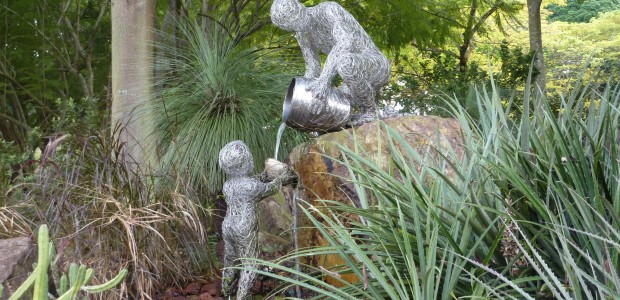
"Passing of Knowledge" by Victor Tan Wee Tar
...And now, come and be my fellow-traveler on a journey of self-discovery: Come and visit My Wisdom Corner. Surprise yourself. You will love it!
What is this life all about?
Why am I here? What’s my Life’s purpose? How can I make the most of my Life?
The Wisdom Corner
“Come, come, whoever you are. Wanderer, worshiper, lover of leaving. It doesn't matter. Ours is not a caravan of despair. come, even if you have broken your vows a thousand times. Come, yet again , come , come.”- Jalaluddin Rumi, The Persian Sage of Beauty, Wisdom and Love.
Come, come, whoever you are, come
Do you hear that voice calling you, calling us?
- Details
- Written by: Kamran Mofid
- Hits: 1562
Today (18 February 2018) the The Digital, Culture, Media and Sport Committee of the British Parliament published its final report on Disinformation and ‘fake news’.
The report lays bare horrifying abuses by Facebook and other so-called ‘Social Media’ outlets.
The scale of the report – it drew from 170 written submissions and evidence from 73 witnesses who were asked more than 4,350 questions – is without precedent. And it’s what contributes to making its conclusions so damning.
‘Facebook is an out-of-control train wreck that is destroying democracy and must be brought under control. Facebook behaves like a “digital gangster”. It considers itself to be “ahead of and beyond the law”. It “misled” parliament. It gave statements that were “not true”...Continue to read
‘Death threats, bullying, mental torture, privacy invasion, election rigging, fake news, monopoly abuse: as was said of a medieval pope, this is merely to suppress more serious charges. It is hard to recall the social media of 15 years ago and its offer of universal love, democracy and global peace.’...Continue to read
Yes, it is true, some of us knew all these all along. Yes, we knew that:

Photo:blog.rootshell.be
My view on Facebook: the arrogance of power of control and unaccountability, creating a culture of envy, jealousy, inadequacy, virtual reality & friendship, loneliness, anxiety, fear and depression
Yes, it is true, some of us knew these all along years ago and did not keep quiet either. This is what I wrote in 2012, seven years ago:
“The other day, I “Successfully” deactivated my Facebook account. I say “Successfully”, because Facebook does not make it easy to say goodbye, even though I was just trying a short-term separation and not a divorce! At least for now. {Since then, I have now permanently deleted myself from Facebook}
You know, given human weaknesses to addiction, that is any form of addiction, I thought I was watching me and watching you to see if you were watching me, a bit too much: Watching who likes or unlike whatever I post there. As if one click here or there is enough for me to know how good or bad I am doing!
My mind was going “digital” and I was becoming “virtual”: And I said to myself, Hey Kamran, watch where you are going man!
I thought I needed a time out, a time for some reflection and soul-searching. I do not know if you, too, are facing the same or not.”…Continue to read
And also see:
Good on you Ms. Essena O'Neill: Social media 'is not real life'
"How can we see ourselves and our true purpose/talents if we are constantly viewing others?"… "Many of us are in so deep we don't realize [social media's] delusional powers and the impact it has on our lives." Continue to read
Has loneliness become the new normal?
Virtual Connecting in the Digital Age
‘In the past few weeks I have posted three Blogs which, to some extent, as it happens, are very much interrelated: Each one, reinforcing the one before it. The first Blog was Loneliness in Modern Britain and this was followed by What is this life if…? And finally A Plea to address Global Youth Depression.
In these Blogs, I have highlighted the damaging consequences of our “digital”, “virtual” modern life: Virtual friends and friendship, virtual forums, virtual gatherings and get-togethers. In all, the emptiness of this virtual life that many millions are leading, when, the only engagement, conversation and dialogue they have is with their virtual friends on their smartphones, tablets, notebooks, Facebook,…etc.’...Continue to read
So, here you have it!
Get off the so-called ‘Social Media’. Help to stop the horrifying abuses, that has made these guys billionaires many times over at your cost! Carpe Diem!
- Details
- Written by: Kamran Mofid
- Hits: 18531
Love is Life’s Greatest Gift

Photo:bing.com
The symphony of life is all about love and loving, inspiring peace, justice, fairness and the hope for a better life.
All my life I have had the choice of love or hate. I chose love.
When I chose hate, I suffered pain and anguish.
When I chose love, I flourished and found peace and contentment.
Love: Life’s Greatest Gift'*
‘All of us want, or need, to be loved. The need for love is one of the most basic human impulses. We may cover this need with patterns of self-protection or images of self-reliance. Or we may openly acknowledge this need to ourself or to others. But it is always present, whether hidden or visible. Usually, we seek for love in human relationships, project our need onto parents, partners, friends, lovers. Our lack or denial of love often causes wounds that we carry with us. This unmet need haunts us, sometimes driving us into addictions or other self-destructive patterns. Conversely, if our need for love is met, we feel nourished in the depths of our being.
Love calls to us in many different ways. Yet while most people seek for love in the tangle of human relationships, the mystic is drawn deeper under the surface—in Rumi’s words, “return to the root of the root of your own being.” And here we begin to discover one of life’s greatest secrets: how love is at the source of all that exists, is the source of all that exists. Love is not just a feeling between people, but a substance, an energy, a divine spark that is present within everything. And it is this deepest essence—this substance of love—that we need to nourish us.
Love speaks to our soul and to our body. Love includes all the senses—taste and touch, smell, sight and sound. Love by its very nature includes everything. It does not just belong to a human relationship. It can be found anywhere, because it is everywhere. The mystic uncovers the simple secret that in truth love flows through all that exists—sweet, tender, aching, knowing, as well as dark and passionate. And as this primal energy, this greatest power, awakens within us, within our heart, our soul, and even within the cells of our body, it draws us deeper into its own mystery. Love draws us back to love.
And here we discover the oneness of love—that the source and answer to our primal need is not separate from us, but part of our own essential nature, our own true being. Again, to quote Rumi:
The minute I heard my first love story
I started looking for you, not knowing
how blind that was.
Lovers don't finally meet somewhere.
They're in each other all along.
The mystical truth of the oneness of love is something both simple and essential: the real nature of the love that we all seek is not other than us. I remember my first direct experience of this love. I was in my late 20s when one afternoon while I was in meditation, I felt what I can only describe as butterfly wings touching the edge of my heart. And in that instant my whole being and body were filled with a love I had hardly known existed. Every cell of my body was loved, tenderly, gently, and completely. Love was present in all of me. And this love came from within me, from my own heart. There was no other.
Love is life’s greatest gift. We seek for love, and yet it is all around and within us. It belongs to the oneness of life, to every dewdrop on every leaf, to the spider spinning its web, the child looking at the stars. If we open our senses and open our hearts, we can feel its presence. Love is life speaking to us of its real mystery. And in that conversation so many things can happen, so many miracles can be born, the small unsuspecting miracles that we often do not notice—like momentary sunlight from behind a cloud, a flower where a seed unexpectedly sprouted, a smile from a stranger. Despite all of its distortions, pain, and suffering, this world belongs to love, just as each of us belongs to love. And just to know that we are part of this love is enough.
Learning to love is learning to live, to become part of the great love affair that is life. And just as love is life’s gift, so is love the one true gift we each have to give. I was brought up in a family where love was unknown, where nothing real was given. And so I have come to appreciate this simple gift and how precious it is. Love is all we really have to give, and love is free, even if it costs blood and a broken heart.
Sadly, we live in a culture where so much is distorted, caught in the shadowlands of ego and greed. We are fed endless desires, manipulated by advertising and the media, no longer knowing what to trust. We have almost forgotten that life is sacred. At such a time it is especially important to return to what is essential and true, what cannot be bought or sold. Simple acts of loving kindness, an open heart that listens, hands that care—with a friend, a stranger, with someone in need. These are the true currencies of our shared humanity, which easily break through barriers and remind us of a unity deeper than our surface divisions. In our true nature we are not consumers but lovers, and life is not about economic prosperity or getting more stuff, but is a love affair waiting to be lived.
And at this time it is especially important to give the gift of love back to the earth, the same earth that we are poisoning and polluting. Return love with simple acts: planting some herbs with care and attention; walking, our feet touching the ground with love every step; seeing spring blossoms, aware of her beauty. The earth is so generous, she has given us life and yet we desecrate her, attack her fragile web. It is time to fall in love again with the earth, to remember that she is sacred and help in her healing, to listen to her and love her.
And what is revealed within the heart of the lover, of the one who has given himself or herself to love, is the great secret of creation: that love is always present. Love is present within our own heart, within every breath, within every cell of our body and the whole of creation. The whole of creation is a continual outpouring of love, of lover and beloved needing each other, meeting each other, merging with each other. The great mystery is then not that this love is always present, but that it appears hidden from us, that we have forgotten how we are made of love. That we are love seeking love. And life’s greatest gift is love waiting to be lived.’
- Love Life’s Greatest Gift by Llewellyn Vaughan-Lee, was first published in Common Ground, February 2017.

Photo:bing.com
Love Thyself: A Reflection by Harold W. Becker
Founder and President, The Love Foundation
“There is a great wisdom in the idea to “know thyself.” There is an even more amazing truth to “love thyself.” This is not love in a selfish sense, rather to fully accept ourselves just for who we are here and now without condition or limitation. The better we begin to know, understand and love ourselves, the greater we develop love for others and together, the more compassionate world we create.
The process of loving unconditionally begins by turning within and acknowledging our potential to love – even if we do not currently believe it is possible. We have to clear away our thick layers of old worn out and limiting beliefs that hide our light. We also need to look in the mirror of life and realize our current state of personal affairs. How much do we love? Why do we give in to fear and doubt? Why are we afraid to accept and love our self? What keeps us from loving all others? Do we even know what love really means to us?
In every moment we have the opportunity to embrace our natural ability to love unconditionally and to share this love with all others. Thankfully, we are not alone in this endeavor. We have our Higher Self, our indwelling higher nature that knows how to guide us personally through the maze of illusion and into our unconditionally loving selves. In contrast to our human side and focus, this is the spiritual part of us that understands and embodies love and knows the big picture. It brings to us the right ideas, impulses, people, lessons, and experiences that best encourages us how to love more deeply and release the judgments and opinions that bind us. It is ever ready to help us realize and use the higher response of love. We need only acknowledge this guiding force and potential within ourselves to reap the gifts.
Pursuing a life of unconditional love is an incredible journey of ever expanding freedom and joy, peace and harmony. The more we engage in it, the more our lives become enriched by this energy. Willingness is the key that unlocks our potential. Without our willingness to go beyond current understandings of personal and societal beliefs and to even try it out, unconditional love remains little more than a pair of words. It is especially during challenging experiences and events that touch us at our very core, that our readiness to find and use the qualities of forgiveness and love become vital to our individual and collective wellbeing. Without this willingness, we often shut the door to a loving response that could change generations of lives in a single moment.
The journey is as simple as embracing the love we already have within. We are the only ones that make it difficult or delay its attainment in our life. Experiencing and sharing love is the intention; patience and practice are how we get there. Whether we accept it or not, love is the only force that resolves the issues of life. It is the energy that dissolves the limitations of hatred, separation, anger, greed, ignorance and the many other negative and destructive forces that pass through and around us each moment. It is up to us to integrate and use the energy of love to transform the limitations into unlimited possibilities that benefit all.
It is our ultimate destiny to love unconditionally. It is also our freedom, right, privilege, and our gift to ourselves and life around us. Not only does it generate harmony and joy, wisdom and understanding, it brings reason and purpose to life. Be inspired to seek love for yourself and your neighbor and make this a better world for all. We have much to gain and nothing to lose in accepting and using unconditional love. So give it a try, you may never experience life the same way again.” (Original source of this article: Mailshot by the Love Foundation)

Why Love, Trust, Respect and Gratitude Trumps Economics: Together for the Common Good
Kamran Mofid, Founder, Globalisation for the Common Good Initiative (GCGI)
(Written to Commemorate the 10th Anniversary of the GCGI)
Oxford 2002 to Oxford 2012
Portrait of a Great Journey for the Common Good
We live in difficult and troubling times, facing unprecedented global challenges in the areas of climate change and ecology, finance and economics, hunger and infectious disease, international relations and cooperation, peace and justice, terrorism and war, armaments and unprecedented violence. It is precisely in times like these – unstable and confusing though they may be – that people everywhere need to keep their eyes on the better side of human nature, the side of love and compassion, rather than hatred and injustice; the side of the common good, rather than selfishness, individualism and greed.
People need to see that there are serious alternatives to the world’s present failing policies, rules and institutions, and that there are like minded global citizens who share a vision of hope and common values that can lift them out of the deep sense of powerlessness and despair that is now affecting so many parts of the world.
Guided by the principles of hard work, commitment, volunteerism and service; with a great passion for dialogue of cultures, civilisations, religions, ideas and visions, at an international conference in Oxford in 2002 the Globalisation for the Common Good Initiative (GCGI) and the GCGI Annual International Conference Series were founded.
The Globalisation for the Common Good Initiative Annual Conference series have ranged far across the world through Oxford, Saint Petersburg, Dubai, Nairobi/Kericho, Honolulu, Istanbul, Melbourne, Chicago and Thousand Oaks, California. The 10th Annual Conference, once again, is returning to Oxford in September 2012.
The GCGI conferences have created and continue to create an ever-widening international community of scholars, researchers and experts, forging links and establishing dialogues across national, cultural, religious, and academic boundaries, and putting into practice the movement’s core philosophy: that globalisation need not be defined merely in terms of impersonal market forces, but can be a power for good, building spiritual bonds that can unite humanity and bring different cultures, civilisations, faiths and academic disciplines closer together.
Today the GCGI is considered a leading progressive think tank, producing cutting-edge research and innovative policy ideas for a just, democratic and sustainable world. For the last 10 years, GCGI has helped shape the progressive thinking that is now the political centre ground. Independent and radical, we are committed to combating inequality, empowering citizens, promoting social responsibility, creating a sustainable economy and revitalising democracy. Best known for our influential work on Globalisation for the Common Good, Business Ethics and Corporate Social Responsibility, Value-led Economics and Business Education, Ecology, Environment & Sustainable Development, Interfaith Dialogue and more, we now have significant cooperative projects with a number of universities, think tanks and civil societies in many countries around the world. GCGI’s media programme and its influential online Journal, Journal of Globalisation for the Common Good, hosted at Purdue University, has since its inception in 2005 made significant contribution in furthering progressive goals in education and media policy.
What the GCGI seeks to offer- through its scholarly and research programme, as well as its outreach and dialogue projects- is a vision that positions the quest for economic and social justice, peace and ecological sustainability within the framework of a spiritual consciousness and a practice of open-heartedness, generosity and caring for others, by encouraging us all to know and to serve the common good.
The GCGI is a non-profit making initiative with no formal income, capital, seed money, or endowment. It has no bank account, cheque book, team of fund-raisers and accountants. This self-sustaining funding mechanism has been a key linchpin of our independence and integrity. At no point in our history has the GCGI been so reliant on external sources that if external funding is removed, the GCGI cannot continue.
The most precious capital that the GCGI has had is the calibre of its friends and supporters, including the universities that have hosted its annual conferences, and more, which with their love, trust and goodwill have committed themselves as partners in shared vision, to support the GCGI in a spirit of moral, spiritual and intellectual collaboration to further its work.
Reflecting on our shared journey for the common good, it is amazing to me that ten years have gone by so quickly. What began as a simple idea to share the practical wisdom of the common good, dialogue, love, generosity, kindness, and more has blossomed into an internationally recognized non-profit organization that has become a leading resource “inspiring people to do great things for the common good”.
From the very beginning, I knew that we will succeed, if we can reach-out to everybody around the world and be an all volunteer network of individuals, while approaching our growth organically and focusing on our vision and mission.
As you might imagine, in the initial days when we began sharing our vision of doing things for the common good, we were met with a great deal of scepticism, apprehension, and thankfully, some warm embraces and love. We were energized by all of those early experiences and continued to find ways to build ideas, programmes and initiatives around our main message and theme of Globalisation for the Common Good.
Perhaps our greatest accomplishment has been our ability to bring Globalisation for the Common Good into the common vocabulary and awareness of a greater population along with initiating the necessary discussion as to its meaning and potential in our personal and collective lives.
In the last ten years and so, similar to all those who have taken a similar value-based-journeys of self-discovery, I, too, have also realized that, “From the great oceans, vast plains and highest mountains that sustain our fragile and vital ecosystem, to our village friends and city dwellers that bring meaning to our common journey, we are quickly realizing that everyone and everything is interconnected and interdependent.
With each passing day, it is also increasingly evident in every corner of our world that great change is upon us and that by standing together in mutual respect, honour and dignity for one another, we will answer this call with creative, viable and sustainable solutions.
We must take the necessary steps now to reach out to our fellow humans and extend our hand in forgiveness, acceptance and genuine friendship. Our choices shall be made from compassion while embracing the richness of our amazing diversity. The love and acceptance we have for ourselves will be the source of our strength to assist others. Together we can and will make a difference through love.
These necessary changes may challenge us to the depths of our courage and test the very essence of our personal character, yet with each ensuing breath we shall remain in love and this love will be the very basis of a new era of peace and abundance, equality and goodwill for all”.
In short, at Globalisation for the Common Good Initiative we are grateful to be contributing to that vision of a better world, given the goals and objectives that we have been championing since 2002. For that we are most grateful to all our friends and supporters that have made this possible.
Therefore, yes, it is true: “Love, Trust, Respect and Gratitude Trumps Economics”.

Photo:bing.com