
- Details
- Written by: Kamran Mofid
- Hits: 2542
Life can be tough at times. I know that life can knock us into the dirt. But, I also know that life can be joyous, worthwhile and rewarding if we knew how! Let us see what our three centenarians can offer us on how to take this journey we call life.

Photo: holidaytouch.com
Today, Monday, 27 May, is a public holiday in Britain. As usual I came down at dawn. Wow! What a beautiful day. Birds had got up before me. They were singing their heads off. The Sun was rising and the sky was full of beautiful colours. I put the kettle on and made my tea. Went to the garden and watered our beautiful roses. And then, turned the computer on. I usually get some lovely and inspiring emails from my friends all over the world. Today was no exception. A very dear friend from California had sent me a very nice video about the incredible life journey of three remarkable centenarians.
Whilst having my tea, I began to watch. It was wonderful. It made me laugh, it made me cry. It reinforced me to think, reflect, wonder and ponder, about this journey we call life.
You know, I love stories. I love to hear stories and I love to tell stories. So, I very much love to share their stories with you. Please make time today and watch it. You will be happier for it.
Then, I want to share a few further relevant stories with you. You will see them at the end of this page. I very much wish that you will enjoy them too. So, there you have it. First, the video:
‘Life Lessons From 100-Year-Olds’
‘We asked three centenarians what their most valuable life lessons were, and also their regrets.
The conversations that followed were remarkable. They talked about the importance of family, people, relationships and love. Their view on life, as an elderly citizen with a lot of experience is truly an inspiration and motivation.’
‘Age is just a number, and this is clearly evident in the lives of the three centenarians interviewed in the LifeHunters video below. Each has his or her own story — Clifford Crozier, born in 1915; Emilia Tereza Harper, born in 1913; and John Millington Denerley, born in 1914 — but you'll notice a certain "je ne sais quoi" that they all seem to share.
Positivity and strength are certainly apparent, along with a will to live and a continued interest in and curiosity about the world around them.
Even as times changed, these people kept on living, adapting to and welcoming the new phases of their lives. It's this fortitude and emotional resilience that has likely played a major role in their longevity.’
Check out this incredible video where they share what they’ve learned, what they regret, and their advice for a long, happy life.
Watch it and enjoy it. Truly remarkable.
Hope you enjoyed watching the video. And now, a bit of follow up from me:
In these troubled times let us be ordinary and enjoy the simple pleasures of life
The secret to happiness? Contentment!
The Gift of Retirement is 'A New Lease of Life': A View from Morocco and Lebanon
Composing a New Life: In Praise of Wisdom
And finally, a reflection from the beautiful Island of Crete, Greece.
My wife and spent a most beautiful month in Greece in April and May. First, a week in Athens, and then, three wonderful weeks at our Hapimag Resort in Damnoni, Crete. We were also blessed further, when, our younger son, daughter-in-law and grand daughter joined us too. What a blissful times we all had in Crete.
Whilst in Crete, I sent three emails to my GCGI friends and colleagues, reflecting on my time and feelings there. I received many heartwarming replies. Therefore, in conclusion, as they also reflect well on the gems we heard from the centenarians in the video, I have copied those emails below for your reflections too:
Hello from Crete and small, simple pleasures of life (1st email, 5 May 2019, at 5.33AM)
Dear Friends,
Greetings and love from the very beautiful and lovely Island of Crete, Greece. In the last week or so Annie and I have been traveling in Athens and a couple of days ago arrived here in Crete. Very beautiful, warm and blue skies and calm seas.
Whilst travelling, I picked up, once again, a fascinating book I have been reading. I cannot put it down! I want to read it again and again. And knowing me, I cannot settle until I have shared it with you.
Given the short term tenure of life, and the littleness of human existence, why is it that we spend so much time and effort on things that are not really important?
Our collective model of a good life tends to focus exclusively on material side of our existence, whilst ignoring the more important side, namely, the spiritual aspect of our being.
The biggest tasks of civilisation is to teach us how to better enjoy this journey we call life and this is why the book I am reading again and again- Small Pleasures- so beautifully fulfills that function.
Please click on the link below, go to the bottom of the page and see more about this book. Get the book and read it. You will not be disappointed, believe me.
Love,
Kamran
Up at Dawn (2nd email, 14 May 2019, at 4.12AM)
Dear Friends,
Greetings and love from the loveliest Island of Crete.
You know, about 20 years or so ago going through some challenging times in my life, a loving friend, a wise teacher, encouraged me to get up early in the morning, at dawn, just before the sunrise. He told me Kamran, you will see a different world, a better world, a kinder world, a healing world, at that time of the morning.
You will see the clouds dancing, the birds singing, the sky changing. You will see the dawn of a better life.
WoW! How wise and correct my loving, wise friend has been, I must say.
I have been getting up everyday at 5am, doesn’t matter where I am in the world. And I have never looked back.
Today sitting in the balcony of our apartment here in Crete, surrounded by the most beautiful sea and mountains, waiting for the sunrise, listening to the birds, watching the light clouds dancing, I thought it makes me even happier sharing these feelings with you. See the link below, a chapter from my favourite book, Small Pleasures.
As ever,
Kamran
https://www.theschooloflife.com/thebookoflife/up-at-dawn/
On Sunday Mornings (3rd email, 19 May 2019, at 6.22AM)
Dear Friends,
Greetings and blessings to you all from Crete on this beautiful Sunday morning.
I don’t know about you, but, I, for one, am so much yearning for the Sundays we used to have in Britain, which very sadly we have lost.
You know, being from Britain, the land of 24 hours shopping, where everything it seems is about monetary values, shop til you drop, production and consumption, trade and such likes, I thought its the same here, in Crete too. But what a shock I had!
Last Sunday we needed a few items, this and that. Off I went to the nearest small town. But everywhere was closed, like it was in Britain all those decades ago.
I saw families going to church. I saw families going to the seaside. I saw the baker and his wife, their children and grandchildren having a picnic together. The sound of their laughter was so joyous to hear. They were all having a blissful day.
I can remember what it was like all those years ago in Britain. After my marriage to Annie in 1974, and becoming part of my new English family, we, too, had all those lovely moments, going to church, meeting family and friends, grandparents, grandchildren, aunties, uncles, cousins, nieces and nephews. Going to our local, a pint or two, here and there, playing a bit of dominos, and then, Sunday roast with all the trimmings. Good times to be had by all. Those beautiful and blissful Sundays.
These days, Sundays are not the same as before. They are another day, like the previous 6 days before it.
Horrible, Godless, spirit less, right wing, neoliberals, with no humanity, wisdom or principles, started to mess up with God’s day in the 1980s. They said, Sunday must become an economic day, people going to shopping malls, eating Big Macs and Burger King, with litres of fizzy drinks. This, they told the nation, is good for them and the economy!! Making us all great again!!
A crucial part of the pleasure of Sunday morning is our awareness that it’s a distinct, unusual time. I hope, one day, once again, we may be able to feel that pleasure again.
Please look at the link below, a beautiful reflection on Sunday mornings, a chapter from Small Pleasures:
https://www.theschooloflife.com/thebookoflife/on-sunday-mornings/
And then please see still the link below, on how we may be able to regain the joy of Sundays once again:
https://www.gcgi.info/blog/712-sundays-making-them-special-again
Yours,
Kamran
PS: Today, this Sunday, I am very happy. Annie and I have our younger son, daughter in law and grand daughter with us. I don’t need to go for last minute shopping. We are preparing breakfast and then a lovely lunch later. The sunrise is stunning.The blue skies and the calm seas very inviting,...What more can I say, but, thanking God for all his blessings on this Sunday morning.
Photo:flickr.com
- Details
- Written by: Kamran Mofid
- Hits: 2199
Polly, A Beacon of Hope and Light
(4 July 1968- 21 April 2019): An Intellectual Activist who I met in Astana
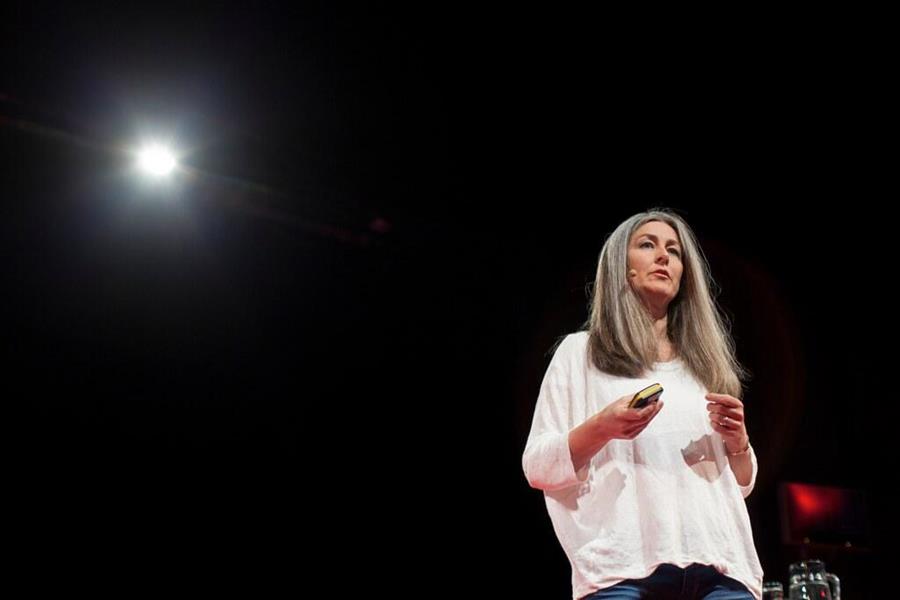
Photo: Stop Ecocide
A lawyer who abandoned a courtroom career to campaign for the international crime of ecocide
N.B. A personal note, recalling what I had written in 2014:
'Moving from moral to legal wrong'
This was the title of a Newsletter (4 March 2014) by my good friend Polly Higgins. Polly is a legal expert on the law of Ecocide and author of Eradicating Ecocide and Earth is our Business, and calls Ecocide “the missing crime of our time.”
Polly and I first met at the Astana Forum a few years back. It was there that we discovered as well as sharing many ideas, insights and visions, we also have another common bond, namely, our books have been published by the same publisher, Shepheard-Walwyn, London.
Ever since I met Polly in Astana I have been following her work and projects. She has done a great deal in the interest of the common good.
She deserves all our acknowledgement and support. In this blog posting, by reprinting her letter: “Moving from moral to legal wrong” I would like to introduce Polly more fully to our GCGI Family...Continue to read

‘When do laws no longer work? When our laws protect greed and not the greater good of society as a whole. Most laws, in particular at an international level, are often drafted without an enforceability mechanism (such as the creation of a crime or by putting in place powers to prohibit the harm). As a result, society suffers.’

Photo:stopecocide.earth
'Her legal and campaign teams are fully committed to carrying her work forward - with your help and that of many thousands of Earth Protectors across the world. Polly’s spirit will live on in all who know it is time that harm to the Earth was named - and prevented.
It is our job to Stop Ecocide: Change the Law and ensure that ecosystem destruction becomes a crime. It won’t just be the law that changes then, but the whole course of history.'-StopEcocide
Polly Higgins obituary
By Jojo Mehta
What would it take to create a legal duty of care for the Earth? That is the question the Scottish barrister Polly Higgins found herself asking 15 years ago; a question that led her to abandon her courtroom career and embark on a quest to establish an international crime of ecocide. Such a crime would render persons of superior responsibility (such as company chief executives and government ministers) liable to prosecution for causing or contributing to large-scale ecosystem destruction.
Polly, who has died aged 50 of cancer, had begun to see the climate activist movement take up her call in the weeks before her death, with Extinction Rebellion actions demanding that ecocide law be established around the world.
Polly’s early research revealed that the Rome statute, the governing document of the international criminal court (ICC), had originally included an atrocity crime of ecocide, but that it had been dropped at the final drafting stage. Determined to see this “missing” crime reinstated alongside genocide, war crimes, crimes against humanity and crimes of aggression, she submitted a proposal to the UN Law Commission in 2010 that defined ecocide as “extensive loss, damage to or destruction of ecosystems of a given territory, such that peaceful enjoyment by the inhabitants has been or will be severely diminished”. This led to a mock ecocide trial at the UK supreme court in 2011 (Michael Mansfield prosecuting), which demonstrated the legal viability of such a crime and brought Polly to international attention.
Polly’s first book, Eradicating Ecocide: Laws and Governance to Prevent the Destruction of Our Planet (2010), won the 2010-11 People’s Book prize and set out her full proposal, while her second book, Earth Is Our Business (2012), included a draft Ecocide Act and indictments that had been used in the mock trial. She became a sought-after speaker and delivered the 50th anniversary Rachel Carson Memorial Lecture in 2012, in London and in the Netherlands. She was named one of the world’s top 10 visionary thinkers by the Ecologist magazine, and a 2015 documentary featuring her work, Advocate for the Earth, was produced by the Dutch broadcaster VPRO.
Polly discovered over time that big NGOs and grant-giving bodies were reluctant to support her proposal, perceiving it as too high-risk or too controversial; and that governments in wealthy developed nations were too enmeshed with polluting industry to consider taking it forward. She therefore shifted her attention to small climate-vulnerable states with the biggest incentive to propose an ecocide amendment to the Rome statute, and in 2017 founded a trust fund to enable her legal team to assist those states in doing so.
Polly attended the annual meetings of the ICC’s management oversight and legislative body (the Assembly of State Parties to the Rome Statute) for four consecutive years – with increasing visibility and amid growing interest from Pacific island states. Among these were Vanuatu, whose foreign affairs minister, Ralph Regenvanu, publicly acknowledged Polly’s work in December 2018 after global climate change talks failed to result in the support his islands were looking for in the face of climate breakdown.
During the 2018 assembly, Polly’s team launched an “independent preliminary examination into climate ecocide” to look at whether the CEO of Royal Dutch Shell, Ben van Beurden, and the CEO of Shell Nederlands, Marjan van Loon, could be prosecuted for ecocide, if such a crime is ever put in place. Since then the team has been preparing a test case file for submission to the ICC, to discover whether prosecutions for climate ecocide can in any case be investigated under existing legal provisions.
Born in Glasgow to Nicholas Higgins, a dentist, and his wife, Monica (nee Garvey), an artist, Polly was the eldest of three children. Showing a strong awareness of injustice from an early age, she was expelled from St Aloysius, a private Jesuit school in Glasgow, at 16 for punching a teacher, unable to stand by and watch a younger child being violently disciplined.
She went on to achieve a degree in art history from Aberdeen University, a diploma in semiology from Utrecht University in the Netherlands, and a postgraduate degree in law from Glasgow University before moving to London, where she worked for an auction house and set up a catering business to fund her way through bar school. She was called to the English bar in 1998 and gained a pupillage at the chambers of Baroness (Patricia) Scotland. She was subsequently offered a tenancy at Bridewell Chambers in London, where she met Ian Lawrie, now a judge, whom she married in 2002. After quitting court advocacy she became co-founder of a solar energy company, Desertec, before devoting herself full-time to ecocide law in 2010.
She is survived by Ian, by her mother, her brother, Nicholas, and her sister, Monica.
- Pauline Helène (Polly) Higgins, barrister and climate change activist, born 4 July 1968; died 21 April 2019
*Polly’s Obituary noted above was written by Jojo Mehta, Polly's closest colleague and co-founder of the Earth Protectors campaign, and was first published in the Guardian on Thursday 25 April 2019.
- Details
- Written by: Kamran Mofid
- Hits: 2534
‘Nigel Moon spent 10 years restoring this 18th-century mill. By isolating himself from the modern world, he has found what many of us lack – contentment’
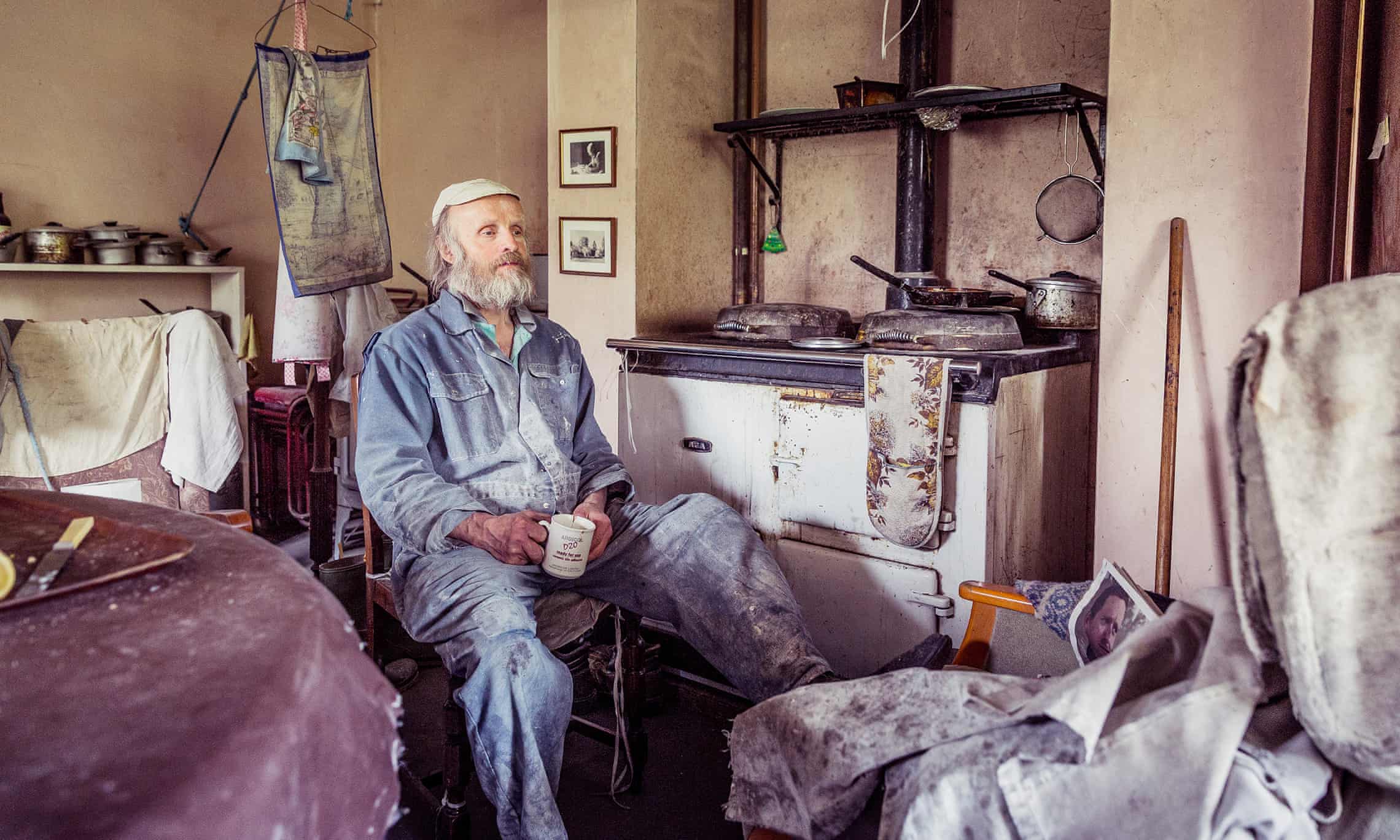
Miller Nigel Moon in his Rutland home, by Euan Myles. Photograph: Euan Myles-theguardian.com
‘I’ve never met a man more content than Nigel Moon. He’s dedicated his whole life to the windmill where he lives and works. He has no modern technology – no computer, no television, not even a mobile phone until very recently – and he’s happier for it.
Nigel decided he wanted to become a miller when he was a small boy. He spotted his first windmill when he was out horse-riding through the Leicestershire countryside, and that was it. It was a childhood dream that he turned into a lifelong love affair.
It’s not the first mill he’s done up. He completely restored one from scratch out in Sutton in East Anglia, and got it working, but then decided to start all over again. He found the Whissendine mill in Rutland, which was completely ruined at the time. It took him 10 years to completely restore it.
I first came across Nigel when I saw him briefly on a TV show about how to make the perfect Melton Mowbray pork pie. I recognised the windmill, as it’s near to where I grew up.
I popped in to see him, then returned to spend a couple of days taking photos of him and his mum, Ruth, who also lived at the mill. She was 94 then, and was still bagging up flour. She said being in the mill with Nigel, still working, was what kept her going.
Inside the mill is just incredible – it’s a working mill with cogs and stairs going to the top, though you probably wouldn’t fancy going up there. When you’re inside and the sails are turning, it’s like being in a wooden, mechanical clock. The whole thing is shuddering and clunking, and the stones are spinning, the sieves are shaking. It’s a living, breathing building, and Nigel is like the heartbeat, scurrying up and down ladders, keeping the whole thing moving.
Nigel was completely living the dream, and not in that hipster craft way we talk about – you know, that person who quits their job in IT, buys an apron and starts making violins. It’s not like that for Nigel. When you meet him, you are meeting someone from another century. He’s a time capsule.
There are only a very few mills working commercially like this – Nigel does his own deliveries to local shops, farm shops, organic shops, and that’s how he survives. It’s a unique life, but he’s not a recluse – he’s trying to turn the little shed into an exhibition space because he gets local schoolkids going to see him.
This photograph came about during lunch. We’d eaten something he’d baked – some bread and a delicious apple pie – and were having a cup of tea and a chat. I asked if I could take a quick picture of him resting. He looked so peaceful, sitting there gazing into the Aga. It summed his personality up, how laid-back he was. He’s managed to carve out what many of us lack in life: contentment. And that’s because he’s isolated himself from the modern world within this 18th-century building and invested all his time and effort into keeping it running.
I like how the picture shows his home as it really is. Nothing’s been tidied away. He lives this incredibly practical life – there’s nothing in the house that has no practical use. The whole thing has a lovely echo of a different age, when all we did was work, eat and sleep, yet we were more content, in a way.

Photo:bing.com
Sadly, Ruth passed away a year or so after this was taken. She’d been working right up until a couple of weeks before her death. Now Nigel is alone in the mill, but I think he’s at peace with things, more than anyone I’ve ever met.
Nigel can be very quiet and philosophical. But he’s funny too. I called him recently to see how he was and he just said: “Terrible! Nobody’s making bread at the moment because they’ve all gone gluten-intolerant!”*
*This article by Tim Jonze was first published in The Guardian on Thursday 25 April 2019.
See the original article: Euan Myles's best photograph: The secret to happiness? Your own windmill
The Miller’s Tale: Watch the Video
Give Me the Simple Life: Ordinary Wonders
Life can be tough at times. I know that life can knock you into the dirt. But, I also know that life can be joyous, worthwhile and rewarding if we knew how!
In these troubled times let us be ordinary and enjoy the simple pleasures of life

Photo:journeywithparkinsons.com
- The scar on the conscience of Britain: The neglect of its children, youth, students and more
- Like Coventry Cathedral Notre Dame will also rise again
- Celebrating the life of William Stanley Merwin, poet of nature, a lifetime worker for peace and social Justice (September 30, 1927 – March 15, 2019)
- In these troubled times let us be ordinary and enjoy the simple pleasures of life
- Independence’ and the Lies of Brexit