- Details
- Written by: Kamran Mofid
- Hits: 3165
Hands Off Our Land!
‘If this public land sell-off continues, there could be none left by 2050’
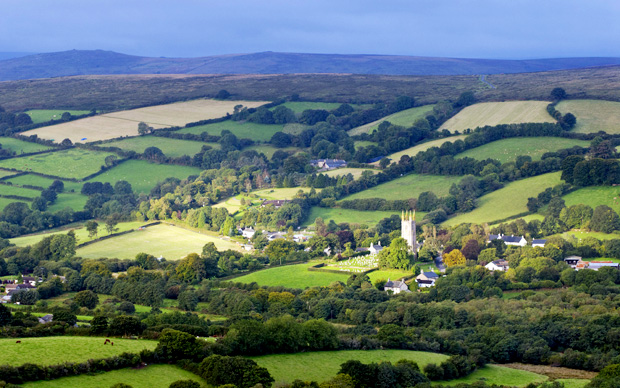
Photo: telegraph.co.uk
Since Margaret Thatcher came to power, 10% of the area of Britain has left public ownership, and sold to private interests, against the common good of the nation. No wonder the country has lost its soul, heart, moral fibre and purpose.
Celebrating and promoting greed and extreme values-free economic system is sinking to the nadir of decadence.
A Timely Reflection on the biggest privatisation: the land beneath our feet*
N.B. Before this reflection, I wish to share a few examples of articles I have written over the past few years, highlighting the consequences of the biggest robbery and theft of all time, namely, the so-called privatisation, deregulation, and marketisation, neoliberalism, if you may:
UK’s economic model is broken, says Archbishop of Canterbury
People’s Tragedy: Neoliberal Legacy of Thatcher and Reagan
Bastard Economics of Greedy Neoliberalism and the Killings of the Innocents in London Tower
Dear Prime Minister-Britain needs a New Economic Model
And now reverting to our reflection on the sell-off of our Motherland, our Sacred Home:
A Timely Reflection on the biggest privatisation: the land beneath our feet*

Photo: Stop the Sale and Privatisation of ALL public Land.
‘In her memoirs the late Margaret Thatcher wrote that privatisation must be “at the centre of any programme of reclaiming territory for freedom”. Since 1979 British prime ministers have been true to her word. Thatcher used territory in a metaphorical sense, but it was also true literally: the privatisation of land is the biggest, and least well-known, sell-off of the state’s assets. As Brett Christophers, a professor of economic geography, points out in our pages, almost 10% of land has been transferred from public into private ownership since Thatcher came to power. In his book, The New Enclosure, Prof Christophers calculates that approximately 2 million hectares of land – or 10 % of Britain – has disappeared from public hands, the bulk of which has entered corporate, as opposed to charity or community, ownership. This is a privatisation of half of the state’s estate, worth about £400bn, and dwarfs any other transfer of public wealth to private hands.
Marketisation, privatisation, liberalisation, deregulation, self-regulation, downsizing, outsourcing, cost-cutting, profit-maximisation, cost-minimisation, highest returns to the shareholders, values-free actions and education, alternative facts, falsehood, lies and deceitful thoughts, brainwashing, bribery and corruption,…:
These are the main ingredients of the Bastard Economics of Neoliberal Ideology
The scale of the disposals was masked because the process took place largely in silence and by stealth. Often tracking the sales was difficult because of the opacity of transactions. The diversity of public bodies in the UK offering sites – from forests to airbases to hospital grounds – made it hard to piece together. The sales often took place at knockdown prices, with the public sector barely realising a fraction of the current value. This process has been briefly illuminated by tenacious journalism, such as this week’s story exposing how nine years of swingeing central government cuts to English councils have resulted in a vast and irreversible sell-off of public assets. In many cases local authorities have begun offloading their assets – playing fields, community centres, libraries, youth clubs, swimming pools – to fund redundancies made necessary by Whitehall cuts.
Would Henry George’s ‘Remedy’ help us combat today’s global crises?
The defence of privatisation is that it can increase efficiency and spur investment. Such an argument is difficult to sustain with land. When the Cabinet Office looked into whether public bodies were holding on to vacant space, officials reported that, au contraire, it was the private sector that had a problem – maintaining a vacancy rate three times as high as government. Neither has land use been invigorated by private developers. Last year the New Economics Foundation pointed out that the government’s target of building 160,000 homes by selling off public land was 12 years behind schedule and would take until 2032 to achieve. The Tudor enclosure movement was supposed to have turbo-charged the capitalism of its day. Even if this dubious claim is true, it is unlikely that today’s equivalent is having any positive effect.
Where there appears to be some historical echo is in the appropriation of wealth by a rentier class which has grown up alongside large aristocratic estates. A staggering 23 of the top 100 richest people in the country last year have property listed as a major source of their wealth. That dwarfs the other biggest sources. Then there is the corporate hoarding of land: one study lists 50 private companies that together own about a 40th of Britain. Lastly there is the growing social dislocation: the share of young families privately renting has increased from just 9% in the late 1980s to 34%. Land can bring political influence, power, wealth and pleasure. But these things ought to be widely shared, whether land is built upon or not. It ought to be there for the common good: to be run across or gazed over or protested on.
Ownership of land matters, and it ought not to be solely for the market to decide who is included or excluded from it.’
* Guardian Editorial, ‘The Guardian view on the biggest privatisation: the land beneath our feet’ was first published in the Guardian on Tuesday 5 March 2019.
See also:
Hands off #OurLand: gifting green space to QPR highlights wider threat to cities
The biggest privatisation you’ve never heard of: land
If this public land sell-off continues, there could be none left by 2050
The Must Read Book
By Brett Christophers
The New Enclosure: The Appropriation of Public Land in Neoliberal Britain
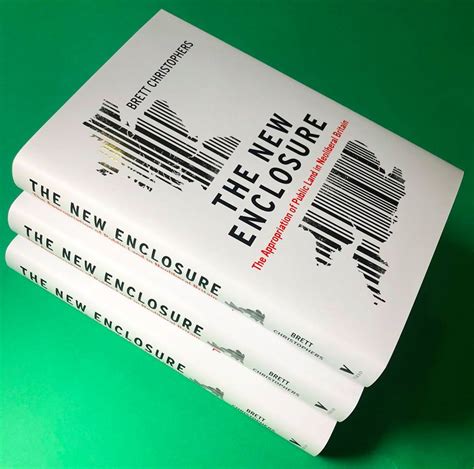
Photo:Verso Books
'Much has been written about Britain's trailblazing post-1970s privatization program, but the biggest privatization of them all has until now escaped scrutiny: the privatization of land. Since Margaret Thatcher took power in 1979, and hidden from the public eye, about 10 per cent of the entire British land mass, including some of its most valuable real estate, has passed from public to private hands. Forest land, defence land, health service land and above all else local authority land for farming and school sports, for recreation and housing has been sold off en masse. Why? How? And with what social, economic and political consequences? The New Enclosure provides the first ever study of this profoundly significant phenomenon, situating it as a centrepiece of neoliberalism in Britain and as a successor programme to the original eighteenth-century enclosures. With more public land still slated for disposal, the book identifies the stakes and asks what, if anything, can and should be done.'
Are you physically and emotionally drained? I know of a good and cost-free solution!

Photo:coolcatteacher.com
- Details
- Written by: Kamran Mofid
- Hits: 6640
Photo:coolcatteacher.com
‘As our world becomes increasingly urbanized and mental illnesses such as depression and anxiety become seemingly more prevalent, it is time we pause and consider ways to alleviate this stress. Growing numbers of psychologists claim that several of our modern stressors are due to a departure from the natural world. Since industrialization, we have become disconnected from our relationship with nature. However, there is a solution…’
Especially at risk are the Millennial burnouts, the youth, our future leaders: It’s all about being hyper-healthy, hyper-clued-up, hyper-fashionable, hyper-achiever, be best, be perfect,... - and this is too exhausting, too draining.
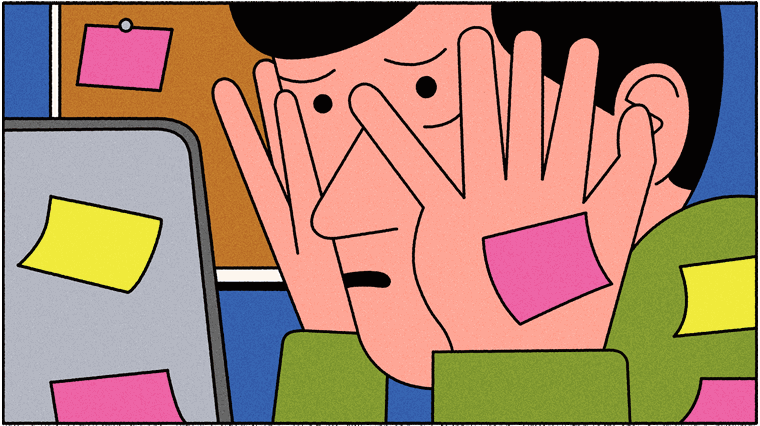
Photo: nbcnews.com
Together, We Hold the Future in Our Hands
We must not fail our children and grandchildren. We must do the right thing. We must save the web of life
At the GCGI we believe every child, young person, students and their teachers should have regular opportunities and ease of access to connect with nature, so they can learn to value it, appreciate it, enjoy it, prioritise it and take action to save it.
“Be like the sun for grace and mercy.
Be like the night to cover others’ faults.
Be like running water for generosity.
Be like death for rage and anger.
Be like the Earth for modesty.
Appear as you are.
Be as you appear.”-Rumi
Desperately seeking Sophia: The Wisdom of Nature
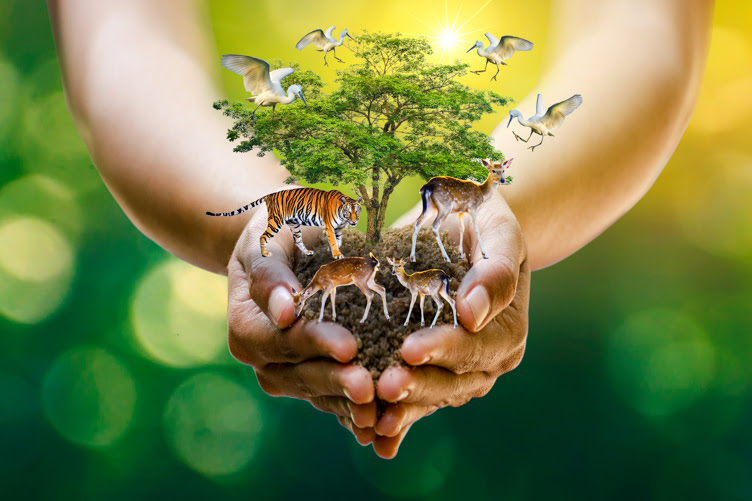
Photo: Stock
Mental and physical health: The Healing Power of Nature
‘You’ve got problems. Perhaps more than you know. Apart from all the usual woes—work, relationships, money, time—the ‘civilized’ life may also be causing you psychological trauma.’
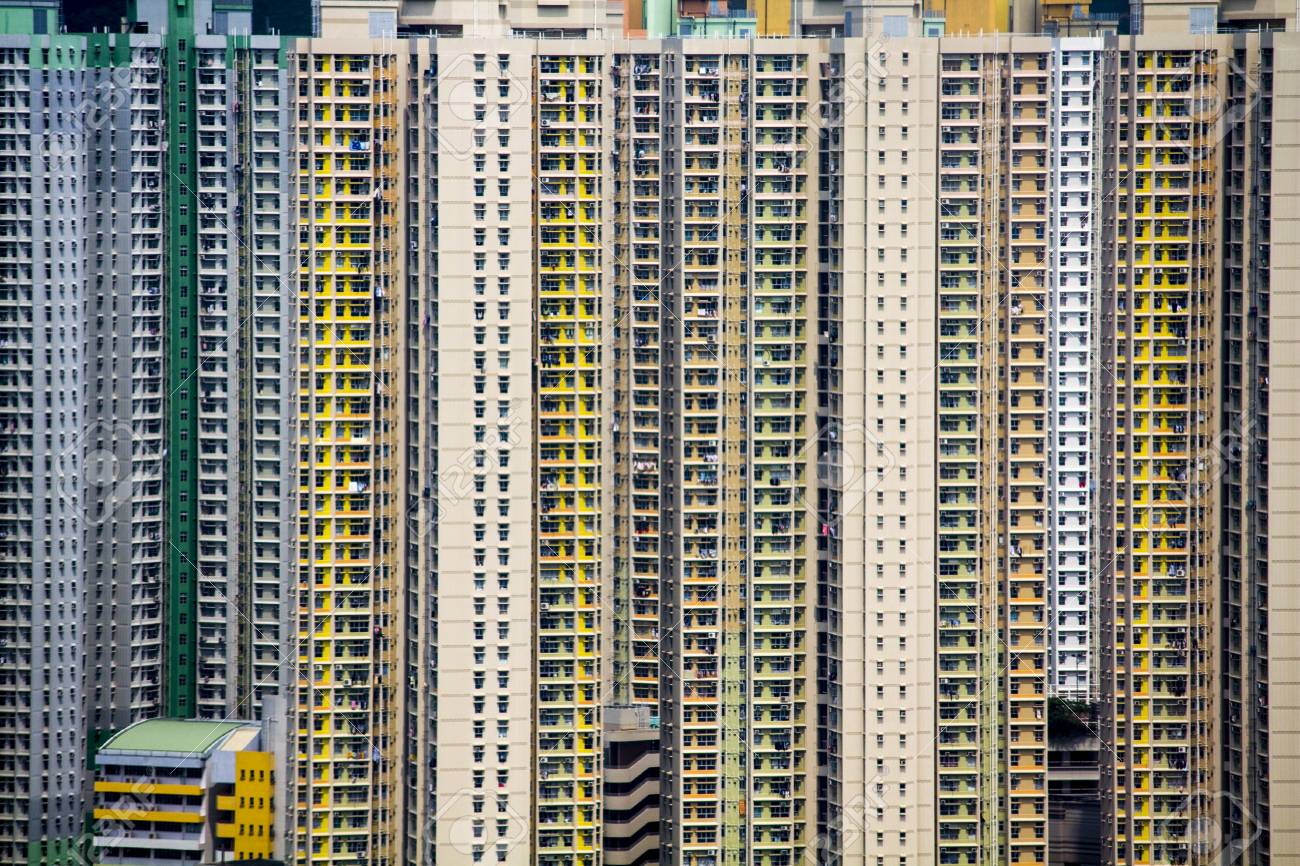
'Humans have long been deeply moved by a still expanse of water, a deep forest, a mountain peak. After all, nature is where we find our soul and come into contact with our spirituality. Yet, most of people today live in cities and spend far less time outside in green, natural spaces than the populations of only a few generations ago.’ Photo:123rf.com
Nature heals, Nature soothes, Nature restores, Nature connects: Yes, Nature is what makes us Human!
‘Being in nature, or even viewing scenes of nature, reduces anger, fear, and stress and increases pleasant feelings. Exposure to nature not only makes you feel better emotionally, it contributes to your physical wellbeing, reducing blood pressure, heart rate, muscle tension, and the production of stress hormones. It may even reduce mortality. Research done in hospitals, offices, and schools has found that even a simple plant in a room can have a significant impact on stress and anxiety.’
‘Psychoterratica is the trauma caused by distance from nature’*
The high costs of nature deprivation
‘You’ve got problems. Perhaps more than you know. Apart from all the usual woes—work, relationships, money, time—the civilized life may also be causing you psychological trauma.
Disconnection from nature can be bad for our mental health. But there was no name for this particular malaise until 2000, when Australian philosophy professor Glenn Albracht coined the term psychoterratica, creating the beginning of a vocabulary to discuss the relationship between mental health and environment.
Since then, he’s thought up a whole lexicon. In May, Albrecht’s dictionary, Earth Emotions: New Words for a New World, will be published by Cornell University Press. It includes gems like the word ecoagnosy, a term created to describe environmental ignorance or indifference to the ecology. Then there’s solastalgia, a uniquely contemporary nostalgia: the psychic pain of climate change and missing a home that’s transforming before your eyes.
The healing power of nature
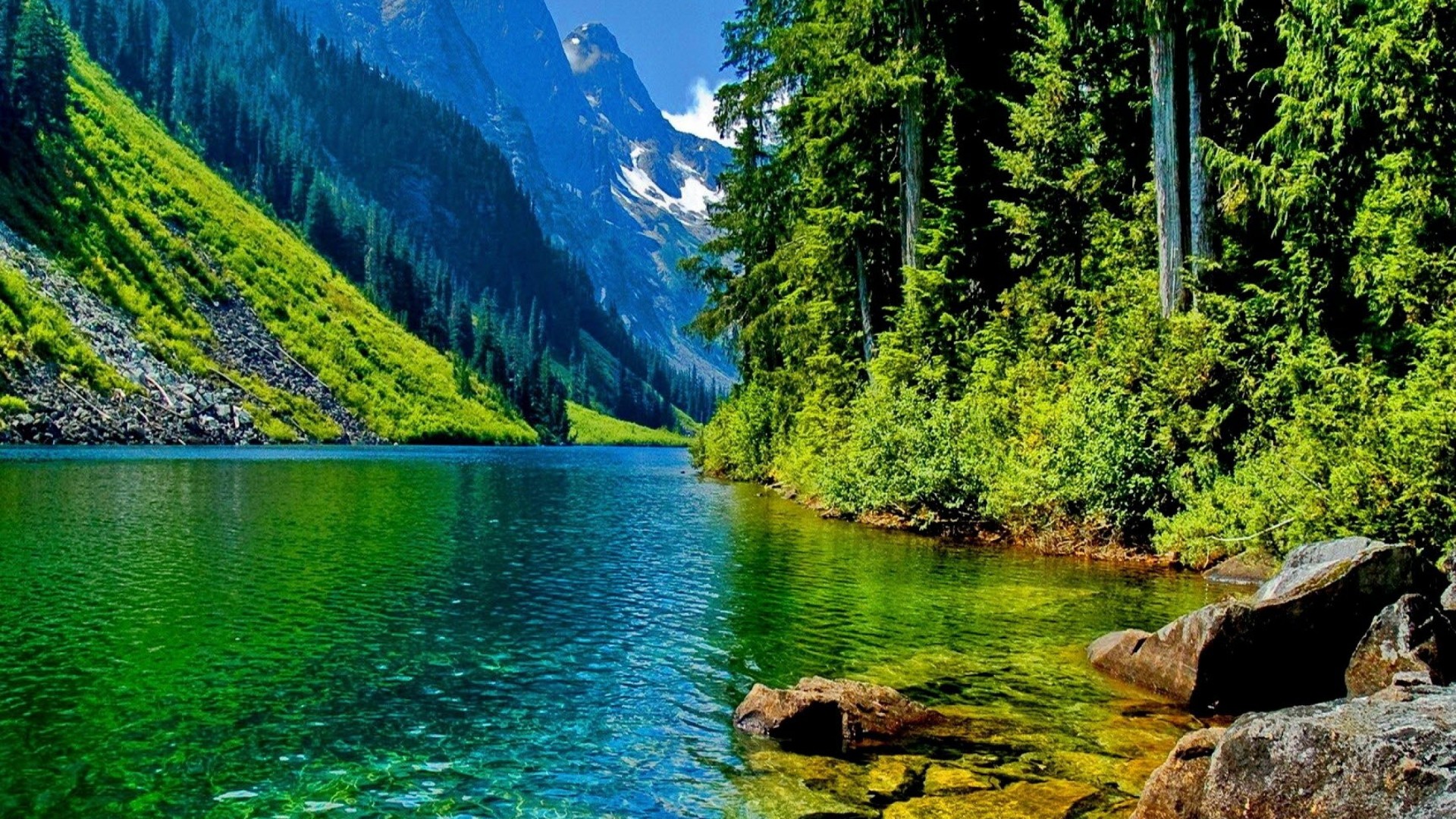
Photo:theodysseyonline.com
Julia Plevin, author of the upcoming book The Healing Magic of Forest Bathing, to be published in March by Random House, used to suffer from psychoterratica. As a design student in New York, Plevin recognized that all the gray buildings and dearth of greenery, was making her depressed and anxious. She focused her studies on psychoterratica and began examining the connection between space, nature, health, and design.
When she returned to her native San Francisco to work in Silicon Valley, she alighted upon a miracle treatment for her psychological malaise. It’s remarkably simple…and if you live near a forest, especially. As Plevin puts it, we just need to “rewild” regularly, spending time outside, especially among trees. Walking in the woods and cultivating a connection with nature is her medicine, and sharing this therapy has become her mission.
Plevin is the founder of the San Francisco Forest Bathing Club. When she started the group on Meetup.com in 2016, she didn’t know if people would be into it. They were. Within months, more than 500 members signed up, and she was talking to reporters worldwide about the tonic of the wilderness. Forest bathing, one of humanity’s oldest pastimes, was experiencing a sudden resurgence in popularity.
In Search of Well-being, Joy and Happiness: ‘Nature and ‘Forest Bathing’ is the Path
A walk in the park: just 20 minutes with nature beats stress and makes you happier
A 20-minute stroll through a park is one of the most effective stress-busting treatments that a doctor can prescribe, research suggests.
Through contact with the natural environment and engagement in health-promoting and/or social and recreational activities in parks, users experience physical and mental health benefits such as stress reduction and recovery from mental fatigue... Continue to read
Imagine a sunny day, one in which many people, on walking out of the house for the first time, will note a particular brightness to the light, and a balminess to the air, which may trigger a surge of hope and a willingness to look at familiar problems with renewed determination...
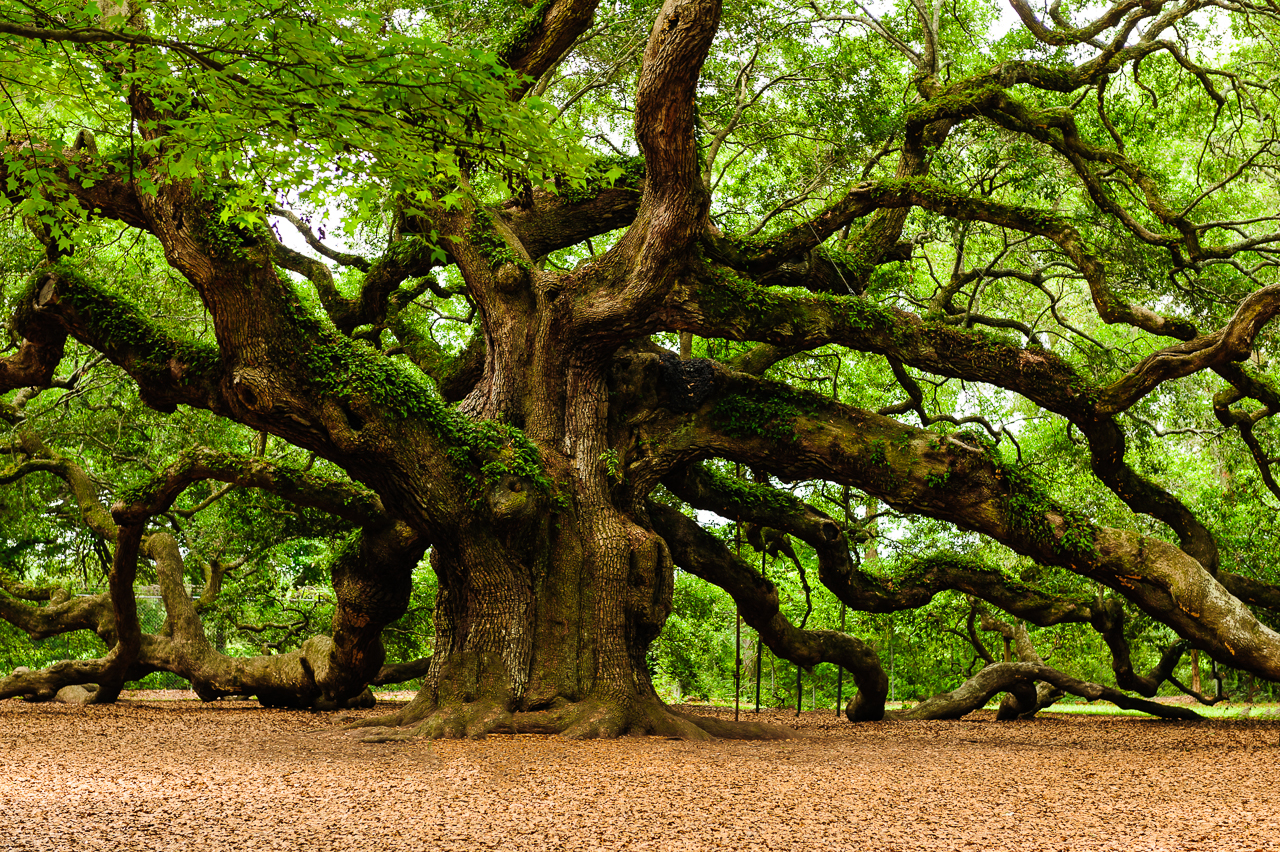
Angel Oak Tree, South Carolina, USA. Photo: naturedeprived.com
‘Healing power of nature – it was once the preserve of tree hugging hippies. Today, nature’s powerful potential to heal mind, body and spirit is recognised by science. Being in nature makes you feel good. And, surprisingly, nature’s powers extend beyond wellbeing to the healing of social and economic problems too.'
In this troubled world let the beauty of nature and simple life be our greatest teachers
We should look beyond economics and open our eyes to beauty
'Come forth into the light of things, Let Nature be your teacher'
'One of the pleasantest things in the world is going a journey.'
'In the mysteries of natural scenery': This is one of the places we often go, to be inspired, nurtured, nourished, find inner-peace and contentment
What’s old is new again
Wood wandering as therapy began in Japan in 1982, when the government introduced the concept of shinrin yoku, or “forest bathing.” It urged citizens to make use of the country’s 3,000 wooded miles to improve their wellbeing. Tomohide Akiyama, then chief of the forestry ministry, understood intuitively that the woods do people good, while distance from nature makes us sick.
Soon, Japanese researchers tried to quantify this intuition, studying the healing effect of trees. They discovered that forest bathing not only feels good but it is also healing, physically, because it exposes people to the healthy essential oils that trees release, called phytoncides. These antimicrobial oils protect trees from germs and have a host of human health benefits, including boosting mood and immune system function; reducing blood pressure, heart rate, stress, anxiety, and confusion; improving sleep and creativity; and possibly fighting cancer and depression.
From 2004 to 2012, Japanese officials spent about $4 million dollars studying the physiological and psychological effects of forest bathing, designating 48 therapy trails based on the results. In one very small (and thus limited) but interesting study, Qing Li, a professor at Nippon Medical School in Tokyo, measured the activity of human natural killer (NK) cells in 12 men’s immune systems before and after exposure to the woods. These cells provide rapid responses to viral-infected cells and tumors, and are associated with immune system health and cancer prevention. In a 2009 study, Li’s subjects showed significant increases in NK cell activity in the week after a forest visit, and positive effects lasted a month following each weekend in the woods.
Japan now has 62 designated therapeutic woods, attracting about 5 million visitors annually, and Li has become known as a postmodern shaman, the scientist pioneering tree medicine. Finland advertises itself to tourists as a forest bathing destination. There are forest therapy guide and certification programs in the US, UK, and Canada, and there’s a Global Institute for Forest Therapy. Around the world, groups like Plevin’s forest bathing club, official and unofficial, are treating their psychoterratica with a dose of nature, whether or not they know it.
Nature and Simple Living is a Blissful Life
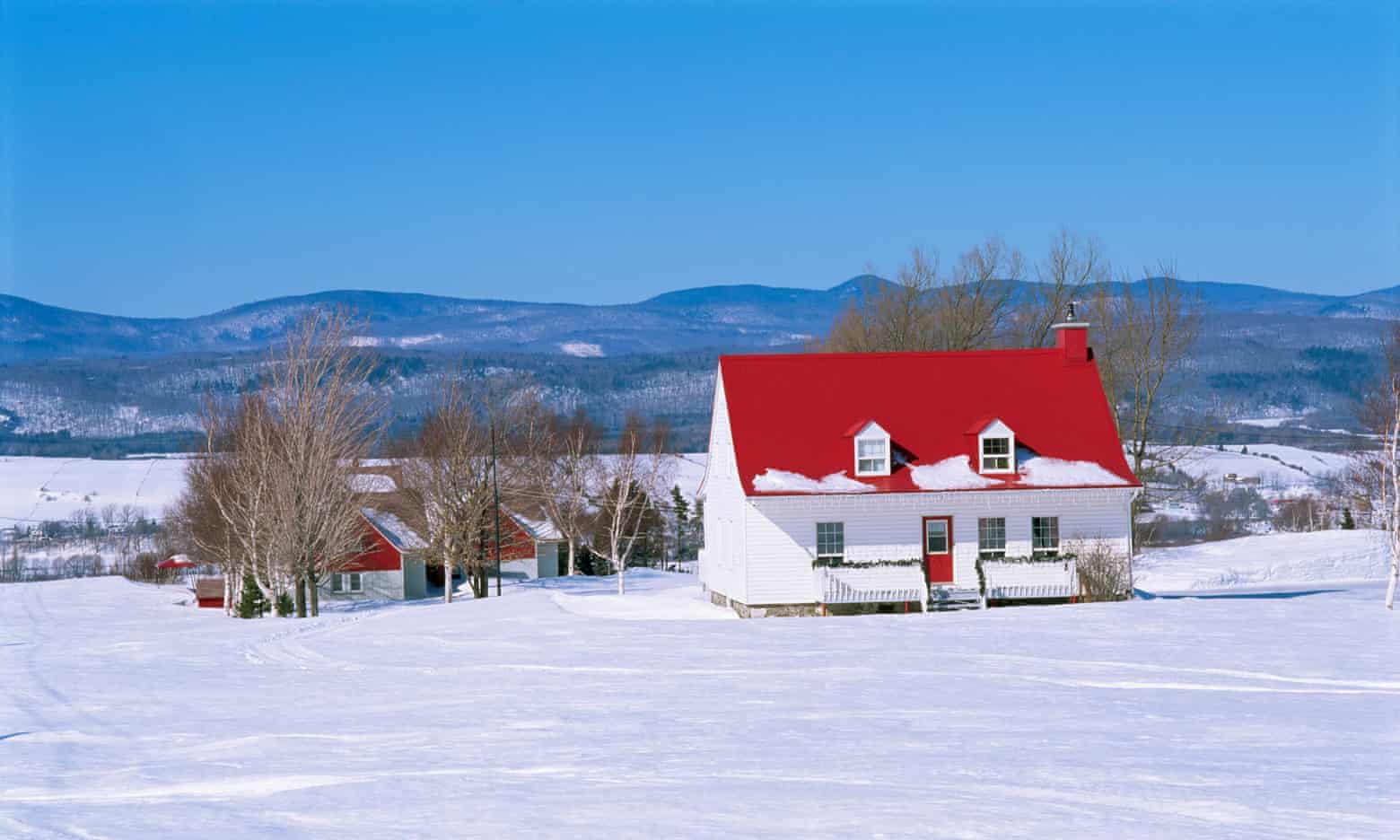
A rural scene on l’île d’Orléans, Québec, Canada. Photo:theguardian.com
Civilization and its discontents
That said, there are plenty of ways to take your nature medicine. Blue mind science is the study of water’s curative properties, and studies have shown that both a trip to the ocean and a shower at home prove soothing. A visit to the park is also restorative, as is walking barefoot and earthing—which is basically just connecting to the ground.
Even just digging your fingers in the soil of a potted plant can improve your mood and boost your immune system. It turns out that, like trees, dirt has properties that are good for human health. Soil has a microbiome and the more we contact it, the more we let it infiltrate our systems, the better our chances of maintaining physical and mental wellness.
We have both a physical and psychological need to be in nature, as new research increasingly reveals, and we get sick when we’re disconnected from it. Luckily, the prescription for what ails us turns out to be a simple fix that is inexpensive and has no negative side effects.’
*The above article by Ephrat Livini was first published in QUARTZ on 24 February 2019
Getting More Nature***
How nature helps us feel good and do good
Photo:bing.com
‘Experiencing the benefits of nature requires you to S L O W D O W N and to pay attention to your surroundings mindfully by immersing yourself using your 5 senses. If you think this sounds a lot like Mindfulness, well you are correct! – Being in nature can make you more mindful, and being more mindful can help you enjoy being present in nature.
- Mindful Awareness: Enhance your experience of being immersed in nature by thinking about think about how you can actively incorporate your 5 senses as – eg, Ask yourself: “What can you see, smell, hear, taste, and feel on my skin?” Choose to deliberately tune into what you are focusing on – noticing whenever you have a thought, and gently returning your focus to stimulation by nature of your 5 senses.
- Viewing or listening to nature: Such as watching a storm, spending time in a forest or the bush, reading a beautifully illustrated book, drawing or painting something in nature, standing at a lookout, studying a flower or insect, listening to sounds – or field recordings – of nature, or watching a nature video. Any of David Attenborough’s documentaries are great example of soothing videos that can inspire an appreciation of nature. The BBC’s Blue Planet Series is a great example.
- Being in the presence of nature: Witnessing a beautiful sunset or a sunrise, lying on the grass looking at the clouds, eating a nice meal feeling in the sun warming your skin, swimming in the ocean, watching and listening to the waves from the beach, watching and listening to the flames while being warmed by a fire, watching the moon rise, or going somewhere remote to see an amazing starry-sky. The options are endless – the key is to be present, open, and curious!
- Actively participate in nature: Take a camera and be a photographer for the day – look for little things in nature that you wouldn’t normally see! Do things that require you to spend time in nature – gardening, trekking, running, swimming, snorkeling, horse-riding, or camping. Walk a dog, go for a bush-walk, or meet friends in a park. Meeting with friends or walking with an animal can help get you outside and into nature if you are finding motivation is tricky.
- S L O W down in nature: Learn about how to increase the powerful relaxing and rejuvenating effects of being in nature by practicing Soothing Rhythm Breathing. With this type of breathing, you can quickly deactivate your ‘fight/flight’ response & activate your soothing system. Do this breathing in nature, and you will be well on the way to being more calm, more present, and more at peace.’
- ***The above excerpt are from an article Dr Andreas Comninos, ‘The Mental Health Benefits of Nature’ which was first published in Mindfulness & Clinical Psychology Solutions.
Photo: shutterstock.com
..And now, come and be my fellow-traveler on a journey of self-discovery: Come and visit My Wisdom Corner. Surprise yourself. You will love it!
What is this life all about?
Why am I here? What’s my Life’s purpose? How can I make the most of my Life?
The Wisdom Corner
“Come, come, whoever you are. Wanderer, worshiper, lover of leaving. It doesn't matter. Ours is not a caravan of despair. come, even if you have broken your vows a thousand times. Come, yet again , come , come.”- Jalaluddin Rumi, The Persian Sage of Beauty, Wisdom and Love.
Come, come, whoever you are, come
Do you hear that voice calling you, calling us?
...And finally, lest we forget
My generation has trashed the planet. So I salute the children and the youth striking back, showing us how to face up to the crisis of our own making.
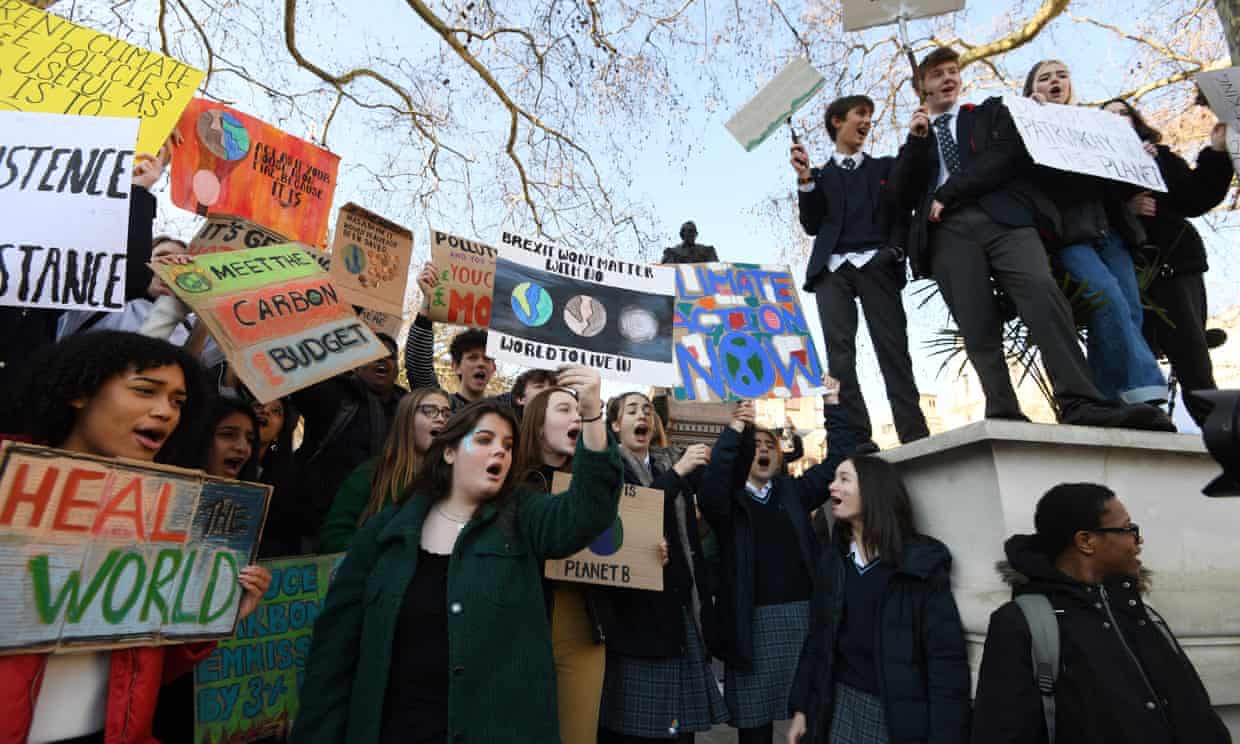
‘You have issued a challenge to which we must rise, and we will stand in solidarity with you. Though we are old and you are young, we will be led by you.’ Students take part in the climate change strike in London. Photo: The Guardian
‘The Youth Strike 4 Climate gives me more hope than I have felt in 30 years of campaigning. Before this week, I believed it was all over. I thought, given the indifference and hostility of those who govern us, and the passivity of most of my generation, that climate breakdown and ecological collapse were inevitable. Now, for the first time in years, I think we can turn them around.
My generation and the generations that went before have failed you. We failed to grasp the basic premise of intergenerational justice: that you cannot apply discount rates to human life. In other words, the life of someone who has not been born will be of no less value than the life of someone who already exists. We have lived as if your lives had no importance, as if any resource we encountered was ours and ours alone to use as we wished, regardless of the impact on future generations. In doing so, we created a cannibal economy: we ate your future to satisfy our greed.'... George Monbiot. Continue to read
Let us all salute the youth of the world. They will change and build the better world. They are the ones to Make the World Great Again! Heed them and Hear them. Carpe Diem!
Youth climate strikers: 'We are going to change the fate of humanity'
Climate crisis and a betrayed generation
In an open letter, published in the Guardian on Friday 1 March 2019, activists behind recent youth-led climate protests say their views are being ignored in the debate about global warming.
'We, the young, are deeply concerned about our future. Humanity is currently causing the sixth mass extinction of species and the global climate system is at the brink of a catastrophic crisis. Its devastating impacts are already felt by millions of people around the globe. Yet we are far from reaching the goals of the Paris agreement.
Young people make up more than half of the global population. Our generation grew up with the climate crisis and we will have to deal with it for the rest of our lives. Despite that fact, most of us are not included in the local and global decision-making process. We are the voiceless future of humanity.
We will no longer accept this injustice. We demand justice for all past, current and future victims of the climate crisis, and so we are rising up. Thousands of us have taken to the streets in the past weeks all around the world. Now we will make our voices heard. On 15 March, we will protest on every continent.
We finally need to treat the climate crisis as a crisis. It is the biggest threat in human history and we will not accept the world’s decision-makers’ inaction that threatens our entire civilisation. We will not accept a life in fear and devastation. We have the right to live our dreams and hopes. Climate change is already happening. People did die, are dying and will die because of it, but we can and will stop this madness.
We, the young, have started to move. We are going to change the fate of humanity, whether you like it or not. United we will rise until we see climate justice. We demand the world’s decision-makers take responsibility and solve this crisis.
You have failed us in the past. If you continue failing us in the future, we, the young people, will make change happen by ourselves. The youth of this world has started to move and we will not rest again.’- Read the letter in the Guardian
Youth Voices are Crucial to Driving Change to Build a Better World. They Will Be Heard!
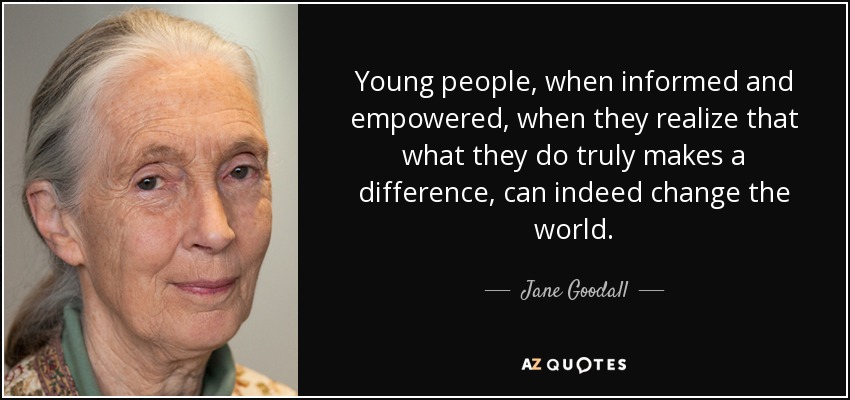
I am delighted and honoured that over the many years, since the GCGI was founded in 2002, we have been at the forefront of supporting our children, grandchildren, the youth and students world-wide.
So, it is with utmost pleasure that I say, once again: My dear young people, our future hopes and dreams, our future leaders to build a better world in the interest of the common good, I wish you all the best in life. I love, admire and support your inspiring initiatives, and I thank you for who you are and what you do. Youth of the World: Your Voices will be Heard. GCGI will always be your friend.
Millennials Building a Better World
"We are committed to building a better world for the common good"

Photo:ricecentre.ca
In a message that I wrote to mark the International Youth Day on 12 August 2012 In Praise of Youth on International Youth Day, I noted the following:
'...Over 50% of the global population is under 30, and with the global population at over 7 billion - that’s a lot of young people. Young people are incredibly important in bringing about change, they are generally less afraid to speak out about what they believe in than older people, and they are the ones who are going to be affected the most by the decisions made today. If we effectively harness the leadership and potential of young people around the world then together we can empower youth for the common good.
We must realise that what the young lack in experience they make up for in courage and vision, dreams and hope for a better, more sustainable future...
Today mark a time when youth are raising their voices to claim their place in the future of their communities, societies, countries and the world. The need to be heard, and to go beyond and actually shape decision-making, is of the essence.
Today the youth of the world have committed themselves to build a world that is just, free and prosperous for all, by promoting and practicing the true human values of love, compassion, justice, dialogue, truthfulness, honesty, trustworthiness, humility, courtesy, hard work, dedication, commitment, sympathy, empathy, volunteerism and service. Values such as these should never be underestimated; the power of a value-led life coupled with the commitment and the passion of young activists is a force for change that cannot be matched. The youth are empowering the world for the common good.
These qualities, essential for the moulding of character, must be internalised, and be expressed in daily action, whether in the context of family, community, country, or the world at large. The youth are an instrument of peace, promoting dialogue, advancing justice, so that we can all realise our dreams. The dream of young people has become the dream of the older generation. Their hope is now our hope...'
That was 2012. Today, I am very pleased to share with you a bit of good news. It seems, I was right in my predictions and assumptions. I was right to say that we are in good hands. It seems our world is being steered in the right direction by our younger generation, our youth, who are acting in the interest of the common good… Continue to read
- Details
- Written by: Kamran Mofid
- Hits: 1769
Spike Lee implores US to regain its humanity*
The film-maker gave a heartfelt and political speech after winning the best screenplay Academy Award for BlacKkKlansman

Spike Lee accepts the award for best adapted screenplay for his film ‘BlacKkKlansman.’ Photo: The New York Times
Spike Lee celebrated winning his first non-honorary Oscar in his long career as a filmmaker with an explicitly political speech, during which he called on the audience to “regain our humanity” at the next US election.
Lee was accepting the award for best adapted screenplay for his film BlackKklansman, with co-writers David Rabinowitz, Charlie Wachtel and Kevin Willmott. It is a satirical film loosely based on a true story about a black policeman who infiltrated the Ku Klux Klan by using a white, Jewish proxy.
Although it is set in the 70s, the film explores how racism has remained in America’s bloodstream since slavery, and how it has erupted into the mainstream with the election of Donald Trump. BlackKklansman concludes with real footage from Charlottesville, where Heather Heyer was killed when a car was driven into a crowd protesting against a “unite the right” rally of white supremacists.
The speech** that followed touched deeply on black history and exhorted the crowd to get involved in the 2020 presidential election.
The word today is “irony.” The date, the 24th. The month, February, which also happens to be the shortest month of the year, which also happens to be Black History month. The year, 2019. The year, 1619. History. Her story. 1619. 2019. 400 years.
Four hundred years. Our ancestors were stolen from Mother Africa and brought to Jamestown, Virginia, enslaved. Our ancestors worked the land from can’t see in the morning to can’t see at night. My grandmother, [inaudible], who lived to be 100 years young, who was a Spelman College graduate even though her mother was a slave. My grandmother who saved 50 years of social security checks to put her first grandchild — she called me Spikie-poo — she put me through Morehouse College and N.Y.U. grad film. N.Y.U.!
Before the world tonight, I give praise to our ancestors who have built this country into what it is today along with the genocide of its native people. We all connect with our ancestors. We will have love and wisdom regained, we will regain our humanity. It will be a powerful moment. The 2020 presidential election is around the corner. Let’s all mobilize. Let’s all be on the right side of history. Make the moral choice between love versus hate. Let’s do the right thing! You know I had to get that in there.
*Spike Lee implores US to regain its humanity during Oscars speech
**Spike Lee Won an Oscar. Read His Passionate Speech.
Spike Lee implores US to regain its humanity: Watch the Video
Read more:
Recalling an epoch-defining day: “I Have a Dream” speech remembered
‘I Have a Dream’: Yearning for Dr. King’s Interconnected World