- Details
- Written by: Kamran Mofid
- Hits: 3077
Wisdom and the Well-Rounded Life: What Is a University?
The beautiful campus of my alma mater (PhD Economics, 1986), The University of Birmingham
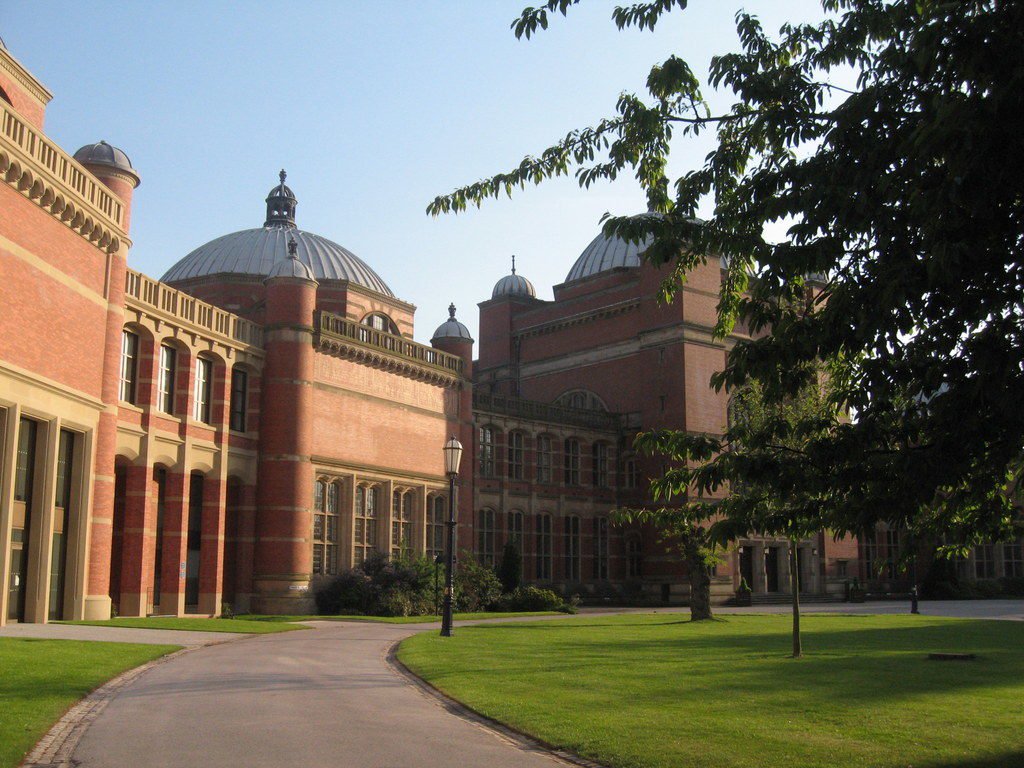
(1982-1986 PhD Candidate and Tutor in Economics. Plenty of fond memories, when education at universities in Britain was guided by values other than money and greed, when students were students and not customers, and where tutors and lecturers were academics and teachers and not service providers, valued for the calibre of their personality, moral character, strong work ethics, collegiality and commitment to do good, rather than how much money they have raised, regardless of its source! And, where the vice-chancellors were people of vision and dreams to build a better world, rather than fat cats, huge salaries and questionable expense accounts. Oh how things have changed!) Photo:bing.com
“The one continuing purpose of education, since ancient times, has been to bring people to as full a realization as possible of what it is to be a human being.”-Arthur W. Foshay
‘The Bologna statement, which defines the very purpose of universities, doesn’t seem to apply to the UK any more.’-Stefan Collini, professor of English literature and intellectual history at the University of Cambridge.
The Values-led British Universities as I knew them: And now we can only lament the passing of the idea of a university
‘In UK universities there is a daily erosion of integrity’
This was the caption of a very informative and timely article by Prof. Stefan Collini, on the state of education and universities in Britain today, which was published in the Guardian (Tuesday 24 April 2018). The subject matter is very close to my heart, which as many readers know well, has been a source of deep concern and reflection for me also.
Amongst many academics that I know of, I find Prof. Collini’s article very refreshing and an honest reflection of what is happening to our universities in Britain today. This is why I very much wish to share it with you.
However, before that, I wish to say a few words about EDUCATION, lest we forget what is at the heart of our reflection:
‘We live in a world with many complex problems, at all levels, local, regional and global. It is said that education is the key that opens the door to a more harmonious world.
The pertinent question is: What kind of education and learning would help us address these challenges and create a sustainable world and a better life for all?
T.S. Eliot posed the question: "Where is the Life we have lost in living? Where is the wisdom we have lost in knowledge? Where is the knowledge we have lost in information?"
Reflecting on the questions above, we are going to need an education system that respects planetary boundaries, that recognises the dependence of human well-being on social relations and fairness, and that the ultimate goal is human happiness and ecological sustainability, not merely growth of material consumption.
In short, we need to listen to our hearts, re-learn what we think we know, and encourage our children to think and behave differently, to live more in sync with Nature.
If we do this successfully we can become wiser as a species, more “eco-logical.” We and the planet that gave birth to us can be happier and healthier, healed and transformed.’-Kamran Mofid, The Journey to Sophia: Education for Wisdom
And now reverting to Prof. Collini’s article, ‘In UK universities there is a daily erosion of integrity’
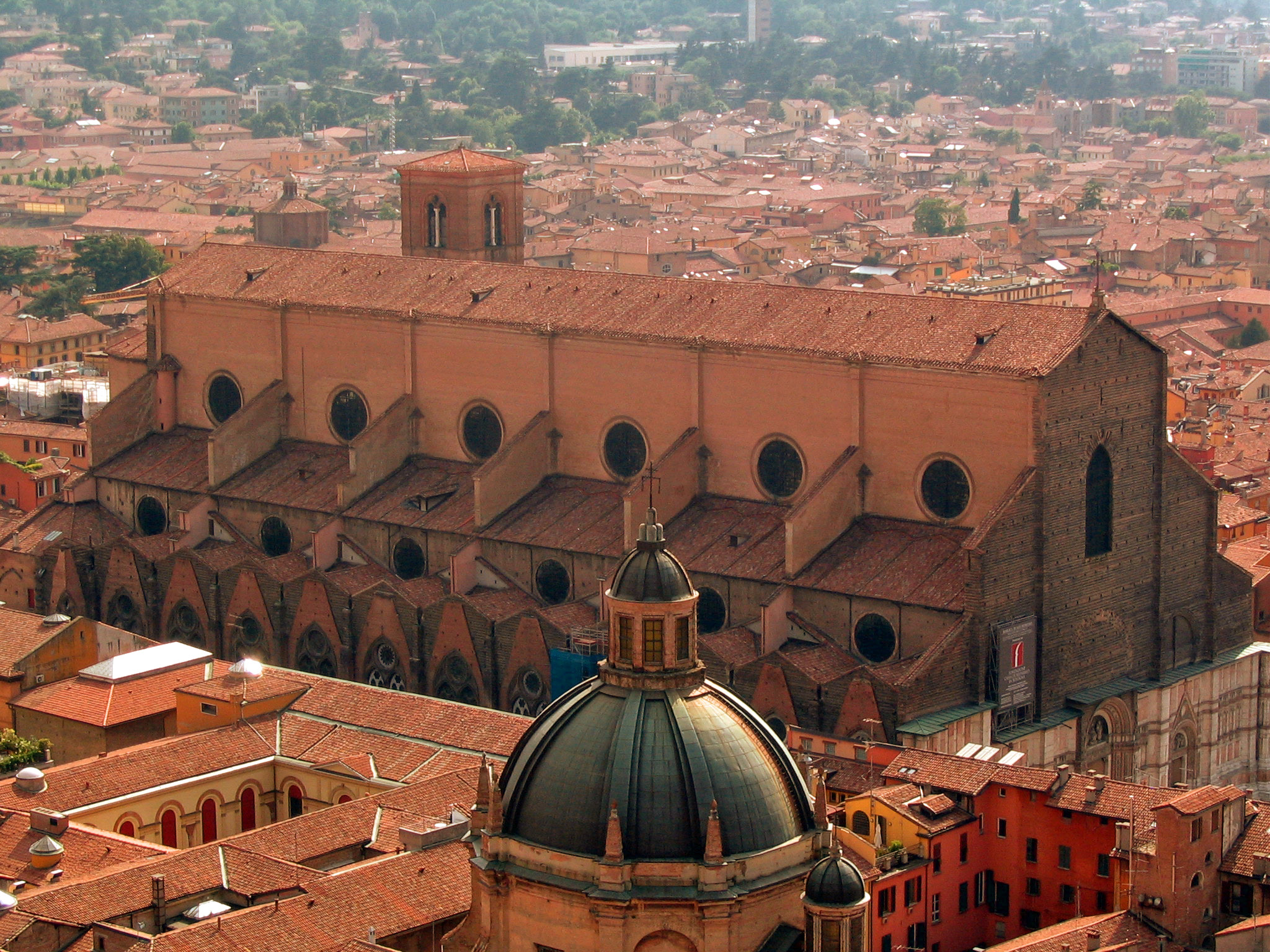
The University of Bologna -Photo: bing.com
‘In 1988, to mark the 900th anniversary of the founding of the University of Bologna, Europe’s oldest university, 388 rectors and heads of universities drew up the Magna Charta Universitatum. This was a brief general declaration of the nature of universities and their purpose.
The first principle was: “The university is an autonomous institution at the heart of societies differently organised because of geography and historical heritage”. The second fundamental principle was: “Freedom in research and training is the fundamental principle of university life, and governments and universities … must ensure respect for this fundamental requirement.”
The Bologna statement was an affirmation of an ideal transcending national frontiers. Its principles were reaffirmed in a 1999 document establishing the European Higher Education Area, signed by the education ministers of 29 European countries, including the UK.
Viewed from the everyday experience of a British university two decades later, these principles can ring hollow. “An autonomous institution”? Barely a month goes by without a new diktat issuing from Whitehall and its satellite agencies. Governance is as constrained as policy. One recognised expression of autonomy is for academic staff to have a say in who is appointed to the roles of deans, pro-vice-chancellors, and vice-chancellors. In British universities – unlike the majority of their European counterparts – that doesn’t happen.
Another institutional expression of autonomy would be a senate that had effective control of academic and intellectual policy, but that body has been bypassed or abolished in nearly all UK universities.
“Freedom in research”? Tell that to the colleague compelled by their research excellence framework manager to focus on a particular line of inquiry. Or tell it to the heads of department obliged to enforce the targets set by the pro-vice-chancellor (research) for the amount of money to be brought in by each member of staff through external grants. The mantras “accountability” and “performance management” mask the disturbing extent of institutional bullying in so many British universities.
It has long been recognised in most university systems that academic freedom and academic tenure are two faces of the same coin, with appropriate legal protections to match. In Britain, however, tenure was abolished by the Tories’ Education Act of 1988. But academics still have de facto tenure, don’t they? Tell that to those who are made redundant as a result of the latest piece of managerialist restructuring.
In Britain we are used to hearing a lot of sub-Burkean blather about how written constitutions are only needed by those countries that don’t have our practical wisdom and good judgment. But the truth is that genuine academic freedom in British universities is in a parlous condition. Not because uniformed commissars are frog-marching outspoken academics off to jail (not that there are that many outspoken academics in the first place). It is more a matter of the daily erosion of intellectual integrity, the relentless commodification of scholarly values, and the tightening grip of managerialist autocracy. And no one can seriously believe that any of this will be improved by leaving the EU and submitting to the unregulated embrace of global capitalism in its most buccaneering and profit-hungry form.
Anyone tempted to dismiss these points as the alarmism of disappointed idealists or other malcontents should read the sober and detailed survey of academic freedom across Europe by Terence Karran and Lucy Mallinson. When measured against a range of standard criteria, including legal safeguards and de facto practices, the UK came bottom of the 28 member states of the EU. Similarly, the definitive text book The Law of Higher Education declares that “in terms of the health of academic freedom, the UK is clearly ‘the sick man of Europe’”.
So they may soon have to rewrite the Magna Charta Universitatum. “The university is an autonomous institution (though not, in practice, in the UK …).” “Freedom in research and training is the fundamental principle of university life (though, funnily enough, not in the UK …).”
This article, by Stefan Collini, was first published in the Guardian Tuesday 24 April 2018. See the original article
See also: The must-read book: A clarion call to shut down the business school!
Related articles:
What is the Purpose of Education?
Make 2017 the Year of Values-led Education to Make the World Truly Great Again
Welcome to the New World- Class British Bogof Universities
“A mark of barbarity”: Universities today what Nietzsche had foreseen in 1872
Are Universities still for the Common Good? No way! It’s all about Money, Money, and more Money!
Calling all academic economists: What are you teaching your students?
My Economics and Business Educators’ Oath: My Promise to My Students
The Journey to Sophia: Education for Wisdom
What might an Economy for the Common Good look like?
The Sorry State of British Universities: Could a university be the next HMV?
What Can I teach my students in the age of Selfie, Isolation, Virtual friendship and loneliness?
Student Suicides at Bristol University: My Open Letter to the Vice-Chancellor, Prof. Hugh Brady
And finally, What is a University?
Let me quote a passage or two from a Foreword I wrote a few years back for a book of the same title: What is a University:
“The world of knowledge and competence is in a constant state of flux. The same can be said for the universe of visions, aspirations and dreams. Changes are occurring every day on a national and world scale…All of these things are increasing the need for new knowledge and skills, for new scenarios for our global society. Love, courage, honesty, justice, spirituality, religion, altruism, vocation, creativity, the common good – life itself – are again becoming major issues.
In today’s largely decadent, money-driven world, the teaching of virtue and building of character are no longer part of the curriculum at our universities. The pursuit of virtue has been replaced by moral neutrality – the idea that anything goes. For centuries it had been considered that universities were responsible for the moral and social development of students, and for bringing together diverse groups for the common good.
In the last few decades, however, and especially since the 1970s, a new generation of educational reformers has been intent on using places of learning, and in particular universities, to solve national and international economic problems. The economic justification for education – equipping students with marketable skills to help countries compete in a global, information-based workplace – has overwhelmed other historically important purposes of education.
The language of business management is now being applied to educational establishments: schools and universities are ‘downsized’ and ‘restructured’, and their staffing is ‘outsourced’. But, if there is a shared national purpose for education, should it be oriented only towards enhancing this narrow vision of a country’s economic success? Is everything public for sale? Should education be answerable only to the ‘bottom line’? Are the interests of individuals and selective groups overwhelming the common good that the education system is meant to support?
I have been part of these changes and have witnessed their negative consequences for students and staff. An education system that has turned students into customers or clients, pitted members of staff against each other, removed collegiality and turned classrooms into mass-production factories, financed by profits from the sale of alcohol, cigarettes, medical drugs and arms, has brought a bitter harvest and needs to be changed. Education has to be reunited with its roots in theology, philosophy and the virtues.”…
In short we must realise that, in days of spiritual hunger, education needs to do more than grope in the dark. It needs to point students to the light of the world: What is a University
- Details
- Written by: Kamran Mofid
- Hits: 4349
Updated April 2022
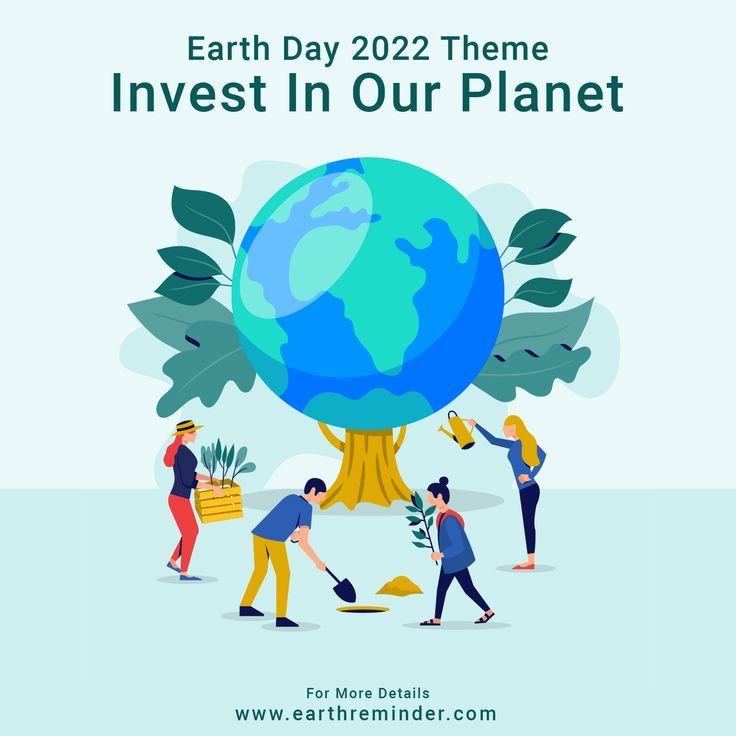
EARTH DAY 2022 – APRIL 22
INVEST IN OUR PLANET
‘This is the moment to change it all — the business climate, the political climate, and how we take action on climate. Now is the time for the unstoppable courage to preserve and protect our health, our families, and our livelihoods.
‘For Earth Day 2022, we need to act (boldly), innovate (broadly), and implement (equitably). It’s going to take all of us. All in. Businesses, governments, and citizens — everyone accounted for, and everyone accountable. A partnership for the planet…’-EARTHDAY.ORG
Our GCGI's vision and hope for the flourishing of the Earth Community in
these challenging times
Defend the Sacred
Living Earth: Cooperation With All Beings
‘All human activities, professions, programs, and institutions must henceforth be judged primarily by the extent to which they inhibit, ignore, or foster a mutually enhancing human/Earth relationship.’-Thomas Berry
“Nature does nothing in vain.”- Aristotle
"We must all widen our circles of compassion to embrace all living creatures and the whole of nature in its beauty."- Albert Einstein
"Never doubt that a small group of thoughtful, committed citizens can change the world. Indeed, it is the only thing that ever has."- Margaret Mead
Hopelessness or Eruption of Hope?
We can all fall in hopelessness and despair or we can ask of ourselves: How can we harness our creativity, ingenuity, insight and ability to cooperate and take actions in the interest of the common good, recognising that we need to live more sustainably, fostering hope that indeed, yes, we can build a better world?
Is there any hope for a more sustainable world? Can we reimagine a way of living in which the nonhuman world matters also? How might we inspire hope and empower action for a sustainable and environmentally just world, with special concern for the most vulnerable members of the Earth community, or facilitate deeper understanding of human responsibility for care of our Sacred Earth?
In that spirit of ‘The Eruption of Hope’, here's a selection of related posting from the gcgi.info from the past years.
Eruption of Hope: Every Sunrise Brings us New Hope

Sunrise, a painting by Hope Bruens-fineartamerica.com
In this time of crisis on our beloved earth, it is my sincere hope that, these offerings will intimately connect us to the land with presence and reverence to heal and strengthen our hearts. We will learn from nature’s perennial wisdom teachings on change, inter-dependence, sustainability, regeneration and more. Moreover, I hope, we will be able to explore the interconnection between our inner and outer landscape and experience how nature touches and evokes many beautiful qualities including hope, joy, peace, wonder and love.
Harmony arises when we seek Wisdom and Beauty...When we merge open heart...Stillness and space with sacred world...In sacredness arises HOPE...in hope arises the desire and imagination to build a better world...by touching the earth, combining our inner spiritual path with the goal of creating an environmentally sustainable and socially just human presence on this planet.
Desperately seeking Sophia: The Wisdom of Nature
Spiritual Ecology and 10 Practices to Reawaken the Sacred in Everyday Life
Nature the Best Teacher: Re-Connecting the World’s Children with Nature
Biomimicry: Learning from Nature
In this troubled world let the beauty of nature and simple life be our greatest teachers
Sustainable Development Goals: Where is the Common Good?
Happy International Day of Forests 21 March 2018
A Reflection on Monet’s timeless harrowing pleas for humanity to build a better world
On the 250th Birthday of William Wordsworth Let Nature be our Wisest Teacher
Land As Our Teacher: Rhythms of Nature Ushering in a Better World
The IPCC Report- I Refuse to give up Hope: Earth Is A Mother that Never Dies
Do we love the world enough to look after it, to save it?
Climate Change, Environmental Degradation and the Rise of COVID-19
Nature the Best Teacher: Re-Connecting the World’s Children with Nature
Detaching Nature from Economics is ‘Burning the Library of Life’
‘Nature and Me’: Realigning and Reconnecting with Mother Nature’s Wisdom- A Five Part Guide
Ten Love Letters to the Earth: “Walk as if you are kissing the earth with your feet”
We need to come together to stop the plunder of the commons
By Forgetting Mother Nature- We have Now Ended Up with This unenviable World
The future that awaits the human venture: A Story from a Wise and Loving Teacher
The healing power of ‘Dawn’ at this time of coronavirus crisis
Coronavirus and the New Tapestry of Life: The time is now to rediscover our true selves
Are you physically and emotionally drained? I know of a good and cost-free solution!
Nature is the model to teach business how to thrive
GCGI is our journey of hope and the sweet fruit of a labour of love. It is free to access, and it is ad-free too. We spend hundreds of hours, volunteering our labour and time, spreading the word about what is good and what matters most. If you think that's a worthy mission, as we do—one with powerful leverage to make the world a better place—then, please consider offering your moral and spiritual support by joining our circle of friends, spreading the word about the GCGI and forwarding the website to all those who maybe interested.

Tarn Reflection, Mt Taranaki/Egmont, Egmont National Park, NZ.-Dave Young, Creative Commons
- Details
- Written by: Kamran Mofid
- Hits: 1480
‘I can’t believe that this world can go on beyond our generation and on down to succeeding generations with this kind of weapon on both sides poised at each other without someday some fool or some maniac or some accident triggering the kind of war that is the end of the line for all of us.’-President Ronald Reagan, May 16, 1983
‘We are in the era of the thermonuclear bomb that can obliterate cities and can be delivered across continents. With such weapons, war has become, not just tragic, but preposterous.’-Dwight D. Eisenhower, Republican National Convention, August 23, 1956.
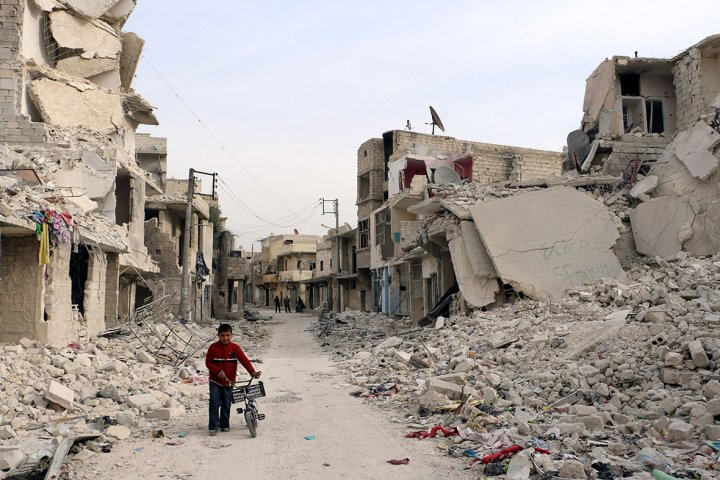
A Syrian boy, an innocent soul, walks with his bicycle, wondering why and what has happened to his beloved family, home, city and country.
Photo: afp.com
Imagining a Better World
The Path to the Heart of True Human Possibilities
A Poetic and Spiritual Pilgrimage to Wisdom to Build a Better World for All
O You Who’ve gone on Pilgrimage
Come, Come, Whoever You Are, Come
Ours is not a caravan of despair.
Ours is a Journey of Hope
What You Seek Is Seeking You ~ Rumi
‘To my mind, there is no doubt that, we need all the wisdom we can receive, especially in relation to the dark thoughts, the shame and the malice from which no person is immune. We need hope, love, beauty and wisdom to guide us in all we do. We need to be agents of goodness and light, whilst projecting them onto others. Taking this path, I am sure the world would, in due course, be less fractured and in pain than it is today.’ Kamran Mofid, A Poetic Pilgrimage to Wisdom
Poetry, literature and spirituality: The Language of Dialogue and Diplomacy
An Investment of Heart and Spirit: Balancing Humility and Ambition
It is worth remembering the centuries-old and timeless wisdom of the Persian poet, Sa’di:
Human beings are like parts of a body
Created from the same essence.
When one part is hurt and in pain,
the others cannot remain in peace and be quiet.
If the misery of others leaves you indifferent and with no feelings of sorrow,
You cannot be called a human being.
Another of his poems is inscribed at the entrance of the Secretariat of the United Nations in New York:
The Children of Adam
Are limbs of one another,
In terms of Creation,
They're of the self-same Essence
Poetry and literature: The language of dialogue and diplomacy
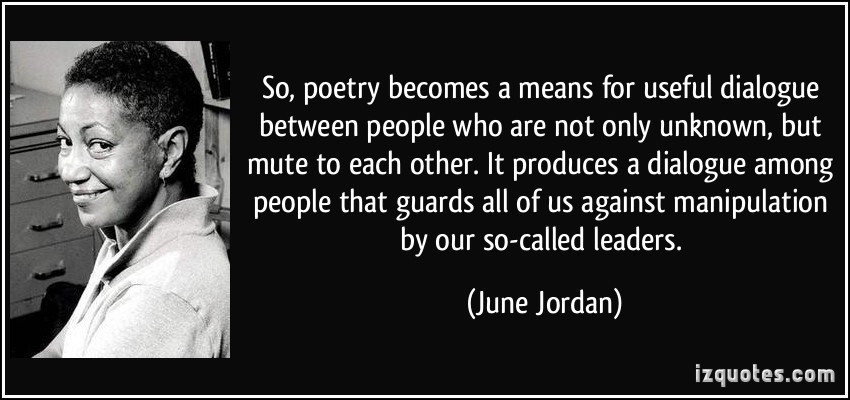
It may sound strange and irrelevant at glance to connect poetry, literature and spirituality (PLS) with politics or foreign policy in this so called digitized and gadget-driven age. However, the more I look, the way I see it, (PLS) are the perfect allegories that one must understand in order to envision a foreign policy that is built on diplomacy and dialogue for the common good, rather than relying on bombs and weapons.
(PLS) embodies the good and evil that exists in each one of us, and how one must strive to achieve the goodness, wisdom and beauty in spite of having evil qualities. If only politicians and policy makers chose to follow the path of dialogue, many wars and conflicts can be avoided. It is in each one of us to choose the path of dialogue, take actions in the interest of the common good, and achieve a lasting peace, building a world of harmony and prosperity for all and not a few.
To press this point further, I wish to share with the reader, a Blog I wrote a few years back, celebrating the successful nuclear treaty between Iran and the P5+1, reflecting on the words and philosophy of the Persian sage and poet, Farid al-Din 'Attar.
The more I read Attar’s poetry and the more I discovered about his philosophy, the more I realised that his poetry and literature promote the language of dialogue and diplomacy, very relevant to today’s needs to address the multiple global crises. His words, ideas and poetry foster human potential and the art of building true relations, nurturing dialogue, understanding, empathy and compassion to cultivate peace and harmony throughout the world.
In our troubled and suffering world of continuing and deepening crisis, our political leaders that take actions in our names, must show and stand up for a greater vision and courage, projecting honesty, humility and trust and invest not in shiny, new, smart missiles and boast about them, but, make substantial investment in wisdom, beauty, heart and spirit.
In order to show them a way in which this might be achieved, I can do no better than share what I had put together in an article in 2006 (updated in 2013 and again in 2015).
Iran and the US: A Mystic and Poetic Path to Conflict Resolution and Peacemaking
Kamran Mofid 6 May 2006
Dialogue: Our mystic Journey to Build a Better World
Kindness, love, compassion and forgiveness can unlock the door to peace in oneself, peace in others and then peace in the world
Life is a Journey of Transformative Dialogues of Self-Discovery of Knowing you, Knowing me
Photo:centerforpersonalevolution.com
As the Founder of the Globalisation for the Common Good Initiative, and as a person who has embraced spiritual economics, I always thought that there must be a better way, a more just path, to reconcile the West (US) and Iran. I felt that they must move away from concentrating mainly on the material aspect of their relationship to a more spiritual appreciation of who they are, what they believe in, what they share and what they have in common.
I strongly felt that this must be the first step, moving back from “All options are on the table”, and “Death to America - The Great Satan”, to a more meaningful dialogue for the Common Good: A Dialogue of Civilisations, the Dialogue of Discovery and Hope, celebrating our common humanity, kindness, trust, dignity, mutual respect and love.
But, the question was how this may happen, how it may begin? The answer, I believe, rests in Spiritual Diplomacy for the Common Good, choosing love which is the path to world peace with responsibility.
In a simplistic sense, as it has been noted, the idea is to see spirituality, universal human themes, religion and God as part of the solution to conflicts, as opposed to part of the problem. The tools and mechanisms that emerge from centuries of spiritual quests may provide a basis for communication, understanding and ultimate agreement.’ ... Continue to read

Photo:bing.com
Iran Nuclear Deal is truly the Triumph of Dialogue, Humility, Courage, Wisdom, Diplomacy, Hope and a Visionary Leadership; over Foolishness, Arrogance, Selfishness, Weakness, Fear, Extremism, Warmongering, and Short-sighted leadership. This has been a gift to the world. Long may it be so.
- Good Friday Agreement and the Spirit of Forgiveness and Reconciliation
- What does it mean to be kind? What is Kindness?
- A Reflection on Monet’s timeless harrowing pleas for humanity to build a better world
- 14th GCGI International Conference and the 4th Joint GCGI-SES Forum, Lucca, 2018: Final Programme
- Book of Abstracts: 4th GCGI-SES Joint Conference 2018