- Details
- Written by: Kamran Mofid
- Hits: 4190
Photo:mauiindependent.org
The World Water Forum is the world’s biggest water-related event and is organized by the World Water Council (WWC), an international organization that brings together all those interested in the theme of water. Its mission is “to promote awareness, build political commitment and trigger action on critical water issues at all levels, to facilitate the efficient conservation, protection, development, planning, management and use of water in all its dimensions on an environmentally sustainable basis for the benefit of all life on Earth”.
Water is Life, Water is a Common Good not a Commodity
‘The well-known statement 'No water – no life' is significant in the life of all living things on earth. Water is accepted as the basis of life on the planet (Jeremiah 2007:2). Nothing on this earth has life without water. Water was in existence even before life:
‘In the beginning of creation, when God made heaven and earth, the earth was without form and void, with darkness over the face of the abyss, and a mighty wind that swept over the surface of the water.’-(GN 1:1-2)
No money to pay for the privatised water?
Then, you know what you can do!
- Details
- Written by: Kamran Mofid
- Hits: 3056
Photo:imgnaly.com
“The clearest way into the Universe is through a forest wilderness.”- John Muir
I offer this in honour of our forthcoming coming conference in Lucca,Tuscany, 28 August-1 September 2018
World Forestry Day or International Day of Forests is celebrated globally each year on 21st of March in order to increase the public awareness among communities about the values, significance and contributions of the forests to balance the life cycle on the earth.
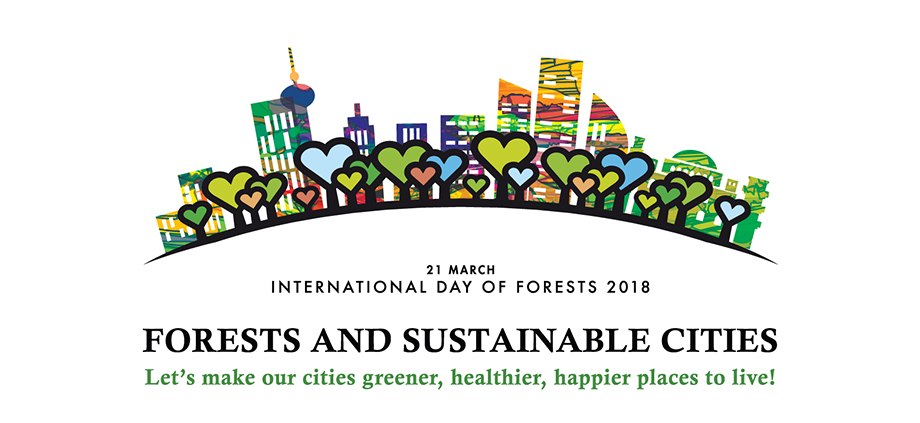
The day was first initiated in 1971 at the 23rd General Assembly of European Confederation of Agriculture. Then, on 21 December 2012, the United Nations General Assembly adopted a resolution which declared 21 March as the International Day of Forests. It is held annually to raise awareness of the importance of forests to people.
2018 Theme: Forests and Sustainable Cities
Desperately seeking Sophia: The Wisdom of Nature
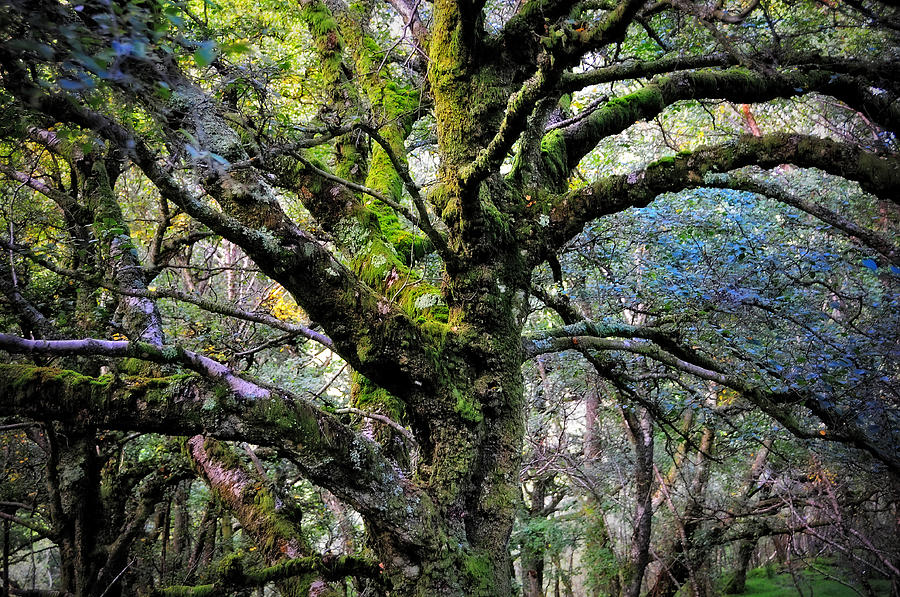
The Tree of Wisdom, Old whimsical tree in the Wicklow forest, Ireland.
Photograph by Jenny Rainbow: fineartamerica.com
What can we learn from the forests, the trees, in this man-made troubled world?
‘Trees don’t actually compete with each other. They are super-cooperators!’
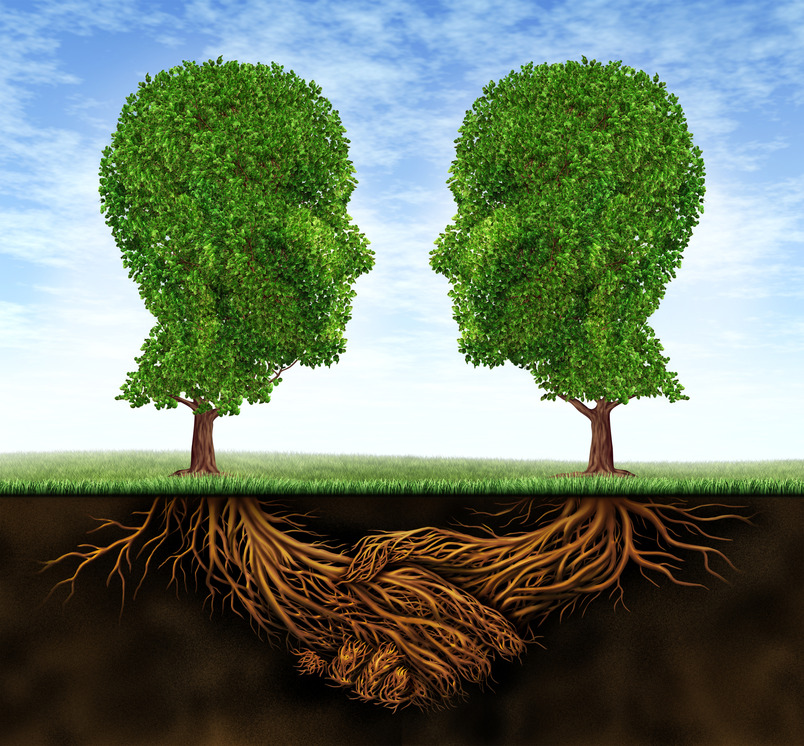
Photo:toopen.com
Yes, whilst we, the humans, celebrate INDIVIDUALISM and COMPETITION, the wiser ones have discovered the wisdom and beauty of COOPERATION in the interest of the COMMON GOOD!
"A forest is much more than what you see," says ecologist Suzanne Simard. Her 30 years of research in Canadian forests have led to an astounding discovery -- trees talk, often and over vast distances. Learn more about the harmonious yet complicated social lives of trees and prepare to see the natural world with new eyes.
To learn more about how trees talk, see this fascinating video by Suzanne Simard, professor of forest ecology at the University of British Columbia, Canada:
Imagine you are walking through a forest: How trees talk to each other
A Must Read Reflection on the Beauty and Wisdom of Trees and Forests
Photo:zenawakened.com
“For me, trees have always been the most penetrating preachers. I revere them when they live in tribes and families, in forests and groves. And even more I revere them when they stand alone. They are like lonely persons. Not like hermits who have stolen away out of some weakness, but like great, solitary men, like Beethoven and Nietzsche. In their highest boughs the world rustles, their roots rest in infinity; but they do not lose themselves there, they struggle with all the force of their lives for one thing only: to fulfil themselves according to their own laws, to build up their own form, to represent themselves. Nothing is holier, nothing is more exemplary than a beautiful, strong tree. When a tree is cut down and reveals its naked death-wound to the sun, one can read its whole history in the luminous, inscribed disk of its trunk: in the rings of its years, its scars, all the struggle, all the suffering, all the sickness, all the happiness and prosperity stand truly written, the narrow years and the luxurious years, the attacks withstood, the storms endured. And every young farm boy knows that the hardest and noblest wood has the narrowest rings, that high on the mountains and in continuing danger the most indestructible, the strongest, the ideal trees grow.
Trees are sanctuaries. Whoever knows how to speak to them, whoever knows how to listen to them, can learn the truth. They do not preach learning and precepts, they preach, undeterred by particulars, the ancient law of life.
A tree says: A kernel is hidden in me, a spark, a thought, I am life from eternal life. The attempt and the risk that the eternal mother took with me is unique, unique the form and veins of my skin, unique the smallest play of leaves in my branches and the smallest scar on my bark. I was made to form and reveal the eternal in my smallest special detail.
A tree says: My strength is trust. I know nothing about my fathers, I know nothing about the thousand children that every year spring out of me. I live out the secret of my seed to the very end, and I care for nothing else. I trust that God is in me. I trust that my labor is holy. Out of this trust I live.
When we are stricken and cannot bear our lives any longer, then a tree has something to say to us: Be still! Be still! Look at me! Life is not easy, life is not difficult. Those are childish thoughts. Let God speak within you, and your thoughts will grow silent. You are anxious because your path leads away from mother and home. But every step and every day lead you back again to the mother. Home is neither here nor there. Home is within you, or home is nowhere at all.
A longing to wander tears my heart when I hear trees rustling in the wind at evening. If one listens to them silently for a long time, this longing reveals its kernel, its meaning. It is not so much a matter of escaping from one's suffering, though it may seem to be so. It is a longing for home, for a memory of the mother, for new metaphors for life. It leads home. Every path leads homeward, every step is birth, every step is death, every grave is mother.
So the tree rustles in the evening, when we stand uneasy before our own childish thoughts: Trees have long thoughts, long-breathing and restful, just as they have longer lives than ours. They are wiser than we are, as long as we do not listen to them. But when we have learned how to listen to trees, then the brevity and the quickness and the childlike hastiness of our thoughts achieve an incomparable joy. Whoever has learned how to listen to trees no longer wants to be a tree. He wants to be nothing except what he is. That is home. That is happiness.”― Hermann Hesse, Bäume. Betrachtungen und Gedichte
Destruction of nature as dangerous as climate change, scientists warn
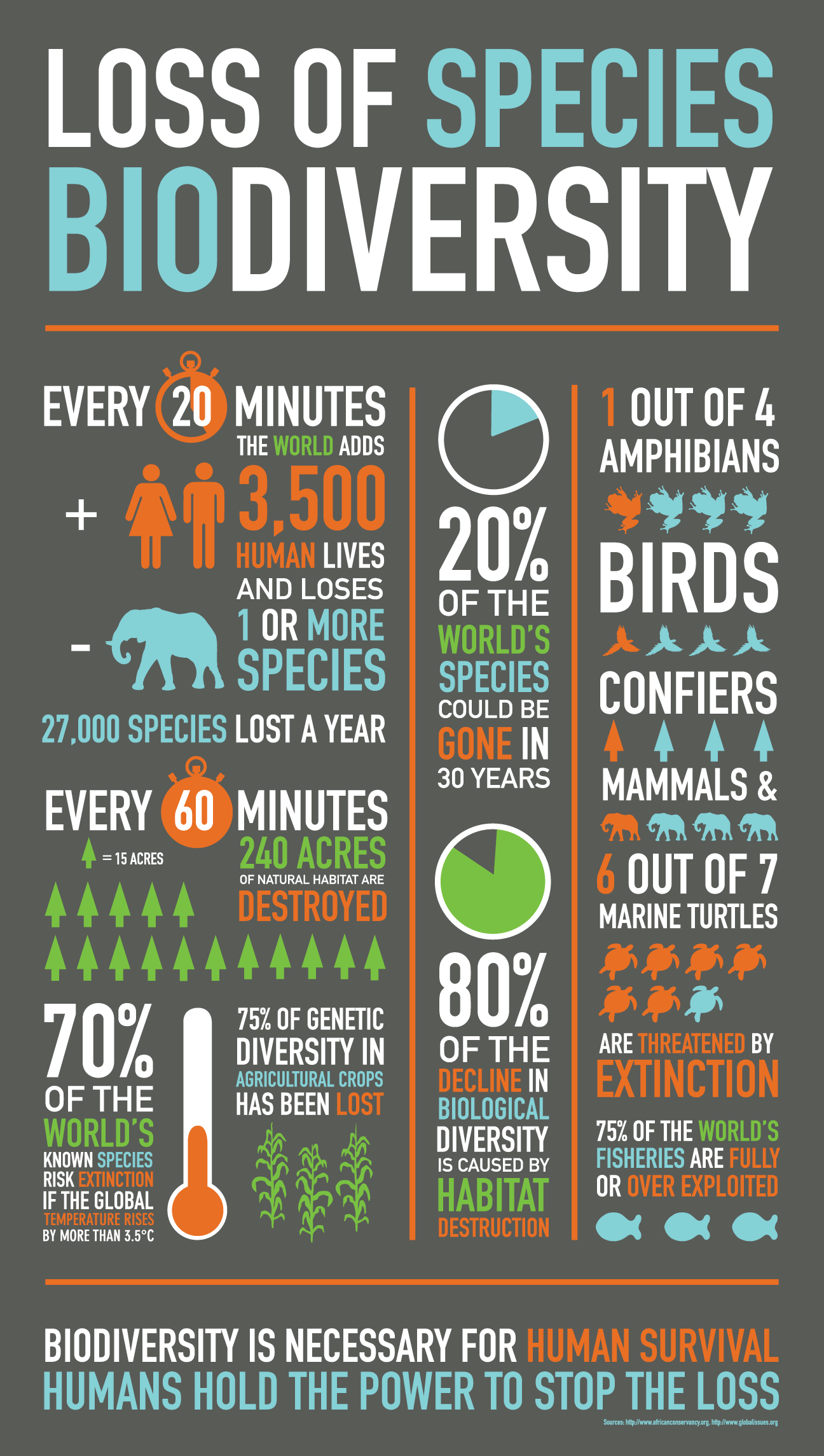
Photo:behance.net
‘Human destruction of nature is rapidly eroding the world’s capacity to provide food, water and security to billions of people, according to the most comprehensive biodiversity study in more than a decade.
Such is the rate of decline that the risks posed by biodiversity loss should be considered on the same scale as those of climate change, noted the authors of the UN-backed report, which was released in Medellin, Colombia on Friday.
Among the standout findings are that exploitable fisheries in the world’s most populous region – the Asia-Pacific – are on course to decline to zero by 2048; that freshwater availability in the Americas has halved since the 1950s and that 42% of land species in Europe have declined in the past decade.’...Continue to read
What is biodiversity and why does it matter to us?
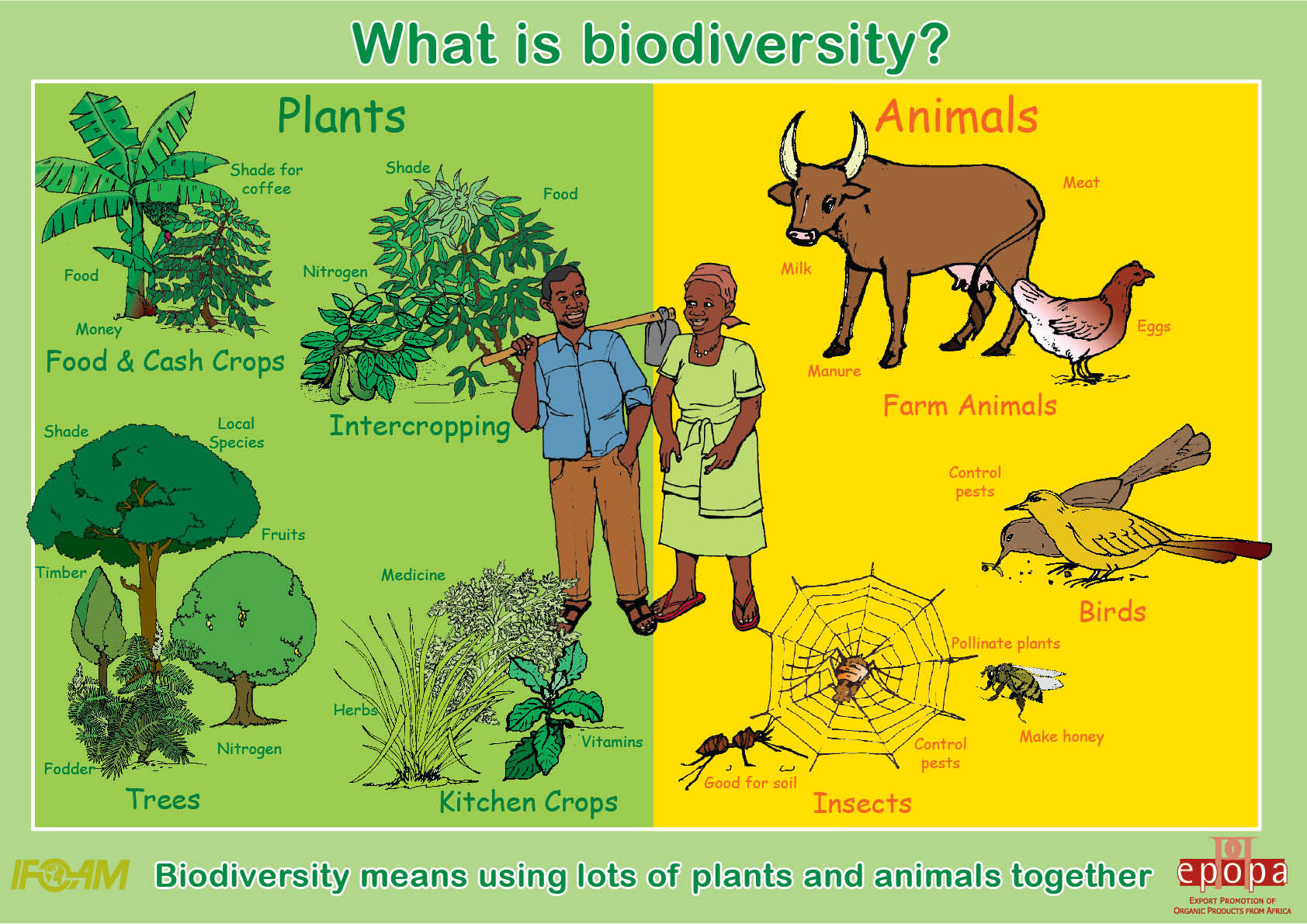
Photo:justforests.org
‘The air you breathe, the water you drink and the food you eat all rely on biodiversity, but right now it is in crisis – because of us. What does this mean for our future and can we stop it?’
‘It is the variety of life on Earth, in all its forms and all its interactions. If that sounds bewilderingly broad, that’s because it is. Biodiversity is the most complex feature of our planet and it is the most vital. “Without biodiversity, there is no future for humanity,” says Prof David Macdonald, at Oxford University.
The term was coined in 1985 – a contraction of “biological diversity” – but the huge global biodiversity losses now becoming apparent represent a crisis equalling – or quite possibly surpassing – climate change.
More formally, biodiversity is comprised of several levels, starting with genes, then individual species, then communities of creatures and finally entire ecosystems, such as forests or coral reefs, where life interplays with the physical environment. These myriad interactions have made Earth habitable for billions of years.
A more philosophical way of viewing biodiversity is this: it represents the knowledge learned by evolving species over millions of years about how to survive through the vastly varying environmental conditions Earth has experienced. Seen like that, experts warn, humanity is currently “burning the library of life”...Continue to read
For a selection of related and complementary articles and videos visit The Wisdom Corner
- Details
- Written by: Kamran Mofid
- Hits: 2730
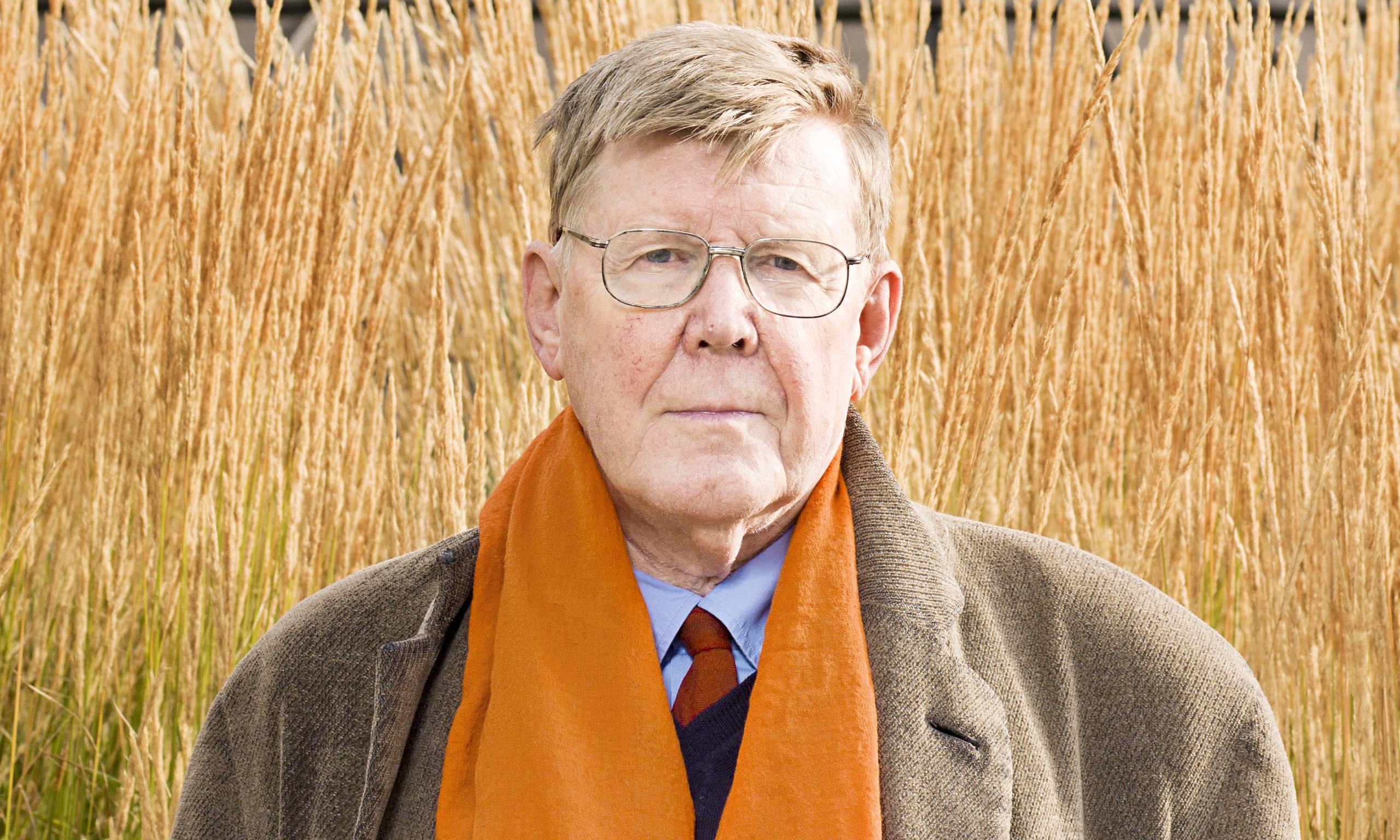
Allen Bennett
Photo:theguardian.com
Alan Bennett, the playwright and passionate champion of the underdog, has turned his fire on the creeping privatisation of Britain’s public institutions.
The 80-year-old writer used a “sermon” at Cambridge University to lambast what he said was the pursuit of profit in public services from prisons to the National Health Service, and suggested the drivers of privatisation were comparable to the “devout louts” of 17th Century puritanism.
In a broad-ranging sermon before the university, Bennett criticised the lack of fairness in British society encapsulated by the private school system, recalling his own visit to Cambridge in the 1950s with “the odds stacked against me” as he sought a scholarship against public school-educated rivals.
Private Education is unfair and un-Christian
‘But if, unlike the Daily Mail, one believes that the nation is still generous, magnanimous and above all fair, it is hard not to think that we all know that to educate not according to ability but according to the social situation of the parents is both wrong and a waste.
Private education is not fair. Those who provide it know it. Those who pay for it know it. Those who have to sacrifice in order to purchase it know it. And those who receive it know it, or should. And if their education ends without it dawning on them then that education has been wasted. I would also suggest – hesitantly, as I am not adept enough to follow the ethical arguments involved – that if it is not fair, then maybe it's not Christian either.
How much our ideas of fairness owe to Christianity, I am not sure. Souls, after all, are equal in the sight of God and thus deserving of what these days is called a level playing field.
This is certainly not the case in education and never has been, but that doesn't mean we shouldn't go on trying. Isn't it time we made a proper start? Unlike today's ideologues, whom I would call single-minded if mind came into it at all, I have no fear of the state. I was educated at the expense of the state, both at school and university. My father's life was saved by the state as, on one occasion, was my own. This would be the nanny state, a sneering appellation that gets short shrift with me. Without the state, I would not be standing here today.
I have no time for the ideology masquerading as pragmatism that would strip the state of its benevolent functions and make them occasions for profit. And why roll back the state only to be rolled over by the corporate entities that have been allowed, nay encouraged, to take its place? I am uneasy when prisons are run for profit or health services either. The rewards of probation and the alleviation of suffering are human profits and nothing to do with balance sheets. And these days no institution is immune. In my last play, the Church of England is planning to sell off Winchester Cathedral.
"Why not?" says a character. "The school is private, why shouldn't the cathedral be also?" And it's a joke, but it's no longer far-fetched.
With ideology masquerading as pragmatism, profit is now the sole yardstick against which all our institutions must be measured, a policy that comes not from experience but from assumptions – false assumptions – about human nature, with greed and self-interest taken to be its only reliable attributes.
In pursuit of profit, the state and all that goes with it is sold from under us who are its rightful owners and with a frenzy and dedication that call up memories of an earlier iconoclasm.
Which brings me nearly to the end.
One pastime I had as a boy which, thanks to my partner, I resumed in middle age, was looking at old churches, "ruin-bibbing" Larkin dismissively called it, though we perhaps have a little more expertise than Larkin disingenuously claimed he had. I do know what rood lofts were, for instance, though, like Larkin, I'm not always able to date a roof.
The charm of most medieval churches consists in what history has left and one learns to delight in little, the dregs of history: a few 15th-century bench ends, an alabaster tomb chest or, where glass is concerned, just the leavings of bigotry, with ideology weakening when it came to out-of-reach tracery – the hammer too heavy, the ladder too short – so that only fragments survive, a cluster of crockets and towers maybe, the glimpse of a golden city with a devil leering down.
In my bleaker moments, these shards of history seem to me emblematic obviously of what has happened to England in the past, but also a reminder and a warning of what in other respects is continuing to happen in the present, with the fabric of the state and the welfare state in particular stealthily dismantled as once the fabric of churches more rudely was, sold off, farmed out; another Dissolution, with profit taking precedence over any other consideration, and the perpetrators today as locked into their ideology and convinced of their own rightness as any of the devout louts who four and five hundred years ago stove in the windows and scratched out the faces of the saints as a passport to Heaven.
I end with the last few lines of my first play, Forty Years On. It's set in a school with the headmaster on the verge of retirement and is what nowadays is called a play for England. It ends with the boys and staff singing the doxology "All Creatures That on Earth Do Dwell", with before it, this advertisement for England:
To let. A valuable site at the crossroads of the world. At present on offer to corporate clients. Outlying portions of the estate already disposed of to sitting tenants. Of some historical and period interest. Some alterations and improvements necessary.’
On the issues raised above see more:
Alan Bennett launches fierce attack on private education
Why Alan Bennett's plea for the reform of private education is welcome
Abolish private schools, Alan Bennett argues
“The charge sheet is this. The government is led by a clique of toffs who have neither respect for their colleagues, nor empathy with the average voter. Their born-to-rule mentality means they have a greatly over-inflated view of their own capabilities, which deafens their ears to the advice and warnings of others who might actually know better. They are nothing like as good at governing as they think they are. And this, the charge sheet concludes, is now inflicting serious harm on both the country and the Conservatives' future electoral prospects. This view is now becoming more and more prevalent in the media, too, even among the press that the Conservatives would normally count as their friends.”-Andrew Rawnsley, The Observer, 29 April 2012
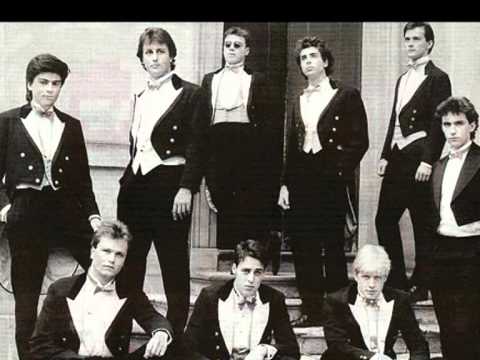
Men of the people? David Cameron and Boris Johnson in the livery of the Oxford University Bullingdon Club
- Desperately seeking Sophia: The Wisdom of Nature
- Long Way from Adi Ghehad: A Powerful and Inspiring Story of an Asylum Seeker
- Student Suicides at Bristol University: My Open Letter to the Vice-Chancellor, Prof. Hugh Brady
- ‘I Have a Dream’: Yearning for Dr. King’s Interconnected World
- On the 1st Day of the New Year...A Poetic Pilgrimage to Wisdom