
- Details
- Written by: Kamran Mofid
- Hits: 3154
‘Coventry has a history of triumphing against adversity, of coming together with a fierce but quiet pride. We love our city and all too often have listened to others putting it down but now is the time to invite the world to venture past our beloved ring road and into a city with a story to tell and experiences to share.
We weren’t sent to Coventry; we chose to come. Coventry is a city of welcome, a city of peace and reconciliation, a city of innovation and invention, a City of Culture.’ Coventry 2021
Coventry named as UK's city of culture for 2021

Photo:independent.co.uk
Coventry has been named as the next UK City of Culture in 2021, beating competition from Swansea, Stoke-on-Trent, Sunderland and Paisley.
My heartfelt congratulations and best wishes to Coventry, the city that inspired me to be who I am, and what I do.
“Father, Forgive” - these two words which I discovered at the ruins of Coventry Cathedral in 1973 changed the course of my life.

Photo:pinterest.com
Coventry and I: The story of a boy from Iran who became a man in Coventry
Thank you Coventry, my Coventrian friends, the sources of my inspiration and strength. I cannot tell you how grateful I am to you all.
Coventry for ever,
In gratitude,
Kamran Mofid (The Boy from Iran who became a Man in Coventry)
Co- founder and the Associate Director
The Centre for the Study of Forgiveness and Reconciliation at Coventry University in 1996
Co-founder, Coventry Ambassadors’ Lecture Series
- Details
- Written by: Kamran Mofid
- Hits: 2709
The telling accounts of mixing the common good with crony capitalism, greed and unjust excess profit. Also a very good read on the damaging and costly Public-Private Partnership (PPP), the cornerstone of the Tories' and New Labour's morally and ecomically obnoxious economic ideology in Britain.
Some ambassador!

Photo:cbc.ca
The crumbling Ambassador Bridge connects the United States to Canada. It is privately owned by an aging billionaire who has leveled entire neighborhoods in Michigan and Windsor, Ontario and waged scores of lawsuits against municipalities, the state, and Canada in order to maintain a stranglehold on the crossing—and the tolls that go directly into his pockets. In this very interesting and informative article in Harper’s, Matt Mossman looks at how a gas station owner came to control a key chokepoint in the North American economy (See below)
First, a personal note: I read Matt Mossman’s article with great interest. I learnt many new things about Windsor, Detroit and the Ambassador Bridge. I hold a special place in my heart for Windsor, Ontario. My wife, Annie, and I emigrated to Canada in mid-1970s. We went to Windsor, where my wife got a position at Windsor Cancer Clinic, Metropolitan General Hospital, whilst I went to the University of Windsor, where I studied for my BA and MA in Economics. Our oldest son, Kevin was born in Windsor in 1982. Whilst we were in Windsor, my brother, Kambiz, and my sister, Kiyan, were in Windsor too, studying at the University of Windsor. Moreover, my sister got married to Sasan in Windsor, who was studying at the University with us all. All in all, we were very fortunate to meet and make lasting friendship with many wonderful friends in Windsor. We cherish those wonderful and priceless memories.
And now, Matt Mossman’s article: Crossing Guards When private ownership of a bridge gets old
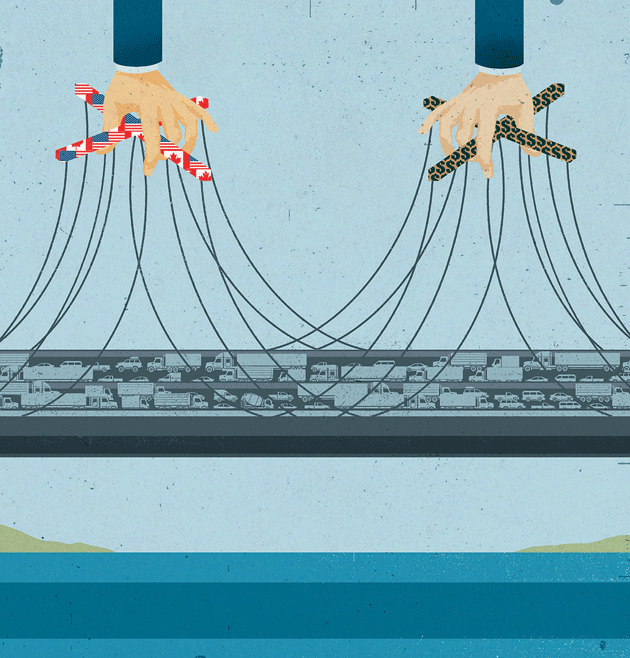
Photo:harpers.org
- Details
- Written by: Kamran Mofid
- Hits: 2133
'Facebook was designed to exploit human "vulnerability"
Where is the life we have lost in living?
Where is the wisdom we have lost in knowledge?
Where is the knowledge we have lost in information?-T.S. Eliot
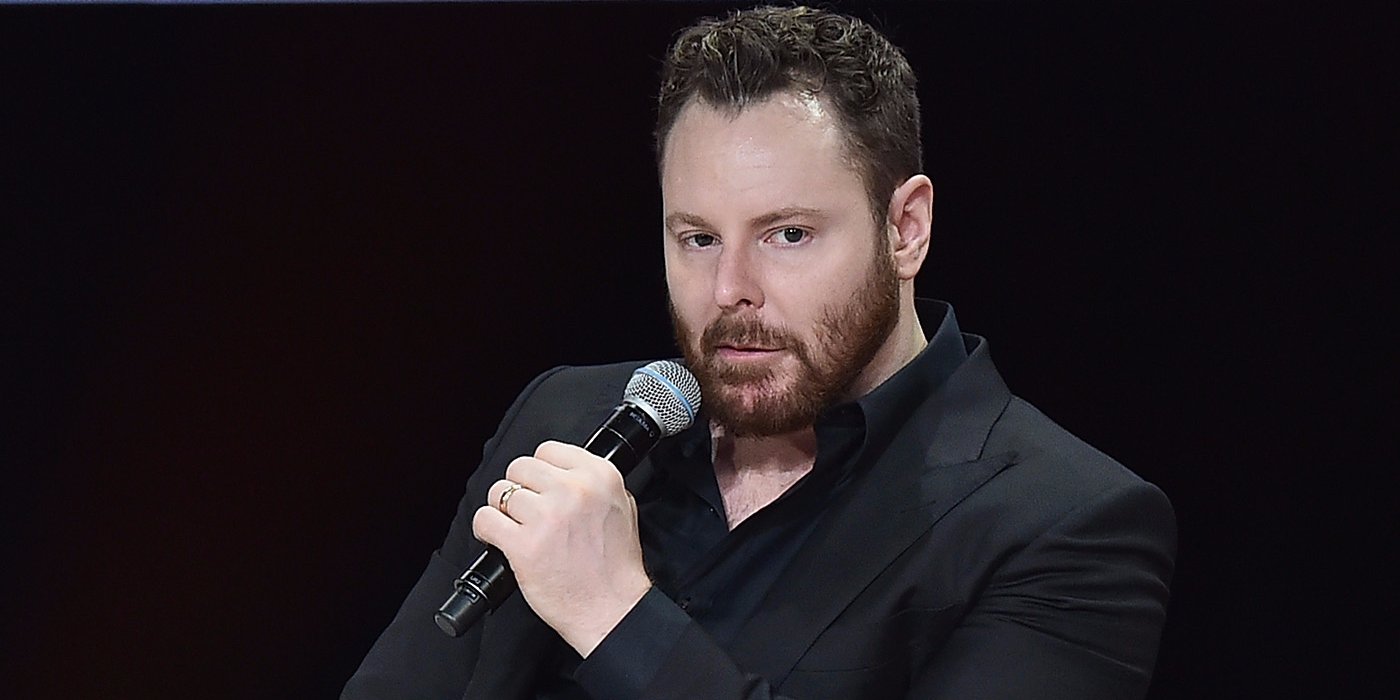
Sean Parker
Photo: uk.businessinsider.com
In an interview this week with Axios, Facebook’s original president, Sean Parker, admitted that the company intentionally sought to addict users and expressed regret at the damage being inflicted on children.
He then said that, the thought process behind building the social media giant was: "How do we consume as much of your time and conscious attention as possible?"...“That means that we needed to sort of give you a little dopamine hit every once in awhile because someone liked or commented on a photo or a post or whatever ... It's a social validation feedback loop ... You're exploiting a vulnerability in human psychology ... [The inventors] understood this, consciously, and we did it anyway."
First, before I share Parker’s comments with you further, I wish to recall and remember a bit of what I had written in 2012:
‘The other day, I “Successfully” deactivated my Facebook account. I say “Successfully”, because Facebook does not make it easy to say good bye. They want us to stay with them!
You know, given human weaknesses to addiction, that is any form of addiction, I thought I was watching me and watching you to see if you were watching me, a bit too much: Watching who "likes" or "unlikes" whatever I post there. As if one click here or one click there is enough for me to know how good or bad I am doing!
My mind was going “digital” and I was becoming “virtual”: And I said to myself, Hey Kamran, watch where you are going man!
I thought I needed a timeout, a time for some reflection and soul-searching. I do not know if you, too, are facing the same or not.’...Continue to read
I find this truly remarkable that years ago in 2012, after only a few months of interaction with the Facebook, I firmly came to the realisation that I was getting hooked, I was becoming addicted to it. Moreover, I also realised that this addiction was adversely affecting my health, both physical and emotional. Thus, I am glad, given what Parker and others are saying now, I divorced Facebook, twitter, and other impersonal interactions and engagements.
"Throughout the history of human civilisation, including periods of ecclesiastical rule, no entity has had as much power to influence and control the social and political ideals of billions of people with zero oversight or regulation as these tech giants. This is extremely dangerous."

Photo:theodysseyonline.com
Is Mobile phone Driving us Mad?
Good on you Ms. Essena O'Neill: Social media 'is not real life'
How Facebook and Google threaten public health – and democracy
Google, Amazon, Facebook, Twitter are a menace
‘The solution is to double down on being human’
And now more on Parker’s comments:
Speaking to the news website Axios, the entrepreneur and executive talked openly about what he perceives as the dangers of social media and how it exploits human "vulnerability."
"The thought process that went into building these applications, Facebook being the first of them ... was all about: 'How do we consume as much of your time and conscious attention as possible?'" said Parker, who joined Facebook in 2004, when it was less than a year old.
"And that means that we need to sort of give you a little dopamine hit every once in awhile, because someone liked or commented on a photo or a post or whatever," he told Axios. "And that's going to get you to contribute more content, and that's going to get you ... more likes and comments."
Parker added: "It's a social-validation feedback loop ... exactly the kind of thing that a hacker like myself would come up with, because you're exploiting a vulnerability in human psychology."
"The inventors, creators — it's me, it's Mark [Zuckerberg], it's Kevin Systrom on Instagram, it's all of these people — understood this consciously," he said. "And we did it anyway."
Some in tech are growing disillusioned — and worried
Parker isn't the only tech figure to express disillusionment and worry by what they helped create. Tristan Harris, a former Google employee, has been outspoken in his criticism of how tech companies' products hijack users' minds.
"If you're an app, how do you keep people hooked? Turn yourself into a slot machine," he wrote in a widely shared Medium post in 2016.
"We need our smartphones, notifications screens and web browsers to be exoskeletons for our minds and interpersonal relationships that put our values, not our impulses, first," he continued. "People's time is valuable. And we should protect it with the same rigor as privacy and other digital rights."
In a recent feature, The Guardian spoke to tech workers and industry figures who have been critical of Silicon Valley business practices.
Loren Brichter, the designer who created the slot-machine-like pull-down-to-refresh mechanism now widely used on smartphones, said, "I've spent many hours and weeks and months and years thinking about whether anything I've done has made a net positive impact on society or humanity at all."
Brichter added: "Pull-to-refresh is addictive. Twitter is addictive. These are not good things. When I was working on them, it was not something I was mature enough to think about. I'm not saying I'm mature now, but I'm a little bit more mature, and I regret the downsides."
And Roger McNamee, an investor in Facebook and Google, told The Guardian: "The people who run Facebook and Google are good people, whose well-intentioned strategies have led to horrific unintended consequences ... The problem is that there is nothing the companies can do to address the harm unless they abandon their current advertising models."
The comments from Parker and others are further evidence of souring public sentiment about Silicon Valley. Once lauded in utopian terms, companies like Facebook have now come under heavy criticism over their role in the spread of "fake news" and Russian propaganda.
- My friend Jamshid Damooei and a greater, better, kinder America
- The young man who 500 years ago sowed the seeds of Brexit
- Neoliberalism and the death of Nature in Sheffield and the world over
- In a world of constant distraction seek solitude to attain contentment
- Capitalism is broken: The time is now to seek the common good