
- Details
- Written by: Kamran Mofid
- Hits: 10907
14th GCGI International Conference
And
The Fourth GCGI and SES Joint Conference, Lucca, Tuscany 2018
‘OUR SACRED EARTH: Spiritual Ecology, Values-led Economics, Education and Society Responding to Ecological Crisis’
CALL FOR PAPERS AND PARTICIPATION

Photo:change.org
Globalisation for the Common Good Initiative
and
Fourth Joint Conference
28 August-1 September 2018
‘OUR SACRED EARTH:
‘Spiritual Ecology, Values-led Economics, Education and Society Responding to Ecological Crisis’
To be hosted at
Villa Boccella, Tuscany, Italy

(A truly spiritual and inspirational place: This 17th Century Tuscan estate which is set amongst the hills of Northern Tuscany is very well situated, 10 Kilometers from the medieval city of LUCCA, one hour from the international airport of Pisa and about two hours from Florence. The Villa and estate belong to long-standing members of the School of Economic Science, and we are grateful to them for hosting the 2018 Joint Conference.)
CALL FOR PAPERS AND PARTICIPATION
- Details
- Written by: Kamran Mofid
- Hits: 2413
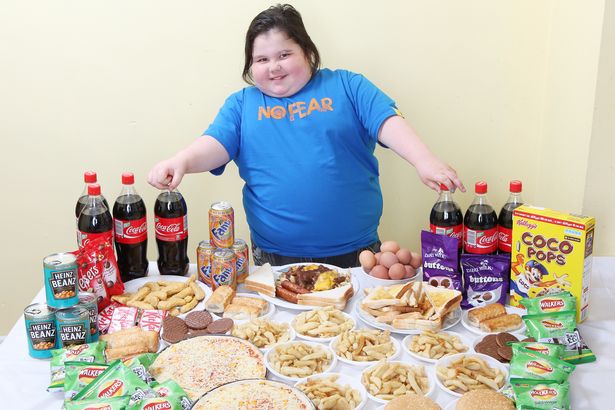
Photo: health.am
Western culture is to blame for rising childhood obesity in developing countries
‘A history of colonialism and misplaced admiration for Western culture means fast food chains see developing countries as a potential gold mine’
An article by Safeeyah Kazi, first published in The Independent on 16 October 2017
New statistics have revealed the extent of the world’s obesity epidemic, with obesity rising tenfold in children over the past four decades. In addition to this, another 213 million children were classed as overweight. Yet obesity figures in the US and the UK reached a plateau for the first time.
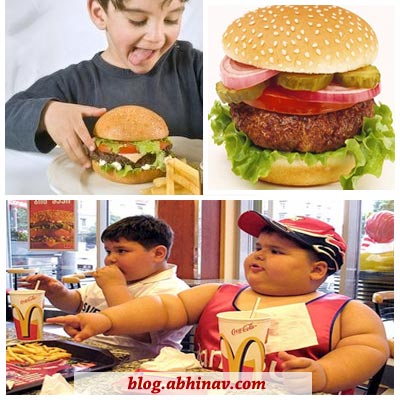
As a millennial, junk food – namely crisps, burgers, chips, pizza and fizzy drinks – was an integral part of my childhood. Walking to the shops after school and ordering some chips was a daily habit. We all know that it’s not difficult to find junk food for a cheap price in the UK. Indeed, many poorer families depend on it precisely because of its price point.
But some of these products are only now making their way to developing countries – and this “new” mode of cheap, fatty, filling cuisine is having a terrible effect. The worst increases in obesity occurred in China, India, Polynesia and Micronesia – in the case of the latter, half of their young population is either overweight or obese. The number of underweight children has decreased, but this development has been quickly met with an epidemic at the other end of the scale.
Diabetes epidemic affecting 350m – and western fast food is to blame
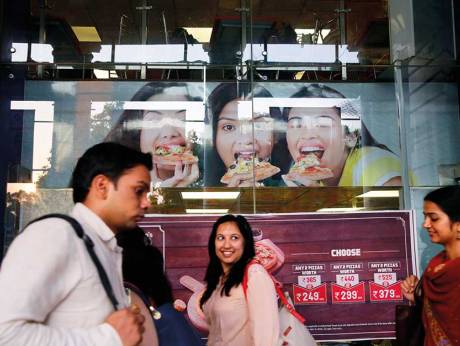
A 'Happy' McDonald's in India-Photo:gulfnews.com
Most people in the UK are aware that the country has undergone an obesity “boom” in the past decade. Figures indicate that we are stabilising the problem, but one in five children of reception age are still classed as obese or overweight. The figures increase to 26 per cent of children in the most deprived areas, compared to 12 per cent in the most affluent – showing that poverty and obesity still go hand in hand.
So it’s no surprise that some of the most deprived countries are now seeing a rise in obesity, and we bear some responsibility for outsourcing this problem.
India's fascination with fast food
Egypt was recently found to be in the top 20 most obese countries in the world, with an estimated 35 per cent of adults classed as obese and 22 million Egyptians living in poverty. In Egypt’s heart lies Cairo, and with a buzzing capital city come with long working hours and often low wages.
Samoa, the “paradise island” in the Pacific, has seen a dramatic increase in obesity, with figures showing a 95 per cent increase since they began importing Western food and tinned goods. This has led in turn to sharp increase in the diagnoses of diabetes and sleep apnoea.
Developing countries seem to now be subjected to the hands of power-chains in the same manner as the US and the UK. KFC in 2016 planned to open 600 restaurants across China and McDonalds stating a long-term goal of 1,000 stores over the next five years.
One in four children aged seven or above will be obese in China by 2030. And although China has seen a drop in poverty since the late 1900s, millions still live below the poverty line.
Africa's journey from one disaster to a bigger disaster: from underweight to overweight
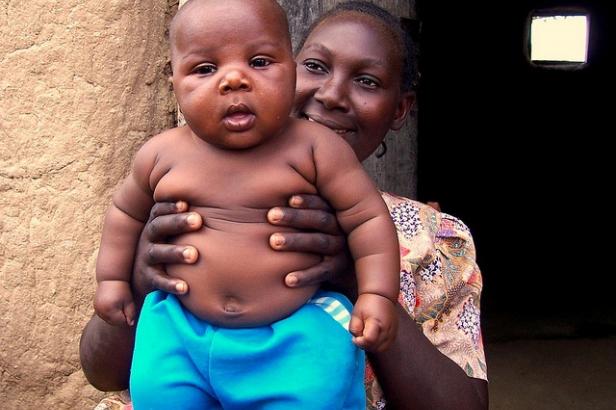
Photo:jolpress.com
Many of these countries either currently are or once were colonised by the West, which may have led to a widespread ideology that a better life exists here. For the millions in poverty, we are perceived as wealthy beyond their wildest dreams. It’s plausible that in some way by adopting the norms of the West, these countries feel closer to that dream and to the culture and society they idolise.
Having been a tourist in some of these countries, including Egypt, it became obvious to me that there was a growing obsession with the West. I could barely walk down the street without being approached about being a Brit; I had countless conversations with Egyptians dreaming of the UK, their very own idea of a “paradise island”, and discussions of how much better life must be.
The trend appears to expand far beyond the food industry extending to fashion TV and music in a push for modernisation over traditionalism. Recent times have seen a spread of this culture, a prime example of this is mainstream artists such as One Direction, Ed Sheeran and The Vamps all cracking markets in developing countries. Next month India will see Ed Sheeran make a stop, Jakarta will similarly be another one to experience this. Last year British band The Vamps made a highly-anticipated stop in India. It is more apparent than ever that global chart-toppers are appealing to markets far beyond the West.
TV shows such as Game of Thrones, Breaking Bad and The Big Band Theory have all taken China by a storm following the success of Friends in the early 1990s, giving users the opportunity to watch American favourites with Chinese subtitles for free.
This obsession with Western-affinity taken high-street brands such as Zara, H&M and New Look and landed them with stores across the developing world including Egypt, Morocco and Indonesia, there is a want to be associated with and embraced by the West's modernisation on a broad scale.
Many of the countries struggling with obesity have embraced Western food culture with open arms because they have a desire to mirror the environment as a whole, a dream of a wealthy and prosperous society and an easier life for their people and perhaps adopting this food culture makes them feel a step closer to that, even if it means giving up what they know so well: great real food.
With such admiration of this food culture, big chains see these territories as a gold mine.
The West’s “boom” of obesity is now transcending across the oceans as developing countries start trading in real produce for convenience food – and it’s clearly having a detrimental effect on their health.
- Details
- Written by: Kamran Mofid
- Hits: 4418
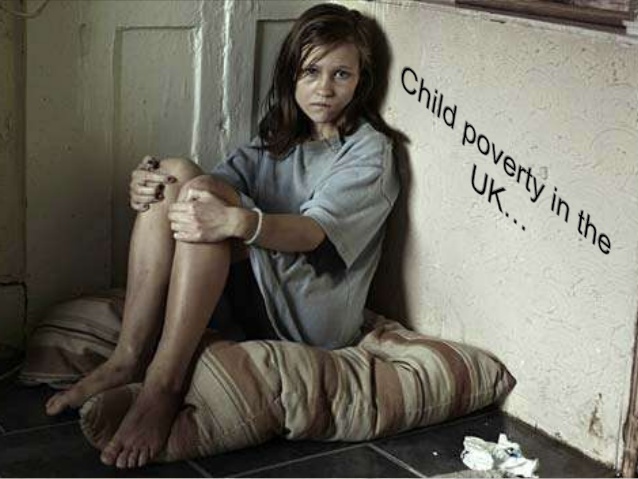
Photo:bing.com
'More than 14 million people, including 4.5 million children, are living below the breadline, with more than half trapped in poverty for years, according to a new measure aimed at providing the most sophisticated analysis yet of material disadvantage in the UK.'
New study finds 4.5 million UK children living in poverty
Alison Michalska: ‘In Britain, we don’t seem to really like children’
By Patrick Butler. This article was first published in the Guardian on Wednesday 11 October 2017
‘Not only does poverty blight youngsters’ lives says Alison Michalska, president of the Association of Directors of Children’s Services, but it’s getting worse’
‘We have children in the city who don’t have warmth, they don’t have food, they don’t have that security that every child would want to have.’ -Alison Michalska
‘Michalska qualified as a social worker four decades ago, and reckons that her younger self would be shocked that more children live in poverty – just surviving – now than then. Four million children currently live below the poverty line, and two-thirds of those are in households where someone works. “A growing number of children in poverty is a disgrace. It’s heartbreaking. When my colleagues and I started out as youth workers in the early 1980s I don’t think we ever thought that 30 years on there would be more children in poverty. That’s a scandal.”
In the face of so much poverty and injustice , the big question of our time is: Where has our humanity gone?
“Overcoming poverty is not a task of charity, it is an act of justice….Poverty is not natural. It is man-made and it can be overcome and eradicated by the actions of human beings. Sometimes it falls on a generation to be great. YOU can be that great generation.”-Nelson Mandela
After the best part of an hour spent discussing rising child poverty, the staggering pressures placed on young people to achieve academically at school, and the negative impact of austerity on children’s mental wellbeing and life chances, Alison Michalska reaches, with the sudden force of revelation, for a root cause of all this seemingly anti-youth policy: “The really big thing that strikes me is that as a country we don’t seem to really like children. We don’t value them. We don’t see them as a citizens of the future. We really don’t like them very much.”
On the face it, Michalska, 56, argues, there is a big policy focus on children by government, but this is all too often in effect about controlling youngsters, forcing them to conform to norms and stereotypes. You can see that cultural dislike, she says, in the continuing presence on housing estates of “no ball game” signs, or rising school exclusion rates, or the hardwired suspicion that loitering groups of teenagers are up to no good. “Teenagers like to hang around. As a teenager I hung around. Why does everyone think that is dangerous? Just because they have their hoods up, why are they dangerous?”
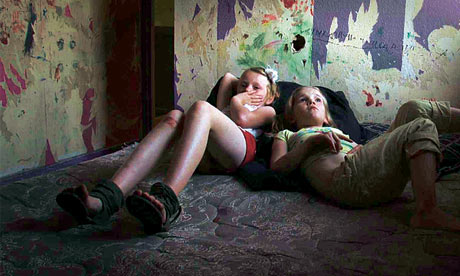
'Five million children across the UK face a lifetime of poverty under the new government rules'
Caption and photo: akashictimes.co.uk
Poverty in the UK jeopardising children’s health, warns landmark report
Ninety children taken into care each day, figures show
Austerity policy blamed for record numbers of children taken into care
In Britain’s landscape of cuts, it’s our children who are lost
Bastard Economics of Greedy Neoliberalism and the Killings of the Innocents in London Tower
Too many youngsters, particularly those from poorer communities, are needlessly criminalised for petty misdemeanours, instantly diminishing their chances of going to college or getting a job, she believes. “I worked in a fairly affluent place where we had kids criminalised for riding the trolleys round a Tesco car park. People were complaining, the local police had to show they took it seriously; of course they caught the kids and they were cautioned or even worse, taken to court. Yes, that behaviour is stupid, but come on. The impact that has on young people’s life chances is just unbelievable.”
Michalska’s passion and directness neatly complement a policy paper published on Wednesday by the body she represents as president of the Association of Directors of Children’s Services (ADCS). The paper is couched in more reserved language but amounts to a clear and forthright challenge to the government’s austerity programme. Cuts and welfare reforms are driving up child poverty rates, overloading child protection services and eroding youth mental health services, it points out. “ADCS members believe every child deserves a happy, safe childhood in which they can thrive not just survive,” the paper notes, adding pointedly, in a nod to the government: “We hope others do.”
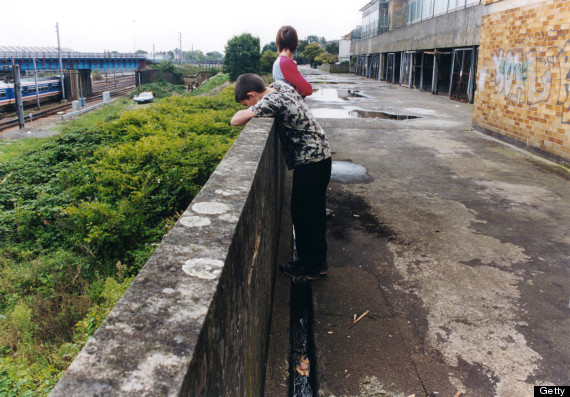
A mother and son at the back of the council estate where they live
Photo:huffingtonpost.co.uk
The Report that should Shame us all: The Neglected and Abused Children in England
A Plea to address Global Youth Depression
Michalska qualified as a social worker four decades ago, and reckons that her younger self would be shocked that more children live in poverty – just surviving – now than then. Four million children currently live below the poverty line, and two-thirds of those are in households where someone works. “A growing number of children in poverty is a disgrace. It’s heartbreaking. When my colleagues and I started out as youth workers in the early 1980s I don’t think we ever thought that 30 years on there would be more children in poverty. That’s a scandal.”
Welfare reform, Michalska says, conflicts with government rhetoric about improving children’s life chances. It punishes children indirectly, disrupting and impoverishing their lives through the strictures it imposes on their parents. In Nottingham, where she is corporate director for children and adults at the city council, an increasing number of families are finding it hard to cope: “We have children in the city who just don’t have warmth, they don’t have food, they don’t have that security that every child would want to have. Nottingham is a fabulous city with a lot going on but there are families and children who are excluded from it.”
The two-child limit on benefits is “punitive” and a “massive waste of time and money”, she says. Cuts to housing benefit force poorer families out of the area where they live: “The one thing children don’t need is having to move house every few months and change schools, having to make new friends, put down new roots. That instability damages children and it damages families.” The resulting poverty creates more children in need and directly drives up demand for expensive children’s social care services. “It’s why the [ADCS] paper focuses so much on poverty. We know that when families are in poverty and they are worried about money, if they are worried about feeding their children … the impact on children is so harmful and damaging.”
What keeps her awake at night, she says, is the impact of cuts to local government budgets. Although councils generally are not disinvesting in children’s social work, the level of cuts to other areas – youth services, family help, libraries, leisure centres, parks, “the kind of preventive services that keep social work manageable” – means the pressure on child protection will become unsustainable. The Local Government Association estimates there is a £2bn gap between funding and demand for children’s services. Michalska believes the crisis is reaching a tipping point.
Councils’ ability to cope with the demand rests on their ability to intervene and help families in need before their problems spiral to crisis point, she says. In Nottingham – an early intervention city since the early 2000s – this principle is well established. “We’ve spent a lot of money on edge-of-care services. They not only pay for themselves but they save money, and it results in better outcomes for the children.”
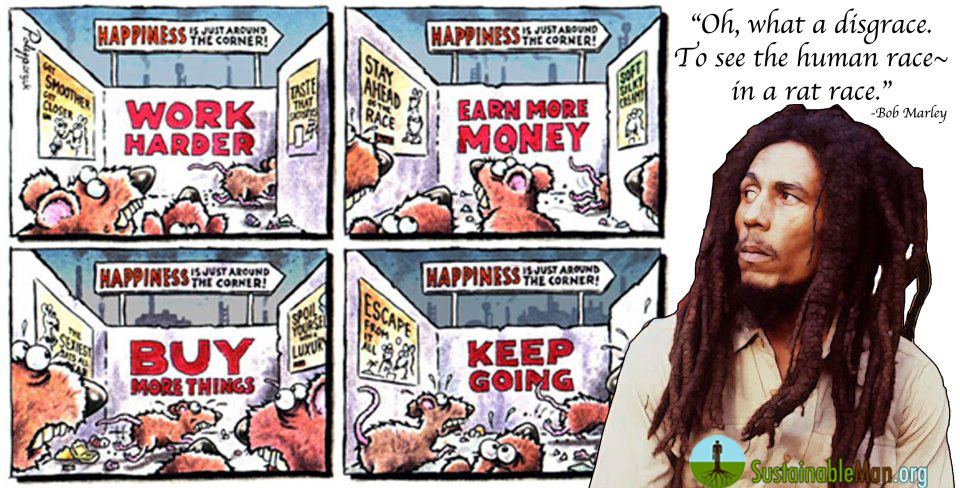
Photo:simplelivingwithkids.com
Success-What is it and is the drive to achieve it making our children sick?
Nature the Best Teacher: Re-Connecting the World’s Children with Nature
Envisioning the Future of our Children’s Education
Services continue to be hamstrung by funding and workforce problems. Nationally, 16% of children’s social work posts are unfilled. There is a lot you can do to retain social workers – smaller caseloads, better supervision and career development, she says. Brexit won’t help, potentially choking off a source of qualified social workers. However, better pay for social workers would help: “When I got my first social-work job I could actually afford to buy a house. Well, you are not going to do that on the average starting salary for a social worker now, of around £20k. Social workers themselves are struggling to cope, let alone the families they are working with.”
- Could Labour be the party that brings the long 20th century to an end?
- Capitalism in Disgrace, Karl Marx’s Magic on the Rise Again
- City of Man VS City of God Why States Fail: Lessons from Augustine
- Would Henry George’s ‘Remedy’ help us combat today’s global crises?
- Economyths exposes the rotten heart of economics