- Details
- Written by: Kamran Mofid
- Hits: 3194
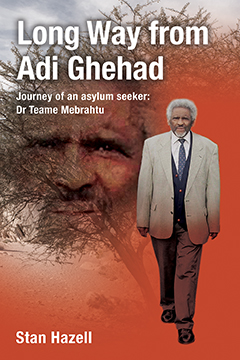
Photo: shepheard-walwyn.co.uk
‘With immigration and asylum seekers high on the agenda of governments throughout Europe, the life story of Dr Teame Mebrahtu is a timely reminder of a positive side of what has become a contentious and potentially divisive issue. It is a truly remarkable and inspiring story.
Dr Mebrahtu, born in the village of Adi Ghehad in the Eritrean Highlands, was a leading teacher trainer in his country but was forced to leave when his life was in danger in the 1970s.
The book first traces his early life in Eritrea, then part of Ethiopia, his efforts to get an education – the first in his family to do so – his involvement in student demonstrations against the government of Emperor Haile Selassie, resulting in imprisonment, and his rise to become Director of the Asmara Teacher Training Institute amidst the political unrest and bloodshed of the Eritrean liberation struggle. He was an eyewitness to the moment Haile Selassie was deposed.
During this time he had been developing his philosophy of teaching, first as a teacher then a teacher trainer, which was to mark the rest of his career. He firmly believes the welfare of students is an essential precursor to academic success.
When his life came under threat, he managed to leave the country to study for a PhD at Bristol. Within a year of arriving he was ordered back to Addis Ababa by the Mengistu regime. Sensing his life was again in danger, he refused and applied for and was granted asylum. Although entitled to state benefits, he declined saying he had not earned them. Instead, he persuaded local schools to let him talk to pupils about Africa and the Africans bringing new understanding of those with a different culture. His popular talks won him a grant from the Rowntree Trust.
While the Eritrean liberation war raged, he raised support for refugees fleeing the fighting and living in camps in Sudan. He visited the camps advising on schooling for the refugee children. Later he went to train teachers in the Zero School set up in caves in liberated parts of Eritrea, braving the Ethiopian MiGs.
After obtaining his PhD, he joined the staff of the Bristol Graduate School of Education where, for 24 years, he became a respected senior academic and adviser to international students – many of whom went on to have leading roles in the education system of their countries. He has become a valued member of his local community. An acknowledged expert on multicultural education and the problems of refugees, he has provided advice and valuable insights from his own experience during the troubled history of Eritrea and whilst establishing a new life in Britain.’
A Highly Recommended Book
“Stories of outstanding people, who overcome great adversity, encounter almost impossible odds in rising from humble beginnings in remote villages to become noteworthy citizens of the world, form part of the most uplifting areas of literature. Such individuals and their life experiences in following a powerful mission to improve human-kind, provide exemplars of how to live a truly good life. This account of the life of Dr Teame Mebrahtu is undoubtedly part of that pantheon of biographies.”- Professor Malcolm Johnson, University of Bristol
“Teame Mebrahtu is a man who received a special vocation and who has held on to it all his life: To be a teacher in the full meaning of the word… It is difficult to understand how it has been possible for one person to take on and to fulfill so many tasks. In his work he has not sought a personal career. In all of it we see a deep concern for people, which in the end is what counts in life. Take the book and read it!”- Prof. Arve Brunvoll, Bergen, Norway
“…This account is memorable. It is a salutary illustration of one man’s reasons for flight, of his desire to contribute to his host country, of his passion for education. At a time when refugees are regularly dehumanised in public discourse, this story shows how people of different cultures can find understanding and common ground.” - Fleur Houston, Reform Magazine
“An honest and genuine narration of Teame’s life long devotion to the art of teaching coupled with a rare personality trait of ready empathy with the underdog.”- Tukue Woldeamlek, Retired Eritrean Educator
“[Dr Mebrahtu’s] views on “living with difference” point the way for diverse communities and cultures to come together in harmony and understanding and are therefore relevant to all of us in the Churches.”- John Singleton, Methodist Recorder
“A valuable resource for those seeking to understand the issues of immigration, the conflicting forces facing asylum seekers, and the challenges for countries where they gain sanctuary. Dr Mebrahtu’s reflections on the issues of immigration both for the immigrants and the host community, based on his own experience and that of the many other refugees he helped, are thought provoking.” - Henleaze & Westbury Voice
Click here to purchase ‘Long Way from Adi Ghehad:Journey of an Asylum Seeker: Dr Teame Mebrahtu’
- Details
- Written by: Kamran Mofid
- Hits: 5597
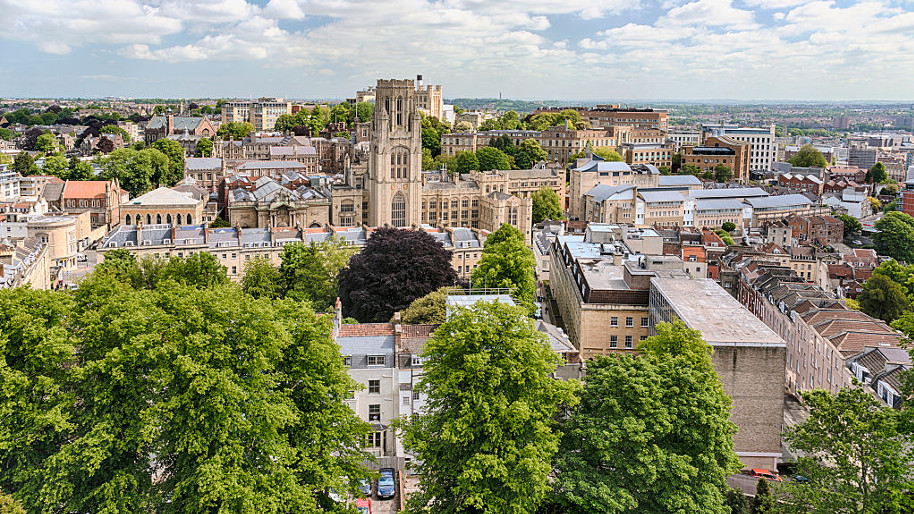
Bristol University, where seven students have killed themselves in less than 18 months. Photo: Olaf Protze / Getty Images
Dear Prof. Brady,
Greetings. I hope this note finds you in good heart. I am writing to thank you for your recent reflection about the tragic cluster of suicides of students at your university in an interview with the Guardian. Thank you for sharing your candid views with us. It is refreshing to note a vice-chancellor speaking frankly on this heartbreaking subject.
But as you point out: “Unfortunately this is a global sectoral issue. If you look over the last five to eight years across the UK, but equally in Canada and the US, the number of students seeking help for and declaring mental health issues has almost tripled.”
You have identified some of the possible reasons for this continuing and deepening crisis, such as the social media, student debt, desire for perfection, uncertain future, the world in turmoil, etc.
All of the above reasons are true, but in my opinion this is not the full story, the story that somehow the universities themselves, wittingly or unwittingly, are responsible for making.
The two main reasons that I believe were omitted from your list are:
1- Our prevalent and dominant global economic model and system which promotes individualism, selfishness, greed, feral competition, rat-race, targets after targets, success as measured by how much one earns and such like; which in turn has given us an age of anger, cynicism, frustration, hopelessness, loneliness and lack of self-worth, devoid of values, virtues and trust;
2- Our education and teaching model that have adopted the above values, which in turn, have sustained and given credibility to the above economic system.
I am often asked: ‘What is the main role and function of a "good" education?’ or indeed ‘What is a UNIVERSITY?’ ,questions that I strongly believe have not been answered by our university leaders. Critical questions which remains to be answered.
Thus, is a 'good education' to equip students with marketable skills to help countries compete in a global, information-based workplace? Has this overwhelmed other historically important purposes of education, and thus, short- changing us all and in particular the students?
If there is a shared national purpose for education, should it be oriented only toward enhancing the narrow vision of a country's economic success? Should education be answerable only to a narrowly defined economic bottom line, or do we need to discover a more comprehensive, inclusive bottom line, given the catastrophic crises that we are witnessing all around us? Are the interests of the individuals and selective groups overwhelming the common good that the education system is meant to support? Should our cherished educational values be all up for sale to the highest bidder? Should private sector management become the model for our mainly publicly-funded education system? Should the language and terminology of for profit- only business model, such as “downsizing”, “outsourcing”, “restructuring”, ”marketisation”, “privatisation” and “deregulation”, amongst others, be allowed to become the values of education, when teaching and learning is nothing short of a vocation and sacrament?
The Guardian in an editorial on the lecturers’ pension strike, summarises the above quite clearly:
‘The public see excessive vice-chancellors’ pay while lecturers face low-paid casualised employment. The government wants universities to think like big businesses. They lure students like customers with shiny new labs, luxury accommodation and sports stadiums – amenities built with cash from fees and debt. To make the sums add up, pension liabilities are being offloaded. Higher education attuned to private markets will prioritise cash surpluses over societal wellbeing.’ Here you have it: ‘Societal wellbeing’!
Unless we change direction, and acknowledge the above, then we will continue banging our heads against the brickwall, unable to address and hopefully resolve this worldwide tragedy.
All my adult life I have been an academic, engaged with university teaching and students, until a few years back, when due to feeling unwell and unhappy, I left my vocation with early retirement. Therefore, what I write is totally based on my conviction and experience that we must be of assistance and support to our youth, the students and indeed to our fellow academic colleagues who are also under tremendous pressure, suffering from anxiety, depression, panic attacks and feelings of unhappiness, sadness and loneliness.
To press this point, please let me quote a passage from "My Story"
‘Life is so full of unpredictable beauty and strange surprises
As many people, wiser than me have noted, our lives and the world in which we all live, are so unpredictable. Things happen suddenly, unexpectedly. We want to feel we are in control of our own existence. In some ways we are, in some ways we're not ... Life, it can bring you so much joy and yet at the same time cause so much pain.
I was so devastated that after this wonderful journey, full of joy and happiness, achievements and success, due to some reasons beyond my control, I started to feel unwell, unhappy, not enjoying what I was doing and teaching, especially when I lost all confidence in the value of moral-free economics that I was teaching my students, and more.
In 1999 I voluntarily resigned from my post at Coventry University. It goes without saying that, I was heartbroken and extremely hurt that I was unable to nurture and develop further what I had envisioned and built.
Looking back, reflecting on what has happened, I think, somehow, somebody, somewhere, had planned it so that I, too, should have a life, similar to the life of Coventry itself: fall and rise again.”
And this is why I have made it my mission to write and talk about this subject and offer possible paths to addressand resolve this national and global tragedy.
In 2015 I wrote an open letter to the university leaders around the world, which I would very much like to share with you:
An Open Letter to University Leaders: Students’ Mental and Emotional Wellbeing Must Be Our Priority
Then, still earlier in 2011 I had written an article Why Happiness Should be Taught at Our Universities
In these two articles, amongst many more, I had tried to discuss and debate students’ welfare and wellbeing, by combining my own experiences, knowledge, insight, and education.
I will be delighted if you read these and share your thoughts with me. This will make me very happy.
I hope, we can all become an instrument of hope to our students, the youth, the world over and begin a journey of hope, all of us, together, where we may challenge the norm, encourage volunteerism and service. A journey that will be about serving our communities, our world, and caring for our planet, our home. Finding out more about ourselves than we ever imagined possible. Having a dream. A journey about a mission and our vocation in life.
Hope for a better life and a better world will sustain us, makes us feel better and valued. Hope is the best medicine to heal the pain of our complicated modern lives.
Thanking you,
Kamran Mofid
- Details
- Written by: Kamran Mofid
- Hits: 6127
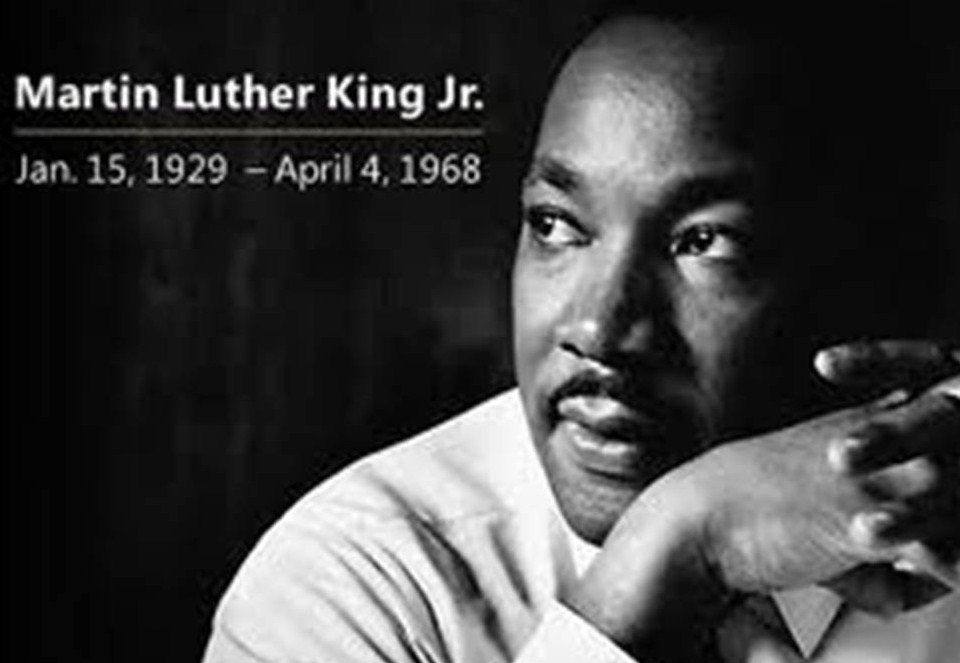
Photo:bing.com
“Martin Luther King JR: Ecological Thinker”
I offer this in honour of Black History Month
And of our forthcoming coming conference in Lucca, Tuscany, 28 August-1 September 2018
“All I'm saying is simply this, that all life is interrelated, that somehow we're caught in an inescapable network of mutuality tied in a single garment of destiny. Whatever affects one directly affects all indirectly. For some strange reason, I can never be what I ought to be until you are what you ought to be. You can never be what you ought to be until I am what I ought to be. This is the interrelated structure of reality.”~ Dr. Martin Luther King, Jr, 1965
"It really boils down to this: that all life is interrelated."
‘Reading through his consistent references to the universe and the cosmos, to interrelatedness, interdependence, and connectedness, to mutuality and participation, an inescapable conclusion dawned on me: Martin Luther King was an ecological thinker.’
"We've played havoc with the destiny of the world," he said in his last months. "Somewhere we must make it clear that we are concerned about the survival of the world."
“Martin Luther King JR: Ecological Thinker”*
- On the 1st Day of the New Year...A Poetic Pilgrimage to Wisdom
- Don’t Despair Walk on: This is the Hope of Christmas
- Congratulations Coventry The City of Culture 2021
- The Mother of All Ambassadors: The telling story of the Ambassador Bridge
- 'God only knows what it's doing to our children's brains: We have built a monster'