
- Details
- Written by: Kamran Mofid
- Hits: 3244
If the UK was economically and morally on the edge of bankruptcy in September 2008, it seems, it is intellectually and spiritually bankrupt in 2017. It is now left to all the progressive people and campaigners to direct the country toward the common good
UK’s economic model is broken, says Archbishop of Canterbury
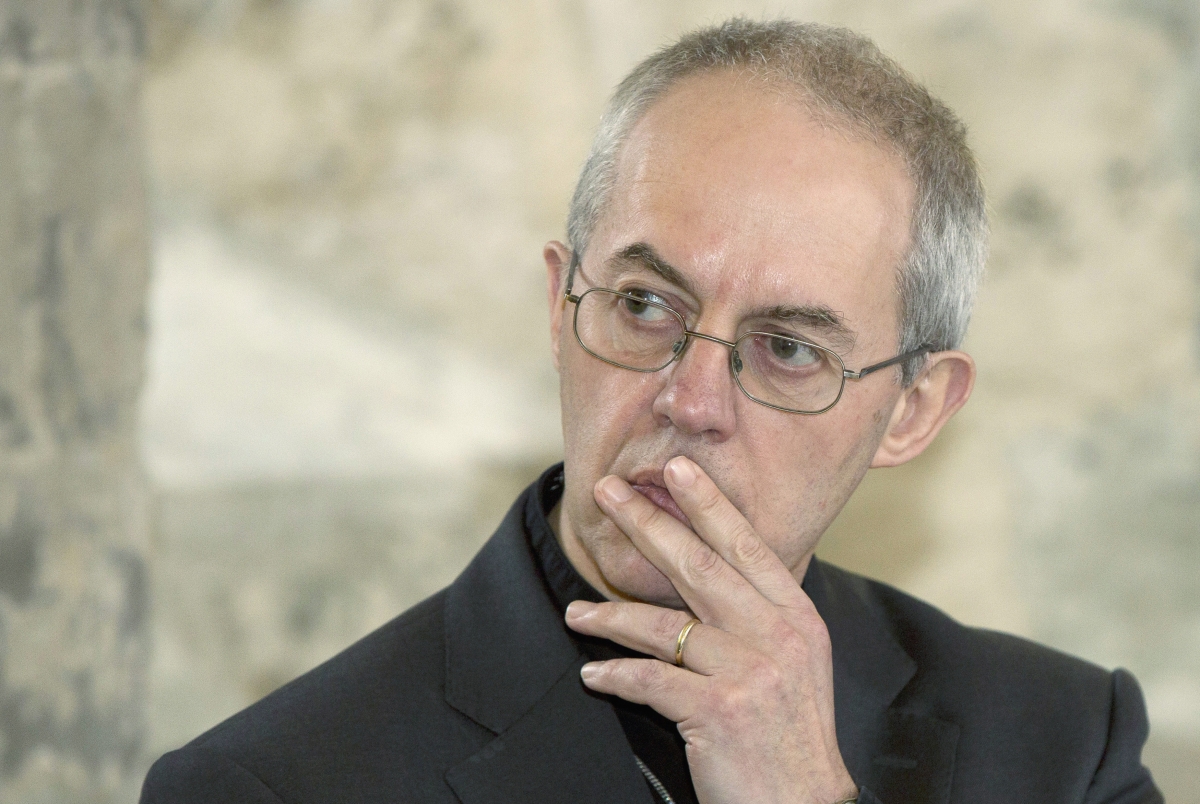
'Britain’s economic model is broken and produces widespread inequality,' the Archbishop of Canterbury has warned. Photo: theguardian.com
Before sharing the gist of what the Archbishop has said, which I must admit, I was very pleased to read, I must say, good on you Archbishop, for your wisdom and insight to see what has happened to our country, losing its heart and soul in pursuit of a morally, spiritually and economically bankrupt ideology, the so-called NEOLIBERALISM.
Moreover, it is refreshing to note that somebody in place of authority and moral compass, is speaking the truth. Our political leaders, of all backgrounds and political persuasion, nourished and nurtured by years of values-free education, worshipping the invisible hand of market economy (whatever that means) have become totally blinded to what is right or wrong, just or unjust, and thus, unable to rescue this country from the catastrophe that is waiting to happen, unless they change course, steering the ship towards the calmer waters.
“Our economic model is broken,” said Welby. “Britain stands at a watershed moment where we need to make fundamental choices about the sort of economy we need. We are failing those who will grow up into a world where the gap between the richest and poorest parts of the country is significant and destabilising.”
The report by the IPPR thinktank’s commission on economic justice, which features senior business and public figures alongside Welby, stressed that all political parties needed to reject the current patterns of economic growth that delivered most of the gains to corporations and the richest in society.
It said the situation had worsened in recent years as workers struggled to make ends meet after the longest period of earnings stagnation for 150 years.
Pointing to rising debt levels, the report called for an urgent public debate on the role of banks and the financial sector in the British economy. It also flagged extra support for trade unions to act as a bulwark against shareholder interests in the workplace. The report, which is expected to produce a series of policy initiatives when it unveils final conclusions next autumn, also said ministers must tackle the market dominance of digital companies such as Amazon, Facebook and Google.
Here I find myself in total agreement with Tom Kibasi, the IPPR director and chair of the commission, who said: “We don’t have a British economic model. We have an economic muddle.”... Continue to read
All in all, Yes, it is true, our country is engulfed in serious crisis by pursuing a BROKEN ECONOMIC MODEL.

photo:independent.co.uk
Here, to my mind, it is noteworthy to reflect on what I wrote on this matter in May and June 2011:
“Do you remember that Margaret Thatcher, the so-called Iron Lady!! She told the Brits that she was going to put the “Great” back into the “Great” Britain. Do you remember? Then, she told us this can only happen if we accept and implement the “Washington Consensus”, the so-called dreaded neo-liberalism. She told us that there was no alternative. She told us we will all prosper and develop more fairly and equitably. She won election after elections. Everything was privatised, deregulated, self-regulated. Industry, manufacturing, (the real economy) was destroyed. Instead, the banks and the bankers were encouraged to rule the world. The economists with no principles and values were “bought” and the business schools, such as Harvard and Columbia were showered with money to act as “Cheerleaders” for the dreaded neo-liberalism (see the Inside Job for evidence). Communities were dismantled and dis-organised. We were told that there is nothing as a society and community. We are all in it just for ourselves, we were told. Destructive competition at the expense of life-enhancing cooperation, collaboration and dialogue was greatly prompted. We were told to say no to love, kindness, generosity, sympathy and empathy and say yes to selfishness, individualism and narcissism, as these values will fire the engine of capitalism and wealth creation! In short, the hell with the common good, we were encouraged to believe.
We were brainwashed. Our other Prime Ministers have repeated her nonsense and have carried on her footsteps. It is now over 30 years since the neo-liberalism experiment in Britain. Are we any “Greater” than we were in 1979? Are we any fairer or more equitable? The country is nearly bankrupt, with public and private debt at unprecedented levels, with greatest levels of poverty and wealth disparity ever. The house of neoliberal capitalism is now at its nadir of decadence.”
You see, all those interested in life’s bigger picture, have been saying the same, over and over. The neoliberals are not in touch with humanity. They will prostitute all in the interest of profit maximization, cost minimization, highest return to the shareholders, and the biggest and juiciest bonuses for the CEOs and their lackeys.”...Continue to read
The pertinent questions must now be: How we might rebuild this broken economic model? What might an Economy for the Common Good look like?
To be able to answer these and other relevant questions, as a first step, one must be able to begin imagining that a better life and a better world is, indeed, possible:
Imagine a political system that puts the public first. Imagine the economy and markets serving people rather than the other way round. Imagine us placing values of respect, fairness, interdependence, and mutuality at the heart of our economy. Imagine an economy that gives everyone their fair share, at least an appropriate living wage, and no zero-hour contracts. Imagine where jobs are accessible and fulfilling, producing useful things rather than games of speculation and casino capitalism. Imagine where wages support lives rather than an ever expanding chasm between the top 1% and the rest. Imagine a society capable of supporting everyone’s needs, and which says no to greed. Imagine unrestricted access to an excellent education, healthcare, housing and social services. Imagine hunger being eliminated, no more food banks and soup kitchens. Imagine each person having a place he/she can call home. Imagine all senior citizens living a dignified and secure life. Imagine all the youth leading their lives with ever-present hope for a better world. Imagine a planet protected from the threat of climate change now and for the generations to come. Imagine no more wars, but dialogue, conversation and non-violent resolution of conflicts. Imagine a world free of corruption!
And now: A Look at an economy that looks and feels good
Dear Prime Minister-Britain needs a New Economic Model
Oxford Theology Society Lecture: Values to Make the World Great Again
Forgiveness and Reconciliation in Pursuit of the Global Common Good
- Details
- Written by: Kamran Mofid
- Hits: 2206
'After a long history of avoiding the morality factor, economists are beginning to include it in their work'
Economist- A Dismal Scientist: An emperor with no clothes
Hopefully not for much longer

"Today's neoclassical economist is an emperor with no clothes who's fooled us all long enough."
Photo: transitionvoice.com
For years, budding economists have been taught to leave morality, values and virtues out of their arguments. This could hopefully be about to change
‘We don’t do God,” Tony Blair’s press secretary, Alastair Campbell, once famously remarked. Similarly, economists don’t “do” morality. They are a breed concerned with economic efficiency not spiritual uplift; human choices and incentives, not human values. They believe questions of morality can be left to philosophers and theologians.’
‘There’s an element of truth in that stereotype. Economists have indeed tended to leave aside issues of morality. In some cases that’s because they think, on ideological grounds, that it has no place in the discipline.
But even more thoughtful and less dogmatic economists have tended to shy away from the question on the grounds that moral values are tricky to pin down, much less quantify…
But things might be changing. Two economic Nobel laureates at a meeting on the German island of Lindau last week outlined a bold attempt to put morality into theoretical economical modelling.
Oliver Hart, a 2016 Nobel winner, presented a paper, co-authored with Luigi Zingales, in which he looked at how the personal morality of shareholders might affect the behaviour of the companies in which they invest, in particular whether those firms will behave in a way that will maximise profits or whether they sacrifice some profit for the sake of behaving in a socially responsible manner.’...
Today I am happy. Please allow me to share my happiness with you
I was pleased to read the article above by Ben Chu in the Independent on Sunday 27 August 2017. Whilst reading the article, I began a nostalgic journey in my head, my mind and my heart, which took me back to the early 1990s.
I paid a heavy price for a small personal revolution in economic thinking that I had started. I was accused of being a troublemaker, ridiculing my honoured profession. How dare I was calling for inclusion of morality, spirituality, God and humanity, and such likes, in the study of and the teaching of economics.
Wherever I went, whichever economics conferences I went to, whoever economists (bar a few) I mentioned these thoughts to, I was taken not seriously, I was treated like a heretic and advised to change my profession: to go and study theology and become a vicar!
Well, I did not become a vicar, but, I went on and studied Pastoral Theology at Plater College in Oxford. Today when I read that many economists are having second thoughts about the inclusion of values in their subject, I feel very happy, I feel exonerated, I feel grateful, and I am thankful for the journey that I started in early 1990s.
Let me explain, as I strongly believe that unless you know the messenger well, first and foremost, then, his message would not make any sense at all.
To do this, the best I can do, is to quote you a passage from a book I wrote in 2005, well before the crash of September 2008 and very relevant to what I am trying to say today:
“From 1980 onwards, for the next twenty years, I taught economics in universities, enthusiastically demonstrating how economic theories provided answers to problems of all sorts. I got quite carried away by the beauty, the sophisticated elegance, of complicated mathematical models and theories. But gradually I started to have an empty feeling.
‘I began to ask fundamental questions of myself. Why did I never talk to my students about compassion, dignity, comradeship, solidarity, happiness, spirituality – about the meaning of life? We never debated the biggest questions. Who are we? Where have we come from? Where are we going to?
‘I told them to create wealth, but I did not tell them for what reason. I told them about scarcity and competition, but not about abundance and co-operation. I told them about free trade, but not about fair trade; about GNP – Gross National Product – but not about GNH – Gross National Happiness. I told them about profit maximisation and cost minimisation, about the highest returns to the shareholders, but not about social consciousness, accountability to the community, sustainability and respect for creation and the creator. I did not tell them that, without humanity, economics is a house of cards built on shifting sands.
‘These conflicts caused me much frustration and alienation, leading to heartache and despair. I needed to rediscover myself and real-life economics. After a proud twenty-year or so academic career, I became a student all over again. I would study theology, philosophy and ethics, disciplines nobody had taught me when I was a student of economics and I did not teach my own students when I became a teacher of economics.
‘It was at this difficult time that I came to understand that I needed to bring spirituality, compassion, ethics and morality back into economics itself, to make this dismal science once again relevant to and concerned with the common good.’
As an economist with a wide range of experience, I do appreciate the significance of economics, politics, trade, banking, insurance and commerce, and of globalisation. I understand the importance of wealth creation. But wealth must be created for the right reasons.
Value-led wealth creation for the purpose of value-led expenditure and investment is to be encouraged and valued. Blessed are those wealth creators who know “Why” and “How” wealth is produced and, more importantly, when wealth is created “What” it is going to be used for.
Today’s business leaders are in a unique position to influence what happens in society for years to come. With this power comes monumental responsibility. They can choose to ignore this responsibility, and thereby exacerbate problems such as economic inequality, environmental degradation and social deprivation, but this will compromise their ability to do business in the long run. The world of good business needs a peaceful and just world in which to operate and prosper: A world that is truly for the common good.
However, in order to arrive at this peaceful and prosperous destination, we need to change the house of neoclassical economics, to make a fit home for the common good. After all, many of the issues that people struggle over, or their governments put forward, have ultimately economics at their core. As I mentioned before, the creation of a stable society in today’s global world is largely ignored in favour of economic considerations of minimising costs and maximising profits, while other equally important values are put aside and ignored.
Economics once again must find its heart, soul and spirit. Moreover, it should also reconnect itself with its original source, rooted in ethics and morality. Today’s huge controversy which surrounds much of the economic activity and the business world is because they do not adequately and appropriately address the needs of the global collective and the powerless, marginalised and excluded. This, surely, in the interest of all, has to change. The need for an explicit acknowledgement of true global values is the essential requirement in making economics work for the common good. Economics, as practiced today cannot claim to be for the common good. In short, a revolution in values is needed, which demands that economics and business must embrace both material and spiritual values.”
And now please allow me to further share my happiness with you, by sharing a passage or two from a lecture I gave at a recent meeting of the Oxford Theology Society, which was held at Keble College, University of Oxford:
"Values to Make the World Great Again: Theology, Economics and Spirituality in Dialogue Again"
...But now, there was another story in making, one that was not under my control: Life is so full of unpredictable beauty and strange surprises
As many people, wiser than me have noted, our lives and the world in which we all live, are so unpredictable. Things happen suddenly, unexpectedly. We want to feel we are in control of our own existence. In some ways we are, in some ways we're not ... Life, it can bring you so much joy and yet at the same time cause so much pain.
I was so devastated that after this wonderful journey, full of joy and happiness, achievements and success, due to some reasons beyond my control, I started to feel unwell, unhappy, depressed, not enjoying what I was doing and teaching, especially when I lost all confidence in the value of moral-free economics that I was teaching my students, and more.
In 1999 I voluntarily resigned from my post at Coventry University. It goes without saying that, I was heartbroken and extremely hurt that I was unable to nurture and develop further what I had envisioned and built.
Looking back, reflecting on what has happened, I think, somehow, somebody, somewhere, had planned it so that I, too, should have a life, similar to the life of Coventry itself: fall and rise again, the story that I very much wish to continue sharing with you tonight.
Oh, my God, there is so much to tell, so much to share. But, one is very relevant to my talk tonight, and that is my return back to Oxford in 2001.
After leaving my post at Coventry University, I went through two years of hell, hardship and struggle with everything. I had to rediscover myself again. I had to find a new path to explain who I am, what I am, and why I am.
Thus, I came back to Oxford again. This time to a small Catholic adult education college there in Pullens Lane, Headington, called Plater College. After decades of being a university lecturer, I became student again, when I register for the Pastoral Theology course.
I enjoyed my time and studies at Plater very much. It was truly a path to my personal healing. There I also discovered the beauty of wisdom, ethics, morality, spirituality, solidarity, comradeship and more.
It was there that I also discovered that I must begin to work hard to ensure that these values must become the values of economics, business, education and globalisation too. I wrote a few books, booklets and articles about these new discoveries. Too much to mention now, but let me quote you a few selected passages, relevant to my discussion tonight:
“Why should we try to combine religion and economics? Because they have a common end: that all may live happily; it is just that they employ different methods in order to achieve this end. One uses the production and exchange of goods and services, the other selfless service, love and compassion.
Religions could – if they will speak with their original source of inspiration – greatly contribute towards restoring the balance between the material and the spiritual elements and thus show the way to live fully human lives in a peaceful, just and sustainable society. The ethical and spiritual teachings of all religions and their striving for the common good can provide us with a clear and focused model of moral behaviour in what we term ‘the marketplace’. An overall ethical orientation to the challenges of daily economic activity can be related to each of our faith traditions. In the Jewish tradition we see the effort to balance pragmatic considerations of economic efficiency with ideals of interpersonal equity and social justice. The key themes of Christian and Islamic thoughts are respectively a concern for human dignity and a concern for communal solidarity. These three themes are not separate: they overlap and interlock; and they are shared by all three traditions. Together they form an inspiring mosaic of Western religious ethics.
The traditions of the East have somewhat different themes from those of the Abrahamic religions; nonetheless, there is much that is similar. The importance of humility and patience characterises the Hindu view of economic life. In Buddhism, the theme that resonates most strongly is compassion; in Confucian thought it is reciprocity. These, also, are not separate themes, but overlapping and interlocked. The mosaic they form is not sharply distinct from that of the Western traditions. Related to the marketplace, it would inspire businessmen to exhibit mutual compassion, while individual achievement would not be at the expense of communal solidarity. Steady economic and moral improvement would be pursued with humility and patience. These must become the guiding principles, the vision behind the teachings of a new economics: the marketplace is not just an economic sphere, ‘it is a region of the human spirit’...
If you wish to read more, see below for further reading:
Oxford Theology Society Lecture: Values to Make the World Great Again
Globalisation for the Common Good
Promoting The Common Good Bringing Economics and Theology Together Again
Business Ethics, Corporate Social Responsibility and Globalisation for the Common Good
The Money Gods: Economics Our New Religion
Father Forgive’: Coventry Cathedral and my life's journey of discovery
- Details
- Written by: Kamran Mofid
- Hits: 3349
It seems, tragically, the world is edging towards a most destructive war of all sorts. Some call it the “Mother of All Wars”!
Trade wars, environmental and ecological wars, wars for resources, water, food, oil and gas wars, religious wars, Jihadi wars, white supremacists and neo-Nazis wars, cold wars, hot wars, very hot (nuclear) wars,...
One might justifiably ask some pertinent questions: What happened to Wisdom; What happened to the Common Good? What has happened to our humanity?
I offer this book, which was originally published in 2008, as our humble contribution, to assist us in our search for wisdom and the common good.
Kamran Mofid, Coventry, The City of Peace, Forgiveness and Reconciliation, 18 August 2017
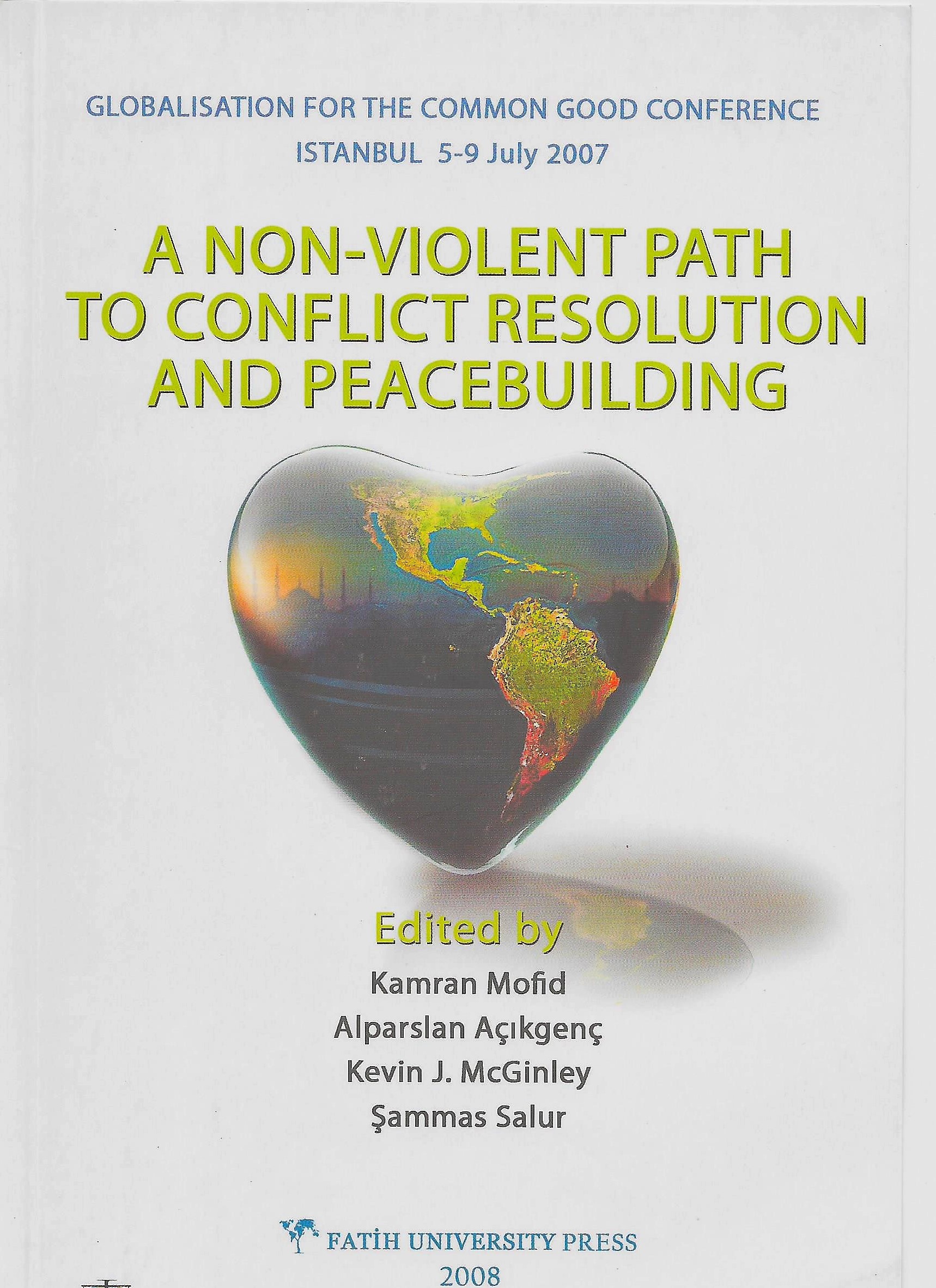
A Non-Violent Path to Conflict Resolution and Peacebuilding- Kamran Mofid (Editor), et al
Globalisation for the Common Good Initiative
Proceedings of the 6th Annual GCGI Conference, Fatih University, Istanbul, Turkey
Edited by Kamran Mofid, Alparslan Açıkgenç,
Kevin J. McGinley, şammas Salur
THE ISTANBUL DECLARATION: A Non-Violent Path to Conflict Resolution and Peacebuilding
This book presents a multidisciplinary array of essays offering new perspectives on how religion can affect the pursuit of world peace in the age of globalisation. The collection features contributions from scholars, peace activists, political figures, and theologians from across the world’s major religions, including Buddhism, Christianity, Hinduism, Islam, and Judaism.
The Globalisation for the Common Good Initiative was established in 2002 by Prof. Kamran Mofid. Its main goal is to unite representatives of the world’s religions, cultures and civilisations in developing an understanding of globalisation not merely in terms of economic relations and mercantile forces, but as enabling positive intercultural and interfaith encounters. The aim is to bring different cultures and faiths closer together, to understand what they have in common and how we might draw on their ethical, spiritual, and theological insights to develop an active agenda for change in the international community’s economic and development policies, so as to better promote global peace, justice, and human well-being across the globe.
The Globalisation for the Common Good Initiative commenced its mission with an international conference held in 2002 in Oxford, UK. Subsequent years saw the annual conference and the GCGI community grow as it moved across the continents through Russia, Dubai, Kenya, and Hawaii. The Sixth Annual Conference took place in 2007. It took as its theme nonviolent conflict resolution and peacebuilding as being particularly appropriate for the setting of Istanbul, traditional gateway between east and west.
The papers from the conference presented in this volume, while all addressing vital issues of inter-religious and intercultural relations as they affect global politics today, cover a startlingly wide range of topics—law, human rights, media, philosophy, psychology, counter-terror policies, traditions of non-violent resistance, international aid and development, business ethics, information technology, as well as studies of specific situations of global political interest.
The papers, however, are united in the conviction that policy-making and strategic decisions informed by a stronger interreligious understanding can make something positive of religious difference by drawing on the insights of the world’s religions to help build a more humane society.
Prof. Kamran Mofid is founder of the Globalisation for the Common Good Initiative.
Prof. Alparslan Açıkgenç is Vice-President and Head of Philosophy at Fatih University, Istanbul.
Dr Kevin J. McGinley is Assistant Professor in English Language and Literature at Fatih University, Istanbul.
Dr şammas Salur is Assistant Professor in Public Administration at Fatih University, Istanbul.
ISBN: 978-975-303-096-6 456pp 210 x 148mm £18.95 pb June 2008
FATIH UNIVERSITY PRESS & SHEPHEARD-WALWYN PUBLISHERS
FOREWORD
By Prof. Dr. Oğuz Borat, President of Fatih University
‘The annual conference of the Globalisation for the Common Good Initiative had ranged far across the world before 2006, through England, Russia, Dubai, Kenya, and Hawaii. The GCG conference created and continues to create an ever-widening international community of scholars, forging links and establishing dialogues across national, cultural, and religious boundaries and putting into practice the movement’s core philosophy: that globalisation need not be defined merely in terms of impersonal market forces, but can be a power for good, building spiritual bonds that can unite humanity and bring different cultures and faiths closer together.
Istanbul was the perfect location for the Sixth Conference on Globalisation for the Common Good. Straddling two continents and with an astoundingly rich cultural history which has been shaped by Islam, Catholic and Orthodox Christianity, and Judaism, as well as by far-reaching and long-standing links to Europe, the Middle and Far East, Africa, and Russia and the Caucasus, the city is a living image of human life enriched by the inter-faith dialogue and cross-cultural fertilisation that the GCG initiative seeks to foster across the globe. As a living bridge between East and West, Istanbul was the perfect site to explore the means to achieve conflict resolution and peacebuilding through nonviolent means.
Fatih University was honoured to host this conference, seeing it as fully in harmony with the university’s goal of promoting education as a means of integrating local cultural perspectives within a global framework. For five wonderful days, we at Fatih University savoured a lively and enriching dialogue that flowed smoothly across the borders of cultural, national, and religious difference. This book, wide ranging and illuminating as the essays it contains are, can give only a taste of the positive and fruitful diversity which made the conference so memorable. Scholars, diplomats, peace workers, journalists, and students freely mingled and disciplinary boundaries dissolved as scientists, theologians, artists, and social scientists constructively exchanged views on religion, faith, and peace. Bonds of understanding and friendship were formed that will last well into the future and which bode well for the goals of the Globalisation for the Common Good movement.
We at Fatih University are proud to have been host to such an enlightening set of multi-cultural inter-faith encounters and look forward to seeing the many relationships and dialogues established here continuing and being built on in future GCG conferences, in Melbourne, Chicago and beyond.’
A Non-Violent Path to Conflict Resolution and Peacebuilding: Read a Brief Introduction
You can also contact SHEPHEARD-WALWYN PUBLISHERS directly to order the book:
- ...And now, Lest we forget…
- The Coventry Litany of Reconciliation: The Charter for Forgiveness and Reconciliation the World Ever Needs
- Forgiveness and Reconciliation: Provost Howard-The Man who made Coventry the City of Peace, Forgiveness and Reconciliation
- Forgiveness and Reconciliation in Pursuit of the Global Common Good
- Honor, Humiliation, and Terror: A must-read book