- Details
- Written by: Kamran Mofid
- Hits: 4746
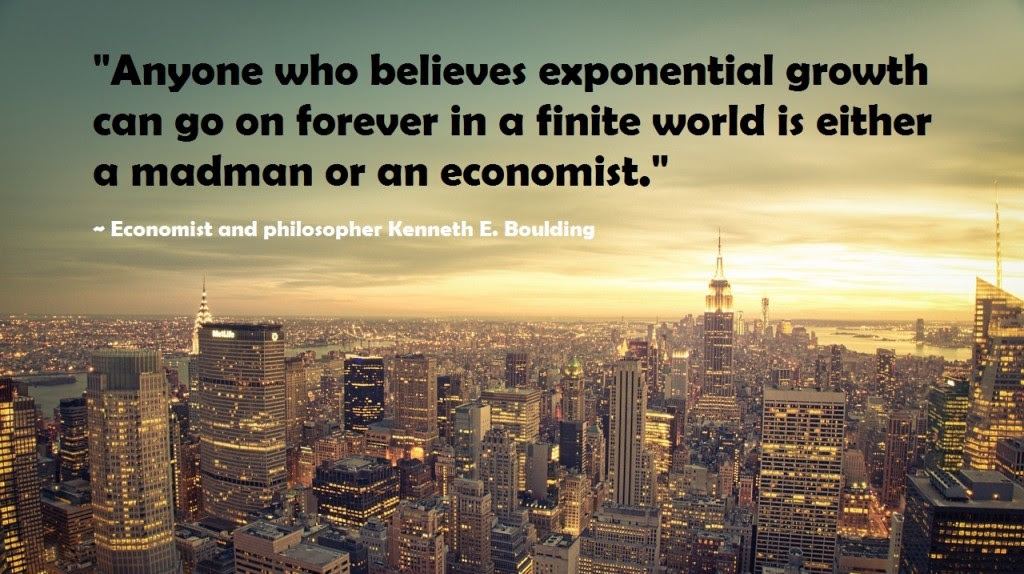
Photo:bing.com
The madness of the never ending economic growth
We have to look beyond the madness: we should invest in everyday services to create a society run for collective good
The Growth Delusion and Confusion, The GDP Measurement: lies, damned lies and statistics
We must do better, much better. Why?
To do this, the best I can do, is to quote you a passage from a book I wrote in 2005, well before the crash of September 2008 and very relevant to what real, authentic, GDP should be all about, replacing the current nonsensical and meaningless one:
‘From 1980 onwards, for the next twenty years, I taught economics in universities, enthusiastically demonstrating how economic theories provided answers to problems of all sorts. I got quite carried away by the beauty, the sophisticated elegance of complicated mathematical models and theories. But gradually I started to have an empty feeling.
‘I began to ask fundamental questions of myself. Why did I never talk to my students about compassion, dignity, comradeship, solidarity, happiness, spirituality – about the meaning of life? We never debated the biggest questions. Who are we? Where have we come from? Where are we going to?
'I told them to create wealth, but I did not tell them for what reason. I told them about scarcity and competition, but not about abundance and co-operation. I told them about free trade, but not about fair trade; about GNP – Gross National Product – but not about GNH – Gross National Happiness. I told them about profit maximisation and cost minimisation, about the highest returns to the shareholders, but not about social consciousness, accountability to the community, sustainability and respect for creation and the creator. I did not tell them that, without humanity, economics is a house of cards built on shifting sands.
‘These conflicts caused me much frustration and alienation, leading to heartache and despair. I needed to rediscover myself and real-life economics. After a proud twenty-year or so academic career, I became a student all over again. I would study theology, philosophy and ethics, disciplines nobody had taught me when I was a student of economics and I did not teach my own students when I became a teacher of economics.
‘It was at this difficult time that I came to understand that I needed to bring spirituality, compassion, ethics and morality back into economics itself, to make this dismal science once again relevant to and concerned with the common good.’
As an economist with a wide range of experience, I do appreciate the significance of economics, politics, trade, banking, insurance and commerce, and of globalisation. I understand the importance of wealth creation. But wealth must be created for the right reasons.
Values-led wealth creation for the purpose of values-led expenditure and investment is to be encouraged and valued. Blessed are those wealth creators who know “Why” and “How” wealth is produced and, more importantly, when wealth is created “What” it is going to be used for.
Today’s business leaders are in a unique position to influence what happens in society for years to come. With this power comes monumental responsibility. They can choose to ignore this responsibility, and thereby exacerbate problems such as economic inequality, environmental degradation and social deprivation, but this will compromise their ability to do business in the long run. The world of good business needs a peaceful and just world in which to operate and prosper: A world that is truly for the common good.
However, in order to arrive at this peaceful and prosperous destination, we need to change the house of neo-classical economics, to make a fit home for the common good. After all, many of the issues that people struggle over, or their governments put forward, have ultimately economics at their core.
The creation of a stable society in today’s global world is largely ignored in favour of economic considerations of minimising costs and maximising profits, while other equally important values are put aside and ignored.
Economics once again must find its heart, soul and spirit. Moreover, it should also reconnect itself with its original source, rooted in ethics, spirituality and morality. Today’s huge controversy which surrounds much of the economic activity and the business world is because they do not adequately and appropriately address the needs of the global collective and the powerless, marginalised and excluded. This, surely, in the interest of all, has to change. The need for an explicit acknowledgement of true global values is the essential requirement in making economics work for the common good. Economics, as practiced today cannot claim to be for the common good. In short, a revolution in values is needed, which demands that economics and business must embrace both material and spiritual values.’
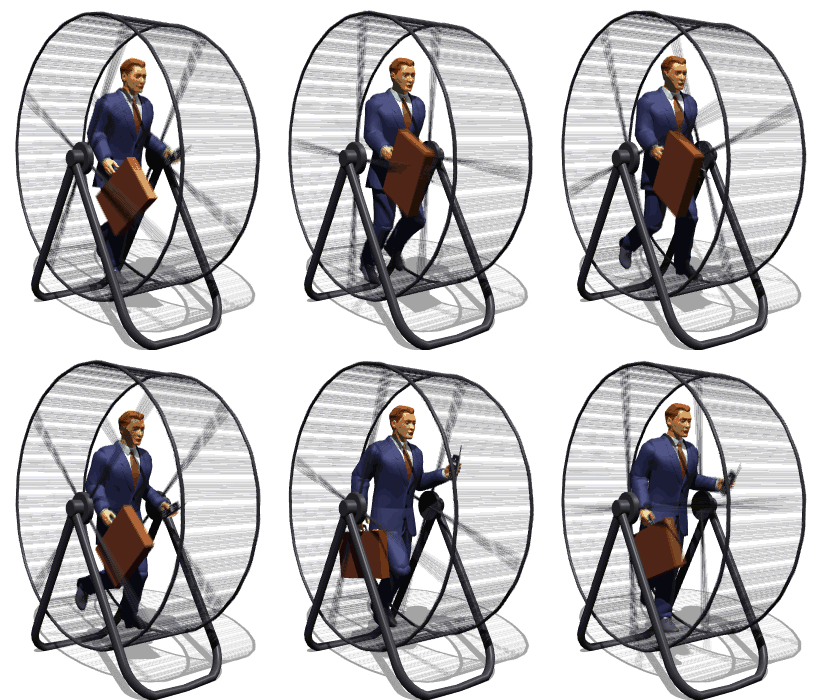
The hellish rat race to nowhere for higher economic growth!
Photo:brdakut.wordpress.com
‘Growth obsession and making money for its own sake will not deliver true prosperity. We need an overhaul of the economic system’
‘We've arrived at a crux in human history. We're at the point where we can produce more than we've ever produced… but we're finding it harder and harder to manage the relationship between needs and limits.’- Professor Paul James, director, the Global Cities Research Institute
‘Countries’ economies are driven by an obsession – continuous growth in the country’s Gross Domestic Product (GDP). And our manic obsession with never-ending economic growth is driving our planet to ruin.
The absurdity of this becomes clear with a little bit of thought. Never-ending growth that relies on extracting resources from a finite planet is, of course, a mathematical impossibility. But well before we reach that point, this obsession will render our planet uninhabitable.’...The World’s Mad Obsession With Unlimited Economic Growth
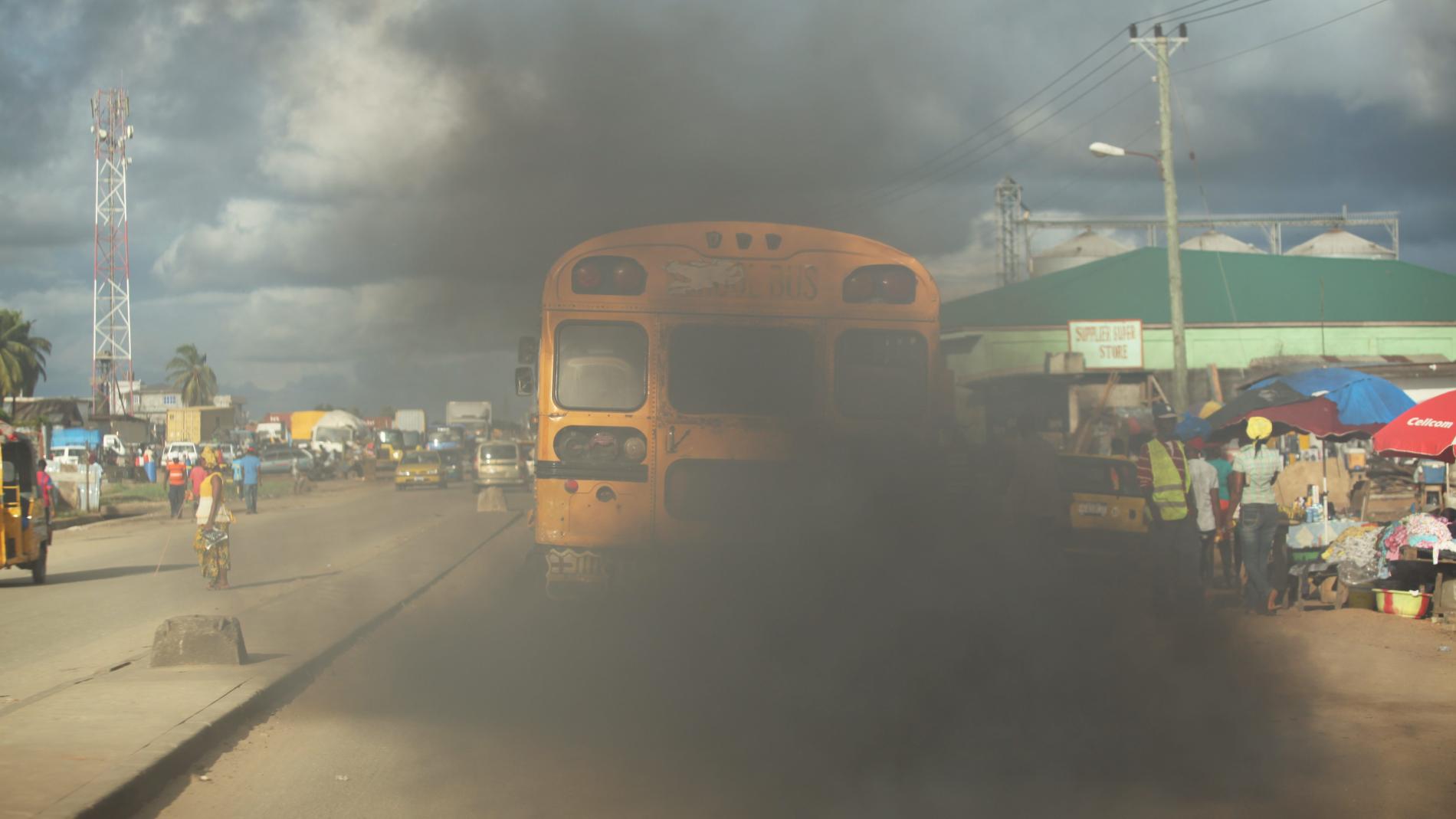
More economic growth? Photo:qz.com
The Fallacy of Economic Growth: In Praise of Robert F. Kennedy
The Fallacy of Economic Growth: In Praise of Herman Daly
The Fallacy of Economic Growth: In Praise of Vandana Shiva
What’s the point of growth if it creates so much misery?*
Forget the ‘high-skill, hi-tech’ obsession: we should invest in everyday services to create a society run for collective good
‘The late Prof Mick Moran, who taught politics and government at Manchester University for most of his professional life, had, according to his colleagues, once had “a certain residual respect for our governing elites”. That all changed during the 2008 financial crisis, after which he experienced an epiphany “because it convinced him that the officer class in business and in politics did not know what it was doing”.
After his epiphany, Moran formed a collective of academics dedicated to exposing the complacency of finance-worship and to replacing it with an idea of running modern economies focused on maximising social good. They called themselves the Foundational Economy Collective, based on the idea that it’s in the everyday economy where there is most potential for true social regeneration: not top-down cash-splashing, but renewal and replenishment from the ground upwards.
Foundational activities are the materials and services without which we cannot live a civilised life: clean, unrationed water; affordable electricity and gas without cuts to supply; collective transport on smooth roads and rails; quality health and social care provided free at the point of use; and reliable, sustainable food supply. Then there’s the “overlooked economy” – everyday services such as hairdressing, veterinary care, catering and hospitality and small-scale manufacturing – which employ far more people, across a wider geographical range, than the “high-skill, hi-tech” economy with which recent governments have been obsessed.
For the Foundational Economy authors, focusing on the fundamental value of invisible and unglamorous jobs “restores the importance of unappreciated and unacknowledged tacit skills of many citizens”. It’s a way of looking at economics from the point of view of people rather than figures, and doing something revolutionary (yet so blindingly obvious) in the process. What is the point of “growth” if the basic elements of a decent life are denied to a large and growing number?
Because everybody has these everyday needs, their provision is not – or ought not to be – specific to one or a few regions, and is comparatively resistant to automation. If applied by government as a central plank of industrial strategy, prioritising the foundational economy could fundamentally transform people’s quality of life outside London and the south-east – which would be the direct opposite of the dire “northern powerhouse” template that has only created even more cynicism.
Visions of an economy run for social good, rather than individual gain, are being developed by Labour through a series of regional workshops on the “new economics”. As the examples of Preston, Enfield and Oldham councils have shown, it hurts nobody to bring services back into local authority control and to divest from the outsourcing firms whose own definition of “growth”’ is extracting profit from social misery.
Any future government will have to take this vision seriously. Take Jeremy Corbyn’s promise of “a million climate jobs” at last month’s Labour conference, which could be a conservative estimate for the task at hand. In 2012, Oxfam reported that 4.7m jobs could be supported and £280bn added to the economy if the government invested in retro-fitting the entire existing housing stock for lower energy consumption. (It could also save a total £8.7bn a year from our domestic fuel bills.) Our homes are the most expensive to heat in Europe, and the oldest, with more than 60% built before 1960.
A change in thinking is urgently required to bring about a permanent and ongoing renewal of the foundations of a good society.
This brings to mind a long-buried yet prescient quote by Raymond Williams. In his 1960 novel Border Country, he describes a character witnessing “a slow and shocking cancellation of the future” in the wake of the 1926 general strike. This quote has been leapt upon in recent years by a reinvigorated and youthful left.
It’s as though, nearly 60 years later, we’ve woken up to the idea that a better future can be reinstated, but that we have to get it back ourselves. Restoring decent basic services for everyone, then keeping the bar high for everyone, is a task akin to painting and repainting the Forth Bridge, and this alone is enough to keep millions of people in stable, valuable work.
For a future better than the one we’re dreading, we need to start rebuilding the foundations now.’
* This article by Lynsey Hanley, was first published in the Guardian on Monday 15 October 2018.
Related articles:
The Shaming of Economics Education
Calling all academic economists: What are you teaching your students?
The Destruction of our World and the lies of Milton Friedman
In Praise of the Economic Students at the Sorbonne: The Class of 2000
Towards an Education Worth Believing In
Small is Beautiful: The Wisdom of E.F. Schumacher
Economics and Economists Engulfed By Crises: What Do We Tell the Students?
Three Must-Read Books
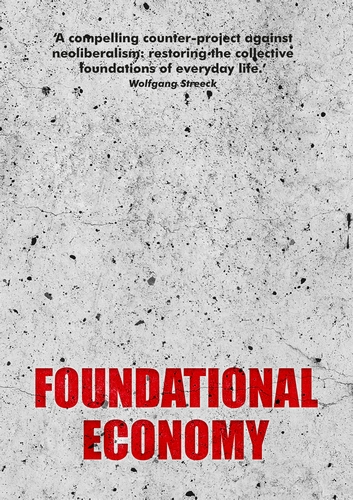
'Privatisation, market choice, outsourcing: these are the watchwords that have shaped policy in numerous democratic states in the last generation. The end result is the degradation of the foundational economy. The foundational economy encompasses the material infrastructure at the foundation of civilised life - things like water pipes and sewers - and the providential services like education, health care and care for the old which are at the base of any civilised life. This book shows how these services were built up in the century between 1880 and 1980 so that they were collectively paid for, collectively delivered and collectively consumed. This system of provision has been undermined in the age of privatisation and outsourcing. The book describes the principles that should guide renewal of the foundational economy and the initiatives which could begin to put these principles into practice.'
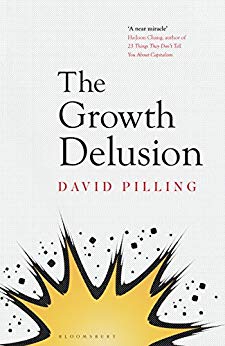
'In The Growth Delusion, author and prize-winning journalist David Pilling explores how economists and their cult of growth have hijacked our policy-making and infiltrated our thinking about what makes societies work. Our policies are geared relentlessly towards increasing our standard measure of growth, Gross Domestic Product. By this yardstick we have never been wealthier or happier. So why doesn't it feel that way? Why are we living in such fractured times, with global populism on the rise and wealth inequality as stark as ever?
In a book that is simultaneously trenchant, thought-provoking and entertaining, Pilling argues that we need to measure our successes and failures using different criteria. While for economic growth, heroin consumption and prostitution are worth more than volunteer work or public services, in a rational world we would learn how to value what makes economies better, not just what makes them bigger. So much of what is important to our wellbeing, from clean air to safe streets and from steady jobs to sound minds, lies outside the purview of our standard measure of success. We prioritise growth maximisation without stopping to think about the costs.
In prose that cuts through the complex language so often wielded by a priesthood of economists, Pilling argues that our steadfast loyalty to growth is informing misguided policies – and contributing to a rising mistrust of experts that is shaking the very foundations of our democracy.'
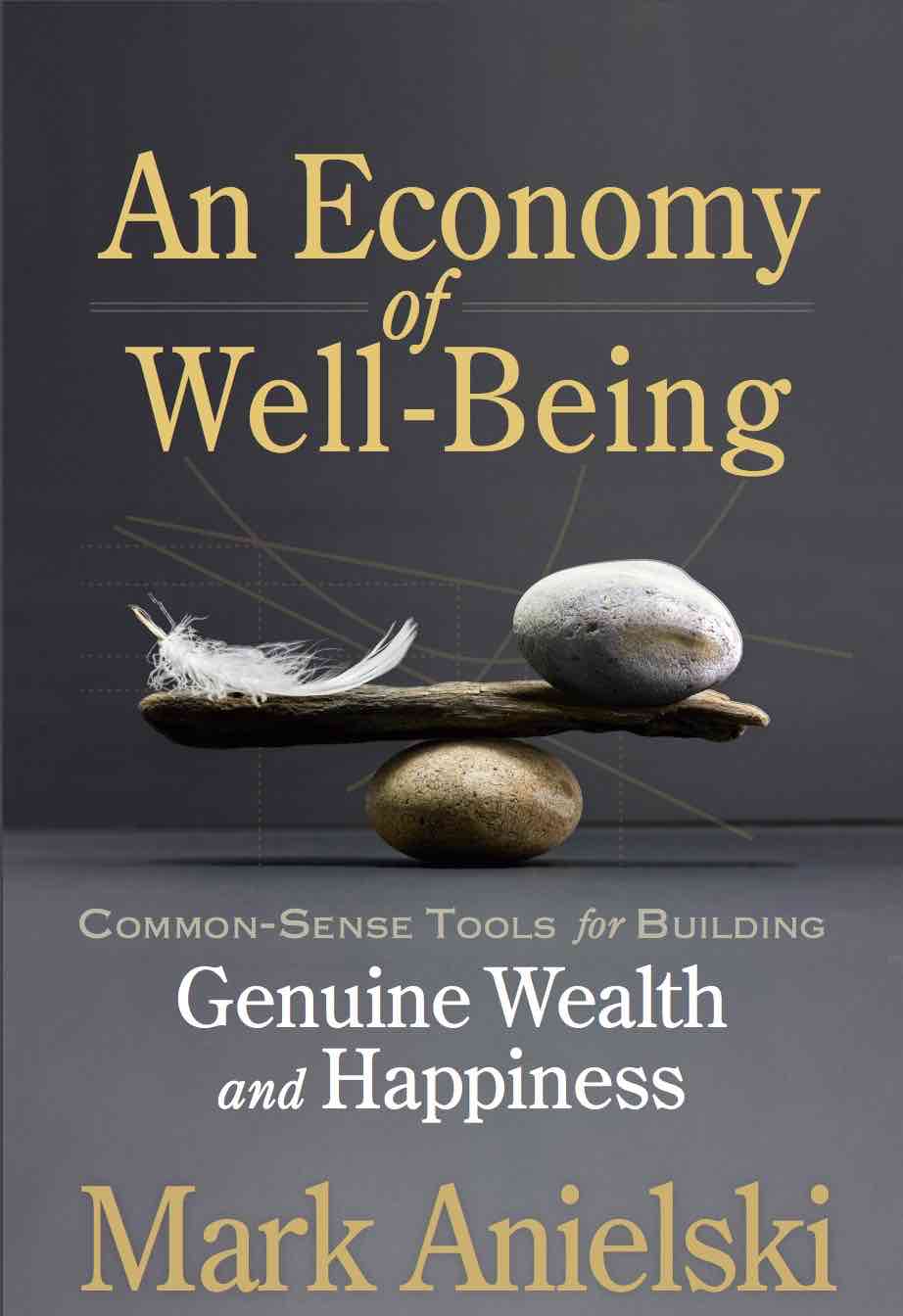
In the face of political, financial, and environmental upheaval, it's difficult to slow down and build lives of mindfulness and joy. These things are within reach, but how can we go about creating a new world, using common-sense economics?
In An Economy of Well-being, author Mark Anielski presents a practical guide for building a new economy of well-being to help communities and nations become more flourishing and happier places to live. In this follow-up to his best-selling The Economics of Happiness, Anielski addresses key questions including:
- How can our personal and family assets be strengthened for a more fulfilling life of meaning and purpose?
- How can neighborhoods and cities become flourishing economies of well-being by making the best of abundant community assets?
- how can an organization, a community and financial institutions measure, manage and finance assets to achieve high levels of well-being?
An Economy of Well-being responds to a common yearning for common-sense tools to orient our lives, our businesses, and our communities towards well-being. This is ideal reading for anyone who wishes to contribute to building happier, more mindful communities, and ultimately lives of joy and meaning.
- Details
- Written by: Kamran Mofid
- Hits: 5032
Sears, the Original Everything Store, Files for Bankruptcy
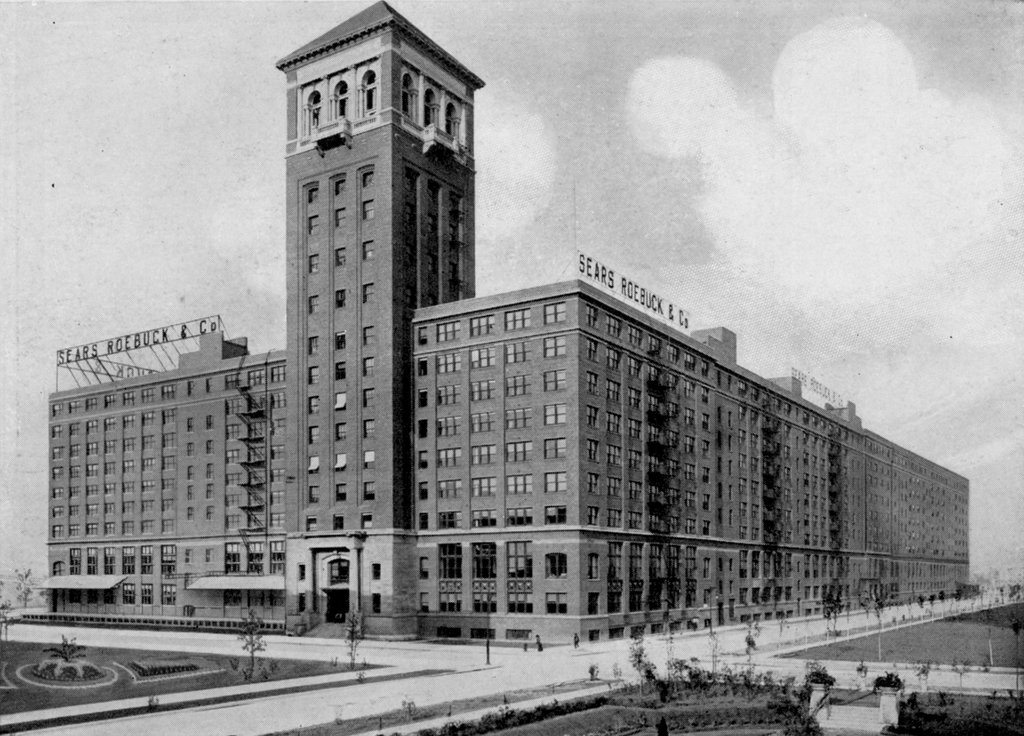
Founded after the Civil War, the original Sears, Roebuck & Co. developed a catalog business that sold the latest dresses, toys, build-it-yourself houses and even tombstones. The company was, in many ways, an early version of Amazon. Photo: nytimes.com
'Sears, which more than a century ago pioneered the strategy of selling everything to everyone, filed for bankruptcy protection early on Monday.
The company had long ago given up its mantle as a retail innovator. It was overtaken first by big box retailers like Walmart and Home Depot and then, by Amazon as the go-to shopping destinations for clothing, tools and appliances.
In the last decade, Sears had been run by a hedge fund manager, Edward S. Lampert, who sold off many of the company’s valuable properties and brands, but failed to develop a winning strategy to entice consumers who increasingly shop online.
The result has been a long painful decline. A decade ago, the company employed 302,000. Today, there are about 68,000 people still working at Sears and Kmart, which Mr. Lampert also runs.
Now, the retailer aims to use a Chapter 11 bankruptcy filing to cut its debts and keep operating at least through the holidays, according to two people briefed on the matter who spoke on condition of anonymity to discuss the company’s plans'
- Details
- Written by: Kamran Mofid
- Hits: 2511
‘People’s manifesto’ to save British wildlife from ‘mass extinction’
Photo:www.chrispackham.co.uk
Following on our most rewarding and fruitful GCGI-SES, (Our Sacred Earth Conference), I was delighted to note the launch of People's Manifesto for Wildlife by the the British naturalist, nature photographer, television presenter and author, Chris Packham.
Here, due to its high relevance to our GCGI environmental work and project, I wish to share the Manifesto with you.
Chris Packham launches People's Manifesto for Wildlife
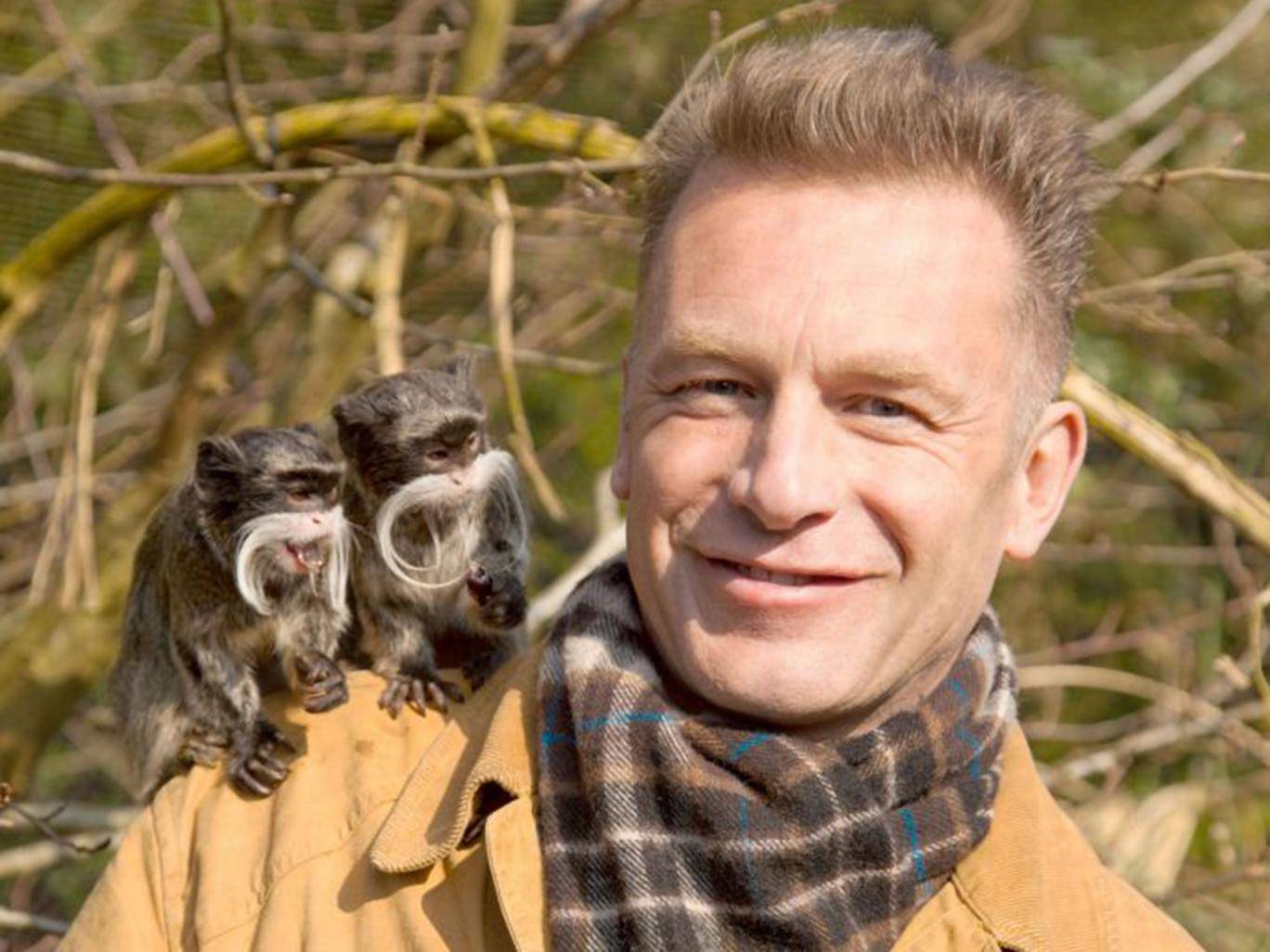
Chris Packham. Photo:independent.co.uk
“This is a people’s manifesto, not devised by the government, and we don’t have to wait for them to do something.” “We can do it ourselves. I want this manifesto to be a first draft to ignite public interest. We know how to solve the problems, we just need to make it happen.”- Chris Packham
Initiative lays out practical steps we can all take to help halt destruction of species and habitats in Britain
By Fiona Harvey, Via the Guardian*
Replanting hedgerows, including birdboxes on all new-build homes, rewilding uplands and an end to seal culling: these are among demands of the People’s Manifesto for Wildlife, a new initiative aimed at halting the drastic decline in British wildlife.
The manifesto has been drawn up by the naturalist and broadcaster Chris Packham, with the aid of 17 independent experts and scientists. They warned that people are sleepwalking into an “ecological apocalypse”, but said everyone could take practical steps themselves, and campaign for broader measures that could yet avert the wholesale destruction of species and habitats.
This Saturday, Packham is urging people from around the country to march through London to demonstrate their support for wildlife. He called on the government to bring forward a series of measures to halt destruction, but said people should also feel empowered to make their own changes.
“This is a people’s manifesto, not devised by the government, and we don’t have to wait for them to do something,” he said. “We can do it ourselves. I want this manifesto to be a first draft to ignite public interest. We know how to solve the problems, we just need to make it happen.”
Thousands of people are expected to turn out for the march, including Packham, columnist George Monbiot and nature writer Robert MacFarlane, while entertainment is to be provided by Billy Bragg, Grace Petrie and Saskia Eng. The walk, supported by many NGOs, schools and businesses, will start with people gathering in Hyde Park, central London, from 10am, with entertainment from noon to 1pm, followed by the walk which is expected to finish at 2pm.
The drastic decline in British wildlife has accelerated in recent years, with main factors being the rise in intensive farming and the destruction of habitats. Farmland bird numbers have more than halved since 1970, while the disappearance of insects went largely unremarked for years.
Some of the measures called for in the manifesto will require the cooperation of businesses and government: wildlife ponds for every industrial estate and all municipal parks, a pesticide tax, and an end to scallop dredging in UK waters.
Others may be highly controversial: banning dogs, except for assistance dogs, from all nature reserves. These would be compensated for by new dogwalking hotspots, but the issue is still likely to raise hackles among some pet-owners.
Among other ideas in the manifesto are ways to broaden participation in the conservation movement, for instance through promoting the importance of nature in schools and to young people to improve their mental health, and apprenticeship schemes to widen access to conservation jobs.
Michael Gove, secretary of state for the environment, pledged to consider the report in depth. “Chris Packham and his colleagues have successfully motivated the public to get behind many of these issues,” he said. “Through our schools we can develop the next generation of environmentally aware citizens and ensure wildlife and the natural world is protected.”
Craig Bennett, chief executive of Friends of the Earth, which is assisting with the event, said: “Our natural environment isn’t just a nice-to-have – it is crucial for our food, health and wellbeing. It’s time to end the sustained assault on wildlife and put it firmly at the heart of government policy making where it belongs.”
Tim Farron, environment spokesman for the Liberal Democrats, whose party conference finishes in Brighton on Wednesday, said: “Chris Packham is right; children do need to have more of a connection with the outdoors, whether that’s tree planting in urban areas or farm visits in rural ones. If they get that when they’re young, they will want to protect our environment in the future. The planning system also needs to be improved to help wildlife thrive – houses and offices need to be built with the environment in mind. We need to demand better from this government, that when they finally start building more houses the environment is central to their thinking.”
*The above article, by Fiona Harvey, environment journalist for the Guardian, was first published in the Guardian on 19 September 2018.
Related reading:
Strong communities, lasting friendships, healthy and worthwhile living, a just and fairer world, are all built on shared dreams and the practical tools to express those dreams.’
Our vision and our hopes and dreams for the flourishing of the Earth Community in these challenging times
- It’s time for a showdown: Economic Man vs. Humanity
- 14th GCGI International Conference and the 4th Joint GCGI-SES Forum, Lucca: A Reflection from Tamas Veress
- 14th GCGI International Conference and the 4th Joint GCGI-SES Forum, Lucca: A Reflection from Susan Eirich
- 14th GCGI International Conference and the 4th Joint GCGI-SES Forum, Lucca: A Reflection from John Thompson
- In terms of value creation, garbage men outweigh bankers