- Details
- Written by: Kamran Mofid
- Hits: 3122
Photo/Logo: internationalcongressofyouthvoices.com
Young people are making their voices heard at the inaugural International Congress of Youth Voices in San Francisco
'By the youth, for the youth': a manifesto for tomorrow's activists*
‘Our vision is to create a global system’, say a coalition who gathered for the International Congress of Youth Voices
I was delighted and overjoyed reading this eloquent and beautifully written ‘Youth Manifesto’ to build a better a fairer world. This topic is very close to my heart, the youth, their welfare, happiness, education, employment, dreams and hopes.
This is why I always begin my lectures, articles, Blogs and conferences by noting the following:
‘This (...) is dedicated to the youth of the world, our children and grandchildren, who are the unfolding story of the decades ahead. May they rise to the challenge of leading our troubled world, with hope and wisdom in the interest of the common good to a better future.’
This why in 2013, I organised a major international conference on intergenerational dialogue at Cité universitaire internationale, Paris.
And moreover, this is why I have written extensively on this topic, a sample of which I have noted below:
The Youth for the Common Good to Build a Better World
In Praise of Youth on International Youth Day
The tragedy of youth unemployment crisis
Youth entrepreneurship: Some Practical Steps
My Economics and Business Educators’ Oath: My Promise to My Students
So, my dear youth, our future hopes and dreams, our future leaders to build a better world in the interest of the common good, I wish you all the best in life. I love, admire and support your Manifesto, and I thank you for who you are and what you do.
'By the youth, for the youth': a manifesto for tomorrow's activists*
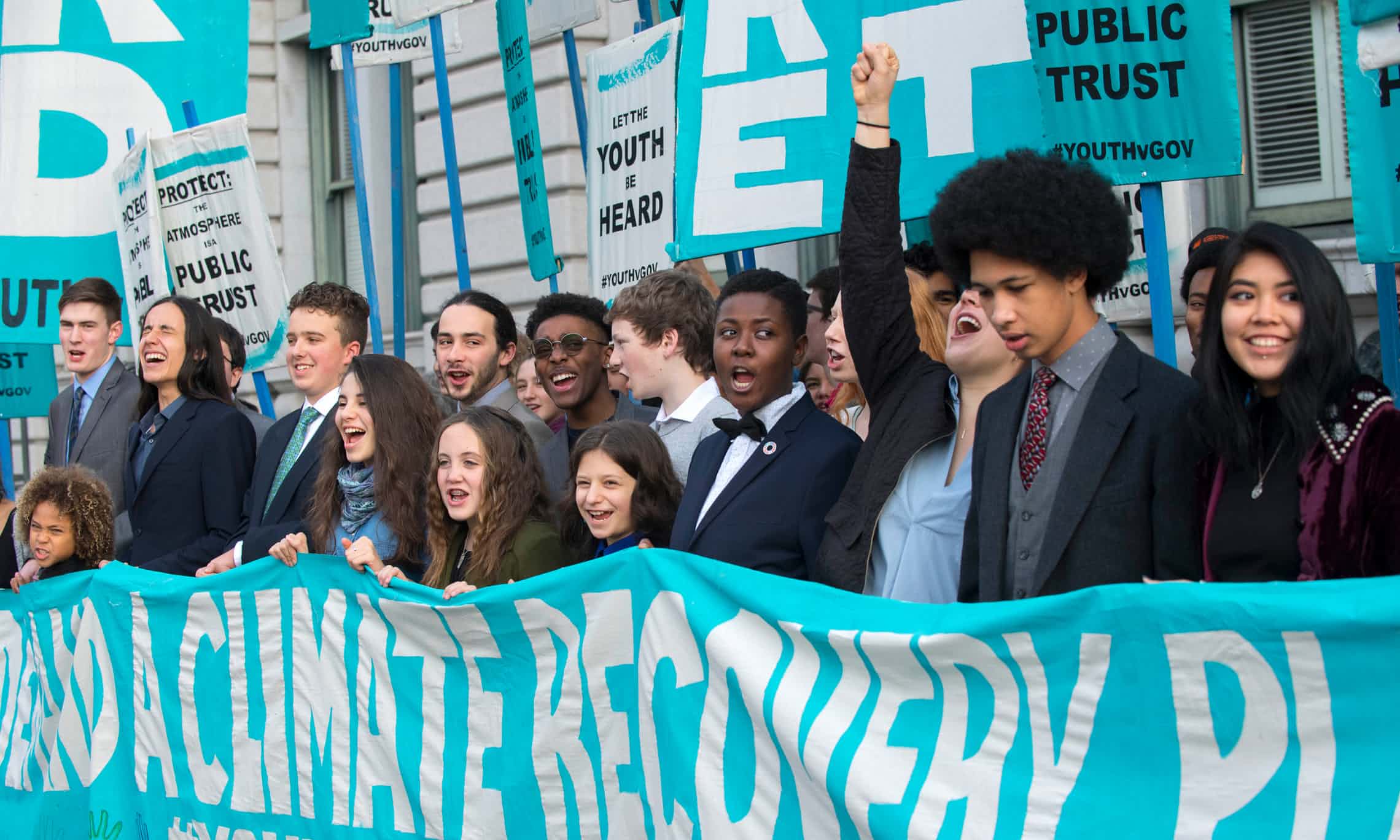
Some of the voices at the International Congress of Youth Voices
Photo:theguardian.com
On 5 August, 2018, a group of student delegates came together in San Francisco for the inaugural International Congress of Youth Voices. Founded by author Dave Eggers and the not-for-profit organizer Amanda Uhle, the congress brought together nearly 100 youth activists from around the world and noted guest speakers – including the US Representative John Lewis and the writer Chimamanda Ngozi Adichie – for readings, mentorship, and collaborative learning.
At the end of the three-day congress, the delegates wrote a group manifesto, which, in the coming weeks, will be translated and published in several languages.
We are a network of empowered youth voices from around the globe that strive to take action for the world we wish to see. We recognize the issues that threaten human rights within our generation; let’s counteract them by implementing innovative solutions in the areas of health, education, social justice, security, and the environment. Our vision is to create a global system which encourages youth to take action for what they believe in – even when others might not. We intend to bring a bright light to the world’s most pressing issues and promote sustainable solutions. By the youth. For the youth.
Intersectionality
We aspire to leave our national ego at the door and enter the gates of our global communities with an open mind. We must use an intersectional lens to self-reflect and be able to access connections and other views after acknowledging bias.
Intersectionality is the overarching framework for change. Intersectionality is understanding our communal and individual experiences as informed by our many identities.
In order to do this, we need to hold these values:
We cannot do necessary personal work if we need to prioritize our daily survival.
Recognizing the foundation of our experiences.
Solidarity and community.
Communal Validation
No one is left behind. All of us are working towards collective freedom by reforming individualism and moving in togetherness. We will be able to do so by staying connected through a network regardless of our countries, while updating each other on our social work. We must accept responsibility to be one voice of change. We must acknowledge each other’s strengths, using them to cover each other’s weaknesses. In the words of the great Dr Martin Luther King Jr: “Injustice anywhere is a threat to justice everywhere” and “no one is free unless we are all free.”
Empathy, self-love, artivism, and patience
Art is traveling without traveling. Art is a language that does not need western translation. Art is a mini-scale revolution. It is an extraordinary and compelling method for communicating one’s experiences, while keeping in mind that everyone’s narratives are multi-faceted.
If we are advocating for empathy, we must empathize with those we do not agree with but are willing to understand. To empathize is to uplift and inspire through the validation of our stories and experiences. As young artivists, we must recognize empathy as a medium that connects us to the world in order to enact positive social change.
It is imperative that we honor each other’s individual experiences and narratives without exploiting them. In order to incite the change we need in the world, we must understand that we as a collective will be met with hate and rejection, but we must remain patient, empathetic, and reflective.
Educational equality
Investment in education is an investment in the future and in order for our world to improve, it is imperative that education should be a right and not a privilege. It is important that we break the harsh restrictions, specifically for students of color, from attending schools outside of their districts and pursuing higher education. At the same time, we can make, expand, and promote programs within our schools and communities.
With disproportionate ratios of counselors to students, it is important to incorporate college access resource centers and programs within schools. We must appreciate and cherish our teachers by paying them better for affordable housing so that they can continue to educate and empower the youth.
We could go to our school boards to make small community changes and make bigger impacts, not only in our community, but globally.
Our lives are so often defined by our education – in order to create a more equal we need a more equal educational system.
Ethos
We must hold curiosity and respect for cultural differences and remember that where you were born is not what defines you. It is who you choose to be. We must honor the credibility of the oppressed and we must reject the collective because opposition from the oppression is our obsession. We must hold ourselves and others accountable for our past and our future. We must redefine our imagination, to imagine taking back our lands, our wealth, and our humanness. And first and foremost we must stop making humans aliens to our unalienable rights.
Identity, ancestry and poetry
The intersectionality of identity and ancestry and how it affects and shows up in our arts and education:
“Until the lions have their own historians, the history of the hunt will always glorify the hunter.” – Chinua Achebe
It is a privilege to know your ancestry. To know where your family comes from is to know where you come from. To not know where you come from is to not know who you are. Lost identity makes you vulnerable to systems of oppression. Lost identity manifests into internalized oppression that becomes present in our bodies and in our manners of expression. Oppressive narratives fill the void of self-representation. Stigmas swallow your self-image. We are being denied ourselves in the lack of representation in schools that only show the oppressors in their glory. To know your history is to be undeniable. We will not be denied anymore.
Commitment to action
We are committed to the mobilization of youth advocates and activists internationally through continuous community building, days of social action, and global initiatives. We believe that hope, resilience, and community must be the core of our mobilization. Our updates and progress shall be published in the multiple languages represented by our global delegation. This delegation stands together as a network of knowledge and resources – economically, emotionally, and spiritually. Our commitment to service and justice must be evident through action and progress and not solely through conversations read on paper. The borders imposed upon our nations will not limit our scope of our action. These issues are international and must be handled as such.
The international network of youth voices
We are the platform:
Meant to amplify the stories of the International Congress of Youth Voices, forthcoming delegates, and other youth worldwide.
We are the platform:
Meant to highlight the talents and skills that are exhibited by young people motivated by activism.
We are the platform:
Meant to build a community that will maintain and monitor our strides towards making real change.
We Are The Platform. Together.
Student delegates
A’Lyric Thomas, Agnes Ugoji, Akilah Toney, Alejandro Melguizo, Alex Palacios Santos, Aliya Hall, Angel E Palencia Ramos, Anika Hussain, Aniya Jenkins-Butler, Ashla Chavez Razzano, Azaria Pittman-Carter, Beatrice Phiri, Bianca Alvarado, Bry Reed, Calvin Sears, Carlos Gomez, Chandler Browne, Cory Williams, Daphne Constantinides, Darvey To, Destiné Price, Edgar McGregor, Edna Akimana, Elizabeth Schultz-Lorentzen Holstein, Emma Lorenceau, Esperanza Rivera, Frantzy Luzincourt, Gabriela Romero, Gbari Garrett, Hafizah Khan, Hana Bezabeh, Haris Hosseini, Hennessys Ortiz, Ibrahim Dahir, Ifeoma White-Thorpe, Iman Abdul, Itumeleng Banda, Jahid Wilson Jr, Jamesha Caldwell, Jeffrey Ngo, Jeronimo Perez Flores, Judica’elle Irakoze, Julian Manyika, Kelsey Juliana, Kenan Mirou, Korik Bestrin, Leeah Michael, Legacy Thornton, Leila Mottley, Lily Huang, Lizette Navarro, Lucy Malcoun, Maeve Wilbourn, Malcolm Yearby, Mansa Kuang, Mariama Savage, Marvin Matamoros, Marwa Samimy, Massih Hutak, Monica Deleon, Natasha McCabe, Naudika Williams, Noa Gur Golan, Noemi Martinez, Noor Alnoman, Qadira Miner, Rachel Parent, Riya Kataria, Robyn Gill, Rohnny Vallarta, Ryann Morelli, Sachin Dangi, Salvador Gómez-Colón, Samuel Getachew, Sarah Sobka, Sean Farrelly, Sydney Rotigel-Finegan, Talon Washington, Tess Kelly, Vanessa Ramon-Ibarra, Vic Barrett, Vivian Pham, Yennifer Coca Izquierdo, Zadren Hill, Zainab Nasrati
*The Manifesto was first published in the Guardian on Sunday 12 August 2018
- Details
- Written by: Kamran Mofid
- Hits: 3247
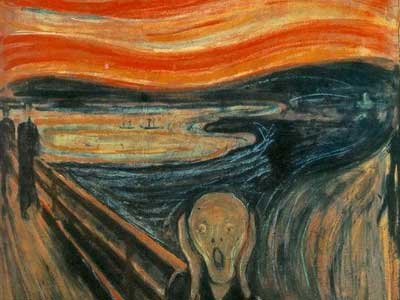
The Scream by Norwegian Expressionist artist Edvard Munch
Is the ‘Modern World’ depressing, lonely, fearful, hopeless and untrustworthy? These are some pertinent and timely questions
“‘Obviously there’s a lot of good things about societal and technological progress and in a lot of ways our lives are much easier than, say, our grandparents’ or great-grandparents’ lives. But there’s a paradox here that we seem to have so much ease and relative economic prosperity compared to previous centuries, yet there’s this dissatisfaction, there’s this unhappiness, there are these mental health issues in terms of depression and anxiety.’”+
'The forces of psychological distress in our world are – currently – much wealthier and more active than the needed cures. We deserve tender pity for the price we have to pay for being born in modern times. But more hopefully, cures are now open to us individually and collectively if only we recognise, with sufficient clarity, the sources of our true anxieties and sorrows.’*
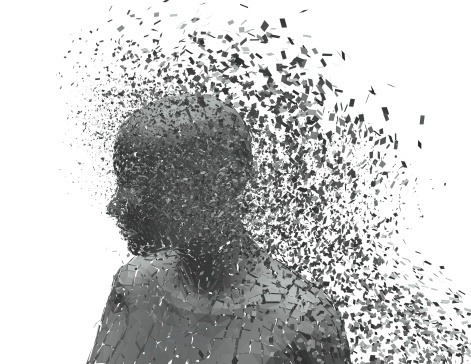
Depression and Mental Illness. Photo: meaningfullife.com
- Details
- Written by: Kamran Mofid
- Hits: 2006
Serving the Earth, Serving One Another
In a world of spiraling ecological, socio-political and economic crises, where does one find hope and wisdom?
Where can we search for and discover our spiritual calling and be one with the world and with each other?
Our Journey of Hope: Our Sacred Activism
GCGI is our journey of hope and the sweet fruit of a labour of love, service and volunteerism.
“With the conscious decision to live in a sacred manner, we attract the understanding, the teachings and information that will help us to unfold our gifts for the benefit of all.”- DHYANI YWAHOO, CHEROKEE ELDER
We work to build a better world
Dedicated to the Common Good- aiming to be a source of hope and inspiration; enabling us all to move from war to peace, from despair to hope, from darkness to light, from hatred to love, and from competition to cooperation.
Our vision and our hope for the flourishing of the Earth Community in these challenging times
- Happiness is to Do Nothing
- Celebrating the Centenary of the Man for the Common Good
- What is Money? Is it Money Money Money, Must be funny?
- A Canadian Path to Goodness and Happiness: Money& Power, The Currency of Life?
- Britain’s greatest achievement: Wishing Our Precious NHS a Very Happy 70th Birthday