- Details
- Written by: Kamran Mofid
- Hits: 1800
One thing that COVID-19 has taught me is that:
‘The most precious thing in life is life itself’
‘Global coronavirus deaths pass 1m with no sign rate is slowing’-The Guardian, 29 September 2020
Photo: Pinterest
It is now a few months since the COVID-19 Global Lockdown. Even though the total lockdown has now been eased a bit, but, nonetheless, it still feels the same isolation, confusion and loss.
This Coronavirus, this state of affairs, has taught us a few things.
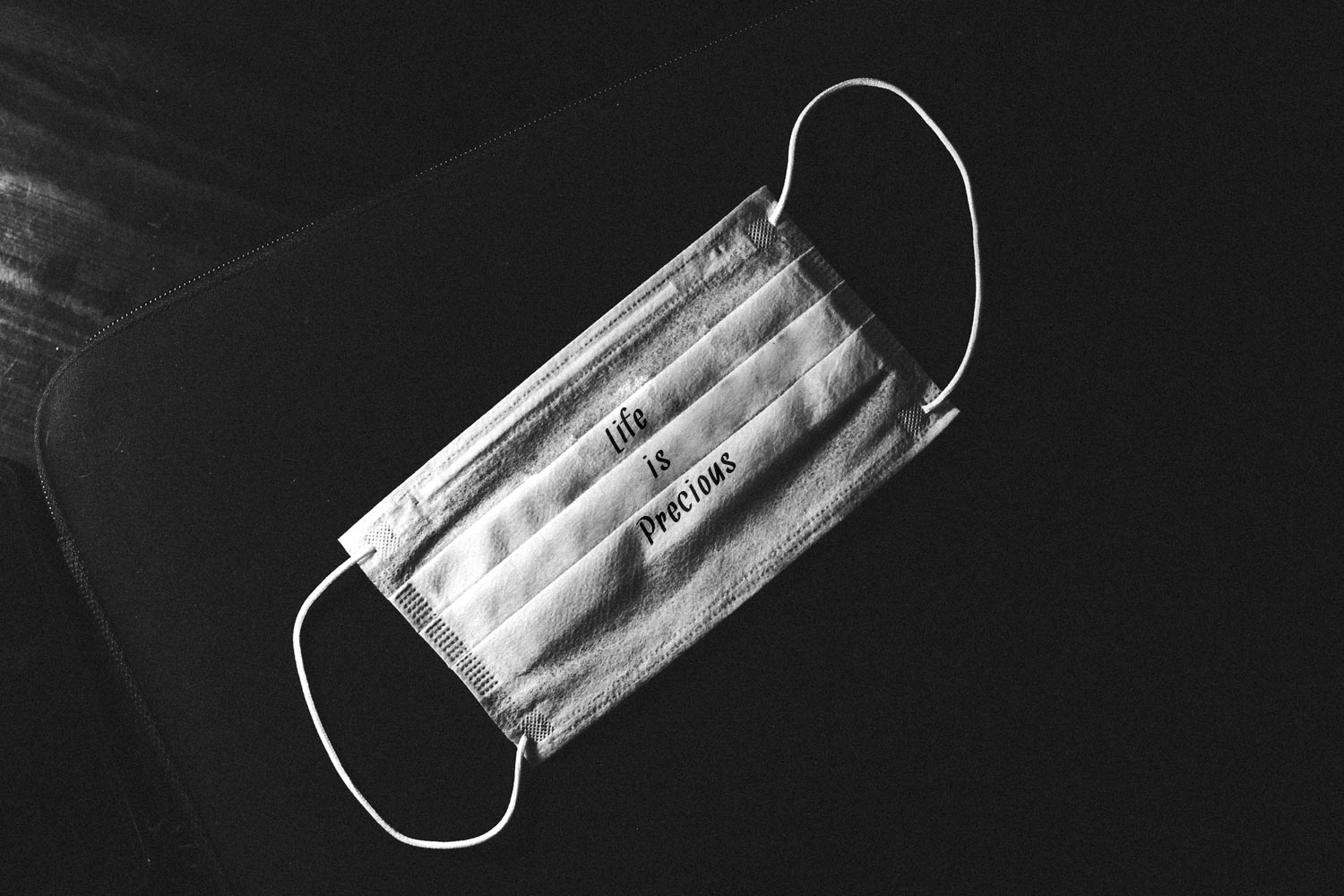
Photo:achyutasamanta.com
Some of these lessons are crystal clear—like, health/home/social care workers are fantastic frontline soldiers in this battle and we owe them a huge debt of gratitude. Second, the rest of the key-workers, paramedics, ambulance drivers, firemen and women, police officers, and other first-line workers like supermarket employees, delivery drivers, volunteers, and the many other essential workers who are keeping us going, in spite of personal risk and hazards to themselves.
However, as noted by many wise observers around the world, there is also something more profound that this pandemic and the subsequent lockdown is teaching us- The Meaning of Life!
‘The most precious thing in life is life itself’*
Human life is a work of art and is the highest expression of nature. This is measured by one thing: the human spirit. It takes years and lives of good deeds to be born as a human being into this world. But as the world grew, and times moved fast, somewhere down the line, we forgot the true meaning of our lives.
Paradoxically, the all-consuming COVID-19, which is supposed to be a setback for the world, is working as a blessing in disguise. It has taught everybody in this world the true value of life, irrespective of the caste, creed, religion, gender or class.
In a single move, it has shown the world the importance and significance of every single human life. The next step to this is that this very precious human life has to be protected by all means.
And moreover, to further enhance the preciousness of this precious life, we can always help others to grow.
Following the fundamentals of “Art of Selflessness and Giving” is the simplest way to reach the highest potential of one’s life.’
Happiness, compassion, kindness, love, peace, gratitude, giving thanks, are all part of life, and they are all the values which make us human. They must be shared freely and not hoarded, for that will interfere with the flow and the web of life.
To be happy, to value life we have to know that we are part of the life force. A life devoid of balance would throw us off on a tangent, and we would go swinging away from the wheel of life. In order to help others achieve happiness and fulfillment, we have to learn how to achieve these and more ourselves first. That is the crux of a happy life!**
*The most precious thing in life is life itself
**What is the most important thing in life?
Photo: Google
‘The most important thing in life is life itself’+
Life is to be in harmony with our life-sustaining system, Nature

Photo: Pinterest
‘We strive so hard and so long to create our safety net, our comfort zone, competing with society, getting an education, climbing the corporate ladder, and chasing the quintessential element called money. We work and buy our way to a model of security, success and self-realization that is actually programmed into our heads by the material-based culture that keeps us fundamentally disconnected from the ultimate reality, Nature.
Besides our material needs which are never truly satisfied, we dedicate so much to satisfying our equally starving egos. We make our petty little personal life dramas seem so important. And how about our distractions, most of which have become the escape out from the increasingly overwhelming reality around us, or the evasion from the lack of fulfillment we silently acknowledge inside.
The fact is that all effort, struggle and achievement even, do in most cases nothing for the absolute bottom line, life. And I do not mean just your life but everybody else’s and everything else’s. I am referring to the totality of life, possibly the most precious phenomenon in the universe.
In this present day society most of us are confused, unsatisfied and continue to endanger ourselves and the very planet we inhabit just because our priorities are not set right. As simple as it may sound, making LIFE (its preservation, restoration, and enhancement) the number one priority will I believe, set our priorities right and lead us into the sustainable paradigm where we are destined to be in harmony with our life-sustaining system, Nature.’
+The most important thing in life is life itself
See also: Pricing the Priceless

A few related inspiring articles from the GCGI Archives for your interest:
Photo: american Meadows
Thank You NHS for who you are and what you do. The nation owes you a debt of gratitude.
'If This Time' Has Taught me Anything…
An open letter to all my Friends
Lessons from an old-time social distancer for novices like us
Have We lost the Art of Knowing What it Means to Be Human?
This is How to Make the World Great Again: The Compassion Project
The Number One Message of Lockdown
“In a world where you can be anything, be kind.”
In a time of panic, please don’t forget to be kind.
How can we measure what makes a country great?
Imaging a Better World: Moving forward with the real Adam Smith
Adam Smith and the Pursuit of Happiness
Build a Better World: The Healing Power of Doing Good
Today is World Kindness Day: Embracing Kindness to Defeat the Political Economy of Hatred
In Praise of Frugality: Materialism is a Killer
There is more in less: The Evolution of Simplicity
Simplicity: it’s our true guide to a better life
The beauty of living simply: the forgotten wisdom of William Morris
In this troubled world let the beauty of nature and simple life be our greatest teachers
On the 250th Birthday of William Wordsworth Let Nature be our Wisest Teacher
- Details
- Written by: Kamran Mofid
- Hits: 1157
A is for Automation: A book to prepare your children for the future of work*
By Dan Kopf & Bárbara Abbês, Via QUARTZ 12 May 2020
This GCGI posting is dedicated to the youth of the world, our children and grand- children, who are the unfolding story of the decades ahead. May they rise to the challenge of leading our troubled world, with hope and wisdom in the interest of the common good to a better future.
'A different world cannot be built by indifferent people.'
The Path of Possibilities and Hope to a more Fulfilling and Rewarding Life
How to Find Alternative Paths to Meaningful Education, Training, and stewardship

Photo:pinterest UK
Nota Bene
In today’s so-called modern era, when we know the price of everything, and value nothing, who really creates wealth, meaning and purpose in our world? And how do we decide the value of what they do, or indeed, the value of what we do?
Lest we forget, it is the value-creation, and not profit maximisation and cost minimisation, which is the productive process that drives a healthy economy and society.
To my mind, my generation, today’s senior citizens, have by and large, failed to build a prosperous, fair and just world that serves the greater good. So, it is now left to our children and grandchildren to rise and transform the world and their lives for the better.
However, and most importantly, this cannot happen without a values-led education. Hence, here lies the value of this beautifully written and worded book.
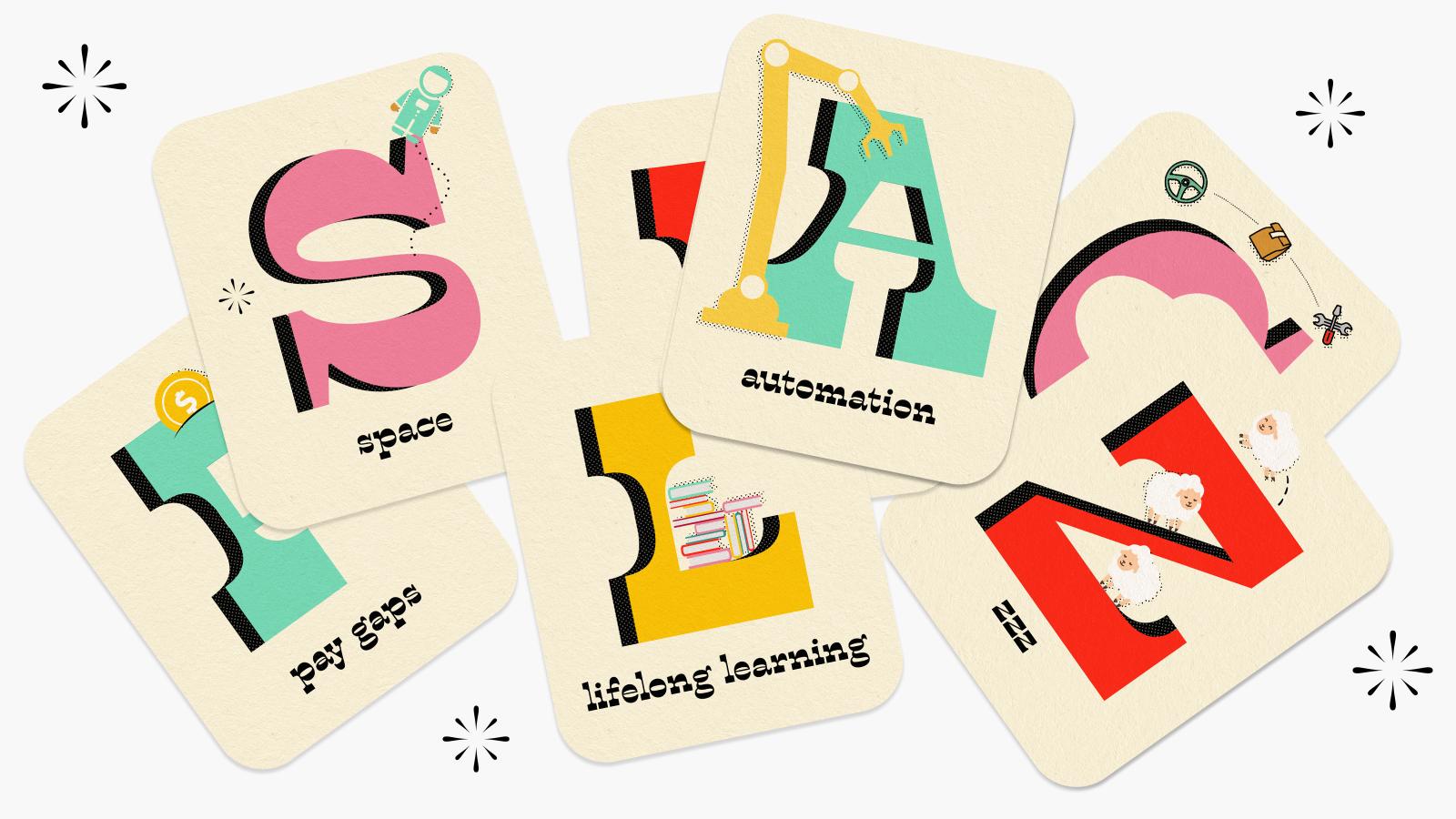
Photo:QUARTZ
Here’s how it works, kid
When you’re young, you just play,
But things will start changing,
You’ll start working one day
Sure, the future is murky,
The job market’s unclear,
But if you can stay nimble,
You have nothing to fear
Let’s review the future of work,
From letters A to Z,
It won’t be so frightening,
Just you see

A is for Automation,
That great destroyer of jobs,
In the olden days,
It brought out the mobs
It can also be great,
Something people can dig,
The agricultural revolution for example,
Farming was a really hard gig
The effect is complicated,
It creates and it ends,
Is it going to hurt you?
Hard to know, it depends

B is for Benefits,
‘Cause pay is more than just a wage,
Healthcare, parental leave, pensions,
These perks are the rage
If you want a lot of time off,
You should get into education,
Though not the best salary,
You will get tons of vacation
You can also read it at Yahoo Finance

A few related inspiring articles from the GCGI Archives for your interest:
Photo: printerest UK
Values-led Education is the Path to a Better Life and Future:
Poetry is the Education that Nourishes the Heart and Nurtures the Soul
Reflecting on Life: My Childhood in Iran where the love of poetry was instilled in me
Finding sanctuary in poetry during lockdown
A timeless reflection on two types of teaching and learning
The Journey to Sophia: Education for Wisdom
What if Universities Taught KINDNESS?
Wisdom and the Well-Rounded Life: What Is a University?
The Value of Values: Values-led Education to Make the World Great Again
Storytelling: The Heart and Soul of Education
Values-free Education is the Path to Destruction:
Britain today and the Bankruptcy of Ideas, Vision and Values-less Education
Brexit, Trump and the failure of our universities to pursue wisdom
Neoliberalism destroys human potential and devastates values-led education
Values-less Education for Profit is the Passport to Slavery
- Details
- Written by: Kamran Mofid
- Hits: 1153
(N.B. Although, this article is about the US, nonetheless, it is global in its relevance.)
“If Black women—who, since our nation’s founding, have been the most disadvantaged by the rules that structure our society—
can one day thrive in the economy, then it must finally be working for everyone.”
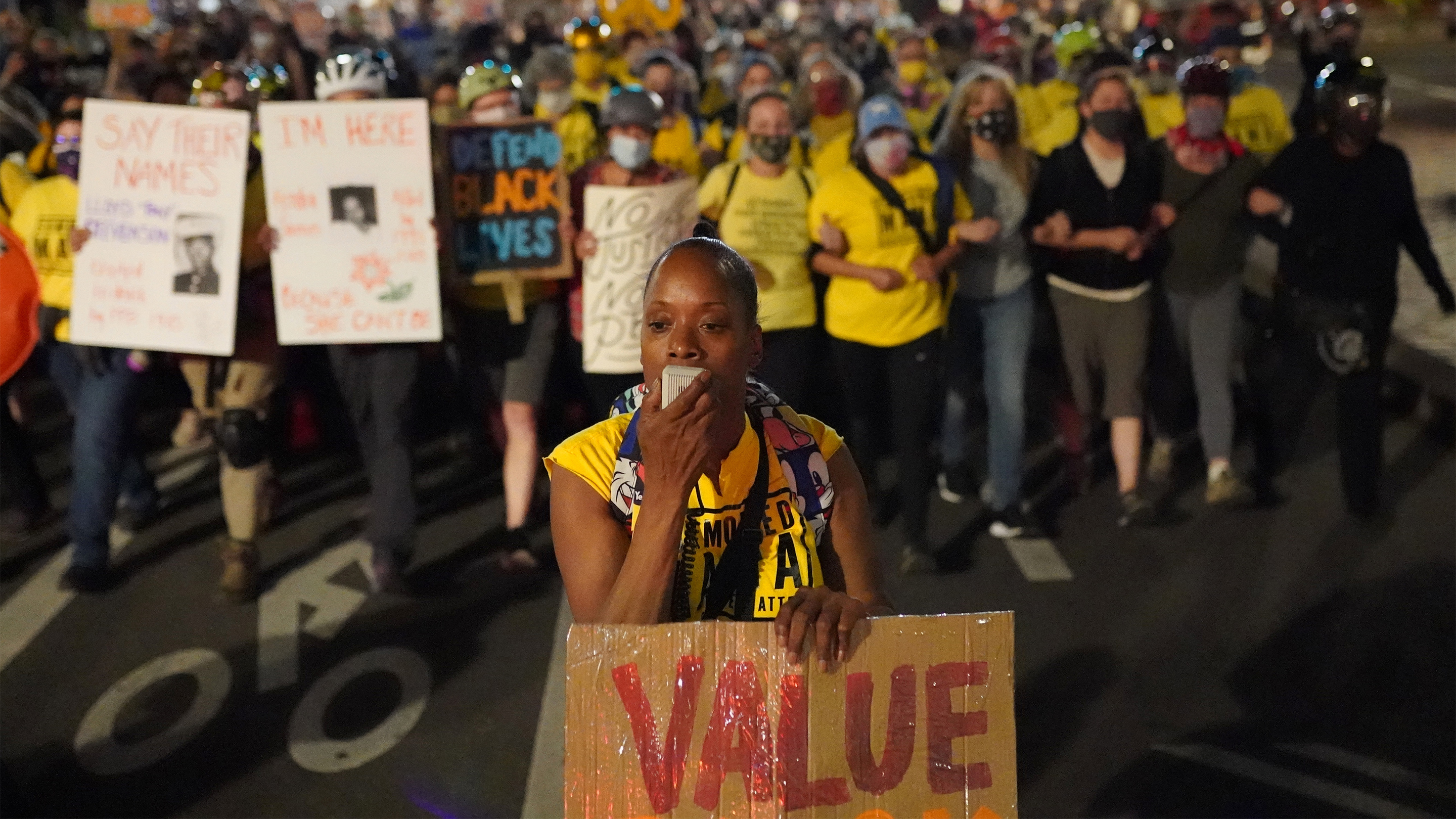
Black Lives Matter supporters demonstrate against racial injustice and police brutality
in Portland, Oregon, on July 31.- Photo: Marketplace.org
Why putting Black women first may save us from economic disaster
By Anna Gifty Opoku-Agyeman, Via The Economic Policy Institute (EPI)*
‘In 2008, our economy experienced an economic crisis in which Black women lost 258,000 jobs—more than twice as many as the jobs gained by Black men.
Our current economic crisis is unfortunately offering up disparity déjà vu. The ravages of the coronavirus have resulted in employment among Black women dropping 11 percentage points—more than any other group. Despite historically low unemployment rates in March, within a month of the pandemic, Black women’s unemployment rate has climbed to 16.9%, suffering the greatest job losses as compared with other groups.
Black women are bearing the brunt of this economic crisis, and keep in mind that Black women were already underpaid upwards of $50 billion in forfeited wages before the pandemic, according to economist Michelle Holder. These findings illustrate an ugly truth: COVID-19 is laying bare the structural inequities that compound when race and gender intersect—inequities that may be best addressed through recentering economic policy on Black women.
Why should policymakers center Black women?
Black women are the core of the nation’s economy, holding the front-line jobs and running small businesses, and they are more often the single heads of households in their communities. If they are elevated through policy, including everything from paid sick leave to stimulus programs targeted directly toward them, the economy at-large will benefit.
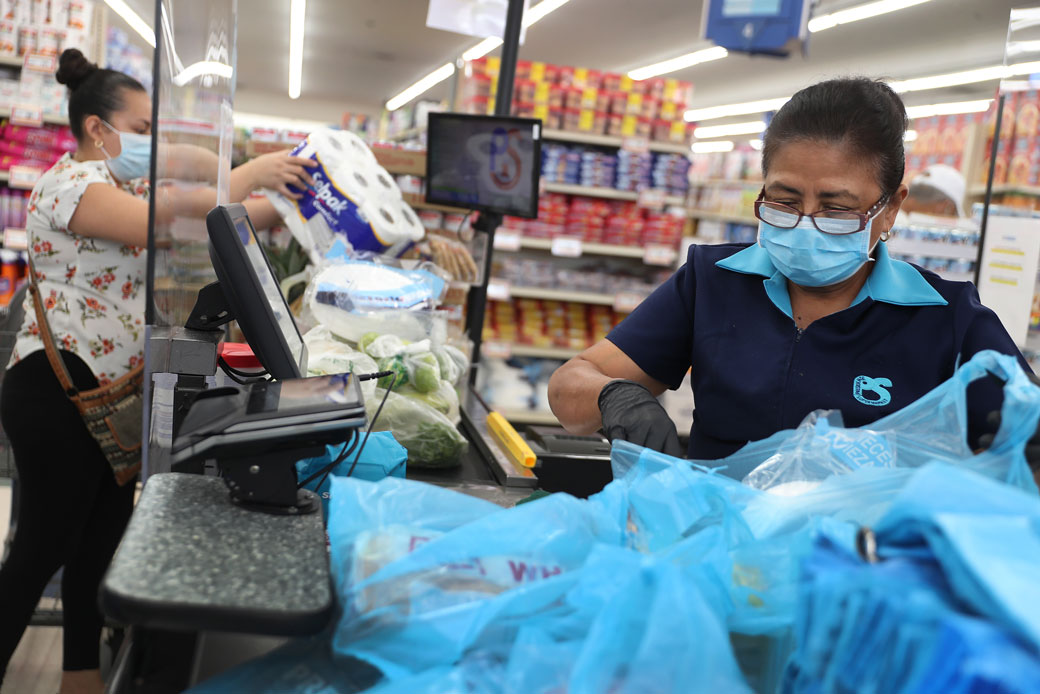
A grocery store worker stands behind a protective plastic screen as she works the
cashier at a supermarket in Miami, April 2020.- Photo:Center for American Progress
Unfortunately, decisions that have already been made don’t take racial and gender inequities into account.
For example, the Federal Reserve Board decided to expand funding for small businesses in light of the recent crisis. As of right now, Black businesses, many of which are owned by women, are most likely to be overrepresented in industries hardest hit by COVID-19; anecdotal evidence suggests that Black business owners are also finding difficulties in applying for funding offered by the Federal Reserve Board.
If the economy is working for Black women, then the economy is working for everyone—an ideology that Janelle Jones, Managing Director of Policy and Research at the Groundwork Collaborative, coined as “Black women best.” Kendra Bozarth of the Roosevelt Institute explains: “If Black women—who, since our nation’s founding, have been the most disadvantaged by the rules that structure our society—can one day thrive in the economy, then it must finally be working for everyone.”
Right now, the economy is not working for Black women. LeanIn recently surveyed nearly 3,000 individuals, and found 60% of Black women were concerned about paying their rent or mortgage as compared with just 24% of white men, which may be due to the fact that Black women are three times as likely as white women to be single heads of households. On the dimensions of paying for groceries and affording child care, there was a 30 and 10 percentage point gap between Black women and white men, respectively.
Furthermore, across the United States, the share of Black women employed in service occupations ranges from 23% in Maryland to 40% in Rhode Island. Many service-sector jobs are considered “essential,” despite the fact that on average, essential workers are less likely to have benefits and face higher health risks. The stories punctuating deaths among Black women highlight those dying on the front lines as health care workers, grocery store clerks, and teachers.
Employers should shift their thinking on paid sick and parental leave, subsidized child and elder care, and work flexibility to help Black women, who are disproportionately facing COVID-19-related deaths in their communities. This shift can inevitably help all workers regardless of background. When the policies shift to focus on the outcomes of Black women, everyone benefits.
Another example of how “Black women best” being at the center of economic policy helps everyone is government mobile payments, which Economist Lisa D. Cook cites as one way to alleviate economic hardship. Imagine if policymakers considered how direct mobile payments via Venmo or Cash App could reach Black mothers who are being asked to meet looming deadlines. Black women would be the aim, but universally, needs would be met.
“Black women best” also translates into prioritizing the perspectives of Black women in economic and policy spaces, an objective that is currently being achieved by the Sadie Collective, a nonprofit organization that addresses the underrepresentation of Black women in economics and related fields. Recently, the organization penned //medium.com/@sadiecollective/open-letter-to-economics-blm-5b38100e59b5">a letter to allies, inclusive of individuals and organizations, constituting a list of demands that aim to achieve equity for Black women. To date, the letter has been endorsed by nearly 2,000 individuals and organizations, and cross-posted by the Economic Policy Institute as well as the Washington Center for Equitable Growth.
Within the Federal Reserve System, structural racism and sexism have kept Black women out of leadership roles that contribute meaningfully to the health of the U.S. economy and beyond. Specifically, out of 406 economists staffed at the Federal Reserve Board of Governors, only one identifies as a Black woman.
Because Black women make up the majority of the Black labor force, they are the pulse of the U.S. economy. By ignoring them, economists and policymakers run the risk of propagating lasting economic ramifications.
As we grapple with the historic job losses, uneven distribution of relief, and widening racial wage gaps, we must not forget to care for and protect Black women. And we must not forget those Black women who died working and serving their communities amidst a global pandemic—women like Rana Zoe Mungin, a beloved social studies teacher and activist from Brooklyn; Leilani Jordan, a Maryland supermarket greeter hired under a program for people with disabilities who helped elderly shoppers make their purchases; and Priscilla Carrow, a community activist from Queens and a hospital worker who was planning on retiring by the end of this year.
Their stories illustrate that indeed Black women are a key part of the backbone of the economy and our communities; as one of Carrow’s friends told a local TV news outlet after her passing: “There were so many people who relied on her so it’s affecting the lives of many, many people.”
*This article by Anna Gifty Opoku-Agyeman was first published in The Economic Policy Institute on 25 June 2020
......
To protect Black women and save America from itself, elect Black women
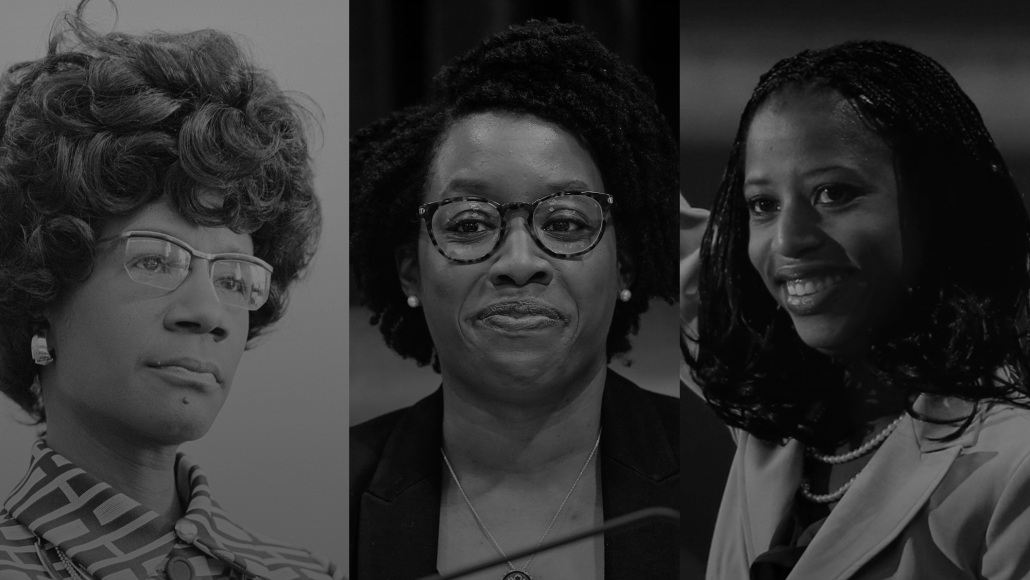
Photo:Brookings Institution
‘One-hundred years ago, women finally gained the right to vote through the 19th Amendment. But it’s taken much longer for women—specifically, Black women—to be granted a seat at the cultural and political table of America.
Shirley Chisholm, the first Black woman elected to Congress (in 1968) and the first woman and African American to seek the nomination for president of the United States from one of the two major political parties (in 1972), famously said, “If they don’t give you a seat at the table, bring a folding chair.” A vanguard for women’s political leadership, Chisholm tactfully pushed for inclusion throughout the political process. But as her quote suggests, if conventional democratic processes fail, then you have to take matters into your own hands.
Recently, across the county, we have seen a new generation of Black political leaders do just that, while a legion of vital Black women voters pushes for long-neglected reforms. But Black women are still vastly underrepresented nationally among political candidates, making up only 2% of challengers to incumbents. If we truly want to create a more equitable America and solidify Black women’s seat at the table, we must bring Chisholm’s folding chair all the way to the White House—with a Black woman vice presidential candidate in 2020.
Representation matters to our political mental health. The fact that all but one president (and every vice president) in the history of the United States has been a white man would be completely unbelievable if the American psyche didn’t see leadership as equating to that one demographic. Today, Black women elected officials—Chisholm’s spiritual children—are not only representing people but also remedying the sick American psyche with every chair they bring to the table…’- Continue to read: Black women’s rise should be America’s gain
......
A selected readings on similar topics and issues from our archive
‘I have a Dream’, 57 Years On and Why We Must Carry on Imagining the Dream
‘I Have a Dream’: Yearning for Dr. King’s Interconnected World
The scar on the conscience of Britain: The neglect of its children, youth, students and more
The Broken Economic Model and the Inhumanity of the Lost Decade of Austerity
Eruption of anxiety, depression and suicide in Britain
Austerity driven Homeless children put up in Shipping Containers in ‘Great Britain’
Austerity and its Consequences: No Hope for the Youth
Life, death and economics: Austerity is a killer
'This is not about politics, it's about humanity'
Recession, Austerity, Mental, Emotional and Physical Illness
Crisis after crisis and the crucial voices of hope
Is Neoliberal Economics and Economists 'The Biggest Fraud Ever Perpetrated on the World?'
Do you have an eye for justice and sense of duty? Then, these questions are for you.
The Myth of the ‘Promised’ Land
Dear Mr. Trump This is How to Make America Great Again
The Mother of all Heists: ‘The Neoliberal Looting of America’
Is this the way to make America great again?
Poverty is not Natural: A Must Read Book
GCGI Celebrating Activism and Hope with British VOGUE
Marcus Rashford: 'This is not about politics, it's about humanity'
In Search of a Better Tomorrow: Reasons for Hope In Times of Uncertainty
Mr. Trump, this is not the way to make America great again!
This is How to Make the World Great Again: The Compassion Project
- Embrace the Spirituality of the Autumn Equinox and Discover What it Means to be Human
- This is How to Balance Purpose and Profit to become a Force for Good
- Eruption of anxiety, depression and suicide in Britain
- Eruption of Corruption in British Education:Debunking the Moral and Spiritual Bankruptcy of Values-free Education
- The Moral, Spiritual, and Financial Bankruptcy of Brexit and the Higher Education in Britain: A View from a Distinguished Scholar